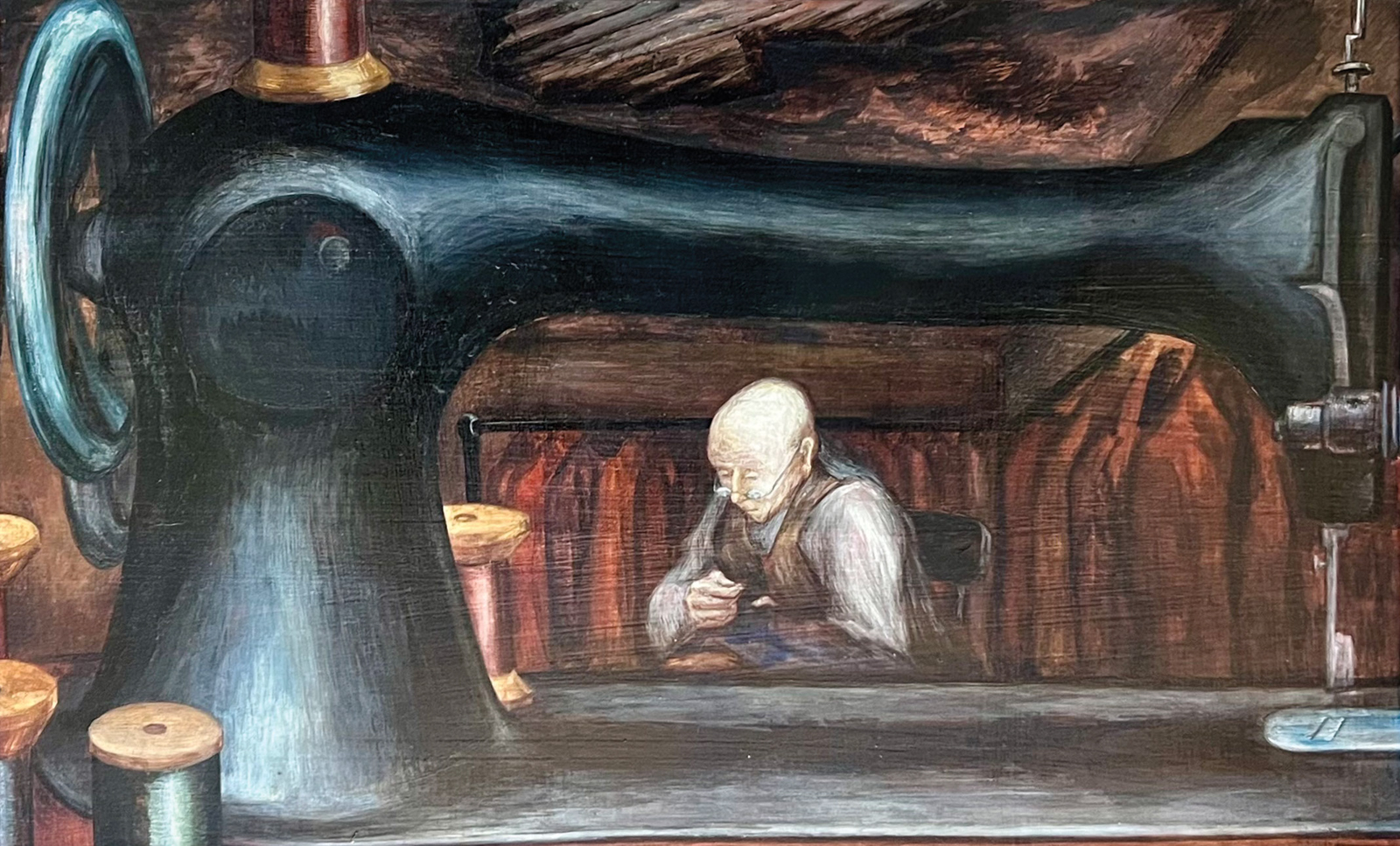
Mervin Jules (1912-1994), The Tailor. Oil on Masonite, ca. 1930s, 9½ x 15½ in.
Mervin Jules (1912-1994) The Tailor
Mervin Jules was a painter and prolific printmaker best known for works of social commentary and satire. After earning a degree from the Maryland Institute of Fine and Applied Arts in 1934, he went to New York City and studied with Thomas Hart Benton at the Art Students League. His preoccupation with the plight of the poor and social injustices is reflected throughout his often moody work. The Tailor, executed circa 1940, is a classic example of Jules’ expression of his empathy for the laborer, in this case a feeble man held “captive” by a sewing machine in a dark, windowless room. One of the most striking elements of the painting is the perspective. Looking through the sewing machine with the working tailor, oblivious of being watched, in the background, this painting is also emblematic of social realism work and the WPA style.
Helicline Fine Art
New York, NY • (212)204-8833 www.heliclinefineart.com
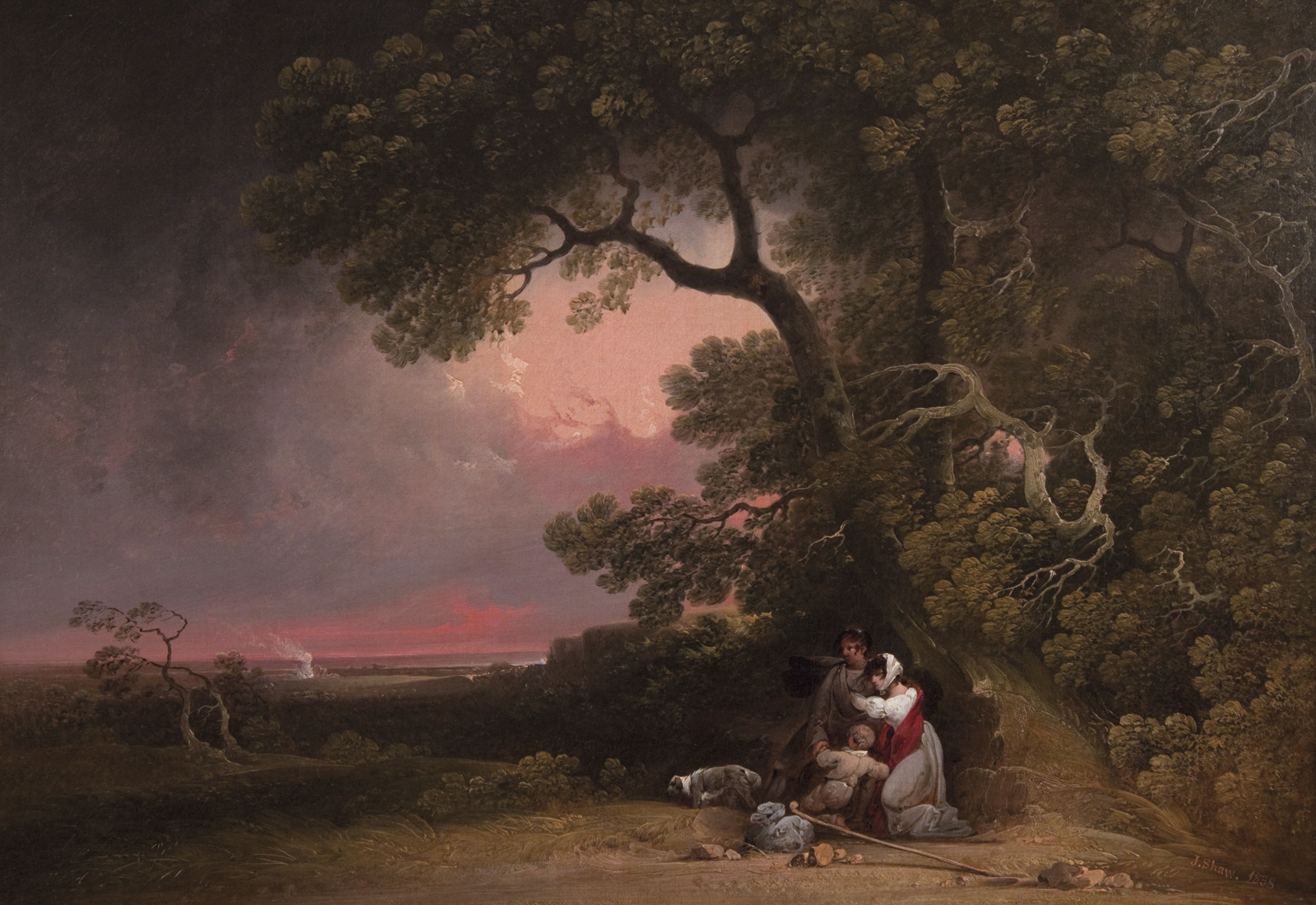
Joshua Shaw (1776-1860), Sunset after a Storm, Domestic Affliction, 1838. Oil on canvas, 19 x 27¼ in., signed and dated lower right: ‘J. Shaw. 1838’.
Joshua Shaw arrived in Philadelphia from London in 1817 having begun a promising career as a Romantic genre and landscape painter in England. He later traveled throughout the eastern and southern United States in the 1820s when there were still Indian-settler skirmishes. His works often depict scenes of human conflict and natural disasters. This painting exhibited at the Pennsylvania Academy in 1838 and shows a young family both caught in a storm, and possibly escaping from an Indian attack on their home which is burning in the distance. Another work from that year depicts Andrew Jackson fighting Native Americans near the Georgia/Florida border.
Thomas Colville Fine Art
111 Old Quarry Road • Guilford, CT 06437 • (203) 453-2449 tlc@thomascolville.com • www.thomascolville.com
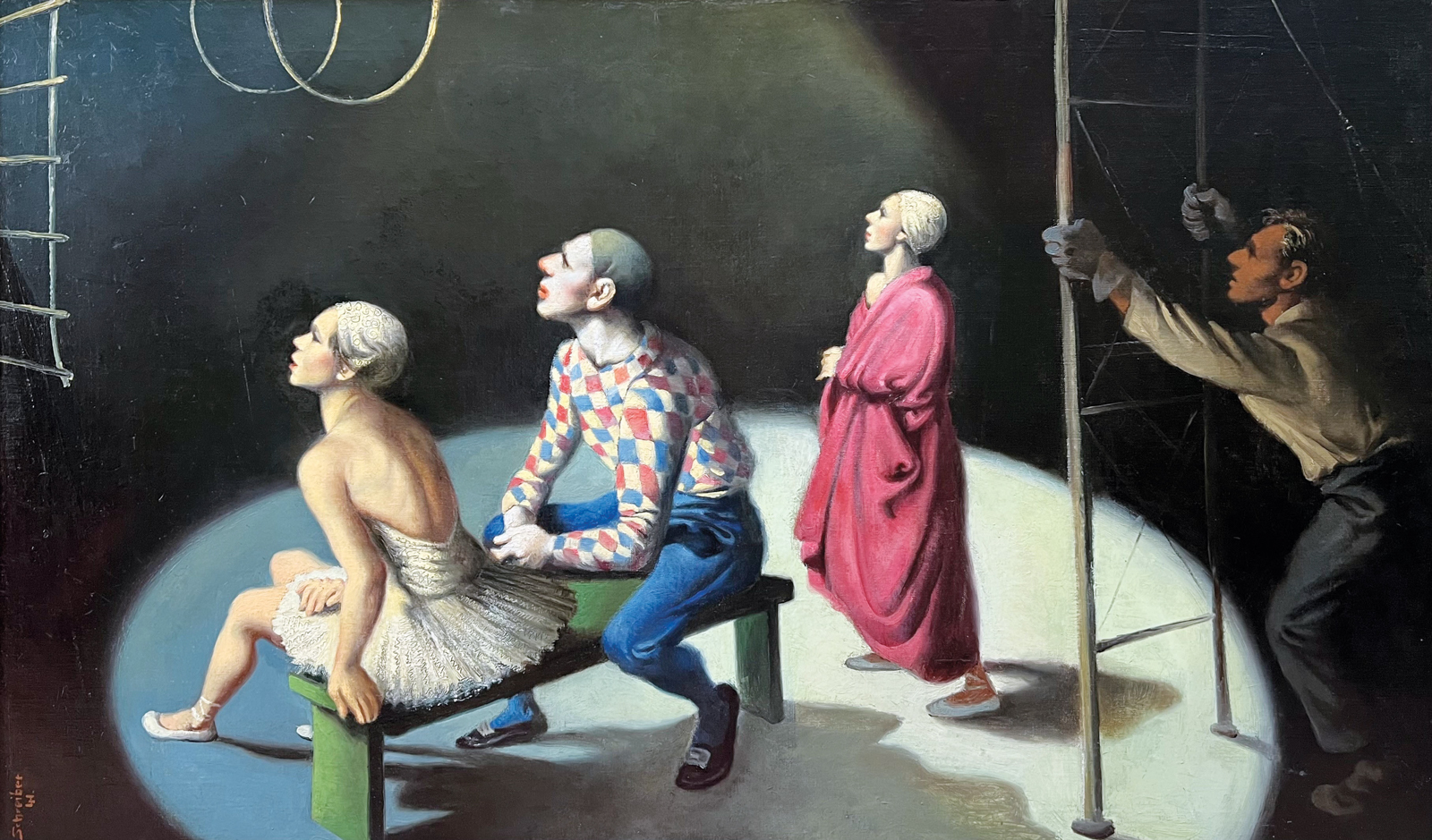
Georges Schreiber (1904-1977), Without a Net, 1941. Oil on canvas, 24 x 40 in., signed and dated lower left; partial label verso from Associated American Artists with the title ‘. . . rmers’ (likely for “Circus Performers”); stamp verso from a Madison Avenue Framer: ‘Midtown Fram[?])’; original frame.
Georges Schreiber (1904-1977) Without a Net
Georges Schreiber was a painter and lithographer who rose to prominence during the 1930s and 1940s for his compelling American scene paintings, which today still have a wonderful narrative quality. Schreiber was born in Brussels and, after extensive European training, immigrated to New York in 1928. Within four years of his arrival, Schreiber was on a two-decade trajectory during which he exhibited at the most prestigious East Coast and Midwestern venues and museums. In Without a Net, also known as Circus Performers, Georges Schreiber captures the tense moment when a circus acrobat performs a high-flying act. Schreiber cleverly does not actually show us the aerialist herself. Rather, we see three other performers in the middle of the circus spotlight and a stagehand on the periphery firming holding a ladder. All eyes look up and to the left to the unseen highwire act surrounded by darkness. Their facial expressions show equal parts amazement and concern as we are left to wonder exactly what we are missing outside the picture plane.
CW American Modernism
Los Angeles, CA • by appointment only cwamericanmodernism@gmail.com www.cwamericanmodernism.com
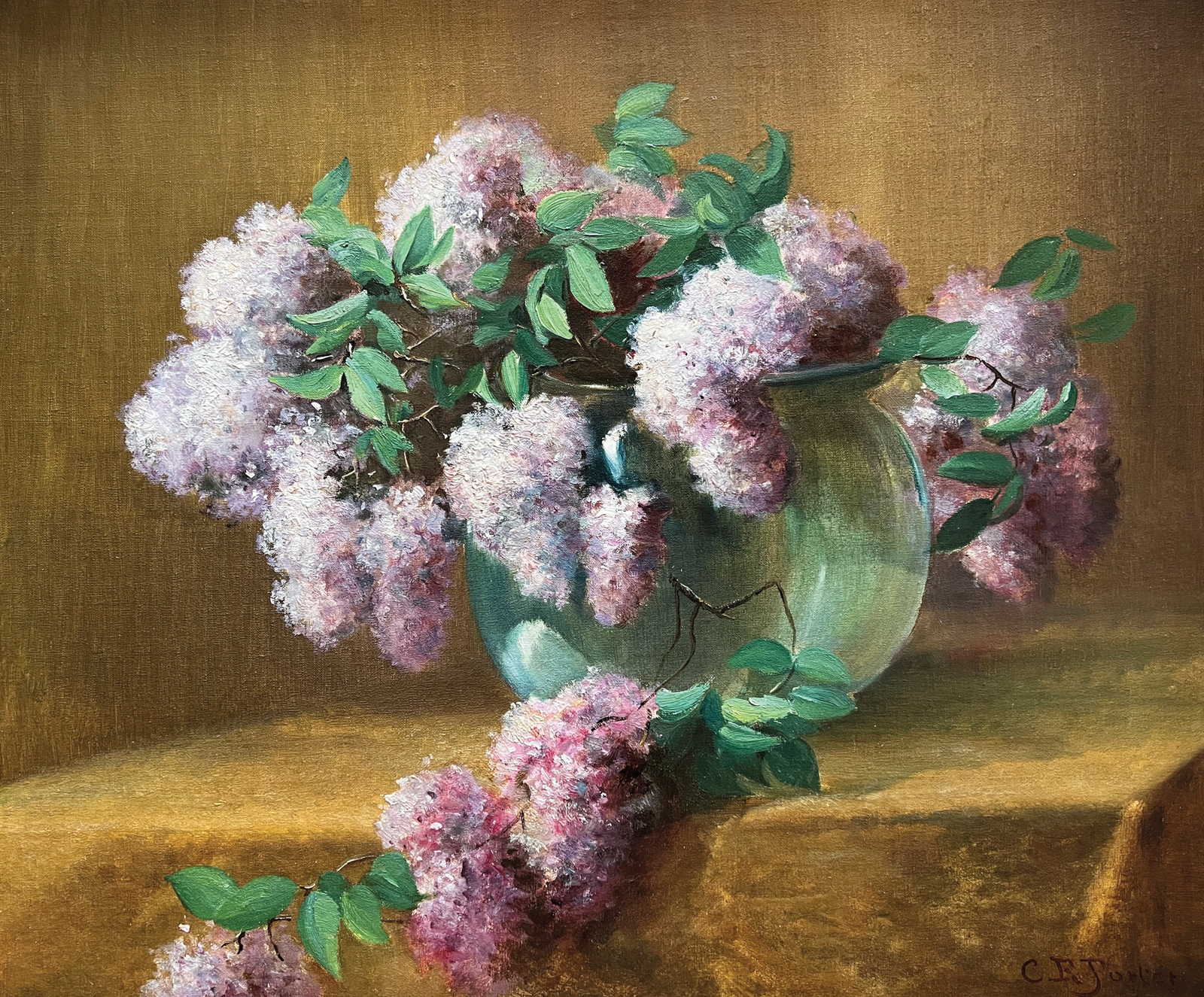
Charles Ethan Porter (American 1847-1923), Lilacs. Oil on canvas, 19 x 23 in., signed lower right.
Charles Ethan Porter (1847-1923) Lilacs
Celebrated by his contemporaries as one of the most skilled still-life painters, Charles Ethan Porter’s significance has been rediscovered by modern audiences. The largely Connecticut-based, New York- and Paris-trained Porter was among the first African American artists to exhibit his work nationally, including at the National Academy of Design, and the only one to specialize in still lifes. Porter specialized in fruit and floral still life painting bestowed with a soft, lush quality that differentiated it from much of previous American still life painting, which was often characterized by a virtuosic but harder-edged technique. Porter’s work embodied both this quality of softness and a sense of naturalistic immediacy that also translate to his landscapes.
Thomas Colville Fine Art
111 Old Quarry Road • Guilford, CT 06437 • (203) 453-2449 tlc@thomascolville.com • www.thomascolville.com
Powered by Froala Editor