The Wampanoag people lived on Cape Cod in Massachusetts for thousands of years before European settlers arrived. It was named Cape Cod because of the abundance of cod fish in its surrounding waters. Its life as an art colony began in the summer of 1899 when Charles Webster Hawthorne opened his Cape Cod School of Art. In 1916, an article in the Boston Globe declared the tiny fishing village as “the biggest art colony in the world…one of Nature’s laboratories in which creative minds and artistic souls can work.” At the time, the Cape had six schools of art. Over the next century it hosted many of the country’s great artists, including Hans Hofmann, Jackson Pollock, Robert Motherwell, Helen Frankenthaler, Milton Avery, Mark Rothko and Franz Kline.
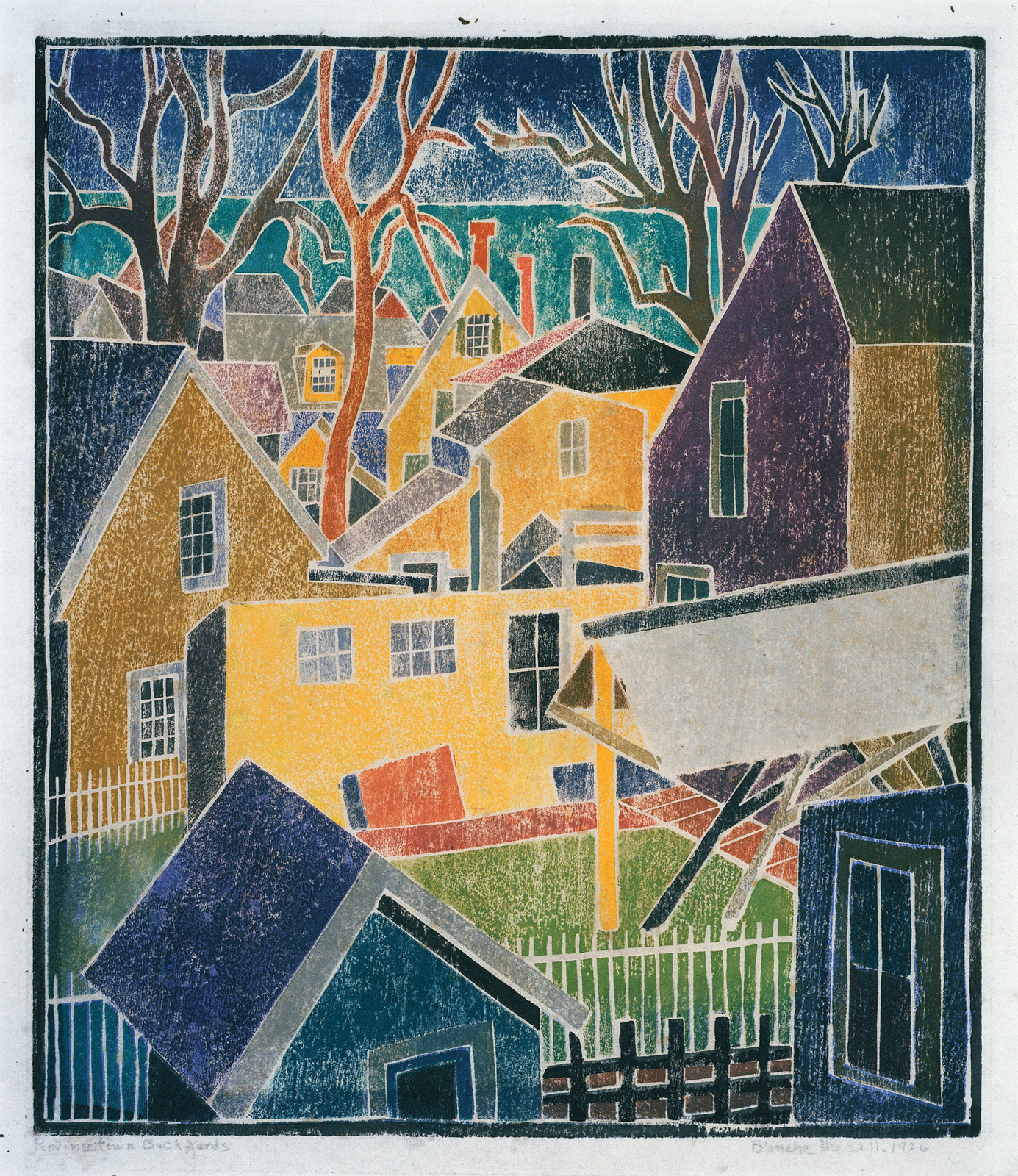
Blanche Lazzell (1878–1956), Provincetown Back Yards, 1926. Color woodcut, block: 135/8 x 113/4 in., inscribed recto: “Provincetown Back Yards / Blanche Lazzell—1926”; inscribed verso: ”Provincetown Back yards Sept. 13, 1926 / Blanche Lazzell Provincetown Mass. / 160/4”. The Leslie and Johanna Garfield Collection—Partial gift of Leslie and Johanna Garfield and Museum purchase with funds from the Charles H. Bayley Picture and Painting Fund and John H. and Ernestine A. Payne Fund. Photograph © Museum of Fine Arts, Boston.
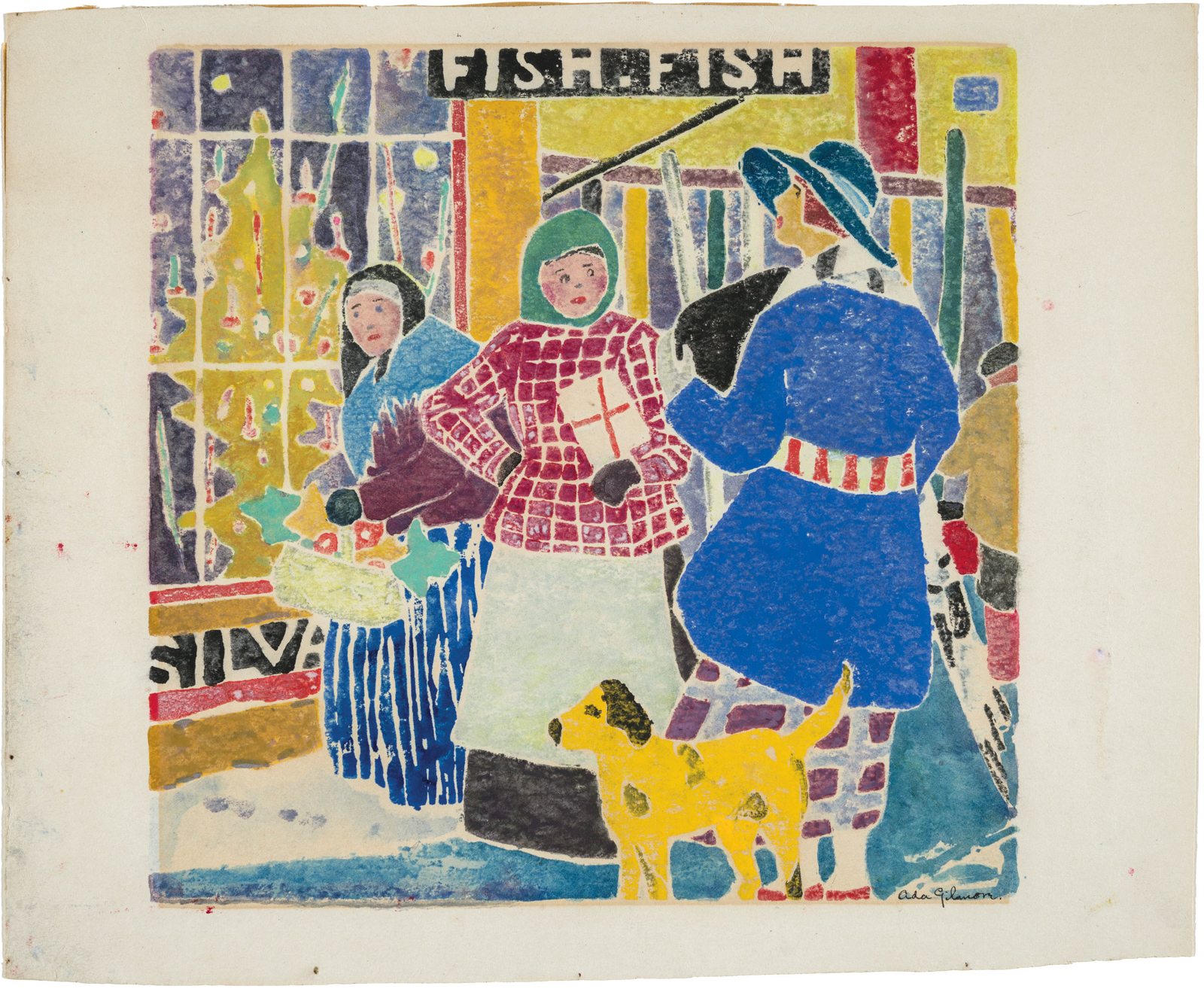
Ada Gilmore Chaffee (1883–1955), Provincetown Christmas, ca. 1915. Color woodcut. The Leslie and Johanna Garfield Collection—Partial gift of Leslie and Johanna Garfield and Museum purchase with funds from the Charles H. Bayley Picture and Painting Fund and John H. and Ernestine A. Payne Fund.
The museum notes, “The nearly 50 inventive prints on view build on the traditions of Japanese woodcuts and European modernism, using bold colors and dramatic lines to illustrate coastal houses, fishers at work and other scenes of daily life on the Cape. A salon-style wall featuring work by students and successors to the original nucleus of printmakers, including the key figure Blanche Lazzell, reveals the persistent creative energy that continues to make Provincetown an artistic destination.”
Lazzell (1878–1956) studied with Fernand Léger in France and with Hofmann in Provincetown, Massachusetts. Her modernist print, Provincetown Back Yards, 1926, is one of a series of impressions from the same block. Each impression was different since she would change colors, paper and rubbing techniques in each print. It is also an example of a white-line print, printed from the one block rather than separate blocks for each color. She said, “Originality, simplicity, freedom of expression, and above all sincerity, with a clean cut block, are characteristics of a good wood block print.”
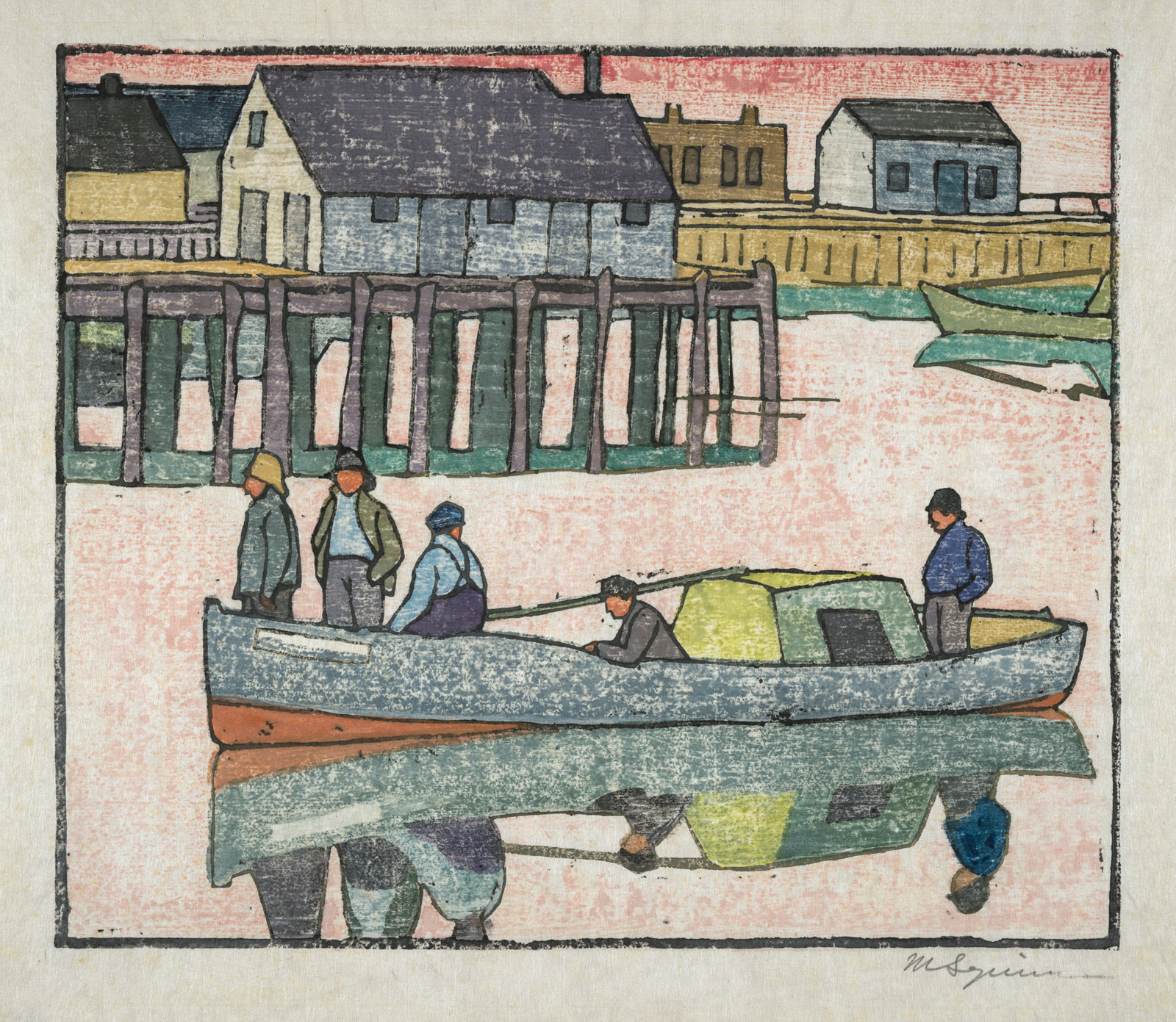
Maud Hunt Squire (1873-1954), Evening, ca. 1919. Color woodcut on Asian‑type paper, block: 11 /4 × 133/16 in., sheet: 143/16 × 181/8 in., signed lower right in graphite pencil: ’MSquire’, inscribed lower right in graphite pencile: ‘Msquire’. Bequest of John T. Spaulding. Photograph © Museum of Fine Arts, Boston.
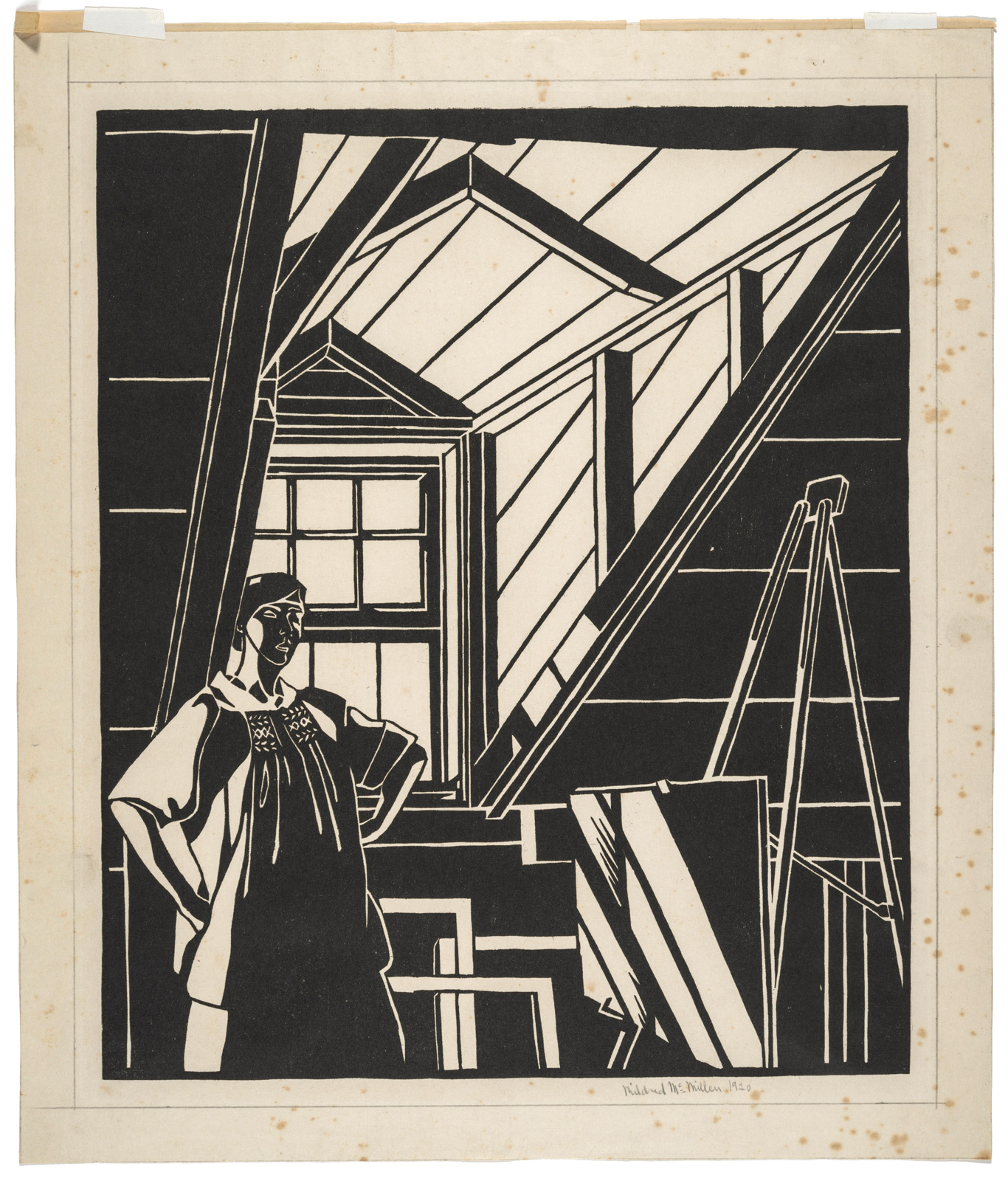
Mildred McMillen (1884–1940), The Attic Window: Portrait of Ada Gilmore in Her Studio, 1920. Linocut, block: 171/2 x 145/8 in., sheet: 213/4 x 173/4 in. The Leslie and Johanna Garfield Collection—Partial gift of Leslie and Johanna Garfield and Museum purchase with funds from the Charles H. Bayley Picture and Painting Fund and John H. and Ernestine A. Payne Fund. Photograph © Museum of Fine Arts, Boston.
Powered by Froala Editor