Arthur Dove: Miniature Laboratories, the new exhibition at the Amon Carter Museum of American Art is a perfect parallel, in a way, to MOMA’s Georgia O’Keeffe: To See Takes Time, also on view. Both exhibitions feature small paintings, experiments in form and media. Looking at the works in each exhibition, the word “essay”—in the sense of “attempt” or “try”—percolates to the surface. The works are graspings, strivings, alternately tentative and assured. “In a way” however, in the above sentence, is a giveaway phrase. For while the reams of small drawings and paintings O’Keeffe produced in the period covered in the first part of the MOMA exhibition arise from her search for a personal style at the outset of her career, 1915 to 1918, the small paintings in Miniature Laboratories emerge from the last years of Dove’s life, 1940 to 1946.
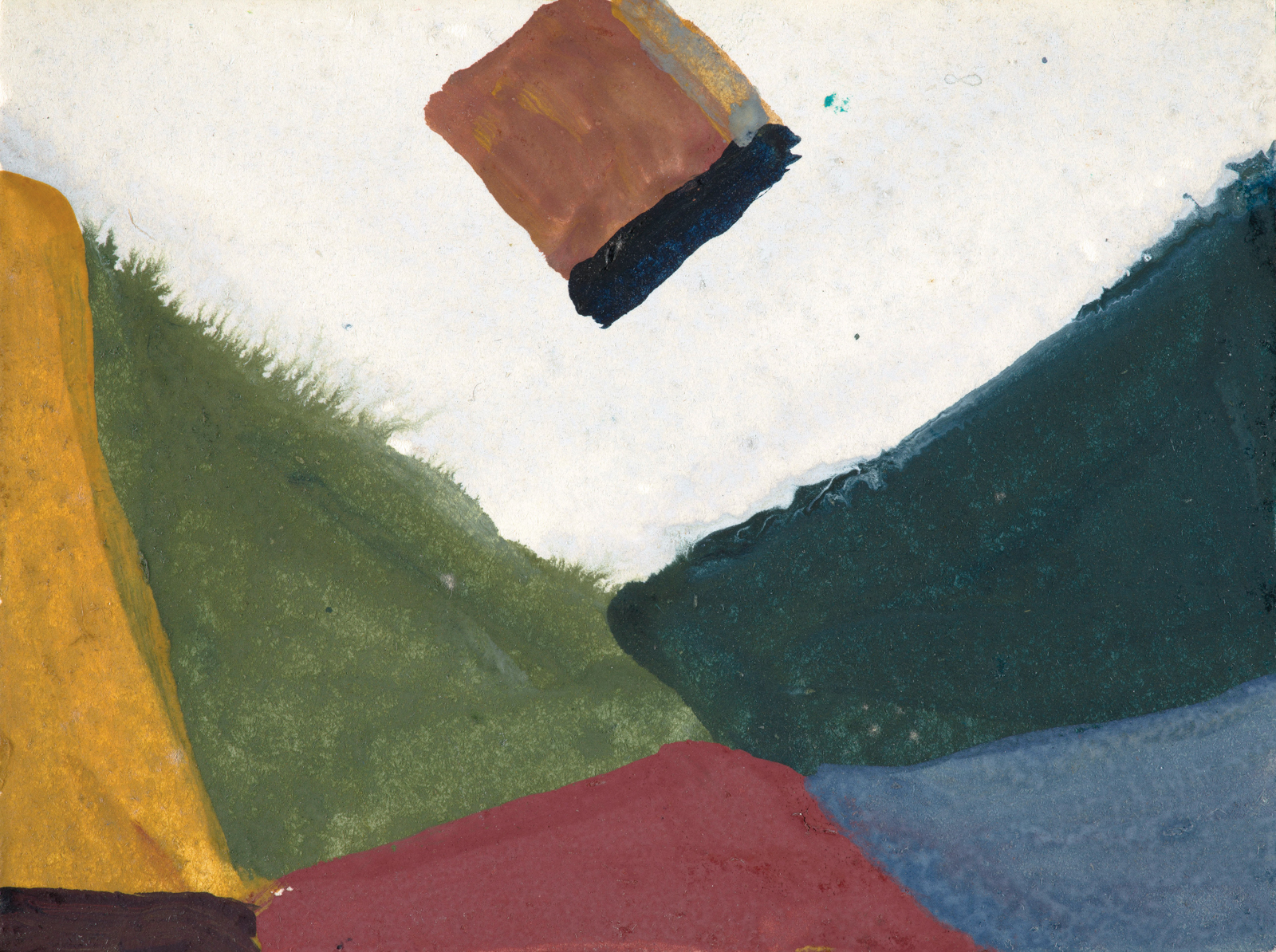
Image 1: Arthur Dove (1880-1946), Untitled, ca. 1940-43. Mixed media on paper. Amon Carter Museum of American Art, Fort Worth, Texas. Gift of William C. Dove, 1987.63.
Illness confined Dove to a tiny waterfront cottage in Centerport, Long Island, where he lived with his wife, artist Helen Torr. During these years, Dove occasionally explored and was inspired by the immediate environs of the cottage—for brief periods only did he feel up to working on full-size canvases. When I say small works, I mean small. As in 3-by-4-inches small. Post-it size. Doodle size. You’ve doodled—you know you have. You might be doodling now. Or wishing you were doodling. Did you ever doodle, look at it, and think, “That’s kind of interesting?” And then try to repeat it, only to find that the second doodle wasn’t the same. And then you tried again. Soon, you had a series of doodles, a sequence of essays that seemed to reveal something about you, your state of being, state of mind—or both.
Doodle. Somewhere between noodle and dawdle. That’s my etymology. I didn’t look it up and I’m not going to. You go right ahead. Seriously. This’ll wait. By noodle I mean sort of poking around, winkling out an idea; by dawdle I mean taking a longer linger than you and the world might think is necessary. Pressing on, the “laboratories” in the exhibition title are aspects of Dove’s unconscious, expressed in the “essays”—the attempts, the tries—that become the miniature works on display. Some of the paintings have origins in the natural world Dove saw out his window as well as on and from his property. Others seem rooted in abstract forms and combinations of forms.
Works such as those in Arthur Dove: Miniature Laboratories allow us to see into the artist’s process. This is what we mean by “process,” a word we arts writers throw around just a bit too lightly, as if every sketch offers insight. But here, you can imagine Dove in the smallness of his house, in his circumscribed world, in the throes of illness, excitedly cutting his sheets of watercolor paper into 3-by-4-inch rectangles—a size without stakes, a throwaway size, a laboratory size, just right for experimentation.
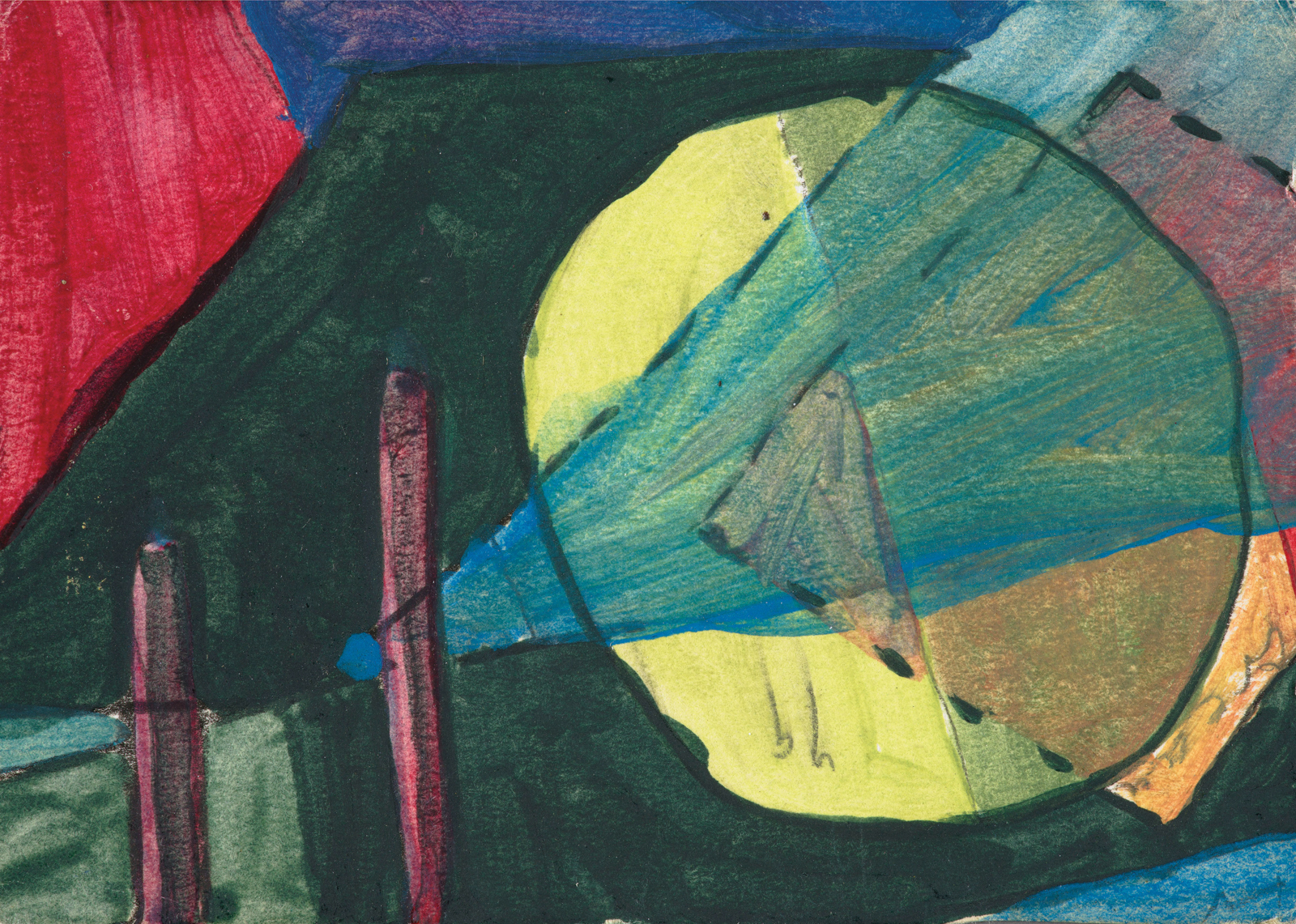
Image 4: Arthur Dove (1880-1946), Untitled, 1943. Mixed media on paper. Amon Carter Museum of American Art, Fort Worth, Texas. Gift of William C. Dove, 1987.36.
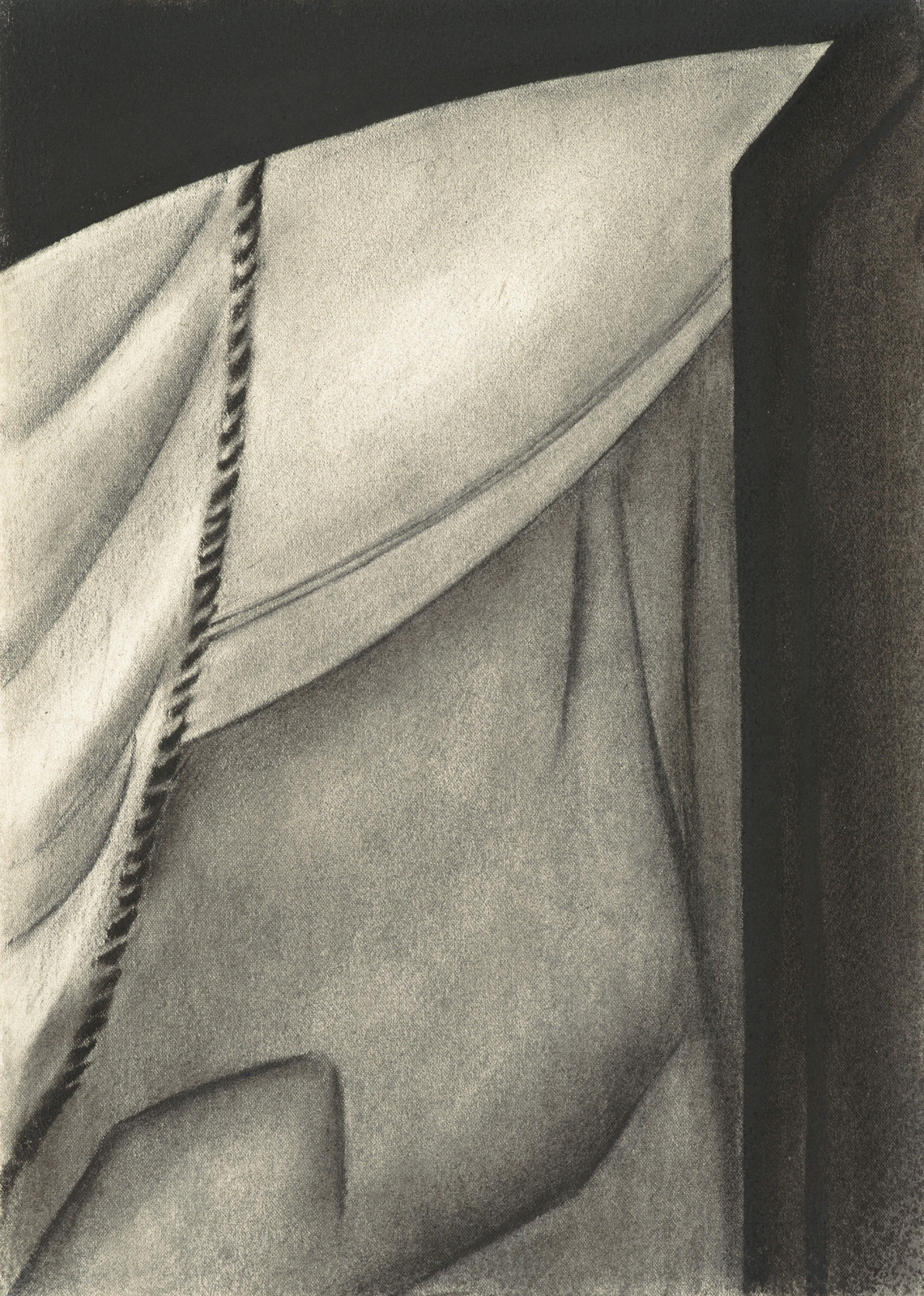
Image 2: Helen Torr (1886-1967), Through the Door, ca. 1928. Charcoal on paper. Amon Carter Museum of American Art, Fort Worth, Texas, 1985.24, © Courtesy of John and Diane Rehm.
To honor Dove’s facture, I propose something similar as I consider individual works in the exhibition. I’m going to limit myself to 120 words per piece, imitating the 3-by-4 ratio. The Amon Carter Museum provided one Helen Torr image, so I’ll include that for contrast. If nothing else, it’ll be an experiment. The works in the exhibition are, in large measure, untitled and undated, so I’ll add the exhibition number where necessary so you can match my essays to Dove’s—and Torr’s. I’ll write them in blocks of text to set them off from the introduction and conclusion. My intention was to start with the more realistic—to my eyes—paintings rooted in landscape. Then something else caught me and I lingered a little longer. Here goes.
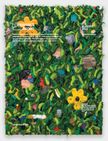
Untitled, ca. 1940-43, image 1. There’s something about this cube—or is it simply one of Dove’s rectangles of watercolor paper?—falling from the top edge of the paper, about to fit in, Tetris-like, into the crease—valley? gulley?—at bottom that angles up the paper symmetrically at either side. Or an alien sun in a colorless sky? My mind wants to make sense of it, make a landscape of it—yellow path at left, grassy hill, cleft, shadowed grassy hill, clay road narrowing, water at bottom right. The falling cube/square denies rationalization. “The sky is falling…!” Chicken Little. Hysteria. Dove’s miniatures are World War II products. the sky was falling—literally, on some. Those who had foreseen it were deemed hysterics. (119 words)
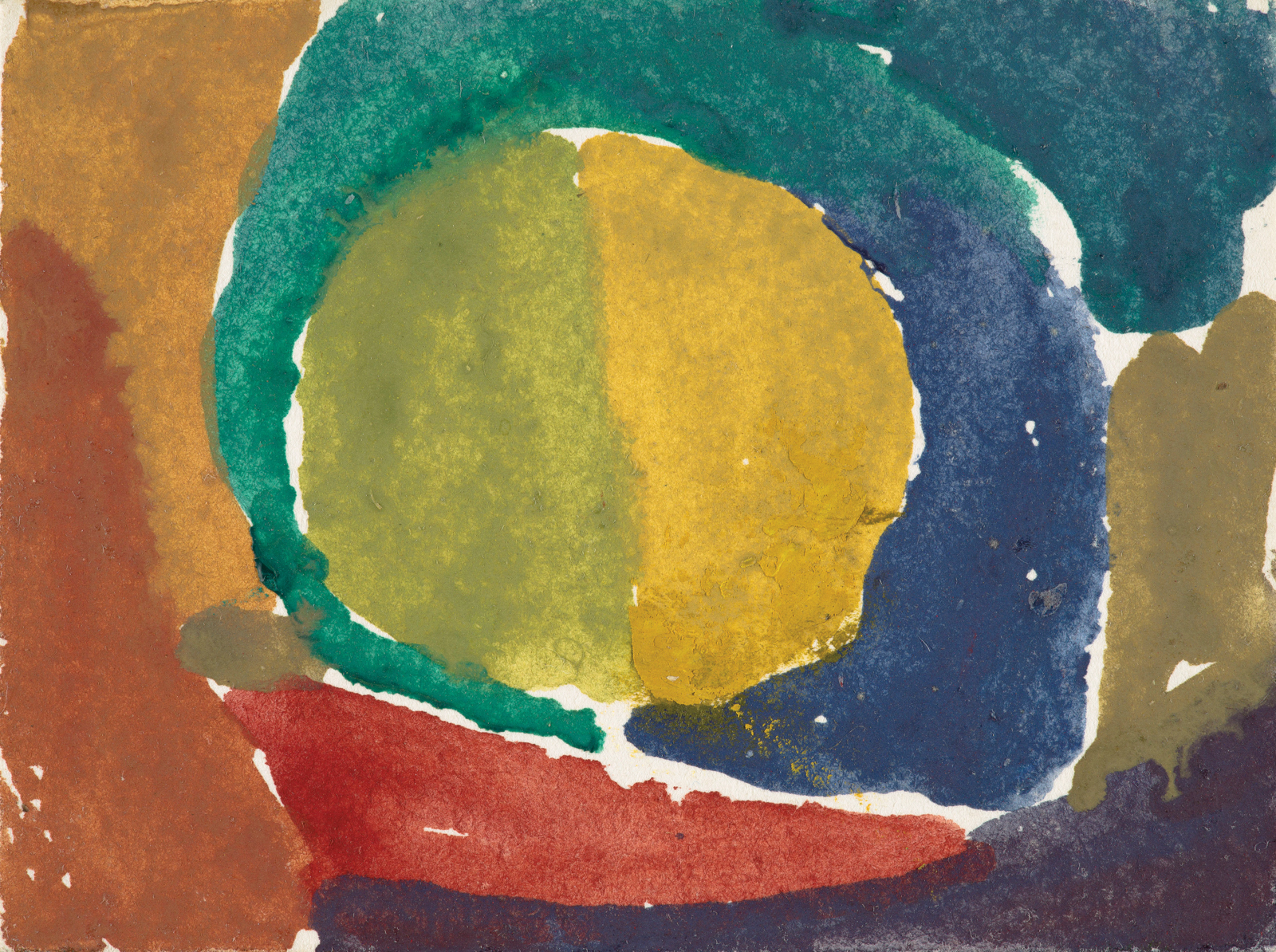
Image 5: Arthur Dove (1880-1946), Untitled, ca. 1940-43. Mixed media on paper. Amon Carter Museum of American Art, Fort Worth, Texas. Gift of William C. Dove, 1987.50.
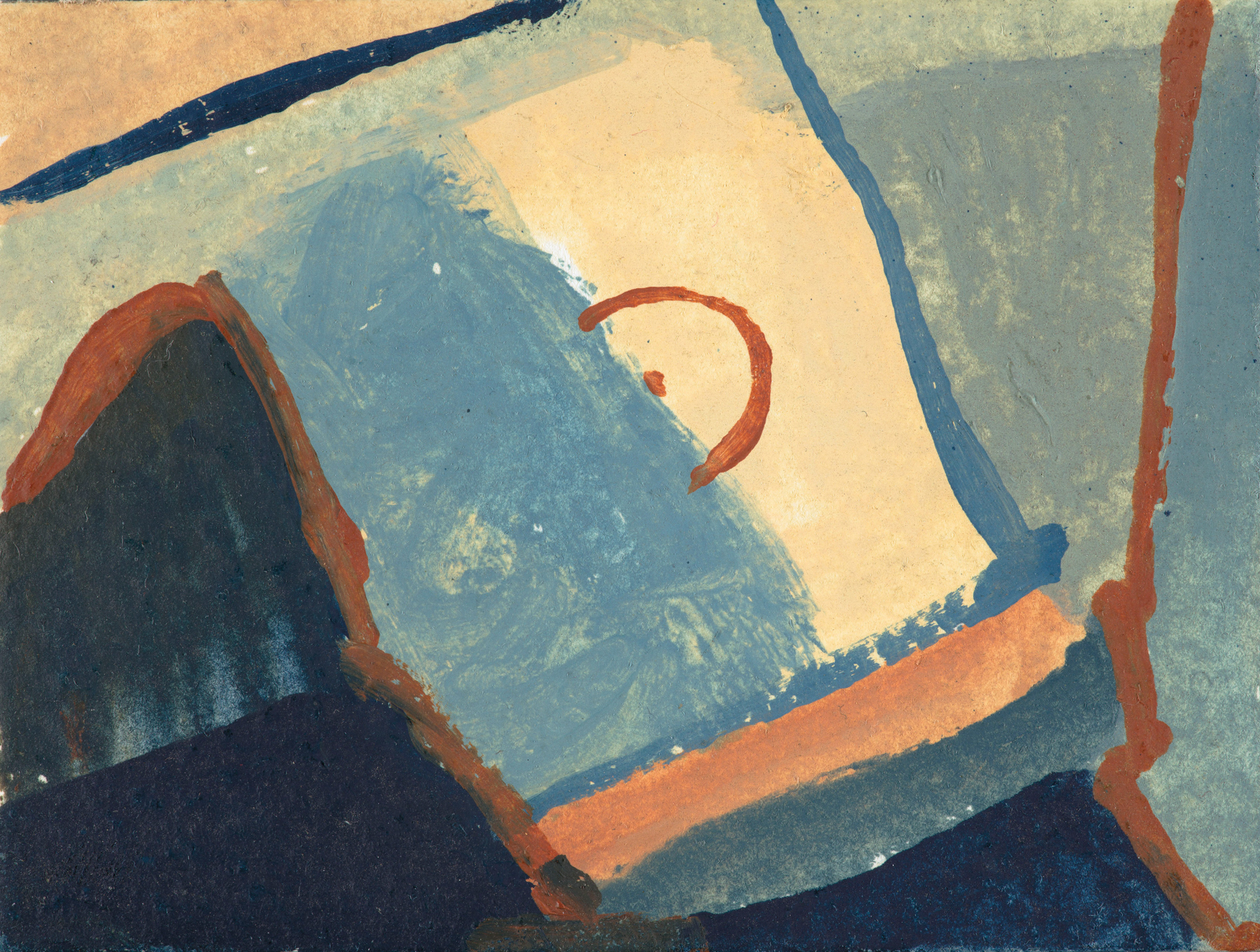
Image 6: Arthur Dove (1880-1946), Untitled, ca. 1940-46. Mixed media on paper. Amon Carter Museum of American Art, Fort Worth, Texas. Gift of William C. Dove, 1987.62.
Untitled, ca. 1940–46, image 3. Didn’t grab me at first. Drab, didn’t grab. Then, intention. Rules ruled. Lines underneath color. Dividing paper, picture plane, into four quadrants. Then the vertical line in the bottom right quadrant, like a mast. Then the regular sine wave through the top two quadrants—a frequency, a transmission. Is Dove looking at a wave in the sea, wondering what the wave might be broadcasting? Two brown trapezoids above the mast. Sails. The bisected blue/green field at lower right. Land. Thin gray rectangle between sails and waves—breaking surf? Breaking news? Thin cream rectangle between land and waves—light breaking on water. Blinding. Diagonally, upper left/lower right—browns. Diagonally, upper right/lower left—blues and greens. (117 words)
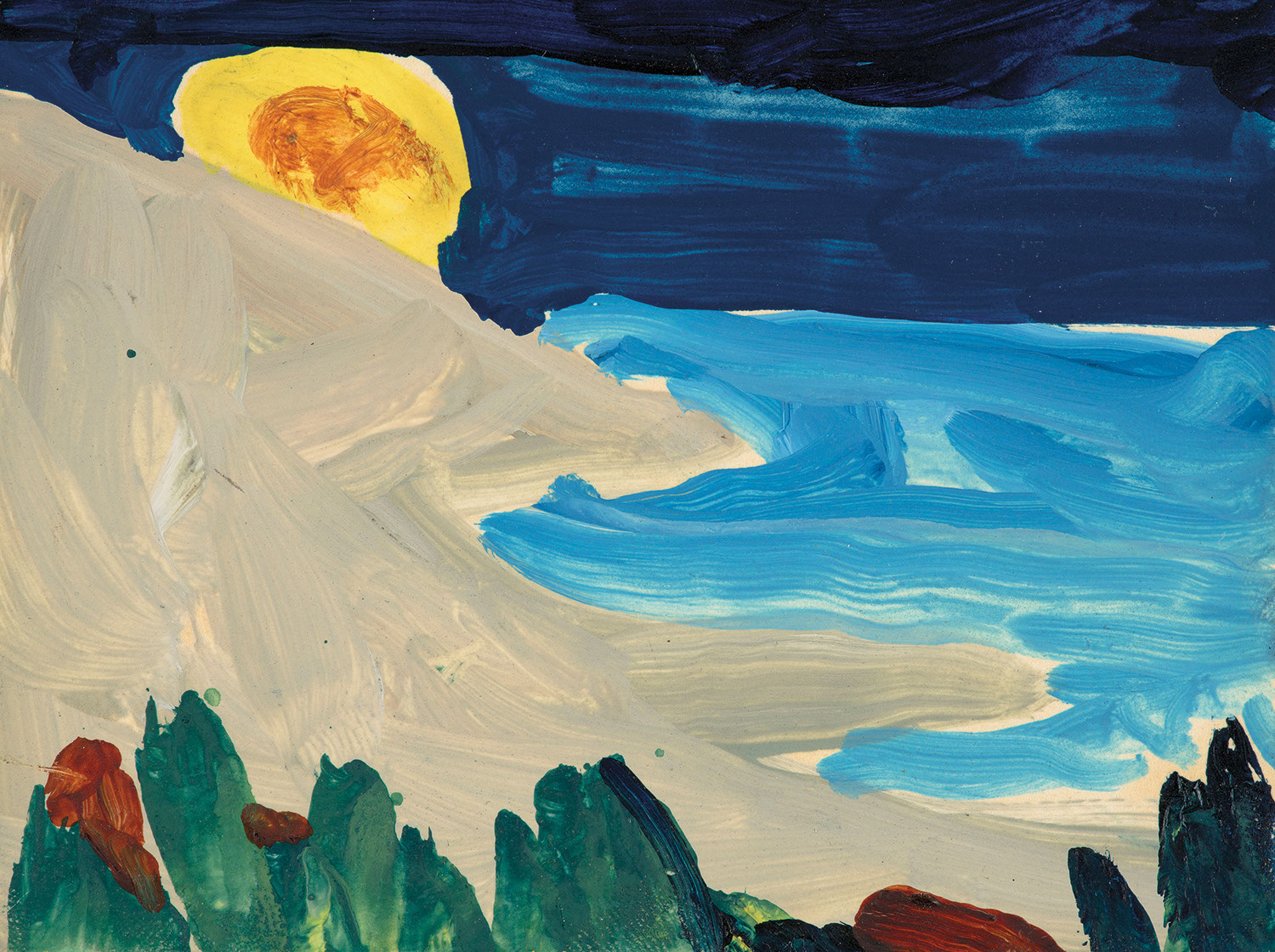
Arthur Dove (1880-1946), Untitled Sketch, ca. 1940-46. Mixed media on paper. Amon Carter Museum of American Art, Fort Worth, Texas, Gift of William C. Dove, 1987.41.
Untitled, ca. 1940-43, image 5. This is the painting that prompted me to pitch Arthur Dove: Miniature Laboratories as a feature in this magazine. Why? Look at my essay on O’Keeffe in the last issue. Or, go to MOMA’s website and look at the images for Georgia O’Keeffe: To See Takes Time. You will see the resemblances, the congruencies. Where did Dove start? With the subtle yin/yang grass/mustard circle, working outward? Or did he work from the edges in? Did this painting begin with a perception of sun, eye, yolk of an egg? With water circling a drain? With an idea forming, an image, perhaps—spiraling centripetally? centrifugally? (105 words)
Untitled, ca. 1940-46, image 6. Out on a limb. Challenge: choose the painting that makes the least sense, that I find the least sense in, sense as in order, as in metaphor, metonymy, synecdoche: whole standing in for whole, association for whole, part for whole. At first, masses and lines contest in two dimensions. Then, layers come to dominate—what’s hidden under the dark blue claws, mountains, fangs? Are they about to shroud the whole? Above, the sensation of rectangles atop rectangles. All of this suggested, I think, by the brown half circle and dot—rising? setting? emerging? disappearing?—just off-center. Rising and setting. I want it to be a sun, star, light. It isn’t, of course. Mass versus Line. Liturgy versus Verse. Loop. (120 words)
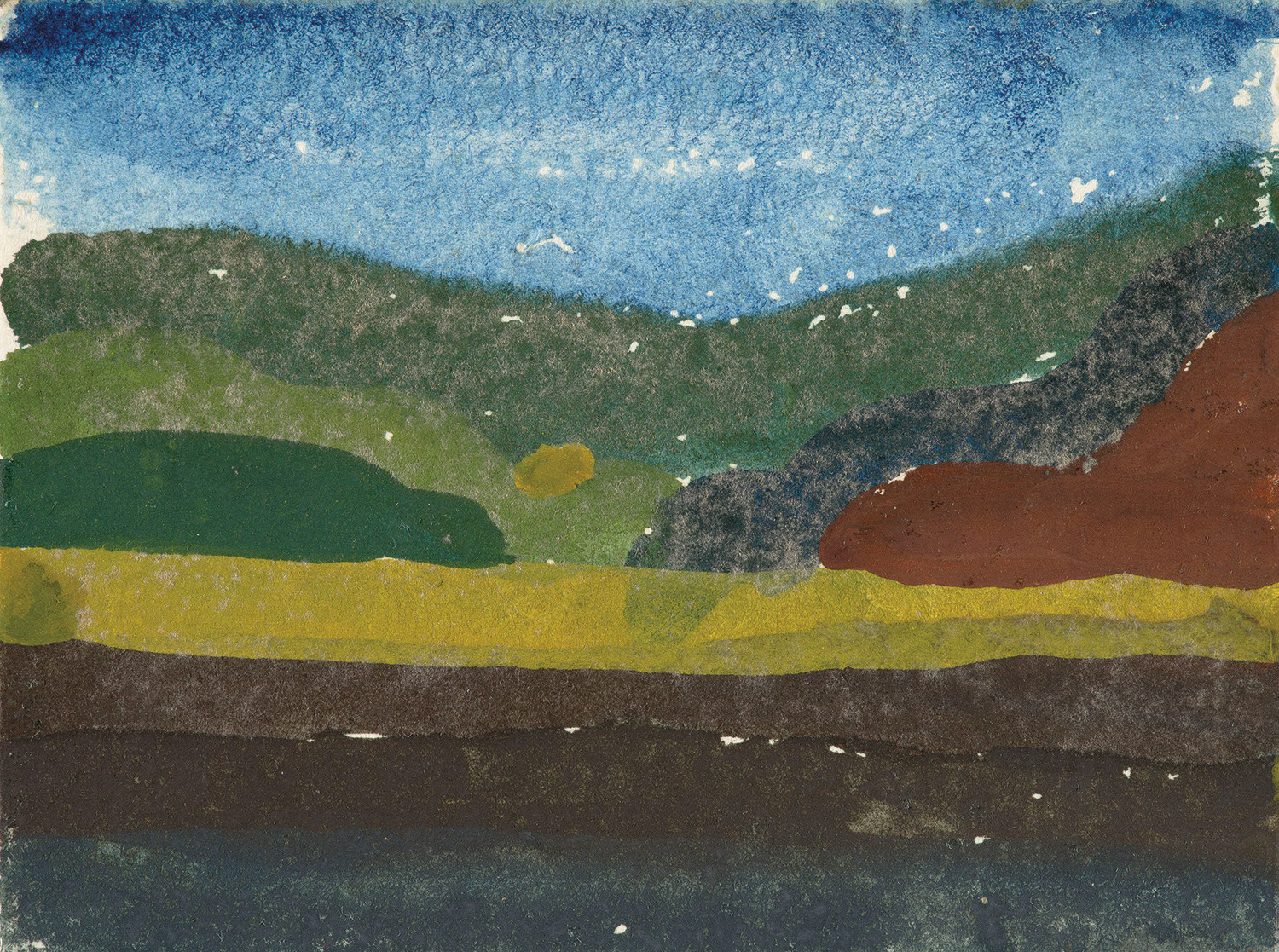
Arthur Dove (1880–1946), Untitled, ca. 1940-46. Mixed media on paper. Amon Carter
Museum of American Art, Fort Worth, Texas. Gift of William C. Dove, 1987.44.
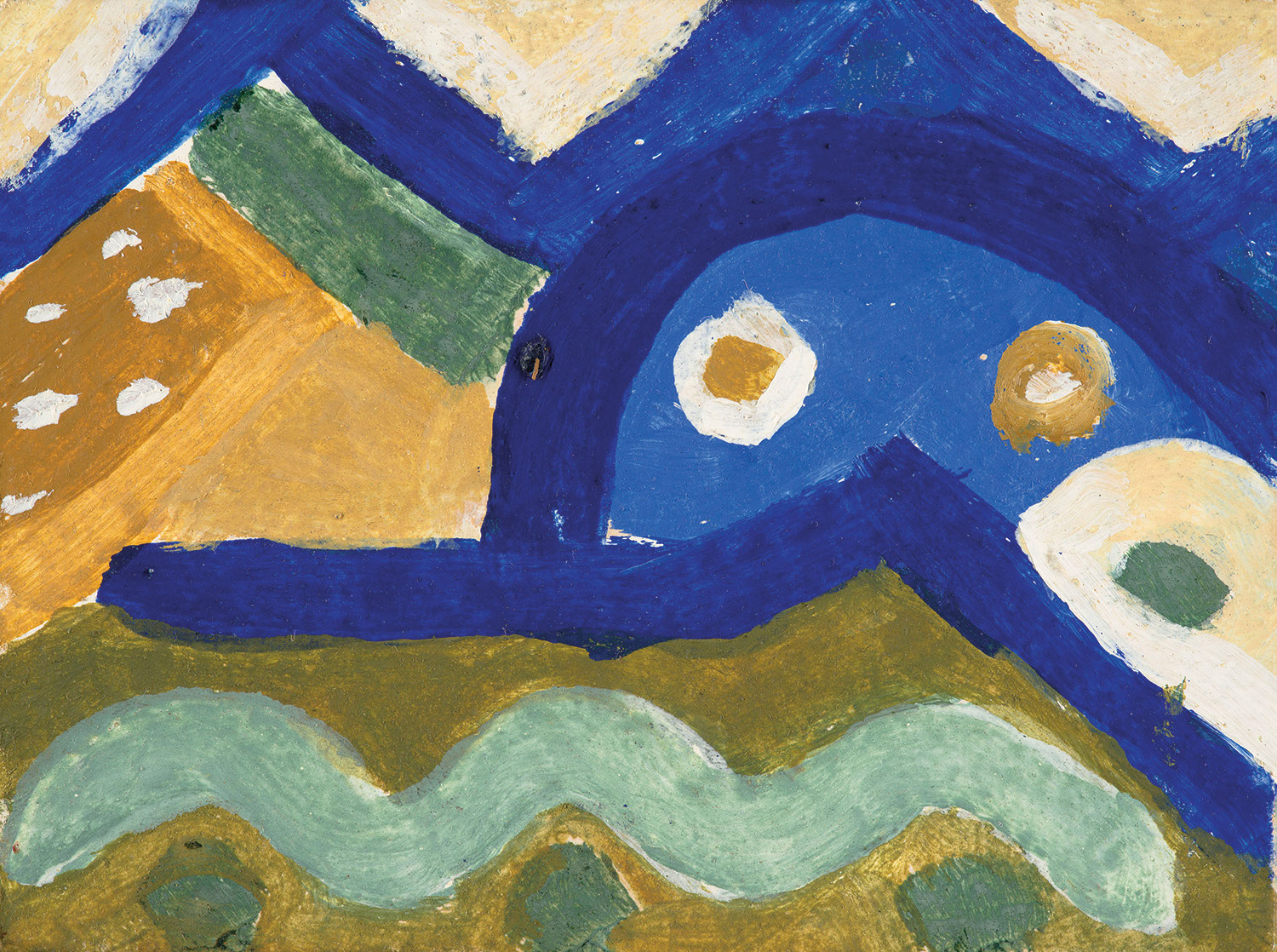
Arthur Dove (1880-1946), Untitled, ca. 1940-43. Mixed media on paper. Amon Carter Museum of American Art, Fort Worth, Texas. Gift of William C. Dove, 1987.66.
Could I go on? I could. But these 3-by-4 essays—in this noodling, dawdling, doodling dynamic—aren’t as easy as they look. I have had to trust my unconscious to leap like a blind frog from lily pad to lily pad without falling in and then trust words to array themselves to convey a shadow of the forms emerging from the chaos of the unconscious. Memory, imagination, adaptation, creation. Jumbled up. Staying in the lines and limits, when you set those lines and limits yourself, takes a certain discipline, discipline that leads to discovery, discovery that leads, in my case, to the revelation and, I hope, further refinement of voice. In Dove’s case, his discoveries led to—and indeed, can be seen as—the final poetic iterations of his artistic practice.
Note: For those who can’t get to the Amon Carter, know that in the fall of 2023, the works in Arthur Dove: Miniature Laboratories will also appear in Salt Life: Arthur Dove and Helen Torr—Works on Paper at the Heckscher Museum of Art in Huntington, New York, Salt Life will add more to the story of Dove and Torr’s shared life in art.
Powered by Froala Editor