The BYU Museum of Art continues its “From the Vault” series with American Highlights and Recent Acquisitions, an exhibition that unearths works from the museum’s collection that haven’t been on view in some time or ever before.
This provides an opportunity to bring out audience favorites including works by Minerva Teichert, Daniel Ridgeway Knight, John Singer Sargent and Norman Rockwell, as well as introducing newly acquired paintings and sculptures from artists Ernie Barnes, Elizabeth Catlett and Joseph Paul Vorst. The show includes 18 works, the earliest two paintings by Connecticut impressionist J. Alden Weir from 1882 and the newest, an Elizabeth Catlett sculpture from 2002.
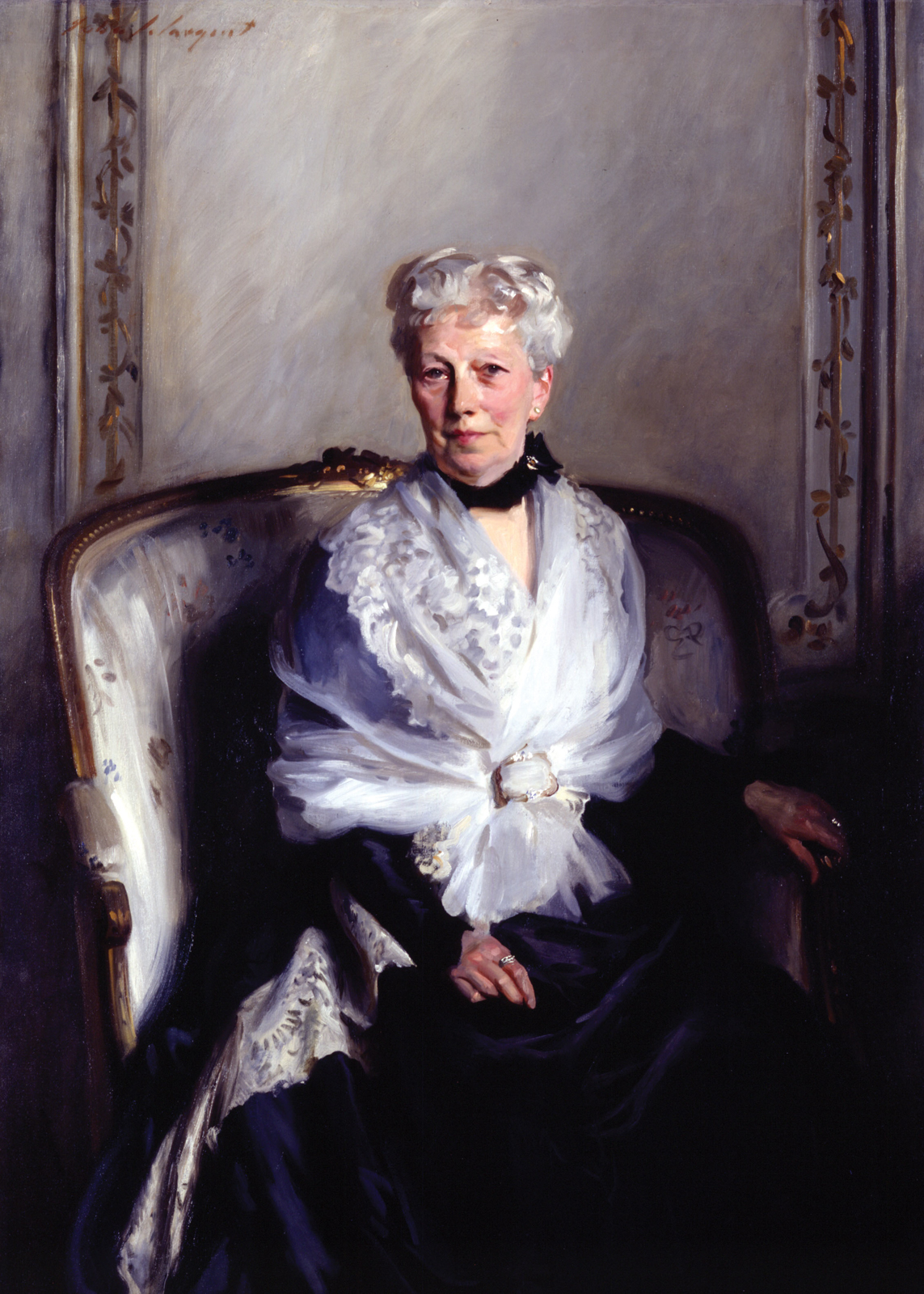
John Singer Sargent (1856-1929), Mrs. Edward Goetz, 1901. Oil on canvas, 58 ½ x 42 in. Brigham Young University Museum of Art, purchased with funds provided by Jack R. and Mary Lois Wheatley, 2000.
“We have over 16,000 pieces in the collection. While we have multiple large galleries and change our shows frequently, you can imagine our storage facility is always full,” says Kenneth Hartvigsen, curator and assistant professor of art history. “The ‘From the Vault’ exhibitions allows us to highlight lesser-known treasures, introduce our audience to recent acquisitions and keep fan favorites on view between other long term installations.”
Curators enjoy these freeform exhibition because they have the creative freedom to select works and place them side-by-side, as if orchestrating a compelling conversation. “I was excited to create new dialogues using artworks that are familiar to our audience,” says Hartvigsen. “It is vital to our mission as a museum and an educational institution to present our collection as a living organism of sorts.”
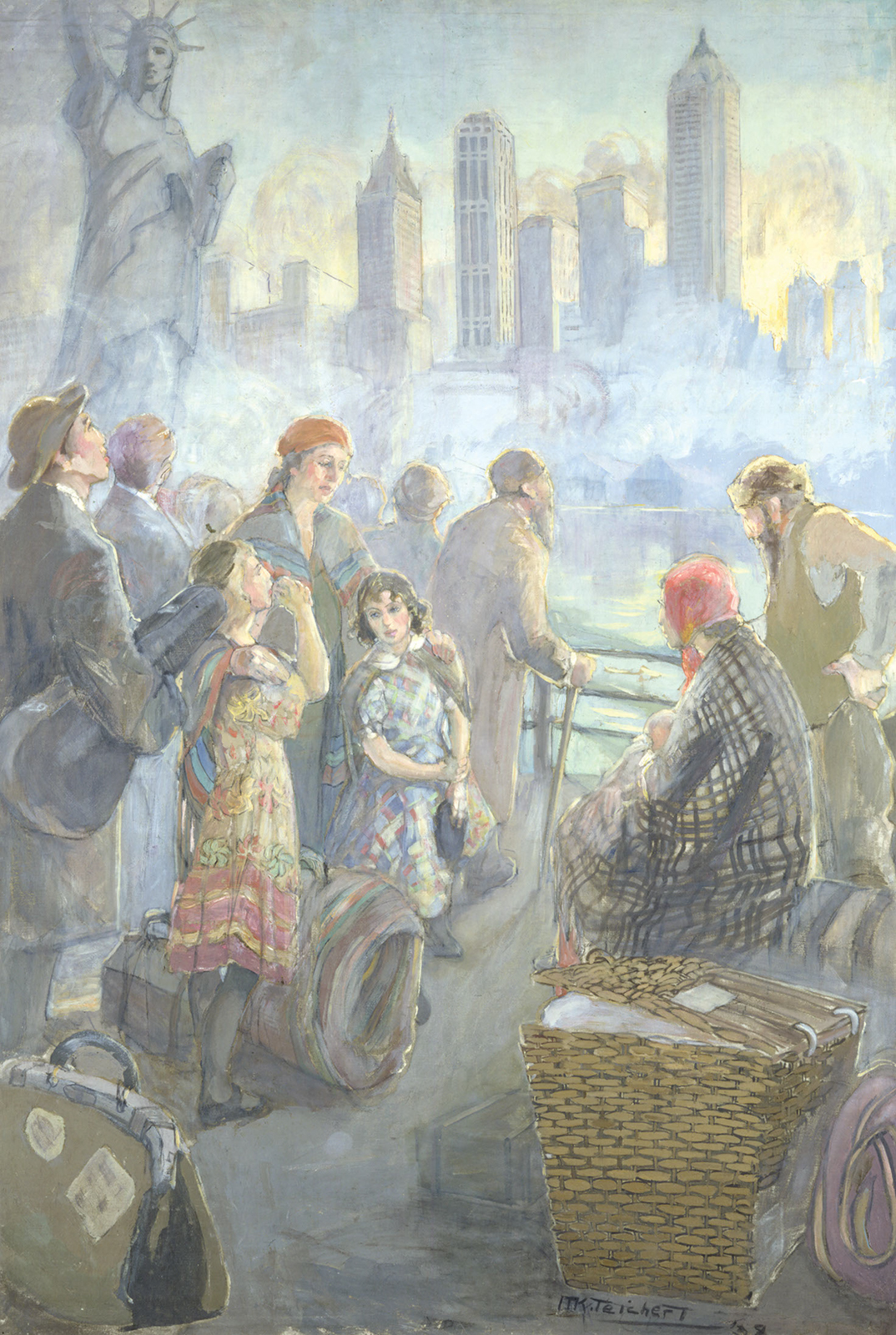
Minerva Teichert (1888-1976), Immigrants to New York City (Jewish Refugees), 1938. Oil on canvas, 59¼ x 37¼ in. Brigham Young University Museum of Art.
For example, many will be familiar with the three Teichert paintings in the show, but they have never been on display together. “This is not surprising when you consider how they differ,” explains Hartvigsen. “Two of the works represent Old Testament narratives, while the other shows immigrants on a ship entering New York Harbor. Bringing them together, however, allows us to not only discuss their individual strengths, but to more clearly introduce the historical context, which is that Teichert painted these all in the mid-1930s as a reaction to the rise of Nazism in Germany. Her son, while serving a mission for the Church of Jesus Christ of Latter-Day Saints in Germany in the ’30s, described in letters the increasing antisemitism he witnessed. This motivated Teichert to produce these works, as she ruminated on historical and contemporary mistreatment of Jewish peoples, and hoped that America might provide a safe home for European refugees.”
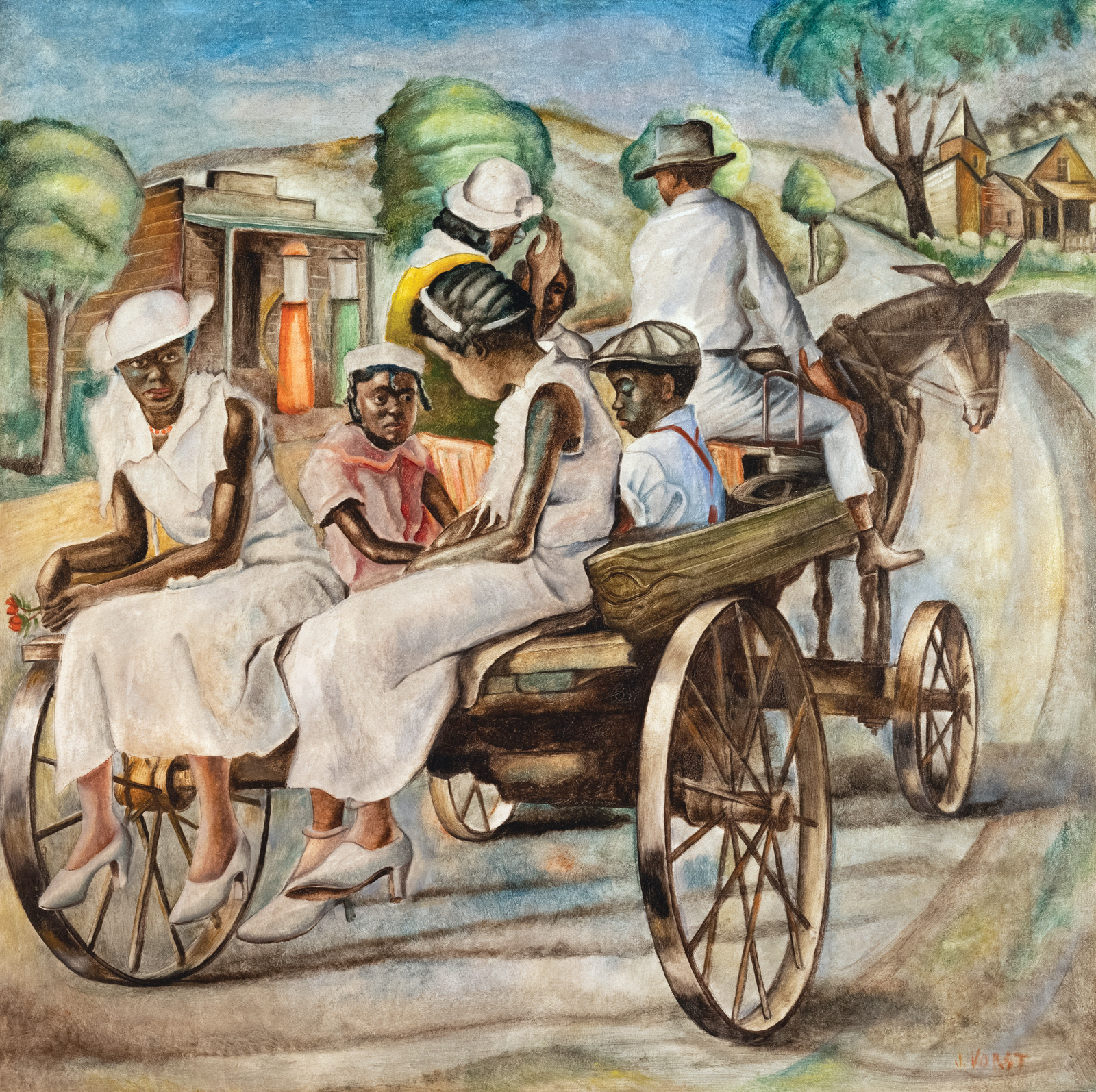
Joseph Paul Vorst (1897-1947), Family on Horse Drawn Cart. Oil on board, 32¼ x 32¼ in. Brigham Young University Museum of Art, purchased with funds provided by Joyce and George Hill, 2020.
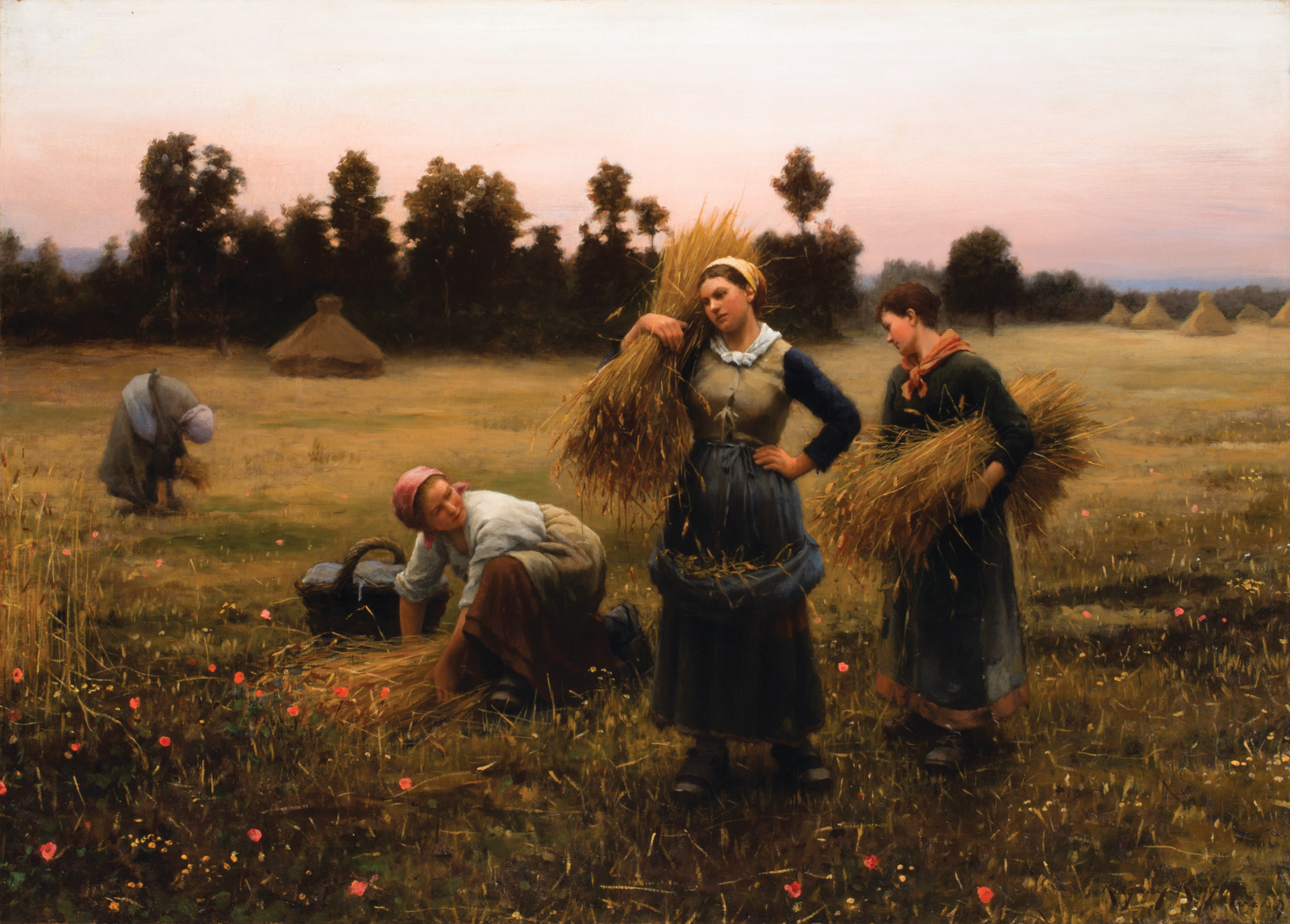
Daniel Ridgeway Knight (1839-1924), The Harvesters. Oil on canvas, 33½ x 46¾ in. Brigham Young University Museum of Art, with funds provided by Jack and Mary Lois Wheatley, 2011.
In other cases, Hartvigsen decided to hang fan favorites immediately next to new acquisitions to encourage discussion. Vorst’s Family on Horse Drawn Cart is relatively new to the museum’s collection and hangs near J. Alden Weir’s Flora. “A pairing like this may invites discussions on many topics, not limited to race, class, or artistic technique and style,” Hartvigsen says.
Powered by Froala Editor
Powered by Froala Editor