When we gaze at the paintings of Thomas Cole, Frederic Church and Albert Bierstadt, we are present before images of the greatest spectacles of our continent’s vast landscape. We know we are in the presence of primordial power, and mere words are not enough to describe the immensity and might of nature—they are paintings of a sublime new world.
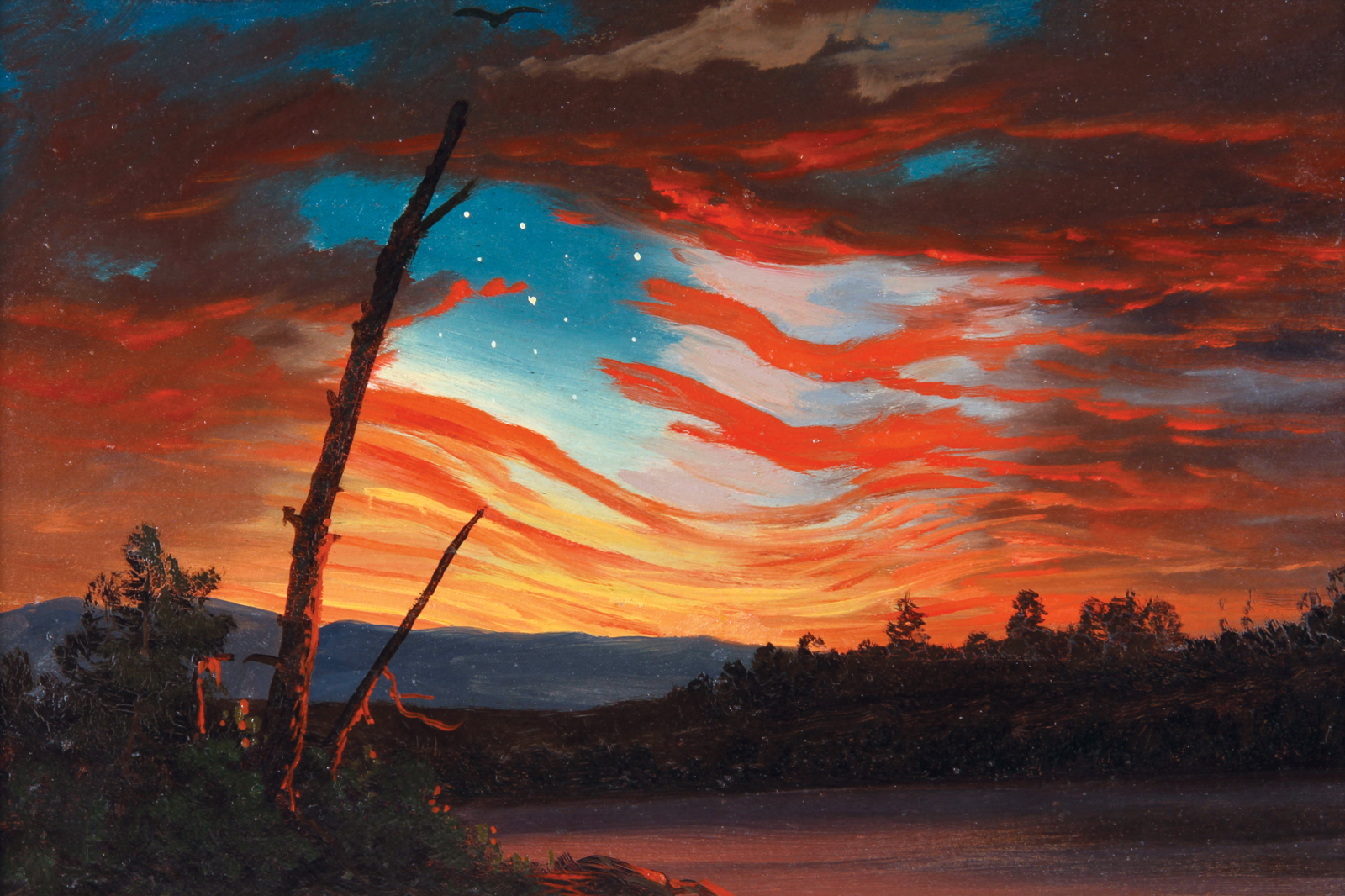 Frederic Church (1826–1900), Our Banner in the Sky, 1861. Oil on paper, 7½ x 11 in.
In 1757, Edmund Burke published a little book with a grand title—A Philosophical Enquiry into the Origins of our Ideas about the Sublime and Beautiful—which shaped the ideas of the Romantic movement that emerged among bohemian artists during the social upheavals of the new era of industrialization. Although sensibly conservative Burke was far from being an irresponsible libertine for whom sensation trumped responsibility, he introduced the alarming idea that humans took pleasure in experiences that were founded in pain, suffering and horror. To Burke, the sublime was enhanced by obscurity, which hid fantastic power in the chaos of transformation and inspired fear.
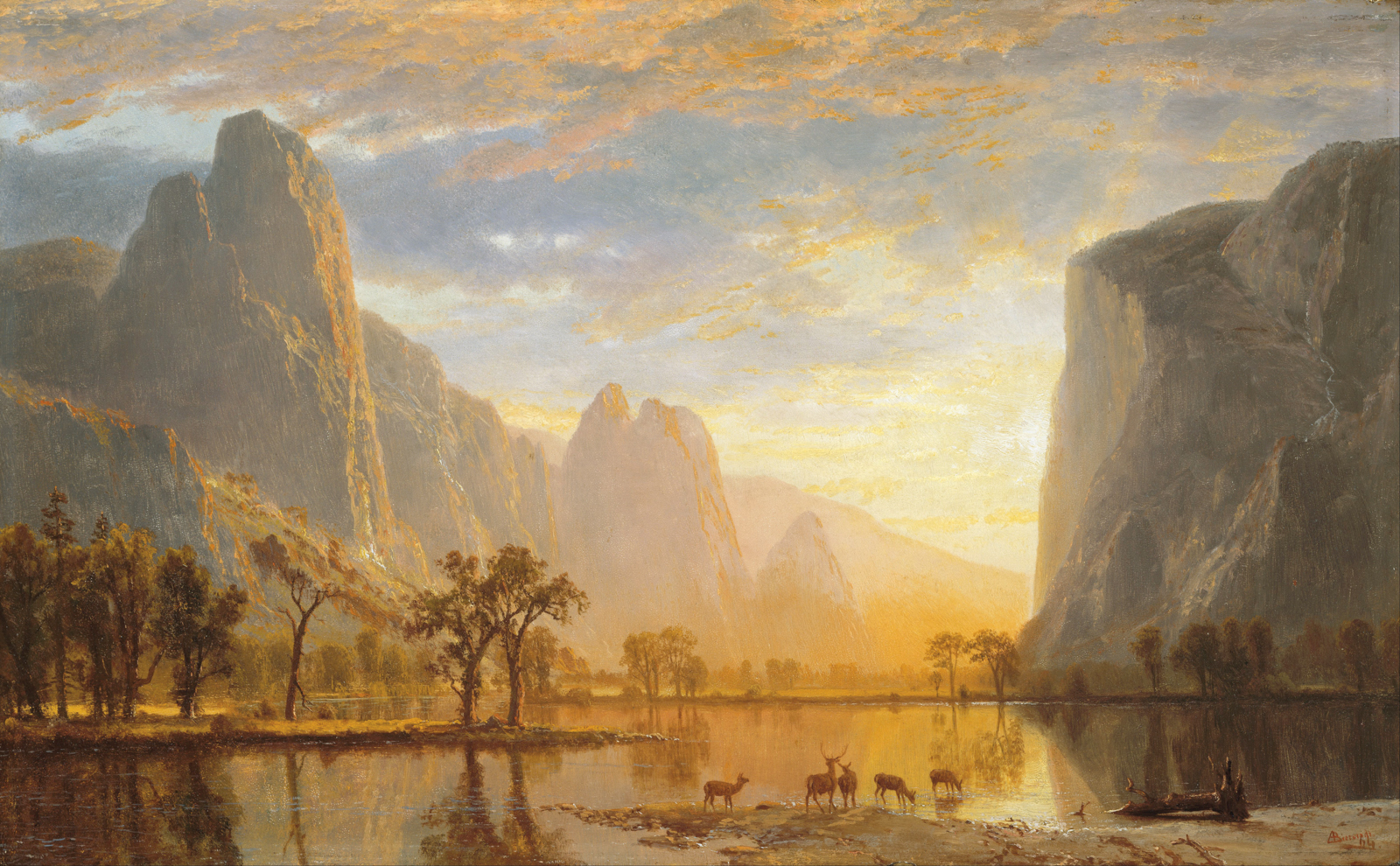 Albert Bierstadt (1830–1902), Valley of the Yosemite, 1864, Oil on paperboard, 12 x 19¼ in. Museum of Fine Arts, Boston, Massachusetts.
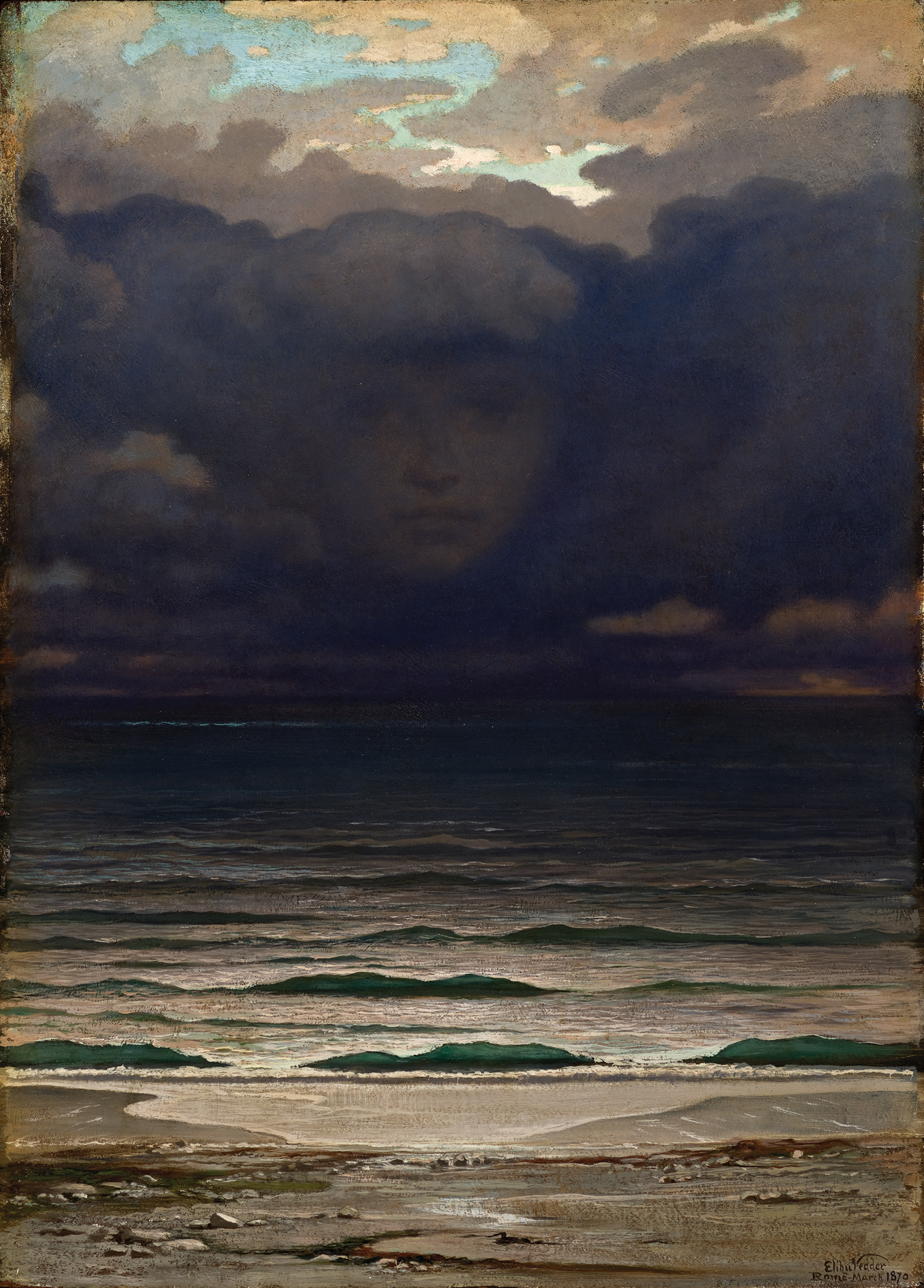 Elihu Vedder (1836–1923), Memory, 1870. Oil on panel, 201/3 x 14¾ in. Los Angeles County Museum of Art, Los Angeles, CA.
Romantic bohemians scorned the evolving ideas of socialist uniformity, preferring to enjoy the self-expression of radical individualism, and Burke’s book provided them with a handbook for the passionate life. The sublime was the door which opened to the Romantic life. Romantic artists saw a successful painting, poem or sculpture as one that provoked strong emotional responses in its audience, which made a deeply sensual appeal born of and giving birth to passion. They lived for grand gestures, heroic spectacle and tragic love. To sacrifice everything for art was a cause worthy of death. When the bohemian poet Thomas Chatterton found his end in a London garret, tearing any literary remnants into shreds before downing the arsenic, he followed the Romantic impulse to live at the edge of ultimate sensation, facing the sublime power of death and sacrificing everything for his art. When the Romantic poet Percy Shelley drowned in a tempest off the Italian coast he was said to have perished with a copy of Keats’ Lamia in his pocket and that his heart survived his body’s cremation on the beach, and was carried to England like the relic of a saint. His was a sublime and heroic ending, and it cemented his reputation. At their best, the Romantics produced dramatic art which dovetailed neatly with the overwhelming power of the sublime experience. At worst, they created wretched self-indulgence. Burke’s brilliant book was their bible.
The Romantics who loved Burke’s sublime longed to dwell on the edge of fear, to feel the sensual thrills of horror—when nature’s rivers flooded and their muddied torrents crushed the feeble ramparts of levees and carried homes away; when her surging hurricanes and tornados tore through cities and whipped the seas; when the earth shook and lava flowed, and fires wiped forests into ash and char, and avalanches renewed the impermanent shapes of the land. Humanity’s greatest feats of engineering were dwarfed and supreme nature sang the violent scales of the sublime, and wonder overtook them and they stood speechless and overwhelmed by the songs of those cataclysmic forces, which shaped tectonic plates into the sculpted majesty of mountains and deserts and canyons. This was living!
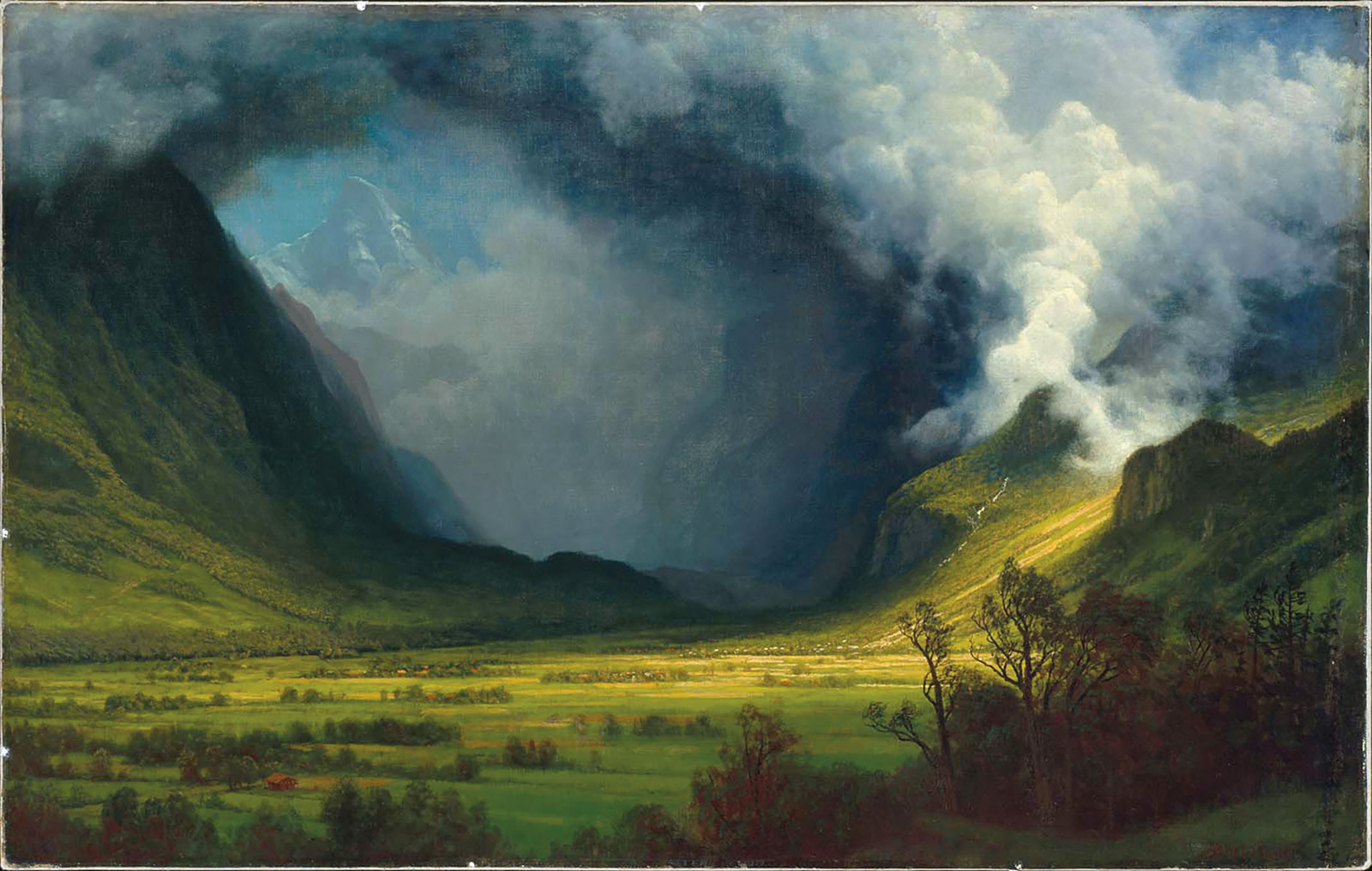 Albert Bierstadt (1830–1902), Storm in the Mountains, ca. 1870. Oil on canvas, 38 x 60 in. Collection Museum of Fine Arts Boston
Paintings by Cole, Church and Bierstadt are vivid depictions of the sublime spectacle of the wild American landscape, but they have little to do with finding pleasure in the experience of horror or fear, which was an important theme in Burke’s book. Burke’s assertions that pleasure and pain were intimately linked gave philosophical credibility to a dark European romanticism, with artistic surrenders to the pleasures of sublime fear like Henry Fuseli’s Nightmare, which introduced the pleasures of creepy horror into the bedroom, or Caspar David Friedrich’s gothic landscapes which dressed nature in the ghostly mists of fantasy and fearful mystery. America’s cities were too young and too fresh to sustain the decadent spirit of urbane internationalism which thrived in Europe’s capitals, where the bohemian subculture was the home of the greatest Romantic fantasists. A new, particularly American gothic sensibility arose in the literary sphere, as Edgar Allen Poe presented his tales of terror during the second quarter of the 19th century, and Melville offered his mighty Moby Dick, but the darkness and dubious morality of their romanticism contrasted sharply with the virtue of Christian values inherent to the Hudson River School, whose ideas of sublime nature were given a philosophical foundation by the writings of Washington Allston.
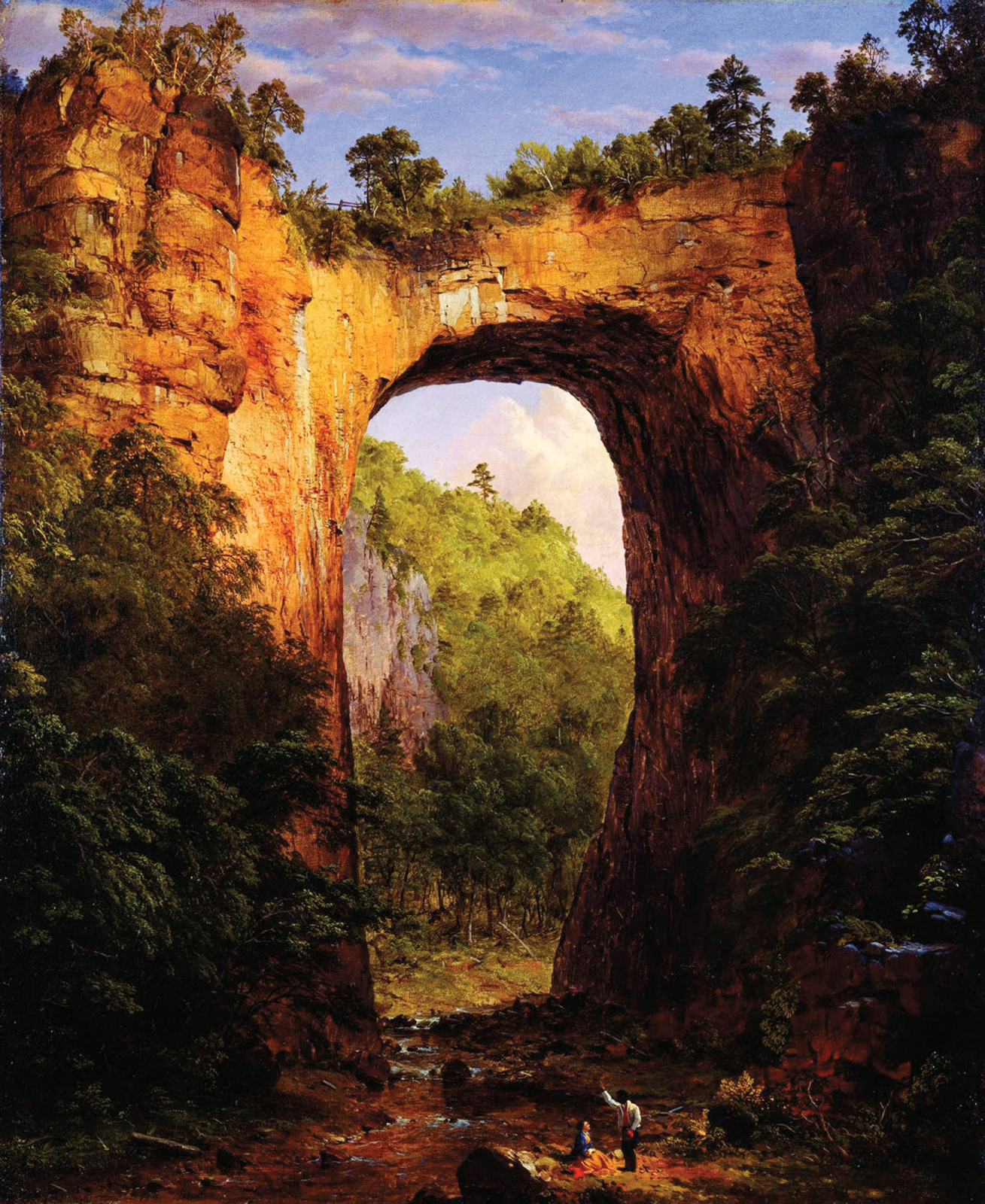 Frederic Church (1826–1900), The Natural Bridge, Virginia, 1852. Oil on canvas, 28 x 23 in. The Fralin Museum of Art at the University of Virginia, Gift of Thomas Fortune Ryan.
Burke’s ideas were fundamentally opposed to the gentler inspiration of the transcendentalists, whose experience of the sublime landscape was founded in a modest but evangelical Protestantism which treated the sublime with an altogether different vision. Allston painted it in his spectacular seascapes and imaginary landscapes, inventing the American Landscape as a heavenly vision of a primordial return to Eden, while his Rising of a Thunderstorm at Sea shaped the power of the rising oceans and the elemental sky into a fantasy of incoming force. His paintings were not inspired by Burke’s vision of the sublime, but explored a pathway which led toward the innocent Christian transcendentalism in the literature of Ralph Waldo Emerson and Henry David Thoreau, who saw the presence of the divine in everyday life, and found a benevolent God ever-present in nature. This was the sublime of the Hudson River painters.
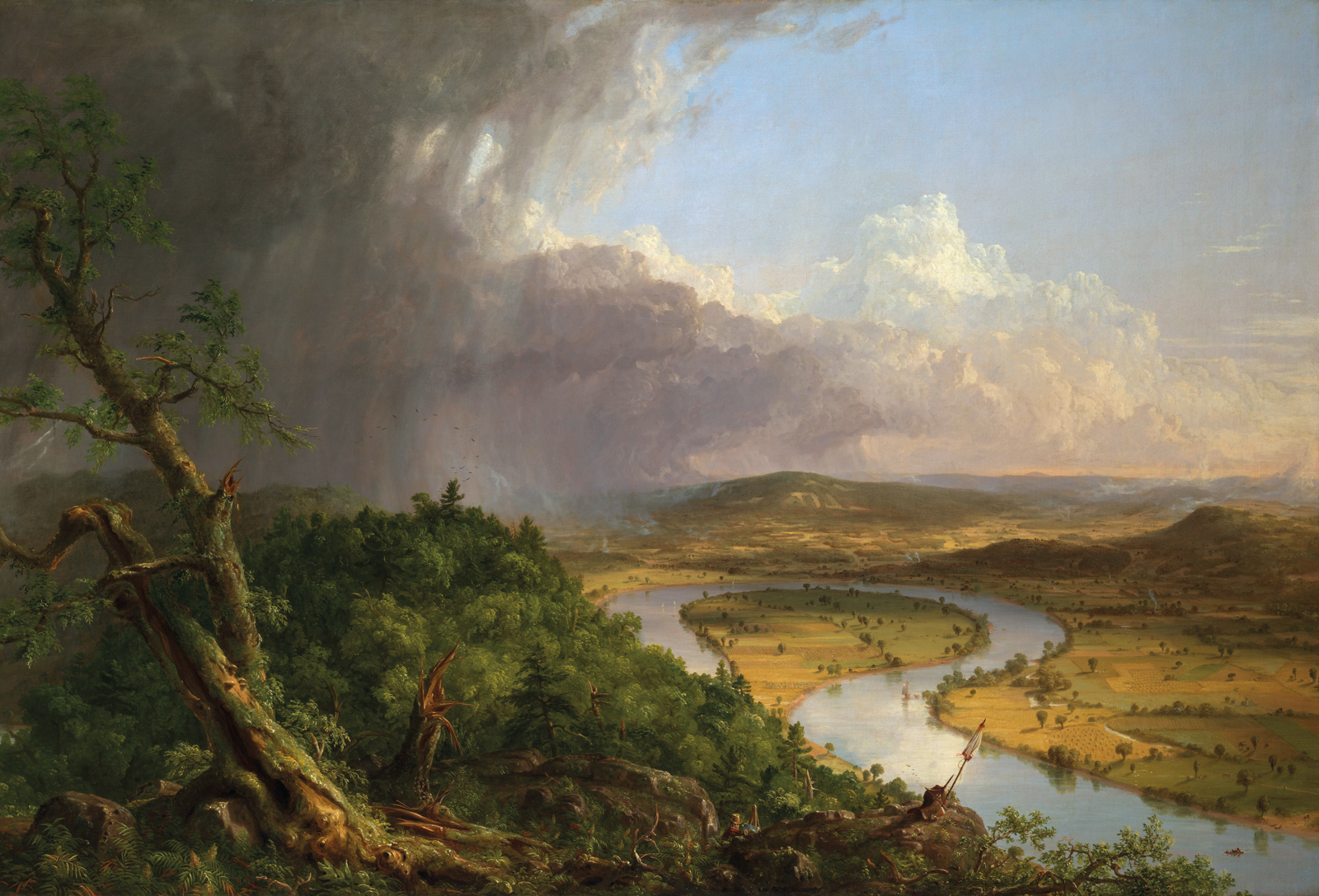 Thomas Cole (1801–1848), View from Mount Holyoke, Northampton, Massachusetts, after a Thunderstorm—The Oxbow, 1836. Oil on canvas, 51½ x 76 in. Metropolitan Museum, Gift of Mrs. Russell Sage, 1908.
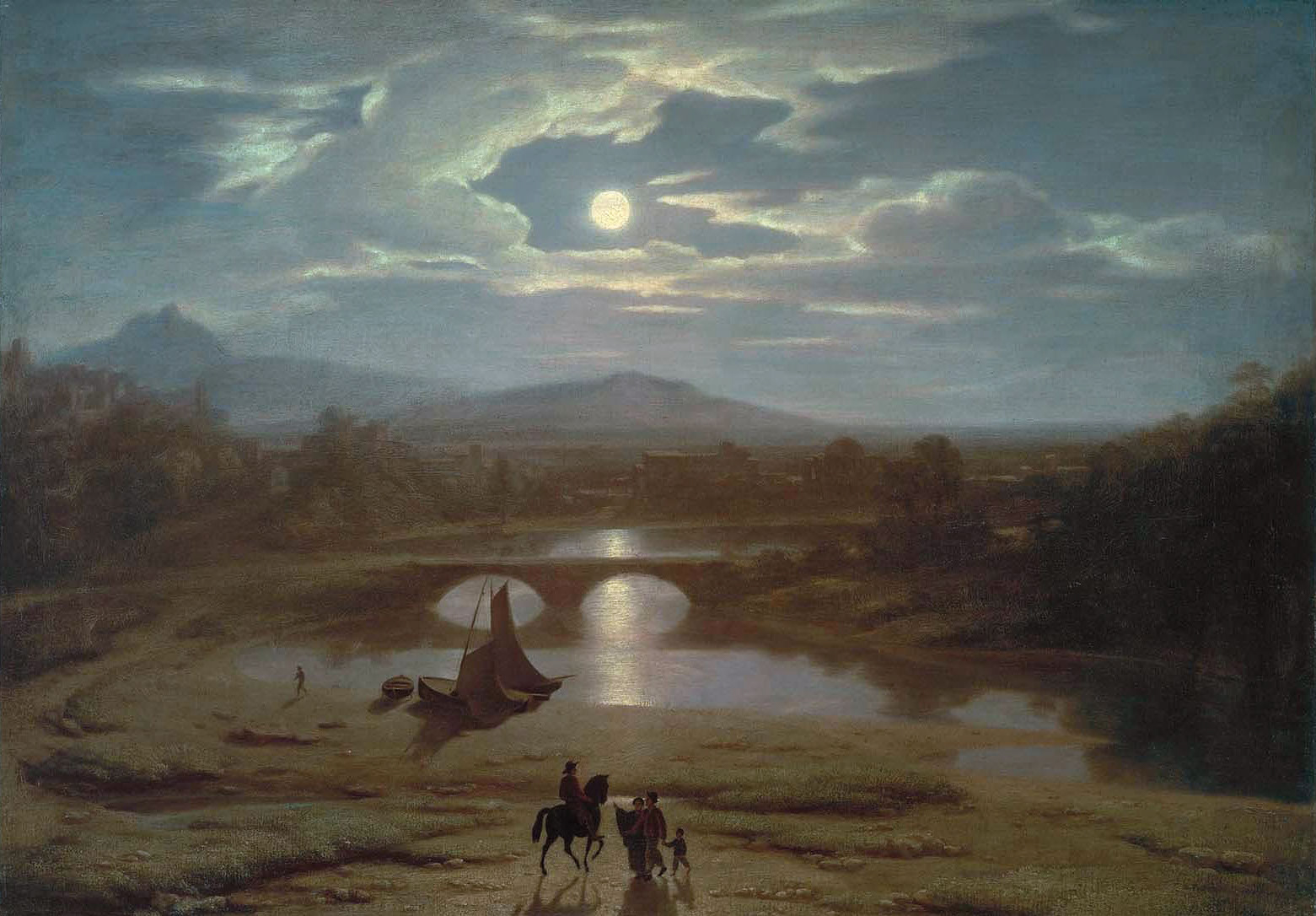 Washington Allston (1779–1843), Moonlight, 1819. Oil on canvas, 251/8 x 35¾ in. William Sturgis Bigelow Collection, Museum of Fine Arts, Boston.
Aside from being known as one of America’s finest painters, Allston was a popular poet and speaker, and when he gave a series of perceptive lectures on art he cemented his place as America’s finest prince of poetry, prose and paint. The lectures were posthumously published in 1850, a century after Burke’s shocking book. To Allston, enjoying horror was sinful and admitting pleasure in it was a sign of guilt. He retreated from Burke’s dependence upon horror and obscurity as the source of nature’s symphony of the sublime, and instead emphasized God’s power and authority as its origin. Allston’s divinely inspired sublime shied away from the luxurious sensuality of fear and placed man and art in service to the divine. His description of the sublime placed man in a position of respect and admiration for the power of nature and, by extension, its creator. Allston wrote in the awed language of an explorer, “…when we call some tall forest stately, or qualify as majestic some broad and slowly-winding river, or some vast, yet unbroken waterfall, or some solitary, gigantic pine, seeming to disdain the earth, and to hold of right its eternal communion with air; or when to the smooth and far-reaching expanse of our inland waters, with their bordering and receding mountains, as they seem to march from the shores, in the pomp of their dark draperies of wood and mist, we apply the terms grand and magnificent: and so onward to an endless succession of objects, imputing, as it were, our own nature, and lending our sympathies, till the headlong rush of some mighty cataract suddenly thunders upon us. But how is it then? In the twinkling of an eye, the outflowing sympathies ebb back upon the heart; the whole mind seems severed from earth, and the awful feeling to suspend the breath—there is nothing human to which we can liken it. And here begins another kind of emotion, which we call Sublime.”
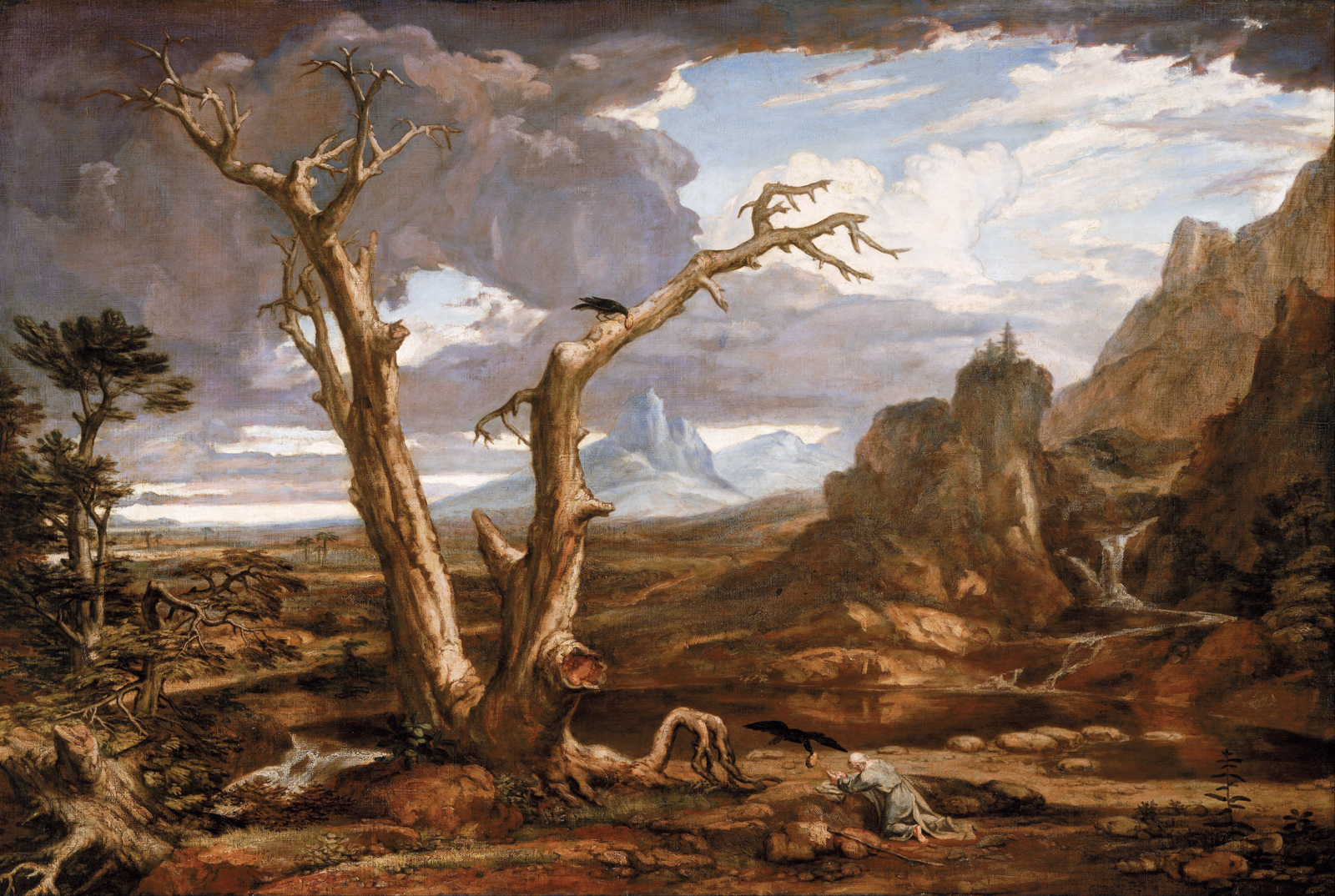 Washington Allston (1779–1843), Elijah in the Desert, 1818. Oil on canvas, 49¼ x 72¾ in. Collection Museum of Fine Arts Boston.
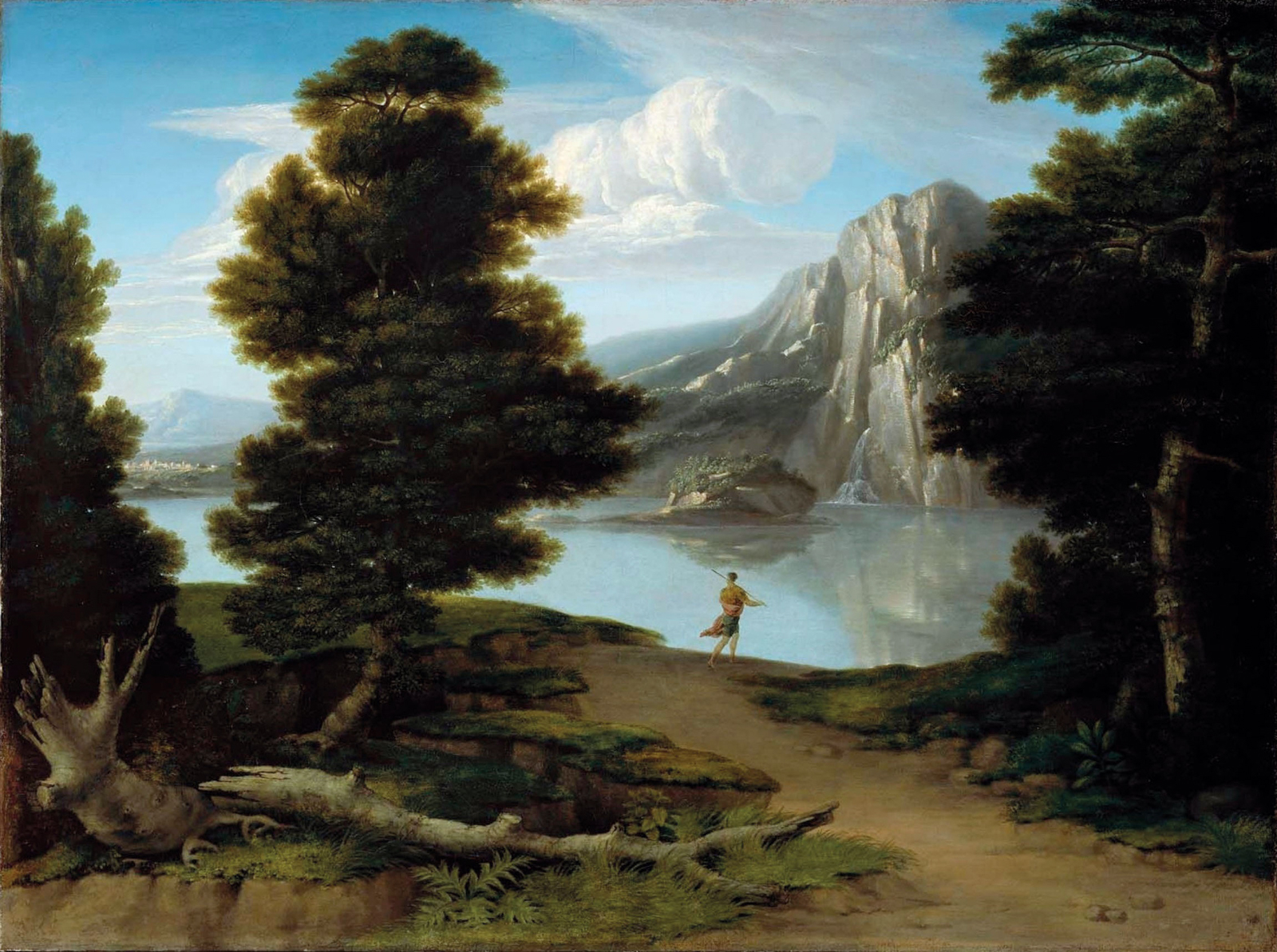
Washington Allston (1779–1843), Landscape with a Lake, 1804. Oil on canvas, 38 x 51 in. Collection Museum of Fine Arts Boston, Gift of Martha C. Karolik for the M. and M. Karolik Collection
Michael Pearce is a dynamic writer, curator, and critic, and a champion of art that emerges from popular culture and shapes the spirit of the age. He has published dozens of articles about art and artists, and is author of Kitsch, Propaganda, and the American Avant-Garde. He is Professor of Art at California Lutheran University.
Powered by Froala Editor