
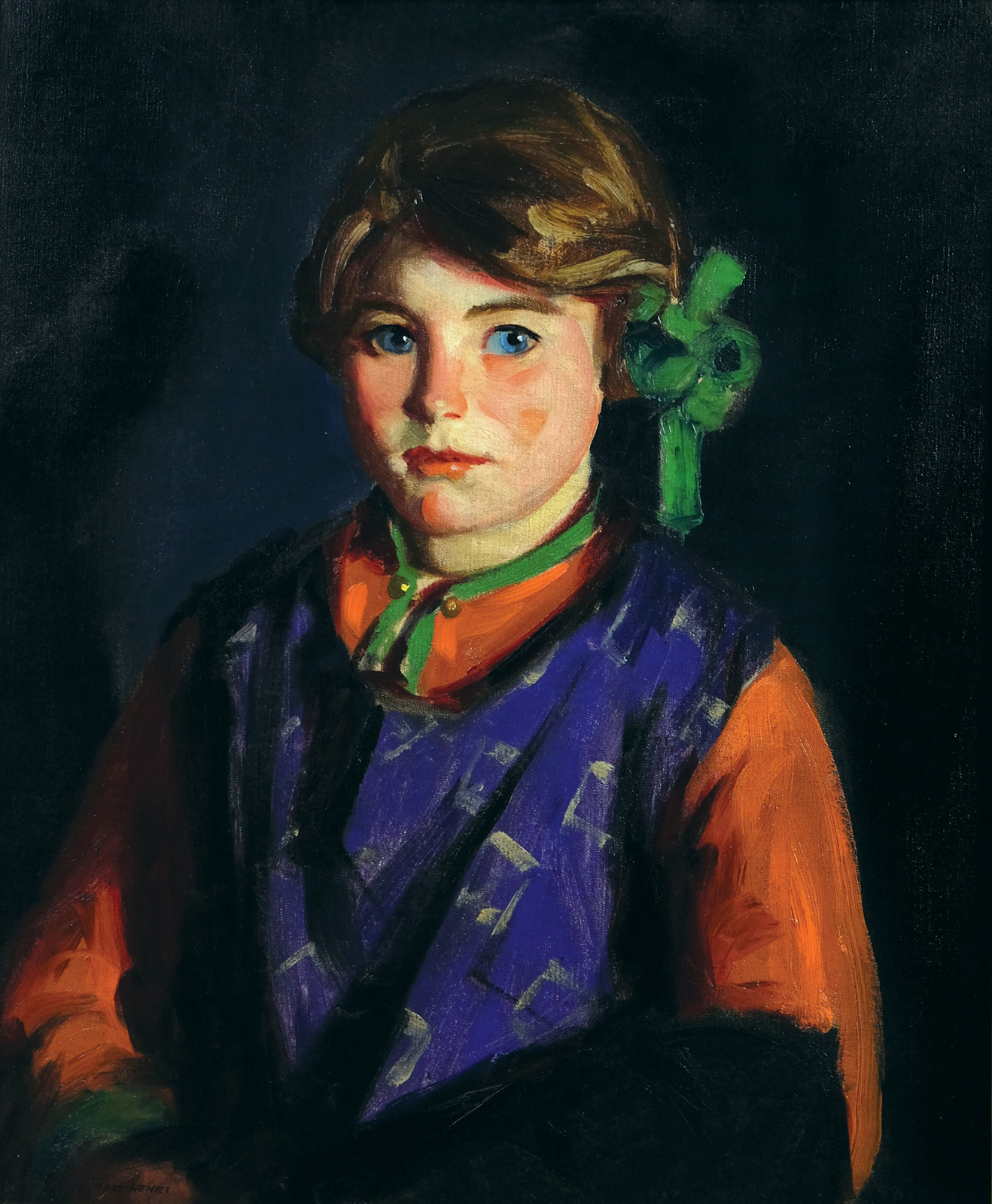
 Robert Henri (1865-1929), Catherine, 1924. Oil on canvas, 24½ x 203/8 in., inscribed on back: ‘Catharine’. Collection of the Flint Institute of Arts, Flint, Michigan. Gift of James W. Sibley in memory of Harriet Cumings Sibley, 1984.7.
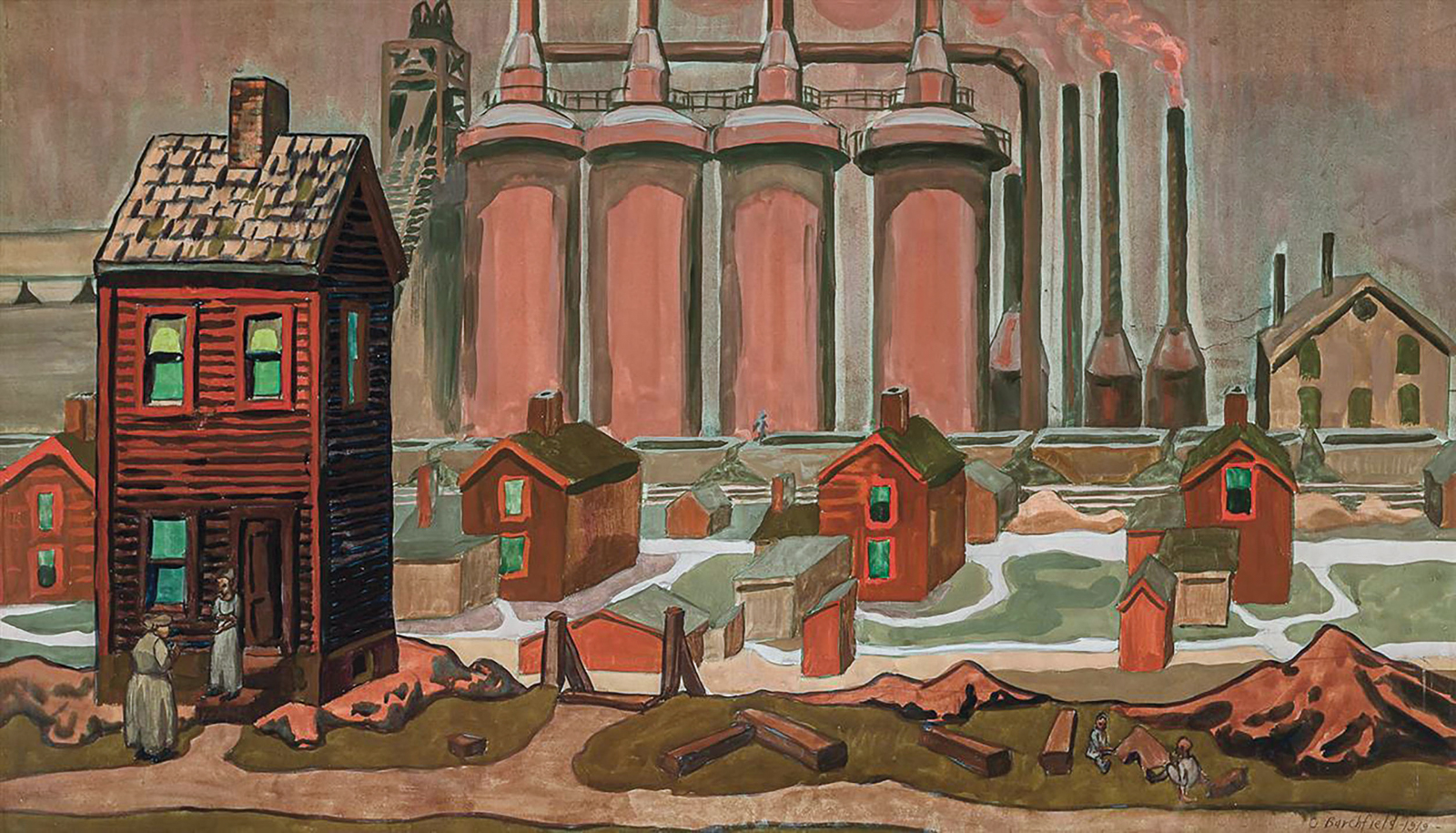 Charles E. Burchfield (1893-1967), Steel Mill Homes (Blast Furnace), 1919, watercolor, 1919. Collection of the Muskegon Museum of Art, Museum purchase, Gift of the L.C. and Margaret Walker Fund, 2020.7.
An exhibition at the Muskegon Museum of Art looks back upon this pivotal moment in our nation’s history through the eyes of some of the most significant American artists of the day. Drawing from the collections of the Muskegon Museum of Art, Flint Institute of Art, Kalamazoo Institute of Art and the Detroit Institute of Art, American Realism: Visions of America, 1900-1950 features 85 work by artists that include George Bellows, Jerome Myers, Stuart Davis, Guy Pène du Bois, Edward Hopper, Rockwell Kent, Guy Wiggins, Peggy Bacon, Alexander Calder, Reginald Marsh and many others. Artists such as these sought to define “American Art” and were determined to create a transformative art movement that captured life in America.
“In the U.S., there was a cyclical change, as a new generation of artists was rebelling against the perceived stifling traditionalism of existing art institutions,” says Art Martin, director of collections and exhibitions for the Muskegon Museum of Art. “For Robert Henri, Walter Pach, Walt Kuhn, Arthur B. Davies and others within their circle, there was a deliberate, focused effort to drive the artistic conversation in the country, to shape it rather than respond to the existing tastes of the public.”
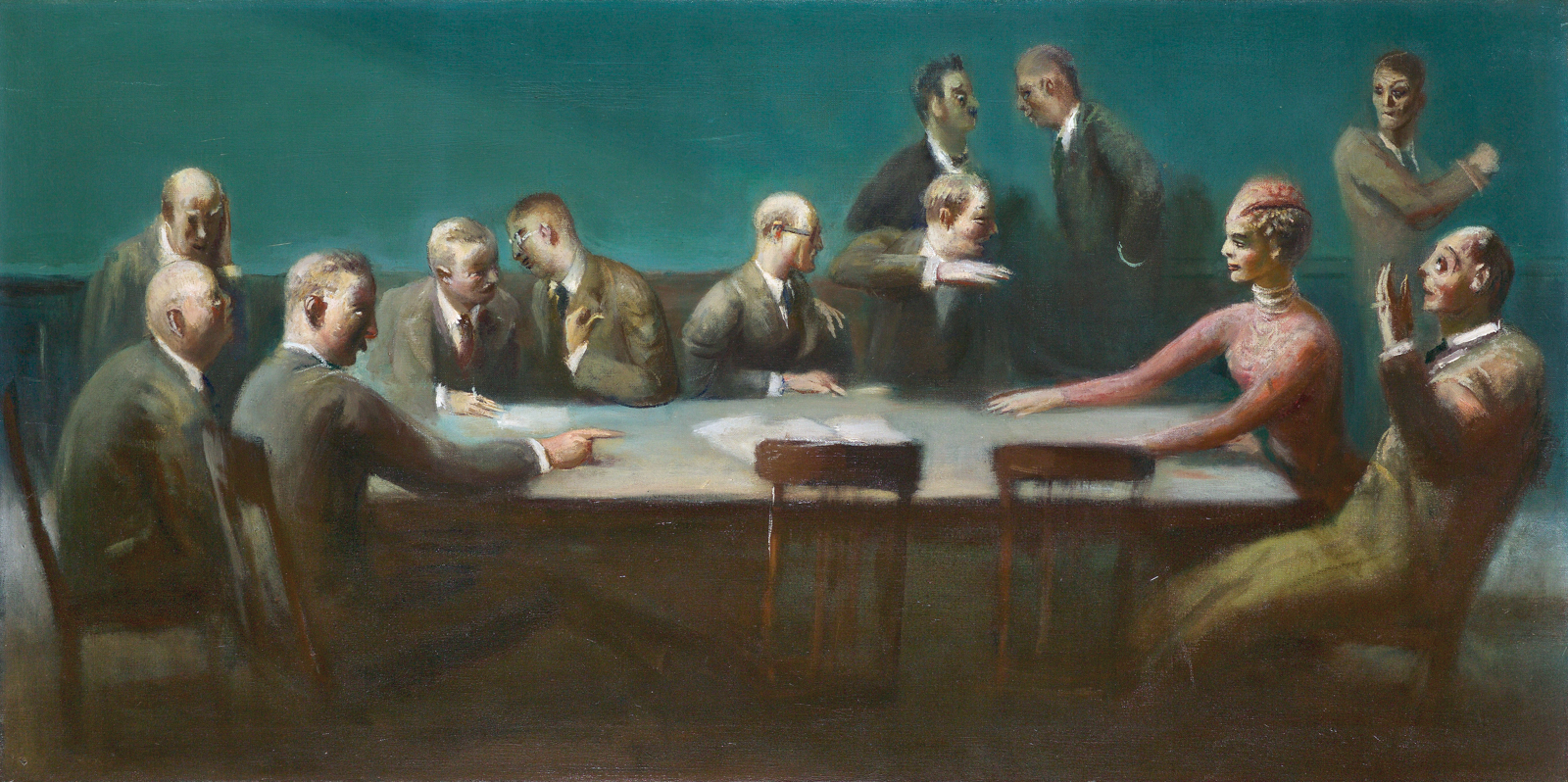 Guy Pène du Bois (1884-1958), Locked Jury, ca. 1950, oil on canvas. Collection of the Muskegon Museum of Art, Museum purchase, through funds from the MMA Acquisition Fund of the Community Foundation for Muskegon County and the Hackley Picture Fund,2016.6.
Organizations such as the Association of American Painters and Sculptors were formed to exhibit progressive new U.S. and European artists and ultimately culminated in the 1913 Armory Show, an epic event that marked the dawn of Modernism in America.
American Realism: Visions of America, on view through August 27, was initially inspired by “The Eight” artists Robert Henri, Everett Shinn, John Sloan, Arthur B. Davies, Ernest Lawson, Maurice Prendergast, George Luks and William Glackens. As Martin and his co-curators, Rehema Barber of the Kalamazoo Institute of Art and Sarah Kohn from the Flint Museum of Art, developed their vision they decided to expand the scope of artists to include more women and artists of color who were also active during the first 50 years of the century.
“Artworks that illustrated the daily life in the urban setting became the backbone of the show, punctuated by paintings that spoke to the new Modernist experiments of the day,” says Martin. “Works such a Bannarn’s Ironing Day, Marsh’s Tunnel of Love, and prints by John Sloan and Isabel Bishop provide dramatic slice of life scenes against the dreamy settings of Arthur B. Davies and the vibrant colors and expressive brush marks of artists like Maurice Prendergast and Charles Alston.”
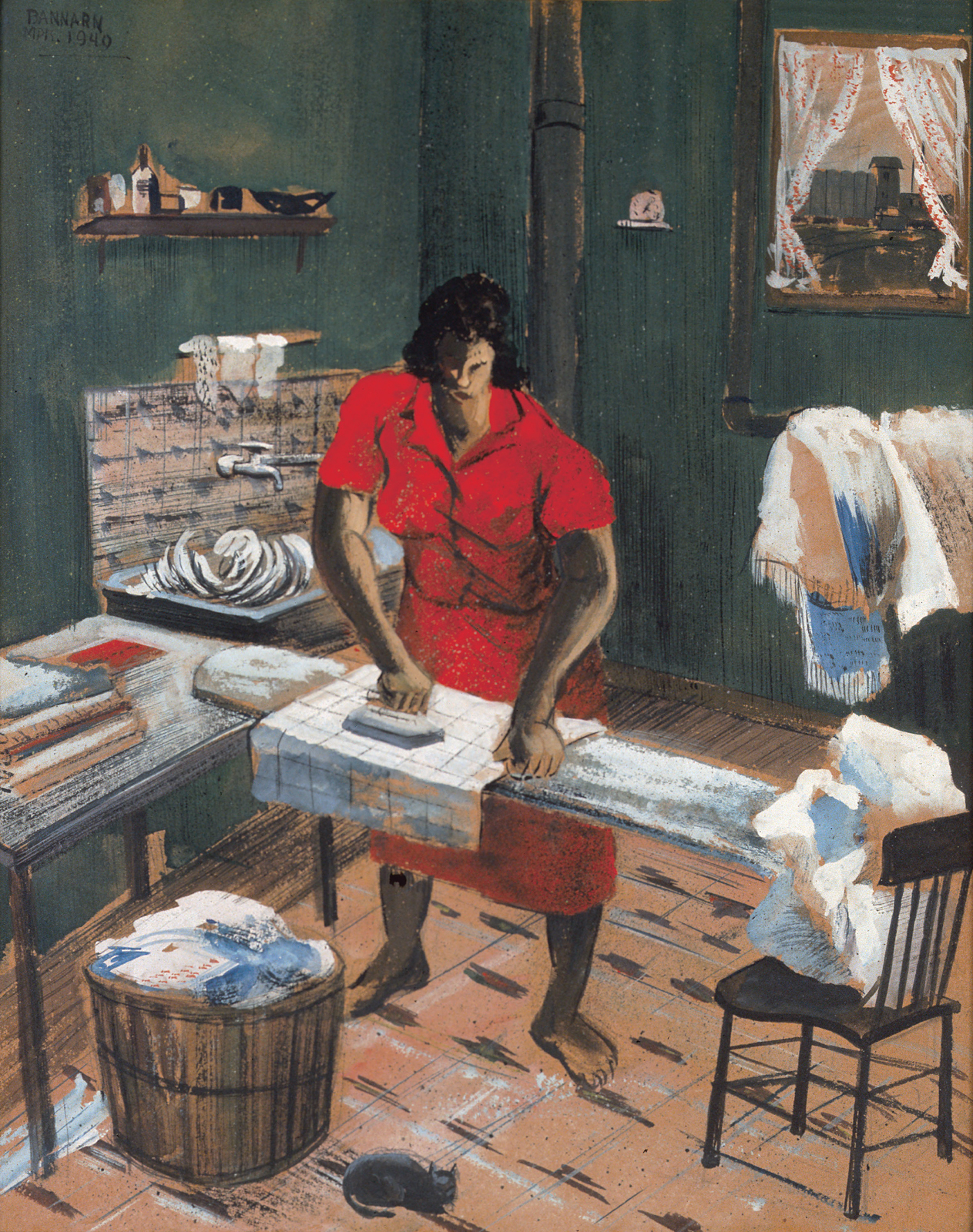 Henry Wilmer Bannarn (1910-1965), Ironing Day, 1949. Gouache on board, 20 x 16 in. Collection of the Flint Institute of Arts, Flint, Michigan. Courtesy of the Isabel Foundation, Inlander Collection, L2003.36.
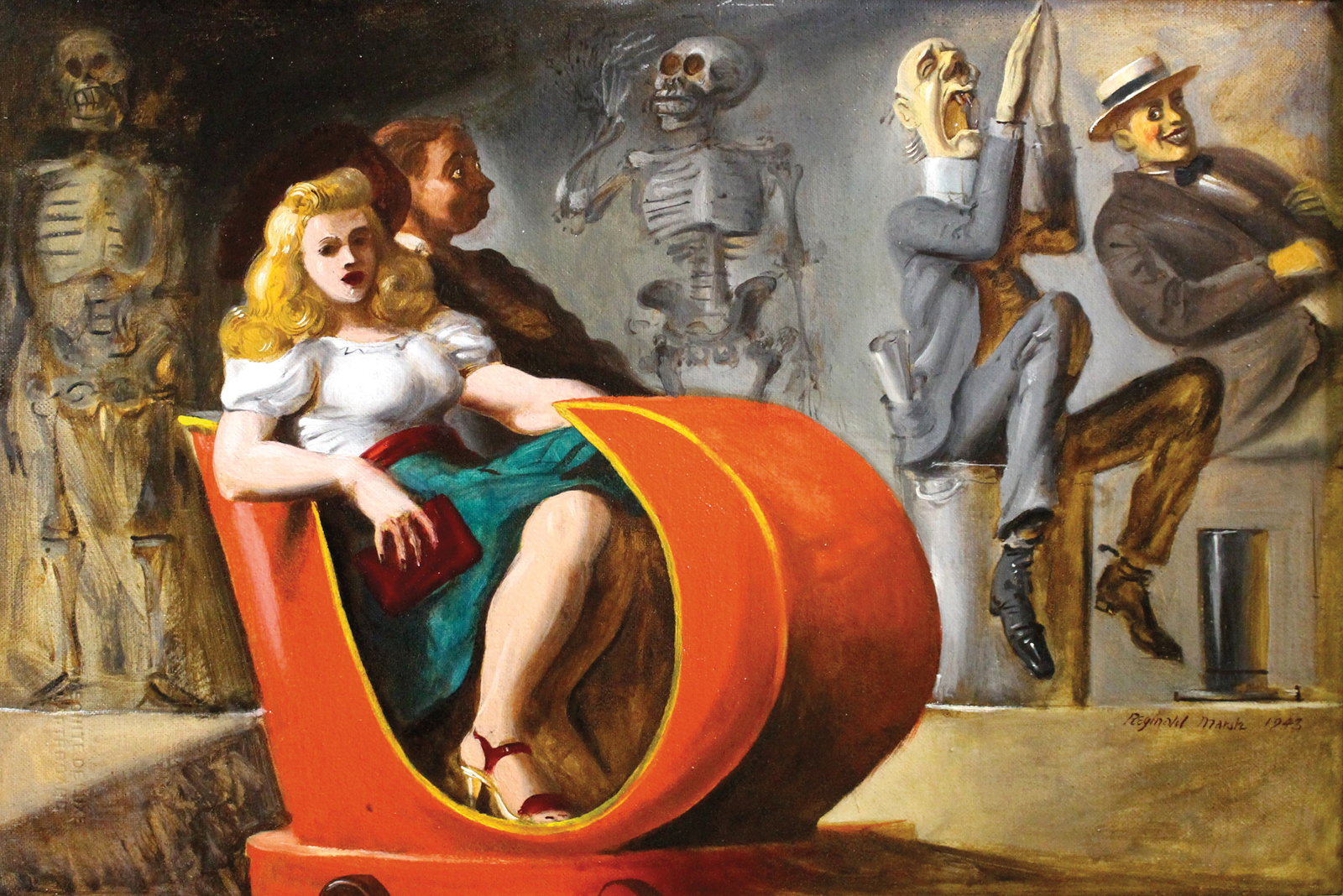 Reginald Marsh (1898-1954), Tunnel of Love (Spooks), 1943, oil on hardboard. Collection of the Muskegon Museum of Art, Museum purchase, through the gift of the André Aerne Estate, 2017.26.
Paintings such as Roman Johnson’s Dad is the work of an artist trained in New York who saw a lack of the Black experience in exhibited art and dedicated himself to Black subjects. Paintings by Glackens, Davies and Prendergast demonstrate the growing influence of European modernism. The exhibit features two works by Henri, Catherine and Laughing Child. Henri’s pieces are shown in the company of works by Pène du Bois, Marsh and Hopper, seminal artists whose careers Henri nurtured.
“Collectively the artwork serves as a record of the concerns, pastimes, labor and living conditions of the people of the time,” says Martin. “City and industrial landscapes show the changing world, images of people at play show new forms of entertainment, and numerous works give intimate looks into apartments and other living spaces. Each individual work is enhanced by seeing similar pieces by other artists, revealing differing but resonant perspectives on the era.” Martin continues, “Across the rich variety of styles and subject matter is a unifying vision that American art could be uniquely expressive of the American experience. Whether seeking inspiration from the lives of working class Americans or exploring new symbols and styles of expression, these artists present a vision of an America full of excitement and growth, yet one still bound by inequalities and struggle.”
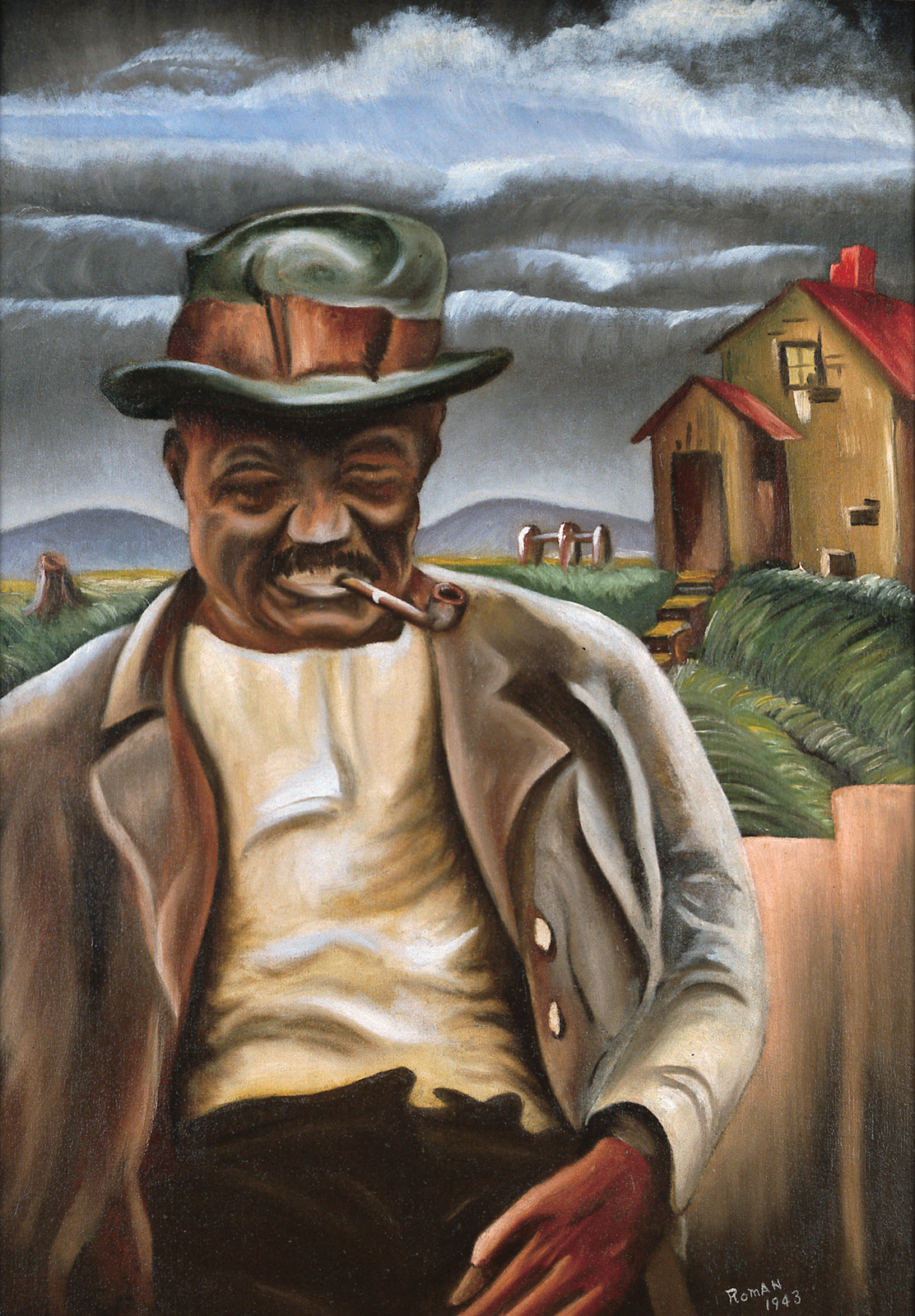 Roman Johnson (1917-2006), Dad, 1943. Oil on canvas, 35 x 24 in. Collection of the Flint Institute of Arts, Flint, Michigan. Courtesy of the Isabel Foundation, Inlander Collection, L2003.76.
American Realism: Visions of America will be on view at the Muskegon Museum of Art through August 27, after which it will travel to the Flint Institute of Art and the Kalamazoo Institute of Art.
Powered by Froala Editor