To the extent that a prevailing cognitive approach in American art history had come to see different, yet inarguably contemporaneous expressions of the new as occurring sequentially, the Armory Show of 1913 would put pay to that, recognizing and celebrating the coexistence of different expressions of the modern in American art. This approach, I would argue, can be applied to American art more generally and can reshape our understanding of its history.
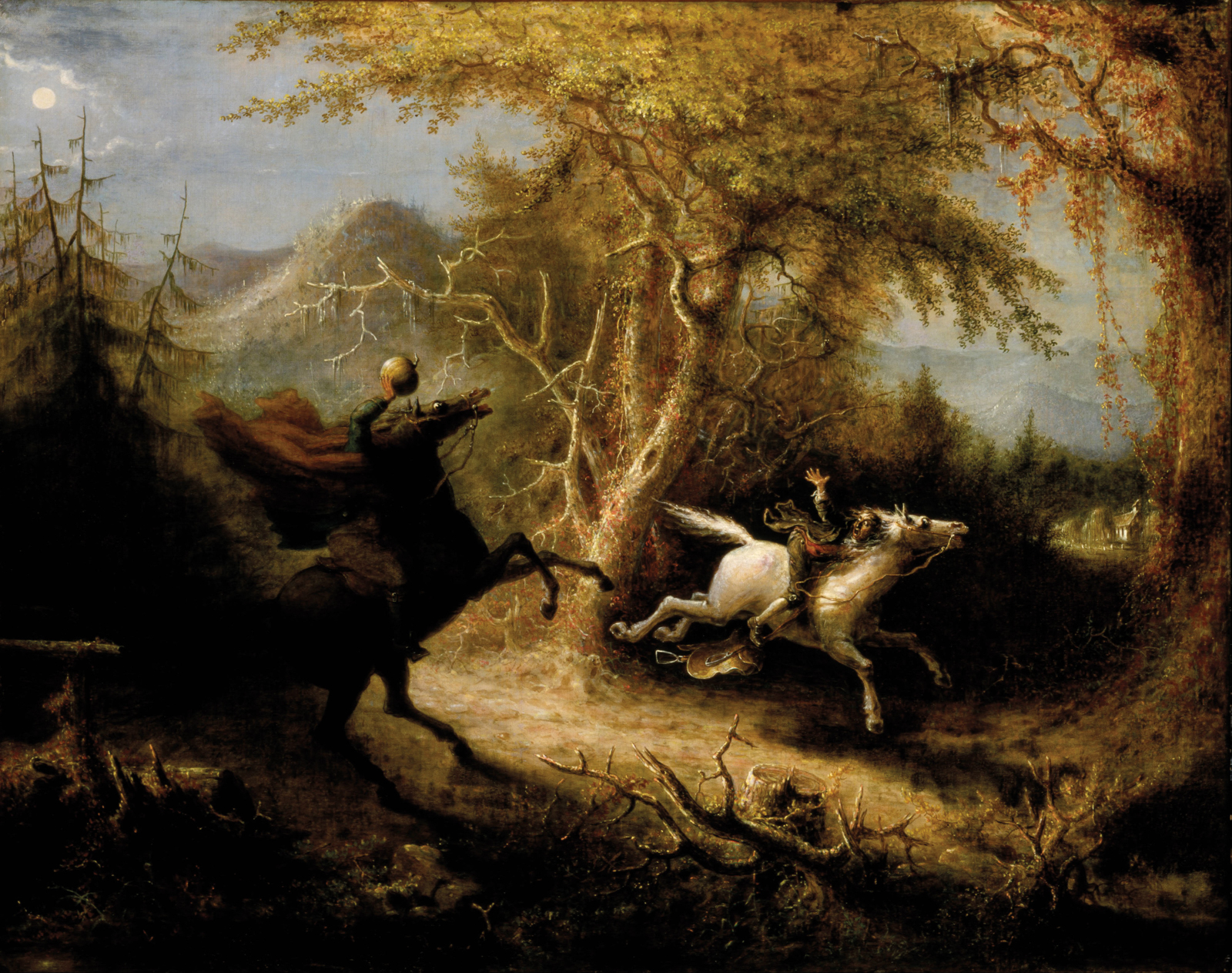
John Quidor (1801-1881), The Headless Horseman Pursuing Ichabod Crane, 1858. Oil on canvas, 267⁄8 x 337⁄8 in. Smithsonian American Art Museum, 1994.120
Clarifying the differences among modern, modernity and modernism is useful. The word “modern,” as commonly defined, relates to or is characteristic of the present or recent past. The “modern” is distinct from “modernity,” a term coined by Baudelaire in his 1863 essay The Painter of Modern Life. Central aspects of modernity, as Baudelaire described it, were the artist’s responsibility to capture the immediacy of life in a metropolis, their openness to the novelty and change, and their questioning or rejection, to a greater or lesser extent, of artistic tradition. “Modernism,” as distinct from both the modern and modernity, generally refers to a specific movement characterized by a tendency to abstraction in pursuit of a “truer” way of rendering a new, more industrialized world.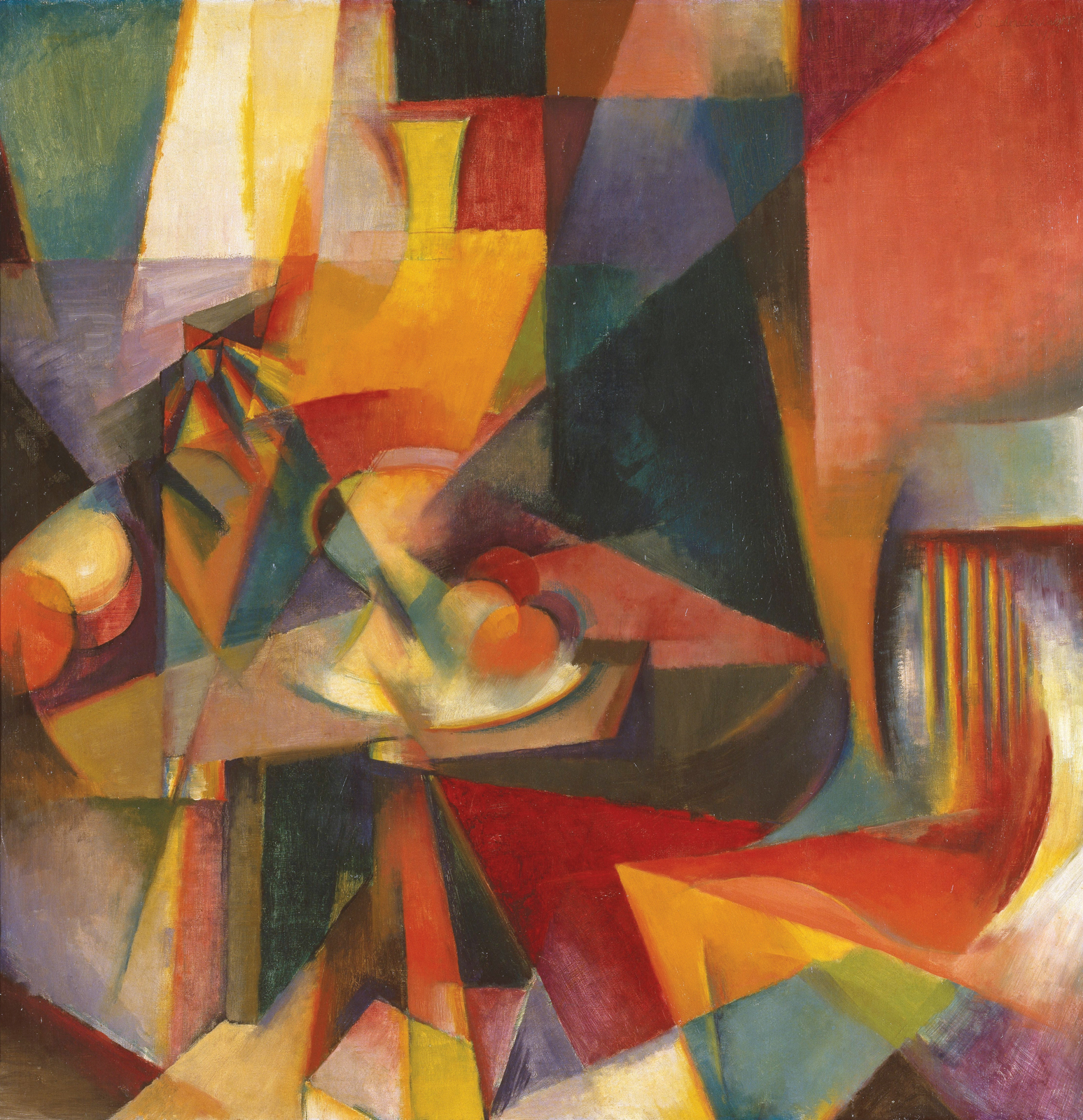
Stanton Macdonald-Wright (1890-1973), Synchromy No. 3, 1917. Oil on canvas, 39 x 38 in. The Brooklyn Museum, Bequest of Edith and Milton Lowenthal, 1992.11.24
Modernism did not replicate the world as we see it. In William C. Agee’s Modern Art in America, 1908-1968, he wrote, “Broadly speaking, we can say that modernism turned from the known, observable world around us to a mode of exploring in personal expressive ways, the interior life of the artist.” American modernism was both in dialog with and strongly influenced by European expressions of the movement, and Agee’s observations regarding the works of Picasso, Braque and Matisse apply as well to their American contemporaries. Their “[d]eviation from the observable world was in keeping with the new sciences developed by Sigmund Freud and Albert Einstein who told us that reality was not what we saw, but was something so vast and distant or deep within us that it was beyond the powers of literal description. Now the interior landscape was as immense as the exterior landscape of the physical world.”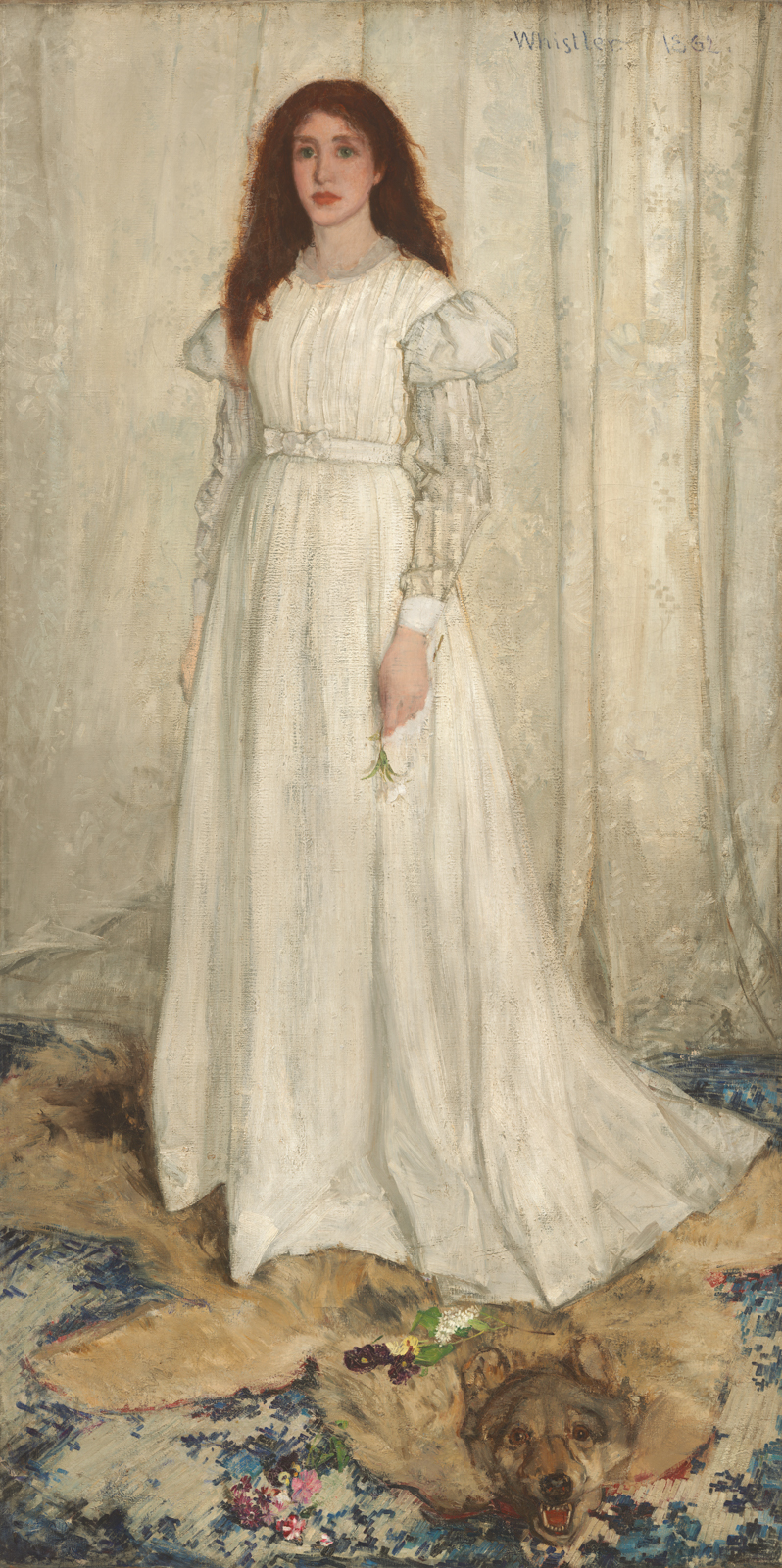
James McNeill Whistler (1804-1903), Symphony in White, No. 1: The White Girl, 1861-1862. Oil on canvas, 834/5 x 422/₅ in. National Gallery of Art, Harris Whittemore Collection, gift of the J.H. Whittemore Company, 1943.6.2.
In tracing the modern in American art, we will focus on 1876 through 1939, the period bracketed by the Centennial Exposition in Philadelphia and the New York World’s Fair. This period—and the three vibrant decades that followed—was characterized by a blossoming of modern movements, in many cases founded on notions of modernity and in others, leading to the emergence of modernism. Agee sets the emergence of the American modern in 1908, the year Henry Ford invented the Model T, the Wright Brothers flew their plane for an extended period and Americans including Max Weber attended Matisse’s school in Paris. For Agee, this more encompassing “modern” came to a close in 1968, a year of “worldwide profound change much of it revolutionary, which altered the course of history in ways that made it as important as 1776, 1848 and 1917.” He further observes that 1968 witnessed the “birth of post-modernism which discredited and critiqued modernism.”Unsurprisingly, what is considered modern changes over time. Thomas Cole was modern in 1824; by 1862, one could argue, Frederic Church, his most prominent successor, was not. That year saw Church complete Cotopaxi, his magnificent depiction of the erupting volcano. But it also saw James McNeill Whistler complete Symphony in White, No. 1: The White Girl, a “radical espousal of a purely aesthetic orientation and the creation of ‘art for art’s sake’” in the words of the National Gallery of Art.
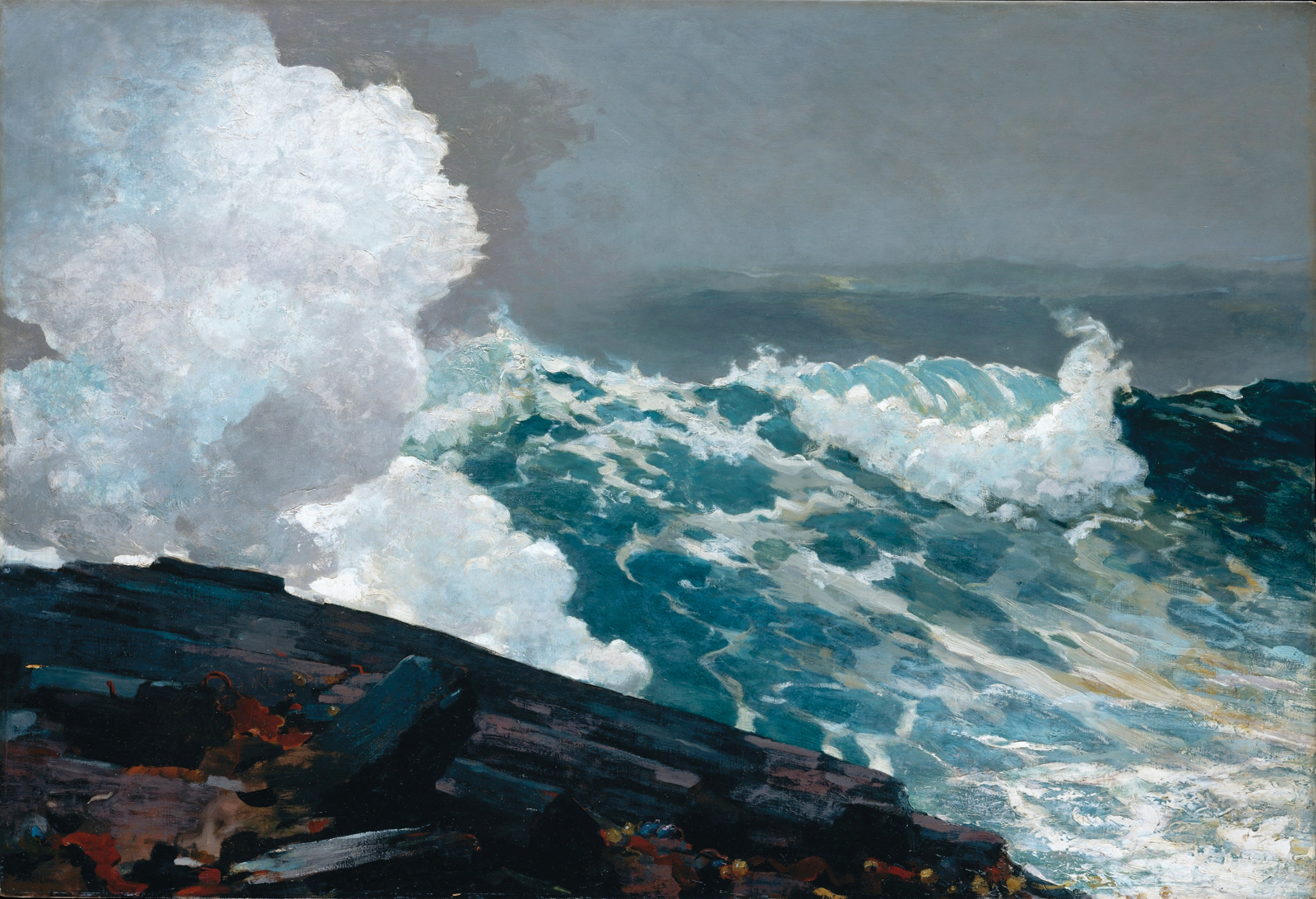
Winslow Homer (1836-1910), Northeaster, 1895; reworked by 1901. Oil on canvas, 34½ x 50 in. The Metropolitan Museum of Art, Gift of George A. Hearn, 1910.64.5.
Focusing on the period between 1876 and 1939 permits us to explore the emergence of modernity in American art and trace the emergence of modernism. But we must avoid conflating the modern with modernity (or either with modernism), and keep in mind that the modern has characterized American art since its beginnings. Each era has its own modern—or multiple moderns—which is sometimes difficult to see given the challenges of placing ourselves in historical context.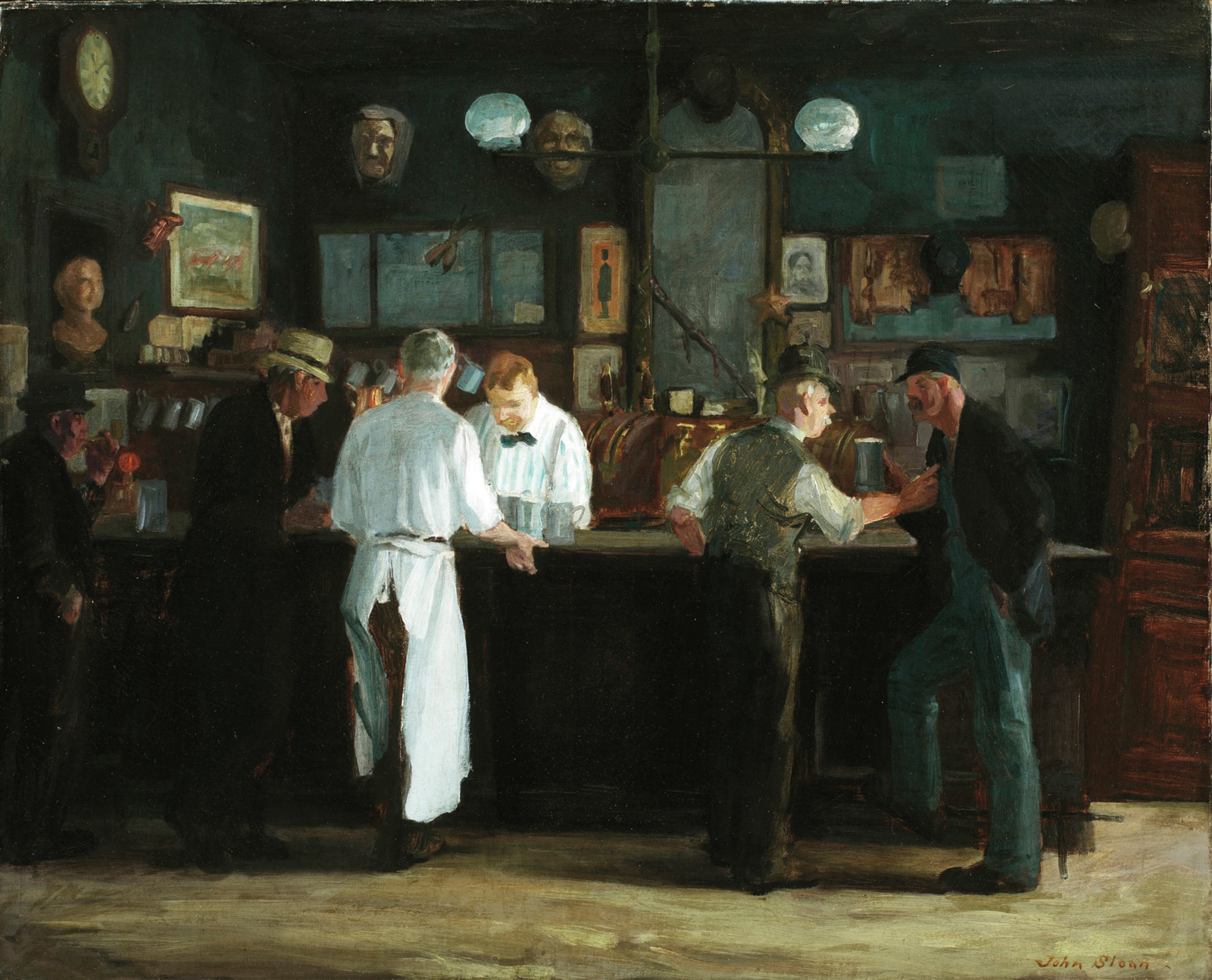
John Sloan (1871-1971), McSorley’s Bar, 1912. Oil on canvas, 32 x 26 in. Detroit Institute of Art, Founders Society 1924, Purchased directly from the artist.
Thus, in the early 19th-century John Trumbull and Samuel F. B. Morse documented, and in some sense created, the history of a new nation—powerfully modern definitionally—while artists like Washington Allston, Rembrandt Peale and John Vanderlyn broadened the narrative tradition to include literary and religious subjects. A rapid multiplication of approaches to the modern ensued, ranging from John Quidor’s trailblazing depictions of American literary subjects to Thomas Cole’s revolutionary approach to depicting the grandeur and rugged natural beauty of America—an approach grounded in his belief in conservation and fear that the wilderness was being destroyed. An impulse toward the new as integral to the history of American painting is particularly evident in the latter half of the 19th-century, with tonalism developing along two paths, aesthetic and expressive tonalism, with Whistler’s Symphony in White, No 1: The White Girl an example of the former. Winslow Homer’s modernity is evident in his expressions of unbridled naturalism.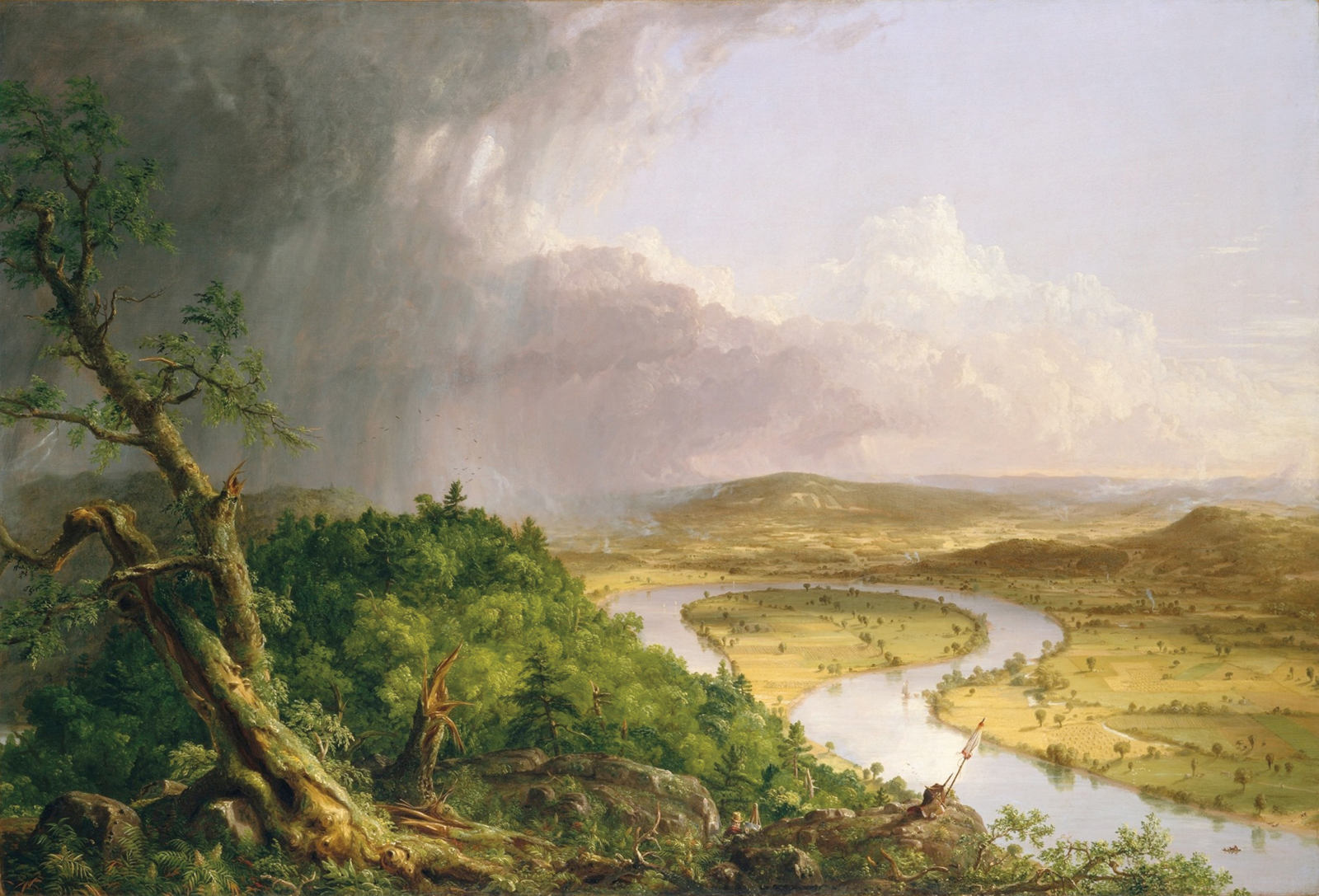
Thomas Cole (1801-1848), View from Mount Holyoke, Northampton, Massachusetts, after a Thunderstorm—The Oxbow, 1836. Oil on canvas, 512⁄5 ix 759⁄10 in. The Metropolitan Museum of Art, Gift of Mrs. Russell Sage, 1908.
Impressionism swept the country while the American Renaissance movement also thrived. In the early 20th-century, the Ashcan School created vital depictions of contemporary life while Arthur Wesley Dow employed Japanesque stylization and composition.Twentieth-century embodiments of the modern ultimately led to modernism and movements that followed it. Movements often perceived as opposites, for example the Ashcan School and precisionism, can be seen to share a core concern with the developments and interpretation of modern life. The early abstractions of John Marin, Max Weber, Morgan Russell and Stanton Macdonald-Wright are complemented by the lyric modernism of Georgia O’Keeffe and Arthur Dove. At the Armory Show, Sloan’s McSorley’s Bar was modern. Albert Pinkham Ryder’s Moonlit Cove was modern. Oscar Bluemner’s cubism-inflected Hackensack River was modern.
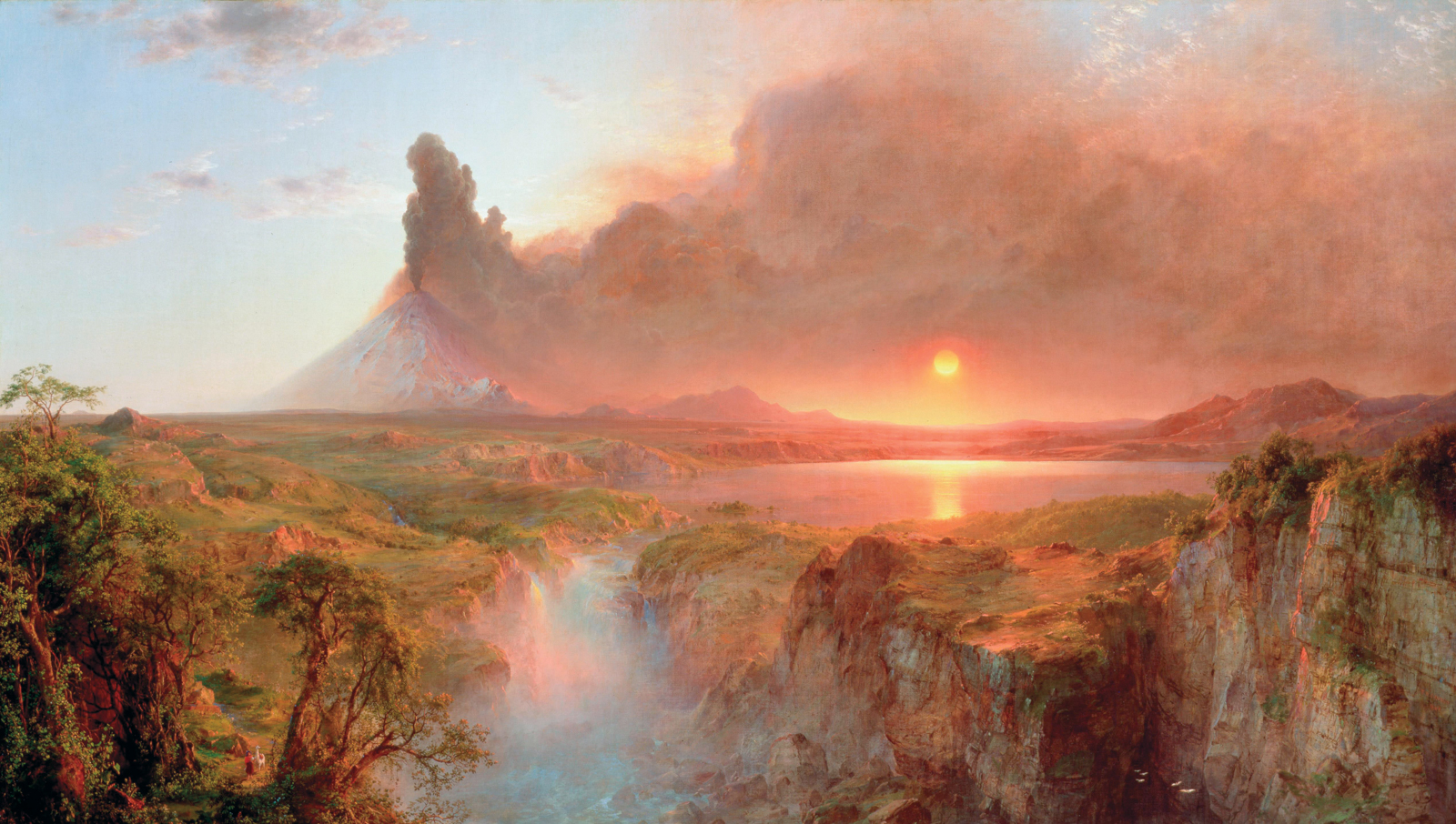
Frederic Edwin Church (1826-1900), Cotopaxi, 1862. Oil on canvas, 48 x 85 in. Detroit Institute of Arts, 76.89.
By the second quarter of the 20th-century, we see multiple, simultaneous moderns in the work of the American abstract artists, the regionalists, the sculptor John Storrs, and in the more purely abstract work of Joseph Stella and Jackson Pollock. The abstract expressionists, exponents of what some view as America’s first truly international style, emerged in the 1950s at the same time Stuart Davis and Edward Hopper continued to follow their own, distinct paths, with all powerfully influencing American art and underscoring the synchronicity of multiple expressions of the modern.Why is it critical to accept that every age has its modern or moderns? In recognizing different manifestations of the modern and considering them in appropriate context, we can give each manifestation its due and, should we choose, assess it qualitatively within the history of American art. We can also see how different moderns relate or speak to one another (or perhaps fail to do so). The modern ceases to be a prisoner of modernism, and we can avoid the trap of looking at late 19th-, early 20th-century American art through modernism-tinted glasses.
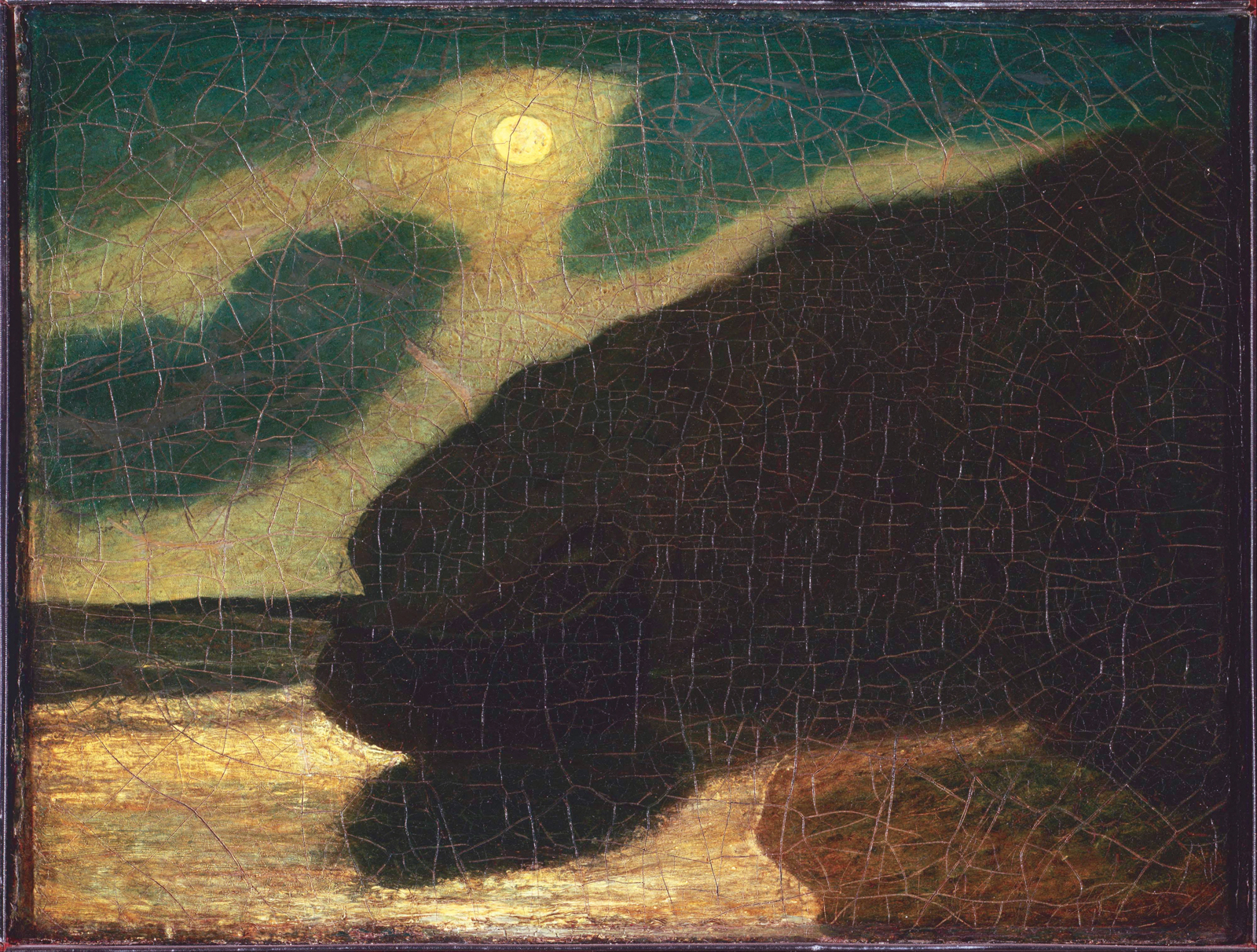
Albert Pinkham Ryder (1847-1917), Moonlit Cove, mid-to-late 1880s. Oil on canvas, 17 x 14 in. The Phillips Collection, acquired 1924.
Recognizing the presence of multiple moderns throughout the history of American art also allows us to give individual artists or works their due. It is one thing to be great. It is another to be modern. It is yet another to be modern in direct or implicit competition with other, contemporaneous expressions of the modern. It is thus that an appreciation of multiple moderns (and the distinctions between the modern, modernity and modernism) can help reshape our understanding of the history of American art.Powered by Froala Editor


