The history of modern art is a story of cultural upheaval, political turmoil and mass emigration within the vast global artistic diaspora of the early 20th century. The American Modernist Movement and the Eastern European Exodus, an upcoming exhibition at J. Kenneth Fine Art, features artists who fled their homelands because of religious and political persecution amid the ongoing wars and conflicts of Europe. A broad grouping and diverse mix of people from various countries and cultural backgrounds fled from the yolk of oppression amid the decline of Imperial Russia and the emergence of the Russian Revolution.
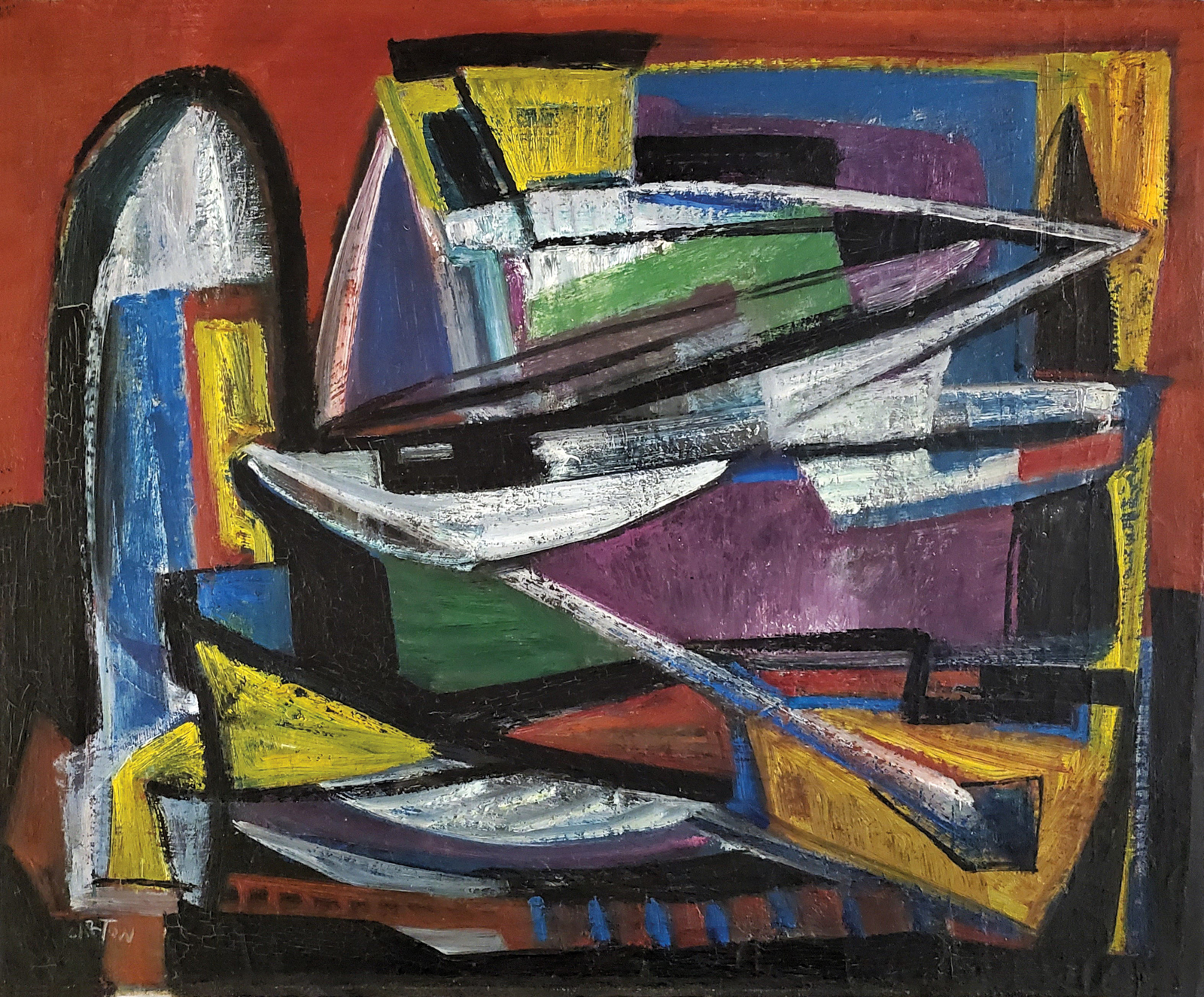
Norman Carton (1908-1980), Untitled #495. Oil on canvas, 20 x 24 in.
This exhibition focuses on three artists whose lineage is traced back to Eastern Europe: Norman Carton (1908-1980), Helen Gerardia (1903-1988), and Jacob Semiatin (1915-2003). Semiatin arrived in America in 1920 at age 5. His family had originally emigrated from Siedle, Poland, to the Jewish enclave of the Portobello region in Dublin, Ireland. Helen Gerardia emigrated from Dnipro, Ukraine, to America in 1921. Norman Carton also emigrated from the Dnieper region of Ukraine, escaping the turmoil of war. These three artists went on to become highly accomplished abstract painters.
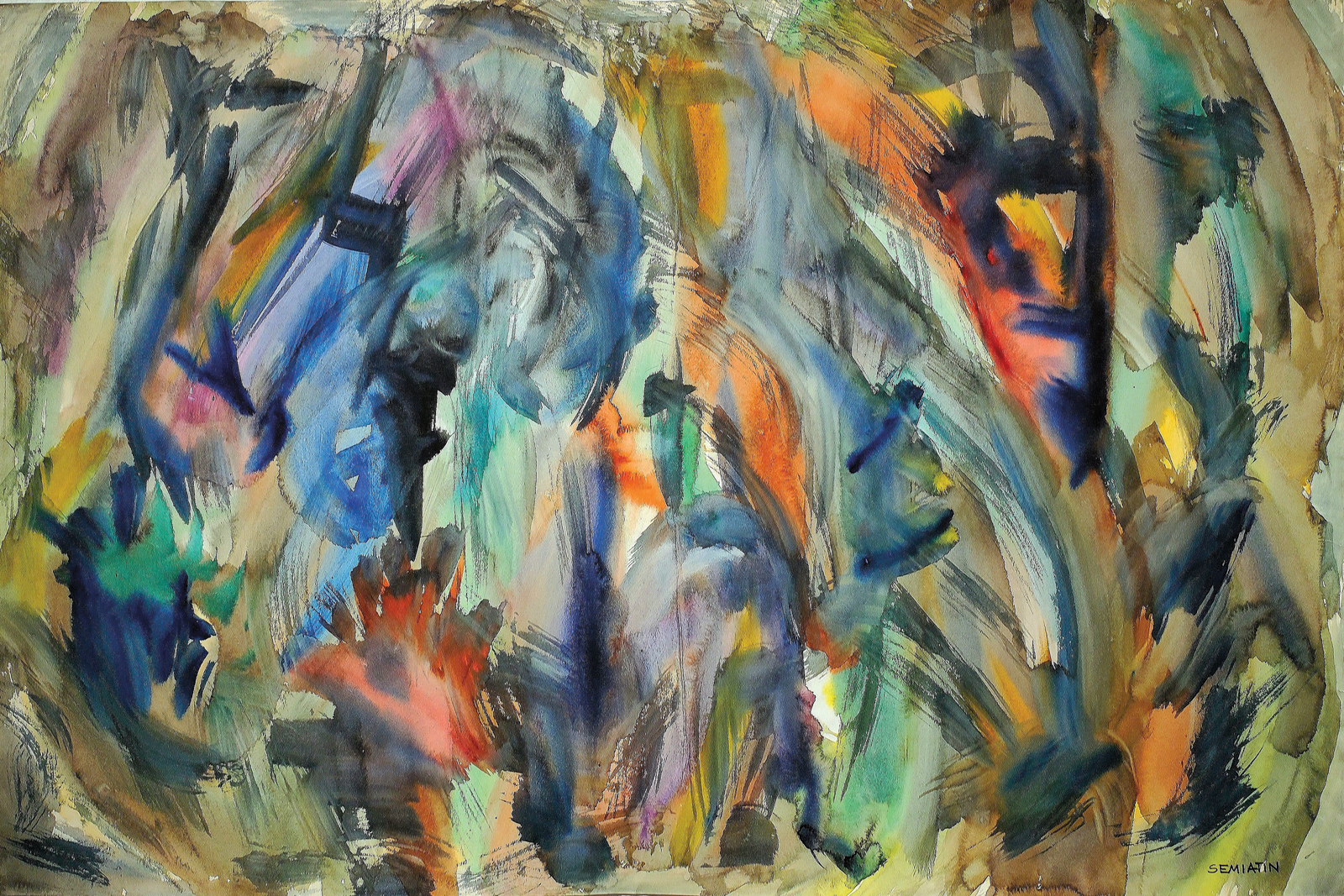
Jacob Semiatin (1915-2003), Untitled, 1959. Watercolor on paper, 28 x 42 in.
At the time of Gerardia’s birth in 1903, Ukraine was under the domination of Imperial Russia. After immigrating to the United Sates in 1921, Gerardia settled in New York, where she studied under Hans Hofmann, and at the Art Students League and the Brooklyn Museum School. Unlike most artists of the abstract expressionist era, Gerardia stayed focused on her love of hard-edge geometric abstraction.
“Even though women of the ’50s and ’60s tended to be disregarded as serious artists, Gerardia was able to successfully navigate her way through the gender-biased atmosphere of the male-dominated New York art scene,” explains gallery owner John Kenneth Alexander. She founded the Gerardia Workshop, where she taught a variety of mediums. She was also an original member of the Vectors artist group, and a delegate to the U.S. Committee of the International Association of Art. From 1967 until 1969, she was president of the American Society of Contemporary Artists. “As time passed, the fine art establishment chose not to remember the accomplishments of women like Gerardia,” continues Alexander. “However, the atmosphere of today’s art market has shifted significantly in favor of artists like Gerardia who were left out of the history of art.”
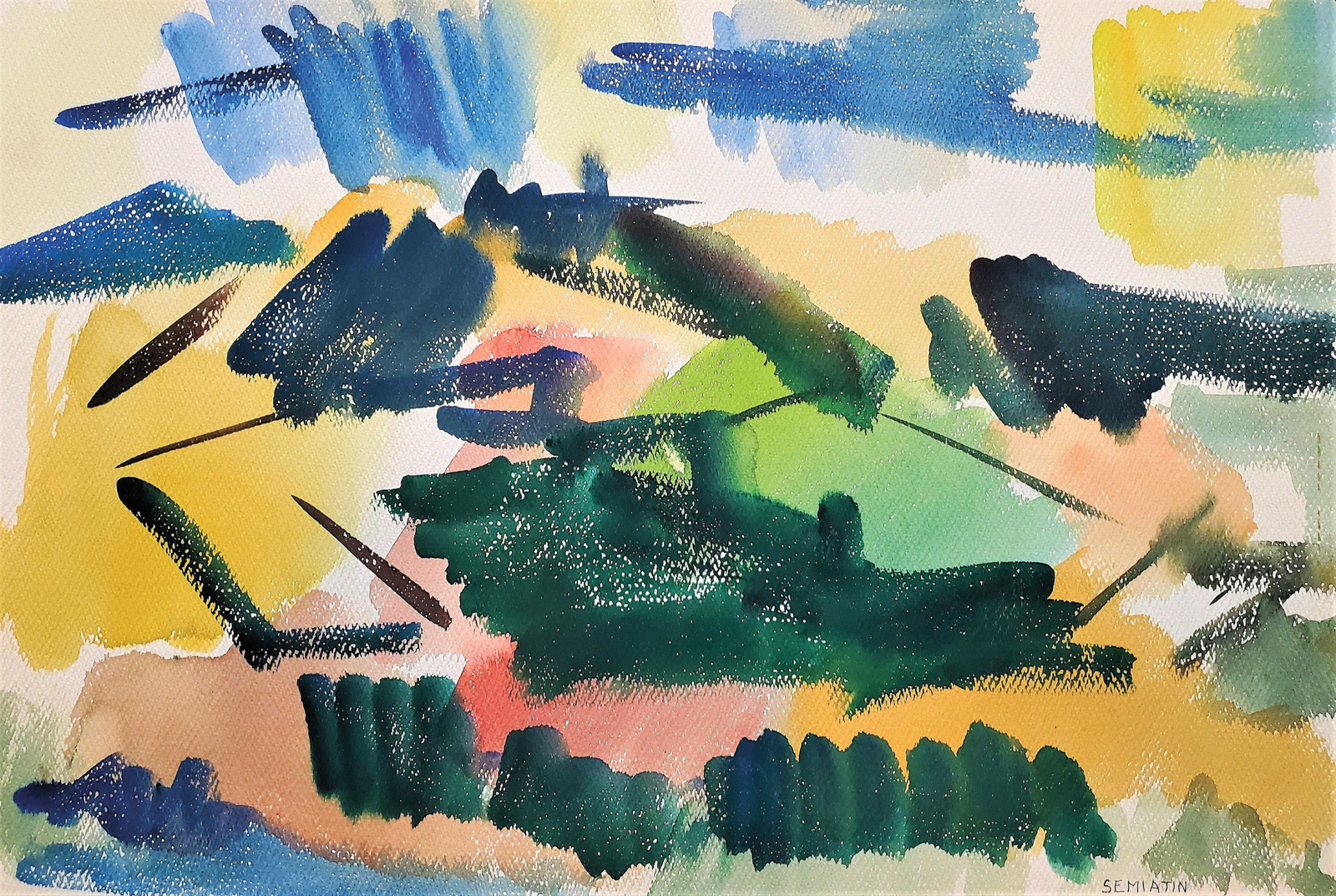
Jacob Semiatin (1915-2003), Near North Branch, NY, 1957. Watercolor on paper, 15 x 22 in.
Like Gerardia, Carton was born into the tumultuous Dnieper region in Ukraine while under Imperial Russian rule. Escaping the turbulence of civil war massacres, he settled in Philadelphia in 1922. Carton’s career spans multiple art movements throughout several decades. During his career as an artist, he worked as a muralist, set designer, illustrator, textile designer and educator. He transitioned to the abstract expressionistic style of painting in the mid to late 1950s just as abstract expressionism entered its decline. Carton became a teacher and his art career ultimately revolved around academia.
Semiatin, another underappreciated artist of this period, continued painting long after his abandonment of New York’s gallery scene. Born to Polish Jewish parents who had fled the farthest regions of eastern Poland for Dublin, he and his family immigrated in 1920 to the United States, where the artist eventually settled in Brooklyn, New York.
Semiatin was a prolific artist, focusing on watercolor landscapes early in his career including cityscapes of Brooklyn. He exhibited with the Brooklyn Society of Artists at the Brooklyn Museum in the 1940s. While serving his country during World War II, he was given permission to wander off base and paint bucolic landscapes and rural scenes at the various camps he was stationed, including Arkansas, Florida and Virginia.
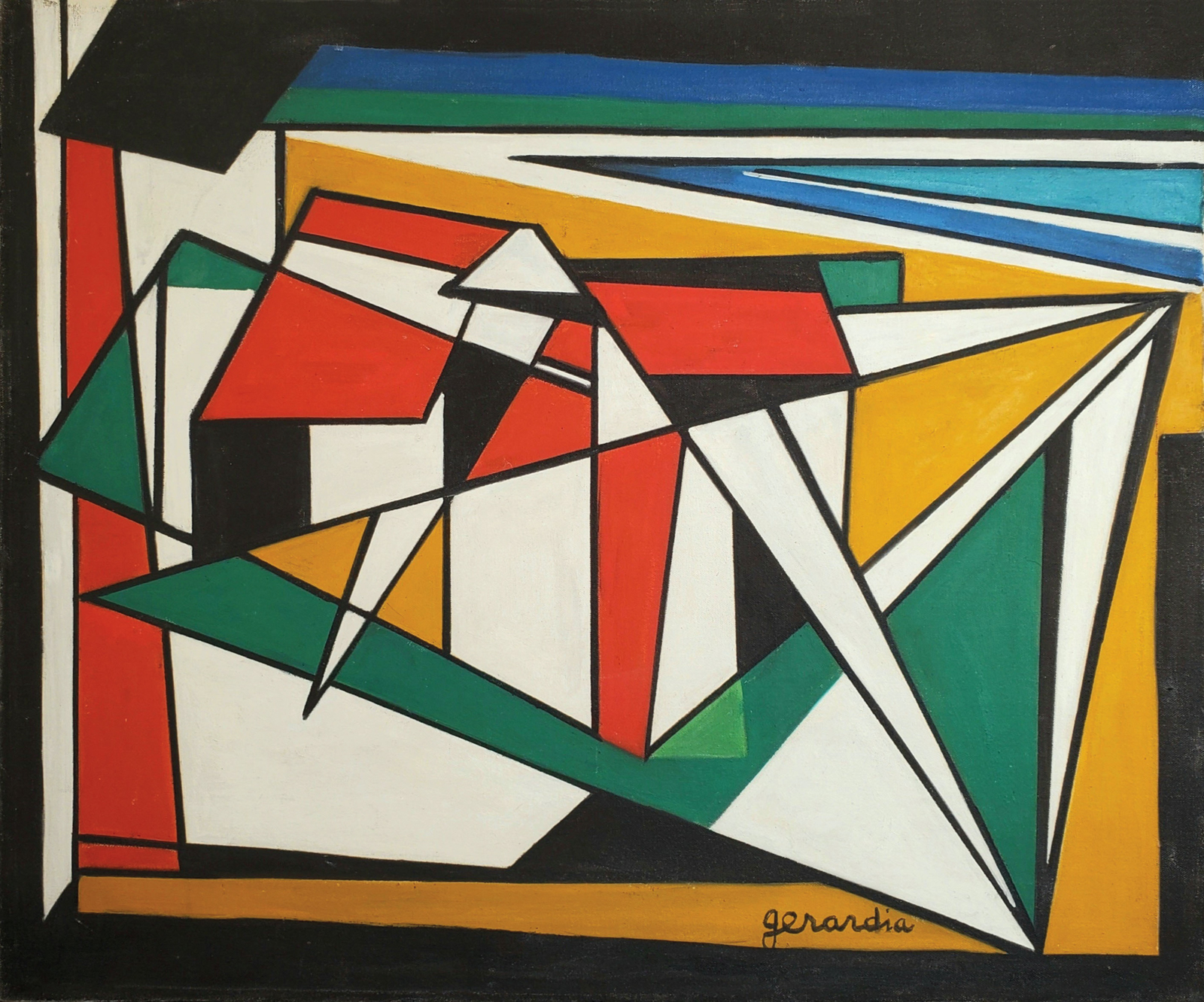
Helen Gerardia (1903-1988), Two Barns, ca. 1955. Oil on canvas, 20 x 24 in.
As the late 1950s approached, Semiatin immersed himself in the abstract expressionist movement and transitioned to abstract watercolor painting by 1959. He exhibited throughout the 1960s and became close friends with James Johnson Sweeney, second director of the Guggenheim. Semiatin became dissatisfied with the quid pro quo attitude of the New York gallery scene and ceased exhibiting his work, all the while continually painting throughout his life and writing essays on art.
Powered by Froala Editor


