John Sloan (1871-1951) was a founder of the Ashcan School with Robert Henri (1865-1929) and others. It was named such because that’s where critics thought their work belonged. Henri said, “There is only one reason for art in America, and that is that the people of America learn the means of expressing themselves in their own time and their own land.” Their depictions of gritty, immigrant and working-class life were counter to the decorous art of their contemporaries.
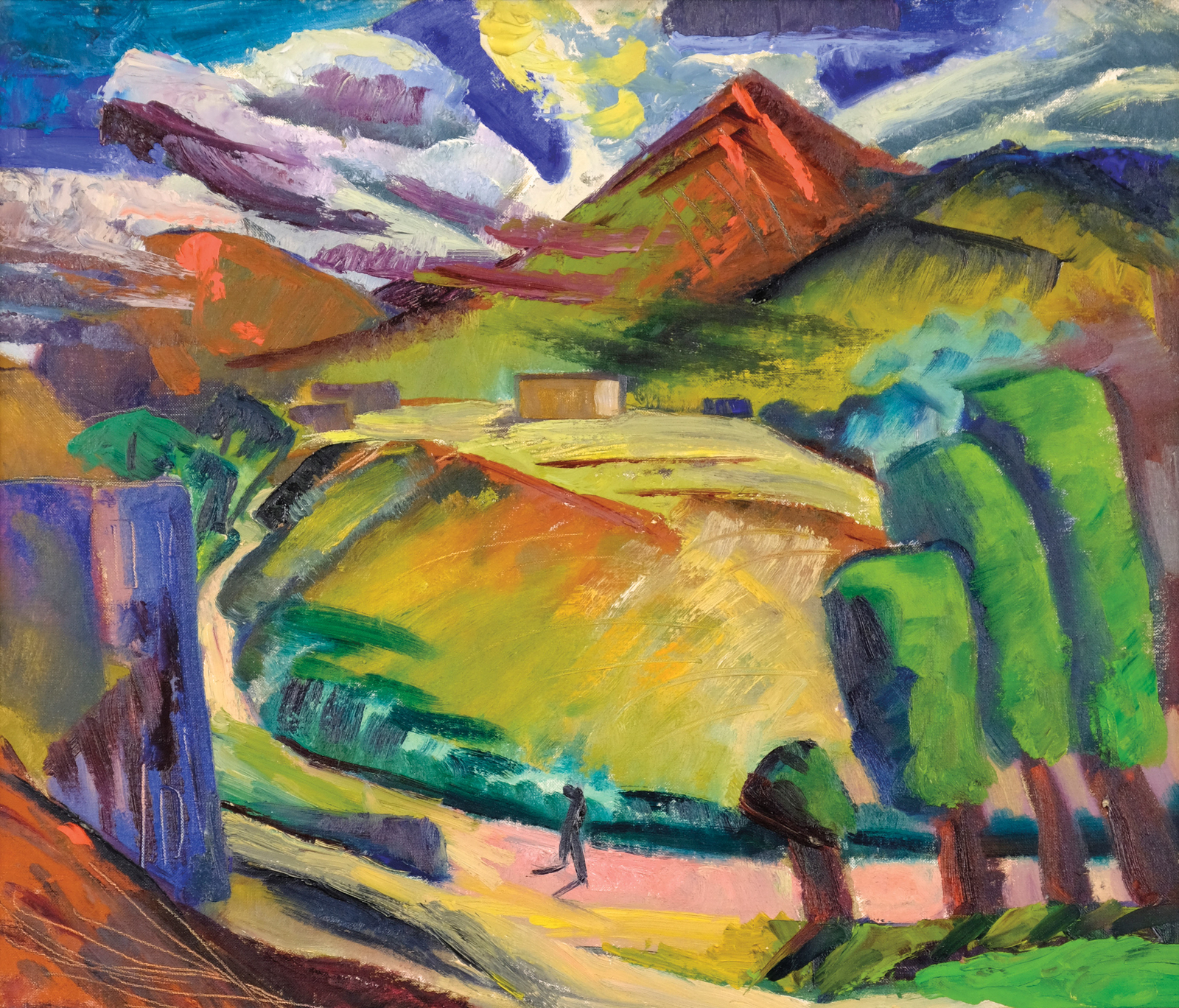
Beulah Stevenson (1895-1965), Cerro Gordo, 1950. Oil on board, 20 x 24 in. Courtesy Addison Rowe Gallery, Santa Fe, NM.
Sloan was also an organizer of the International Exhibition of Modern Art held in 1913 in New York City’s 69th Regiment Armory, now known as the Armory Show. It was the first large exhibition of modern art in America, introducing such artists as Pablo Picasso, Henri Matisse, Marcel Duchamp, Paul Gauguin, Paul Cézanne and Vincent Van Gogh, and including American artists influenced by their work.
The exhibition rocked the art world, upsetting the establishment but inspiring contemporary artists. Responding to the exhibition, President Theodore Roosevelt wrote, “Probably we err in treating most of these pictures seriously. It is likely that many of them represent in the painters the astute appreciation of the powers to make folly lucrative which the late P.T. Barnum showed with his faked mermaid. There are thousands of people who will pay small sums to look at a faked mermaid; and now and then one of this kind with enough money will buy a Cubist picture, or a picture of a misshapen nude woman, repellent from every standpoint.”
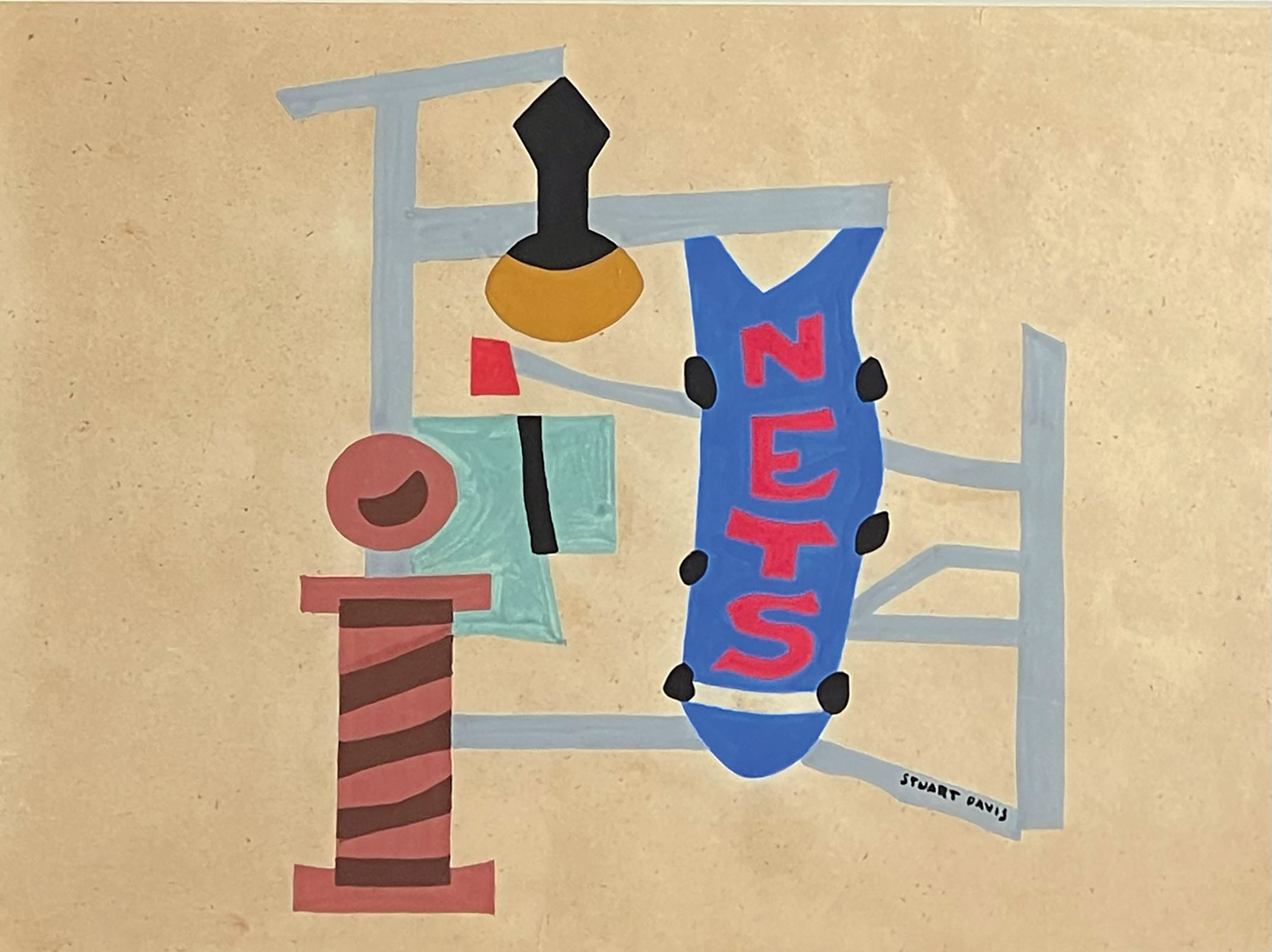
Stuart Davis (1892-1964), NY Street Signs, 1938. Gouache, pencil on paper, 18½ x 22 in. Courtesy Helicline Fine Art, New York, NY.
Sloan traveled to Santa Fe, New Mexico, in 1919 and returned every summer for the next 29 years. He invited Stevenson to New Mexico one summer and she returned often, inspired by the vibrant colors of the Southwest. She gravitated more to Hofmann’s colorful abstractions as can be seen in her painting, Cerro Gordo, 1950, with its energetic brushstrokes of intense color.
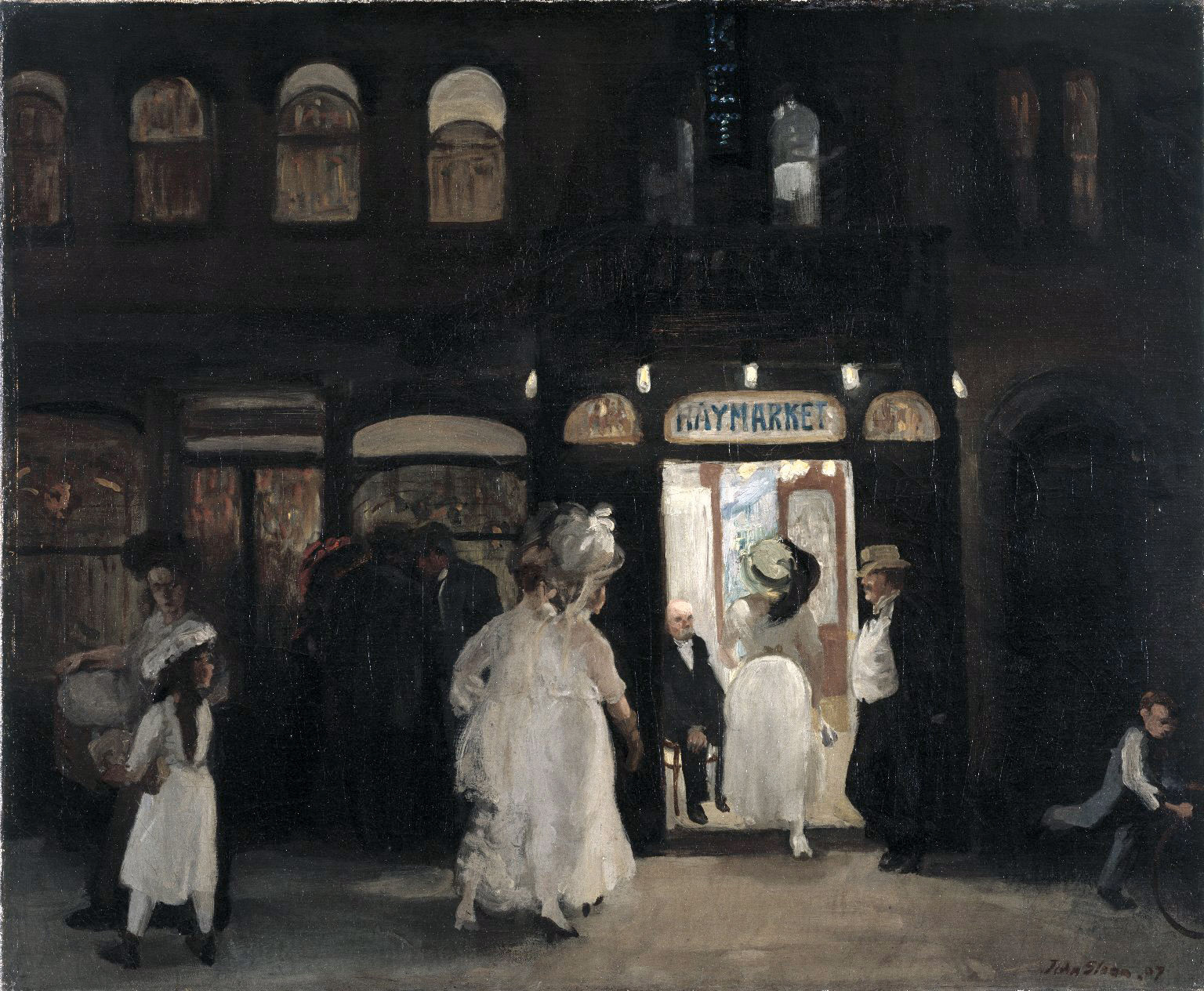
John Sloan (1871-1951), The Haymarket, Sixth Avenue, 1907. Oil on canvas, 261/8 x 3413/16 in. Brooklyn Museum, Brooklyn, NY. Gift of Mrs. Harry Payne Whitney.
His New York Street Signs, 1938, deftly blends the grittiness of the Ashcan School, the hard-edged geometries of advertising and the abstractions of modernism.
In the following pages, the country’s premier historic American fine art galleries showcase exceptional modernist works currently available to collectors.
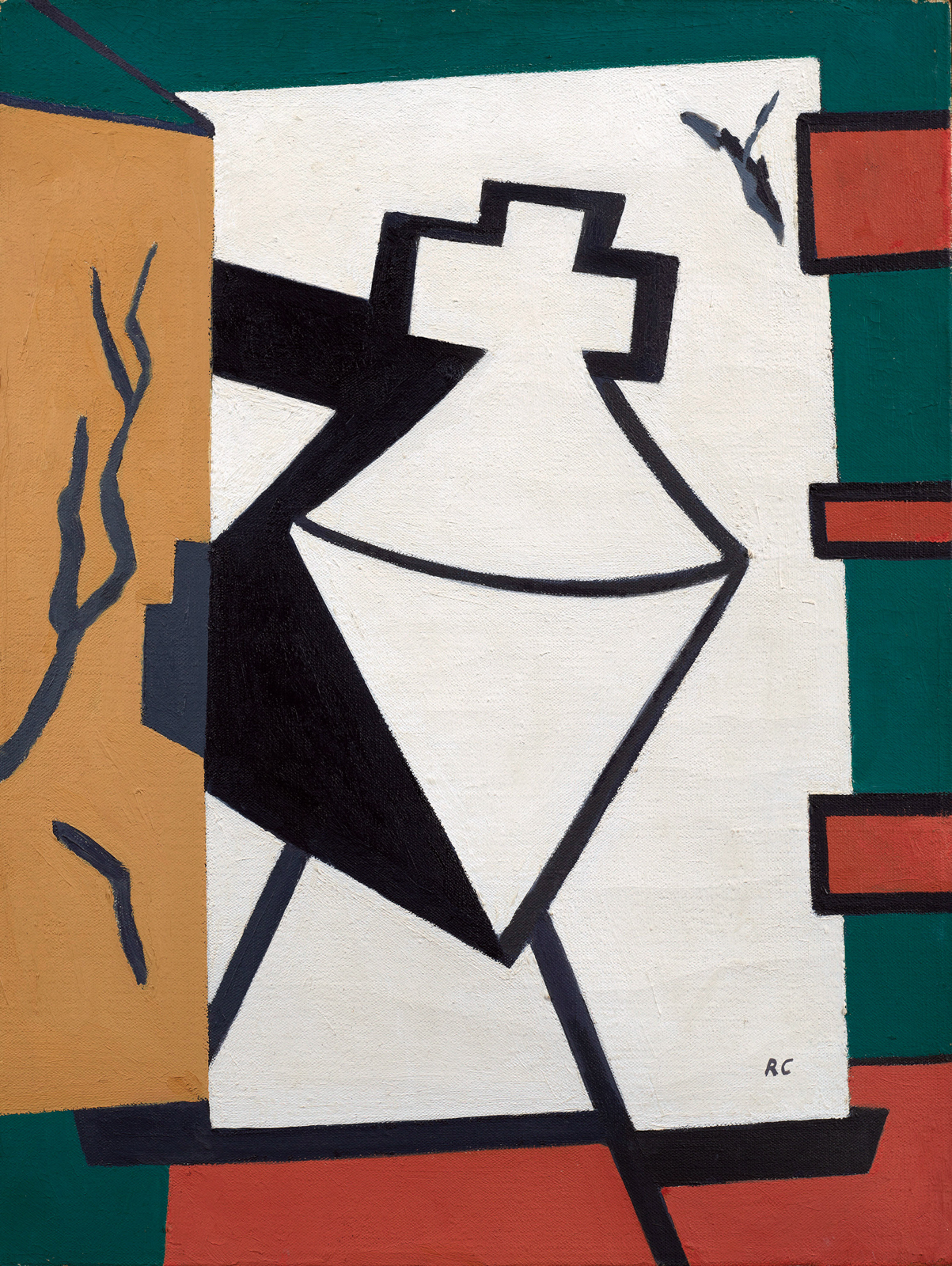
Ralston Crawford (1906-1978), St. Louis Cemetery No. 2, 1954. Oil on canvas, 16 x 12 in. Courtesy Debra Force Fine Art, New York, NY.
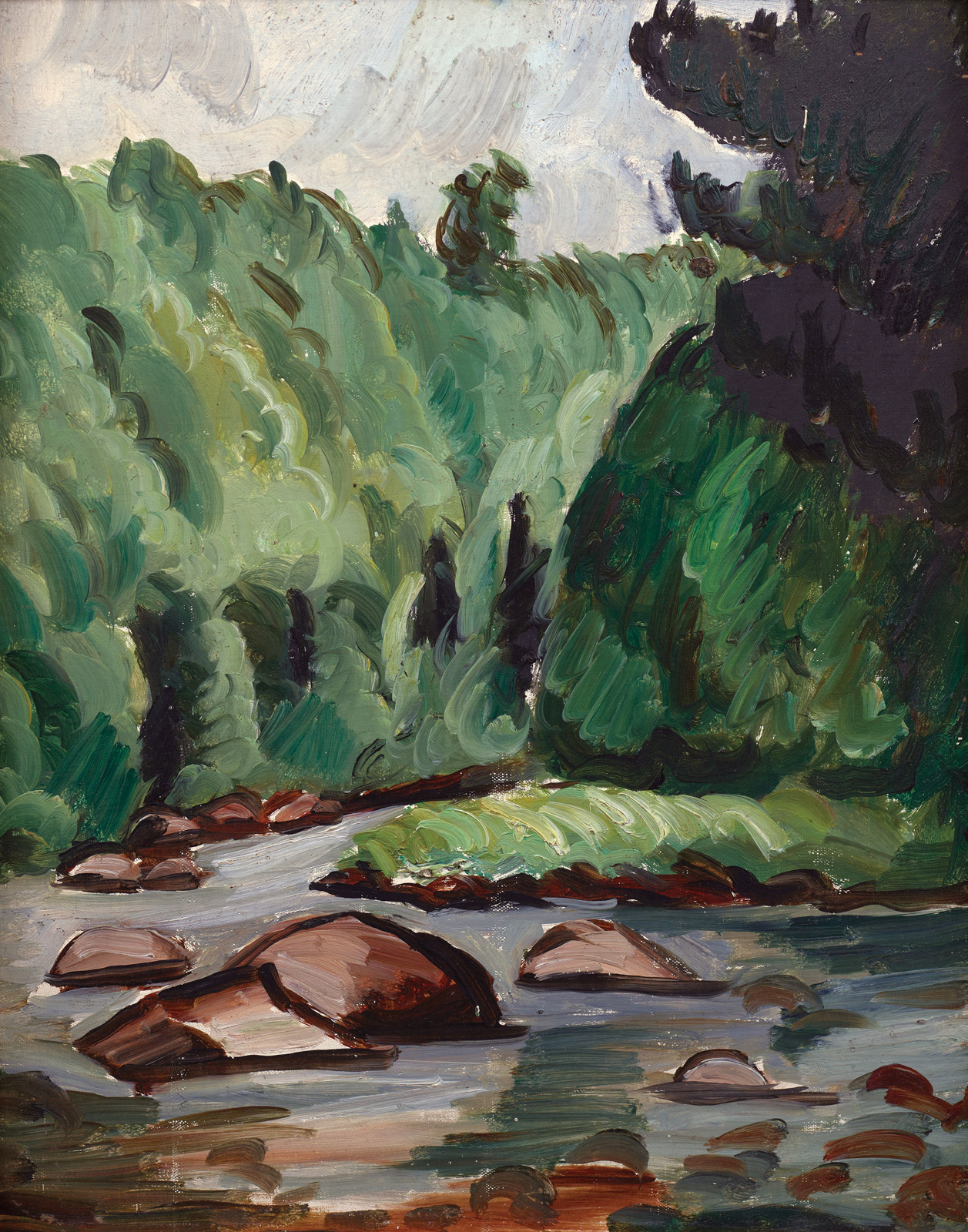
Marsden Hartley (1877-1943), Little River after Rain – Franconia, New Hampshire, 1930. Oil on canvas board, 16 x 127⁄8 in. Courtesy Debra Force Fine Art.
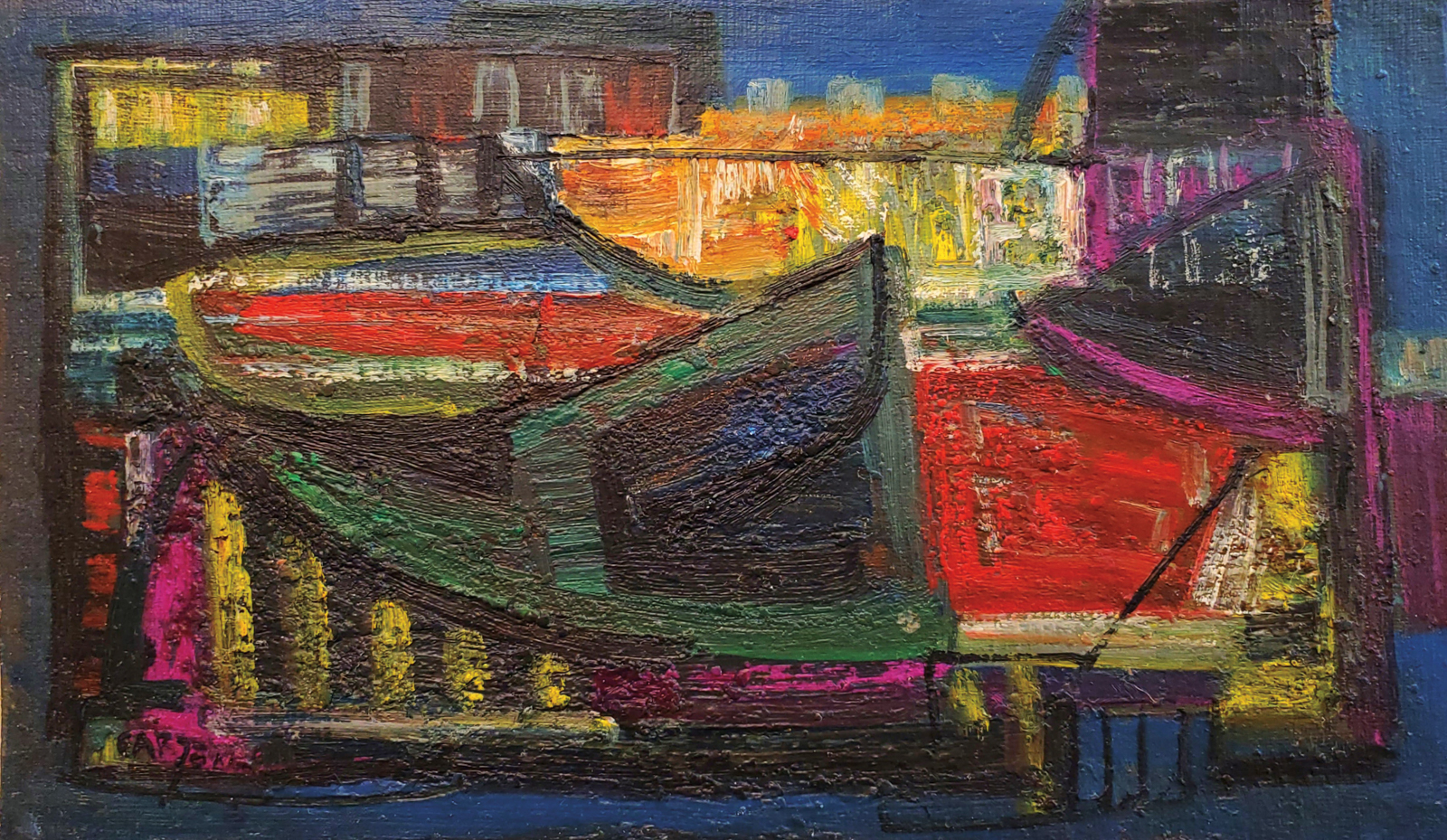
Norman Carton (1908-1980), Untitled #511, ca. 1953. Oil on canvas, 12 x 20½ in. Courtesy J. Kenneth Fine Art.
With roots dating back nearly a century, New York’s Rehs Galleries specializes in 19th- and early 20th-century American and European art. Currently in their ever-evolving inventory is a piece by Swedish-American artist Bror J.O. Nordfeldt (1878-1955), who was a known for his modernist style. Three White Horses is a striking example of his work, which often incorporated strong colors, simplified forms and flattened space. Nordfeldt was a versatile artist who worked in various media, including painting, drawing, and printmaking. He was a prominent figure in the early to mid-20th-century art scene and was associated with several modernist movements, including fauvism and expressionism.
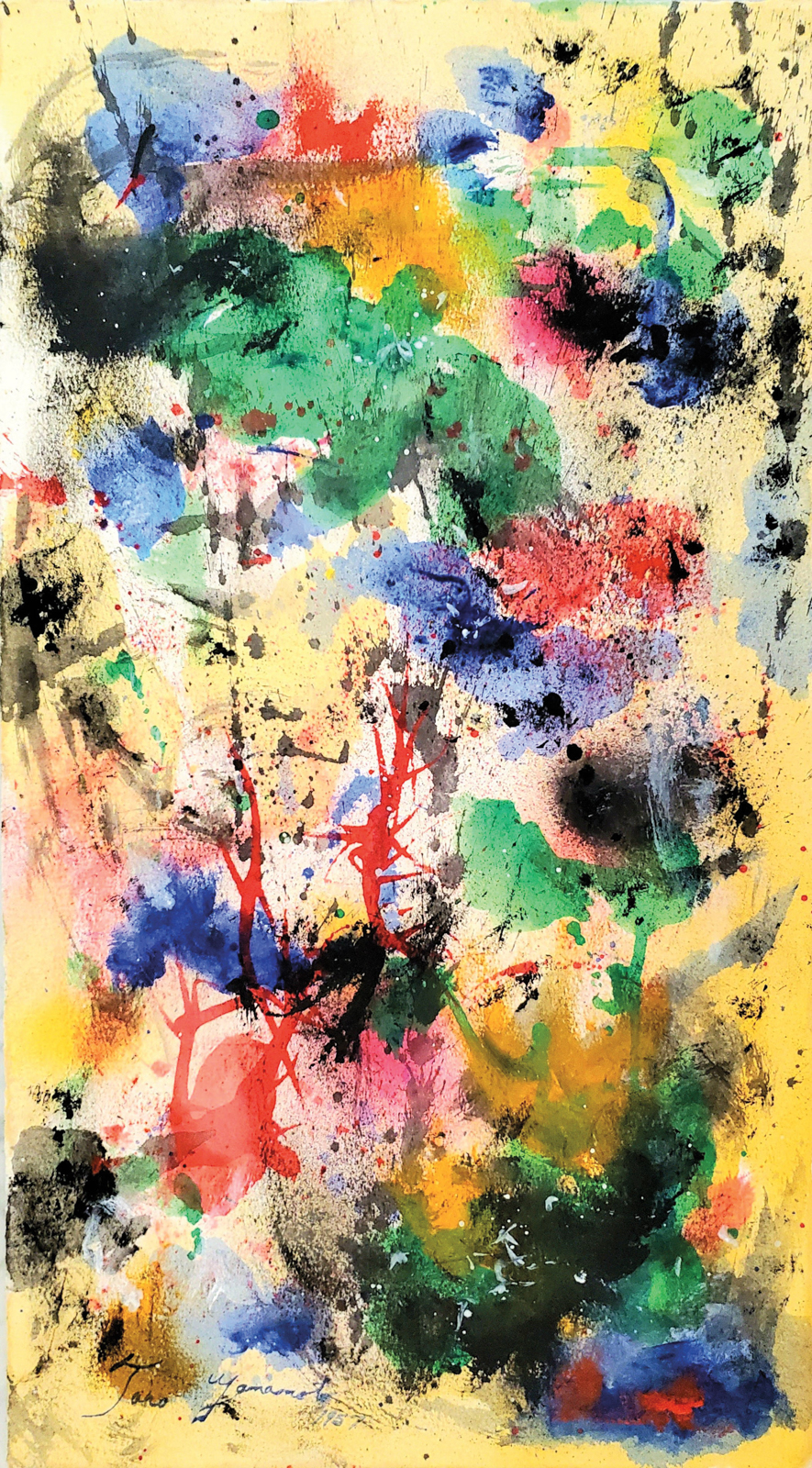
Taro Yamamoto (1919-1994), Untitled, 1957. Mixed media on paper, 19½ x 11 in. Courtesy J. Kenneth Fine Art.
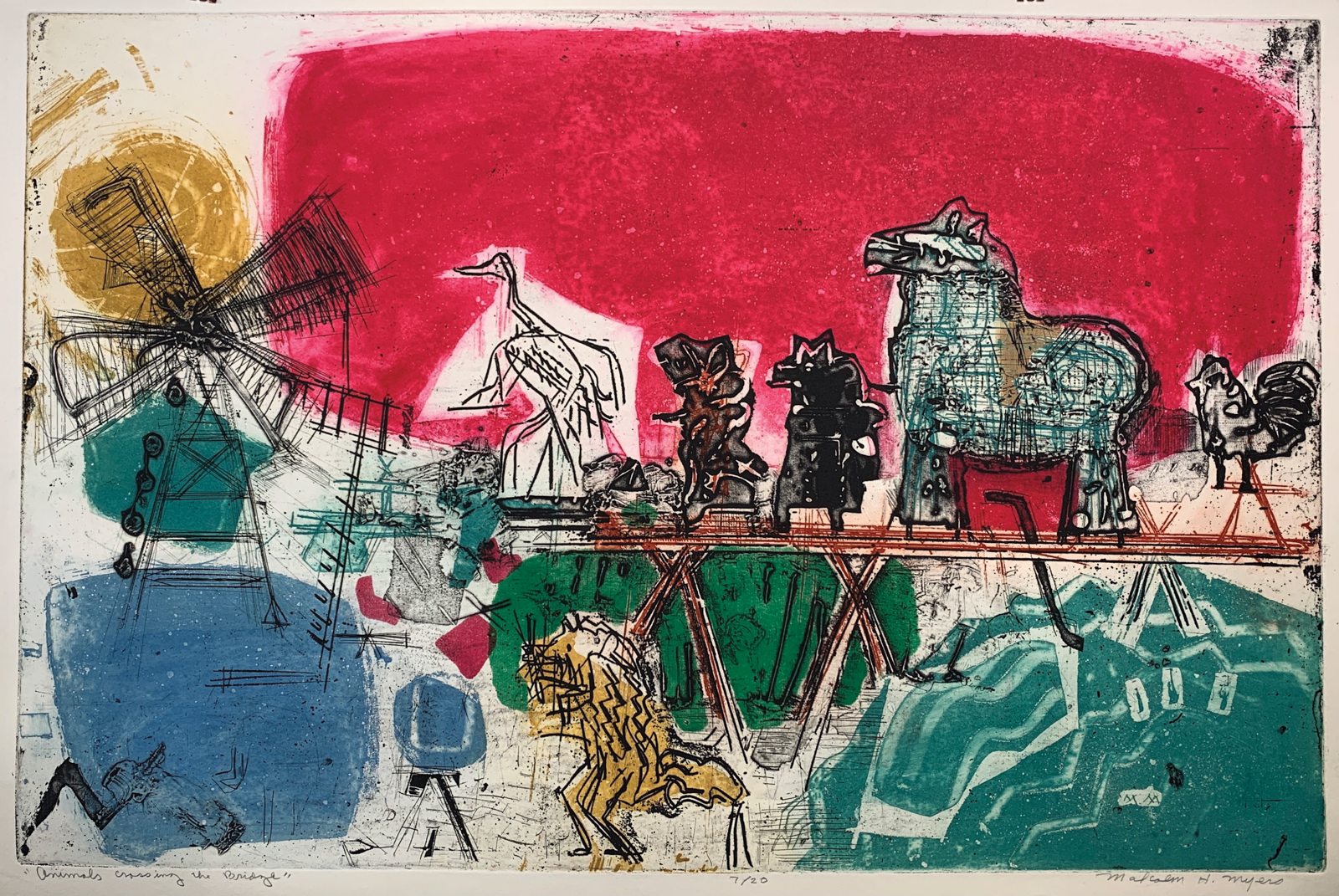
Malcom H. Myers (1917-2002), Animals Crossing the Bridge, 1962. Intaglio, etching, open bite, aquatint, roulette and color Stencil, 24 x 36 in. Courtesy Rubine Red Gallery
Featured here are two works by Myers, a central figure in American printmaking for decades, most notably during the modern era (1950s to the 1970s) when abstraction and abstract expressionism played a significant role in American art.
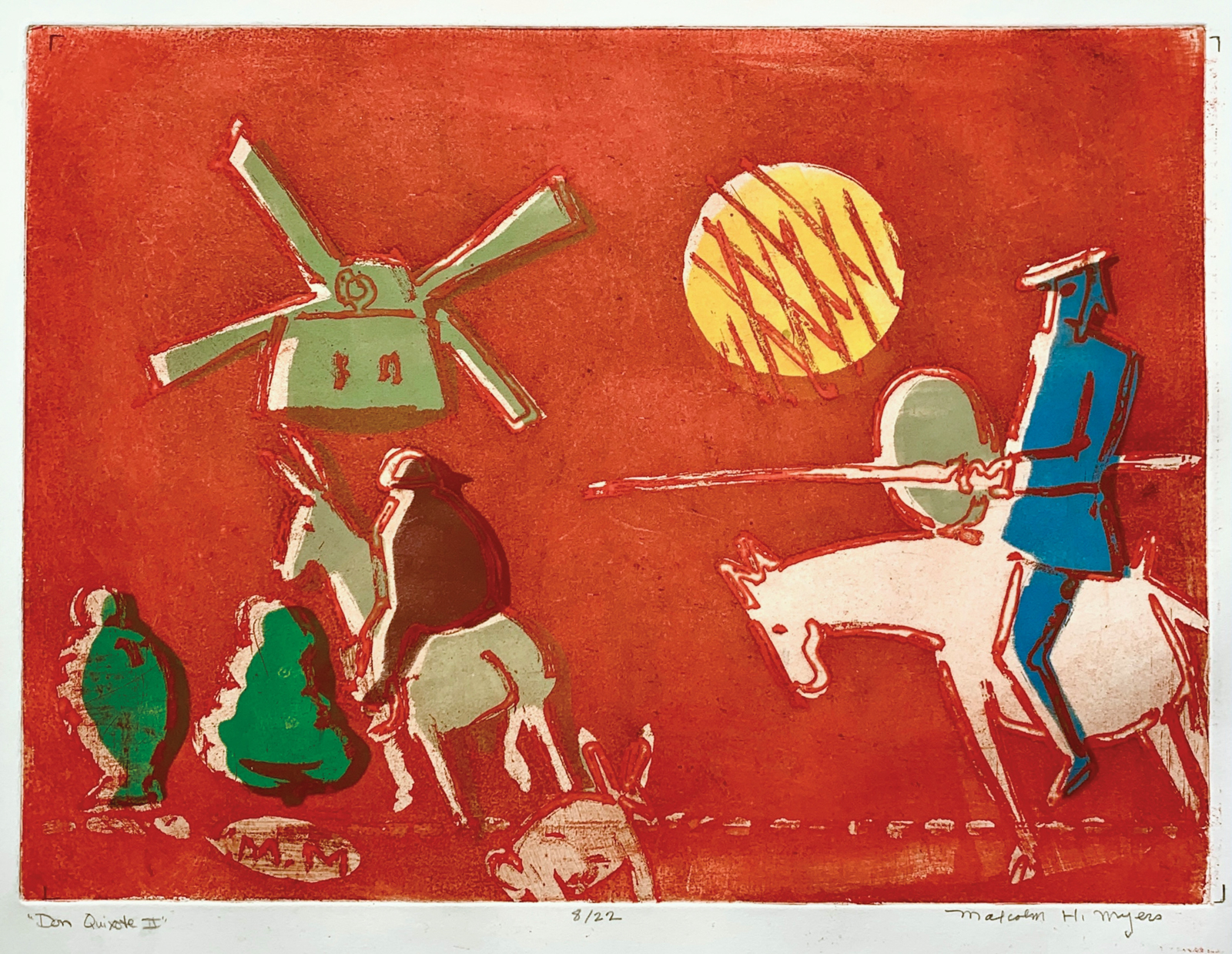
Malcom H. Myers (1917-2002), Don Quixote Edition II Red, ca. 1985. Intaglio and color stencil, 18 x 24 in. Courtesy Rubine Red Gallery.
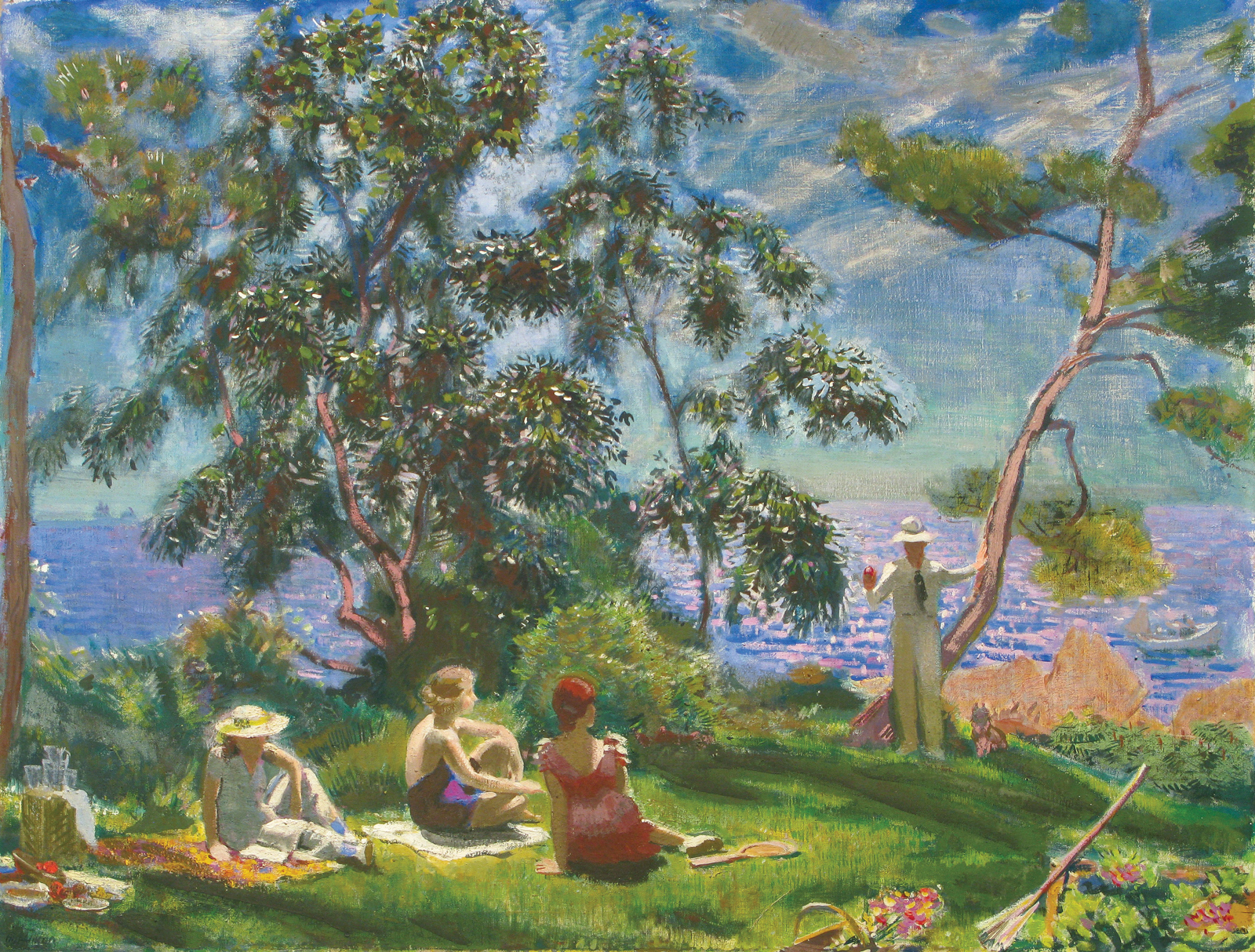
Charles Hopkinson (1869-1962), Judgment of Paris, ca. 1940. Tempera on canvas, 33 x 43 in., signed lower left. Courtesy Vose Galleries.
Established in 1841, Vose Galleries is the oldest family-owned art gallery in America. The gallery specializes in top quality 18th-, 19th- and early 20th-century American realist paintings and works on paper, two examples of which are featured here. A leading portrait and landscape painter in the 20th century, Charles Hopkinson (1869-1962) received his training at some of the most prestigious American and European institutions. After traveling and painting abroad for many years, the artist returned to Massachusetts and married Elinor Curtis in 1903. Judgment of Paris was completed at the Curtis estate around 1940 and is Hopkinson’s interpretation of the famous Greek myth of temptation and beauty. The warm sunlight streaming down on his subjects and his use of lively strokes to capture the sparkling ocean imbue the composition with a modernist bent.
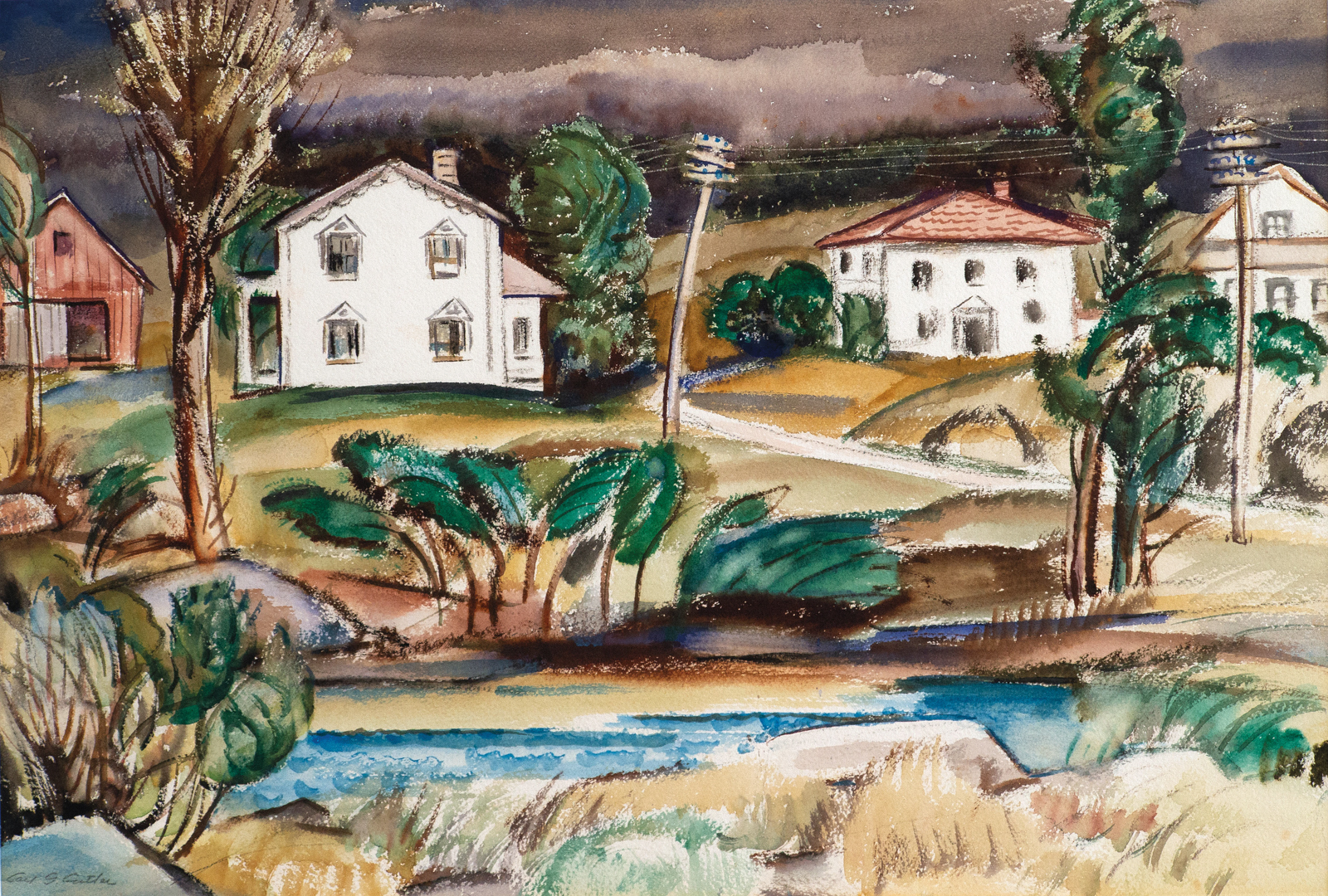
Carl Gordon Cutler (1873-1945), Before the Storm. Watercolor and graphite on paper, 17¼ x 251/8 in., signed lower left: ‘Carl G. Cutler’. Courtesy Vose Galleries.
Featured Galleries
Addison Rowe Gallery 229 E. Marcy Street Santa Fe, NM 87501 t: (505) 982-1533 addart@addisonrowe.com, www.addisonrowe.art
Debra Force Fine Art 13 E. 69th Street, Suite 4F New York, NY 10021 t: (212) 734-3636 info@debraforce.com, www.debraforce.com
Helicline Fine Art New York, NY By Appointment Only t: (212) 204-8833 hello@heliclinefineart.com, www.heliclinefineart.com
J. Kenneth Fine Art 668 N. Palm Canyon Drive Palm Springs, CA 92262 t: (802) 540-0267 jkennethfineart@gmail.com, www.jkennethfineart.com
Rehs Galleries 20 W. 55th Street New York, NY 10019 t: (212) 355-5710 info@rehs.com, www.rehs.com
Rubine Red Gallery 668 N. Palm Canyon Drive, Suite 102 Palm Springs, CA 92262 t: (760) 537-7665 jason@rubineredgallery.com, www.rubineredgallery.com
Vose Galleries 238 Newbury Street Boston, MA 02116 t: (617) 536-6176 info@vosegalleries.com, www.vosegalleries.com
Powered by Froala Editor


