In our exhibition about the changing styles of Western art over a century, we show in 30 artworks how concepts of the American West shifted alongside developments in art.
Art has a role in expressing our national identity, values and aspirations. The Western states hold a particular fascination as their histories connect with frontier America and its Native American peoples. The first Americans to travel west and start new lives inspired successive generations and shaped the national imagination—ultimately the American character which is individualistic, self-reliant and democratic. The American spirit was formed in the West, a mythical land of personal and economic opportunity.
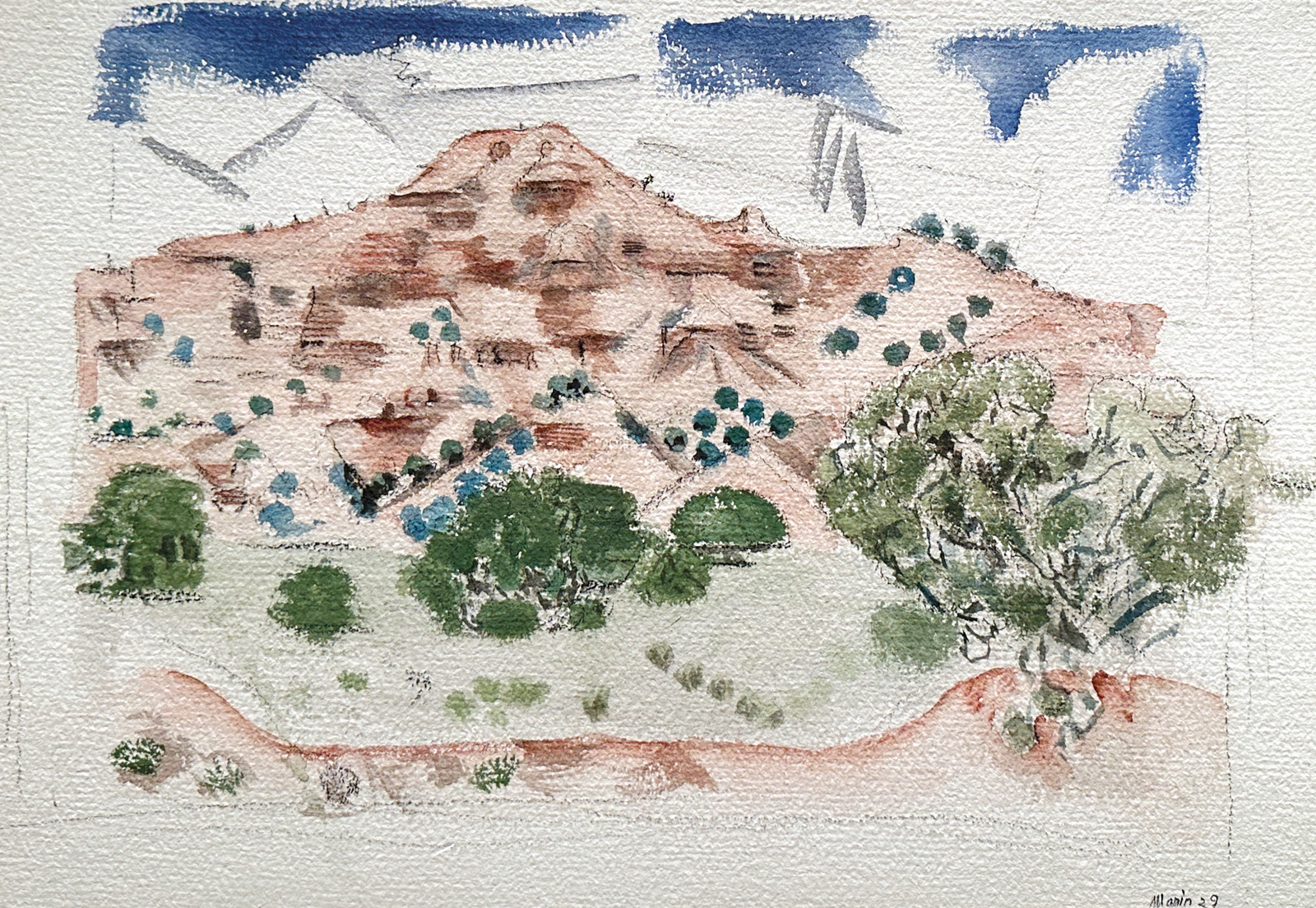
John Marin (1870-1953), Taos Landscape, New Mexico, 1929. Watercolor on paper, 14 x 20 in., signed and dated lower right.
As railroads made the West more accessible, artists like Ernest Lawson and Allen Tucker documented local tribes and settlers in an impressionist-inspired style. In the 20th century, growing interest in Indian themes and forms abstracted from nature found their way into contemporary art and design. Artists like John Sloan promoted New Mexican art back in New York, including an exhibition of contemporary Indian paintings at the Society of Independent Artists in 1920. John Marin made trips to Taos during the summers of 1929 and 1930 as a guest of Mabel Dodge Luhan. Marin executed map-like portraits of the Taos landscape in watercolors filled with light and space. These works connected to Pueblo Indian watercolors, which relied on outline and color without modeling or perspective. Our exhibition includes two of John Marin’s 94 watercolors made during those two visits to Taos.
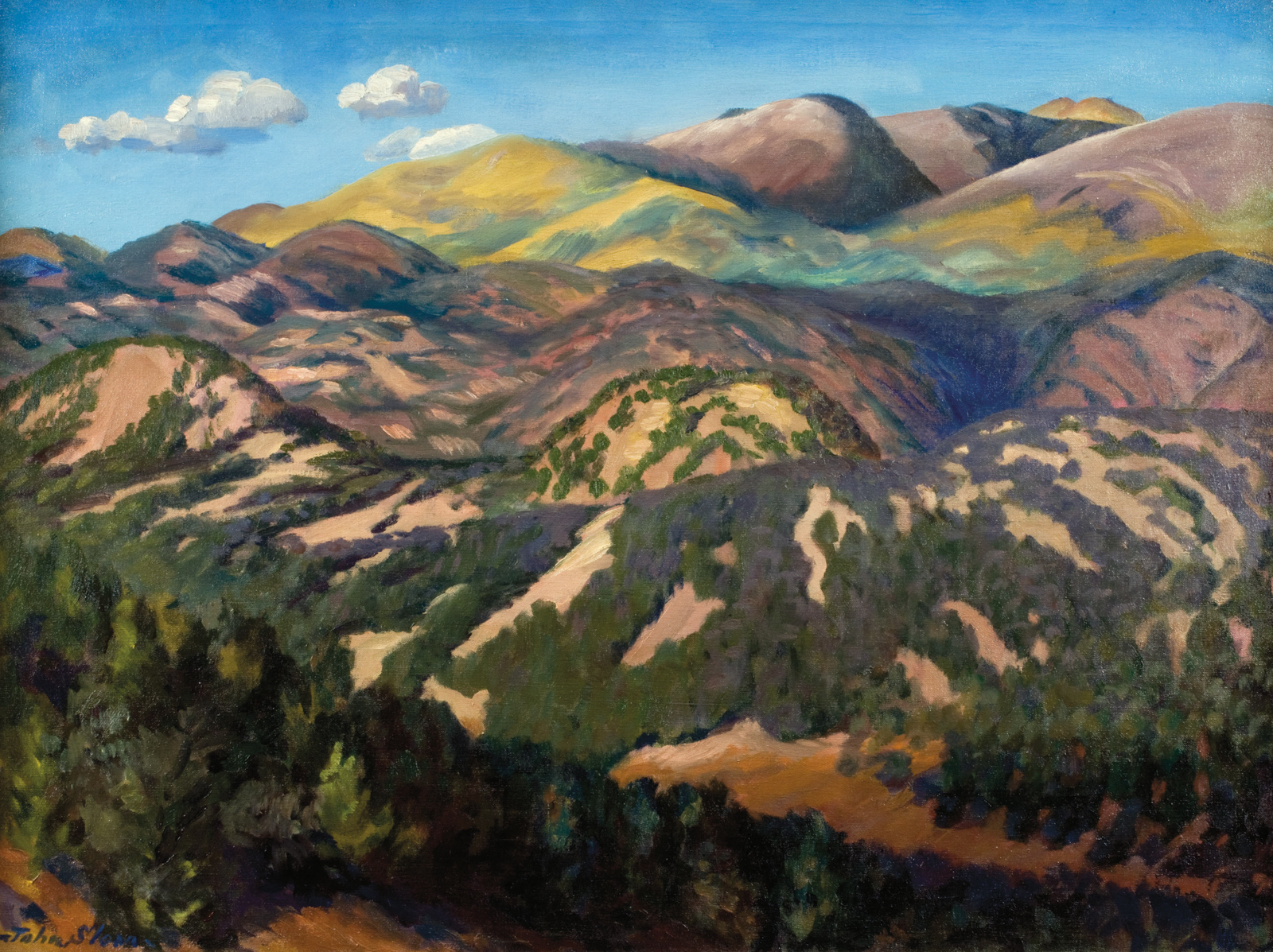
John Sloan (1871-1951), Culebra Range, Early Autumn, 1923. Oil on canvas, 26 x 34 in., signed lower left, titled and dated verso.
Abstract artists looked to the West for sources of Indian design and inspiration from the dramatic landscape. Native American design was an influence in spare, elemental patterns for artists interested in geometry and juxtaposed symbols for artists interested in the subconscious. This is demonstrated in abstract works by Charles Green Shaw and Werner Drewes. In New Mexico the Transcendental Painting Group, active from 1938 to 1942, aimed to take painting beyond the appearance of the physical world through new concepts of space, color, light and design to imagine an idealistic and spiritual world. Our exhibition offers examples by the two founders of the group: Raymond Jonson and Emil Bisttram. Ilya Bolotowsky ran the art department at the University of Wyoming from 1948 to 1957.
In postwar abstraction, compositions became more reductive, hard edge, and rooted in formal and conceptual concerns. Richard Anuszkiewicz, a student of Josef Albers, fascinated with the new understanding of how the eye perceives space, adapted Indian geometric patterns in his proto-Op paintings of the early 1960s. Washington Color School artist Paul Reed’s shaped canvas of a monumental cross evokes a New Mexican adobe church. Steve Wheeler, the Indian Space Group artist, used ancient native symbols full of pattern, message and color in rhythmic, flat design to give the viewer both emotional feelings and technical realism.
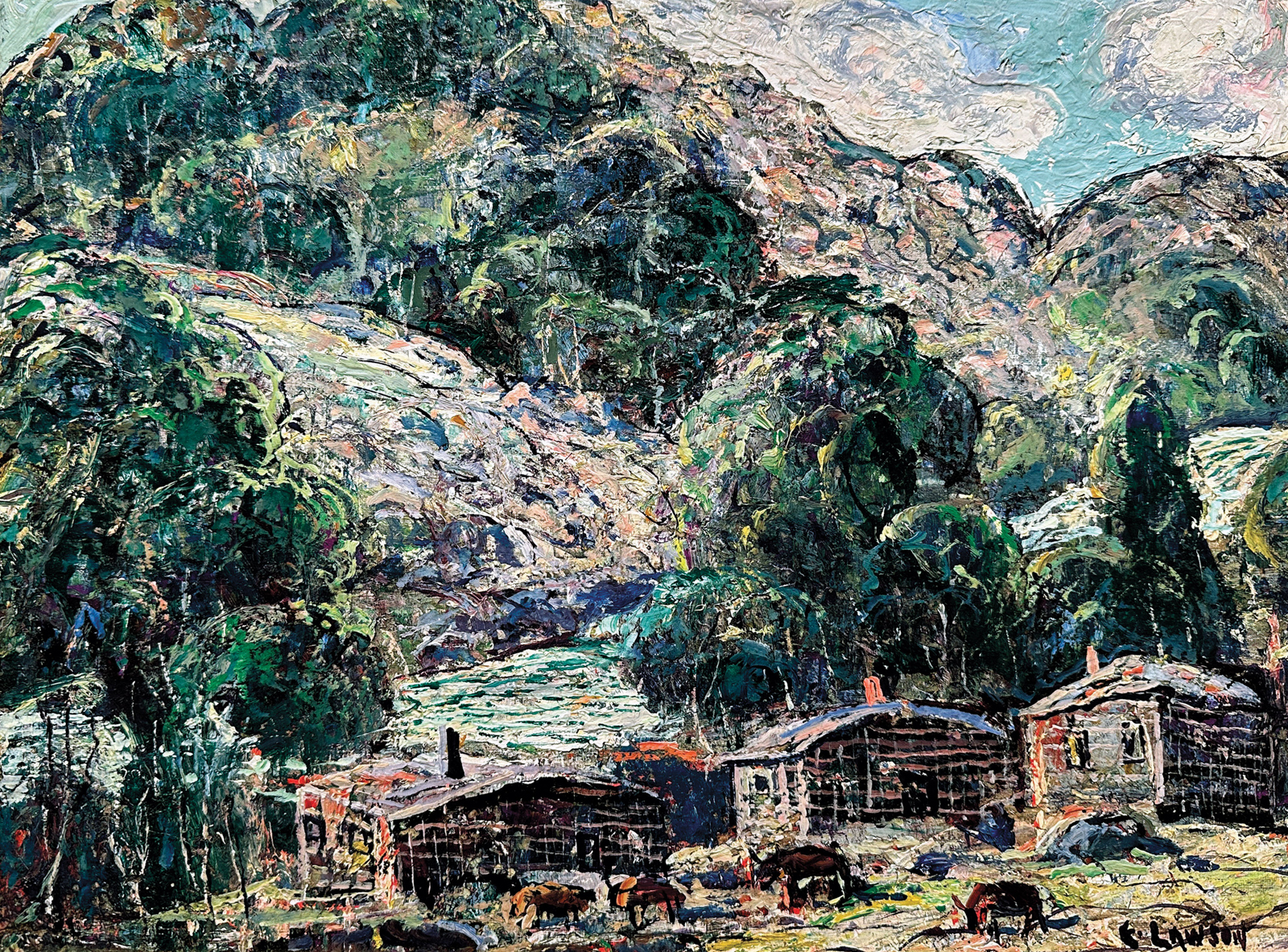
Ernest Lawson (1873-1939), Little Ranch, Colorado, ca. 1925-30. Oil on board, 12 x 16 in., signed lower right, titled verso.
Powered by Froala Editor


