
Hailed as “revelatory” by the New York Times, the exhibition Hear Me Now: The Black Potters of Old Edgefield, South Carolina, at The Met focuses on the work of African American potters in the 19th-century American South. Featuring many objects never before seen outside of the South, Hear Me Now is the first exhibition of its kind in the Northeast.
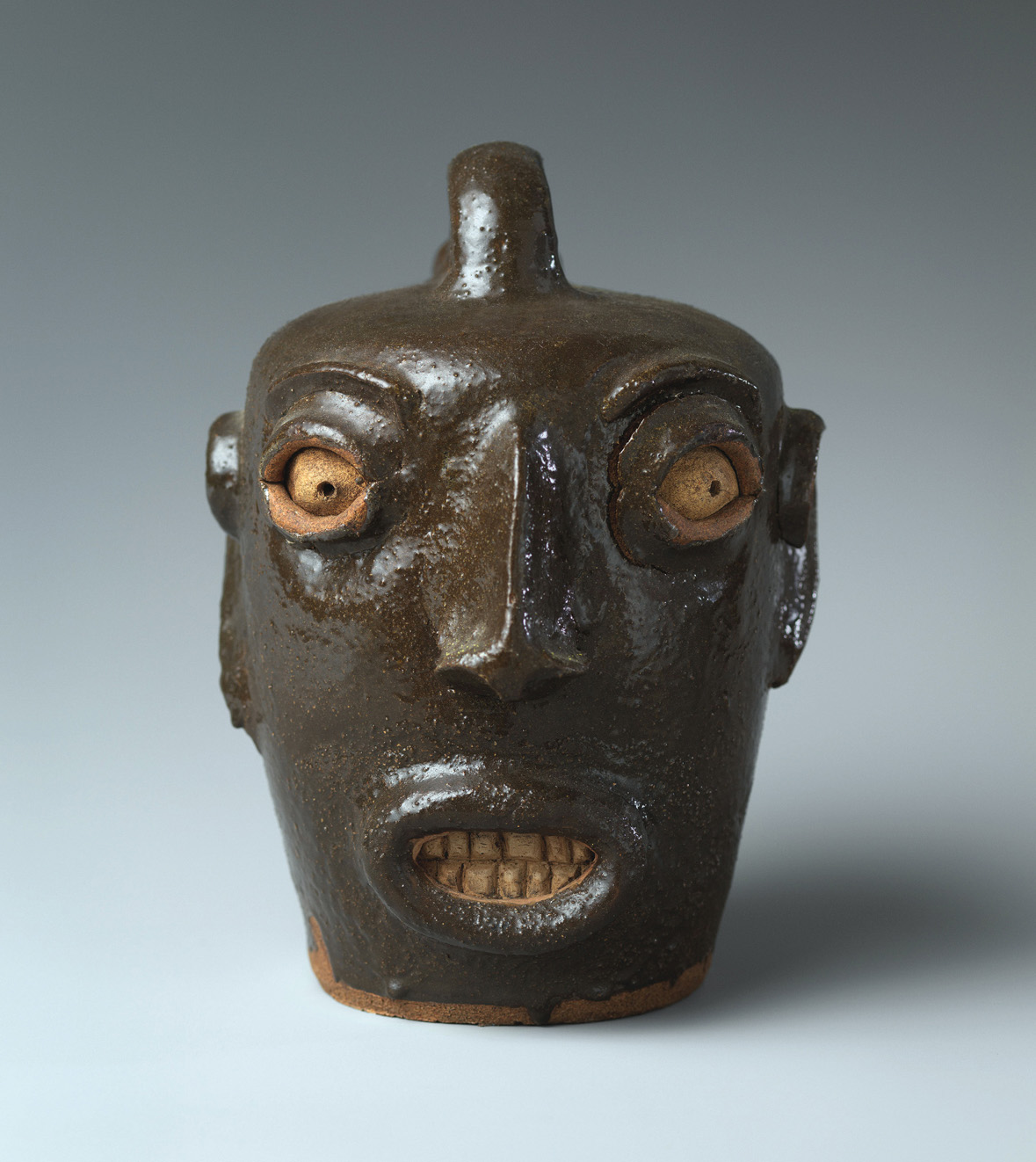 Unrecorded potter, face jug, ca. 1867-85. Alkaline-glazed stoneware with kaolin, 8 in. Attributed to Miles Mill Pottery (1867–85), Old Edgefield District, South Carolina. Hudgins Family Collection, New York.
“As the first exhibition from The Met’s American wing to highlight the work of enslaved makers, this project marks a pivotal moment in the museum’s efforts to tell a more inclusive and expansive story of artistic expression, both past and present,” says Max Hollein, director of the Met. “These remarkable vessels help tell untold histories, while also raising complex questions regarding the collecting, display, and interpretation of objects made by enslaved individuals.”
The exhibition was organized by the Metropolitan Museum of Art and the Museum of Fine Arts, Boston, where it will travel to next.
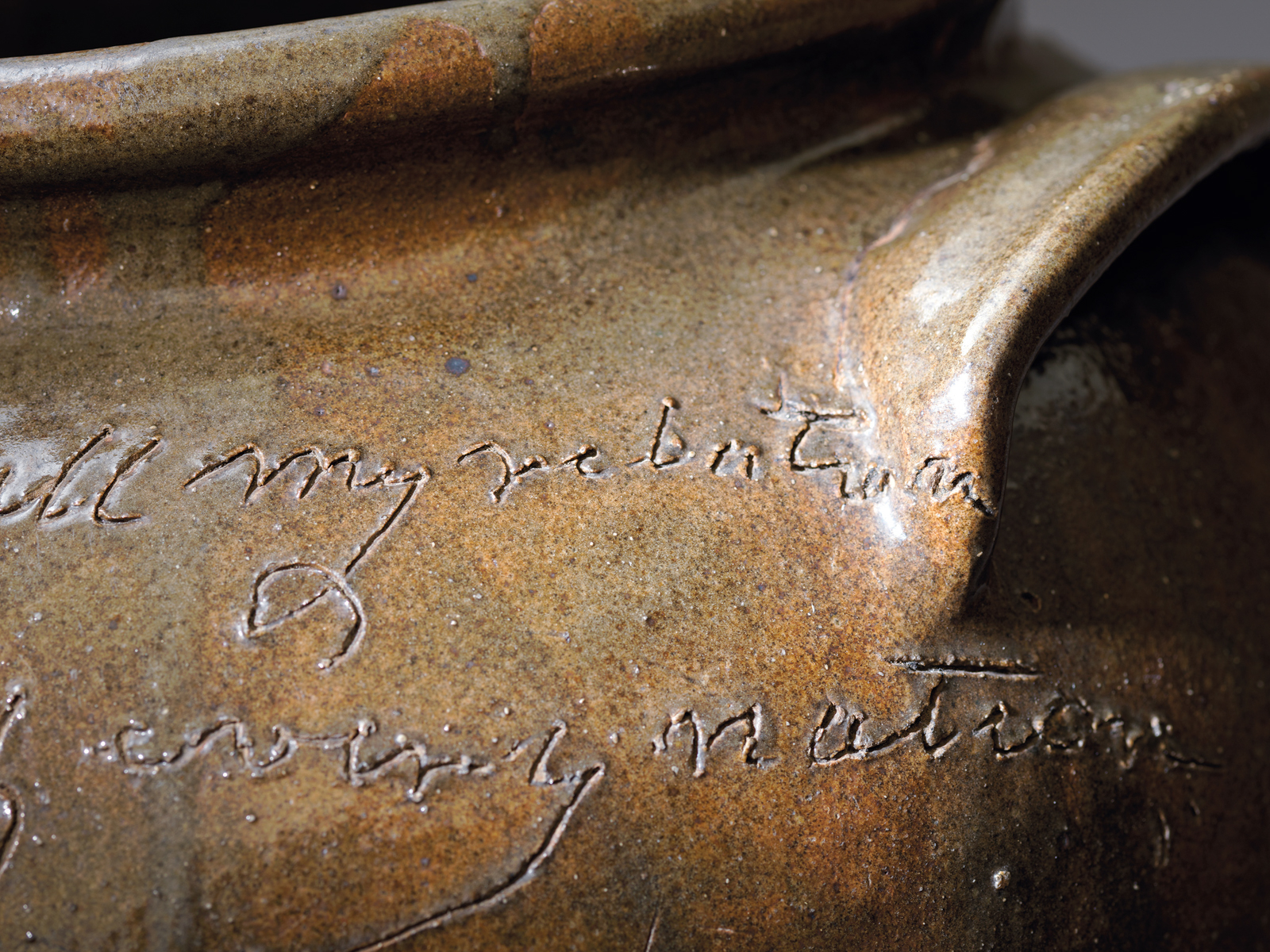
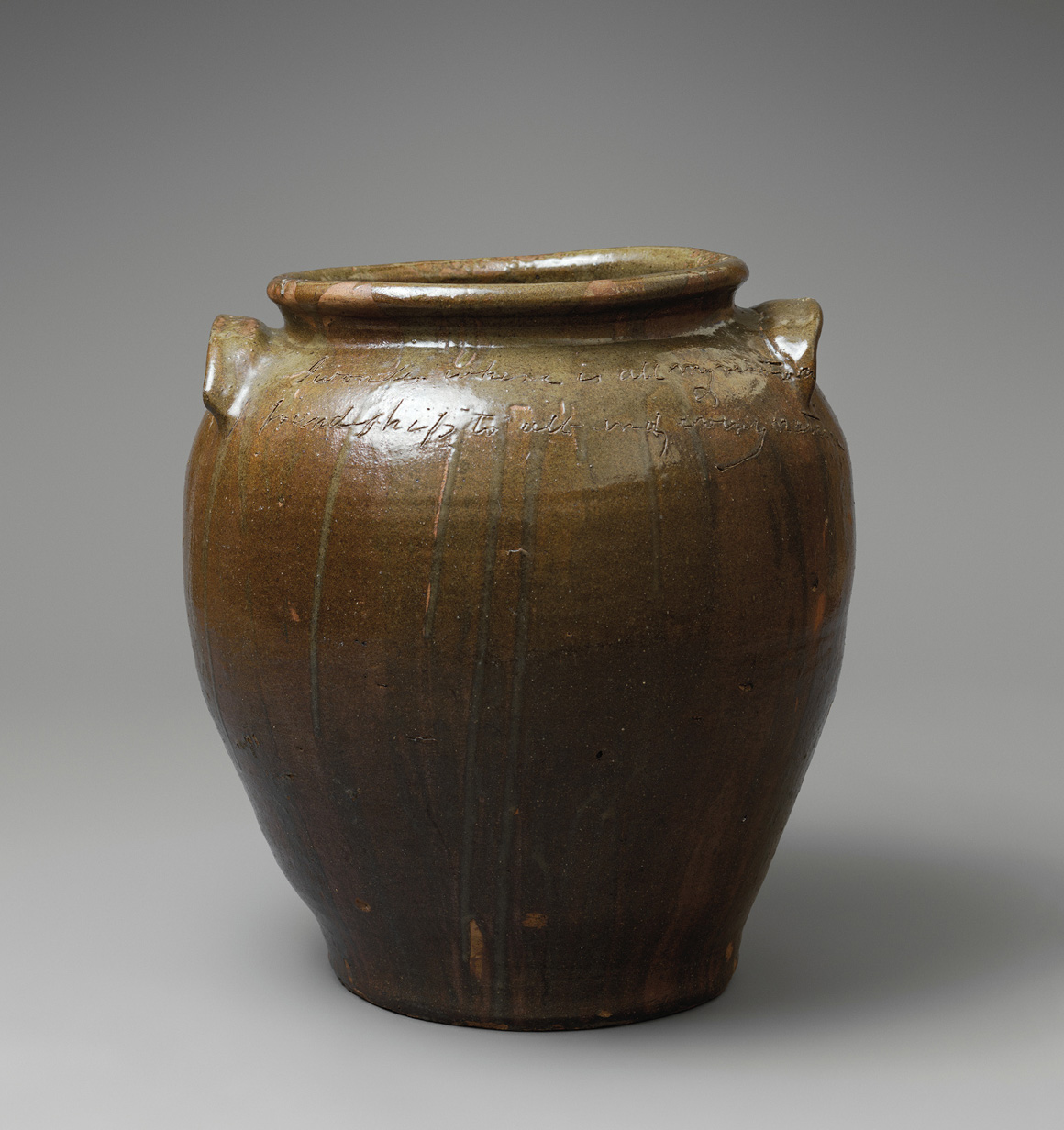 Dave (later recorded as David Drake; ca. 1801-1870s) storage jar, 1857. Alkaline-glazed stoneware, height:19 in. Stony Bluff Manufactory (ca. 1848-67), Old Edgefield District, South Carolina. Collection of Greenville County Museum of Art Inscription: “I wonder where is all my relation / Friendship to all – and every nation / Lm Aug 16, 1857 Dave”.
On display are approximately 50 vessels that were used for a variety of purposes. The Old Edgefield District of South Carolina was known for its clay-rich soil. A robust stoneware industry developed there before the Civil War, powered by enslaved people who became skilled at the craft of pottery making. Their labor may have lined the pockets of the industry owners, but many found surreptitious ways to express themselves and preserve their history.
Exhibition viewers are greeted by a display of 12 monumental masterpieces by a maker known simply as Dave (later identified as David Drake; ca. 1801-1870s). As Edgefield’s best-known artist, Dave exemplifies the talent and daring of potters at that time. Though literacy was illegal for enslaved people, Dave signed, dated and inscribed verses on many of his vessels.
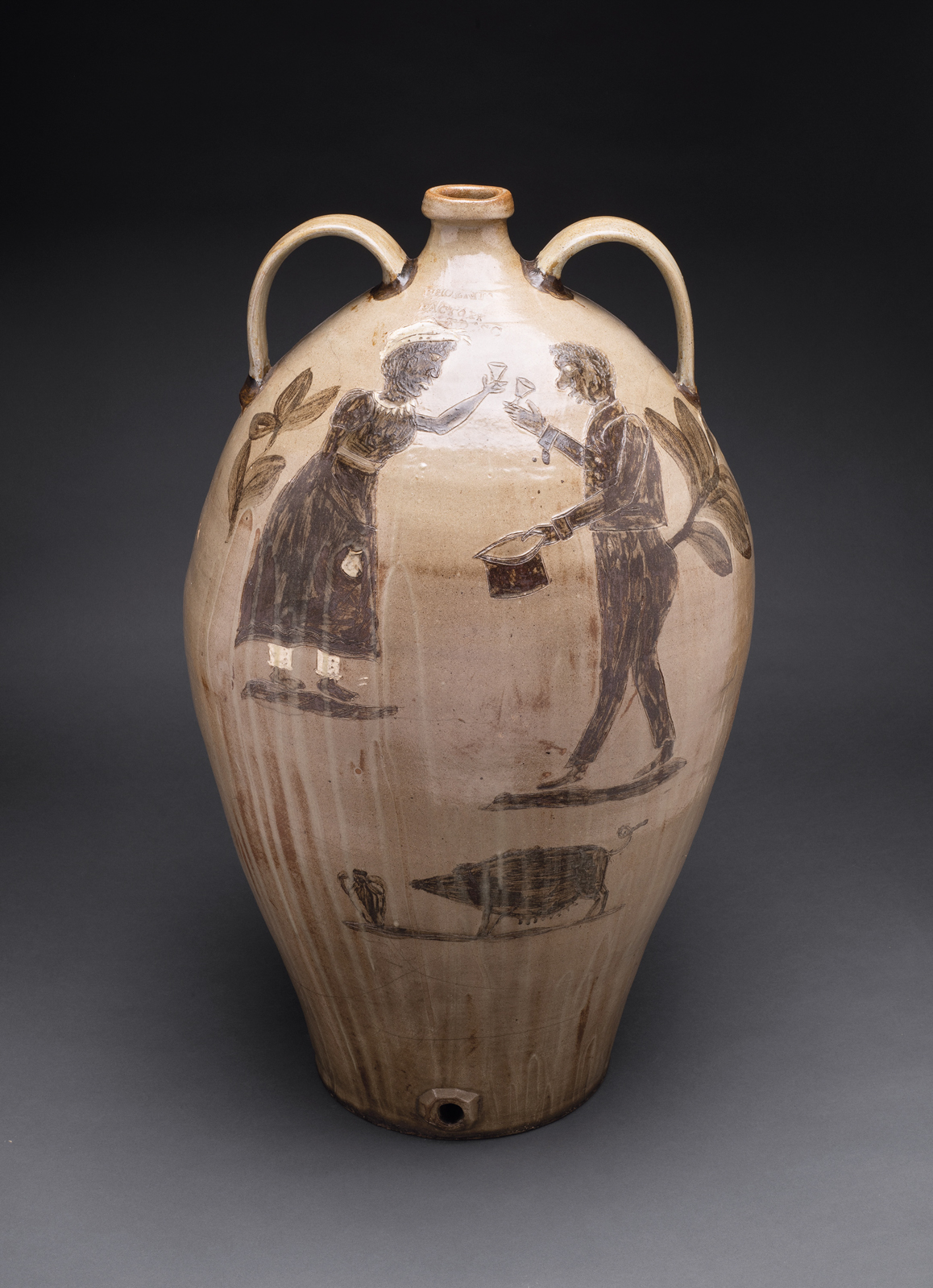 Unrecorded potter, probably Thomas M. Chandler Jr. (1810-1854), watercooler, ca. 184. Alkaline-glazed stoneware with iron and kaolin slip, 31¼ in. Phoenix Stone Ware Factory (ca. 1840), Old Edgefield District, South Carolina. Collection of the High Museum of Art (1996.132). Photo by Michael McKelvey / Courtesy of the High Museum of Art. One example is a storage vessel from 1857 which bears the inscription: “I wonder where is all my relation / Friendship to all – and every nation / Lm Aug 16, 1857 Dave”
According to Vincent Brown, the Charles Warren Professor of American History and Professor of African and African American Studies at Harvard University, Dave’s stature as a master potter did not save his family. Brown discusses the historical moment in which Dave was working in an audio guide accompanying the storage jar. Though the transatlantic slave trade ended in 1808, a massive domestic slave trade was still underway. According to Brown, nearly a million people were sold away to other states and places, including Dave’s partner and children. “The fact that he was a noted potter, a person highly valued for his skills, couldn’t save his family. And it’s recognized in the work itself.”
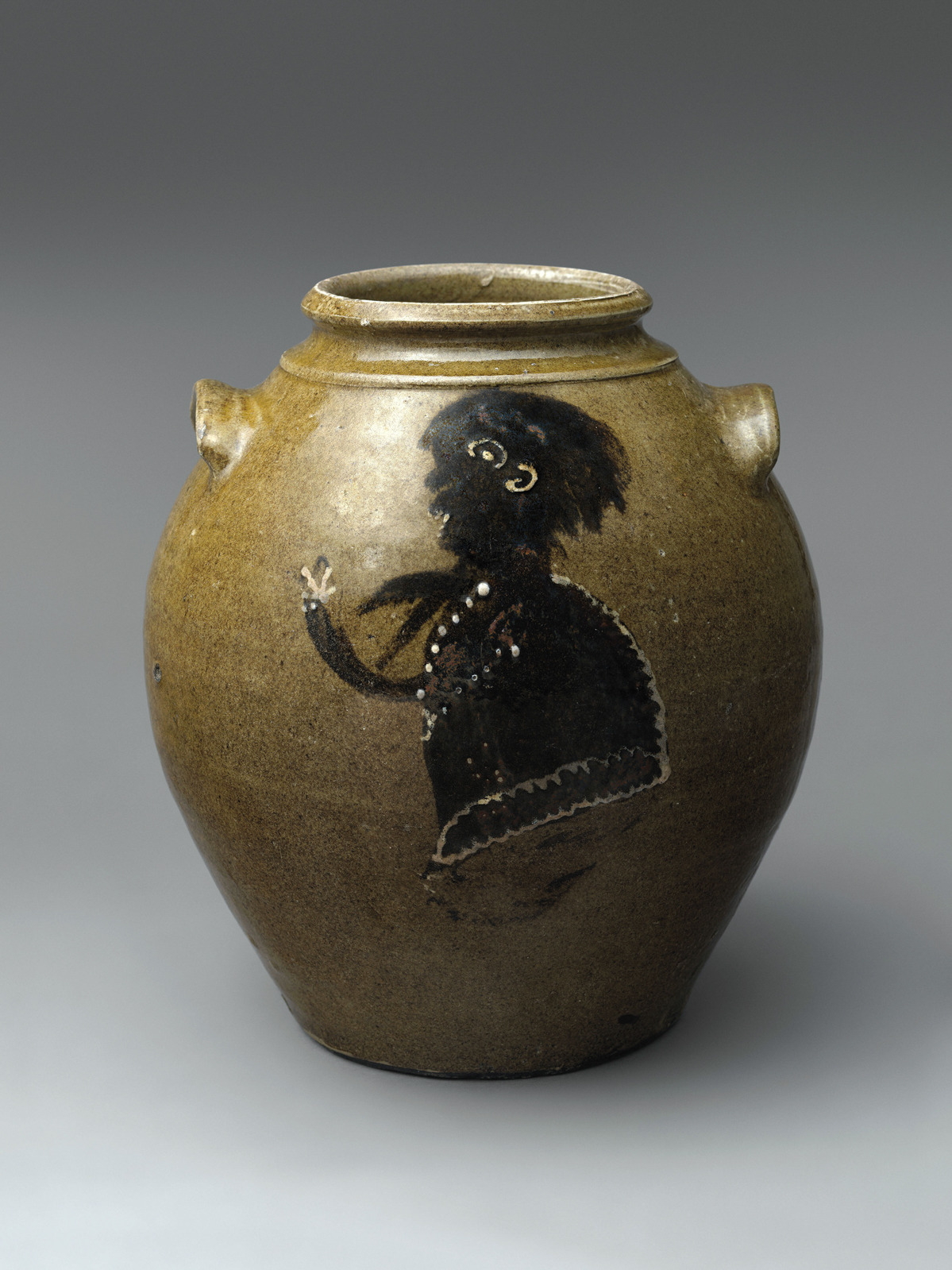 Unrecorded potter, storage jar, ca. 1840-53. Alkaline-glazed stoneware with kaolin and iron slip, height: 14 in. Possibly Phoenix Stone Ware Factory (ca. 1840) or Collin Rhodes Factory (ca. 1846-53), Old Edgefield District, South Carolina. Mr. and Mrs. John LaFoy, Greenville, South Carolina.
Also on display are 19 “face jugs.” Measuring less than 10 inches in height, these small figurative sculptures are thought to resemble minkisi, ritual objects which were important in West-Central Africa. Historians have traced the arrival of approximately 100 enslaved people from Congo who were illegally transported to Edgefield. The face jugs are presumed to be a way of staying in touch with their religions and rituals.
Historian Wayne O’Bryant says the face vessels were unique to Edgefield due to a confluence of the right materials and immediate connection to homeland. “That group that landed in Edgefield County where they were making pottery and had the activating material all kind of came together. That’s why you didn’t see these pots all over the place,” O’Bryant says in an audio guide accompanying the face vessels.
Other vessels feature figurative images, such as one by an unrecorded potter possibly from the Phoenix Stone Ware Factory (circa 1840) or Collin Rhodes Factory (circa 1846 to 1853). The alkaline-glazed pot might have stored food or perishables.
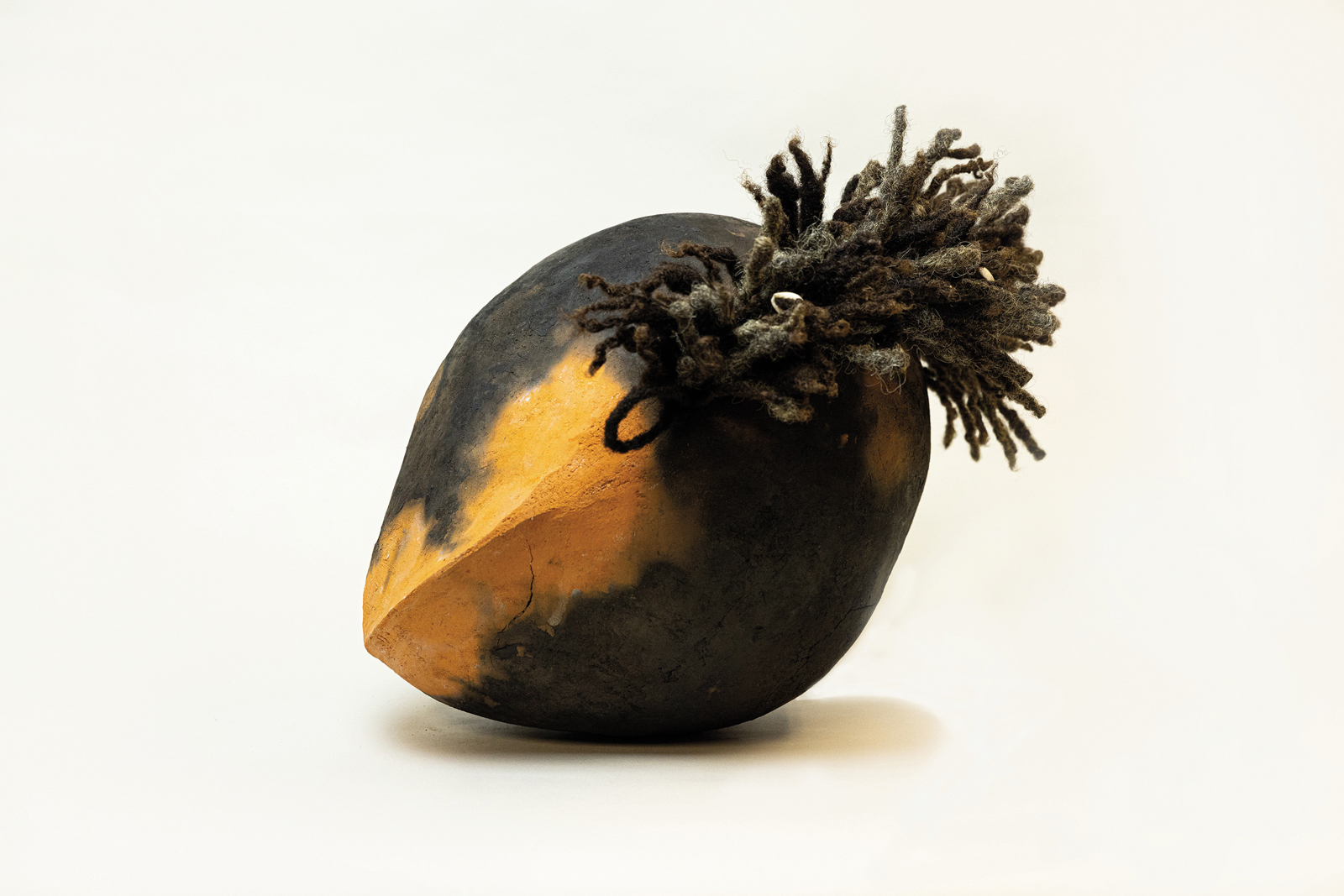 Adebunmi Gbadebo, K.S., 2021. True Blue Cemetery soil, human locs from Aaron Wilson, Kelsey Jackson and Cheryl Person; 17 x 13 x 22 in. Courtesy of the artist, forthcoming acquisition by the Museum of Fine Arts, Boston.
In addition to the historical pieces, the exhibition includes several works by contemporary artists responding to or working in the same vein as the Edgefield potters. Those artists include Theaster Gates, Simone Leigh, and Adebunmi Gbadebo, among others.
“Taken together—along with the scholarly publication, audio guide, and upcoming public programs—this exhibition celebrates the creative practices of all artists on display as enduring tools of communication and activism,” Hollein says.
The exhibition runs through February 5 at The Met. It opens March 4 at the Museum of Fine Arts, Boston.
Powered by Froala Editor