An exhibition opening February 3 at Maine’s Portland Museum of Art asks what it is to be an American and who gets to tell the American story.
American Perspectives: Stories from the American Folk Art Collection is a traveling exhibition featuring over 70 works from the American Folk Art Museum in New York City. The show is as intricate and diverse as the United States, spanning many decades and styles. From quilts to paintings to pottery, these works by self-taught artists blur the line between folk and fine art. They also offer vital insights into American history and identity.
The exhibition is divided into four sections, based on theme rather than chronology: Founders, Travelers, Philosophers, and Seekers. Portland Museum of Art’s assistant curator of American Art Ramey Mize says the sections are meant to be broad and associative, and include both contemporary and historical works. “It can feel wild to jump from the 1890s to something more contemporary,” she says. “The artworks are united by questions of what it means to be an American and what this country means to us.”
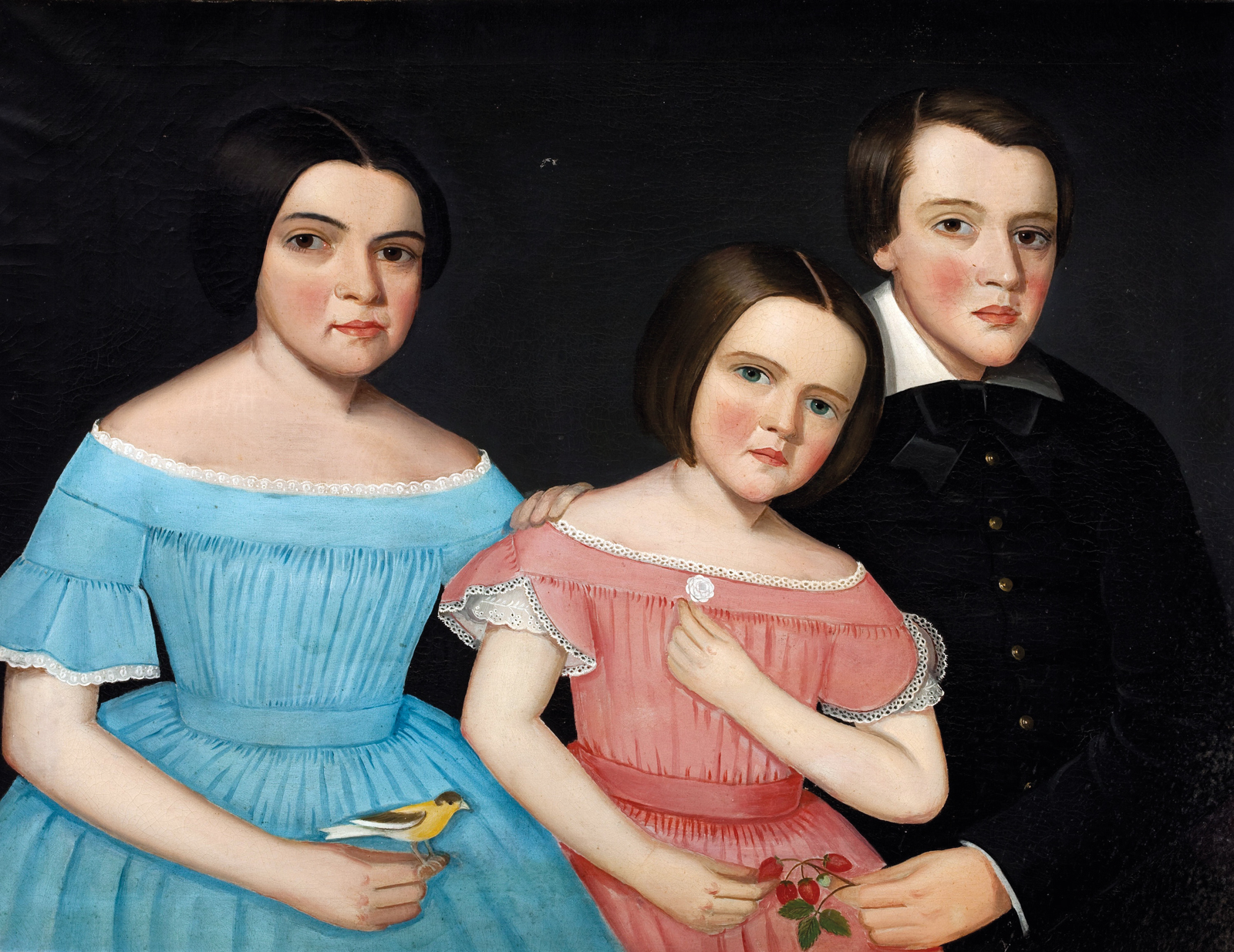 Ammi Phillips (1788–1865), Three Children of Henry Joslen Carter, 1860. Oil on canvas, 28¾ x 37 in. Collection American Folk Art Museum, New York. Gift of Cynthia K. Easterling in honor of her grandmother Grace E. Carter.
The “Founders” section includes the painting Three Children of Henry Joslen Carter, made by Ammi Phillips in 1860 in Stockbridge, Massachusetts. Mize says Phillips was a self-taught artist emblematic of that moment in history, when artists made their livings doing commissions for middle-class families. His “naïve style” is seen as iconic folk art. “It shows how imperfect that term is,” Mize says.
Clementine Hunter’s Playing Cards shows a very different picture of family life in America. Painted in 1970 when Hunter was in her 80s, the timeless scene shows three Black women enjoying an afternoon in the sun. Hunter worked as a farm laborer and never learned to read or write, but she produced thousands of paintings in her lifetime. Her depictions of Black Southern life eventually earned her wide acclaim, including an honorary doctorate from Northwestern State University of Louisiana.
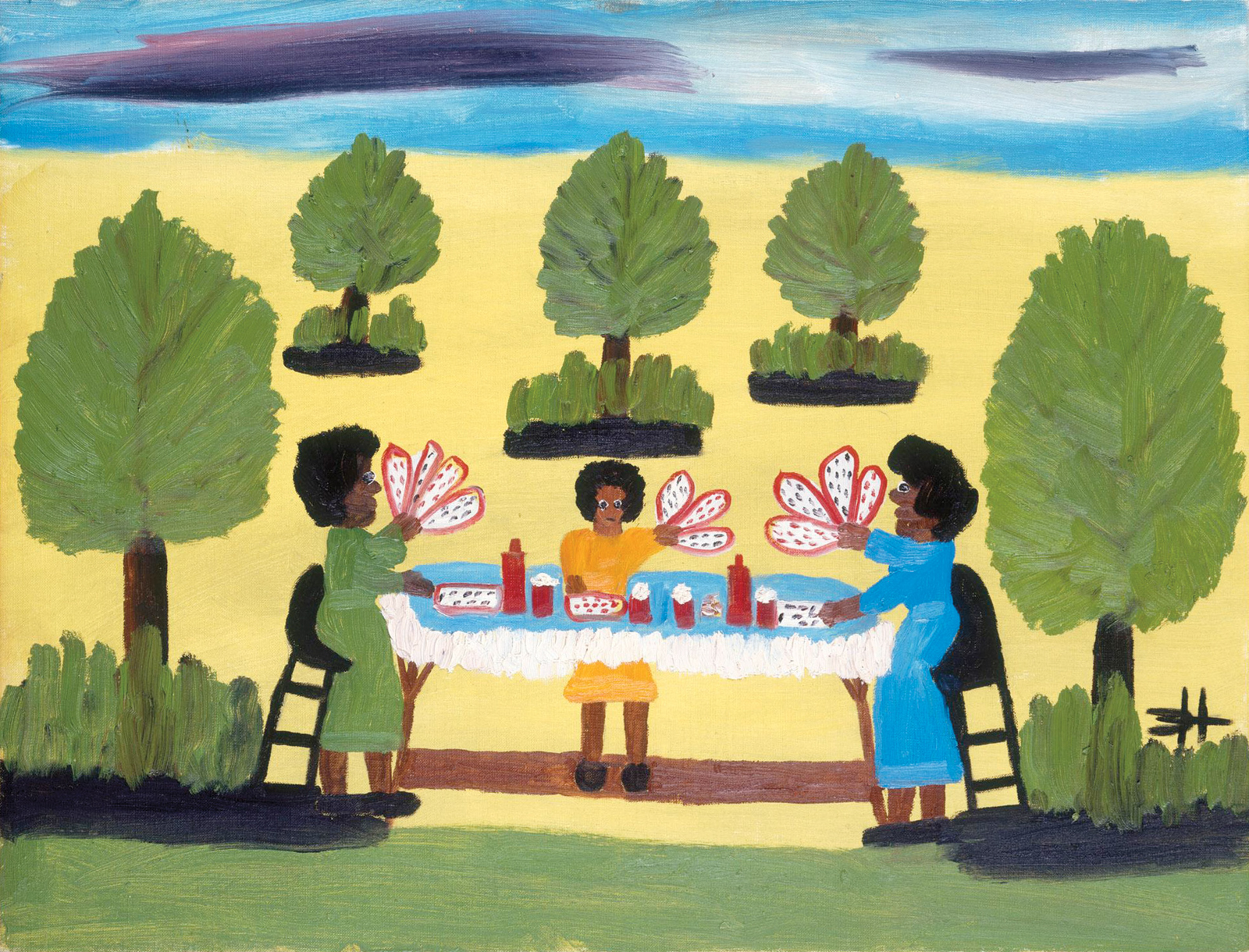 Clementine Hunter (1886/1887–1988), Playing Cards, 1970. Oil on canvas board, 18 x 24 in. Collection American Folk Art Museum, New York. Gift of Mildred Hart Bailey/Clementine Hunter Art Trust.
Mize notes that, as a whole, American Perspectives frames folk and self-taught art as “a witness to history.” The diverse pieces amplify “the entanglement of art with this country’s complex past.”
To Mize’s point, artists like Hunter and other artists of African descent came to be in America through bondage and forced labor. Others, like Charles Carmel (1865-1931), who fled Jewish persecution in Russia, saw America as a refuge. Carmel’s work is featured in the “Travelers” section of the exhibition. His beautiful carved carousel horse, Outer Row Jumper Horse, circa 1918, evokes a unique moment in American history—the advent of carousel rides. Carmel apprenticed with woodworker Charles Looff, who created the first carousel at Coney Island.
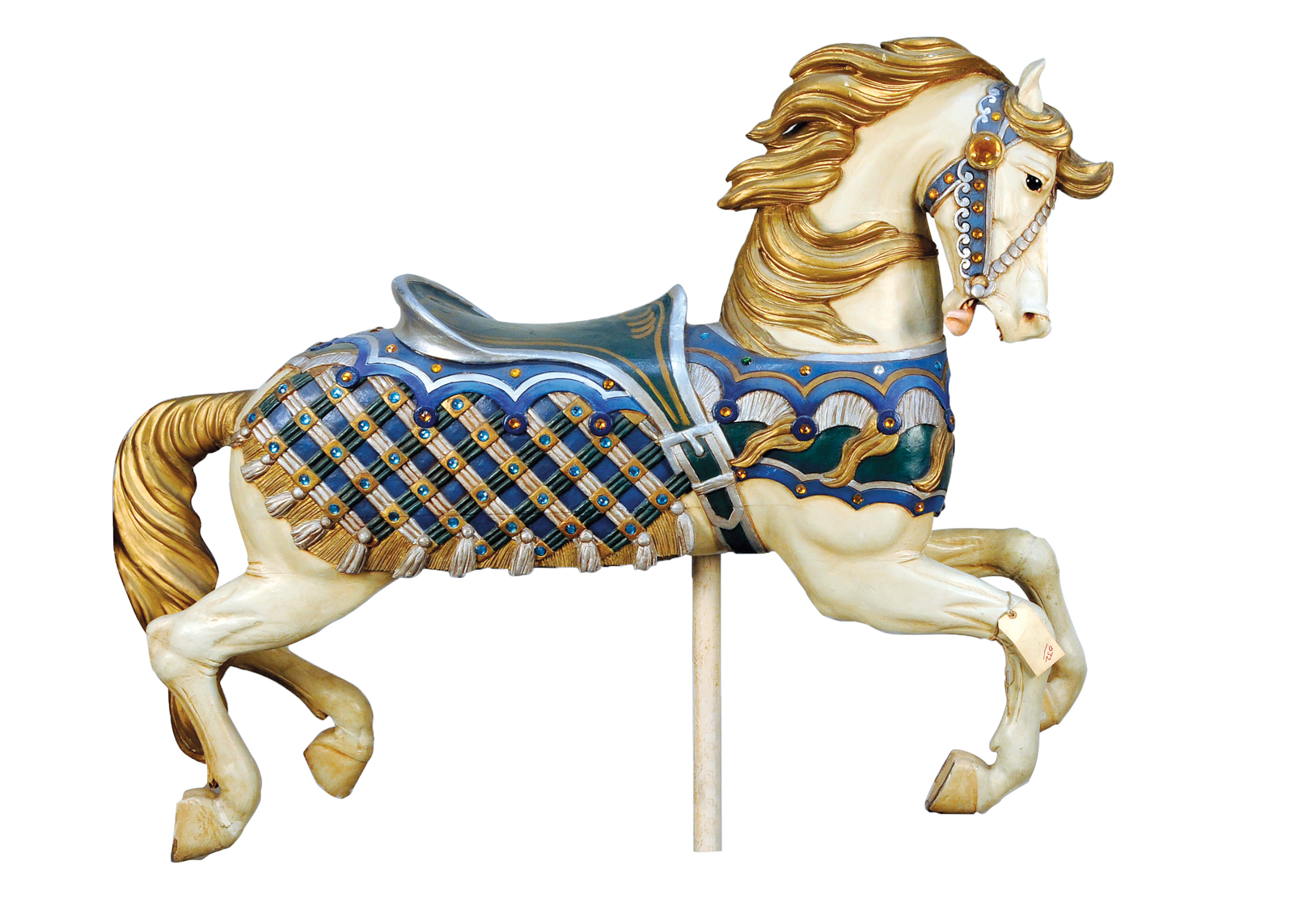 Charles Carmel (1865–1931), Outer Row Jumper Horse, ca. 1918. Paint on wood with glass jewels and glass eyes, 51 x 63 x 14 in. Collection American Folk Art Museum, New York. Gift from the collection of Larry and Gail Freels.
Religious diversity is a key component of America’s history and is represented in American Perspectives. The Peaceable Kingdom by Edward Hicks (1780-1849), which seems at first to be a straightforward theme from the Bible: “The wolf also shall dwell with the lamb…” As a Quaker, Hicks was dissuaded from making art, which his church saw as excess. But he persisted in his craft and painted over 100 variations of this theme. “Clearly he was wrestling and in anguish and making this image was a balm for him,” Mize says.
The “Seekers” section includes an illuminated tunebook by Daniel Steele. Dated 1821, the book harkens back to 17th century Scottish psalm books. Rich with symbolism and history, the book is remarkably well preserved.
“The exhibition explores issues of identity and nationhood through manifold perspectives,” Mize says. “I like how the show embraces rather than avoids that multiplicity.”
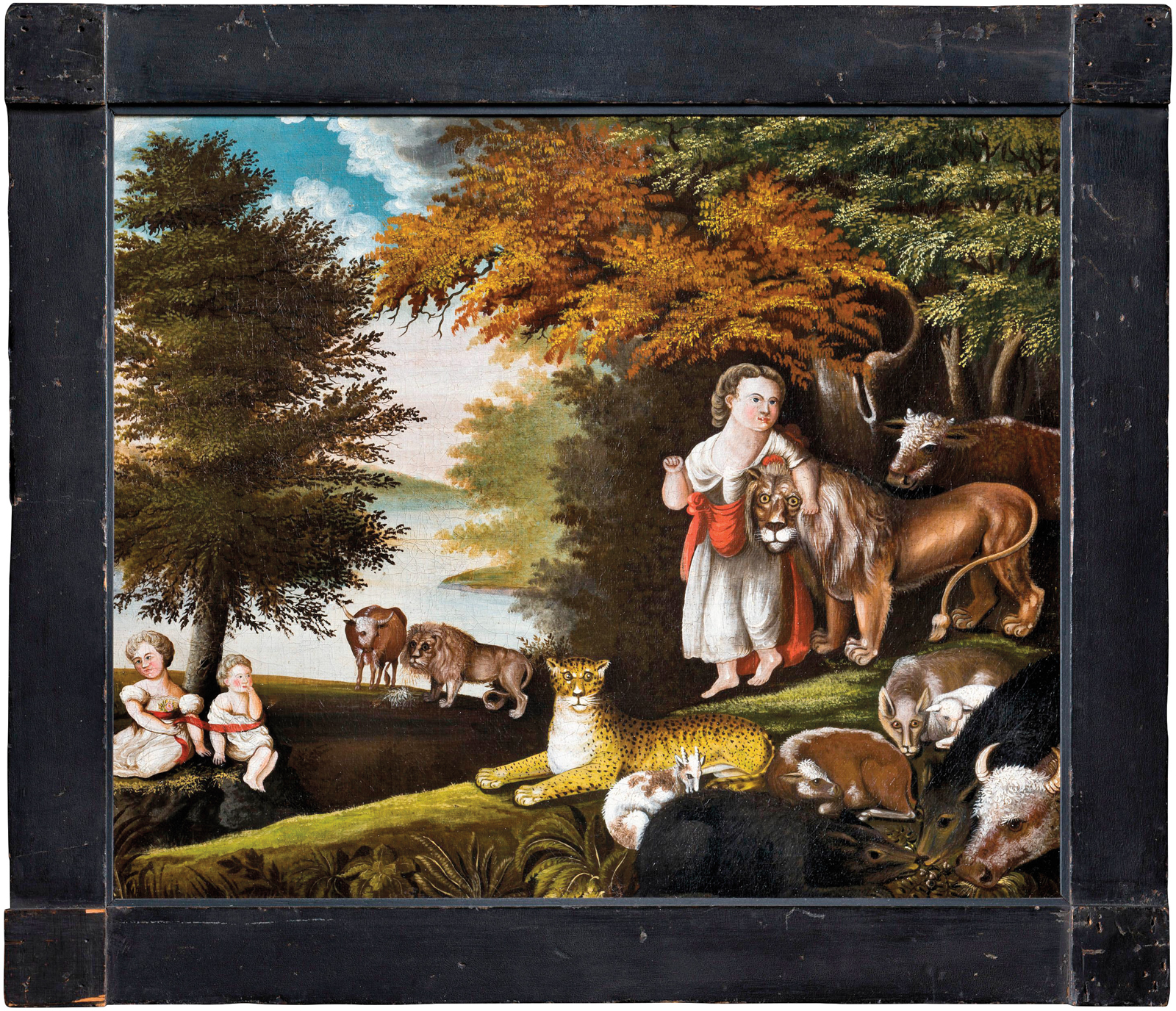 Edward Hicks (1780–1849), The Peaceable Kingdom, 1829-1831. Oil on canvas, in original painted wood frame, 20½ x 24 in. Collection American Folk Art Museum, New York. Gift of Carroll and Donna Janis.
For herself, Mize says her favorite piece in the show is Freedom Quilt by Jessie B. Telfair (1913-1986), created only three years before the textile artist’s death. “It’s such an incredible work of fierce defiance,” Mize says. Telfair worked in a cafeteria in Georgia and was fired for attempting to register to vote in 1963. After she lost her job, members of the Student Nonviolent Coordinating Committee encouraged her to use talent as a quiltmaker to frame a response. “By repeating the word ‘freedom,’” Mize says Telfair “conjured a reference to the American flag but also called forth the lack of freedom.”
American Perspectives was made possible in part by Art Bridges, a philanthropic program designed to expand access to American art in all regions across the United States.
Powered by Froala Editor