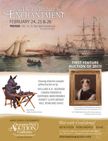
The Albuquerque Museum freezes a snapshot in time, reassembling the paintings residing in Thomas Cole’s studio when the iconic Hudson River School painter died in February 1848. Thomas Cole’s Studio: Memory and Inspiration is a dive into the creative directions of the painter’s last years. The rich and diverse group of works left in his studio demonstrate how his oeuvre so powerfully affected the evolution of art in America.
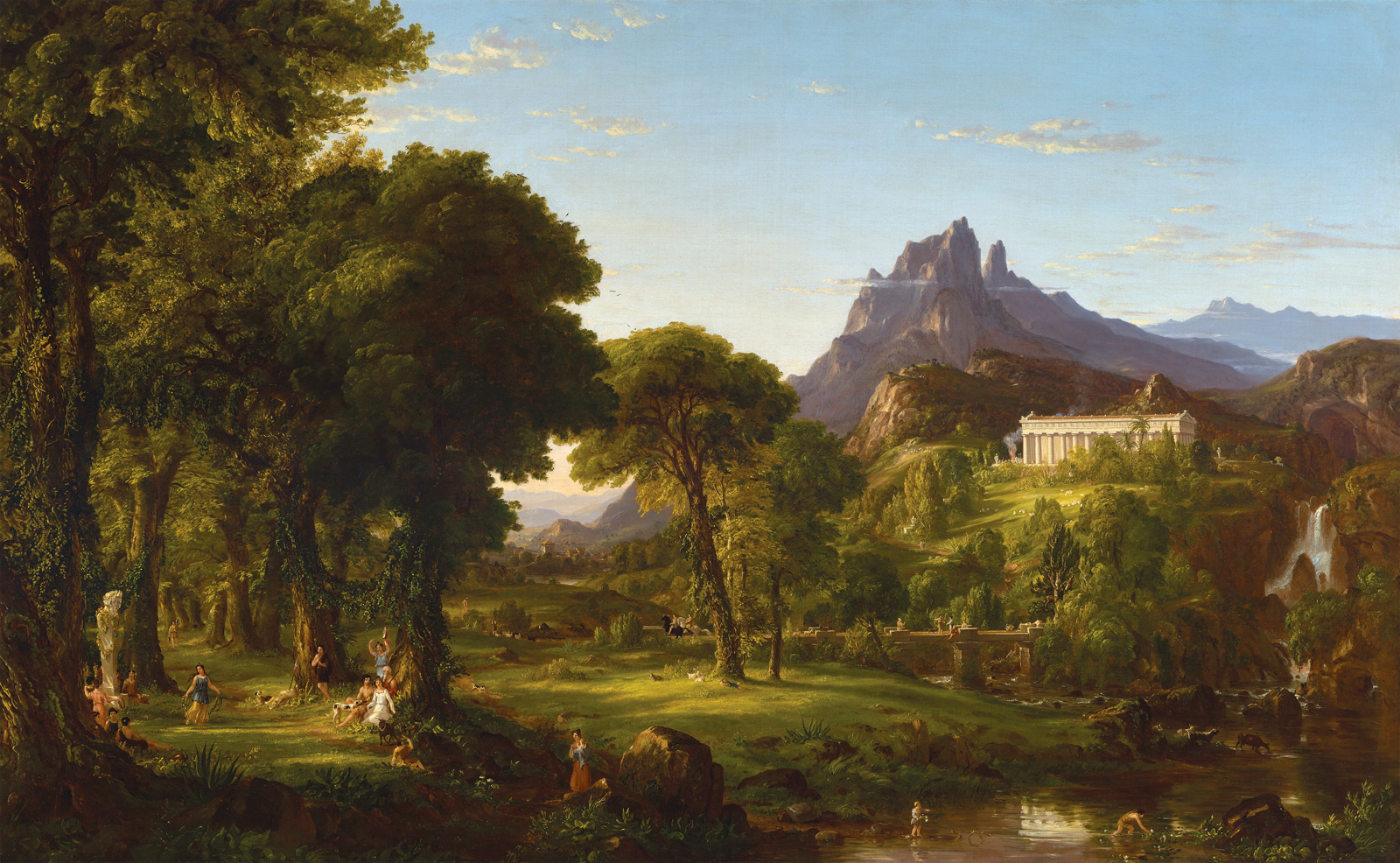 Thomas Cole (1801-1848), Dream of Arcadia, ca. 1838. Oil on canvas; 385/8 x 62¾ in. Denver Art Museum: Gift of Mrs. Lindsey Gentry, 1954.71. Image courtesy the Denver Art Museum.
“When Thomas Cole died…at only 47 years old, he was unquestionably the most important painter of landscapes working in America,” says Franklin Kelly, Senior Curator and Christiane Ellis Valone Curator of American Paintings at the National Gallery of Art, who curated the exhibition. “From the mid-1820s on, he created a major body of work that included views of American and European scenery as well as allegorical/imaginary works inspired by themes from history, the Bible, literature and his own fertile imagination. His great series paintings, The Course of Empire and The Voyage of Life, were among the most famous and admired works of art the young country had yet seen.”
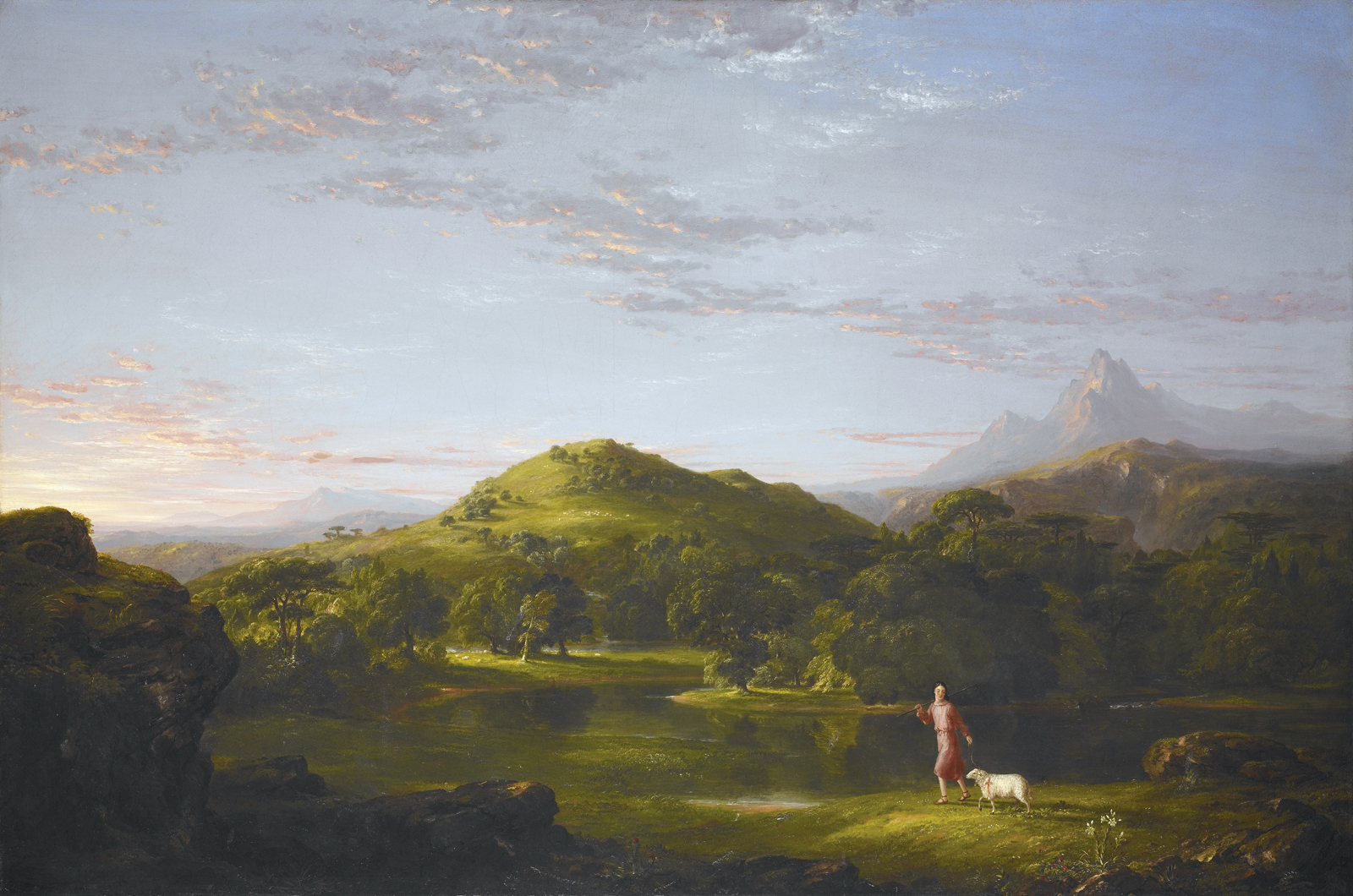 Thomas Cole (1801-1848), The Good Shepherd, 1848. Oil on canvas, 32 x 48 in. Crystal Bridges Museum of American Art, Bentonville, Arkansas, 2007.10.
Kelly explains that in the last years of Cole’s life, he perfected his approach to painting nature, and as a result, his works took on a greater sense of reality and vitality. “Works such as the vibrant oil study, Study for ‘Catskill Creek’—which may have been largely painted out-of-doors—are masterful in their depiction of observed natural phenomena, in this case a range of sunset-lit clouds floating about the Catskill mountains. Cole employed such studies in creating finished paintings of American scenery that sparkle with an immediacy and realism that in many ways foretells the rise of the naturalism that would inform the great works of his successors Durand, Kensett, Cropsey and Church,” says Kelly.
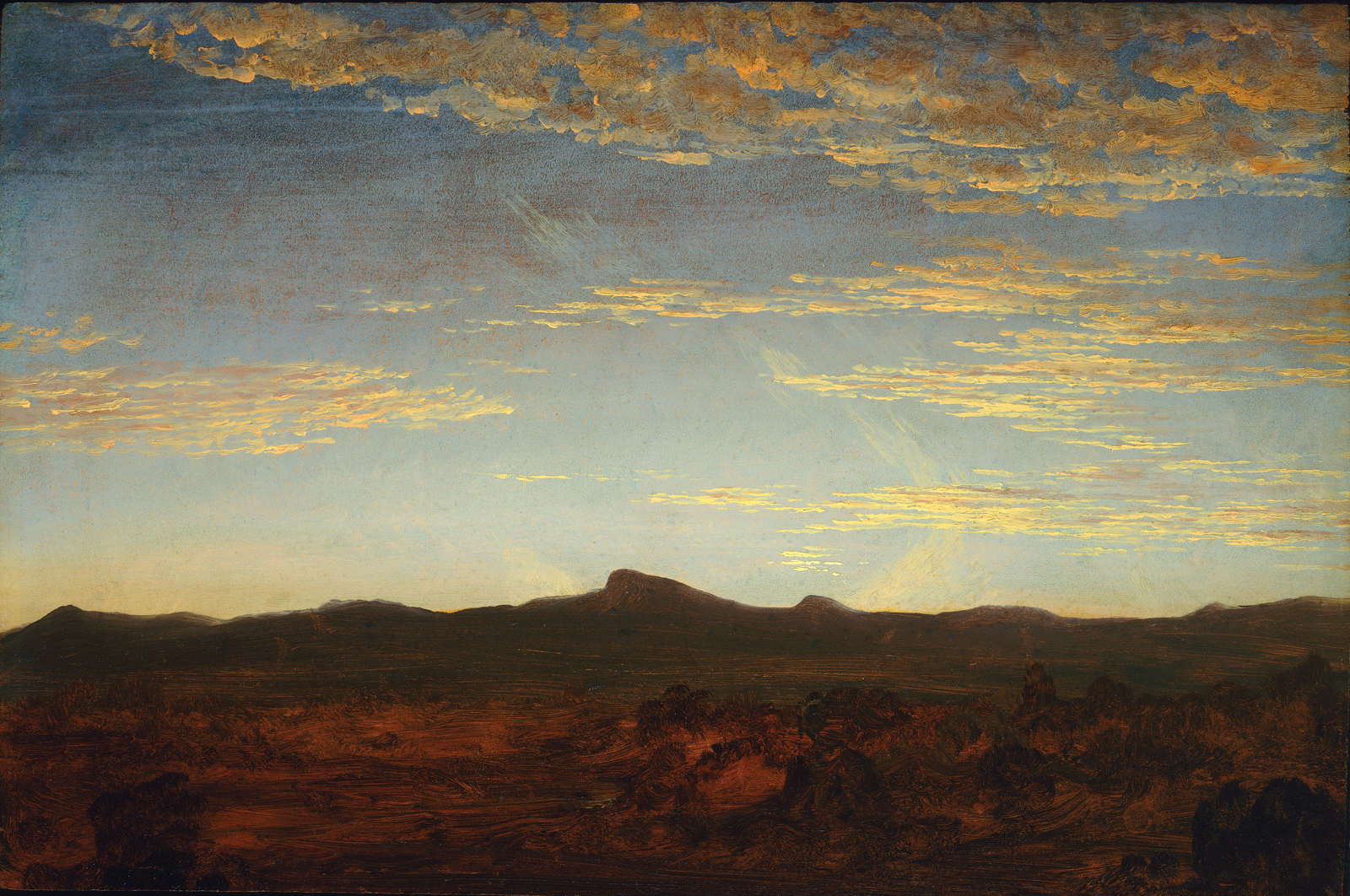 Thomas Cole (1801-1848), Study for “Catskill Creek,” ca. 1844-45. Oil on wood, 12 x 18 in. National Gallery of Art, Washington, Avalon Fund, 1998.67.1.
“Remarkably, Cole also introduced a similar realism into other late landscapes that were wholly composed from his imagination, rather than based on actual scenes,” he continues. “In his last finished painting, The Good Shepherd, the lush landscape of green fields and rolling hills leading to fantastical mountains in the far distance, unfolds beneath a twilight sky that suggests the direct translation of natural effects seen in works such as Study for “Catskill Creek.” This combination—indeed, fusion—of the real and the ideal indicates that Cole was developing a powerful and aesthetically beautiful style of painting that held enormous promise for what he might have accomplished in subsequent works, had he lived.”
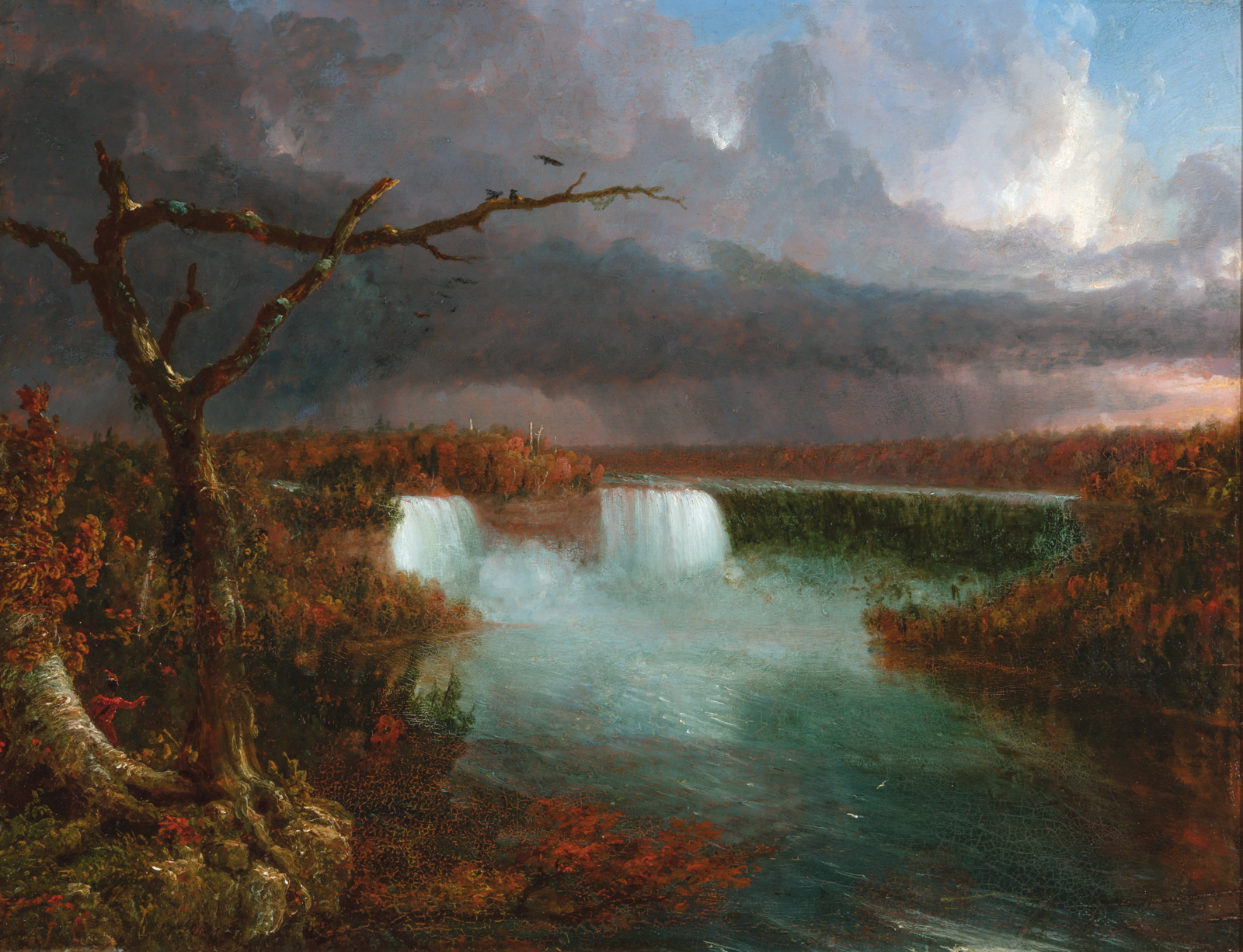 Thomas Cole (1801-1848), Niagara Falls, ca. 1830. Oil on canvas, 18 5/6 x 24½ in. National Park Service, Marsh-Billings-Rockefeller National Historical Park, MABI 1770.
The exhibition contains 26 oil paintings from museum collections across the country, as well as other public and private collections. Visitors can explore these works at the Albuquerque Museum through February 12.
Powered by Froala Editor