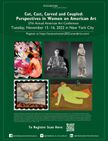
There are many layers and complexities to tease out in this year’s Annual American Art Conference, which builds upon last year’s theme of women in American art and delves even deeper into the sphere of the woman artist, her work and the forces and factors at play in creating it.
With a focus on women who often worked in media traditionally perceived as “feminine,” the conference will explore the multifaceted variables that may have determined why some of these artists of the 19th and 20th centuries achieved recognition during their day while others, equally talented, were overlooked or dismissed.
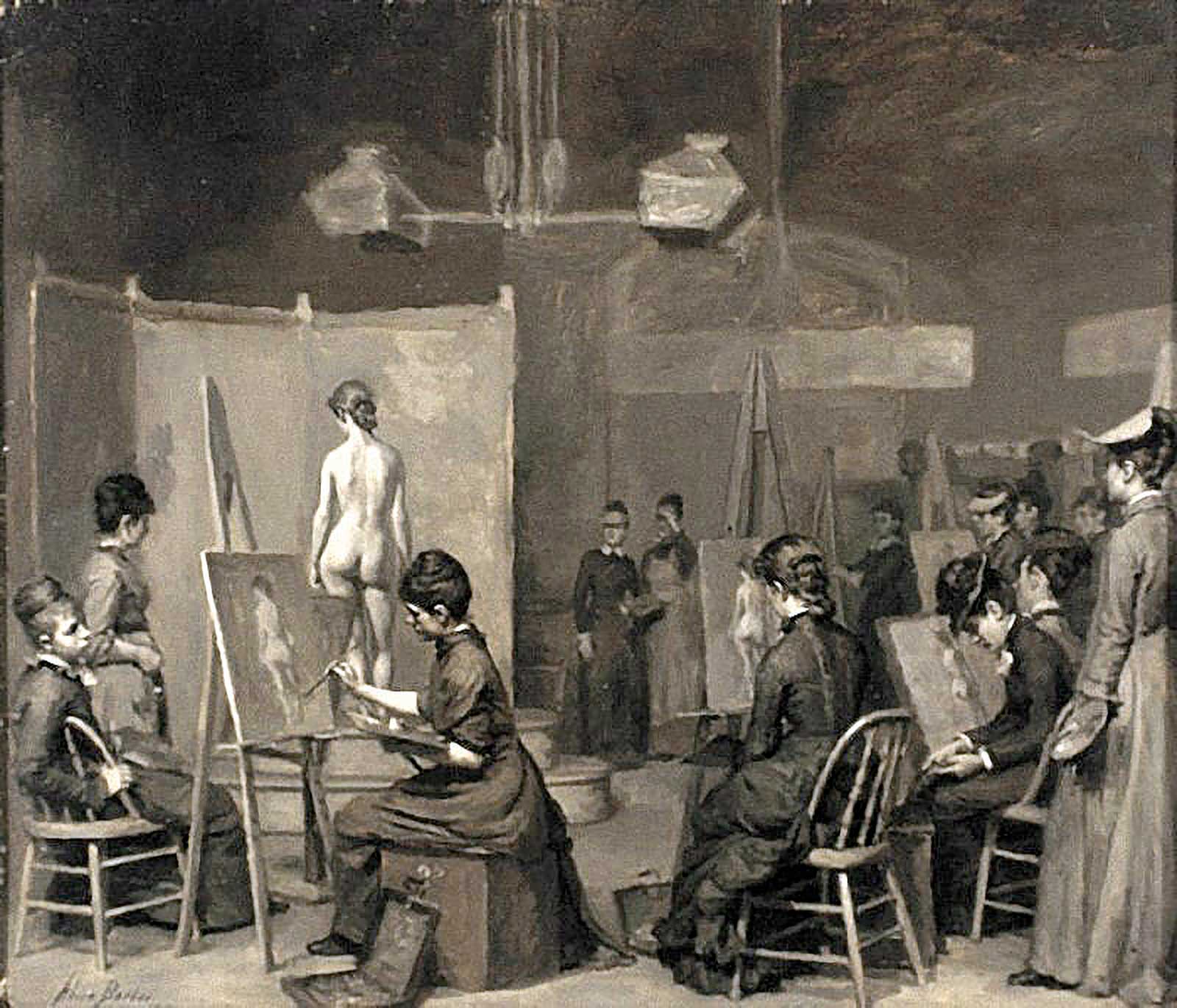 Alice Barber Stephens (1858-1932), The Women’s Life Class, 1879, Oil on cardboard, 12 x 14 in.
Over two days of lectures and panel discussions at New York’s Cosmopolitan Club, leading scholars in the field will examine the effects of expatriation, of being in a relationship with another artist, the roles and responsibilities ascribed to women based on gender, their limited rights and societal constrictions, and the logistical challenges of locating the works, often in more portable mediums, so they have the chance to be lifted from obscurity.
Initiatives in Art Culture has broken down the areas to be explored into the clever title, Cut, Cast, Carved and Coupled, which carries both literal and creative interpretations. “By way of ‘cut,’ we’ll consider works on (or of) paper, textiles, and photography, and those ‘cut from the same cloth’ by virtue of their makers’ shared pursuits or perspectives,” explains Lisa Koenigsberg, founder of Initiatives in Arts and Culture and the Annual American Art Conference. “In ‘cast,’ we’ll explore works created from molten metal, plastic, rubber, and fiberglass and, using ‘cast’ as a noun, consider artists, sitters, and patrons, who have roles in given works or commissions. In ‘carved,’ we’ll explore works in stone, glass, ceramic, and wood, including frames and jewels. Last, in ‘coupled,’ we will look at relationships, whether among the artists themselves or among artists, dealers, collectors, and museums.”
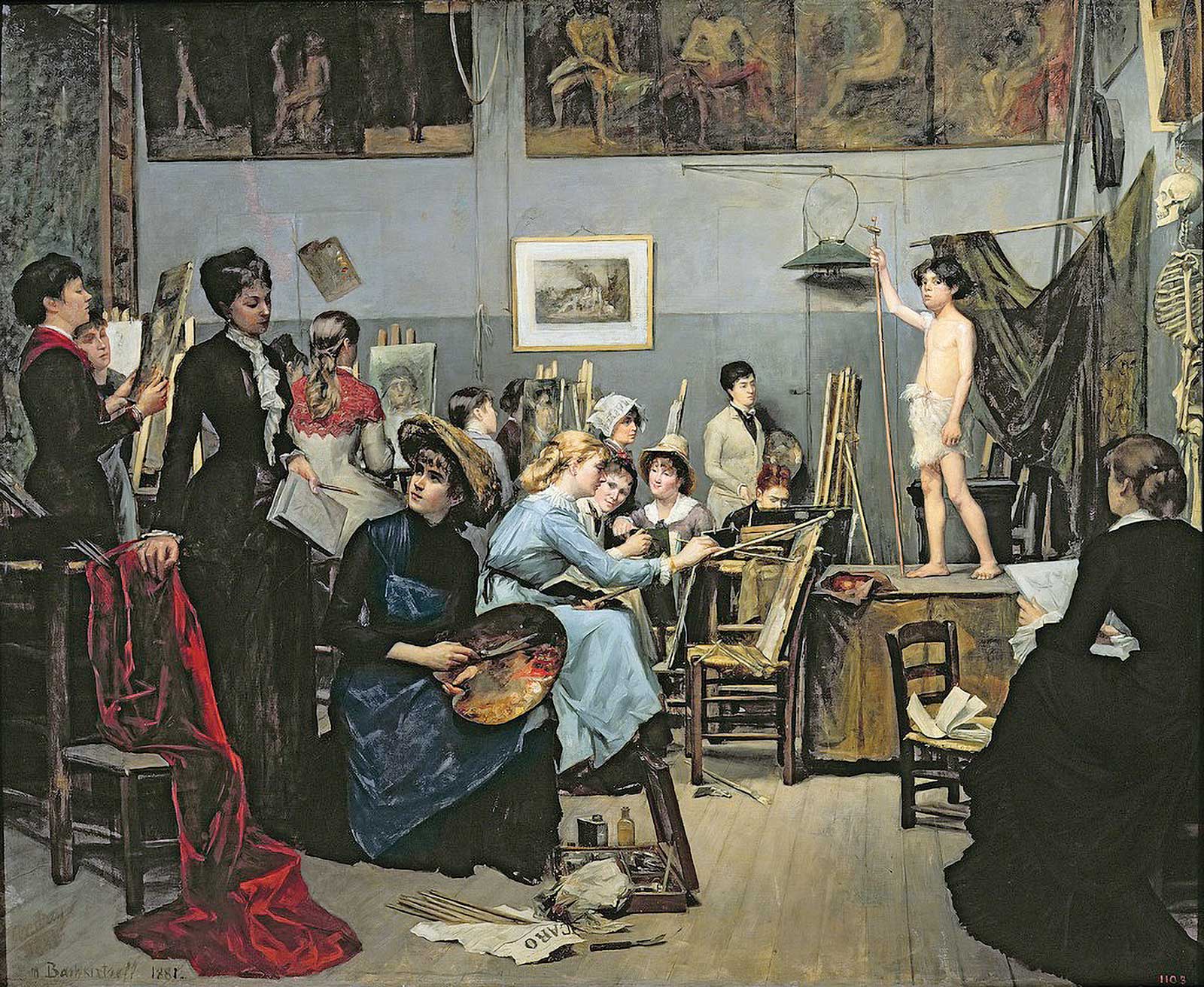 Marie Bashkirtseff (1858-1884), In the Studio, 1881. Oil on canvas, 74 x 60 in. Dnipropetrovsk State Art Museum, Ukraine.
Koenigsberg notes they could have added “collected” to the title as one of the panel discussions will address how private collections shape institutions’ collections and subsequent exhibitions which, in turn, affects women artists’ place in the historical cannon.
Amanda Burdan, senior curator at the Brandywine River Museum, will look at expatriation and opportunities afforded to women artists who went abroad to pursue their art. Compare the works of Alice Barber Stephens’ (1858-1932) and Marie Bashkirtseff (1858-1884), pictured here. In Stephens’ 1879 piece The Women’s Life Class, depicting a female life drawing class at the Pennsylvania Academy of Fine Arts, women paint a nude female figure in a drab, staid studio. On the other hand, Bashkirtseff’s 1881 work In the Studio presents a lively European scene, in which animated women paint a scantily clad boy in a room decorated with art and in creative disarray.
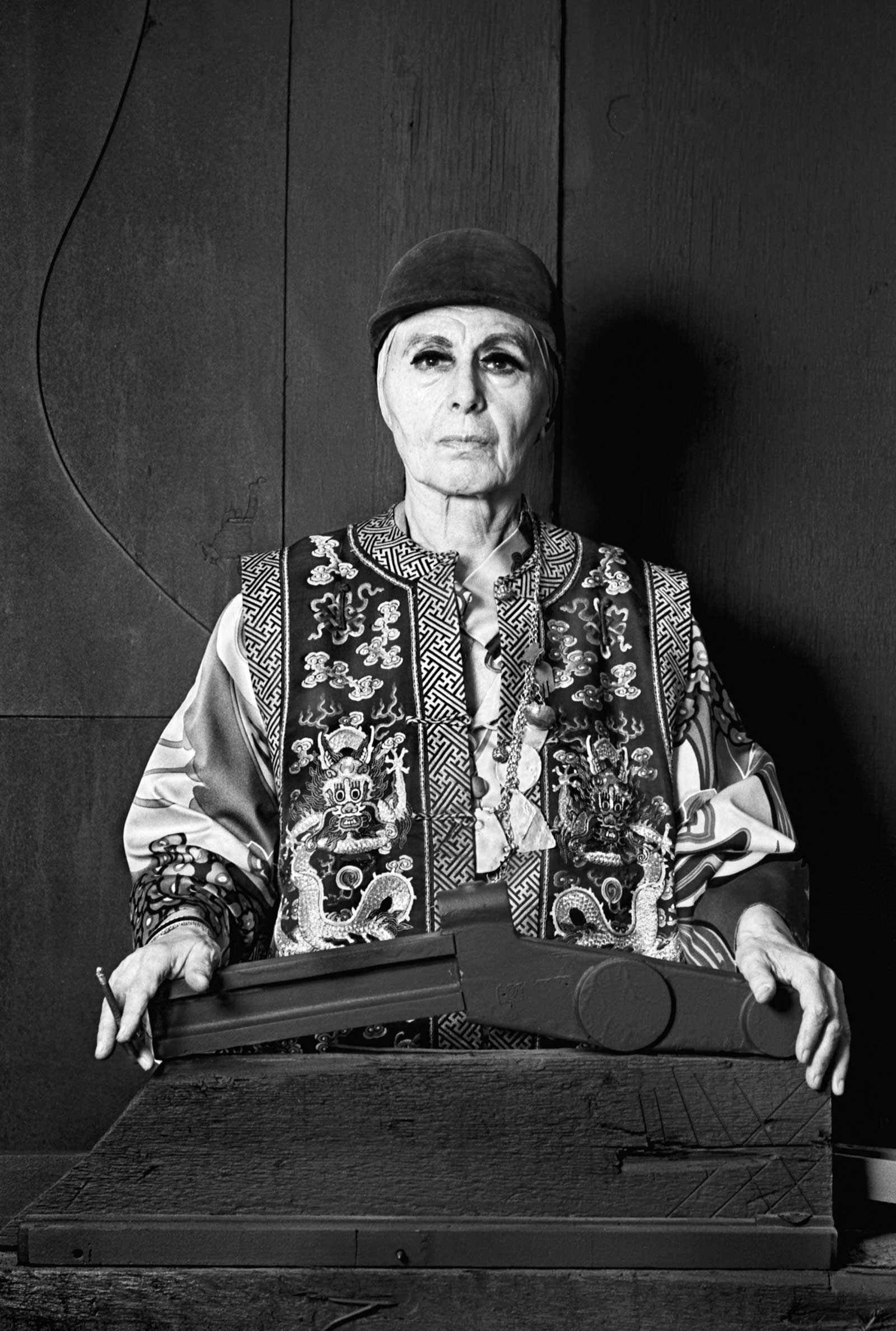 Lynn Gilbert, Portrait of Louise Nevelson, 1976. Selenium-toned silver gelatin print by master printer John Delaney, 14 x 11 in. Image: © Lynn Gilbert, commissioned by the Pace Gallery.
Then there is the fascinating subject of “creative couples,” of which there are endless examples. Take highly regarded artist Mary Nimmo Moran, the wife of Thomas Moran; Lee Krasner and Jackson Pollock, the de Koonings—the list goes on.
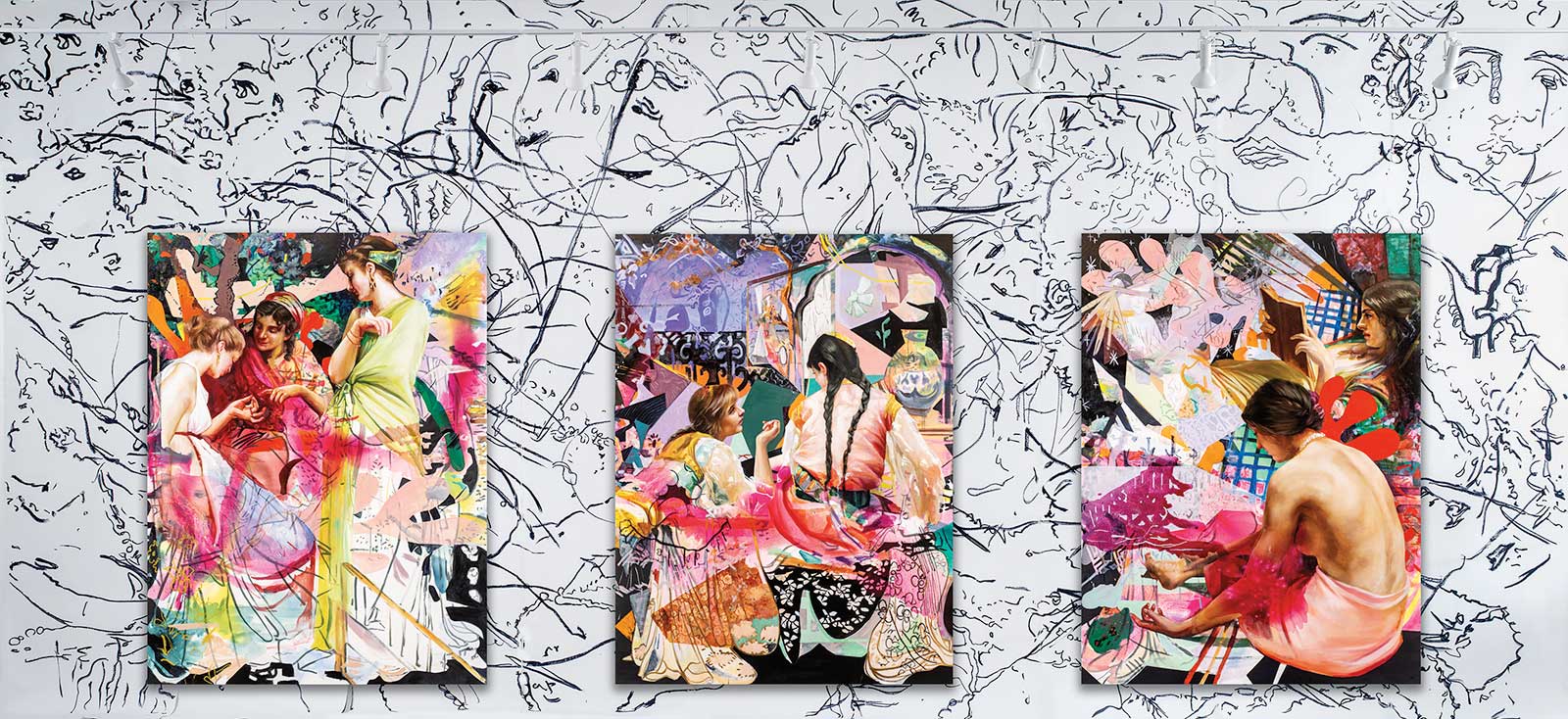 Angela Fraleigh, Splinters of a Secret Sky, 2021. Oil and acrylic on canvas over oil pigment stick on Photo Tex, 26 x 12 ft. Featured in a 2021 Installation View, Weatherspoon Art Museum, Greensboro, N.C.
“Why did one half of the couple become more famous than the other,” asks Koenigsberg. “It’s important to understand the factors that contributed to that fame. Why was one artist able to create a larger body of work? Was it a matter of circumstance? Did one artist exhibit a greater bravado? Did the mythology that grew around the crazed, possessed artist—the alcoholic creative genius—coupled with circumstantial advantages, reinforce the perception of male artists?”
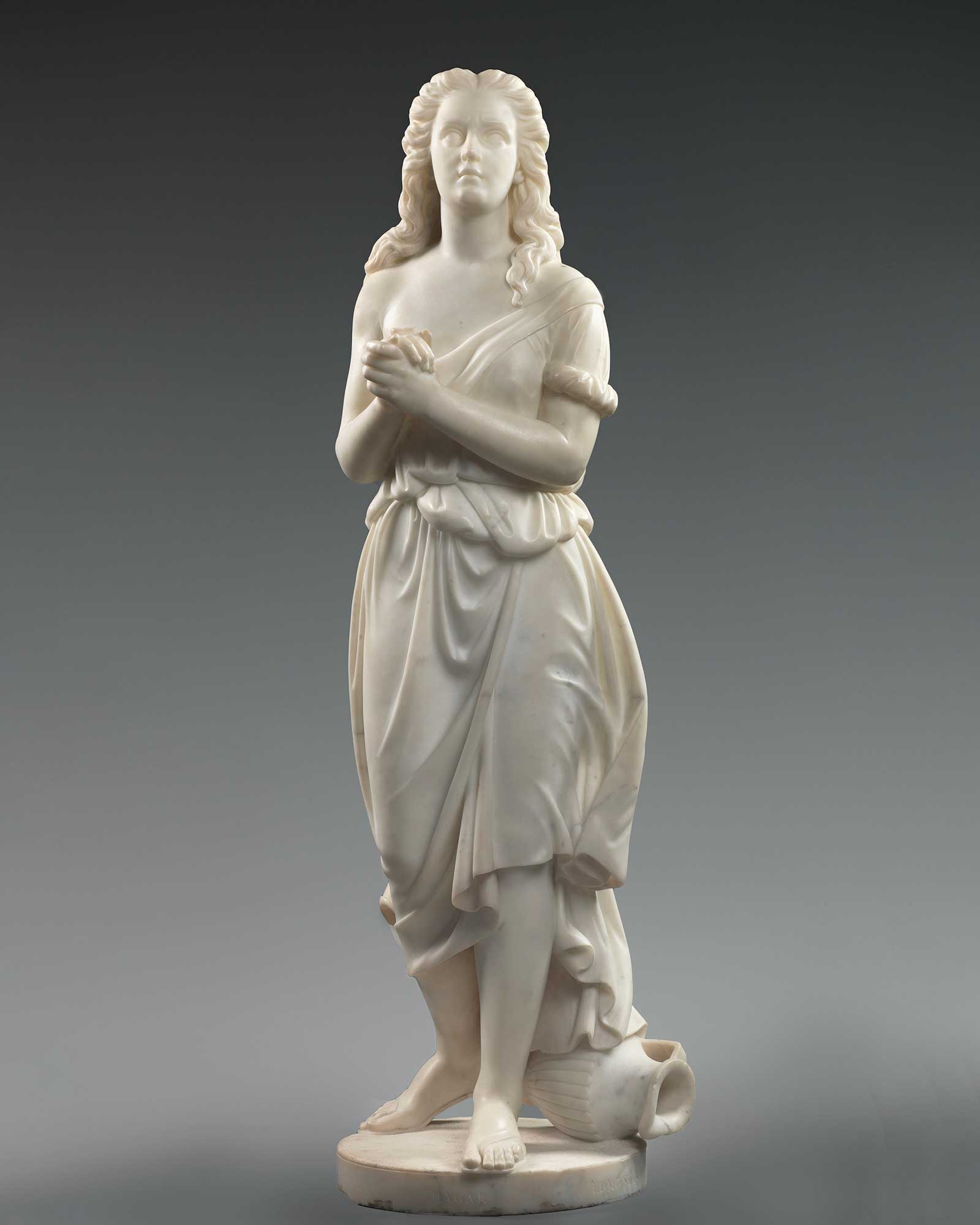 Edmonia Lewis (1844-1907), Hagar, 1875. Marble, 525/8 x 15¼ x 171/8 in. Smithsonian American Art Museum, Gift of Delta Sigma Theta Sorority, Inc., 1983.95.178. Photo: David Finn, © David Finn Archive, Department of Image Collections, National Gallery of Art Library, Washington, D.C.
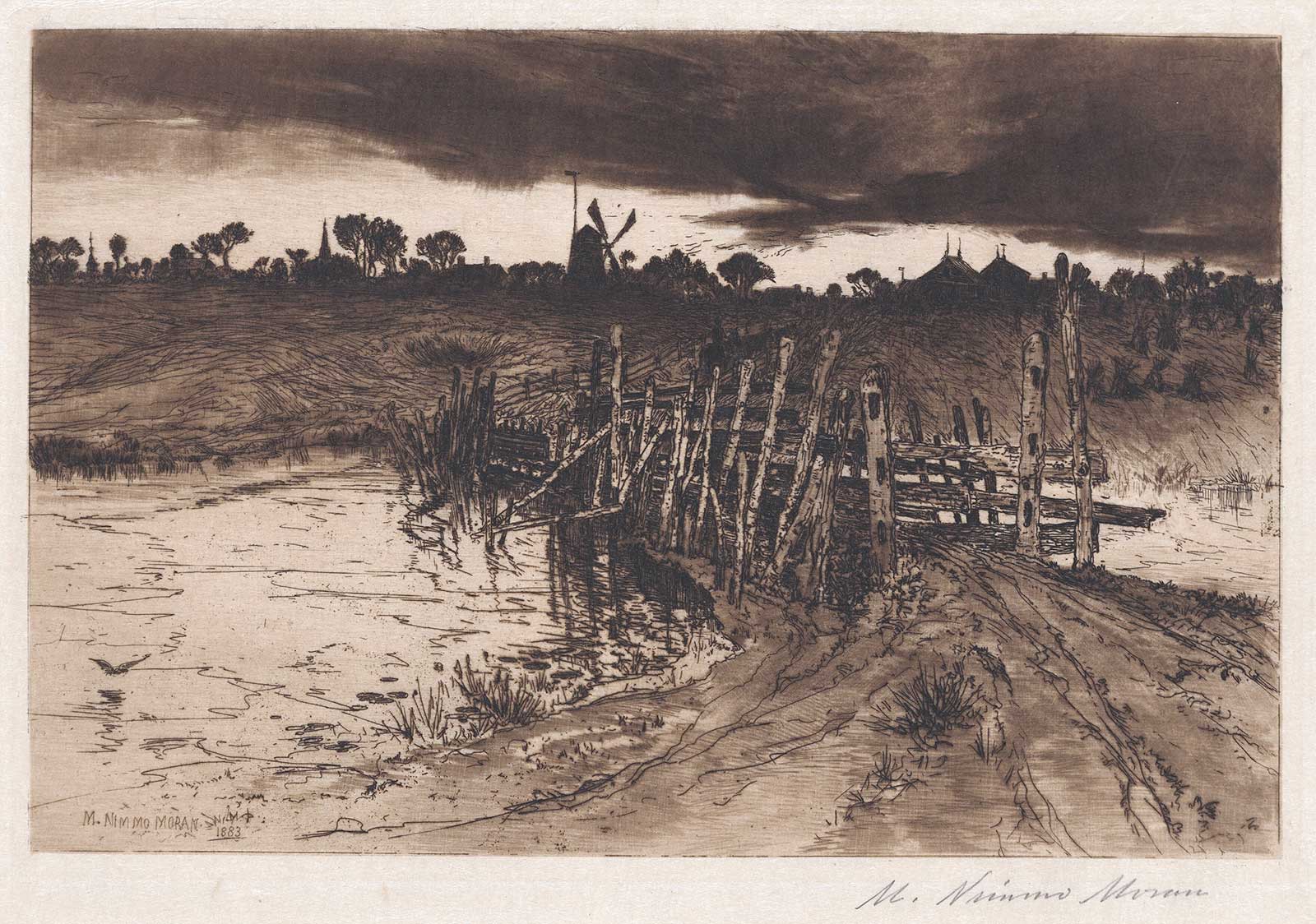 Mary Nimmo Moran (1842-1899), ‘Tween the Gloaming and the Mirk, 1883. Etching and roulette on Japanese paper, plate: 73/8 x 11¼ in., sheet:
1313/16 x 187/8 in. Gift of Jacob Kainen, 2002.98.160.
Another highlight on the long roster of stimulating presentations will be led by Maria Nevelson, founder of the Louise Nevelson Foundation and the sculptor’s granddaughter. She will be joined by Lynn Gilbert, who took the commanding 1976 photograph of Louise Nevelson, in a discussion about the process of becoming iconic—whether a work of art or the artist herself. “O’keeffe and Nevelson’s personae were established in their aesthetic—how they looked, how they lived, and evident in the work they made,” Koenigsberg explains. Why were these particular artists able to secure such a strong foothold in the collective psyche?
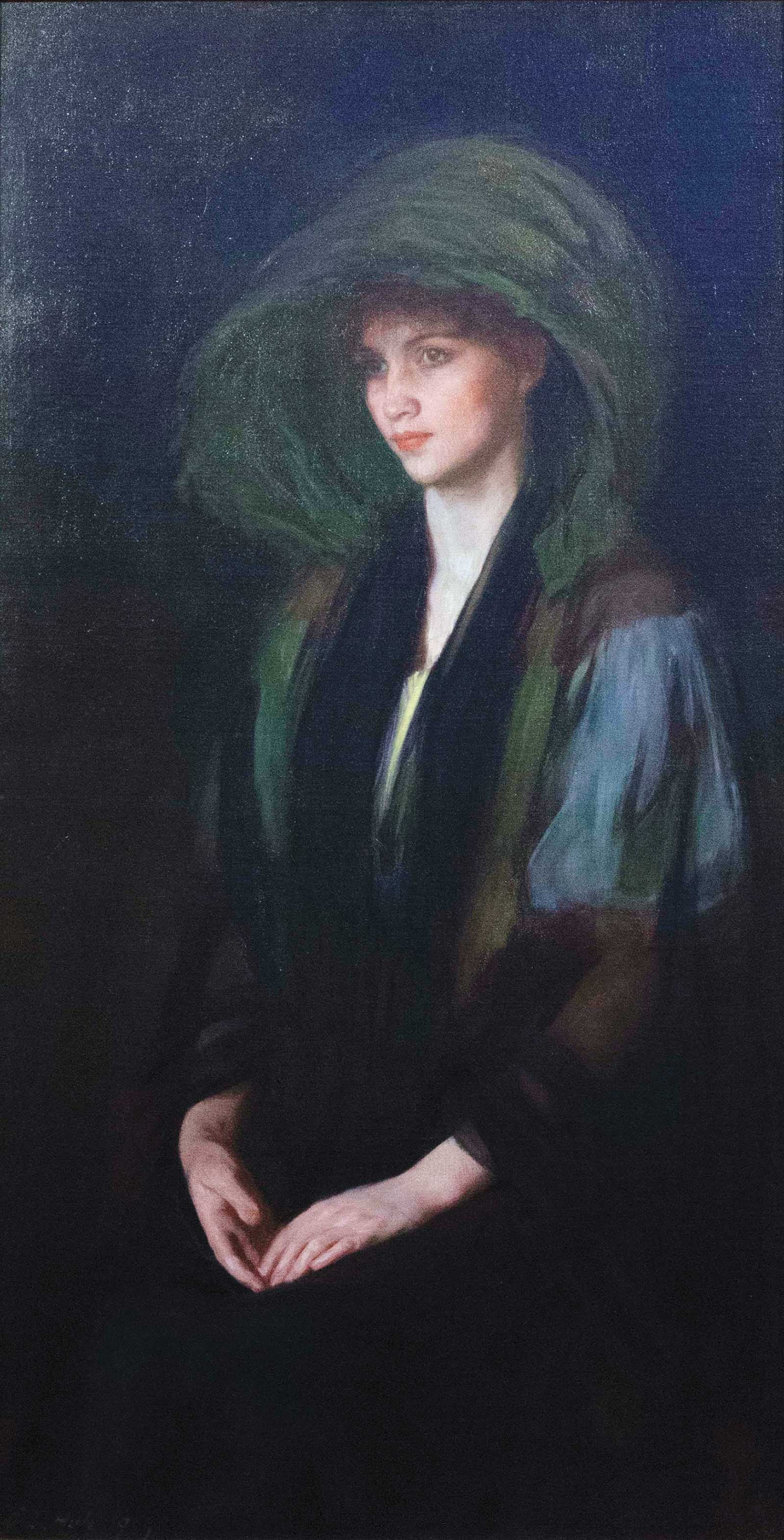 Ellen Day Hale (1855-1940), Green Calash, 1904. Oil on canvas, 50 x 26 in. Promised Gift of Dorothy & Kenneth Woodcock to the Pennsylvania Academy of Fine Arts in honor of Dr. David R Brigham, CEO and President of PAFA, 2010-2020.
Other notable programming includes a sequel to last year’s panel discussion about the American art world moderated by gallerist and industry expert, Debora Force; a presentation by Lisa Hodermarsky on “150 Years of Women at Yale Art School,” and a lecture given by Kirsten Pai Buick, a professor of art history at University of New Mexico, about the fascinating life of the late neo-classical sculptor, Edmonia Lewis.
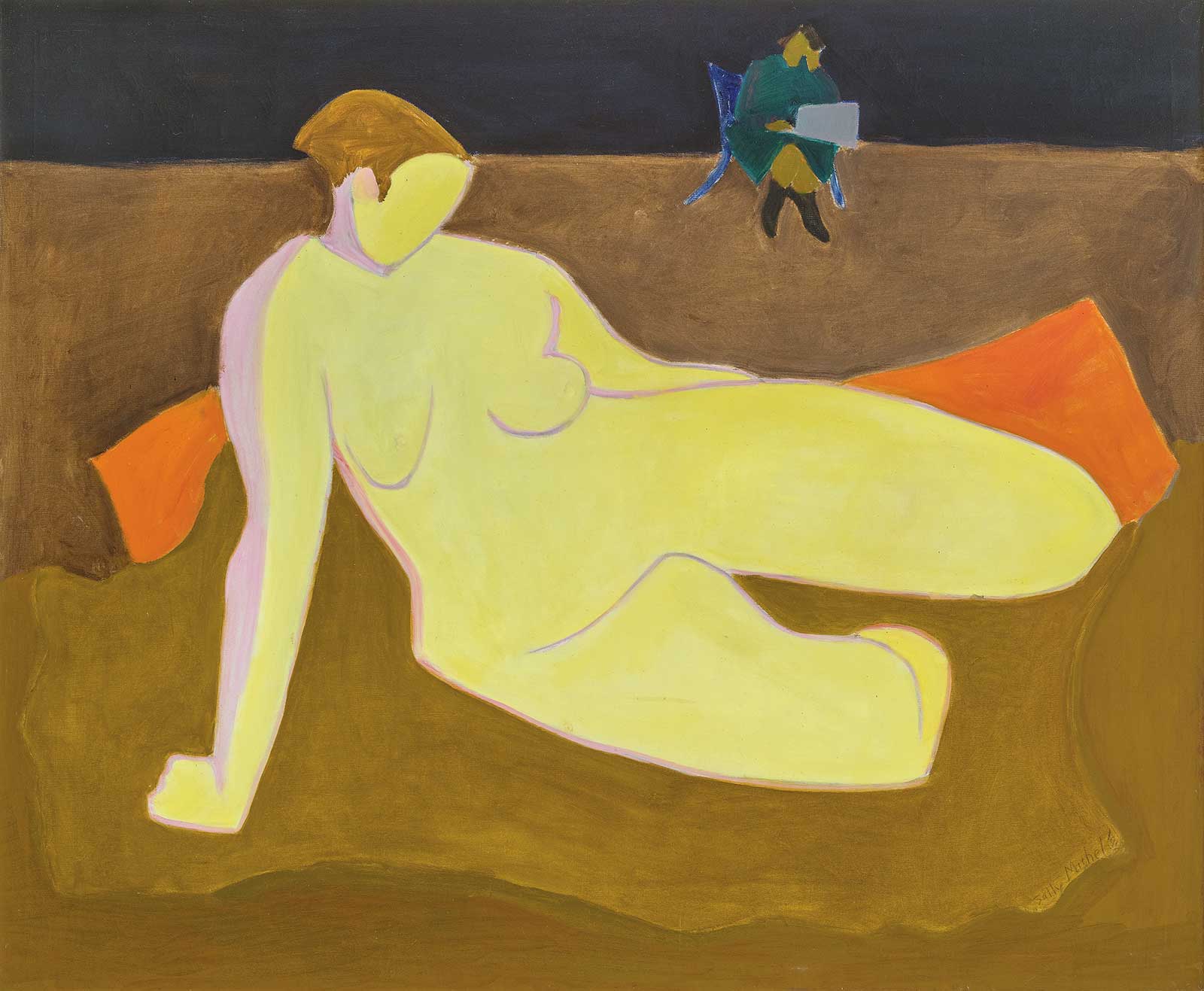 Sally Michel (1902-2003), Yellow Nude, 1968. Oil on canvas, 40 x 48 in. Photo courtesy of D. Wigmore Fine Art.
The conference would not be complete without a contemporary woman artist talking about her work and this year’s honoree is Angela Fraleigh. Her oil and mixed media paintings explore themes of gender, sexuality, femininity and power dynamics in a style that combines elements of realism, abstraction and classical influences.
For a detailed schedule of events and the complete list of esteemed guest speakers visit www.artinitiatives.com.
Powered by Froala Editor