After two consecutive single-artist exhibitions for rediscovered abstract expressionists of the mid-20th century, the newly minted Lincoln Glenn Gallery is hosting an exciting exhibition of pre-war American art featuring prominent Hudson River School, Gilded Age and Ashcan School artists.
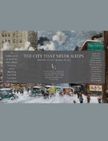
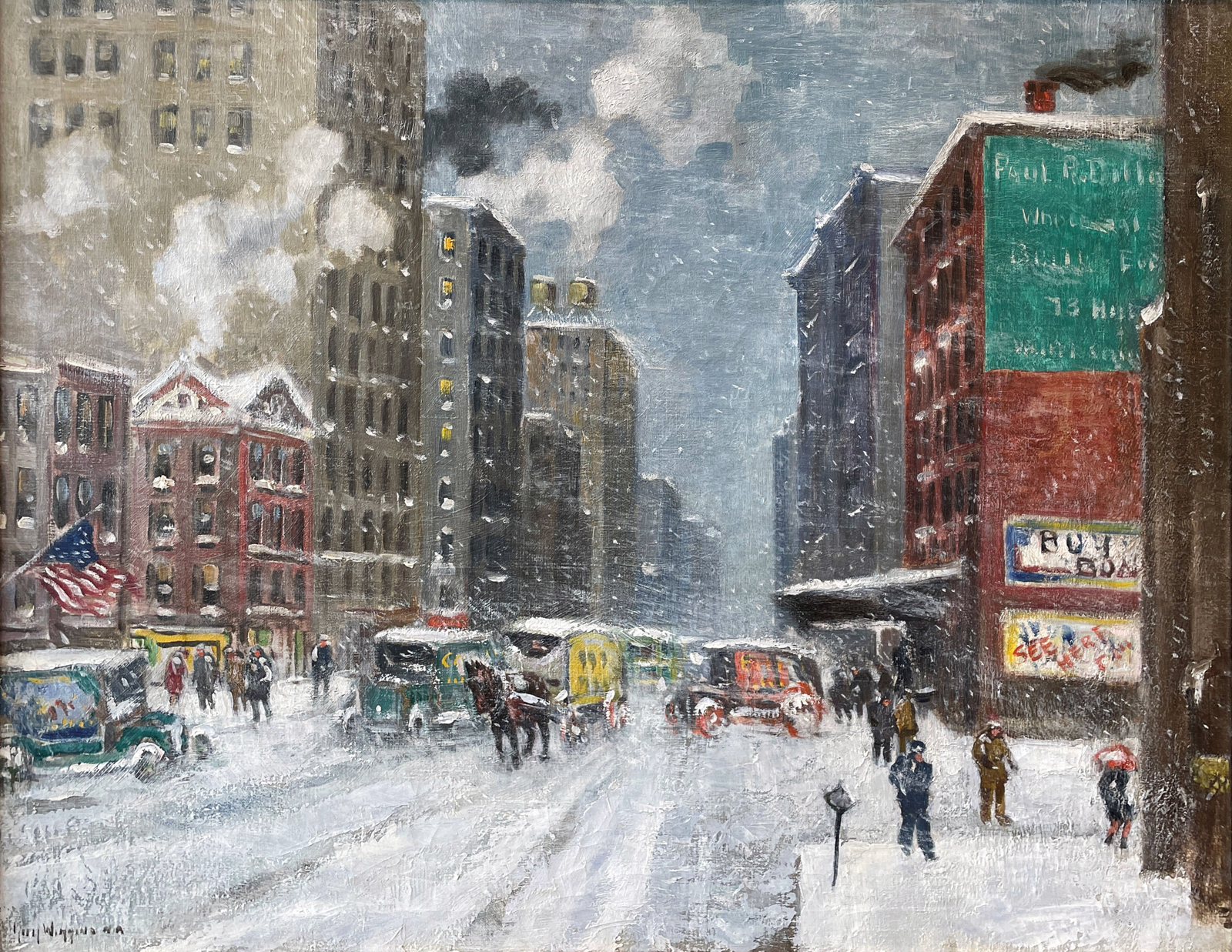 Guy C. Wiggins (1883-1962), Hudson Street, ca. 1932. Oil on canvas, 30 x 40 in., signed lower left.
“Since the construction of the Tenth Street Studio Building in 1857, New York has effectively been the center of the art world in the United States,” says gallery co-founder Eli Sterngass. “For over 150 years, artists and important galleries have relentlessly flocked to The Big Apple for educational opportunities, artistic inspiration and community.”
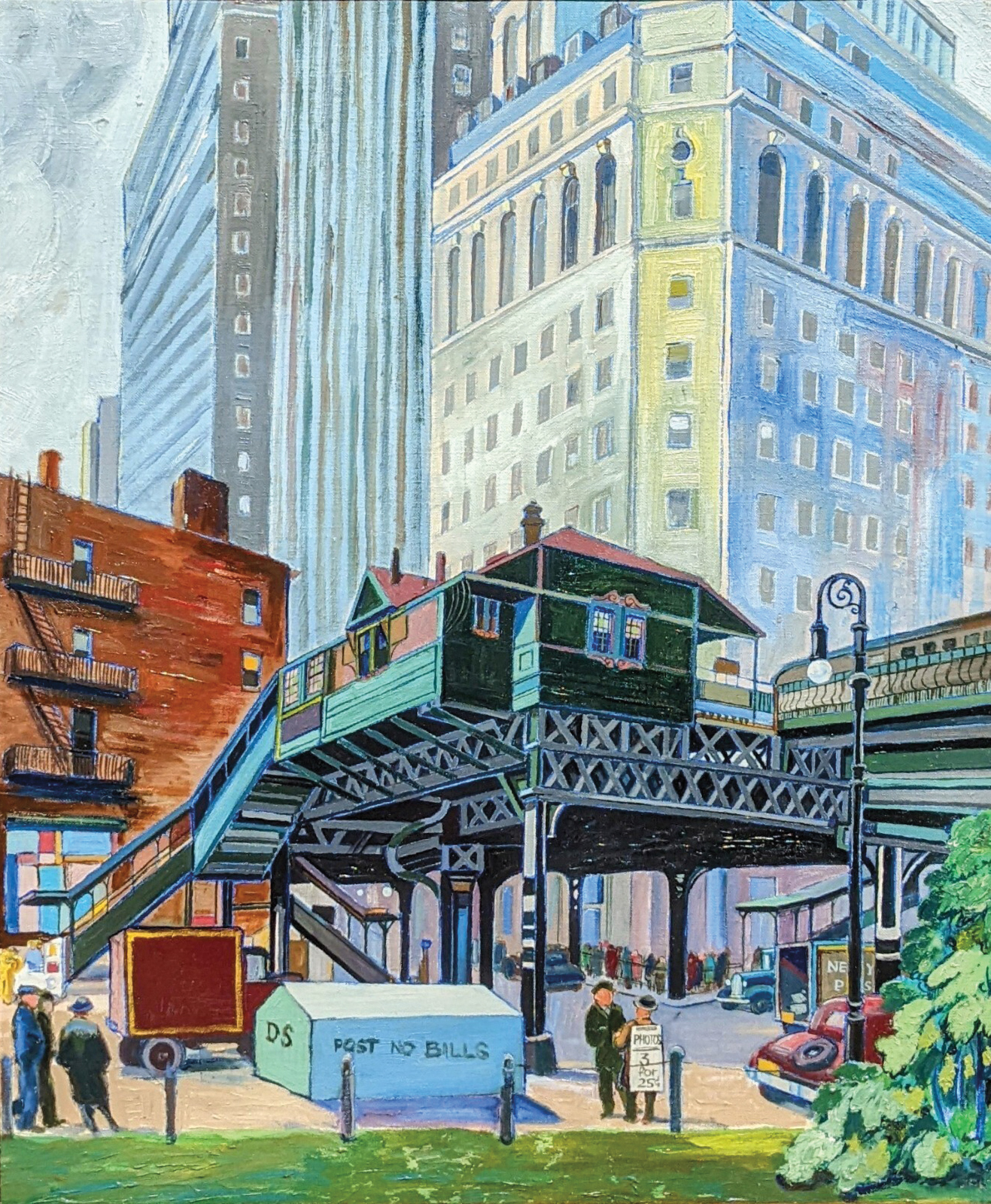 William Sharp (1855-1905), Elevated Train Station, Lower Broadway and the Battery, 1936. Oil on canvas, 24 x 20 in., signed, titled and dated: overlap; signed: reverse.
Chronologically, the exhibition begins with Hudson River School views by Francis Augustus Silva and William Rickarby Miller of New York Harbor and Staten Island, respectively. The show continues into the Gilded Age, represented by the Jewish-American artist Hermann Hyneman. Ashcan examples by William Glackens, Jerome Myers and Guy Pene du Bois add to the impression of an ever-bustling and electrifying urban center.
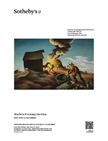
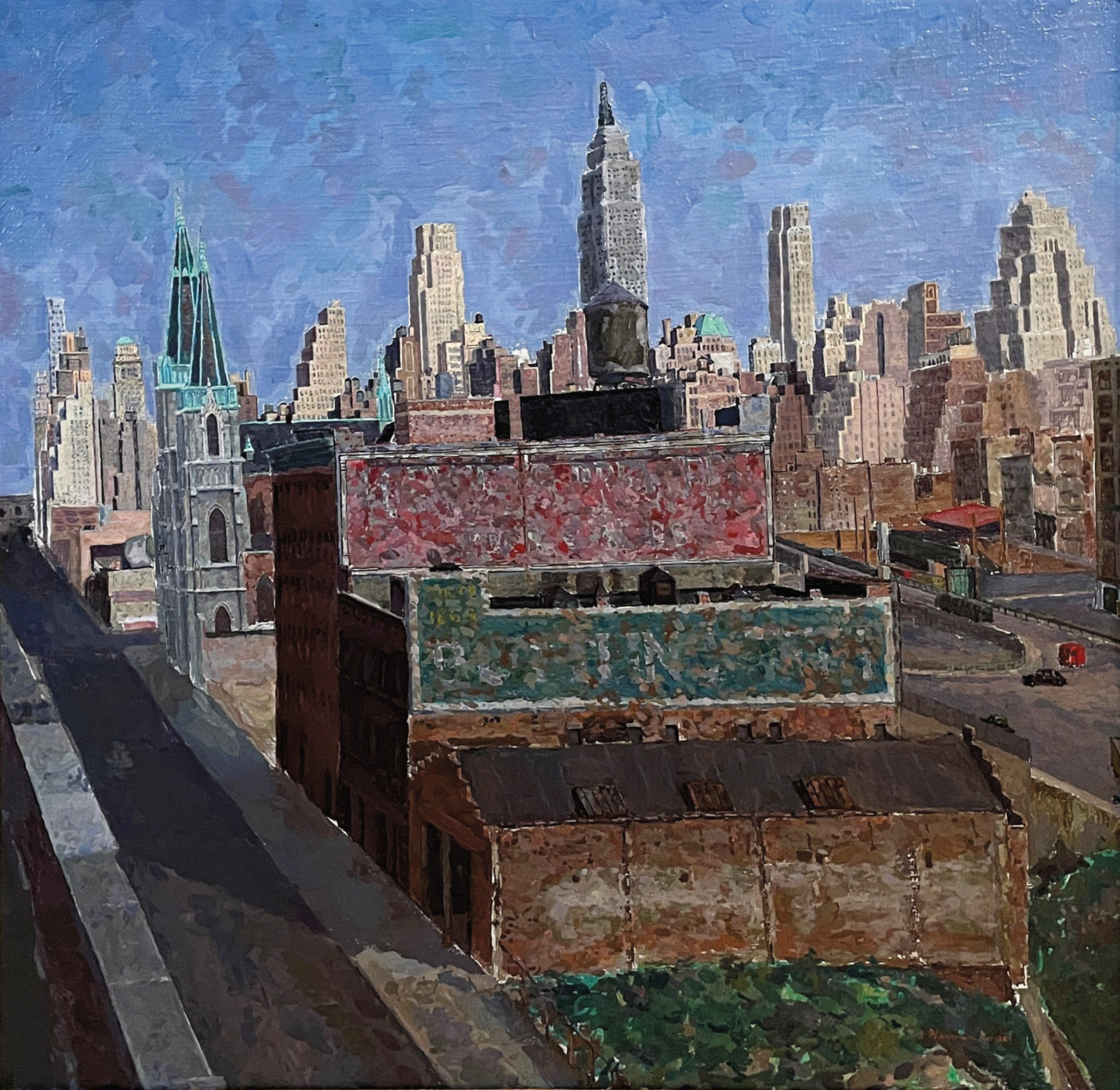 Herman Rose (1909-2007), Manhattan Looking East (View from 11th Ave and 42nd Street), 1952-54. Oil on canvas, 26 x 28 in., signed: lower right.
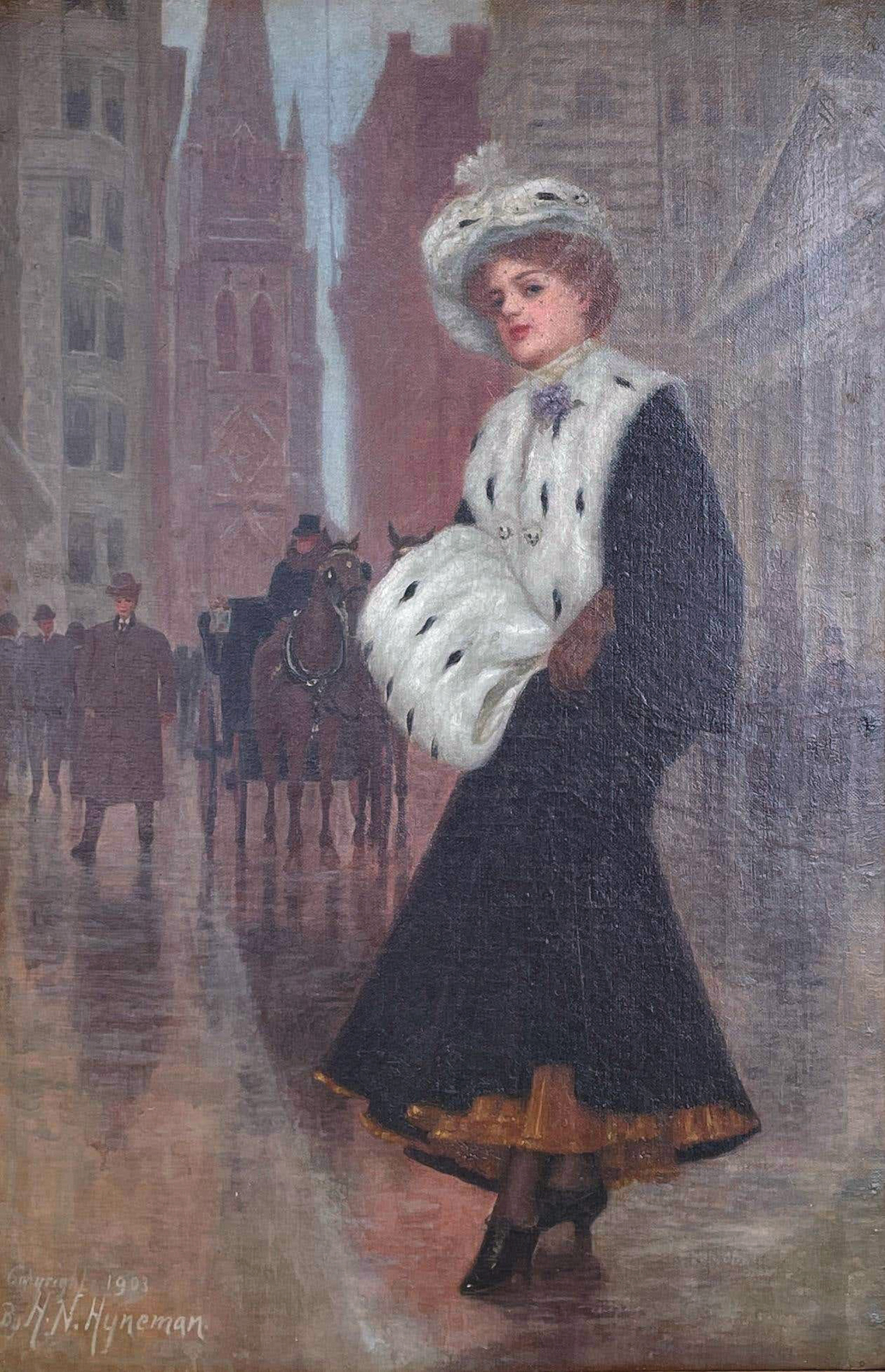 Herman N. Hyneman (1849-1907), Sensation in Wall Street, New York, 1903. Oil on canvas, 24 x 16 in., signed and dated: lower left.
The highlight of the exhibition is a large wintry street scene of Hudson Street in the Tribeca neighborhood by the impressionist Guy Wiggins. When one thinks of New York City in winter, it is hard to imagine the bustling scenery of the metropolis through any other painter’s eye than that of Wiggins. His wind swept images of the streets of Manhattan, of its swaying bridges and its hustling residents trying to survive the tunnels of wind between skyscrapers, cathedrals and great business establishments, have become an icon of American artistic expression.
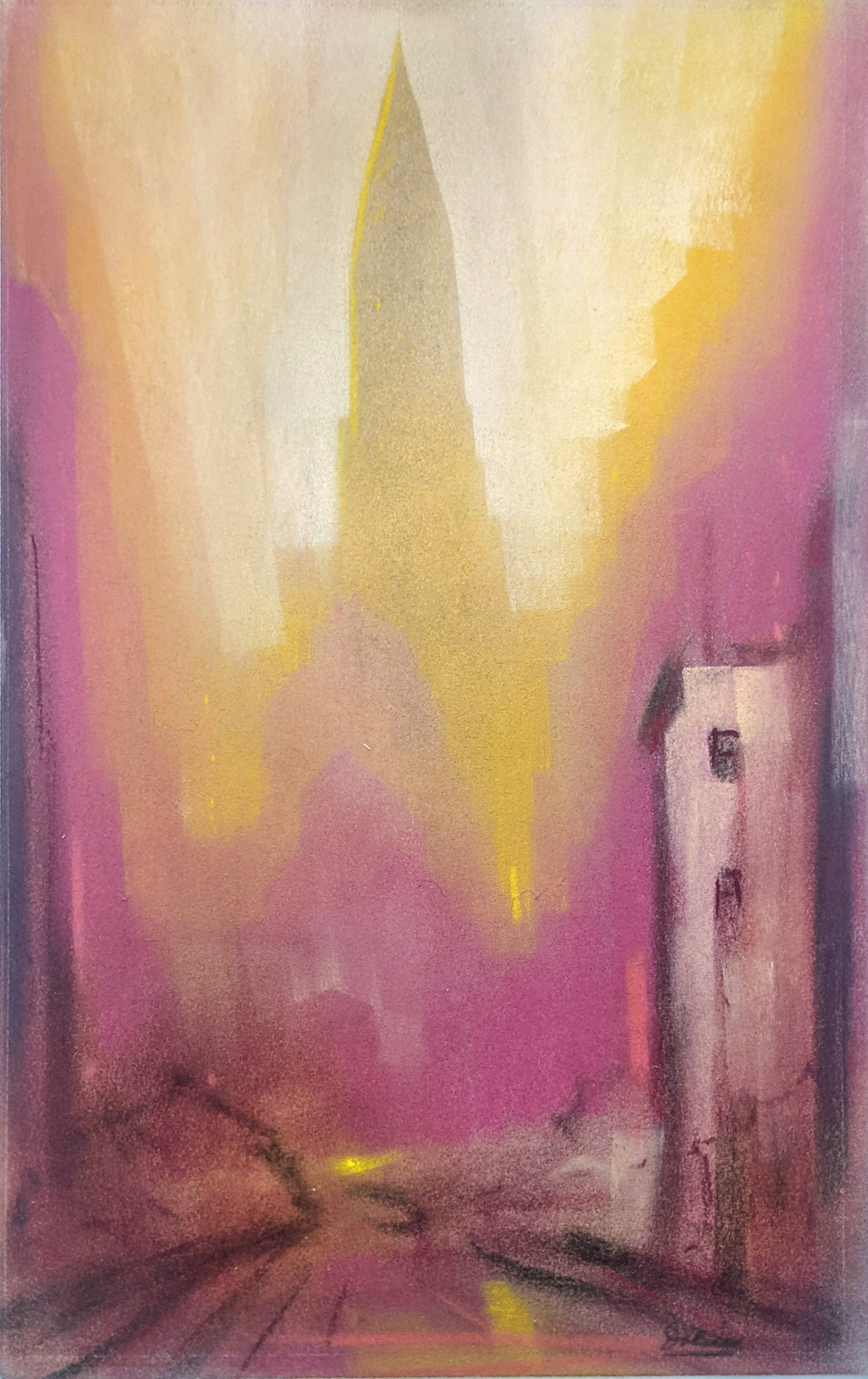 Leon Dolice (1892-1960), Empire State Building, ca. 1930-40. Pastel on paper, 19 x12 in., signed: lower right.
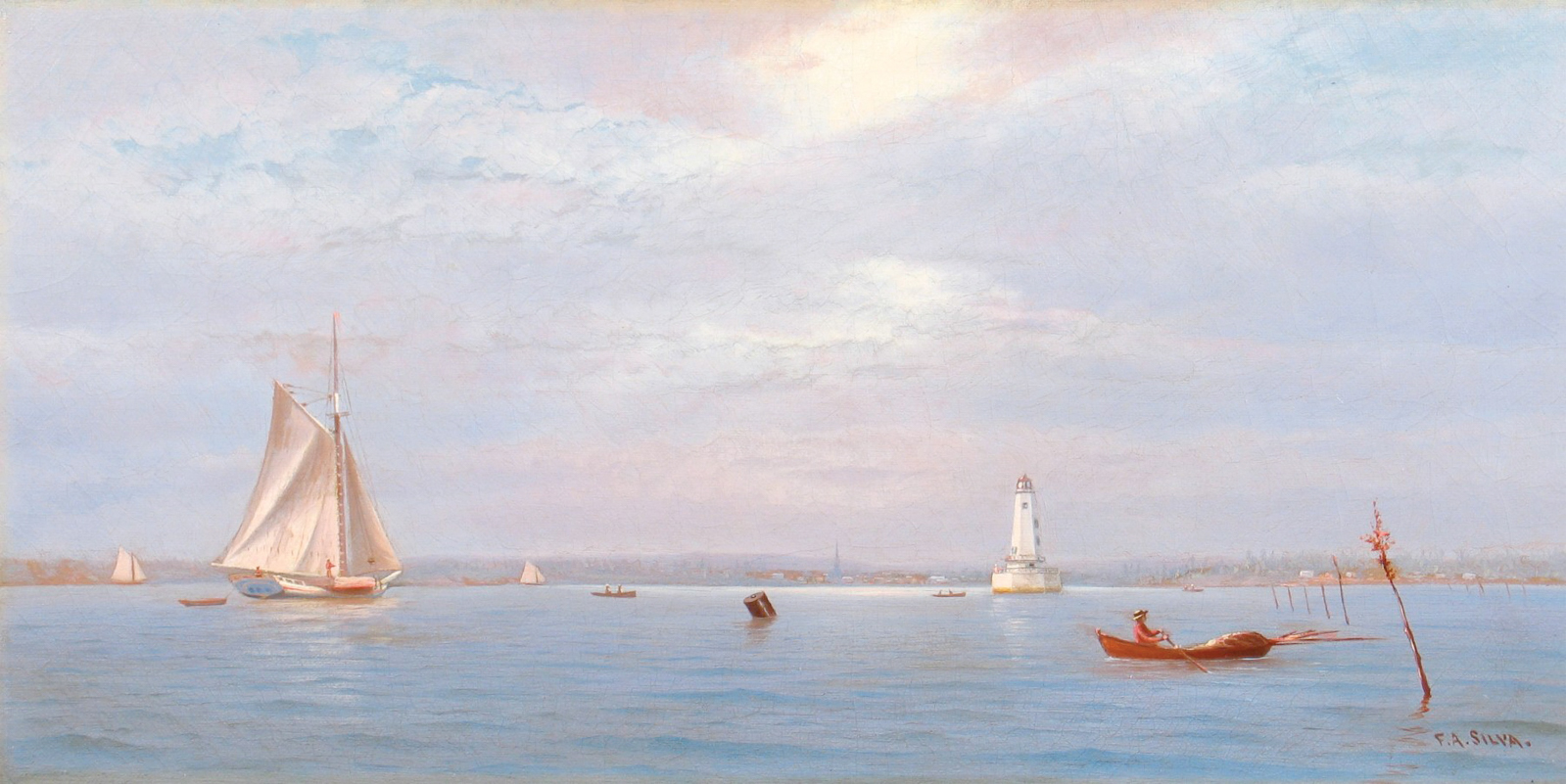 Francis Augustus Silva (1835-1886), Robbin’s Reef Lighthouse off Tompkinsville, New York Harbor, circa 1880. Oil on canvas, 9 x 8 in., signed: lower right.
Hudson Street, painted circa 1932, was originally in the inventory of the Grand Central Art Gallery and portrays the Art Deco tower of the Western Union Building, in addition to the commercial warehouse of The Paul R. Dillon Company, one of the largest of the wholesale dealers of eggs and butter in the region. “It is probably no mere coincidence that Wiggins has chosen to highlight [the Paul R. Dillon warehouse],” explains Sterngass. “While the scene is busy with cargo trucks taking goods out for delivery, it is the time of the Great Depression. We still see an occasional horse-drawn cart, which still helped the poorest of businesses to deliver their goods. Throughout the depression, eggs and butter were generally hard to obtain and both were later rationed food stuffs. Along with milk and other staples of American life, these rationed items transformed New York City and the rest of the country…So, even with this enormous and regularly packed warehouse, plenty was an illusion.”
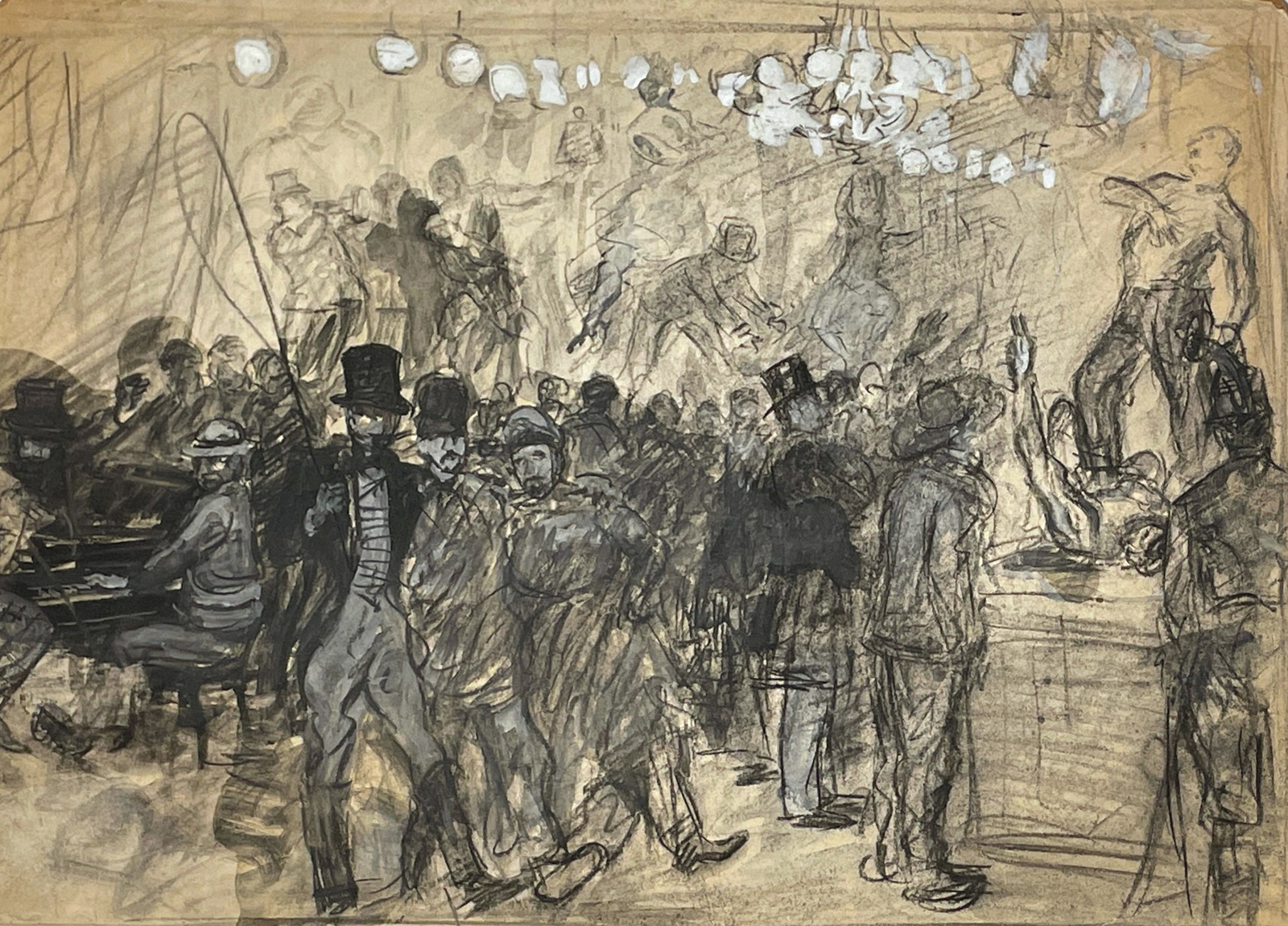 William Glackens (1870-1938), Street Fair, circa 1905. Pencil, ink and gouache on paper, 10 x 14 in.
Gritty works by WPA artists Bertram Hartman and William Sharp represent the later years of the Great Depression, before giving light to a wonderful rooftop view by Herman Rose.
Powered by Froala Editor