On April 8, 1968, the Rev. Martin Luther King, Jr. gave what is called his “I’ve Been to the Mountaintop” speech. He said, “Let us rise up tonight with a greater readiness. Let us stand with a greater determination. And let us move on in these powerful days, these days of challenge to make America what it ought to be. We have an opportunity to make America a better nation….I just want to do God’s will. And He’s allowed me to go up to the mountain. And I’ve looked over. And I’ve seen the promised land. I may not get there with you. But I want you to know tonight, that we, as a people, will get to the promised land.” The following day he was assassinated.
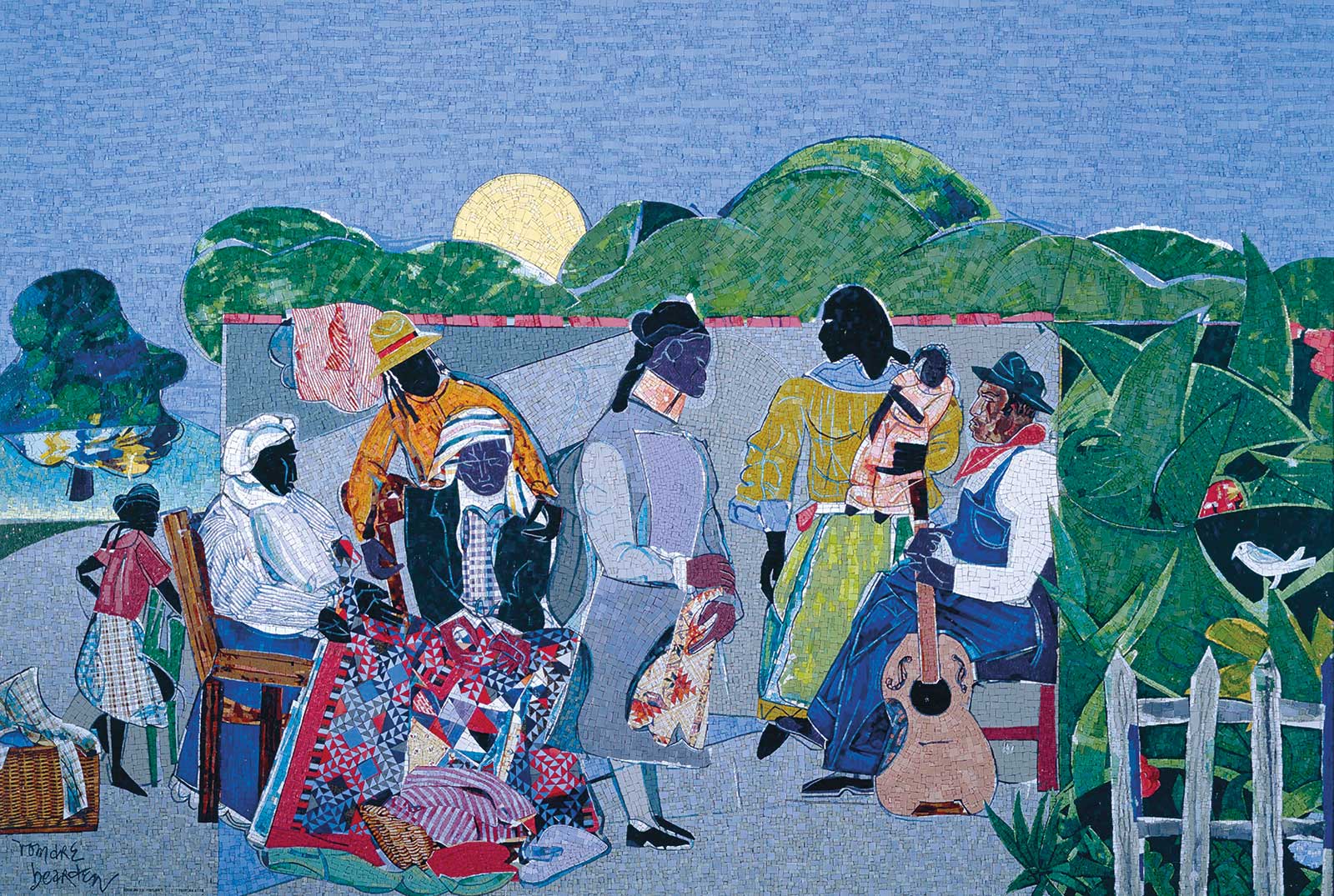 Romare Bearden (1911-1988), Quilting Time (Detroit Institute of Arts), 1986. Poster, 17 x 25¼ in. ART©Romare Bearden Foundation, NY.
Romare Bearden (1911-1988) created a collage, Martin Luther King—Mountain Top, 1968, honoring the fallen leader. Bearden had been drafted in 1942 and served in the all-Black 372nd Infantry Regiment until 1945. He recognized the malingering prejudice that Dr. King sought to combat. A silkscreen print of the collage is included in the exhibition Romare Bearden: Artist, Activist, and Advocate of The Promised Land, organized by The Romare Bearden Foundation and on display at the Brigham Young University Museum of Art from October 15 through January 22, 2023.
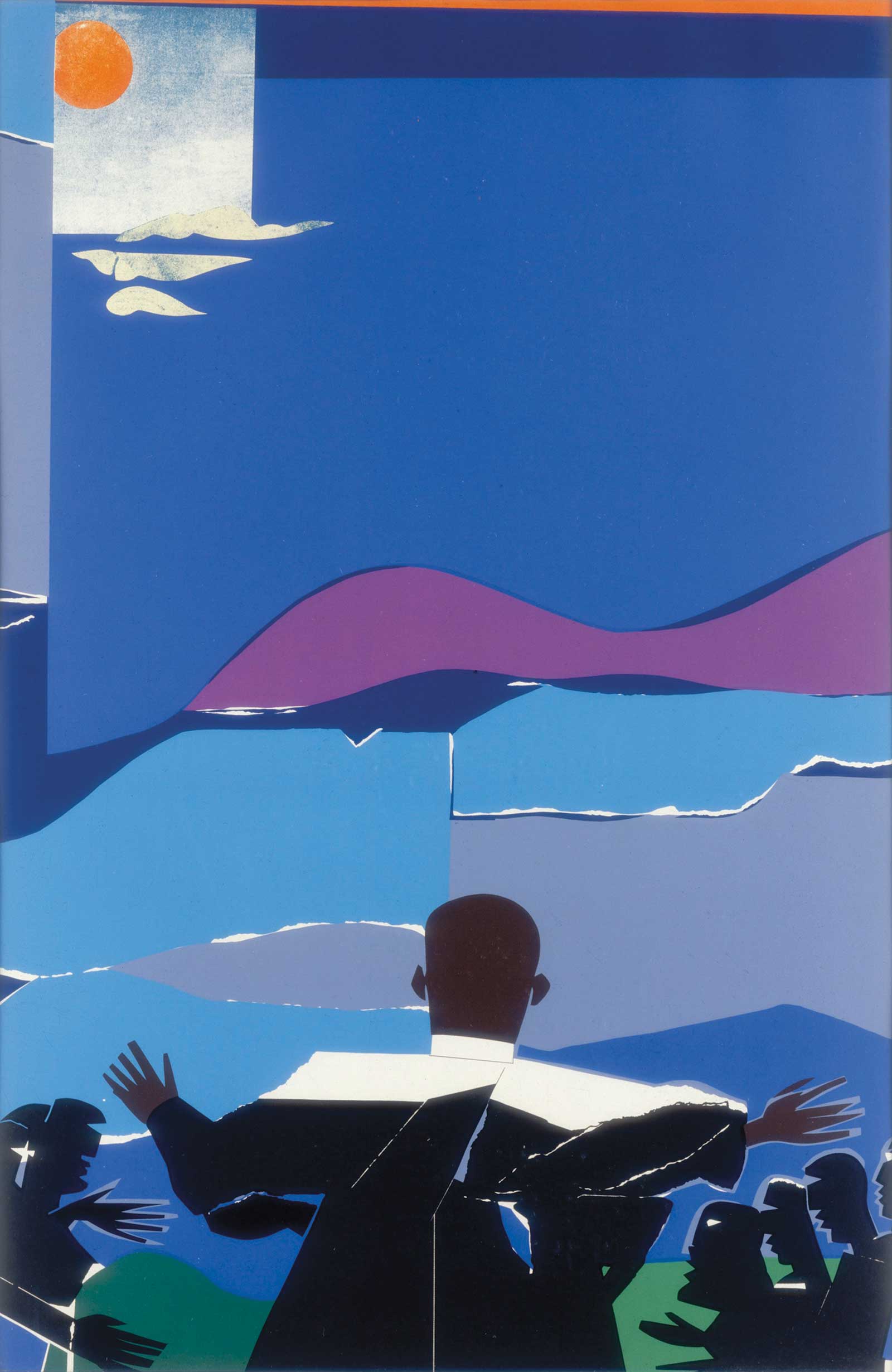 Romare Bearden (1911-1988), Martin Luther King—Mountain Top, 1968. Screenprint, 30 x 19½ in. ART©Romare Bearden Foundation, NY.
The museum notes, “This exhibition presents examples of Bearden’s influences as an artist of social conscience and action. Bearden is recognized as one of the most important visual artists of the 20th century, countered racial stereotypes with images drawn from history, literature, and the free world of his imagination.”
Bearden (who pronounced his first name as “ROH-mery”) was born in Charlotte, North Carolina, where his family lived with his paternal grandparents. The family later moved to Harlem, New York, and he would return to Charlotte for visits. His mother was an activist and their home was a magnet for people like Langston Hughes, W.E.B. DuBois and Duke Ellington, who would become his first patron.
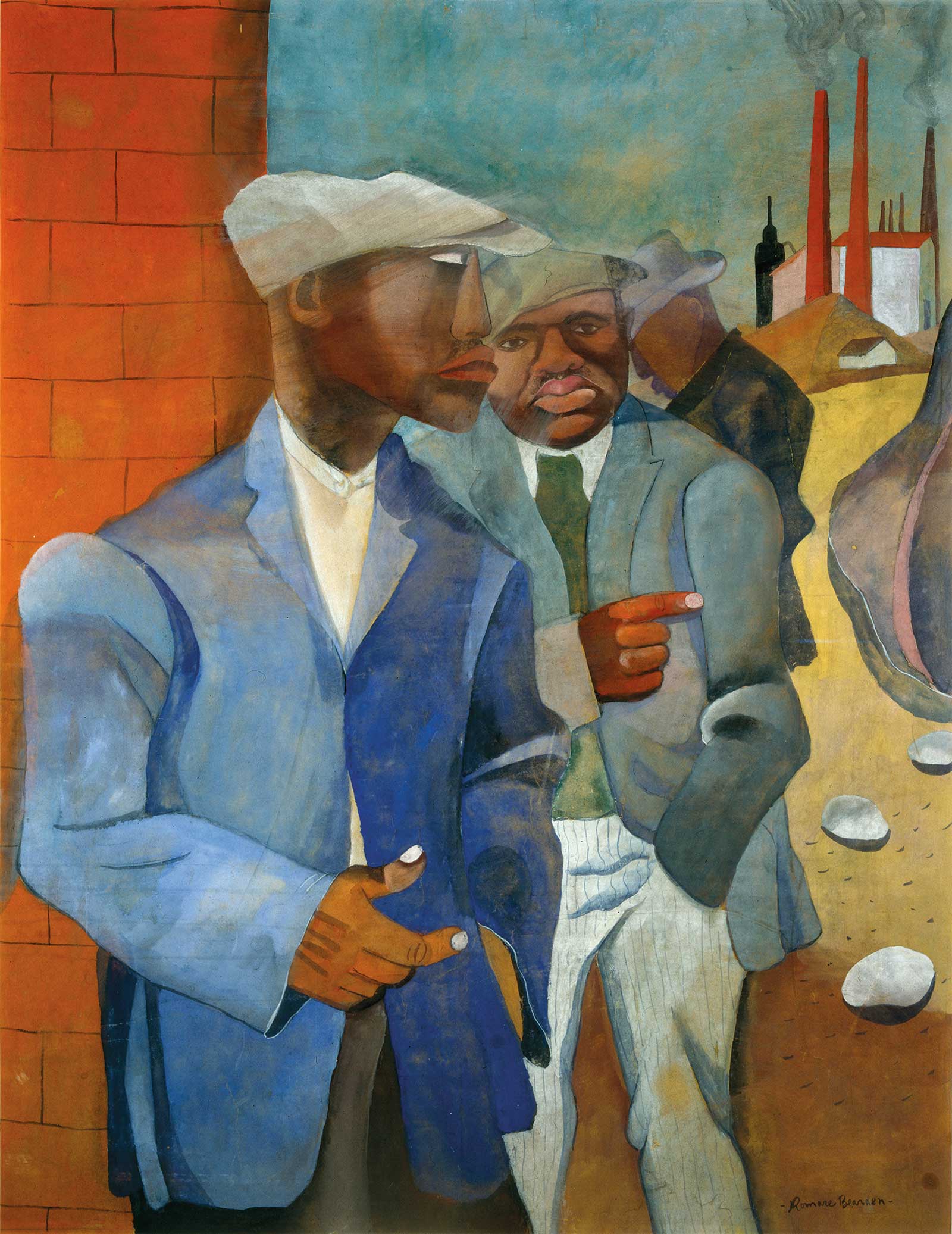 Romare Bearden (1911-1988), Factory Workers (Fortune magazine), 1942. Magazine page, 14 x 11 in. ART©Romare Bearden Foundation, NY.
Bearden began college at Lincoln University, transferred to Boston University and completed his studies at New York University, graduating with a degree in education. From the mid-1930s through the 1960s, Bearden was a social worker with the New York City Department of Social Services, working on his art at night and on weekends. His summers back in Mecklenberg County, North Carolina, formed the memories that would become expressed in art. He transformed his experiences through his art because, in his words, “I am trying to explore the particulars of the life that I know best; those things common to all cultures.”
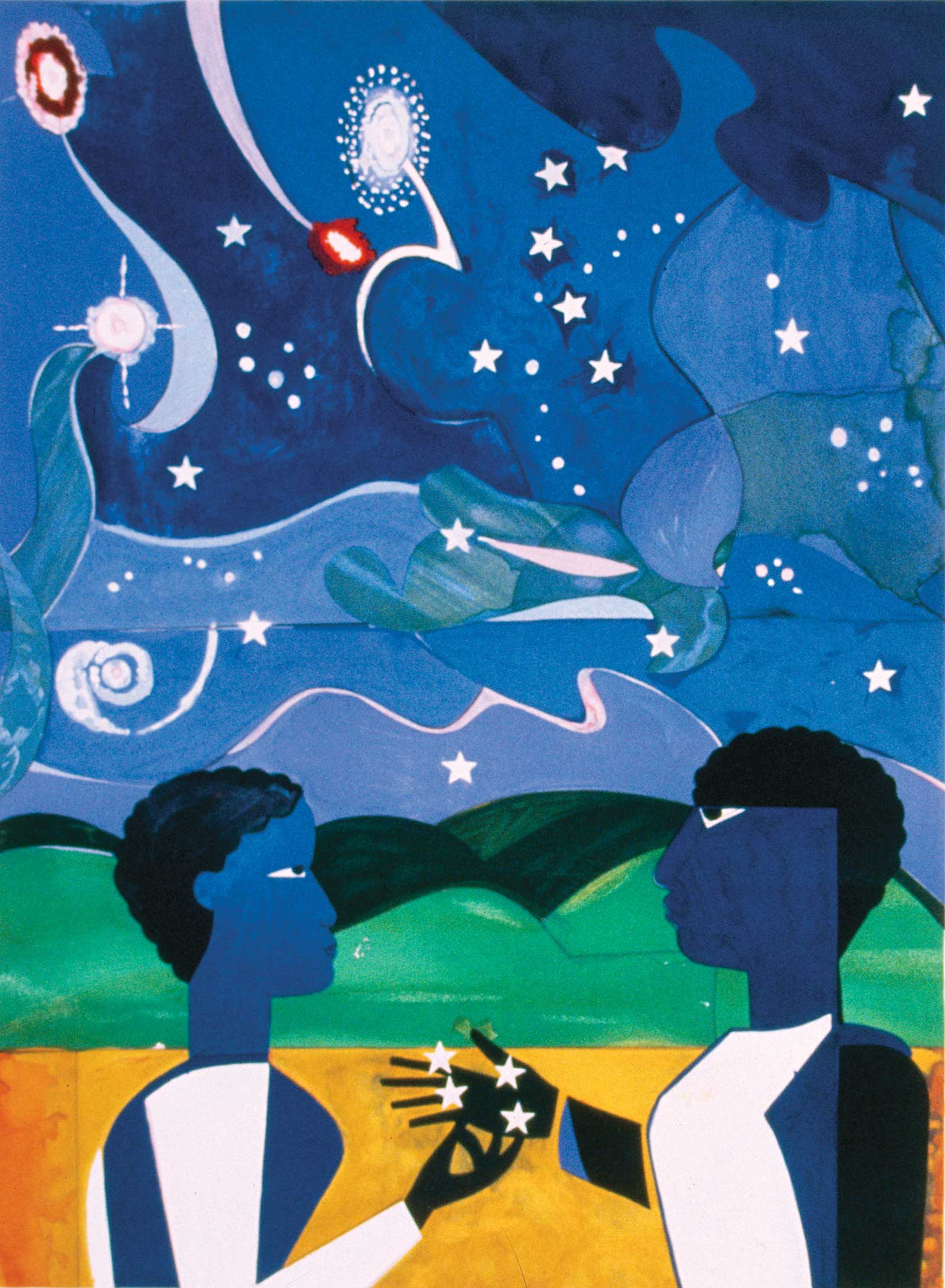 Romare Bearden (1911-1988), Two Worlds, 1980. Lithograph, 17½ x 13 in. ART©Nanette Bearden Estate, NY.
Quilting Time, 1986, depicts a group of people gathered around women making quilts. Its theme shows the sense of community and the reverence for tradition. In 1977, Calvin Tomkins wrote one of his profiles in The New Yorker magazine on Bearden. He observed, “Bearden believed…that the Negro was becoming something of an abstraction in the ’60s, a sort of caricature or protest and injustice. For his own part, he wanted, as he said in 1964, to ‘establish a world through art in which the validity of my Negro experience could live and make its own logic.’ Bearden was concerned with art—not propaganda. ‘I have not created protest images,’ he said. ‘The world within the collage, if it is authentic, retains the right to speak for itself.’”
Powered by Froala Editor