The Pacific Northwest has long been an inspiration for artists. Before grunge rock and Jonathan Borofsky’s Hammering Man, there were paintings by Harriet Foster Beecher, Grafton Tyler Brown and Sydney Laurence. While Indigenous artists of the Pacific Northwest had been making art for thousands of years, non-Native American artists were drawn to the region during the westward expansion of settlers in the late 1880s. Not only did these artists show the rest of the world what it looked and felt like in the Pacific Northwest, they excelled in their media, garnering accolades for their work.
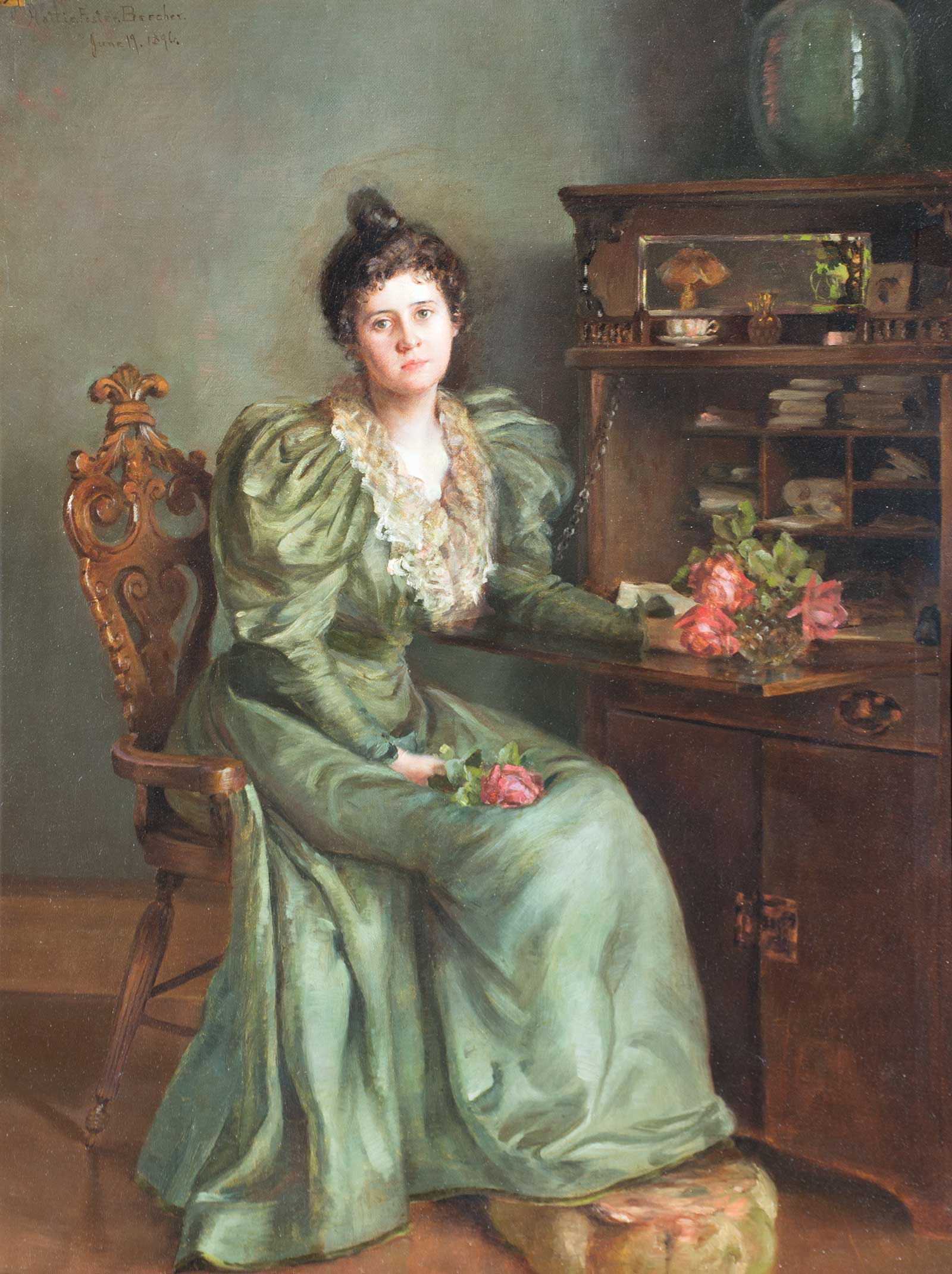 Harriet Foster Beecher (1854-1915), Pondering, 1896. Oil on canvas, 26 x 20 in.
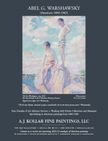
The exhibition at A.J. Kollar Fine Paintings, Defining a Region: Contextualizing Art of the Pacific Northwest, captures this burgeoning artistic vocabulary of the Pacific Northwest at the turn of the 20th century. The exhibition features paintings by artists visiting and living in the western northern coastal regions of Oregon, Washington, Canada and Alaska. Included are works by Albert Bierstadt, Harriet Foster Beecher, Eliza Barcus, Grafton Tyler Brown, Paul Gustin, Abby Williams Hill, Sydney Laurence, William Samuel Parrott, Frederic Remington, James Everett Stuart, Jules Tavernier, and Eustace Ziegler.
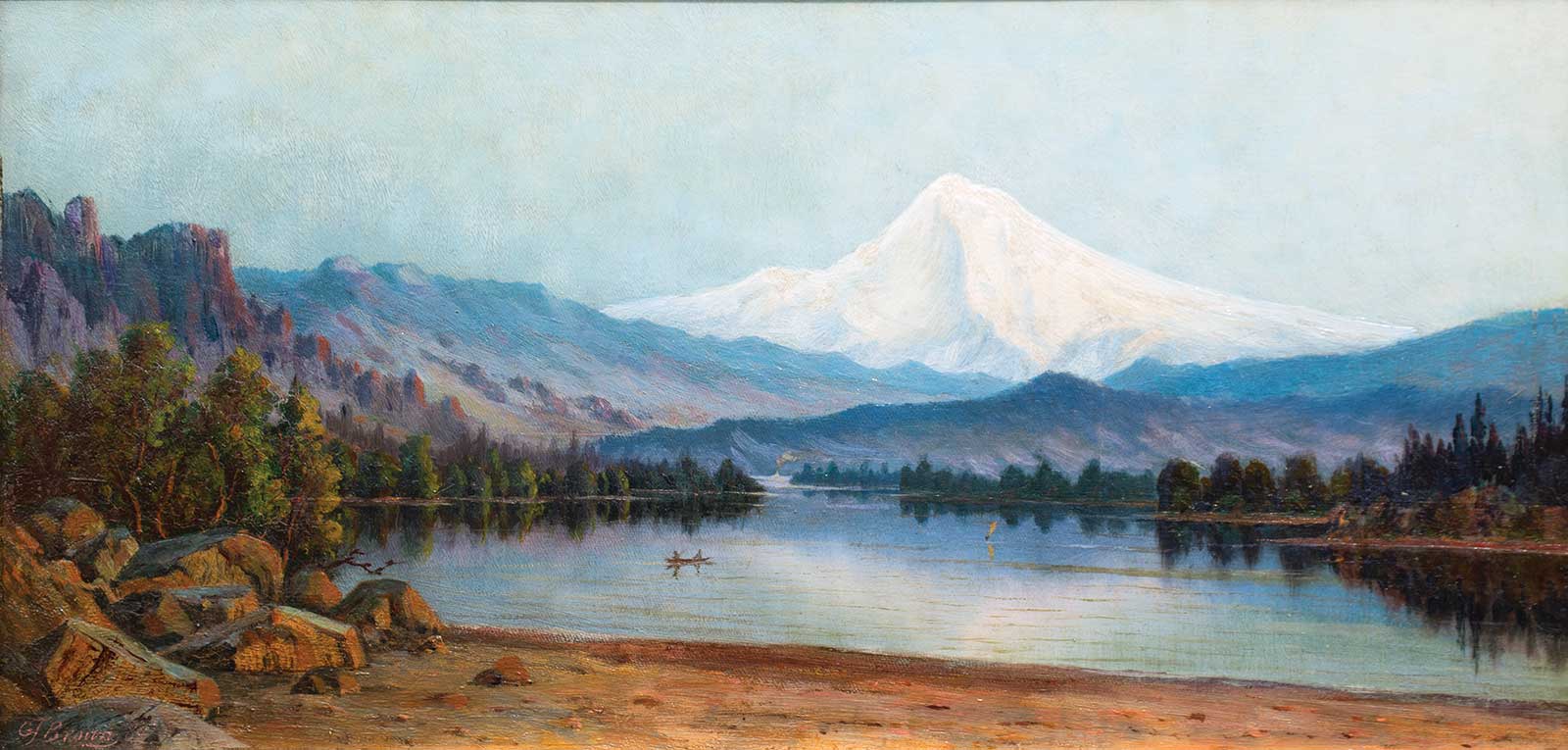 Grafton Tyler Brown (1844-1918), Mt. Hood, Oregon, 1888. Oil on canvas, 10 x 20 in.
“The art of the 19th and early-20th century in the Pacific Northwestern region is only partially researched,” says gallery owner and director Allan Kollar. “Several of the artists’ names will be new to collectors and academics.”
Some of the artists were well known in their day but did not become household names like Bierstadt and Remington. For instance, Grafton Tyler Brown is credited with being the first Black artist to paint landscapes of the Pacific Northwest. Born a freed man in 1841, Brown first became skilled at lithography before turning to painting. He spent severwal years in various Northwest locations. While living in Victoria, Canada, a show of his landscape paintings earned him praise from one critic as “the pioneer of this intellectual and refined art.”
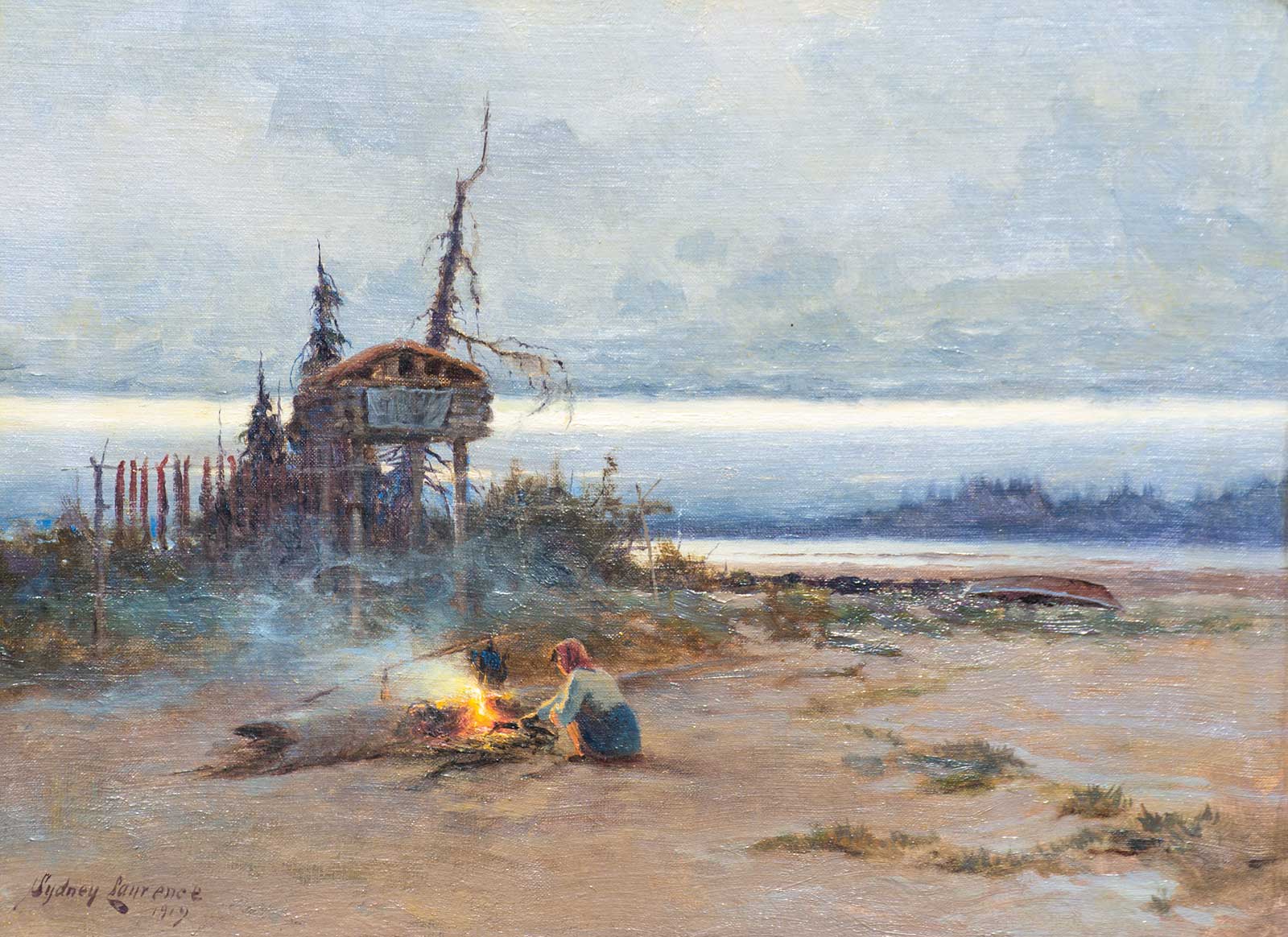 Sydney Laurence (1865-1940), Cache - The Lower Sustina River, Anchorage, Alaska, 1919. Oil on canvas on board, 12 x 16 in.
Landscape paintings at that time weren’t simply decorative. As Kollar notes, “These artists recorded an unknown perspective for those living on the eastern and southern parts of the continent.”
Harriett Foster Beecher exhibited at the 1893 Columbian Exposition in Chicago, and served on the Panama-Pacific International Expo-Advisory Committee. Trained at the San Francisco Art Institute, Beecher lived in Port Townsend, Washington, and Seattle as an adult. She was a charter member of the Society of Seattle Artists, which was formed in 1904. It became the Seattle Fine Arts Society, which later founded the Seattle Art Museum.
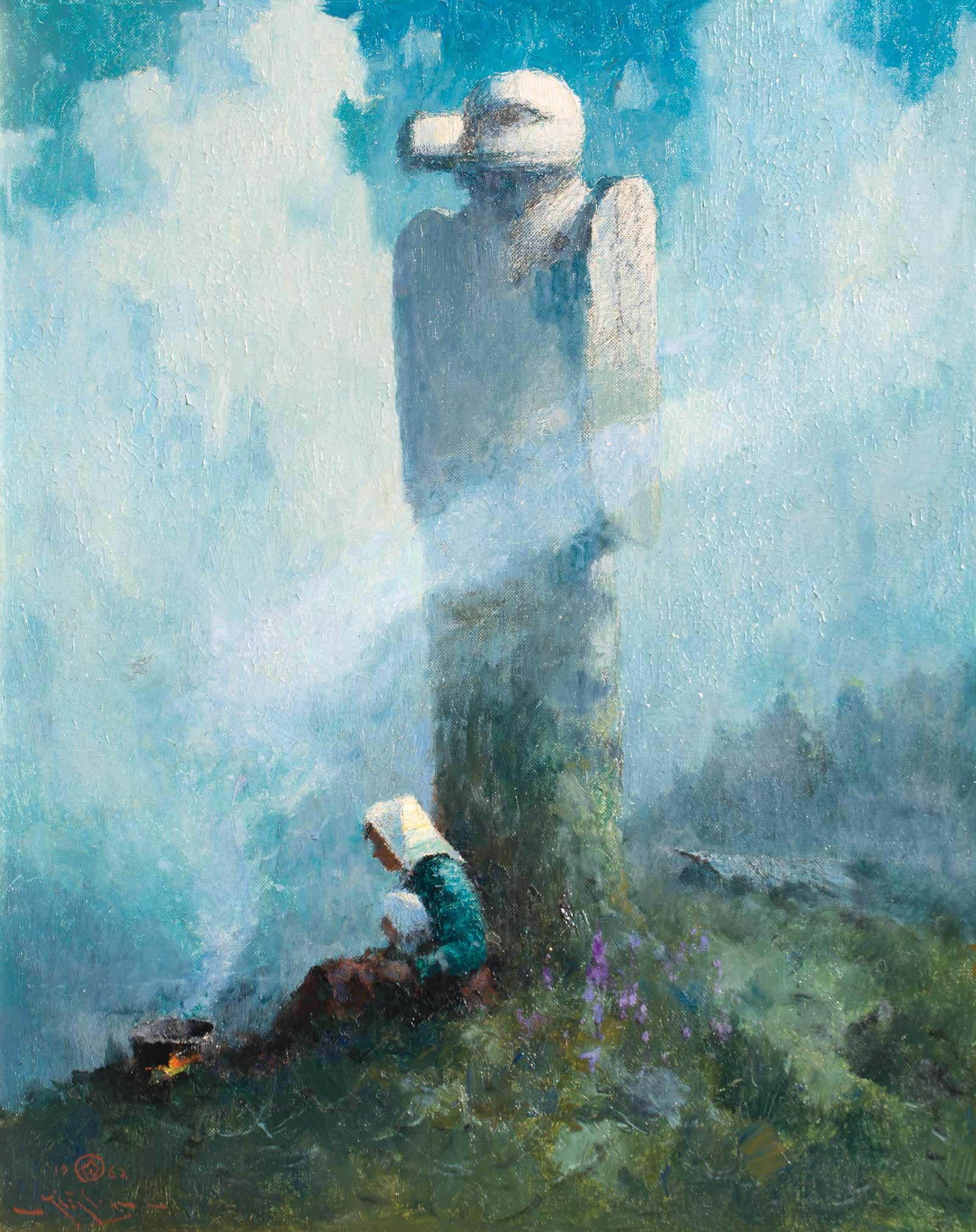 Eustace Paul Ziegler (1881-1969), Shadow of the Wing, 1962. Oil on canvasboard, 20 x 16 in.
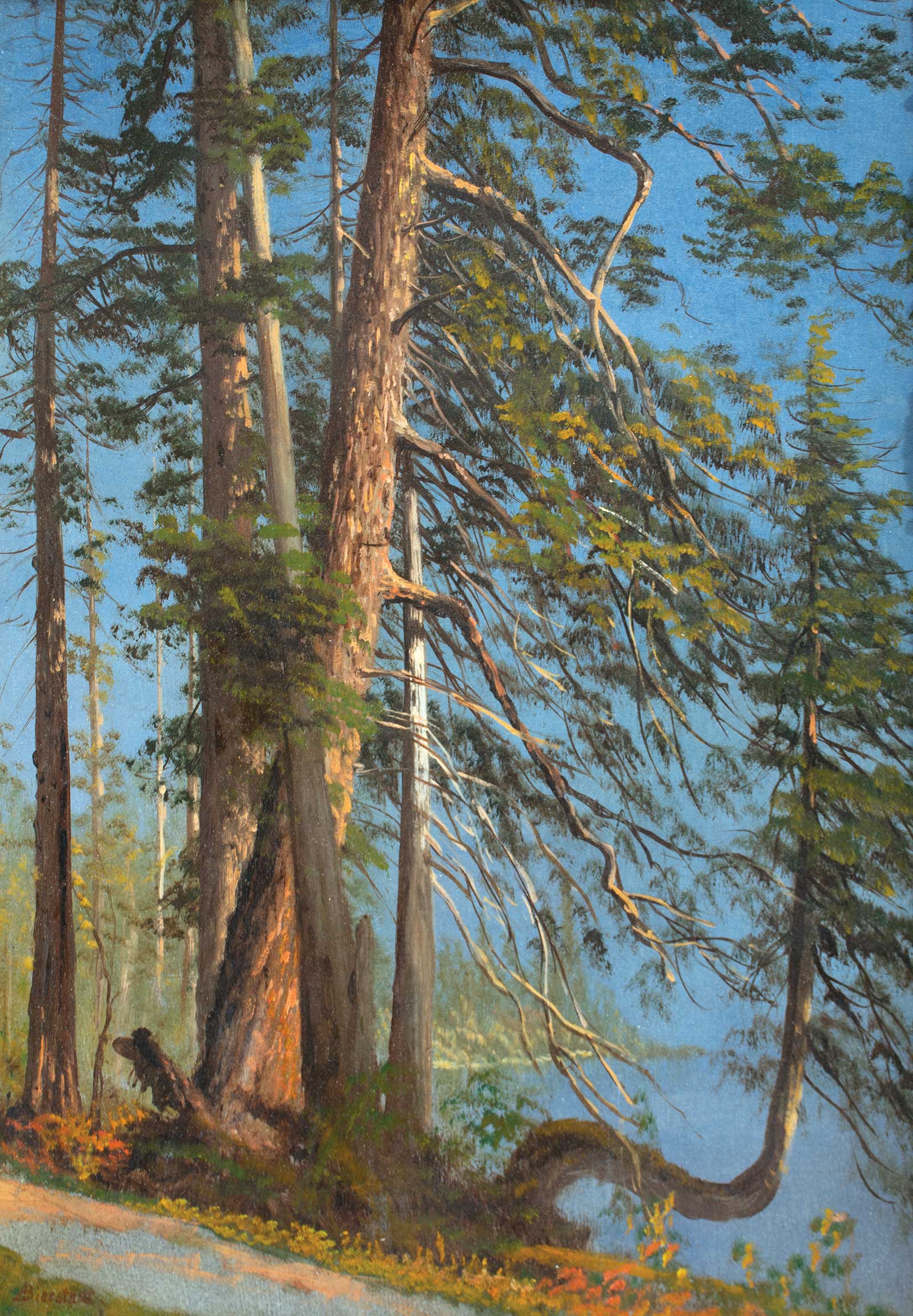 Albert Bierstadt (1830-1902), Stanley Park, British Columbia, ca. 1889. Oil on canvas, 19¼ x 13¼ in.
According to Kollar, Beecher’s landscape paintings included “Salish tribal scenes along the Puget Sound coast, as well as portraits of Clallam and Makah tribal members.” Included in the exhibit is a portrait by Beecher titled Pondering.
One of Beecher’s female contemporaries was Abby Williams Hill, a plein air landscape painter who lived in Tacoma, Washington, and traveled extensively throughout the West. Her work was commissioned by the Great Northern and Northern Pacific railroads, and exhibited at the 1904 St. Louis World’s Fair and the 1905 Lewis and Clark Exposition in Portland, Oregon.
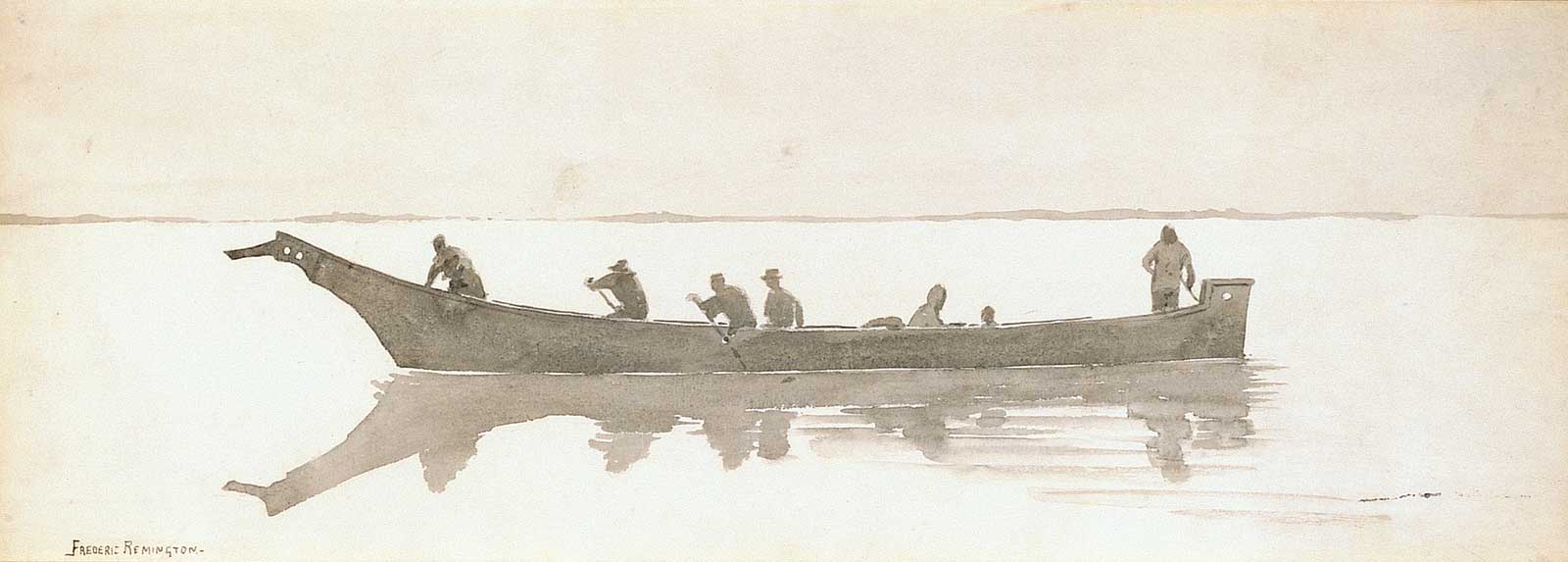 Frederic Remington (1861-1909), An Idyll of the Coast. Gouache on paper 7¾ x 21½ in.
The arrival of the transcontinental railroad to the Pacific Northwest in the 1880s changed the region dramatically. While artists like Hill helped the railroad companies show the grandeur of the region, other artists showed the shifts that came with an influx of people from the Northeastern United States. According to Kollar, painters Sydney Laurence and Eustace Ziegler captured the rapid changes occurring in the Alaskan territory.
“They were two of the region’s most loved artists during the early-20th century,” Kollar says. “Their paintings were and still are highly sought after.”
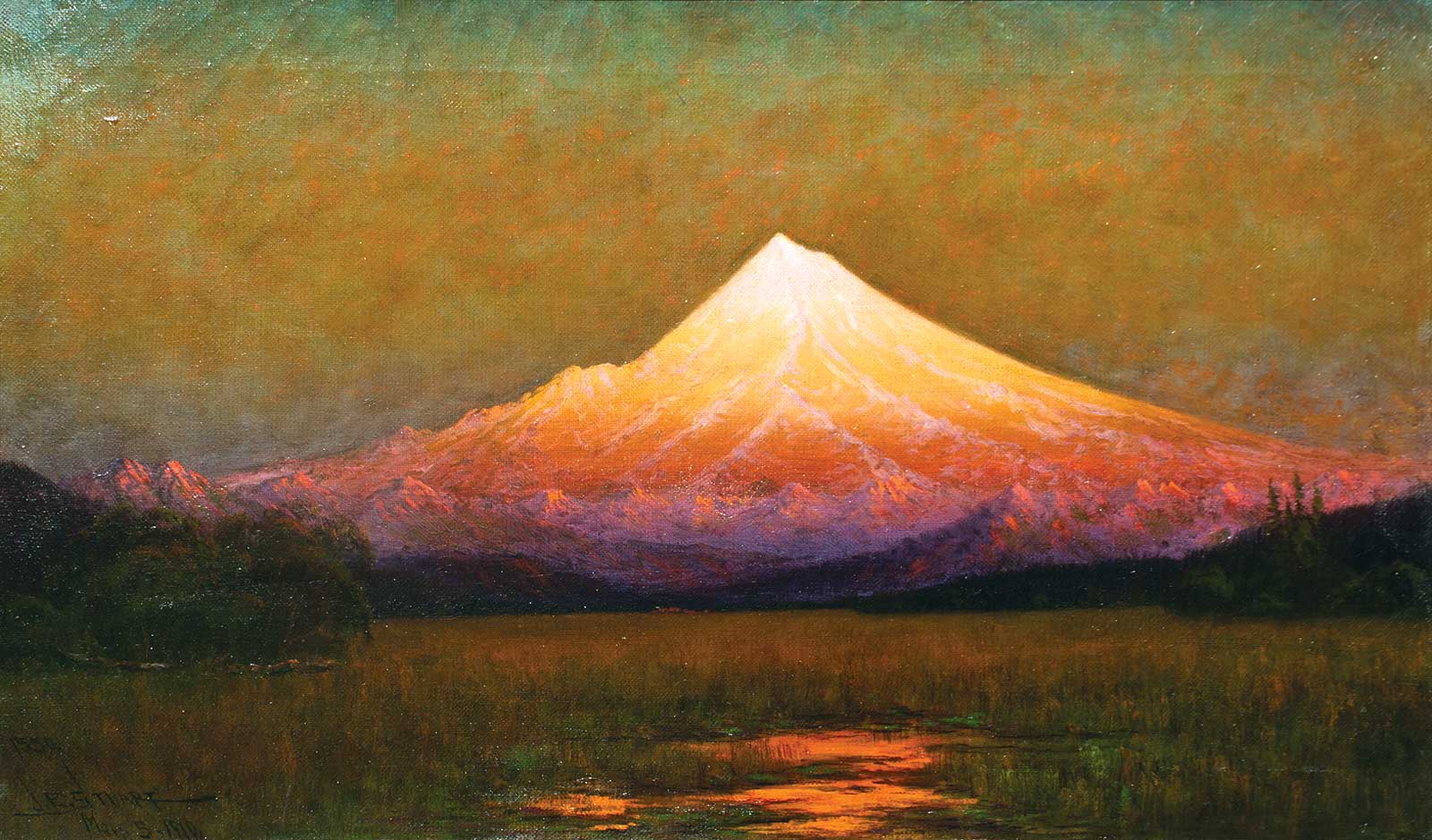 James Everett Stuart (1852-1941), Sunset Glow - Mount Hood from near Portland, Oregon, 1910. Oil on canvas, 18 x 30 in.
One of the works on display by Ziegler, Shadow of the Wing, shows an Inuit mother and child under the protective eagle totem pole. Kollar says this is likely a Madonna and child reference, a motif Ziegler used throughout his career. “The mother and child are away from the house, in the presence of an iconic symbol,” Kollar says. “There is respect for the beauty and spiritual strength of the natural world they—and we—live in.”
Defining a Region: Contextualizing Art of the Pacific Northwest presents a unique window into a particular time and region in American history. The lands and waters of the Pacific Northwest appear as they were before freeways and urban sprawl. So, too, the simpler lives of inhabitants new and old. Another subtler subject, is the quality of Northwest light—a coolness and a northerly latitude perceptible in the way shadows fall.
In all, the exhibition promises to be a feast for the eyes as well as the mind.
Powered by Froala Editor