Opening this October at the Chrysler Museum of Art is Black Orpheus: Jacob Lawrence and the Mbari Club, a traveling exhibition that marks the 60th anniversary of celebrated social realist Jacob Lawrence’s first exhibition and visit to Nigeria. It also provides the first in-depth look at members of the Mbari Artists and Writers Clubs, an organization of Nigerian-based artists, writers and dramatists promoting modern African and international artistic practice. In addition, the forthcoming exhibition honors the 65th anniversary of Black Orpheus, a radical arts and culture publication featuring the work of modernist African and African Diasporic writers and visual artists.
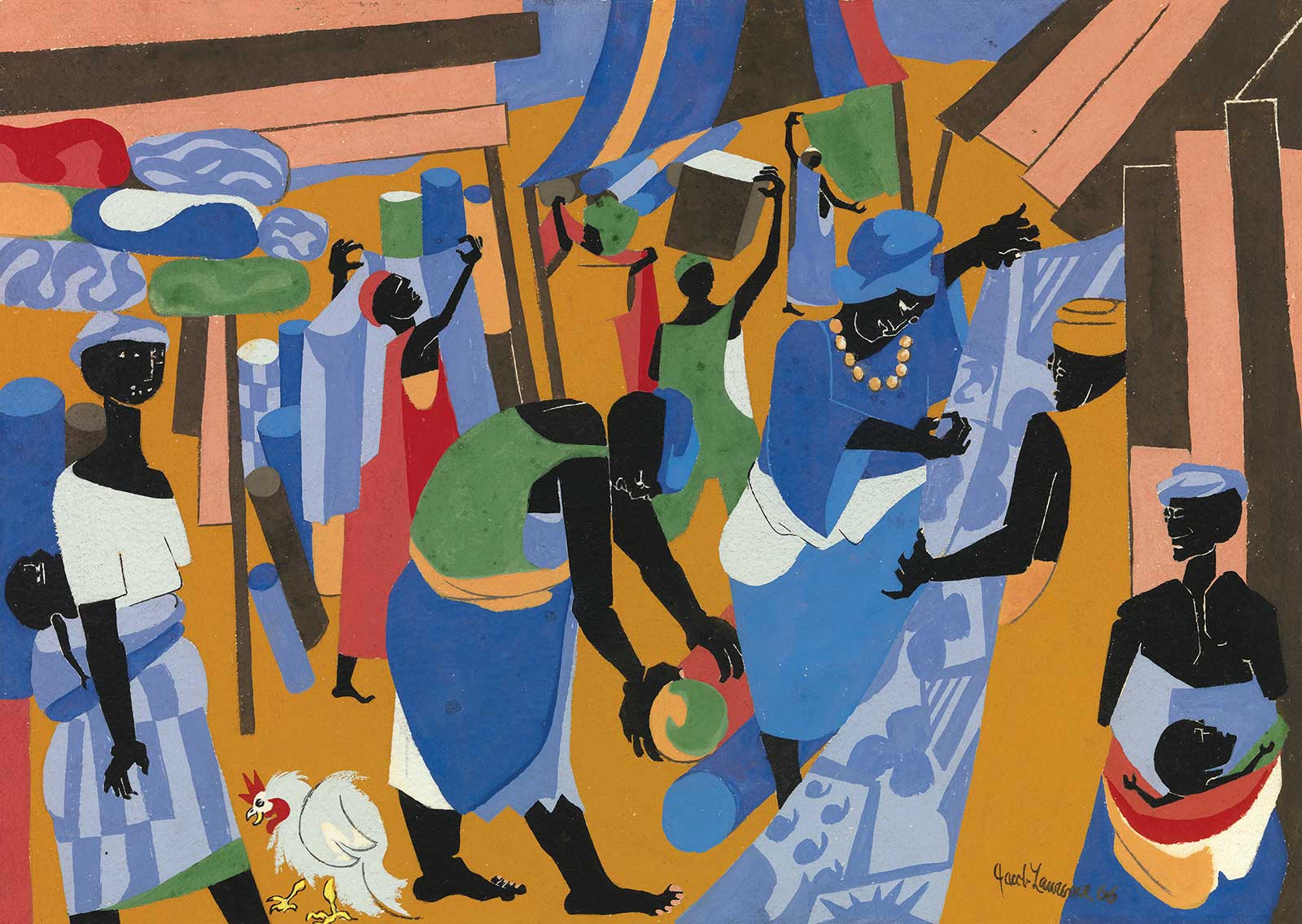 Jacob Lawrence (1917-2000), Market Scene, 1966. Gouache on paper. Chrysler Museum of Art, Museum purchase 2018.22. © 2022 The Jacob and Gwendolyn Knight Lawrence Foundation, Seattle / Artists Rights Society (ARS), New York.
“The exhibition is an investigation [into] a little known period of Lawrence’s life—the eight months he spent in Nigeria with his artist wife Gwendolyn Knight and the connections he made with an already existing art scene happening there,” curator Kimberli Gant reflects. Gant is curator of modern and contemporary art at the Brooklyn Museum, having previously served as the Chrysler Museum’s McKinnon Curator of Modern & Contemporary Art. Black Orpheus: Jacob Lawrence and the Mbari Club is curated in partnership with the New Orleans Museum of Art and Ndubuisi Ezeluomba, New Orleans Museum of Art’s Françoise Billion Richardson curator of African art. After its debut at the Chrysler Museum, the show heads to the New Orleans Museum of Art where it will be on disply from February 10, 2023 to May 7, 2023. From there the exhibit will travel to the Toledo Museum of Art where it will be on view through September 3, 2023.
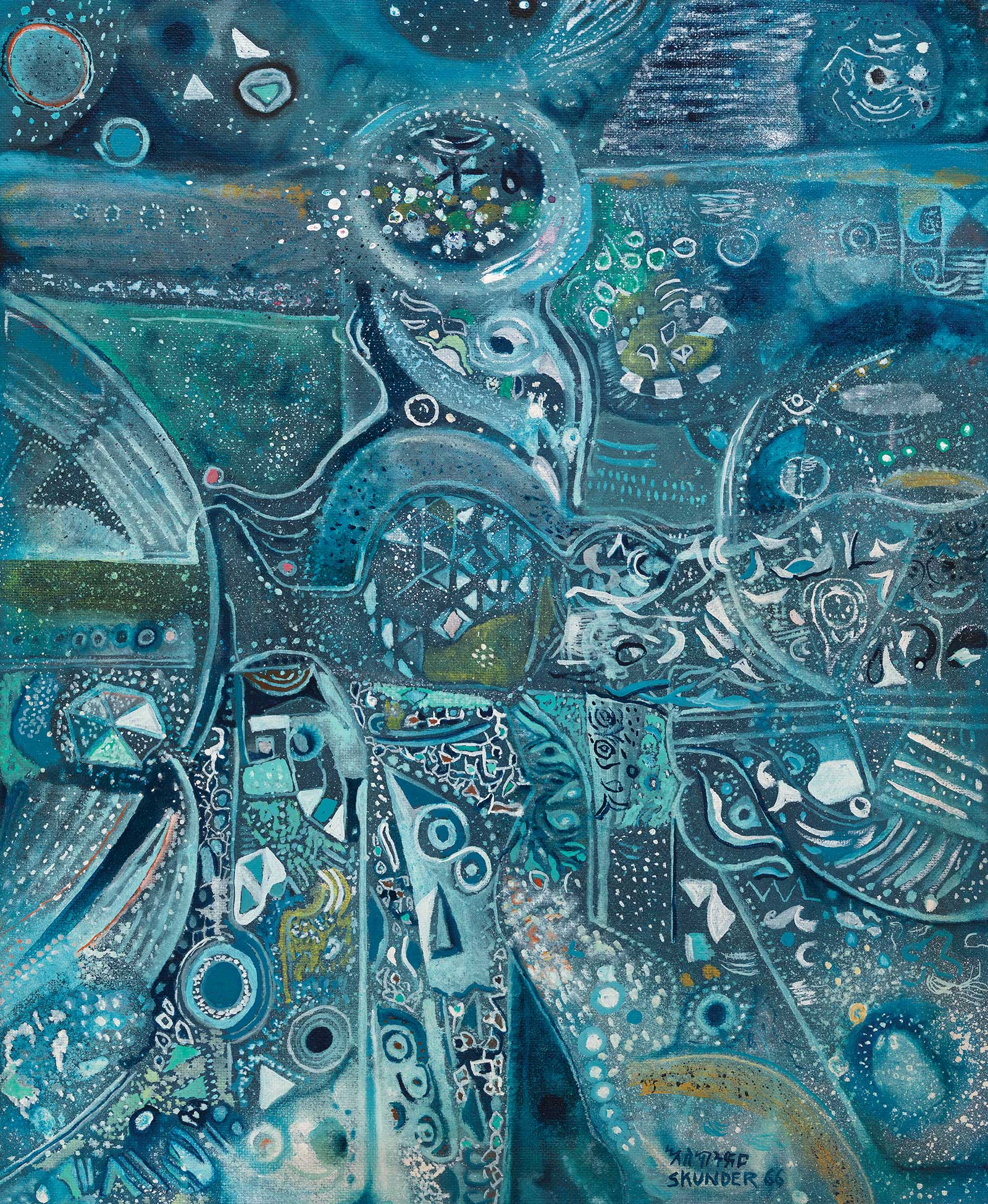 Alexander “Skunder” Boghossian (1937-2003), Untitled, 1966. Oil on canvas. Chrysler Museum of Art, Museum purchase 2020.32.
“There are still so many narratives within the recent past that have yet to be fully presented, known or promoted within art history. The general public does not know about Lawrence’s time in Nigeria or the work he produced there,” Gant continues. “They also do not know about 20th-century art practices within the continent of Africa, and hopefully this project will give them a taste, and that Black Orpheus helped expose and promote literature and art across the world. It is a journal that contributed a great deal within its [10-year run] and needs more attention.”
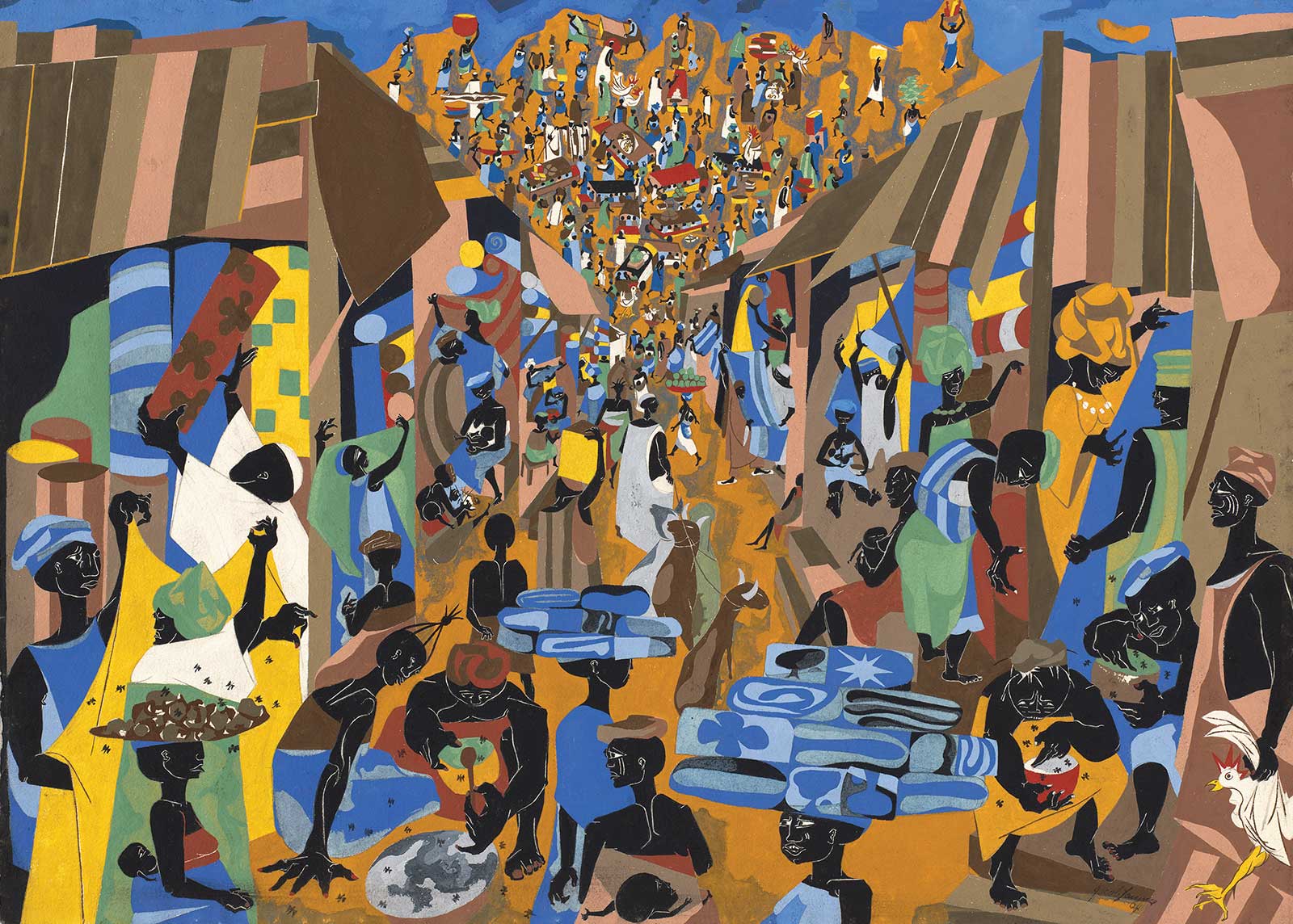 Jacob Lawrence (1917-2000), Street to Mbari, 1964. Tempera over graphite on wove paper. National Gallery of Art, Washington, D.C. Gift of Mr. and Mrs. James T. Dyke 1993.18.1. © 2022 The Jacob and Gwendolyn Knight Lawrence Foundation, Seattle / Artists Rights Society (ARS), New York.
One of Gant’s many intentions is to contribute to the education of global art history in the United States. “To that effect, there was–and continues to be–strong art traditions within Africa, Asia and Latin America, which is often not told or really known here. I would attribute that to major museum collections on the continents being focused on objects from centuries past, and which are only now adding modern and contemporary artists, thereby requiring a rethinking on how artists have always been thinking and creating,” she says. “As seen through this project, African artists often collaborated or were in conversation with artists from the West, such as Lawrence, Georgina Beier or Suzanne Wenger. They went to schools in Europe and often merged styles and influences together to produce a new visual language.”
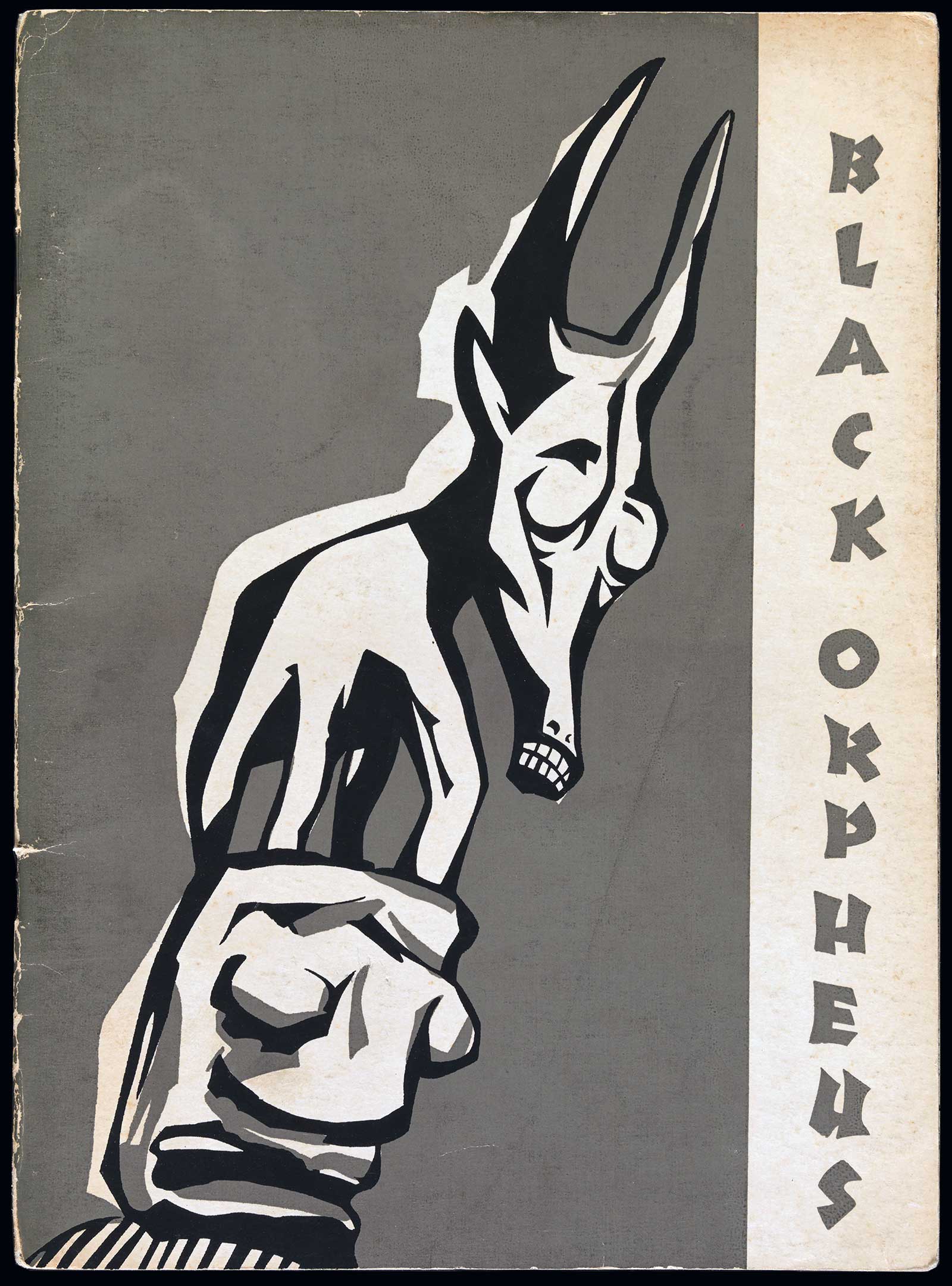 Cover of Black Orpheus Journal #5, May 1959. Collection of Philip Peek, Sanbornton. Photo by Sesthasak Boonchai.
A full-color catalog published by Yale University Press will accompany the exhibition.
Powered by Froala Editor