Gertrude Vanderbilt Whitney (1875-1942) was a sculptor, collector and art patron. She wrote, “You must always have great, secret, big fat hopes for yourself in love and life. The bigger, the better.” She saw the promise of American artists of the early 20th century and began collecting their work. In 1914 she opened the Whitney Studio in New York to show underrepresented living American artists. In 1930, she established the Whitney Museum of American Art which opened the following year.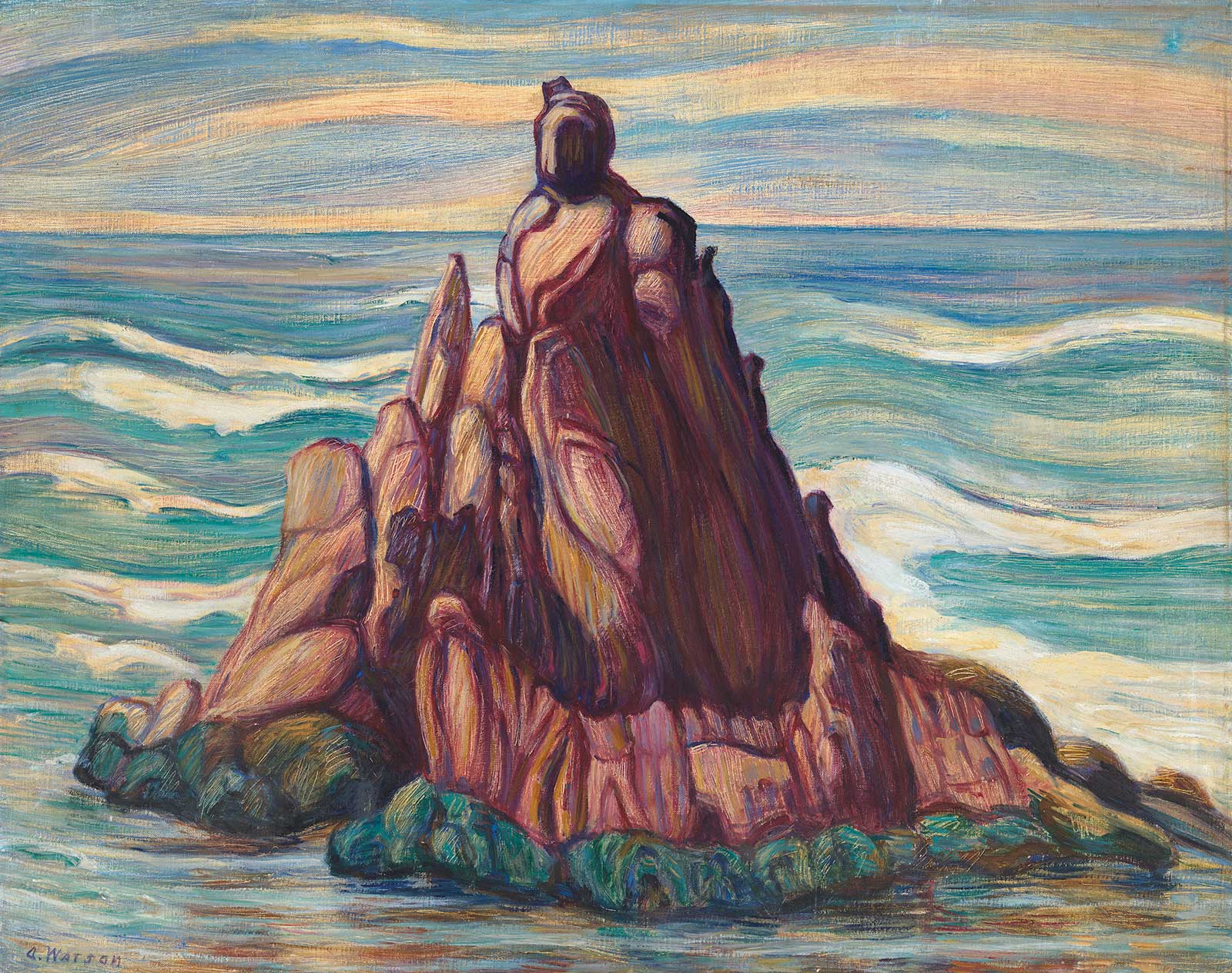 Adele Watson (1873-1947), Untitled (Mountain Island Monk), ca. 1931-47. Oil on canvas, 27 1/8 x 34 in. Whitney Museum of American Art, New York. Gift of Lydia E. Ringwald, 2020.176.
Barbara Haskell has been a curator at the Whitney since 1975. She has recently organized the exhibition, At the Dawn of a New Age: Early 20th Century American Modernism, which opens May 7 and continues through January 2023.
She explains, “In the Whitney’s early days, the museum favored realism over abstract styles. It wasn’t until the mid-1970s that the museum expanded its focus and began acquiring nonrepresentational works from the period. Gaps remain, but the museum’s holdings of early-20th century modernism now rank among the collection’s strengths. By bringing together familiar icons, works that have been in storage for decades and new acquisitions, At the Dawn of a New Age gives us an opportunity to reassess how we tell the story of this period of American art and celebrate its complexity and spirit of innovation.”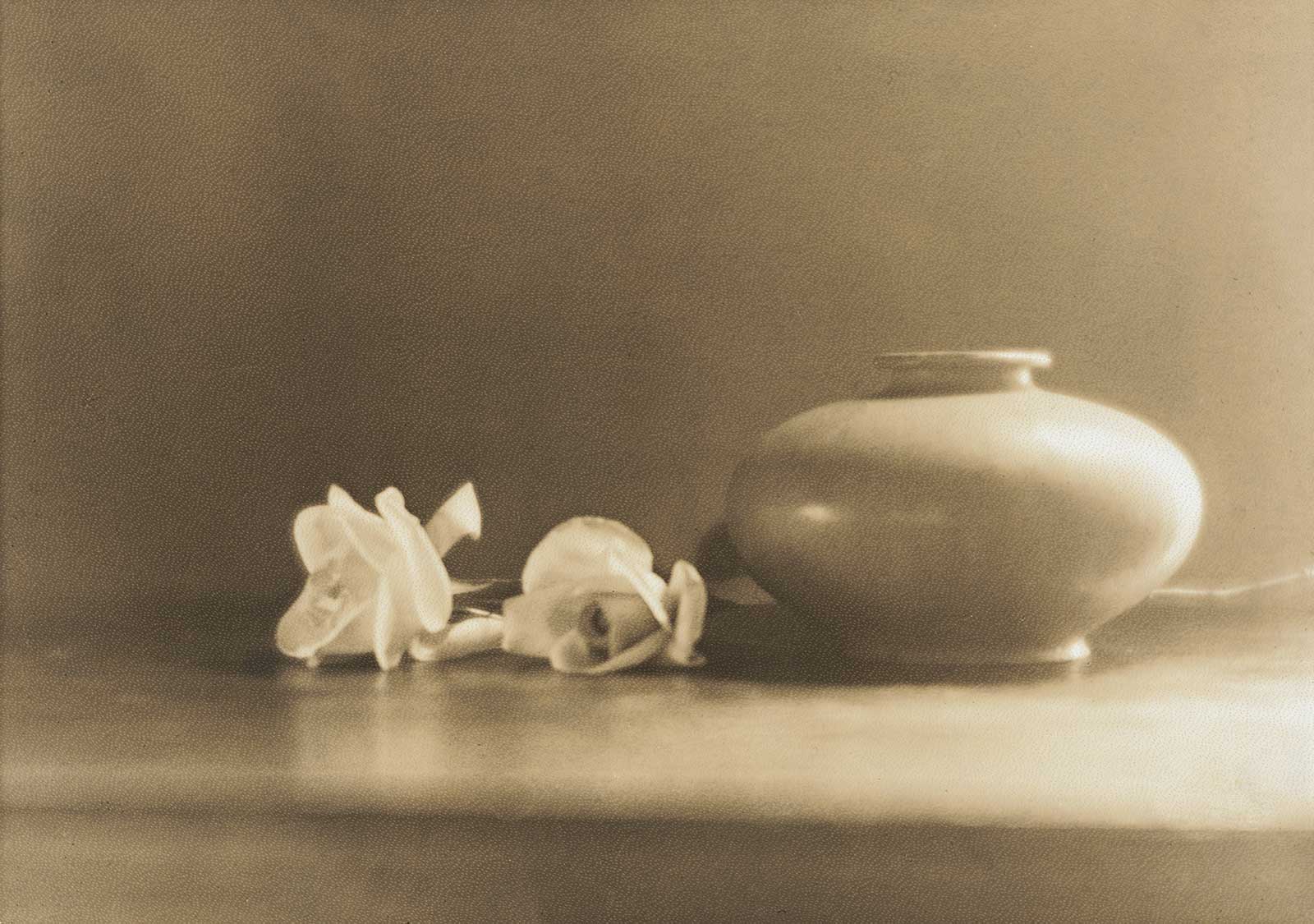 Taizo Kato (1887-1924), Bowl with Two Flowers, ca. 1920. Gelatin silver print: sheet, 77/8 x 10 in.; image, 5 7/8 x 8 3/8 in. Whitney Museum of American Art, New York; purchased with funds from the Photography Committee.
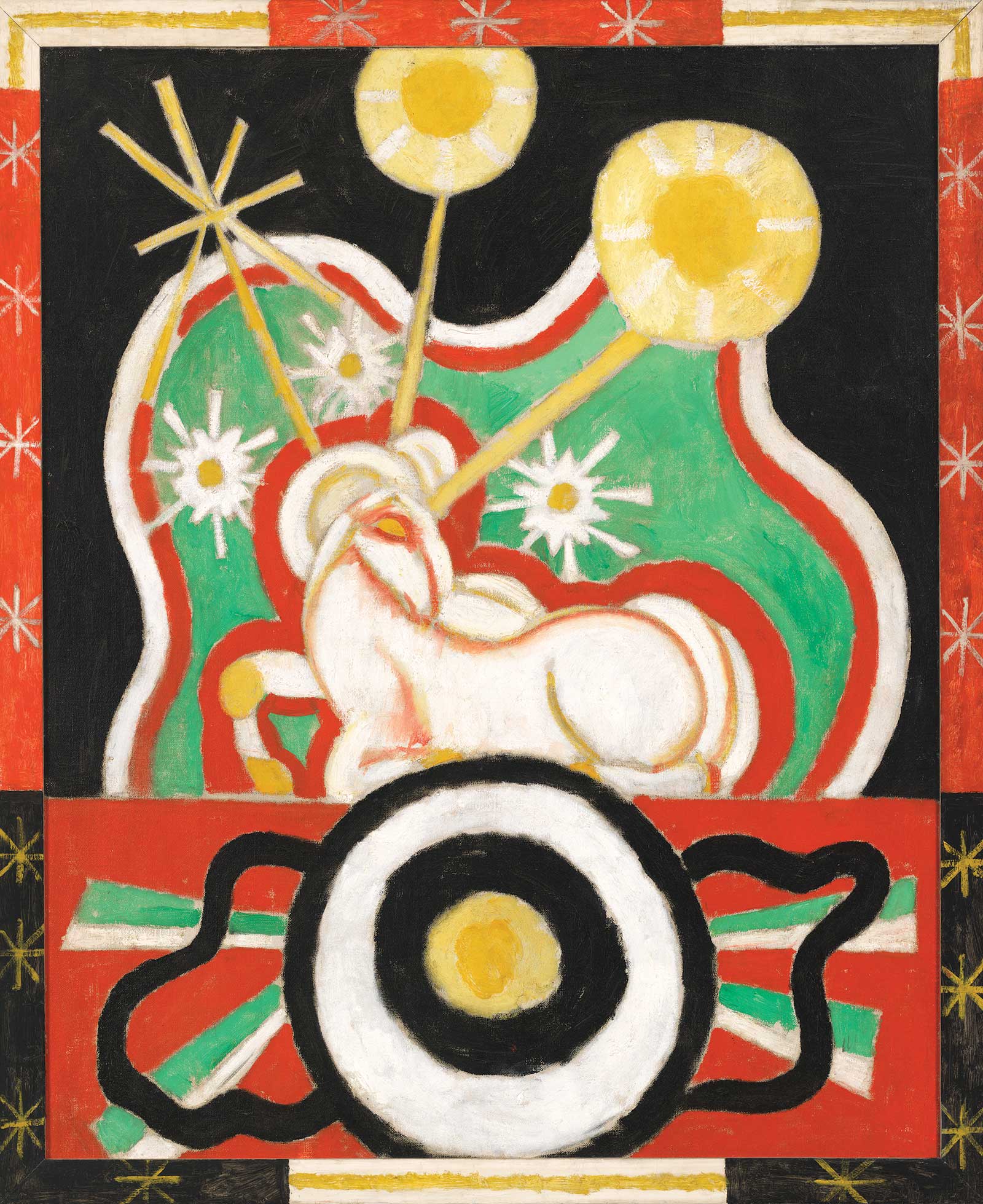 Marsden Hartley (1877-1943), Forms Abstracted, 1914. Oil on canvas, with wood frame, 39 5/8 x 31 13/16 in. Whitney Museum of American Art, New York. Gift of Mr. and Mrs. Hudson D. Walker and exchange, 52.37a-b.
Adele Watson (1890-1933) is among the artists whose work has been brought out from storage. Drawn to symbolism and mysticism, she was a friend of Kahlil Gibran who wrote the poetic fables of The Prophet. Her Untitled (Mountain Island Monk), circa 1931-47, recalls Skellig Michael, the pyramidal rock off the coast of Ireland, home to an early medieval monastic site. In her painting, monk and island appear merged as one.
Taizo Kato (1887-1924) was a Japanese-American photographer who operated a camera store, darkroom and gallery of pictorialist photography painting and ceramics in Los Angeles. Pictorialism sought to emulate fine art painting. Kato introduced the more minimalist compositional aesthetic of Japanese art as in his Bowl with Two Flowers, ca. 1920.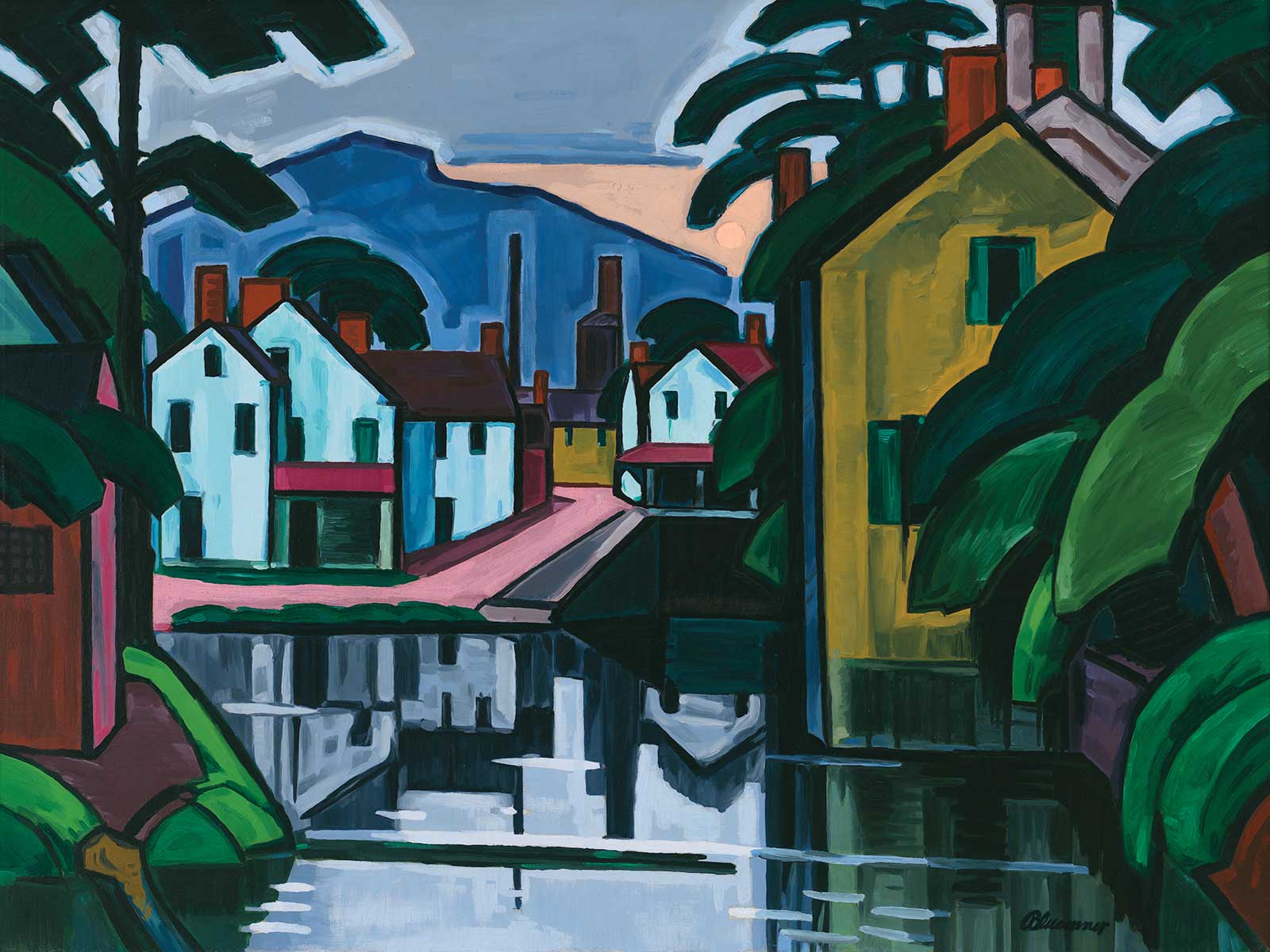 Oscar Bluemner (1867-1938), Old Canal Port, 1914. Oil on canvas, 30¼ x 40¼ in. Whitney Museum of American Art, New York. Gift of Gertrude Vanderbilt Whitney, 31.114.
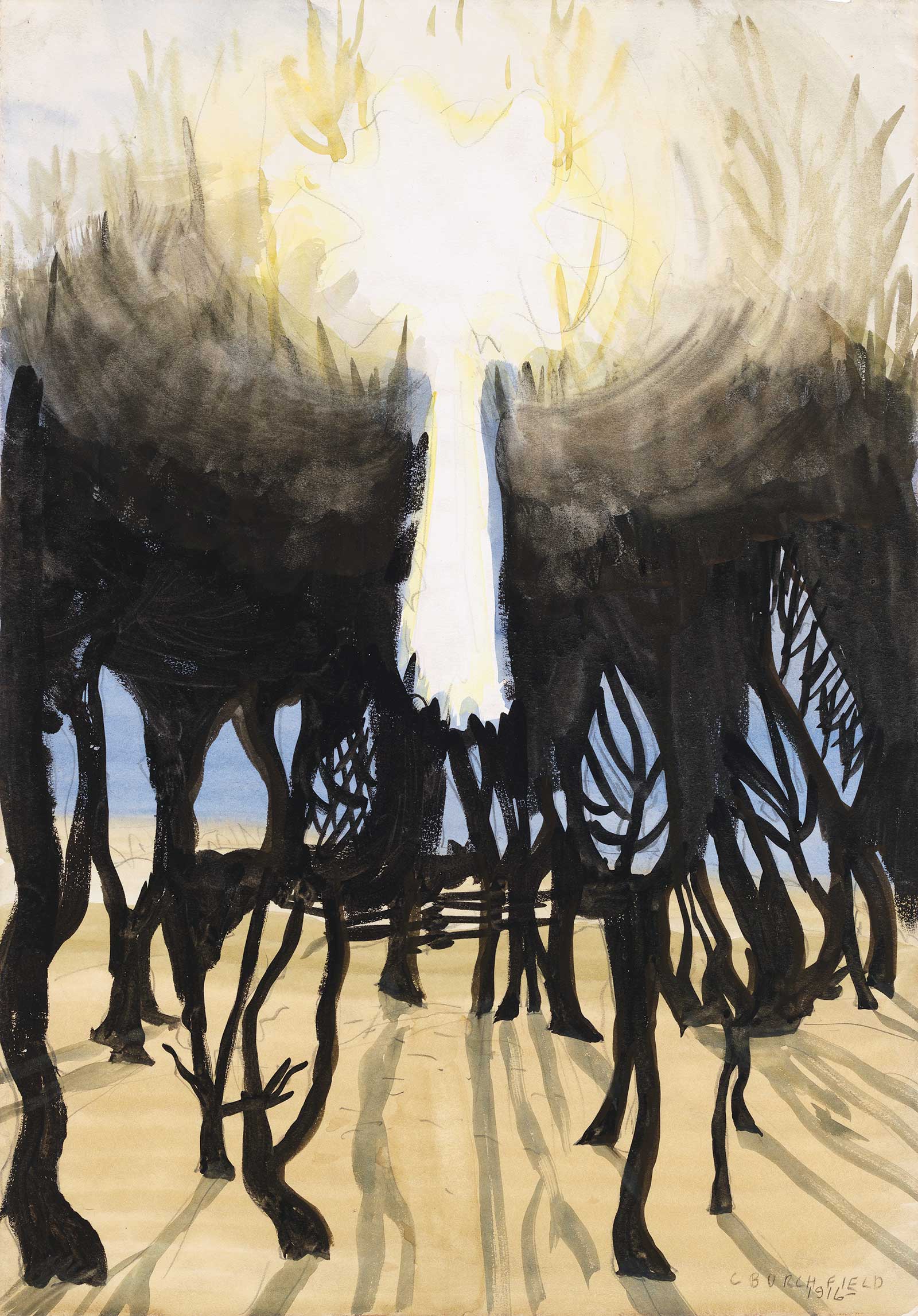 Charles Burchfield (1893-1967), Sunlight in Forest, 1916. Watercolor and graphite pencil on paper, 20 x 13 15/16 in. Whitney Museum of American Art, New York; purchased with funds from the Drawing Committee 2002.331. Reproduced with permission from the Charles E. Burchfield Foundation and the Burchfield Penney Art Center.
Among the well-known masters of the period is Marsden Hartley (1877-1943). In 1912, Hartley went to Paris and then Berlin where he stayed until the beginning of World War I. As a New Englander he was well aware of the spiritual ideas of Ralph Waldo Emerson, Henry David Thoreau and Walt Whitman. He was also familiar with the ideas of Buddhism and Theosophy. In 1907, he spent several months in a utopian community in Maine. The heraldic composition of Forms Abstracted, 1914, would become more pronounced in his later paintings. The Whitney notes, “Painted the year of his visit to Kandinsky’s studio, Forms Abstracted recalls the Blaue Reiter artists’ preoccupation with animals and religious folk-art subjects. Here, Hartley embraces a spiritual theme, depicting the Lamb of God surrounded by radiating orbs, with a painted frame concept borrowed from folk art sources.”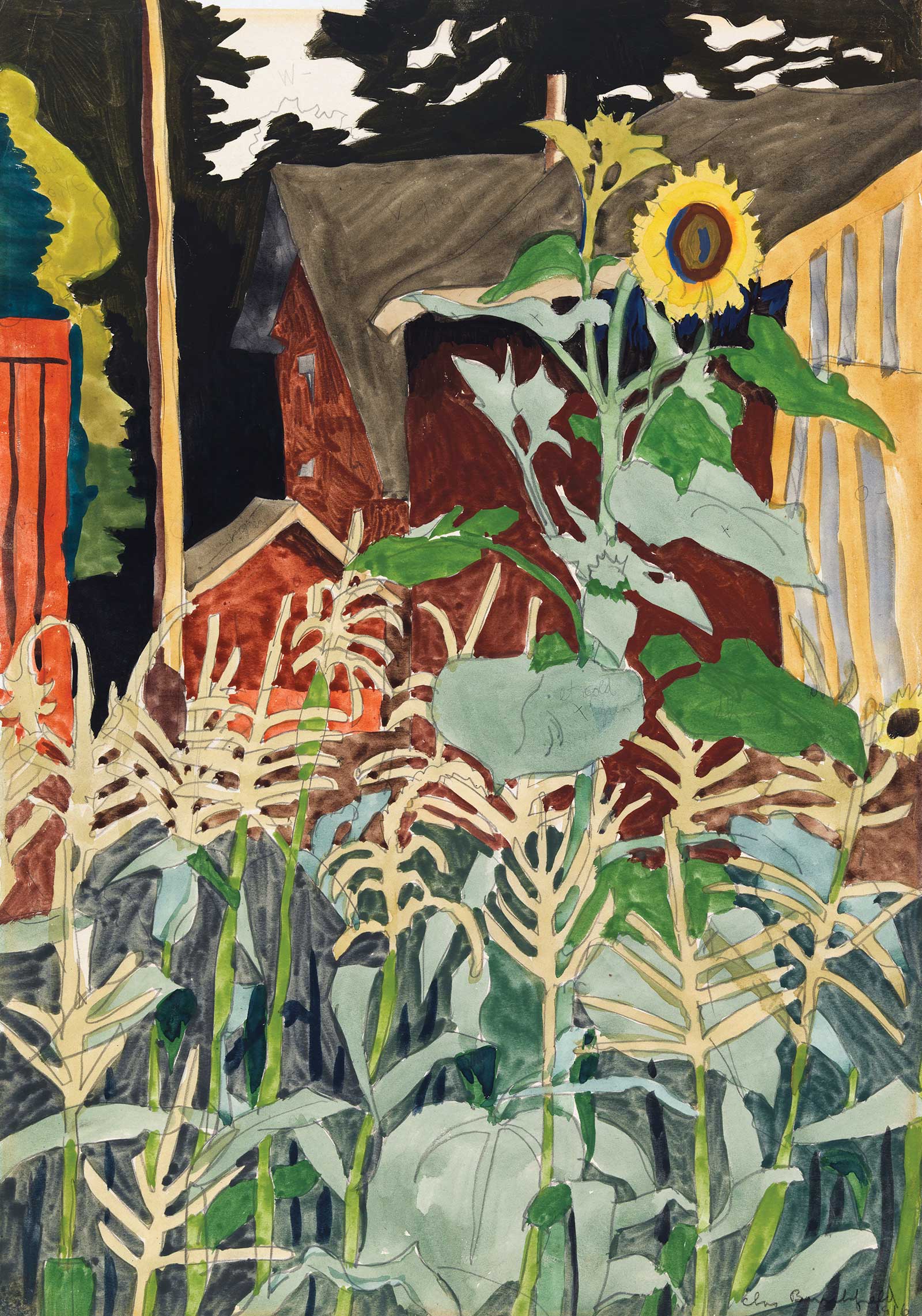 Charles Burchfield (1893-1967), August Evening, 1916. Watercolor and graphite pencil on paper, 1915/16 x 14 in. Whitney Museum of American Art, New York. Gift of Mr. and Mrs. Lesley G. Sheafer 55.43. Reproduced with permission from the Charles E. Burchfield Foundation and the Burchfield Penney Art Center.
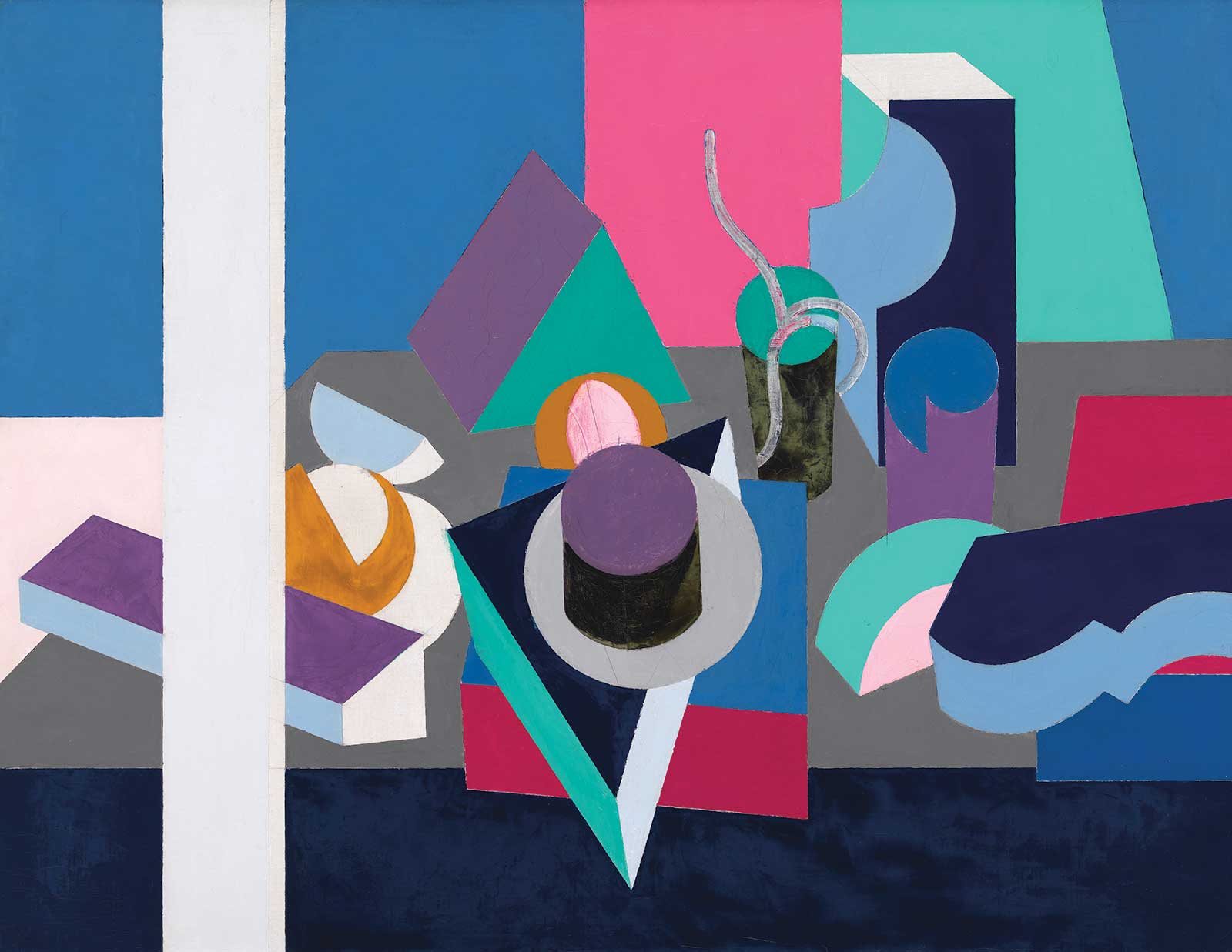 Patrick Henry Bruce (1881-1936), Painting, ca. 1921-22. Oil on canvas, 35 x 45¾ in. Whitney Museum of American Art, New York. Gift of an anonymous donor, 54.20.
Oscar Bluemner’s Old Canal Port, 1914, was a gift to the museum by Gertrude Vanderbilt Whitney. Bluemner (1867-1938), studied architecture in his native Germany. He came to New York in 1892 and practiced architecture in New York and Chicago. In New York, in 1908, he met Alfred Stieglitz who introduced him to the modernist movements in Europe and America. He wrote, about the modernists: “In this, however crude or strange their work may appear at first sight, they exert imagination and move forward within the lines of pure art, as opposed to its merchantable adulteration by sleek and dexterous technicians who pamper a vain and sentimental bourgeoisie with superficial conventionalities. Theirs, at best, is dead art; and our art-authorities and dealers stick to it like the butcher to his trade in dead meat…
“But art is not dead. Art is. It is, because as an idea it is inherent in the human mind. The new art movement in Europe has once more established the standard of true art. It is up to the American also to give his art the form of the living day.” —
Powered by Froala Editor