Bob Thompson (1937-1966) spent the summer of 1958 in Provincetown, Massachusetts. There he discovered the paintings of the German figurative expressionist painter Jan Müller (1922-1958). Müller had died tragically young several months before but Thompson was able to meet his widow, Dody Müller, who advised him, “Don’t ever look for your solutions from contemporaries—look at Old Masters.” Thompson had an affinity for Müller’s work which, the poet John Ashbery wrote, “brings a medieval sensibility to neo-Expressionist paintings.” 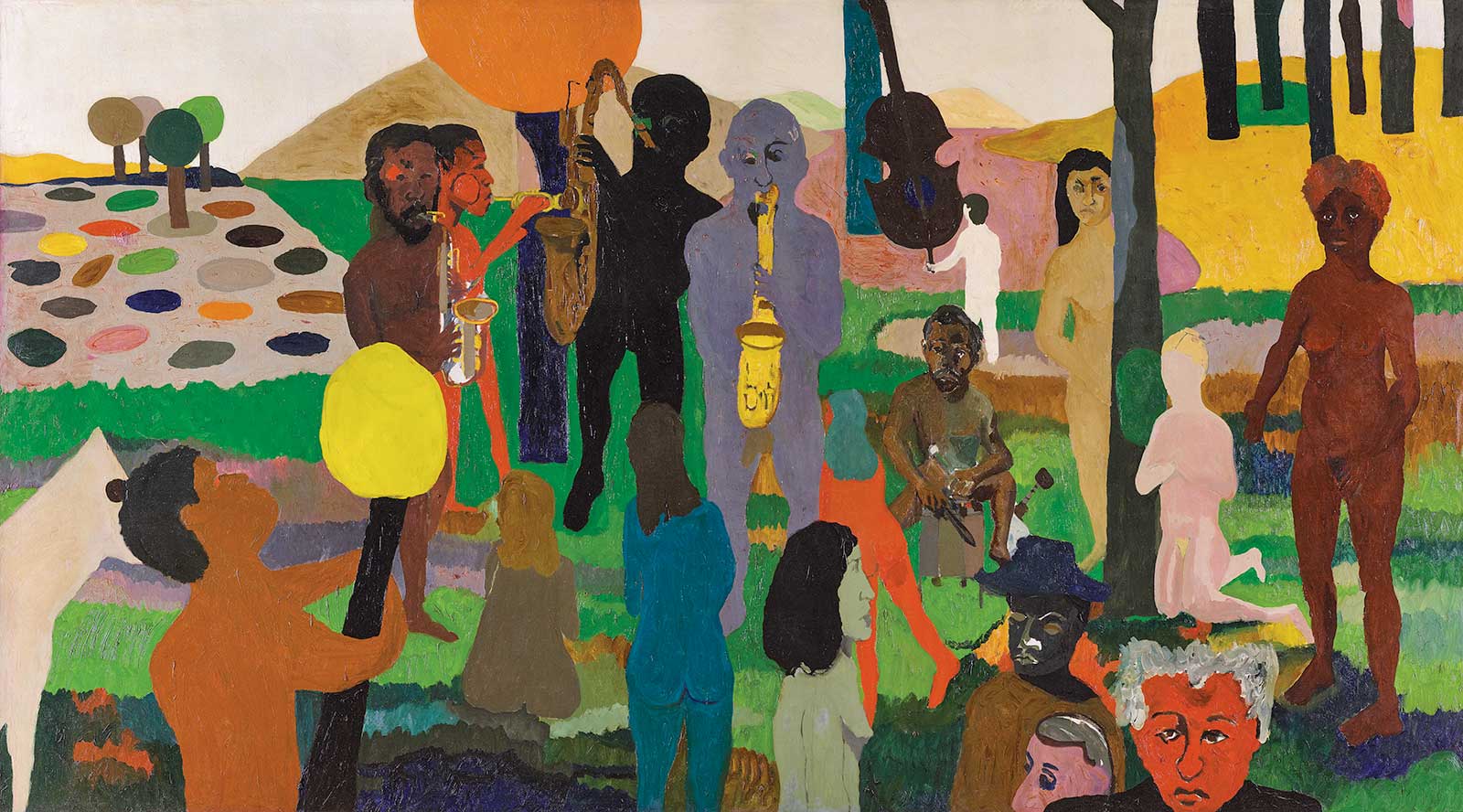 Bob Thompson (1937-1966), Garden of Music, 1960. Oil on canvas, 79½ x 143 in. Wadsworth Atheneum Museum of Art, Hartford, Connecticut, The Ella Gallup Sumner and Mary Catlin Sumner Collection Fund. © Michael Rosenfeld Gallery LLC, New York. Photo: Allen Phillips / Wadsworth Atheneum.
Thompson went on to study Old Masters such as Tintoretto, Goya and Poussin, and painted contemporary allegories with the vivid color palette of Gauguin. In New York, he frequented jazz clubs and riffed on themes in his painting as his friends did in their music. He had a solo exhibition at New York’s prestigious Martha Jackson Gallery in 1963 followed by exhibitions in Chicago and New York. In 1966, a month before his 29th birthday, he died in Rome from delayed complications from gall bladder surgery.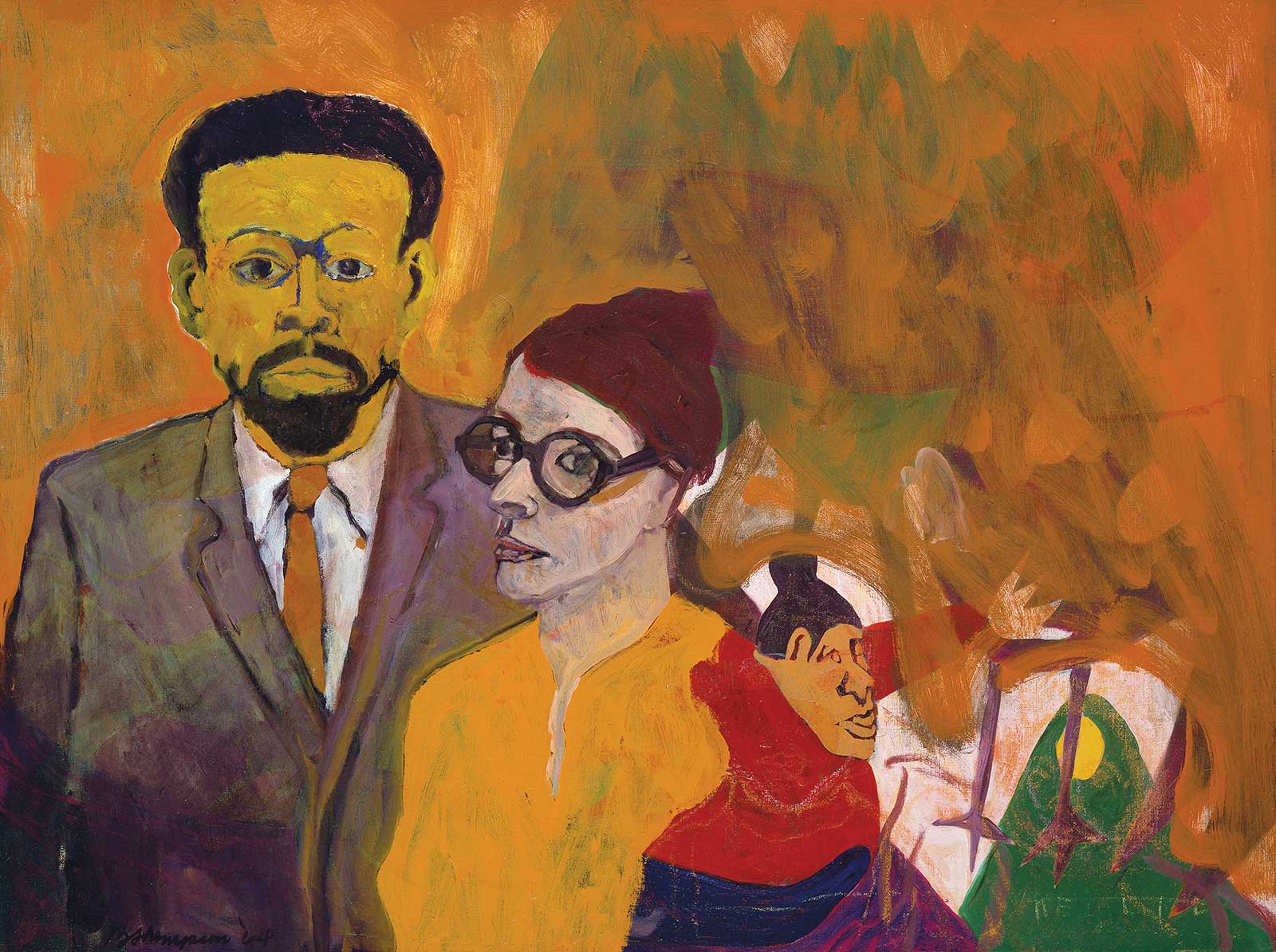 Bob Thompson (1937-1966), LeRoi Jones and his Family, 1964. Oil on canvas, 36 3/8 x 48½ in. Hirshhorn Museum and Sculpture Garden, Smithsonian Institution, Washington, DC., gift of Joseph H. Hirshhorn, 1966. © Michael Rosenfeld Gallery LLC, New York. Photo: Cathy Carver. Hirshhorn Museum and Sculpture Garden.
In 1998, the Whitney Museum of American Art mounted a major retrospective exhibition of his work. The first major survey of his work since then opens at the High Museum of Art in Atlanta on June 17, running through September 11. The exhibition was organized by the Colby College Museum of Art in Waterville, Maine, and its Katz curator of modern and contemporary art, Diana Tuite.
Bob Thompson: This House is Mine “traces Thompson’s trans-Atlantic artistic journey as he wrestled with the exclusionary Western canon,” according to the museum. “The exhibition reflects and contextualizes his significance as a contemporary artist and illuminates critical questions about the politics of representation, particularly for Black artists, while presenting new possibilities for a more inclusive art history.”
Michael Rocks, Wieland Family curator of modern and contemporary art at the High says, “Thompson’s art is like a free jazz adaptation of European art history, breaking down and retooling narrative conventions in an experimental manner. As a result, he quickly developed a mature style that was electrifying and which, implausibly but brilliantly, bridged the vanguard of art and music in New York with art of the Old Masters.” 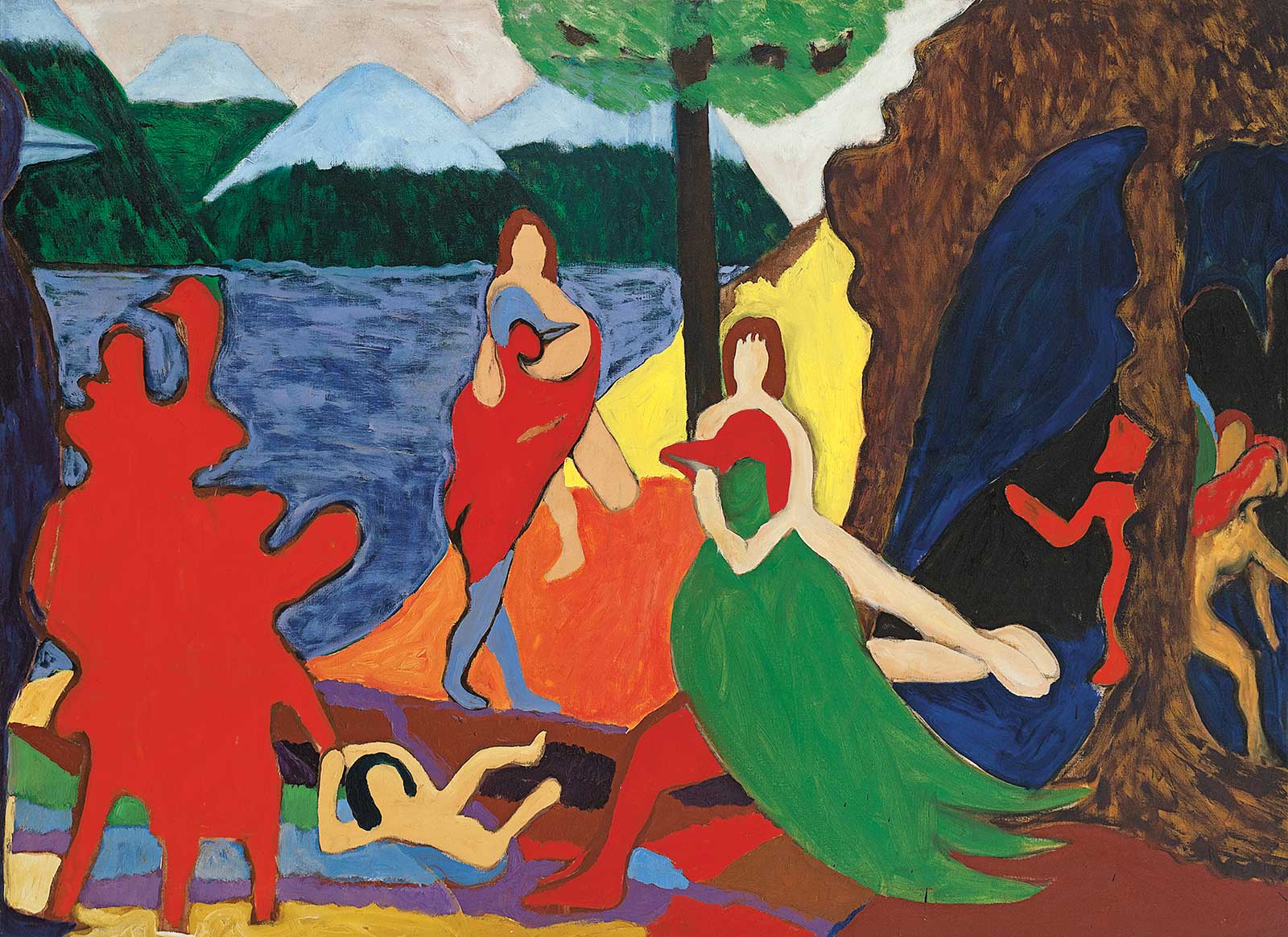 Bob Thompson (1937-1966), Bird Party, 1961. Oil on canvas, 54 3/8 x 74¼ in. Collection of the Rhythm Trust. © Michael Rosenfeld Gallery LLC, New York.
Thompson was born in Louisville, Kentucky. He studied medicine briefly at Boston University but returned to Louisville to enroll in the studio program at the University of Louisville, from which he graduated in 1957. He resisted being pigeonholed as a Black artist documenting the Black experience and began copying the masters of the Italian Renaissance, setting him on the path he would follow in his short career.
In Garden of Music, 1960, Thompson depicts a mythical Garden of Eden with his favorite jazz musicians playing. In the middle of the painting they are, left to right: Ornette Coleman (saxophone), Don Cherry (trumpet), John Coltrane (saxophone), Sonny Rollins (saxophone), Ed Blackwell (seated with drum) and Charlie Haden (bass). He often included his self-portrait wearing a broad-brimmed hat and can be seen on the lower right.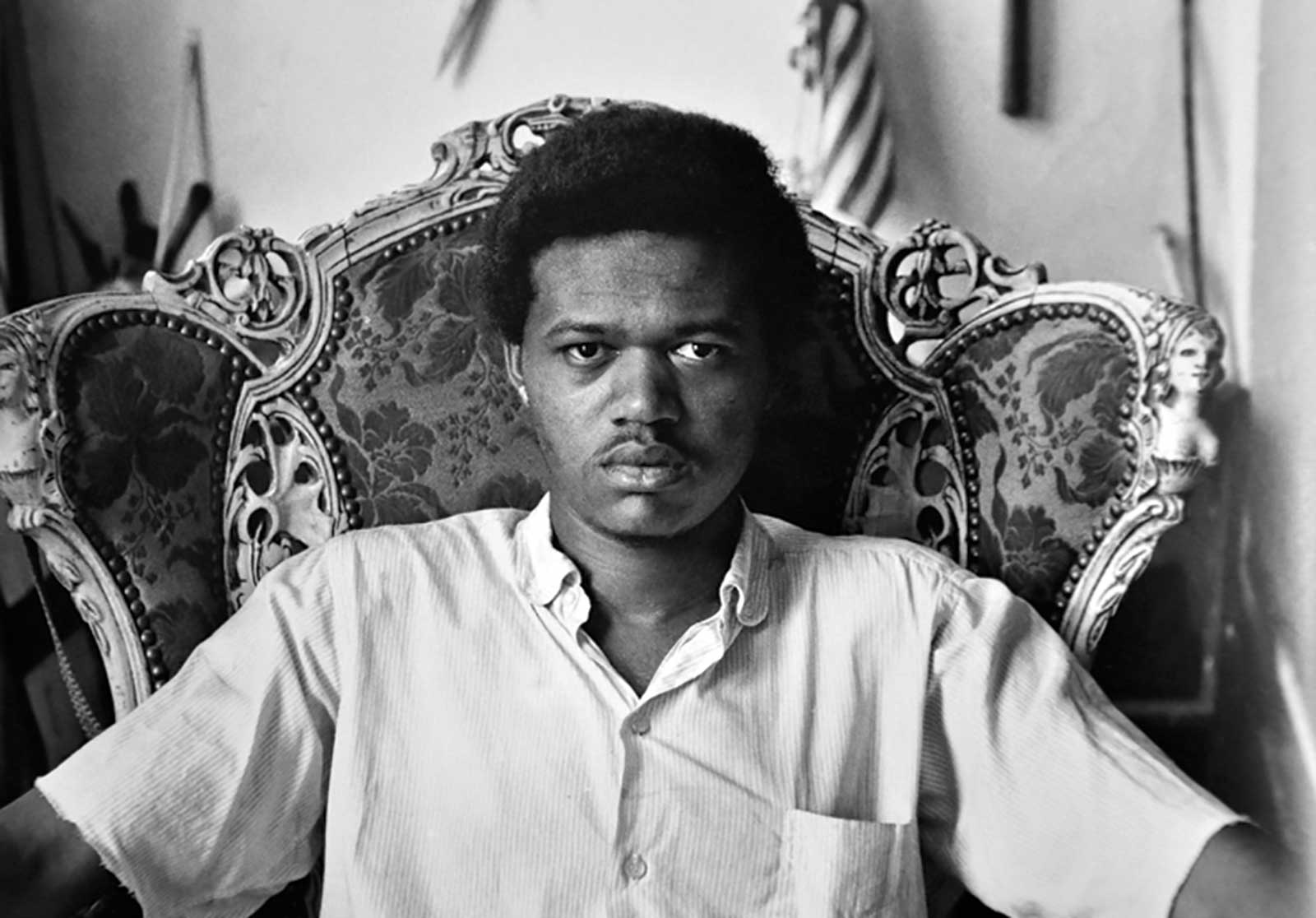 Bob Thompson in his studio on Rivington Street, New York, circa 1964. © Charles Rotmil.
LeRoi Jones and his Family, 1964, was purchased by Joseph H. Hirshhorn and gifted to the Hirshhorn Museum and Sculpture Garden of the Smithsonian Institution. The poet later known as Amiri Baraka, wrote of Thompson, “He was always excited about something he was studying—Tintoretto, Poussin, or whomever—and he would open the book and start pointing things out to you.” —
Powered by Froala Editor