Thomas Cole (1801-1848) was born in Lancashire, England. His family immigrated to the United States when he was 17. He enrolled in the Pennsylvania Academy of the Fine Arts in 1823 and two years later moved to New York where he discovered the Hudson River Valley and the Catskill Mountains. He and other artists strove to create a uniquely American art and their loose fellowship became known as the Hudson River School. Their work informed an emerging national identity.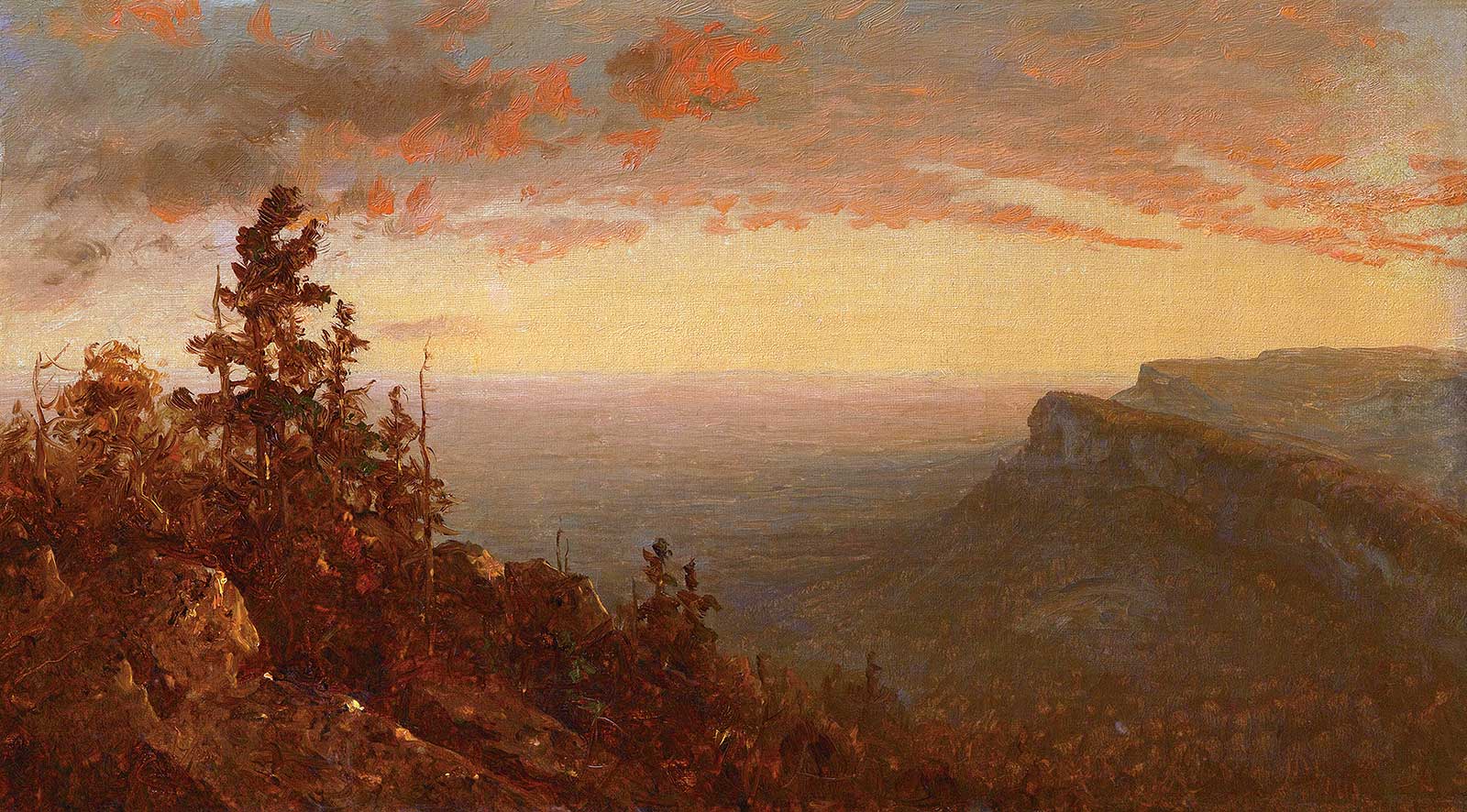 Sanford Robinson Gifford (1823-1880), Sunset Over the Shawangunks. Oil on canvas, 8½ x 147/8 in., estate stamp verso.
Commenting on light in the landscape, Cole wrote, “The sky is the soul of all scenery. It makes the earth lovely at sunrise and splendid at sunset. In the one it breathes over the earth a crystal-like ether, in the other a liquid gold.”
Sanford Robinson Gifford (1823-1880) painted Sunset Over the Shawangunks in the warm Golden Hour of the setting sun. Gifford grew up in the Hudson River Valley. He studied portraiture in New York City but a painting trip to the Catskills convinced him to follow Cole and paint the landscape. He wrote to a friend, “Having once enjoyed the absolute freedom of the landscape artist’s life, I was unable to return to portrait painting. From this time my direction in art was determined.” The brisk brushstrokes forming the trees and sky in Sunset Over the Shawangunks are as if Gifford had just stepped away from the canvas.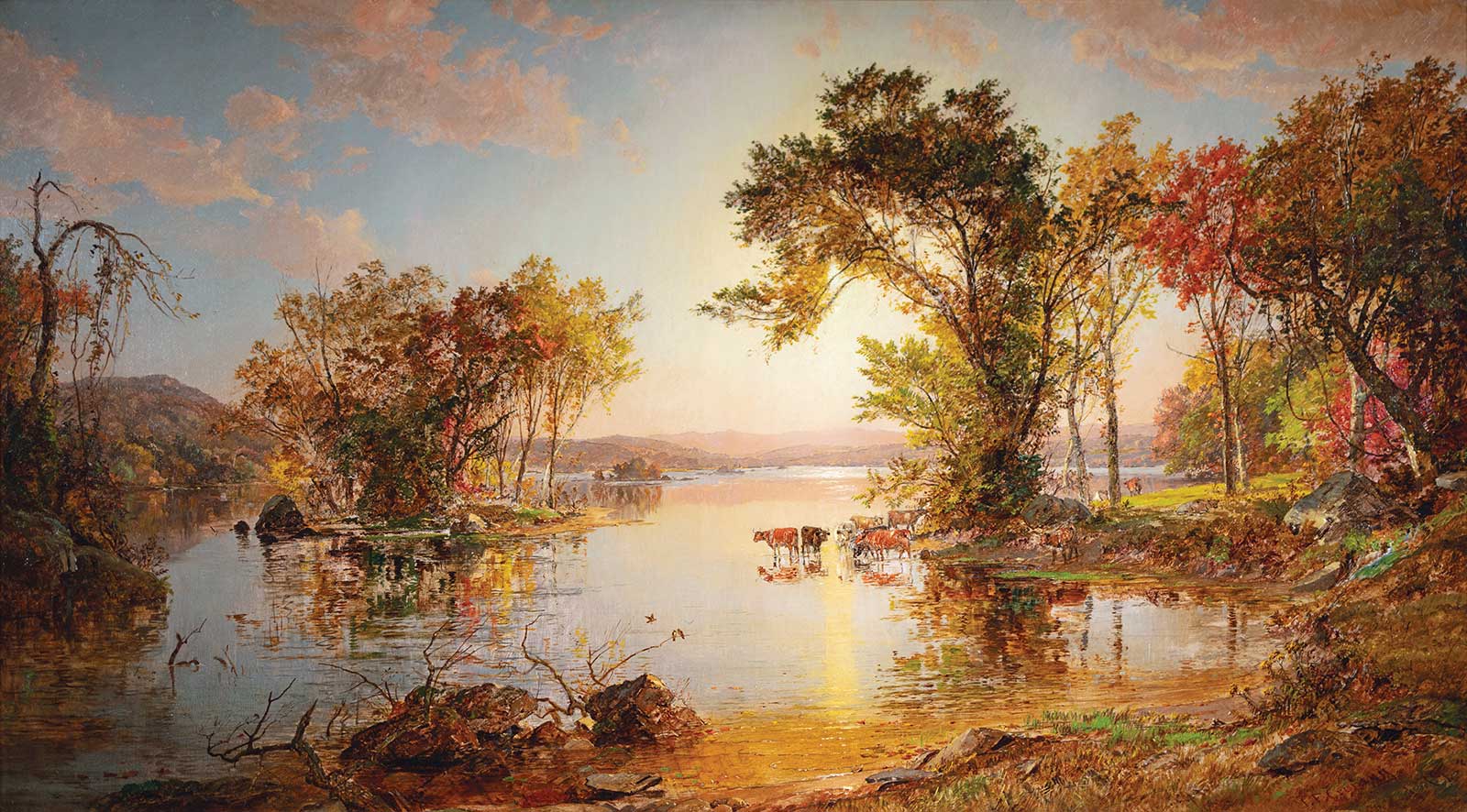 Jasper Francis Cropsey (1823-1900), Autumn Landscape with Cattle, 1879. Oil on canvas, 231/8 x 40¼ in., signed and dated lower right: ‘J. F. Cropsey / 1879’.
The painting is included in the exhibition The Historic Hudson River School: American Excellence at Questroyal Fine Art in New York City from March 10 through April 9.
On the opening page of Questroyal’s website is the advice, “Choose with your heart: It is the most trustworthy Judge.” Choosing with the heart means looking “without knowledge of the artist’s name and reputation, critical opinion or market value.” The gallery’s founder, Louis Salerno, sometimes presents paintings to clients “but I hide all the pertinent information. That forces them to see what they really like. My young son couldn’t understand why one painting is better than another. I told him to look at the art in a pizza parlor and then go look at the art in a museum or a good gallery. It takes being exposed to good art and to shedding preconceived notions. Hudson River paintings are relatable. You don’t have to know anything about art—you can relate to it and see that it’s beautiful.”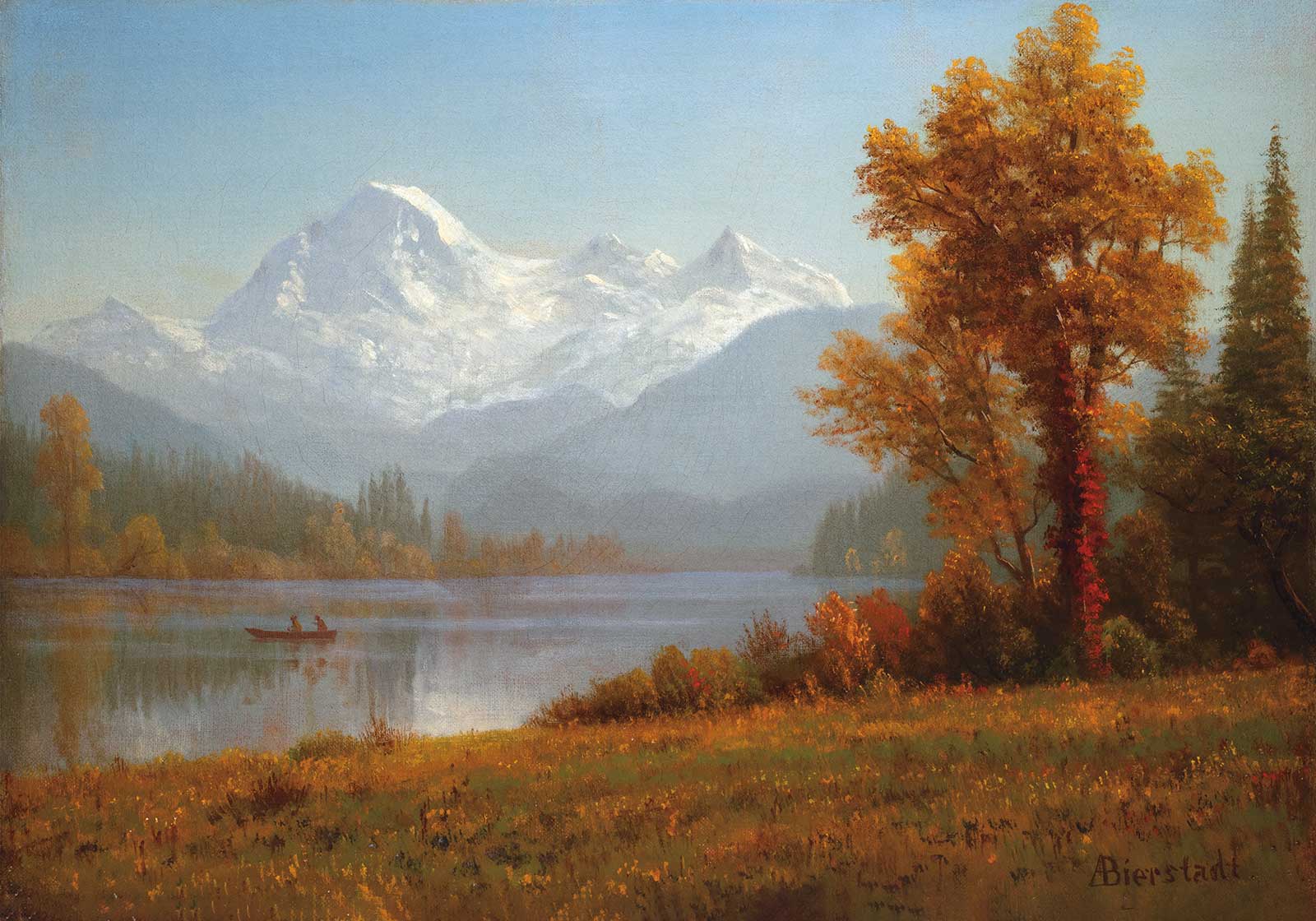 Albert Bierstadt (1830-1902), Mount Baker, Washington, ca. 1891. Oil on canvas, 14 x 201/8 in., monogrammed lower right: ‘ABierstadt’.
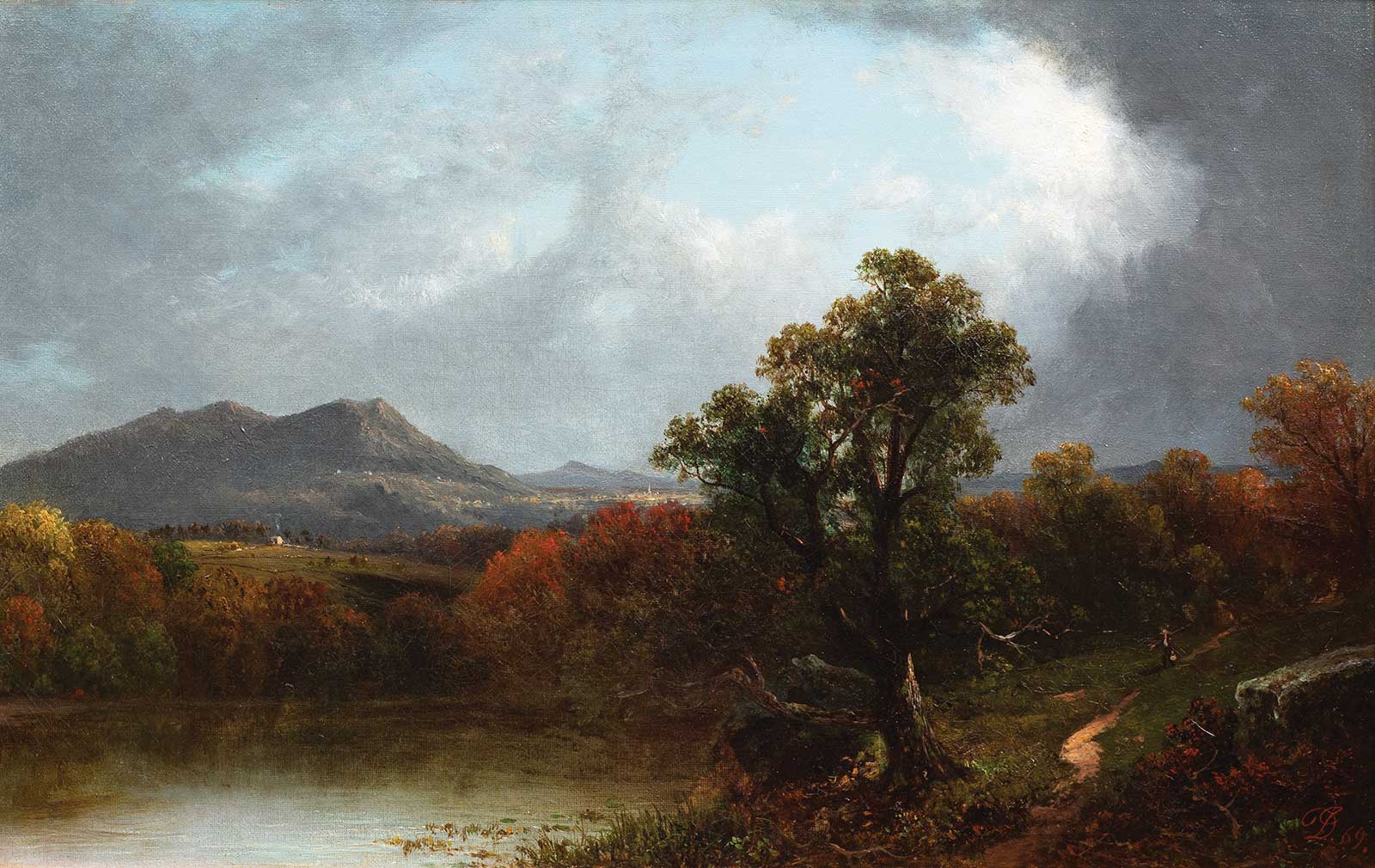 David Johnson (1827–1908), Passing Storm Clouds, 1869. Oil on canvas, 11¾ x 18 7/8 in., monogrammed and dated lower right: ‘DJ. 69.’.Hudson River School painters didn’t respond only to the landscape of the East Coast. Among the paintings assembled for this year’s manifestation of the gallery’s annual Hudson River exhibition is Mount Baker, Washington, circa 1891, by Albert Bierstadt (1830-1902). Bierstadt was born in Germany and his family immigrated to New Bedford, Massachusetts, when he was 3 years old. He was one of the early artists who went west to paint the almost unbelievable grandeur of the landscape to entice people in the east. His first trip west was in 1859 as part of a survey party. Bierstadt’s grand romanticism was often criticized, as were his entrepreneurial skills in promoting and selling his paintings. One critic cited his “vast machinery of advertisement and puffery.”
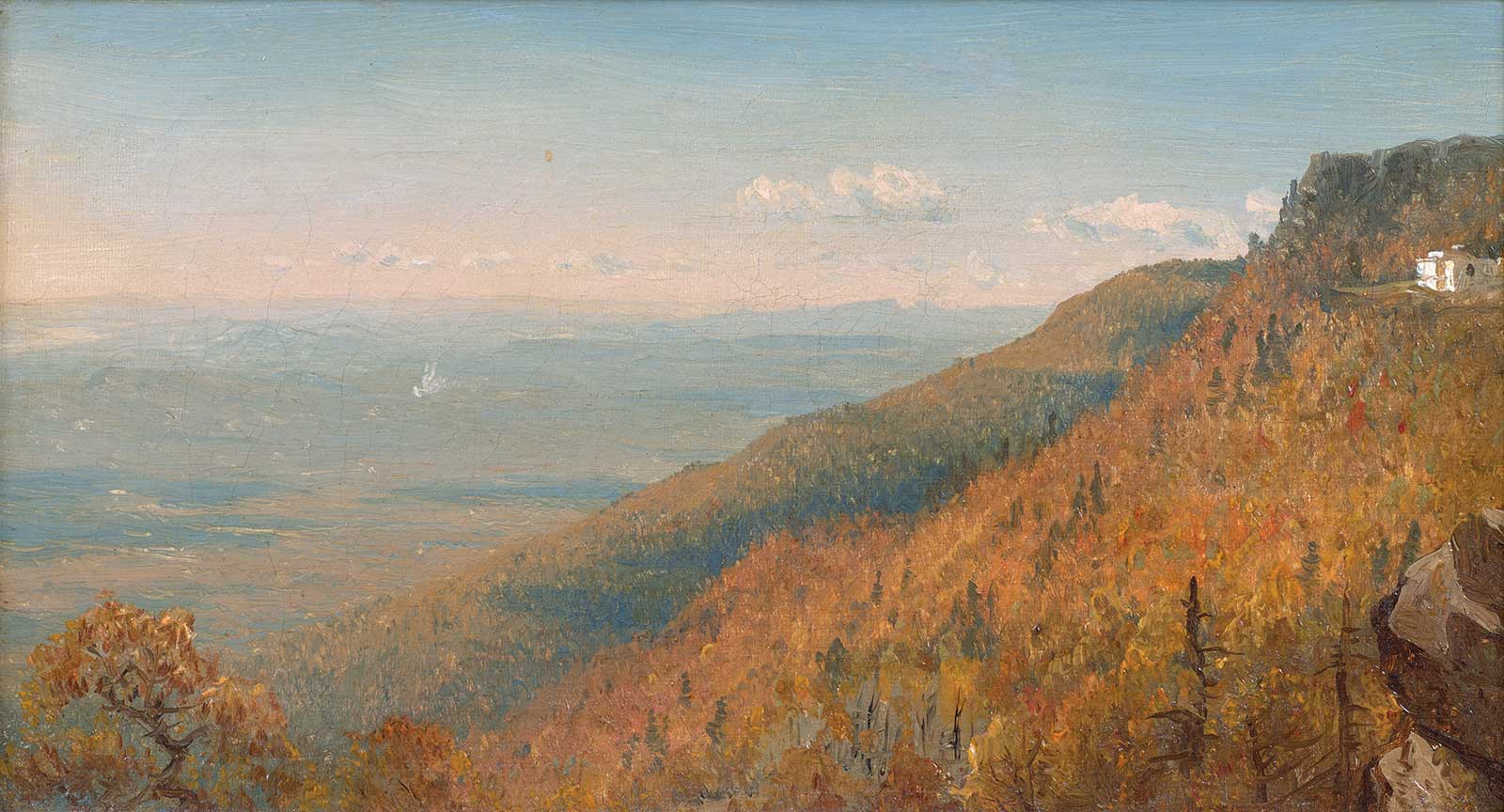 Sanford Robinson Gifford (1823–1880), The Catskill Mountain House. Oil on canvas, 6 1/8 x 11 1/8 in., estate stamp verso. Yet, in 1987, John K. Howat, who was chair of the departments of American art at The Metropolitan Museum, wrote, “The temptation [to criticize him] should be steadfastly resisted. Bierstadt’s theatrical art, fervent sociability, international outlook and unquenchable personal energy reflected the epic expansion in every facet of western civilization during the second half of the 19th century.” —
Powered by Froala Editor