Quilcene, Washington, is a rural turn-in-the-road that most will encounter by way of the few seconds it takes to drive through town en route to the many camping destinations found in the Olympic Mountains looming blue on the horizon. Yet, among the cedars and firs of this community lies a testament to the creation of the American art-historic vision of the Pacific Northwest: the Fine Art and Period Furniture Collection at the Quilcene Historical Museum’s Worthington Mansion.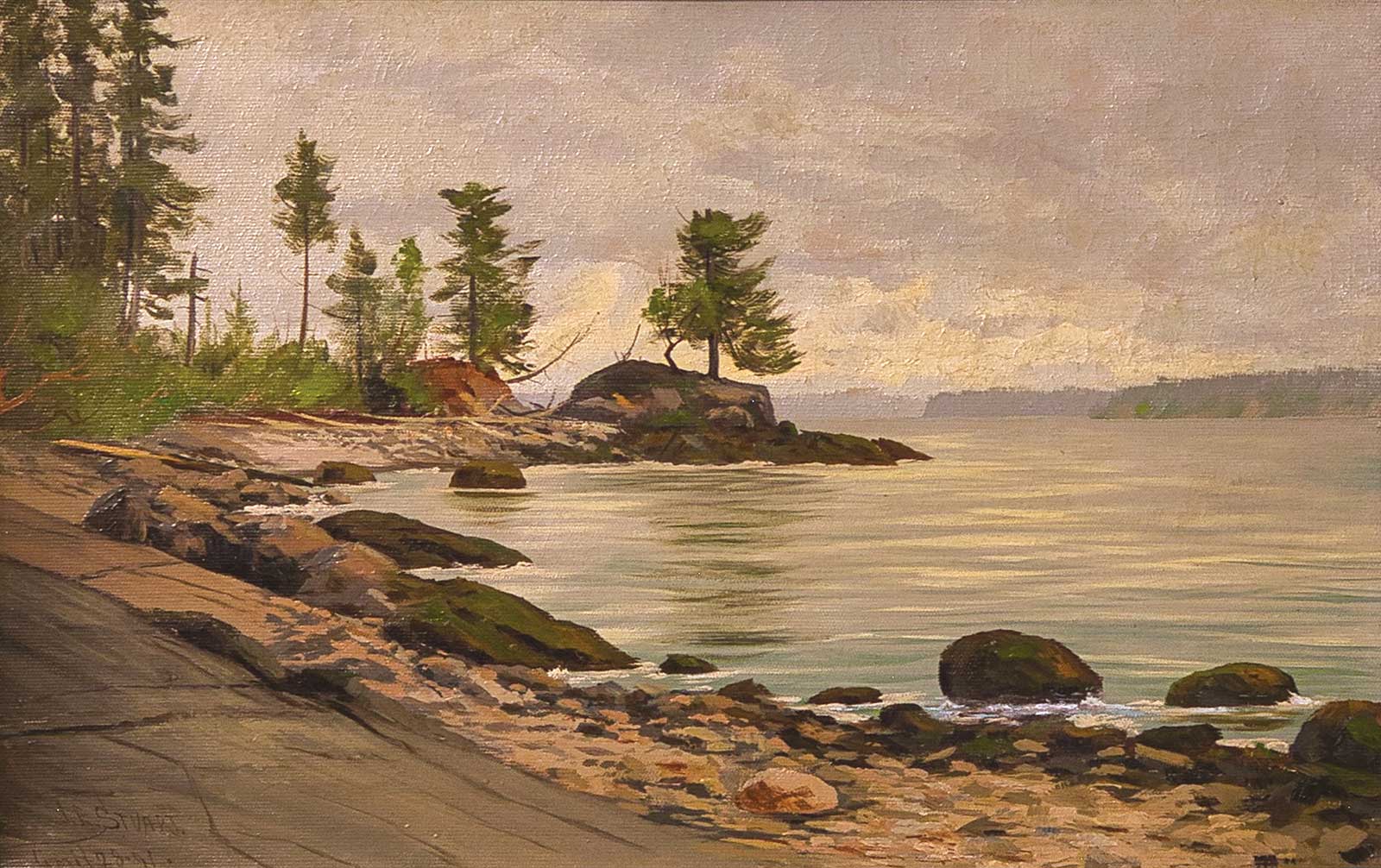 James Everett Stuart (1852-1941), Windy Point, Hood Canal, 1891. Oil on canvas, 12 x 20 in., signed lower right.
The 17-room Victorian home was built in the late 1880s and was occupied by the Worthington family until 2012, when the Quilcene Historical Museum acquired the Worthington Mansion. Since then, the museum has restored the mansion to its original state. The restoration has included furnishing the space with furniture contemporary to its time, and displaying 19 paintings by 13 artists, including Cleveland S. Rockwell, Eliza Barchus, William Samuel Parrott, Paul Gustin and photographs by Edward S. Curtis.
The exhibition highlights a specific moment in American art history: the burgeoning artistic vocabulary of the Pacific Northwest, contextualized within time and space. Paintings on display demonstrate the conflicting and varied visions of the Pacific Northwest as its image was being constructed.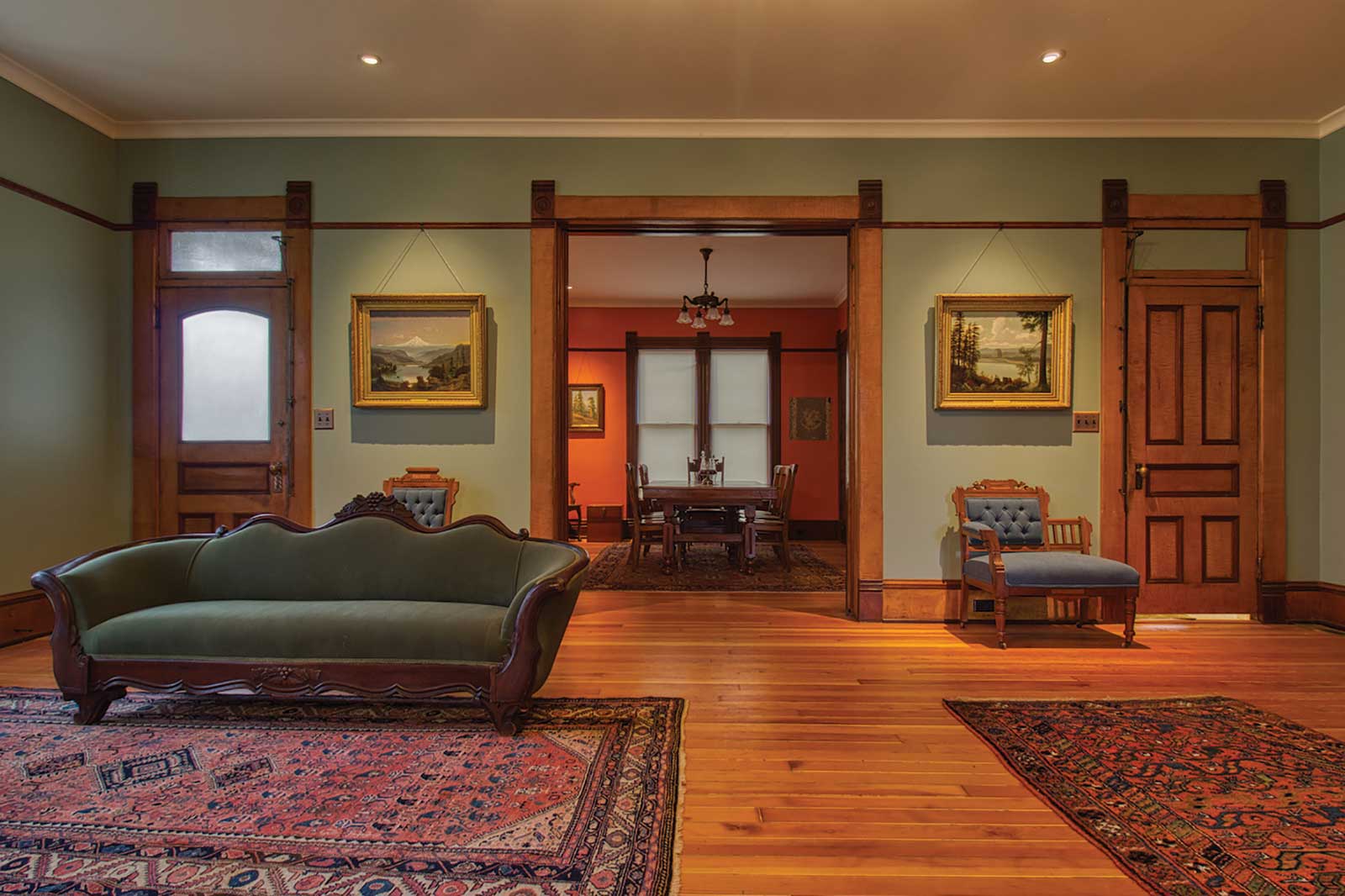 The living room in the Worthington Mansion feature two works by William Samuel Parrott: Mt. Hood, at left, and Northwest Coast on the right wall. In the dining room through the doorway is Abby Hill’s Cedars Above Trout Lake, Mt. Adams, ca. 1900, on the left wall.
James Everett Stuart was a prolific artist, providing a comprehensive vision of the natural landscape of the time. Stuart, grandson of famous 19th-century painter Gilbert Stuart, executed more than 5,000 paintings, including many of the Pacific Northwest. Windy Point, Hood Canal, 1891, is one of these works, depicting the Washington shoreline and local flora. This painting is contextualized not only among its contemporaries but is also displayed in an accurate home setting of its time––the reconstructed Worthington mansion––and, beyond that, the precise natural landscape it captures.Other artists were similarly interested in recording the landscape around them; Harriet Beecher’s Salish Long Boats on Puget Sound, from circa 1890, depicts the Puget Sound in a manner that provides another glimpse into the region. The painting features Salish longboats resting up and down the shore, and the canvas sails used as a tent might imply a group is simply passing by, following seasonal fish migrations until winter forces them back into the woodlands.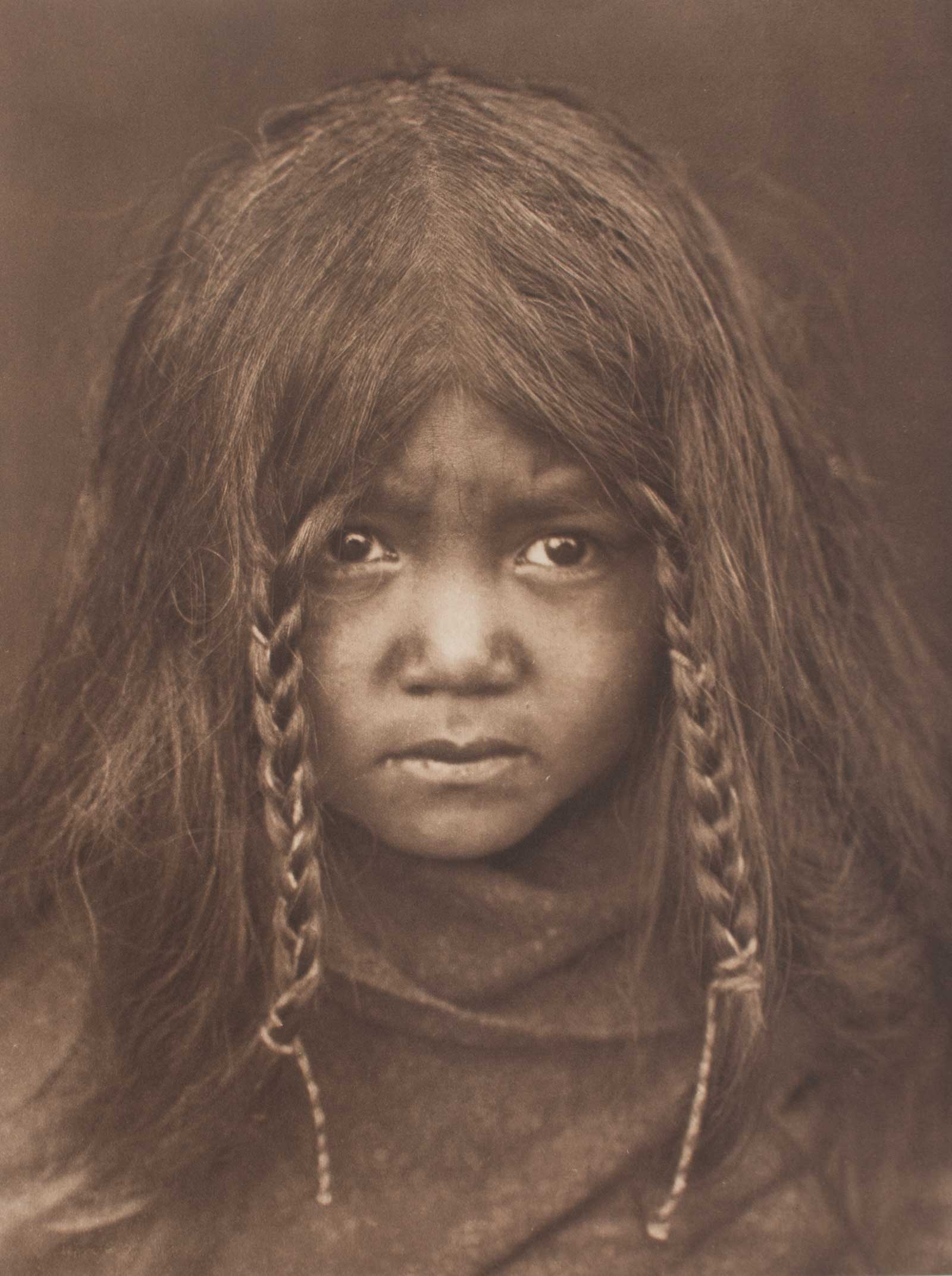 Edward S. Curtis (1868-1952), Quilcene Boy, 1912. Photo by Jeff Childs.
Beecher had a relationship with the Native American peoples of the area, and among her works are portraits of members of the S’Klallam and Makah tribes. In this way, some of the works on display at the Worthington mansion are as much historical record as they are works of art. Beecher herself was notably invested in the history of the area and was a member of the Tacoma Historical Society.
However, an investment in history does not necessarily equate distance from the subject. Beecher was a preeminent artist of the late 19th and early 20th century in America, and eventually founded the first fine art studio in Seattle, placing her in a position of educational authority. Especially as one of the most famous women painters of her time, this meant that Beecher was not only given the opportunity to decide what it meant to depict the Pacific Northwest, but also the power to pass along that knowledge. In documenting history through her art, she also helped co-create the formal artistic method of depicting the area.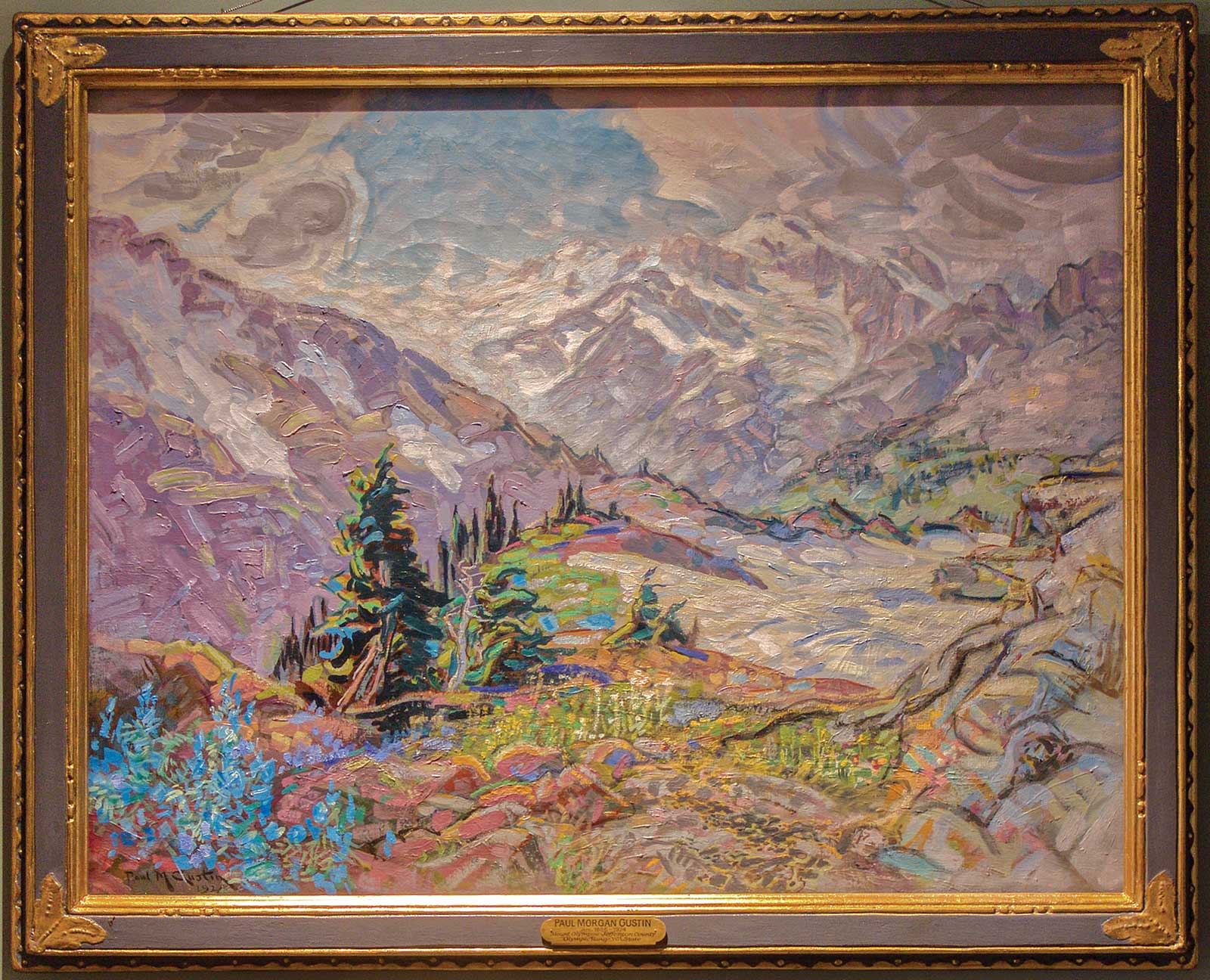 Paul M. Gustin (1886-1974), Mt. Olympus, 1921. Oil on canvas, 36 x 46 in., signed lower left.
Other artists of the time included more explicitly propagandistic influences in their images of the Pacific Northwest landscape. Railroad companies used artistic depictions of the West as a method of incentivizing tourism and migration; in the early 1900s, the Great Northern Railway and the Northern Pacific Railway commissioned Abby Hill to paint a series of landscapes of the Pacific Northwest for just such a reason. She traveled throughout the national parks of the United States, producing plein air paintings in each.
The paintings commissioned by railroad companies were not intended to be hyper-accurate depictions of the natural landscape; rather, they were intended to create a scene that would evoke awe and compel American people to travel across the country to witness the greatness for themselves. As such, Hill was responsible for a creation of the Pacific Northwest landscape that had even less of a foothold in reality; hers was not a historical view of the land, but instead a forward-looking one, a vision that incorporated future interest and allure into the landscape itself.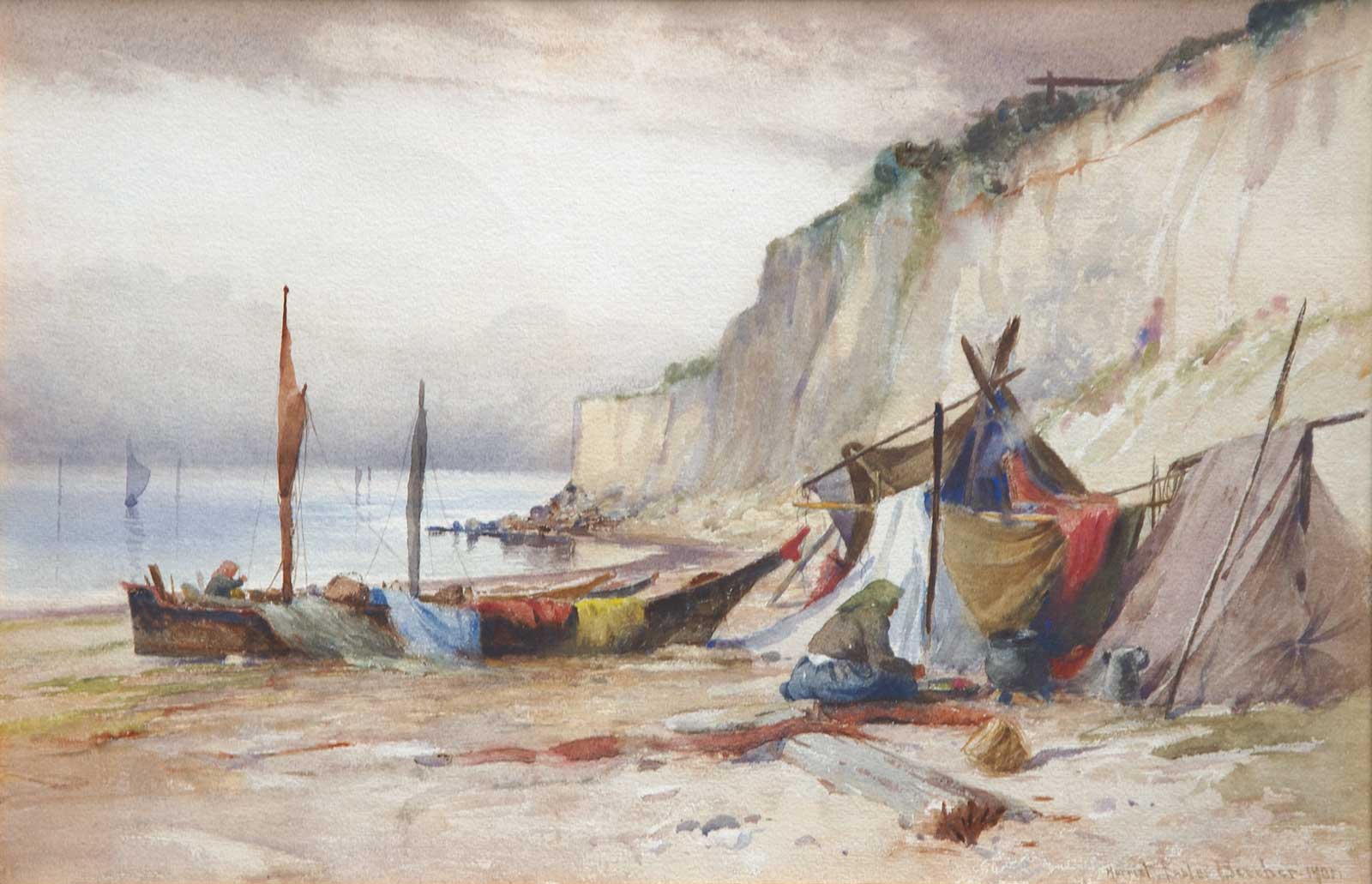 Harriet Beecher (1854-1915), Salish Long Boats on Puget Sound, ca. 1890. Watercolor 12 x 18 in., signed lower right.The paintings on loan at the Worthington Mansion’s Fine Art and Furniture Collection showcase 19th- and 20th-century American art within the context where they were originally viewed. For a selection of the works, this contextualization goes a step further, as they depict the very landscape in which they are being displayed. This means that a portion of the works together form a picture of the art-historical vision of the Pacific Northwest as it was in development. What an opportunity the public has been given to step back into a specific moment in time. —
Powered by Froala Editor