Thomas Cole (1801-1848) ventured up the Hudson River to the Catskill Mountains in 1825. He had emigrated with his family from industrialized England and was inspired by American landscape paintings he saw at the Pennsylvania Academy of the Fine Arts. In the Catskills, he painted three landscapes that he later showed in a bookstore in New York City, where he had recently moved. There, they were discovered by the artist Colonel John Trumbull (1756-1843), known as the “Painter of the Revolution.” Writing for the Metropolitan Museum of Art, Kevin J. Avery commented, “What Trumbull recognized in the work of the young painter was the perception of wildness inherent in American scenery that landscape artists had theretofore ignored. Trumbull brought Cole to the attention of various patrons, who began eagerly buying his work.” Among them was Asher B. Durand (1796-1886) who became a fast friend of Cole. Cole had recognized the wildness and the promise of the American landscape. His work inspired other artists who would come to be known as the Hudson River School.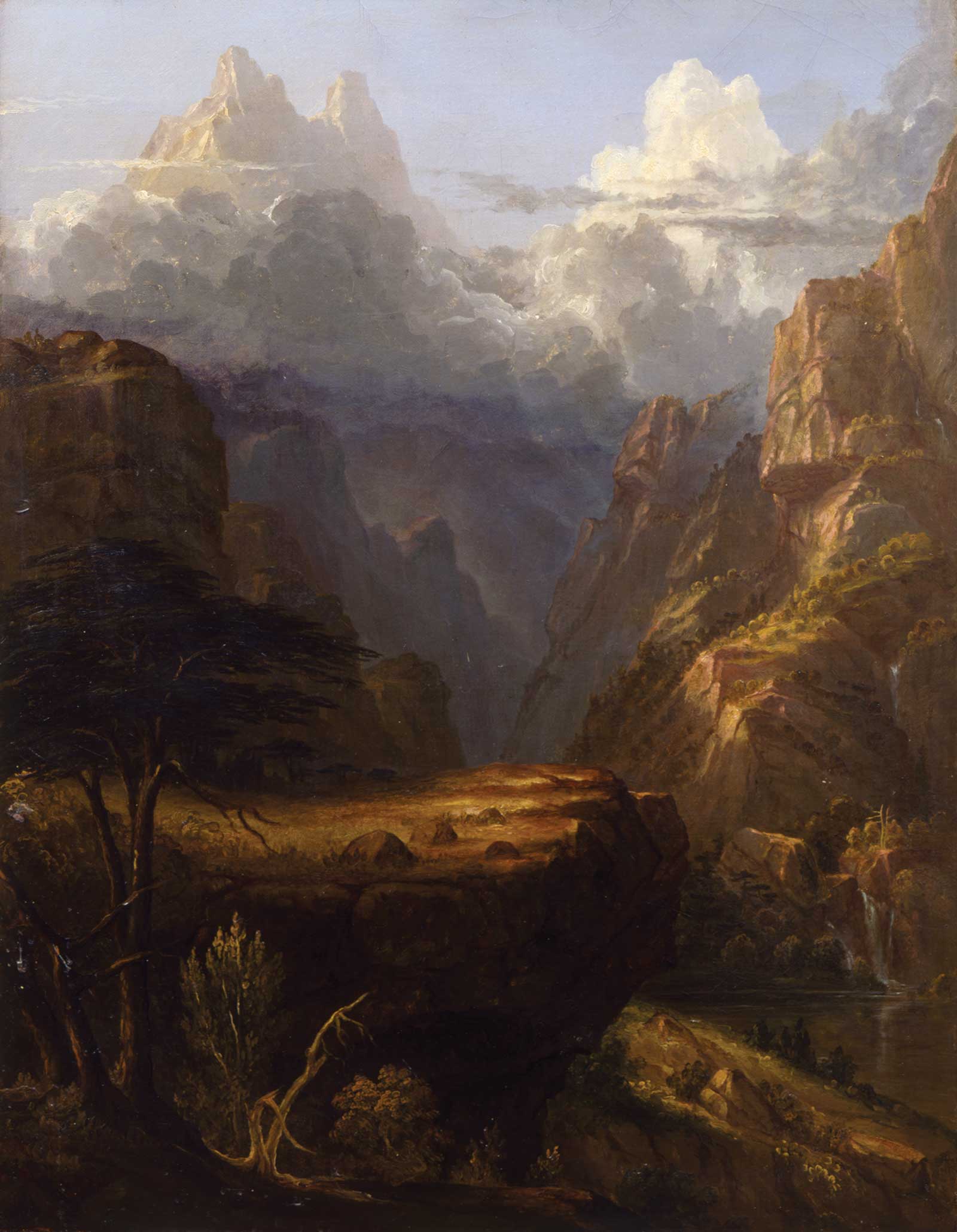 Thomas Cole (1801-1848), Mountain Landscape, ca. 1827. Oil on canvas. New-York Historical Society, The Robert L. Stuart Collection, the gift of his widow, Mrs. Mary Stuart, S-230.
The New Britain Museum of American Art in Connecticut is hosting the exhibition The Poetry of Nature: Hudson River School Landscapes from the New-York Historical Society through May 22. It features over 40 paintings by 25 artists of the Hudson River School from the well-known to the lesser known.
The earliest painting is Niagara Falls, 1818, by Louisa Davis Minot (1788-1858). Little is known about Minot and her extant paintings are two views of the Falls. She wrote an essay in 1815 about the awesome site. “The roar deepened,” she observed, “the rock shook over my head, the earth trembled...It was sometime before I could command my pencil.”
Her sense of awe at the overwhelming spectacle is characteristic of the sublime aspect of the paintings of what would become known as the Hudson River School. They are also described as the beautiful (embodying tranquility and harmony) and the picturesque (embodying charm).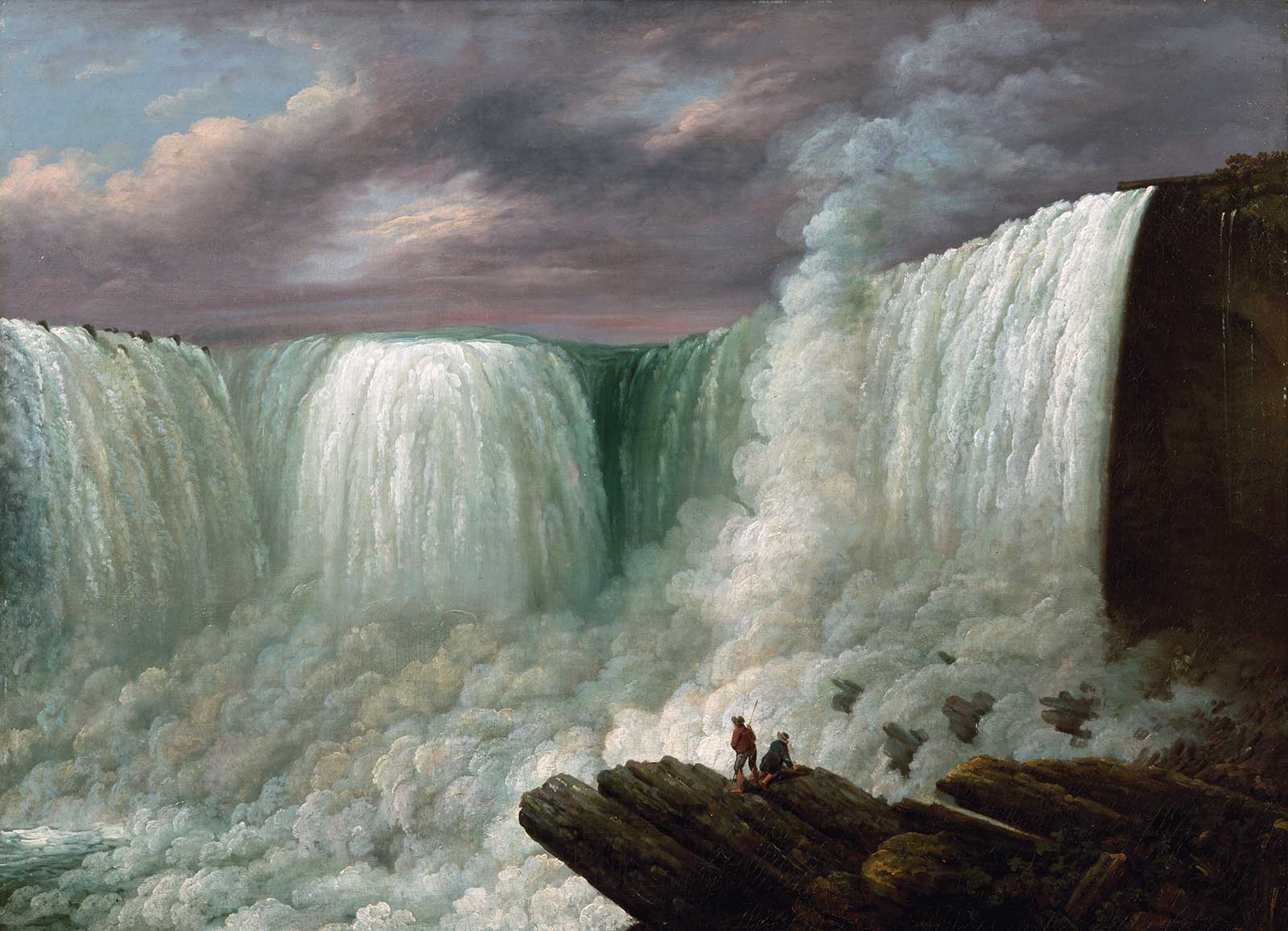 Louisa Davis Minot (1788-1858), Niagara Falls, 1818. Oil on canvas. New-York Historical Society, Gift of Mrs. Waldron Phoenix Belknap Sr. to the Waldron Phoenix Belknap Jr. Collection, 1956.3.
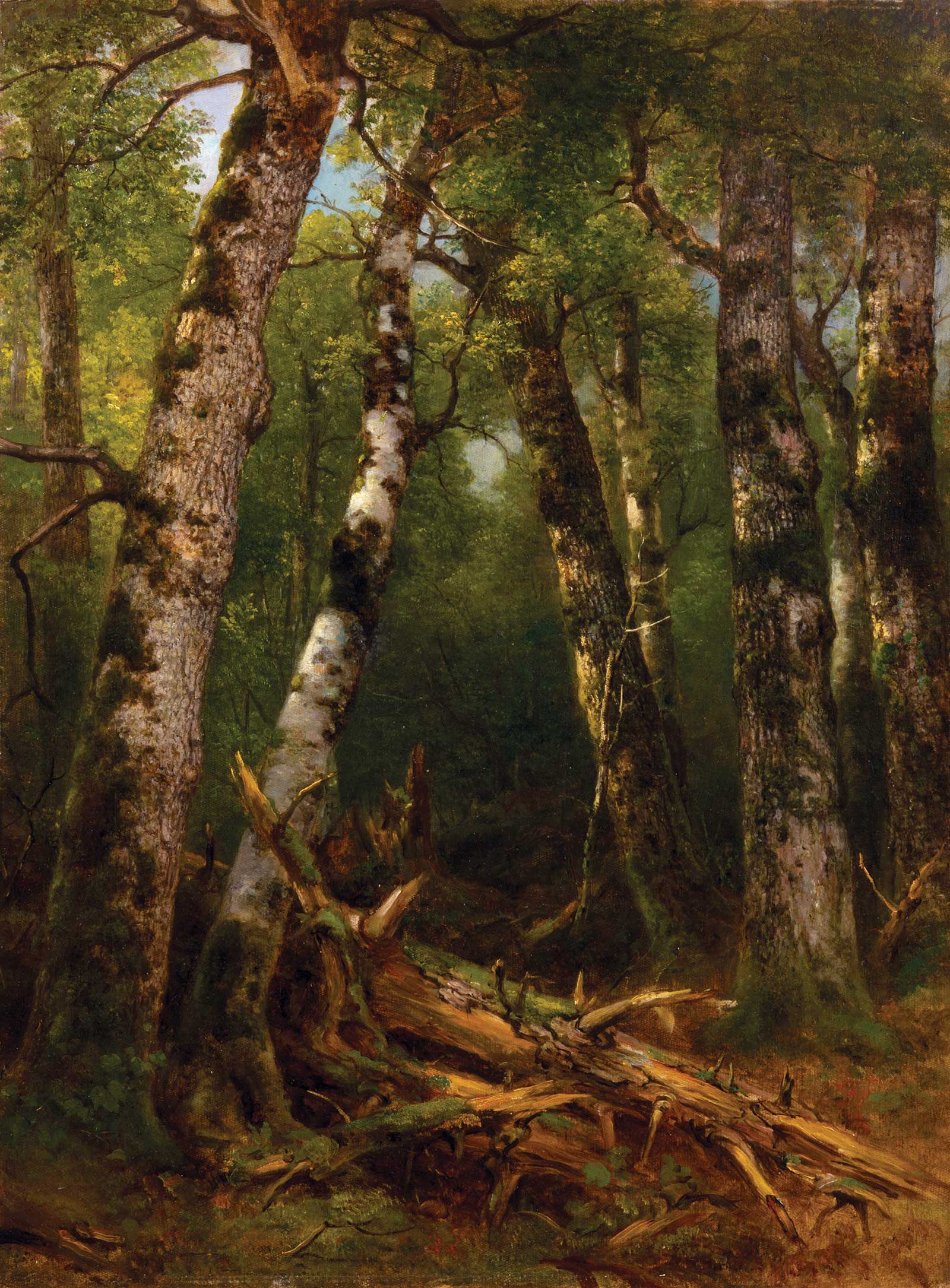 Asher B. Durand (1796-1886), Study from Nature: Group of Trees, 1855-7. Oil on canvas. New-York Historical Society, The Louis Durr Fund, 1887.8.
The exhibition at the New Britain Museum will include the addition of works by Robert S. Duncanson (1821-1872), the first Black artist of the Hudson River School to gain international acclaim. Inspired by Cole, he is considered a second-generation Hudson River School painter. Not well known today, he was thought to be one the finest landscape painters in America. When he showed the English poet laureate Alfred, Lord Tennyson (1809-1892) his painting Land of the Lotus Eaters, which had been inspired by the poet’s The Lotos Eaters, Tennyson responded, “Your landscape is a land in which one loves to wander and linger.” The painting was later acquired by the king of Sweden for the Royal Collection in Stockholm.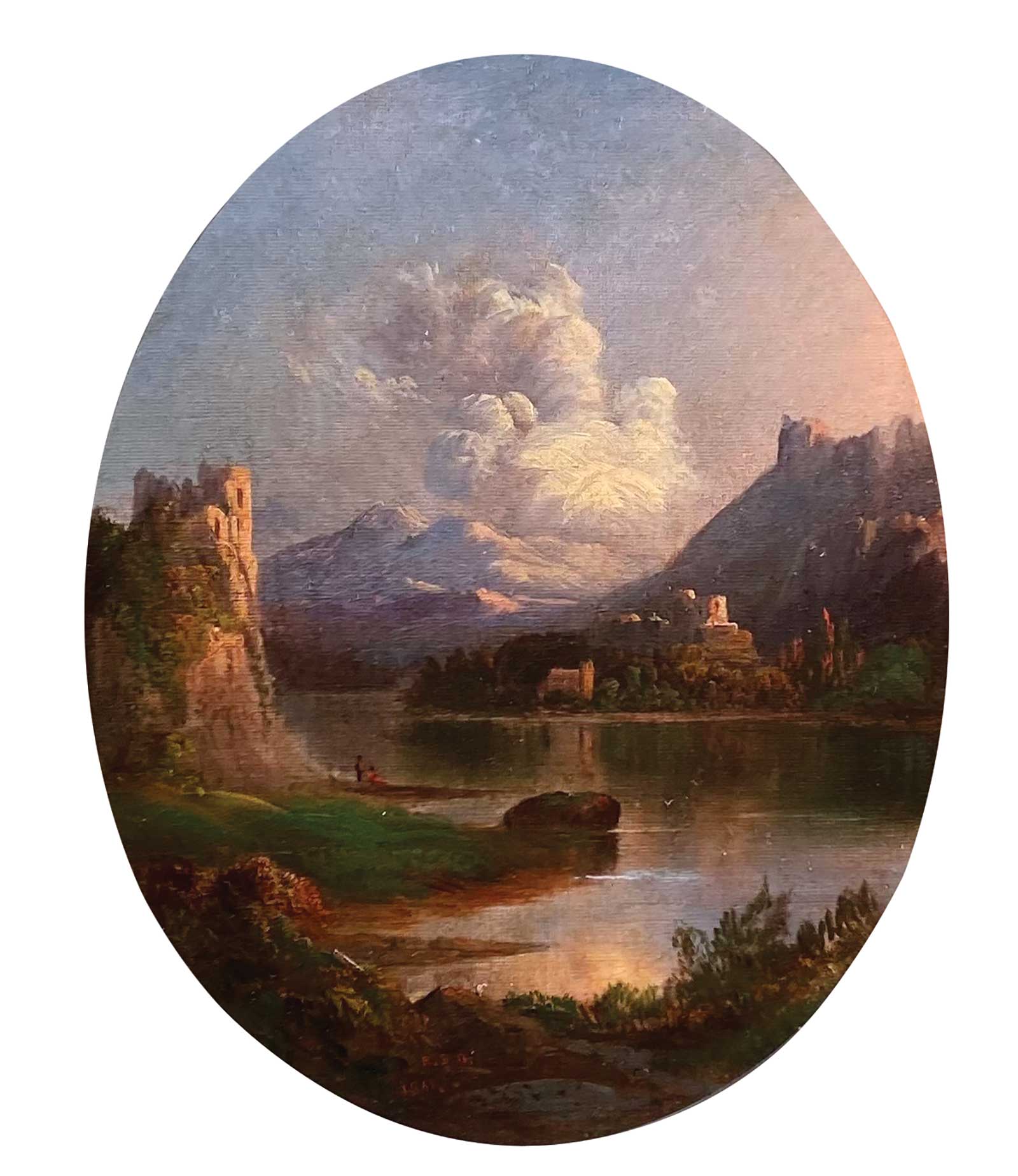 Robert S. Duncanson (1821-1872), Italian Landscape, 1861. Oil on canvas. New-York Historical Society, Gift of Charlynn and Warren Goins, 2014.30.2.
The poet and journalist William Cullen Bryant (1794-1878) was a friend of Durand and a walking companion of Cole. He delivered the funeral oration for Cole at the National Academy of Design of which Durand was president. In his 1824 poem A Forest Hymn, Bryant writes:
The groves were God’s first temples. Ere man learned
To hew the shaft, and lay the architrave,
And spread the roof above them,---ere he framed
The lofty vault, to gather and roll back
The sound of anthems; in the darkling wood,
Amidst the cool and silence, he knelt down,
And offered to the Mightiest solemn thanks
And supplication.
Cole, too, was a poet and wrote in his undated poem A Painter:
I know ‘tis vain ye mountains, and ye woods
To strive to match your wild, and wonderous hues,
Ye rocks and lake and ever rolling floods,
The gold-cinctur’d eve, or morn begemm’d with dews.
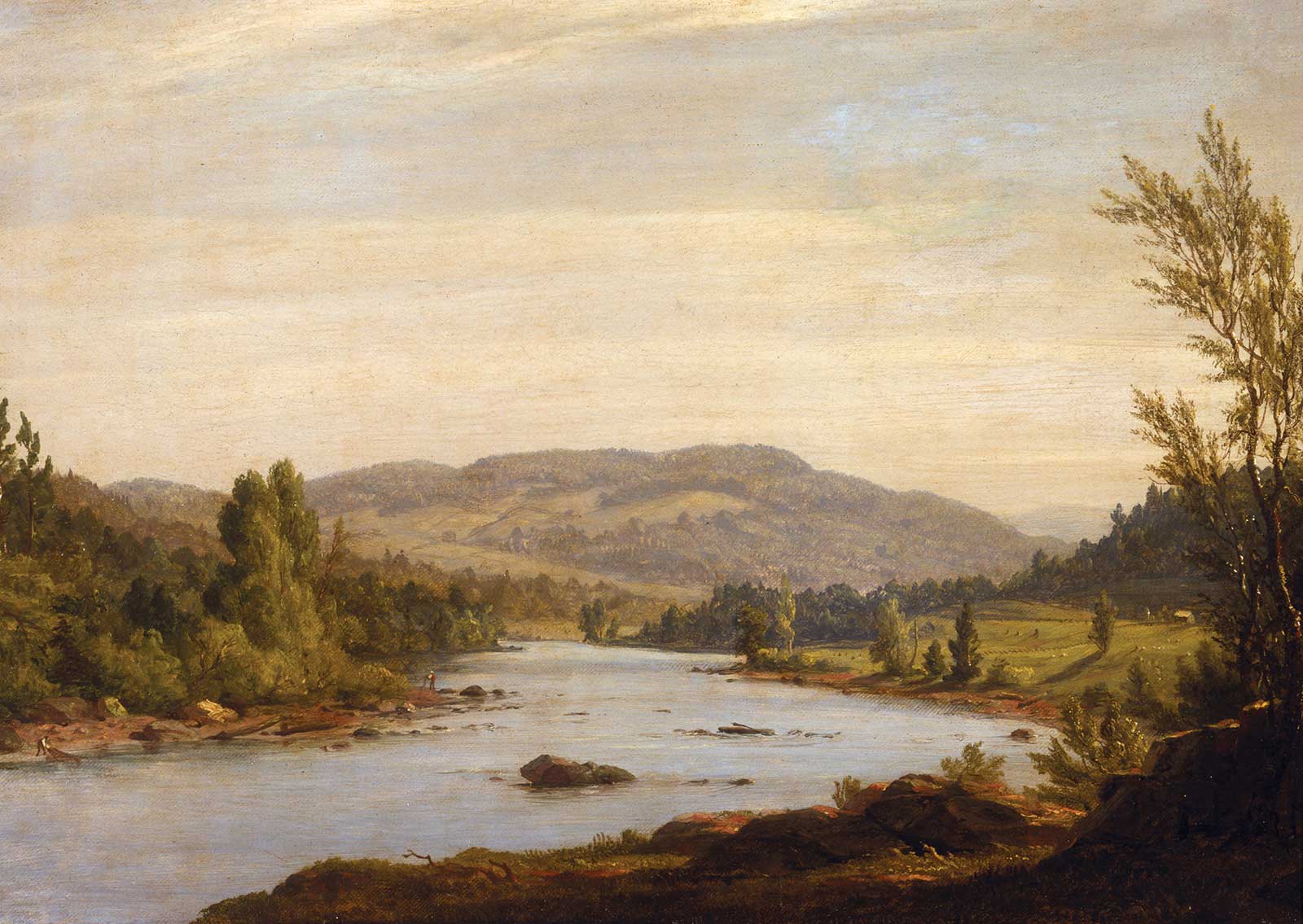 Sanford R. Gifford (1823-1880), Landscape with River (Scene in Northern New York), 1849. Oil on canvas. New-York Historical Society, Gift of DeWitt M. Lockman, 1953.51.
The museum is also hosting a series of programs to go along with the exhibition that highlight “contemporary perspectives on land use, the environment, and landscape painting in America through related programming, and by welcoming contemporary artists and scholars to reflect upon the legacy of the Hudson River School and what it means within our world today.” —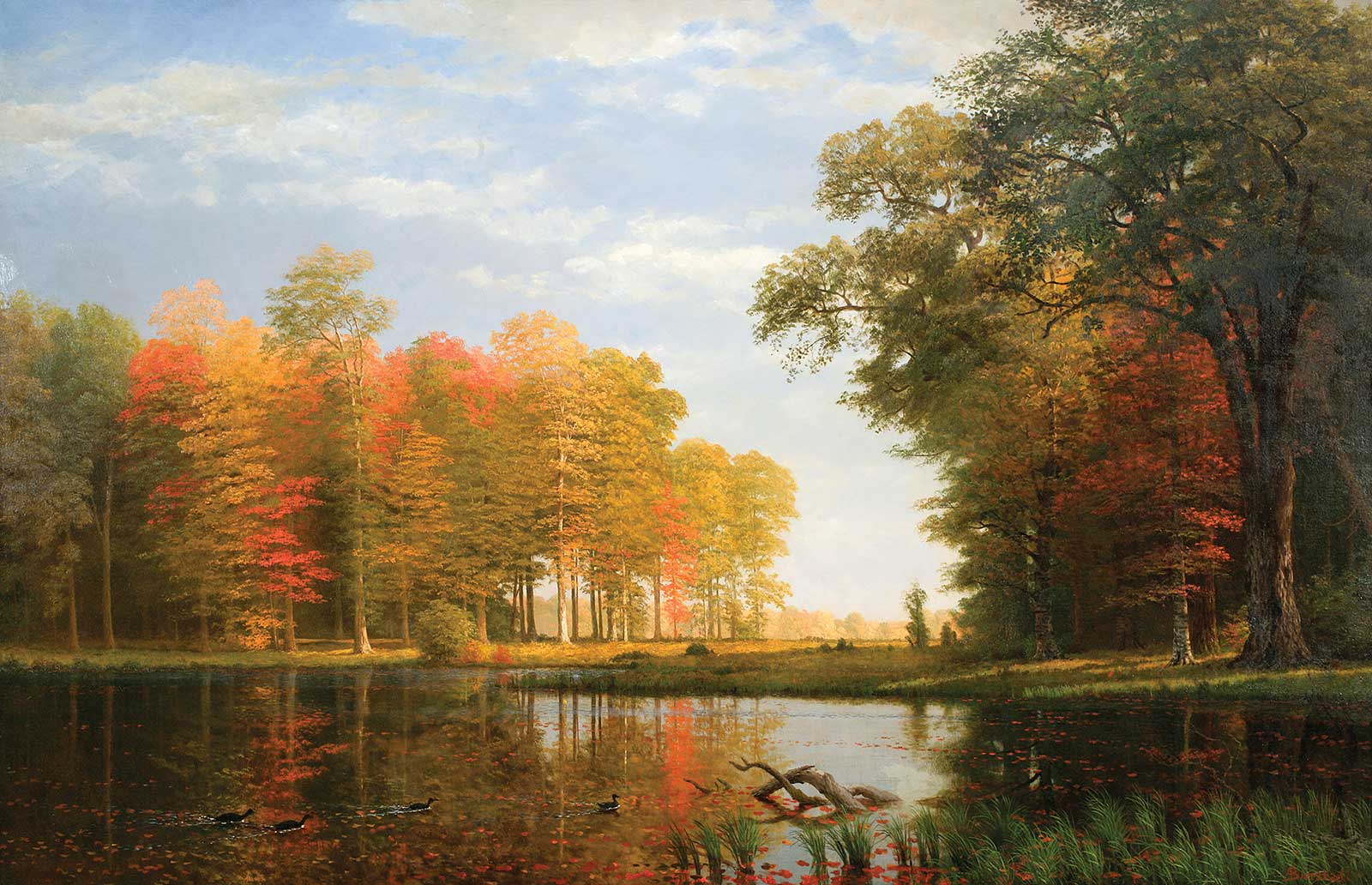 Albert Bierstadt (1830-1902), Autumn Woods, Oneida County, State of New York, ca. 1886. Oil on linen. New-York Historical Society, Gift of Mrs. Albert Bierstadt, 1910.11.
Powered by Froala Editor