Helicline Fine Art in New York City was founded by Roy Goldberg and Keith Sherman in 2008 to bring American art and the expertise they have gained in over 35 years as collectors to the public. Their latest online exhibition is American Art: The WPA and Beyond featuring about three dozen paintings, works on paper and sculptures. It can be seen online through January 30 or by appointment at their Midtown Manhattan gallery.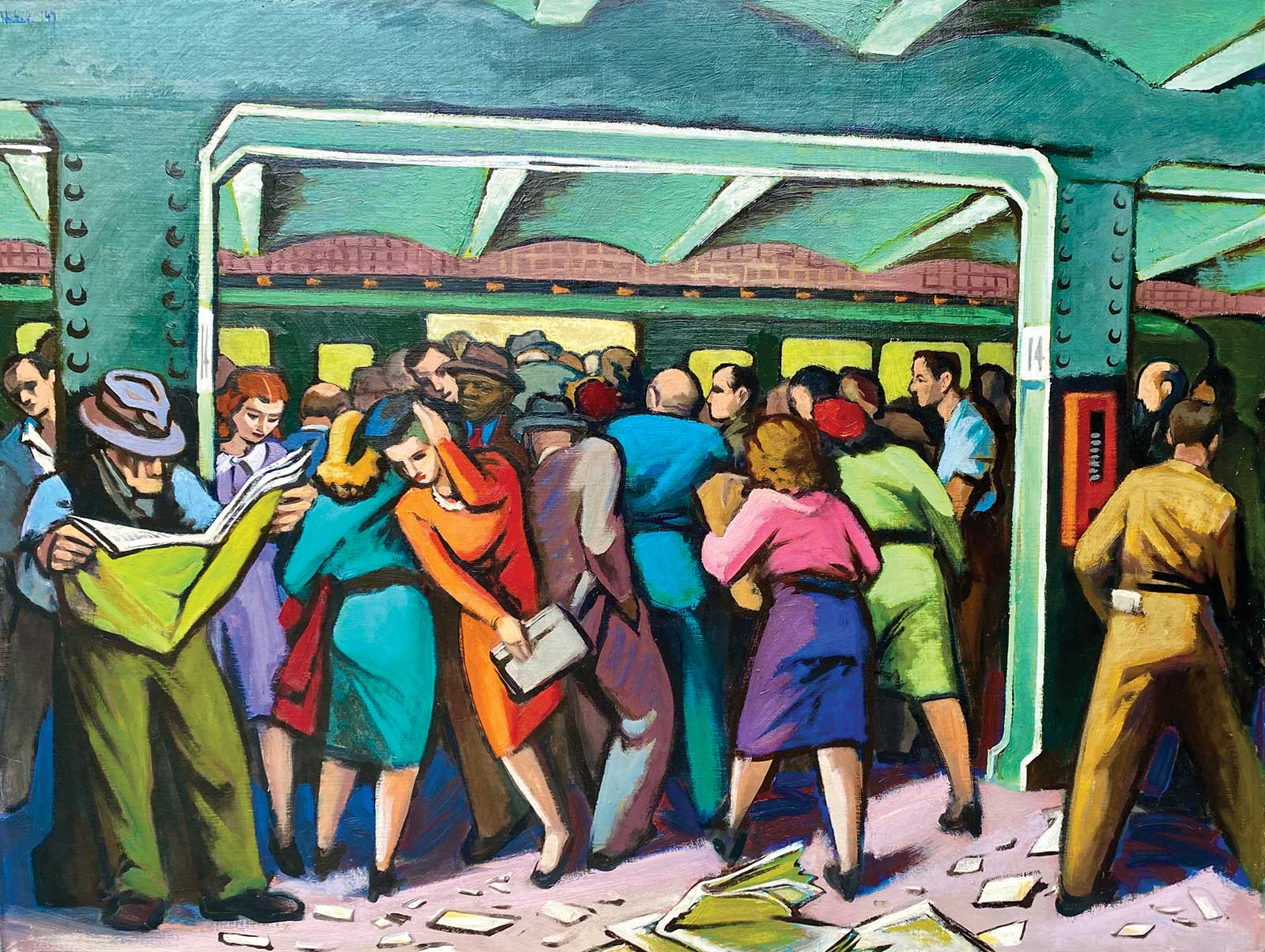 Trew Hocker (1913-1963), New York Subway. Oil on Masonite, 36 x 48 in., signed and dated upper left: ‘’47’.
Sherman explains, “The WPA period is off the radar of most museum curators and is one the least popular periods of American art today. That’s reason for celebrating it, along with the spirit of the worker, the forgotten person, simple moments of everyday life, industry, muscular men, abstracts, mural studies and more. Actually, artwork from the first half of the 20th century is the stuff in our hearts and has been for years.” 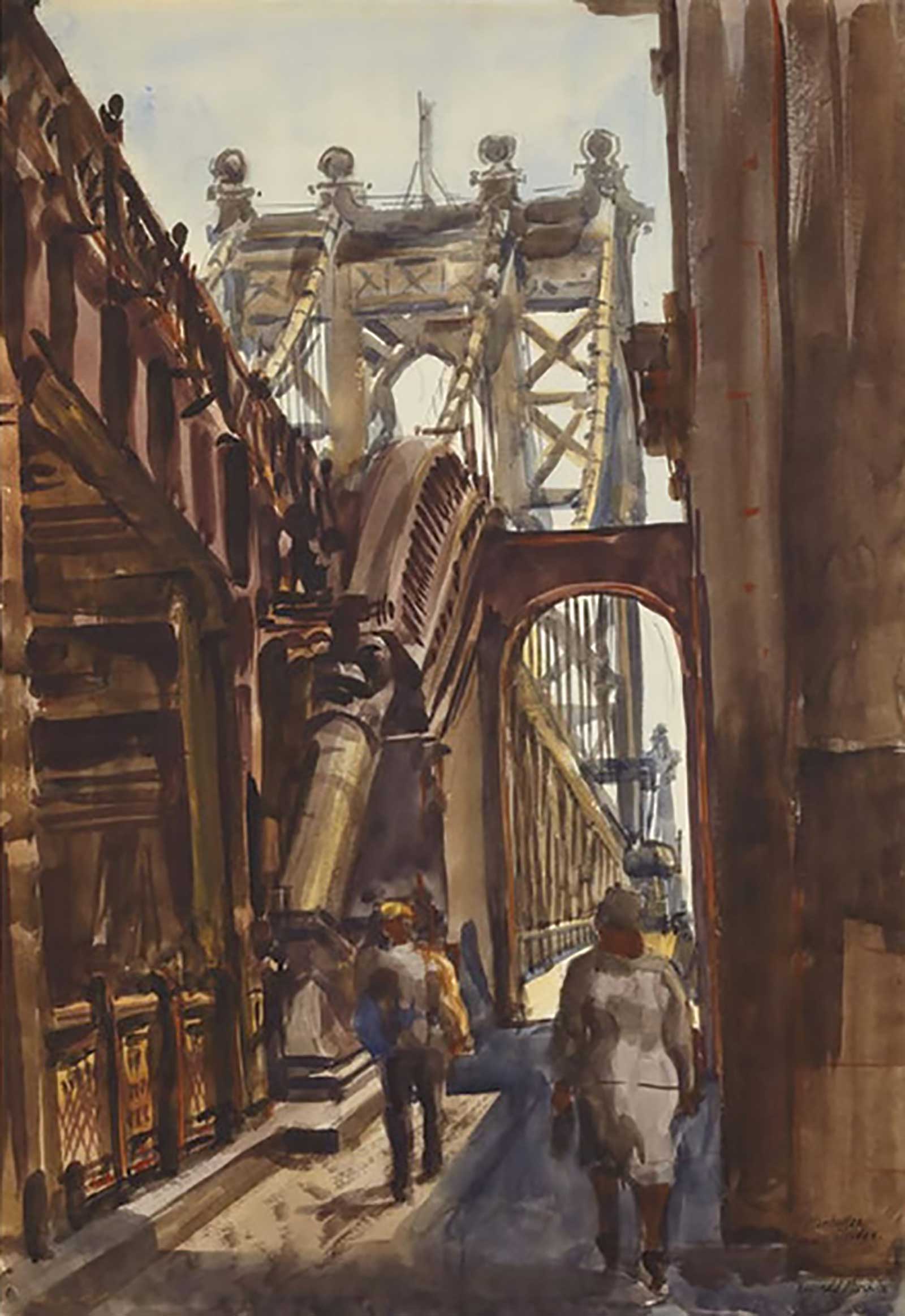 Reginald Marsh (1898-1954), Manhattan Bridge, 1938. Watercolor and pencil on paper, 20 x 14 in., signed lower right.
Many of the artists were immigrants who found work, along with their compatriots, through the Works Progress Administration, a federal program that paid artists to make art for public spaces in the 1930s and ’40s. Among the artists in the exhibition are Gerrit Beneker, Cecil Bell, Max Arthur Cohn, Ralph Fasanella, Malvina Hoffman, Max Kalish, Konrad Cramer, Kyra Markham, Paul Meltsner, Dale Nichols, Robert Riggs, Joseph Solman, and William Zorach, among others—some of whom went on to greater fame.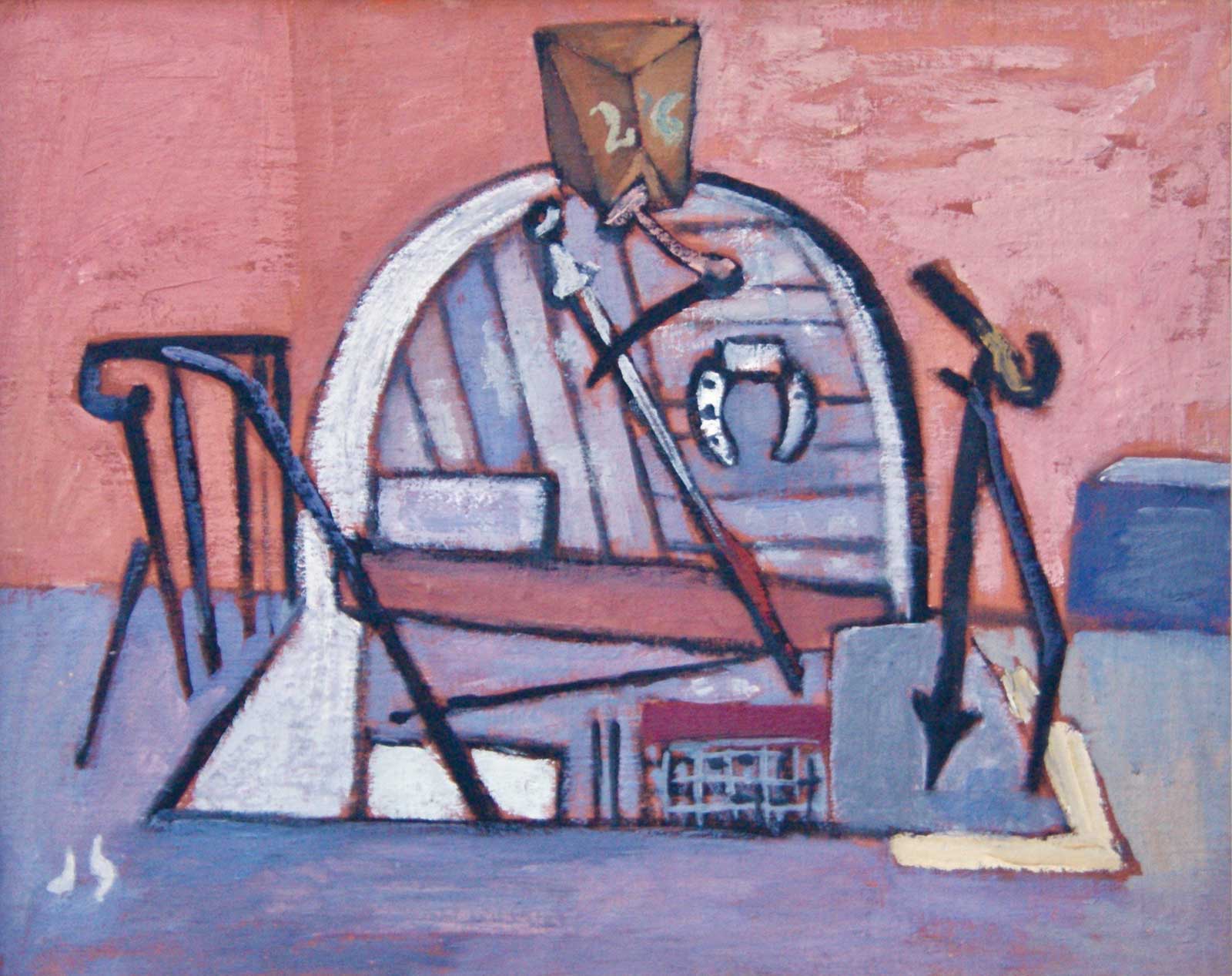 Joseph Solman (1909-2008), Celler with Horseshoe, ca. 1938. Oil on canvas, 16 x 20 in., signed lower left.
Fasanella (1914-1997) was born in the Bronx to Italian immigrant parents. He celebrated the working class in paintings dense with detail and images of social and political unrest, union organizing and the vitality of the city. Self-taught, he exhibited primarily in union halls, churches and other public venues. He was a keen observer as well as a participant in the social movements of his time. In his painting Victory and After, many of the symbols and images are familiar to us today. Some of the images still resonate. Others are lost to time.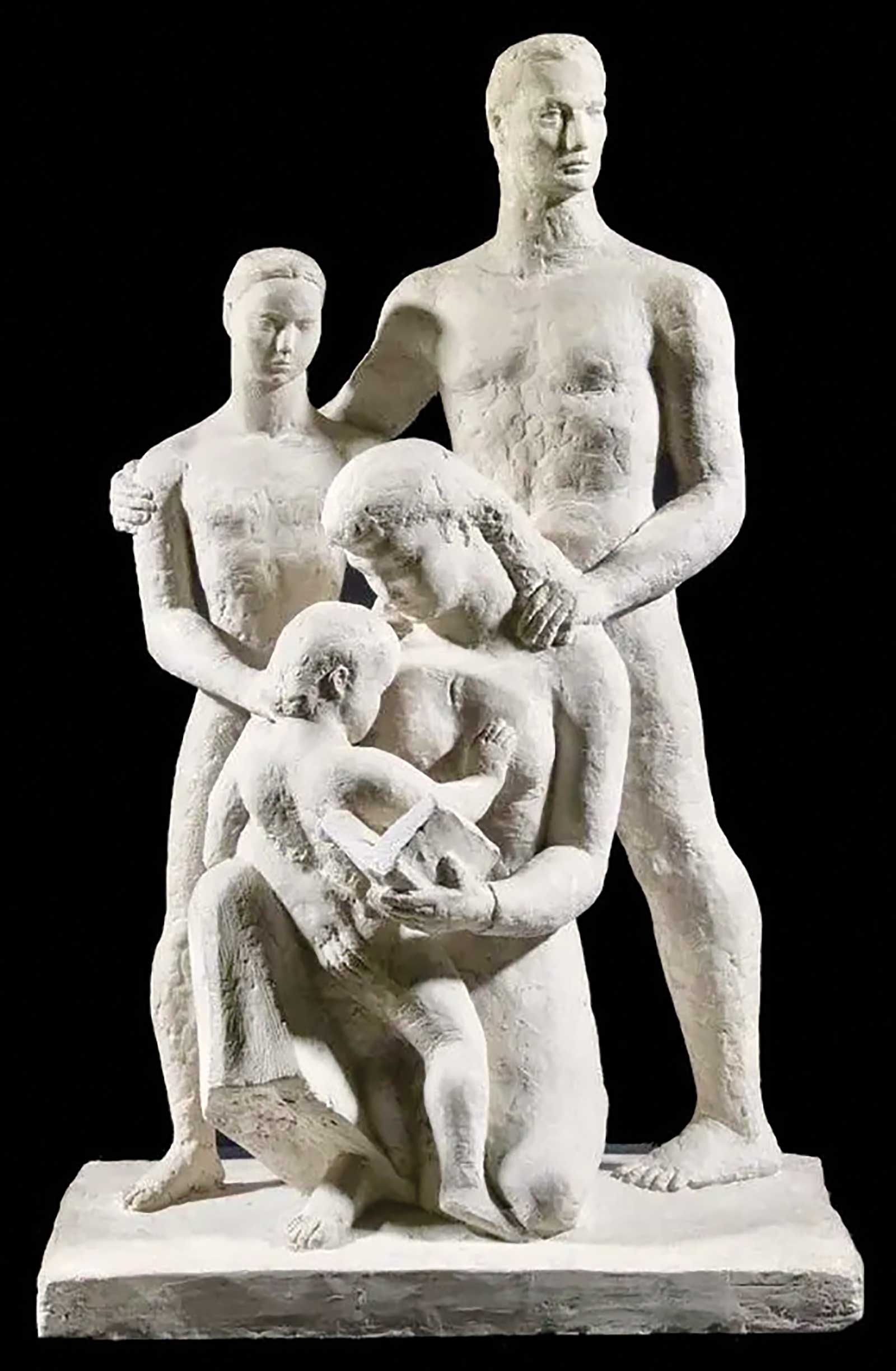 William Zorach (1887-1966), Pioneer Family, ca. 1927. Plaster, 23½ x 15 x 10 in.
Zorach (1887-1966) was born in Lithuania and came to the United States with his parents in 1891. He began his artistic career as a painter but turned to sculpture in wood, stone, plaster and terra cotta. His 6-foot sculpture Spirit of the Dance was chosen by the Rockefeller family to be part of the décor of Radio City Music Hall when it opened in 1932.
One of Sherman’s first jobs in public relations was to promote what he calls the “physicality” of the music hall, its architecture and artistic embellishments. “From that time,” he says, “Zorach has always been an artist I honor in my heart.” 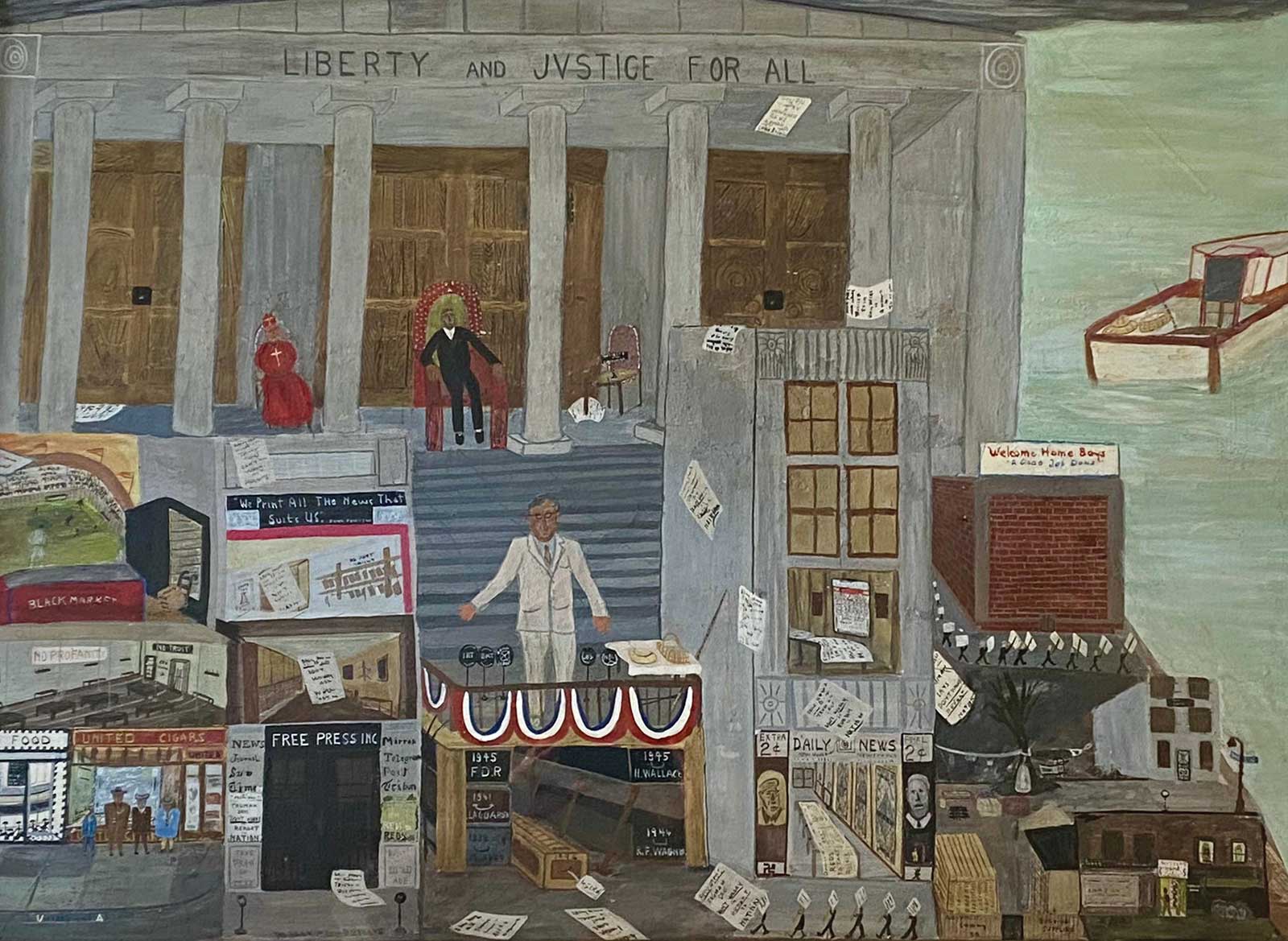 Ralph Fasanella (1914-1997), Victory and After. Gouache on paper, 26½ x 36 in., signed, titled and dated lower left: ‘1945’.
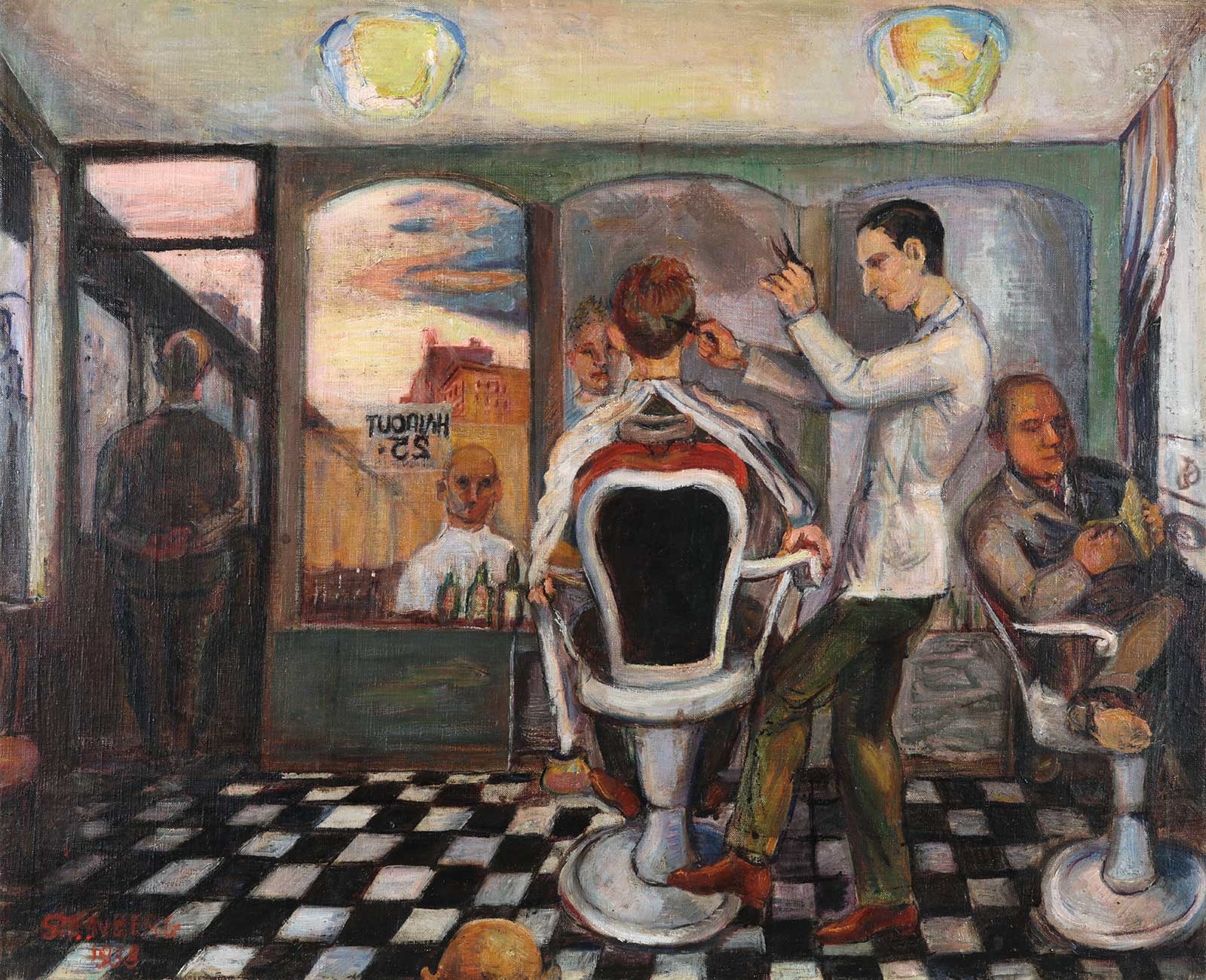 Harry Sternberg (1904-2001), Barber Shop, ca. 1930-40s. Oil on canvas, 24 x 29½ in., signed lower left.
The couple buys a piece “because we love it,” Goldberg remarks. “We never buy anything just to sell it. We’re happy to live with it for a period of time and let it speak to us.”
Among the “finds” in the exhibition is the vibrantly colored New York Subway by Trew Hocker (1913-1963). Although the clothing places the scene in the postwar ’40s, the energy of New York City subway stations is the same today.
Among the well-known artists is Reginald Marsh (1898-1954). Manhattan Bridge is typical of his scenes of people hustling around New York City. He was born in Paris and spent most of his life in New York painting often satiric but, nevertheless, respectful representations of the denizens of the city’s less genteel neighborhoods. —
Powered by Froala Editor