During the 19th and early 20th centuries, a great deal of American artists began traveling to the Mediterranean region, that of Italy, Spain, the Middle East and North Africa. They came for many reasons—to hone their techniques in painting, as well as glimpse new, exotic inspiration from the region’s unique plant life, coastlines and distinct architecture. From that period of exploration came fantastic works of art from William Merritt Chase, Theodore Robinson, George Peter Alexander Healy, Frank Duveneck and others.
Mediterranea: American Art from the Graham D. Williford Collection, currently on view at the Hunter Museum of Art, delves into the artwork created during this time and the history surrounding it. 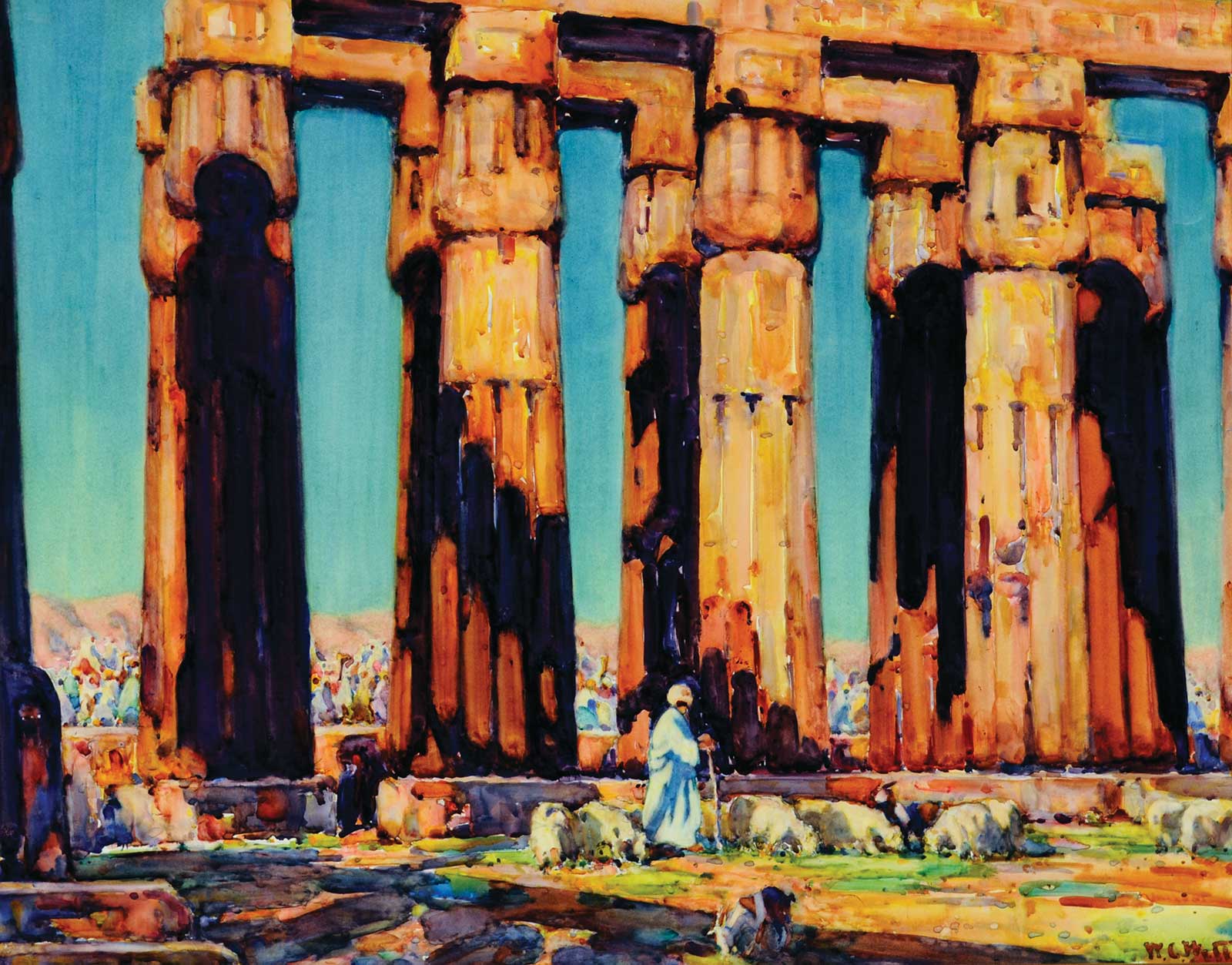 William Clothier Watts (1869-1961), Grazing Sheep, Temple of Luxor, Egypt, ca. 1915. Watercolor on paper, 23 x 29 in.
The Jean and Graham Devoe Williford Charitable Trust.
“For the most part, American artists traveled throughout Europe because of opportunities to study alongside the leading international artists of the day or at art academies, which didn’t exist in the United States at the time,” says Natalie Mault Mead, associate curator at the Hunter Museum. “These artists commonly traveled to destinations first laid out by the European Grand Tourists, but advancements in transportation and new rail lines extending to the Mediterranean Sea made travel throughout the region easier, safer and more accessible, and soon, Americans were traveling to places like Spain to study the Old Master Painters at the Museo del Prado in Madrid.”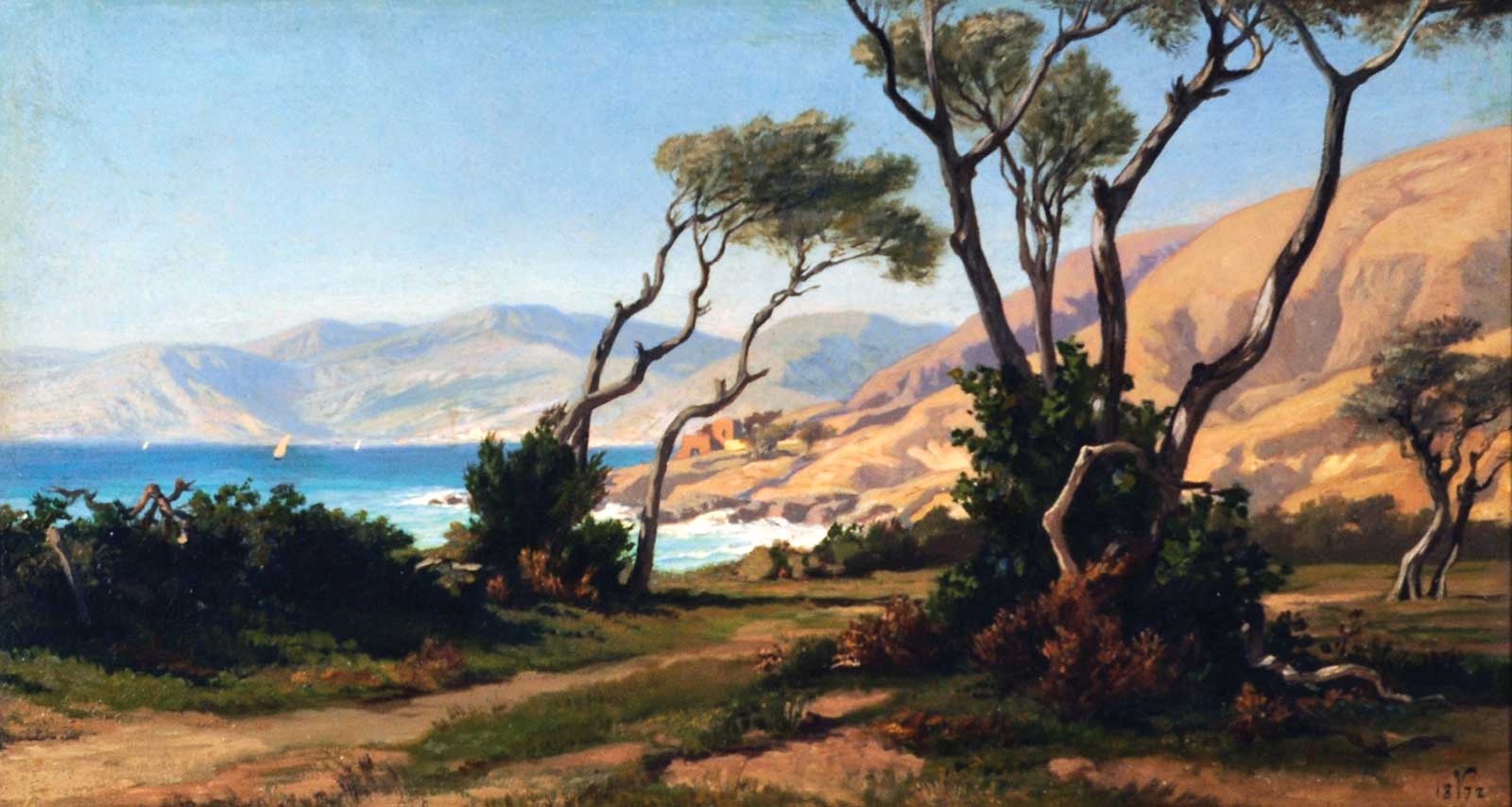 Elihu Vedder (1836-1923), Windswept Olive Trees, Bordighera, 1872. Oil on canvas, 8¾ x 16¼ in. The Jean and Graham Devoe Williford Charitable Trust.
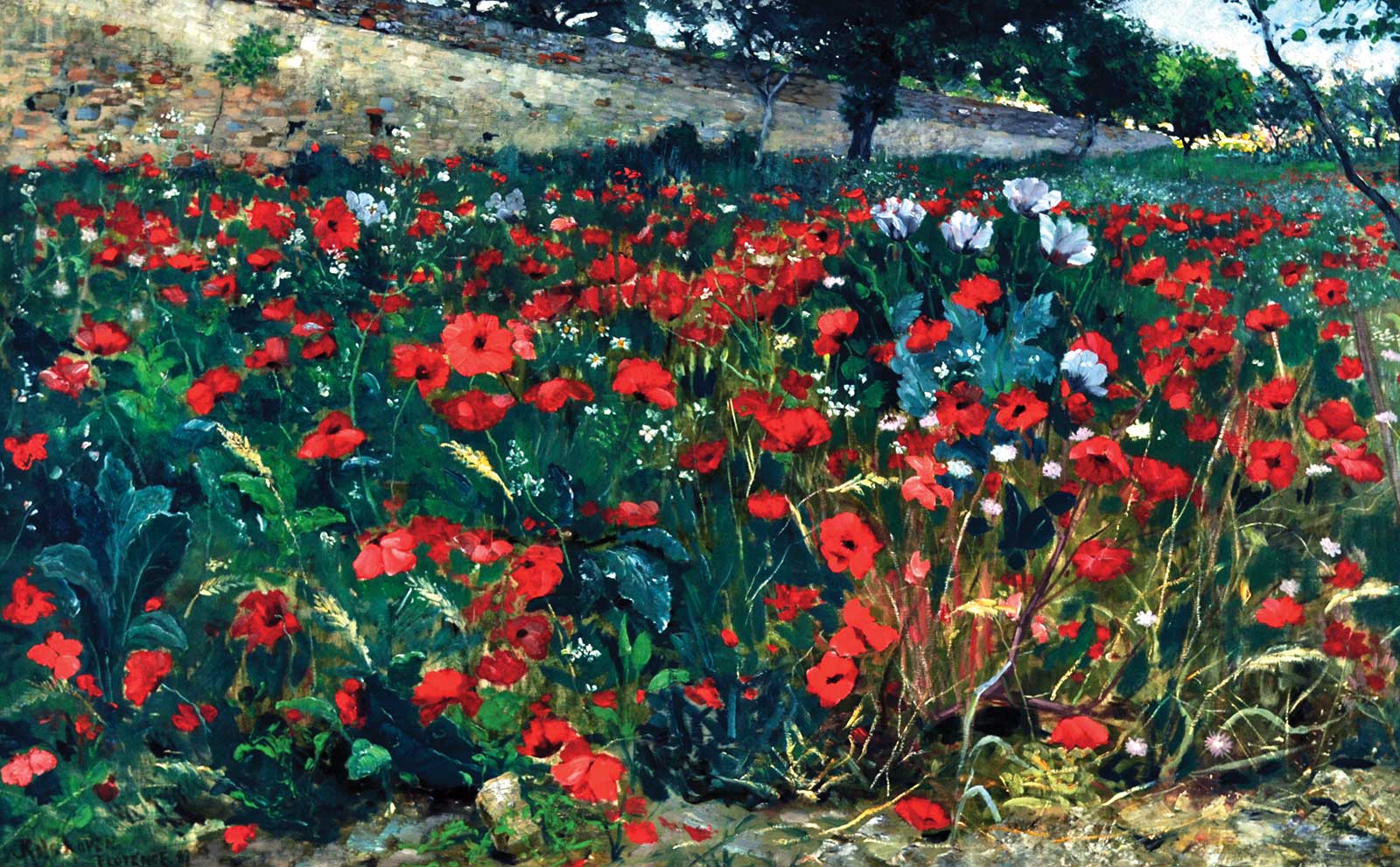 Julius Rolshoven (1858-1930), Field of Poppies, 1887. Oil on canvas, 33½ x 53 in. The Jean and Graham Devoe Williford Charitable Trust.
The Mediterranean was enticing to American artists, and there’s a dichotomy between the region’s perceived exoticism and its reality. “Americans were allured by images and stories of adventure, mystery and exoticism of the region presented in contemporary travel narratives and visual depictions...At times, the line between reality and the artists’ depictions are blurred for aesthetic reasons or to emphasize [a] sense of place,” says Mead. “The tension between artists’ search for realism and embrace of the exotic sometimes resulted in works that blended admiration for the region with a sense of otherness and exoticization.”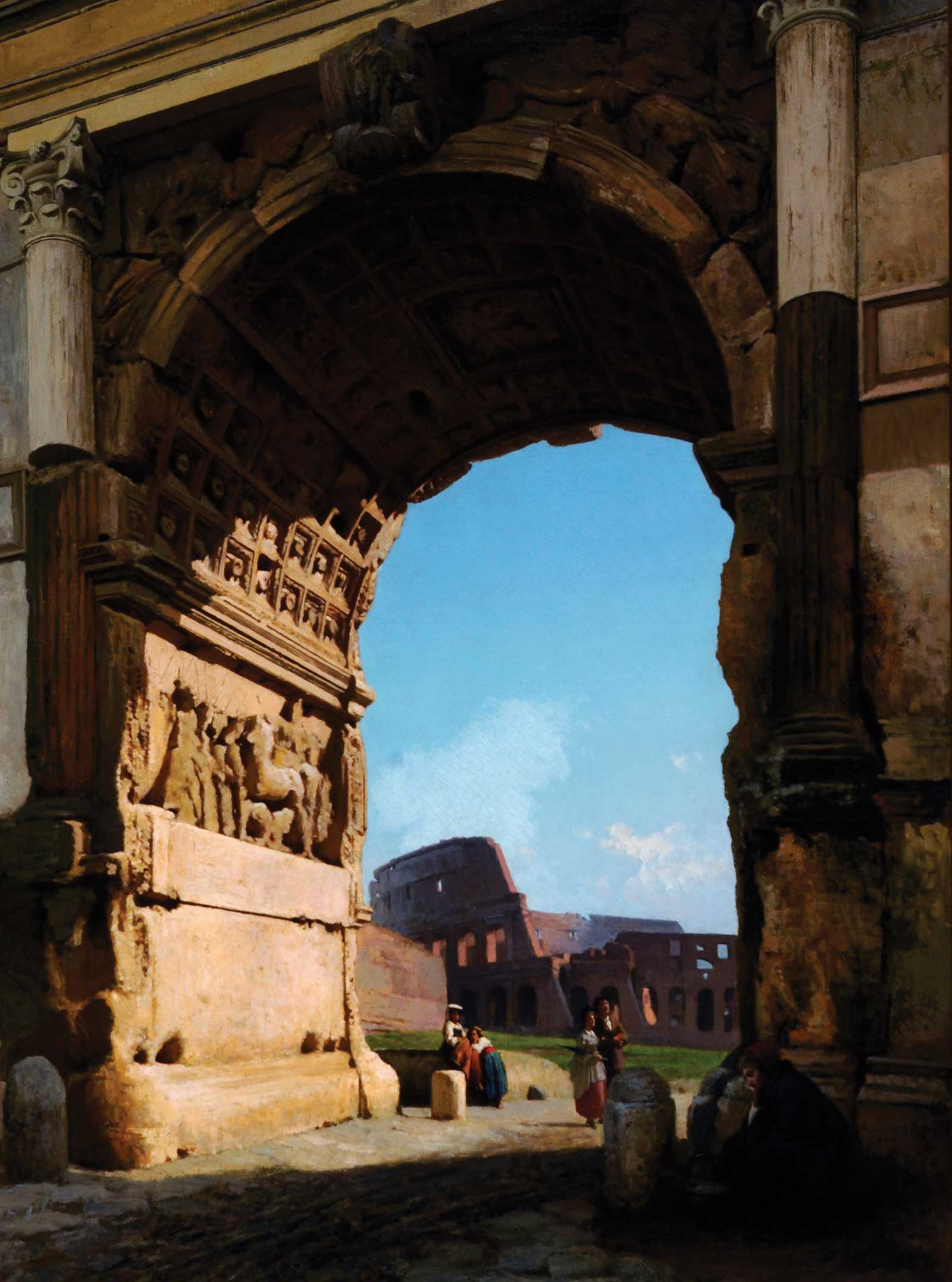 George Peter Alexander Healy (1813-1894), Arch of Titus, ca. 1868-1871. Oil on canvas, 40½ x 29½ in. The Jean and Graham Devoe Williford Charitable Trust.Mead discusses George Peter Alexander Healy’s oil on canvas Arch of Titus, painted around 1868 to 1871. The piece depicts the Roman arch in shadow, which commemorates the military victories of Emperor Titus and the Colosseum. “The view was common amongst contemporary artists, and Healy’s painting was undoubtedly intended to appeal to tourists, such as the fashionable couple passing under the arch...This painting may have been Healy’s first work of the arch,” she says.
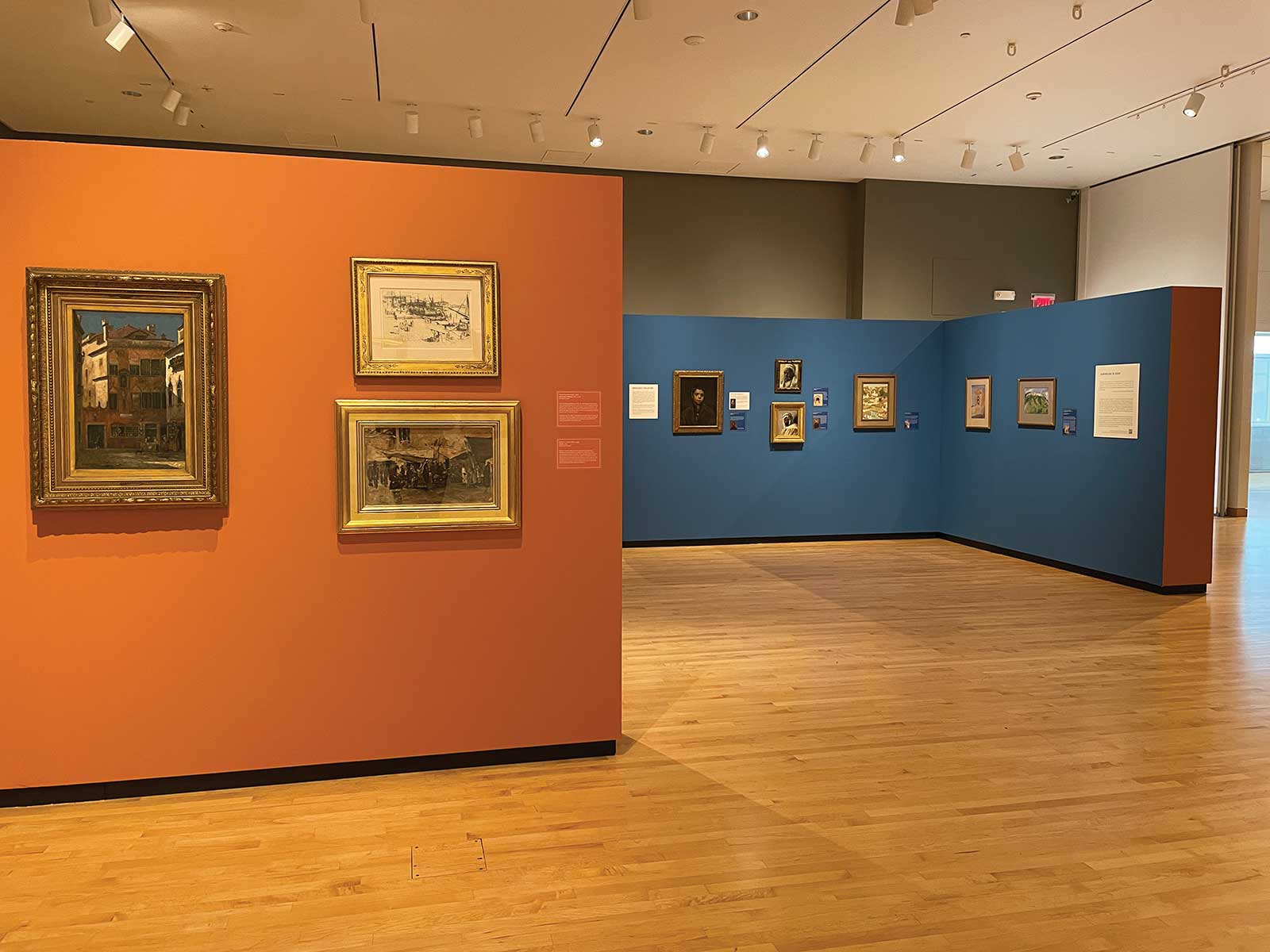 An installation view of Mediterranea: American Art from the Graham D. Williford Collection, Hunter Museum of American Art, through January 9, 2022.
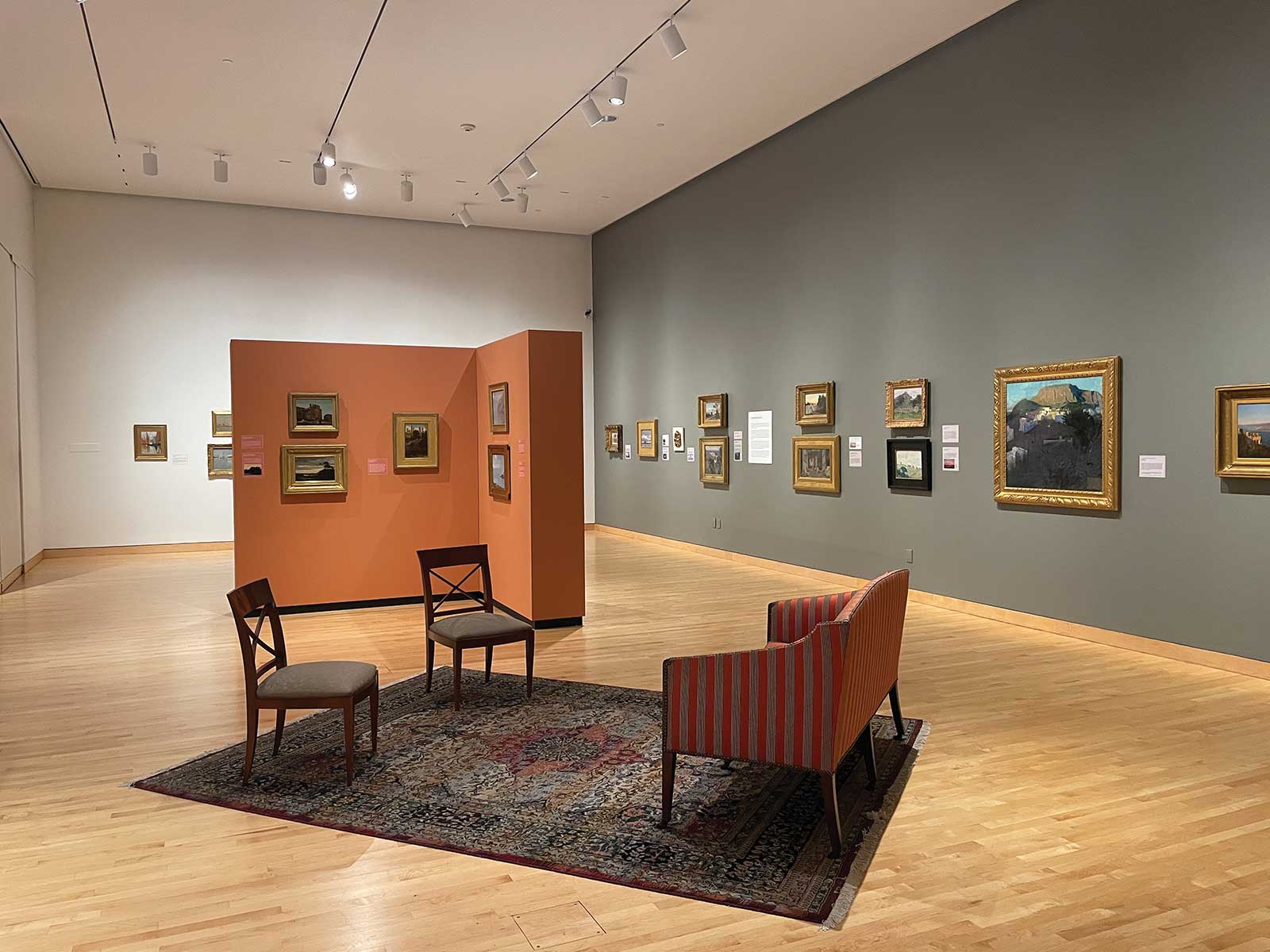 An installation view of Mediterranea: American Art from the Graham D. Williford Collection, Hunter Museum of American Art, through January 9, 2022.Another major piece in the exhibition is Grazing Sheep, Temple of Luxor, Egypt, a circa 1915 watercolor by William Clothier Watts. “Since he frequently produced paintings on site, Watts favored watercolor for its wash effects and portability,” Mead says. “In this watercolor, he highlighted the play of light and shadow on the colonnade of the famous Ancient Egyptian temple complex at Luxor. The shepherd and his flock below the columns create an interesting contrast between the ancient civilization and pastoral present.”
Mediterranea: American Art from the Graham D. Williford Collection is sponsored by the Jean and Graham Devoe Williford Charitable Trust and remains on view through January 9. —
Powered by Froala Editor