The mission of the National Arts Club is to stimulate, foster and promote public interest in the arts and to educate the American people in the fine arts. The club was founded in 1898, and in 1906, moved into the historic Samuel Tilden mansion across from Gramercy Park. Tilden had been governor of New York State and lost the presidential election of 1876 to Rutherford B. Hayes by one electoral vote. The National Arts Club has had three U.S. presidents among its members and from its inception has welcomed women as full members—an unusual practice at the time. The club’s art collection numbers over 600 works, many of which can be seen in a virtual tour and exhibition on the club’s website and on Google Arts & Culture. Its exhibitions are also open to the public.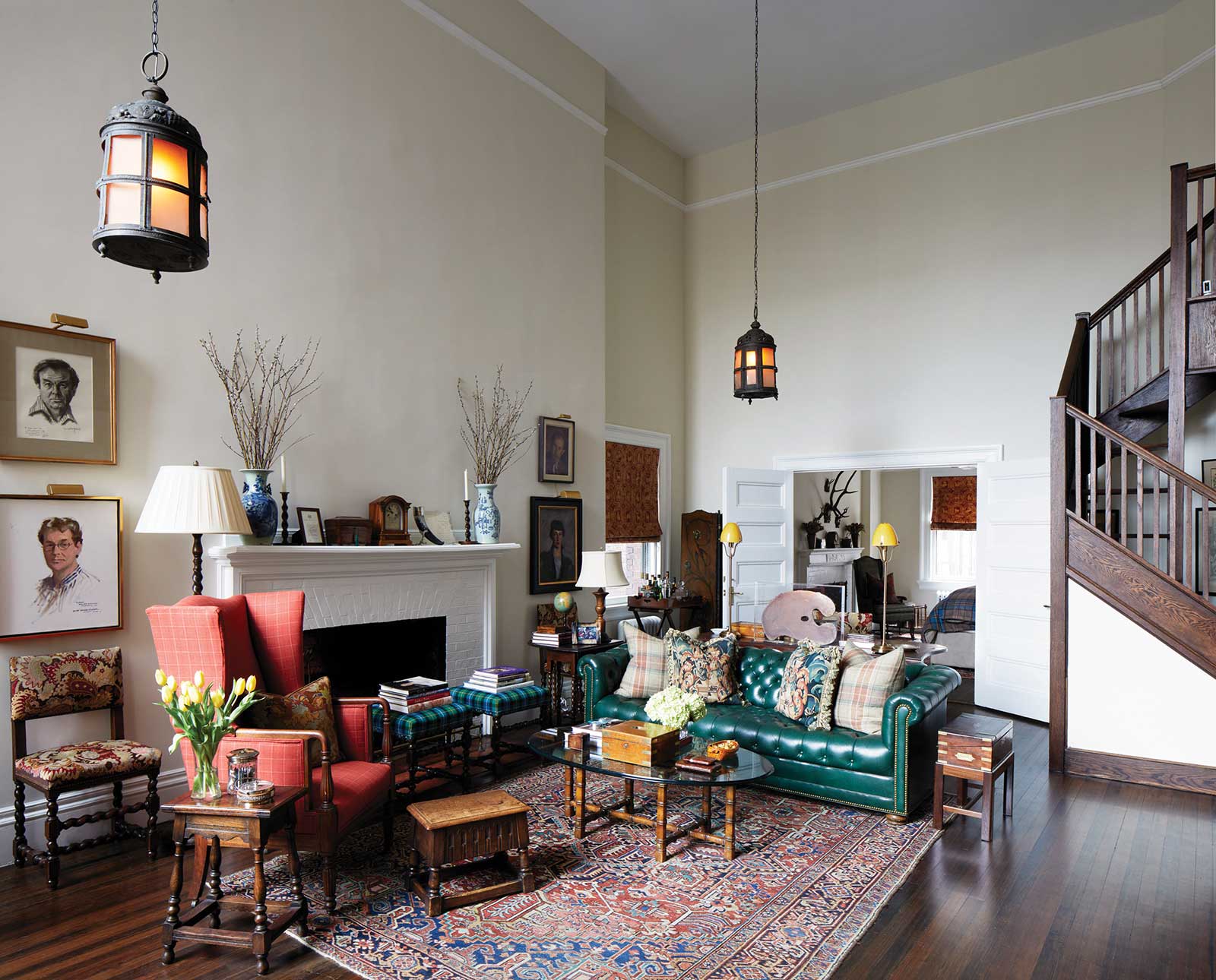 To the left of the fireplace in the 10th floor National Arts Club studio that is now occupied by artist Michael Shane Neal, are, from top, Everett Raymond Kinstler’s charcoal portrait of Neal and Neal’s oil portrait of Kinstler. Behind the sofa in a vitrine is John Singer Sargent’s palette.
Among the works in the permanent collection is Some Little Talk of Me and Thee There Was, 1905-9, by Harry Willson Watrous (1857-1940). In 1905, Watrous had trouble with his eyesight and began to paint large, enigmatic canvases of idealized women. His subjects were in contrast to the passive female figures of the American impressionists and suggest the arrival of the modern woman. Colin Campbell Cooper (1856-1937) was known for his city scenes such as South Ferry, New York, 1917. A critic in 1872 had written that “Cooper has the natural gift of seeing the beauty of what to most people are prosaic structures, and the patience and persistence to perfect his delineation of street and building, is the secret of his success as an architectural painter.” Roy Henry Brown (1879-1956) lived in France from 1907 to 1914 where he painted Sapins et Peupliers aux Dunes, 1910.
The club built a 13-story tower at the rear of the property in 1906 to provide living and workspace for its artist members. The studios have North-facing windows overlooking Gramercy Park.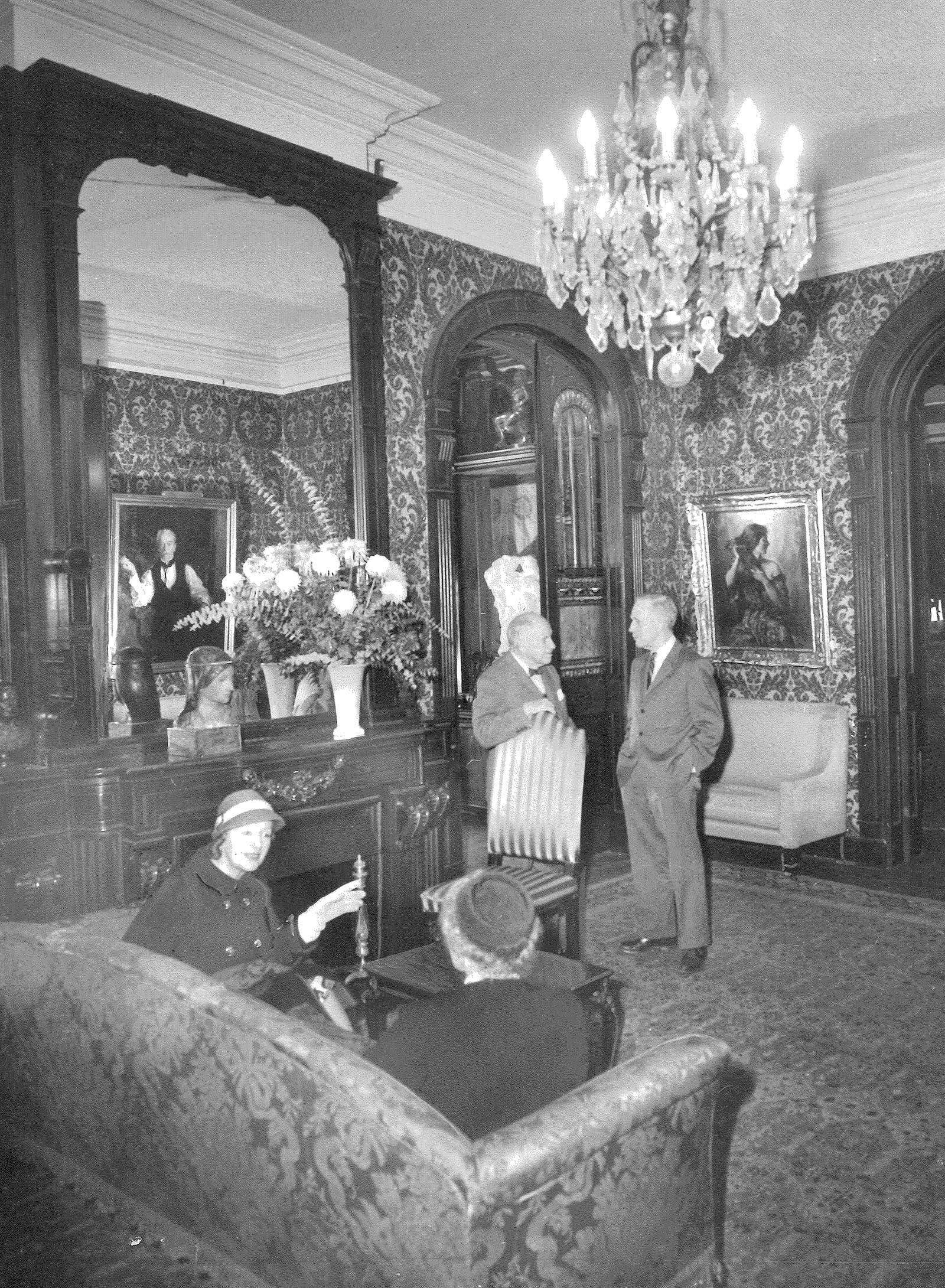 The National Arts Club circa 1950s. Courtesy of The National Arts Club.
In November 2020, one studio on the 10th floor welcomed only its third tenant in 100 years. Michael Shane Neal, chairman of the executive board of the Portrait Society of America and a renowned painter who has completed more than 500 commissioned portraits for clients around the world, succeeded his friend and colleague Everett Raymond Kinstler (1929-2019). Kinstler acquired the studio after the death of his early mentor, Frank Vincent DuMond (1865–1951), who taught at the Art Students League for 59 years.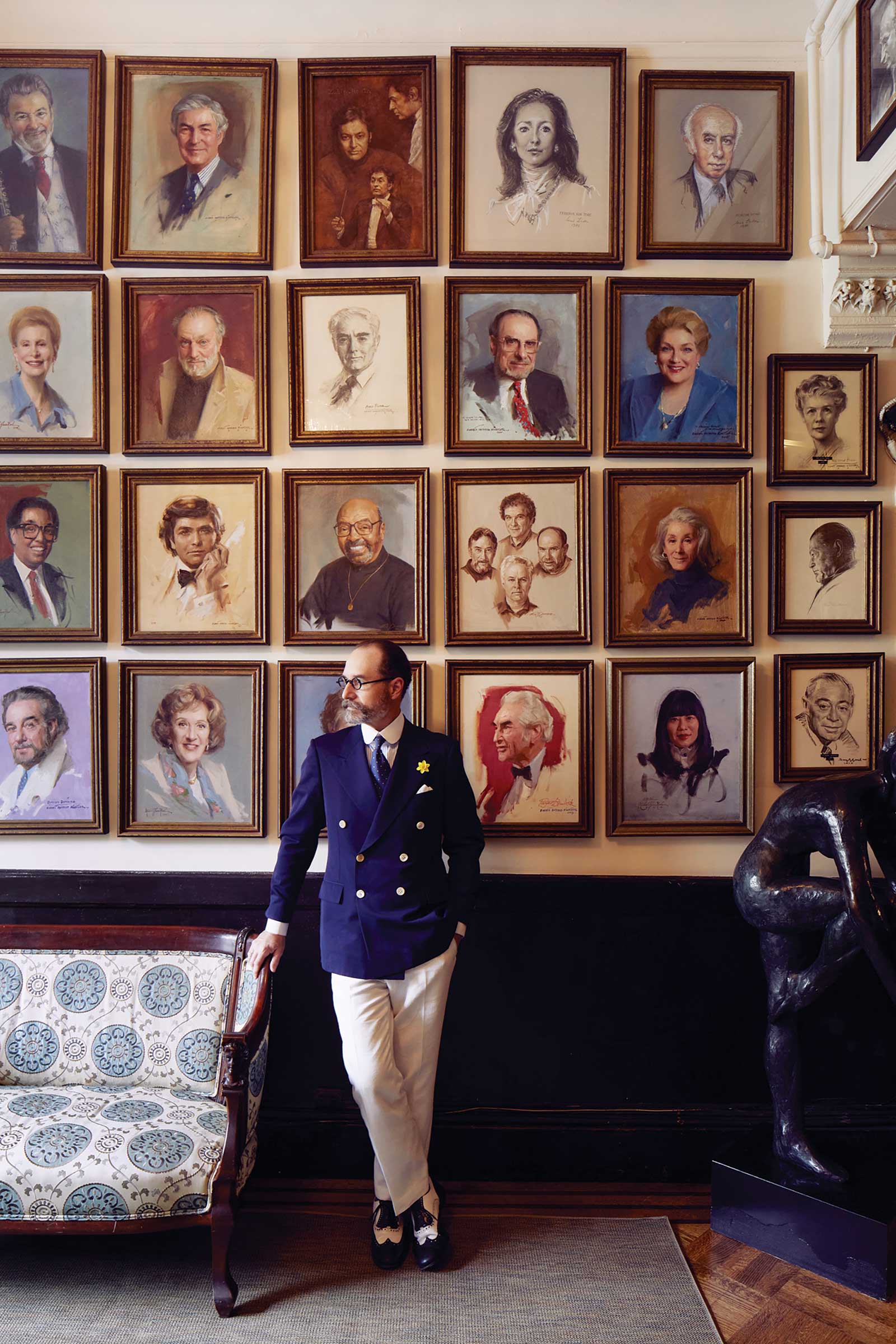 Michael Shane Neal in The Music Room of the National Arts Club in front of portraits by himself, Everett Raymond Kinstler, Tom Donahue, Irene Hecht and Peter Cox among others.
Ironically, DuMond got his start at Harper’s Weekly Magazine because of the attention brought to him by his drawings of Tilden’s funeral that appeared in the New York Daily Graphic. Among his students at the Art Students League were Georgia O’Keeffe, Norman Rockwell and John Marin. At the time of DuMond’s death, the league’s then-executive director, Stewart Klonis, wrote, “we felt that every one could fail, but not he. He was the mighty oak, deeply rooted and sheltering. No matter what point of view one had on art, he had an important contribution to make to it. Take John Marin, who says that he learned a lot from many masters, but feels that from among his many teachers, DuMond was the only one.” Kinstler remarked, “In the academic sense, DuMond was a traditional painter, with a remarkable ability to inspire the heart and stimulate the minds in his students. He believed in experimentation and curiosity…and discipline.”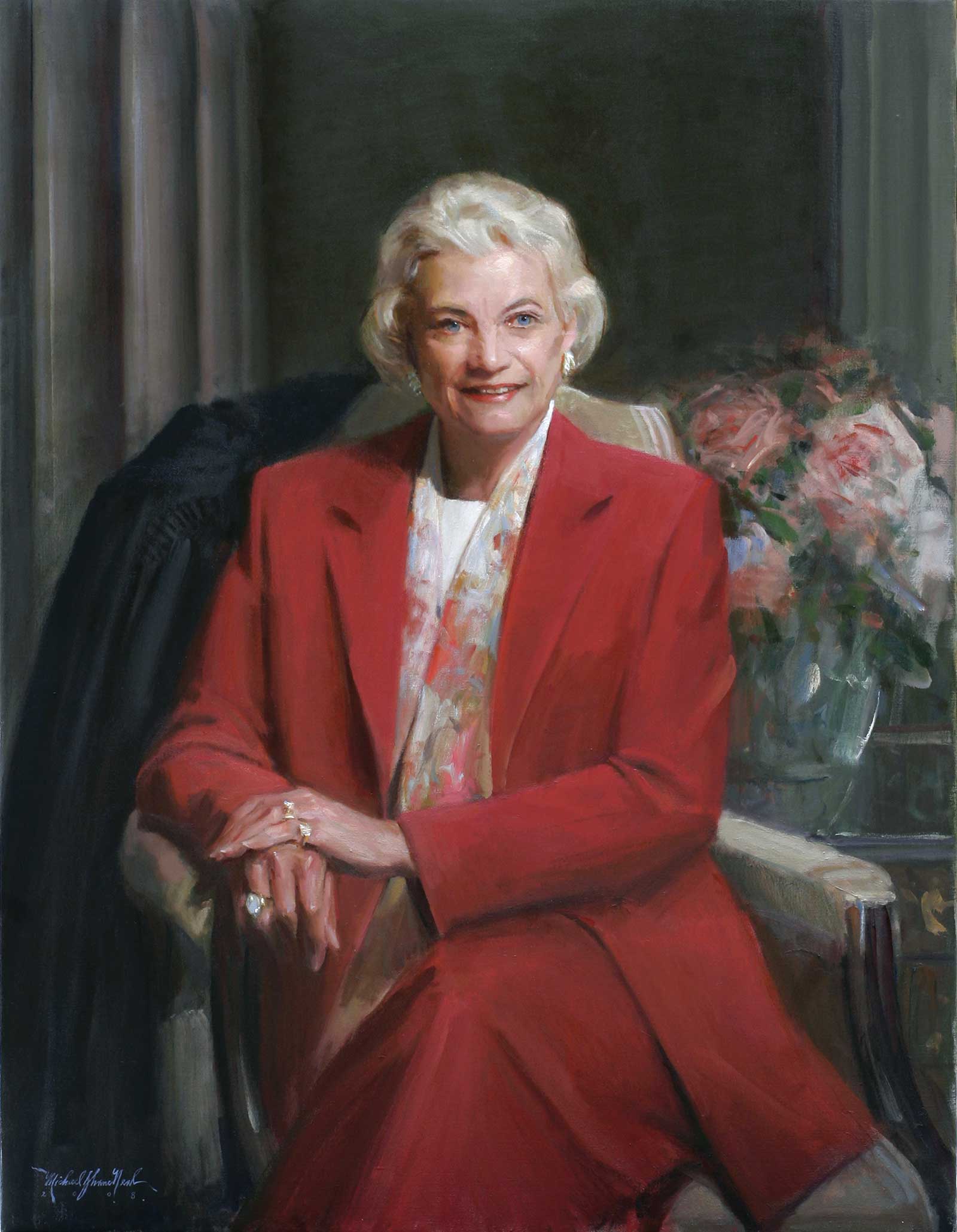 Michael Shane Neal (b. 1968), Sandra Day O’Connor, 2008. Oil on canvas, 48 x 36 in. The Sandra Day O’Connor College of Law, Arizona State University, Tempe, AZ.
Kinstler grew up in New York and dropped out of the School of Industrial Art to begin work in comic book publishing. Neal recalls Kinstler telling him that at that time his father said, “You’re a lucky young man. You’re going to be able to earn your living doing something you enjoy. Don’t ever forget it.” Later, he studied at the Art Students League and taught there for several years. In 1949, DuMond helped Kintsler get his first studio on the sixth floor of the National Arts Club. After DuMond’s death, he petitioned the club’s board to allow him to move up to the 10th floor space, which he then occupied for 66 years.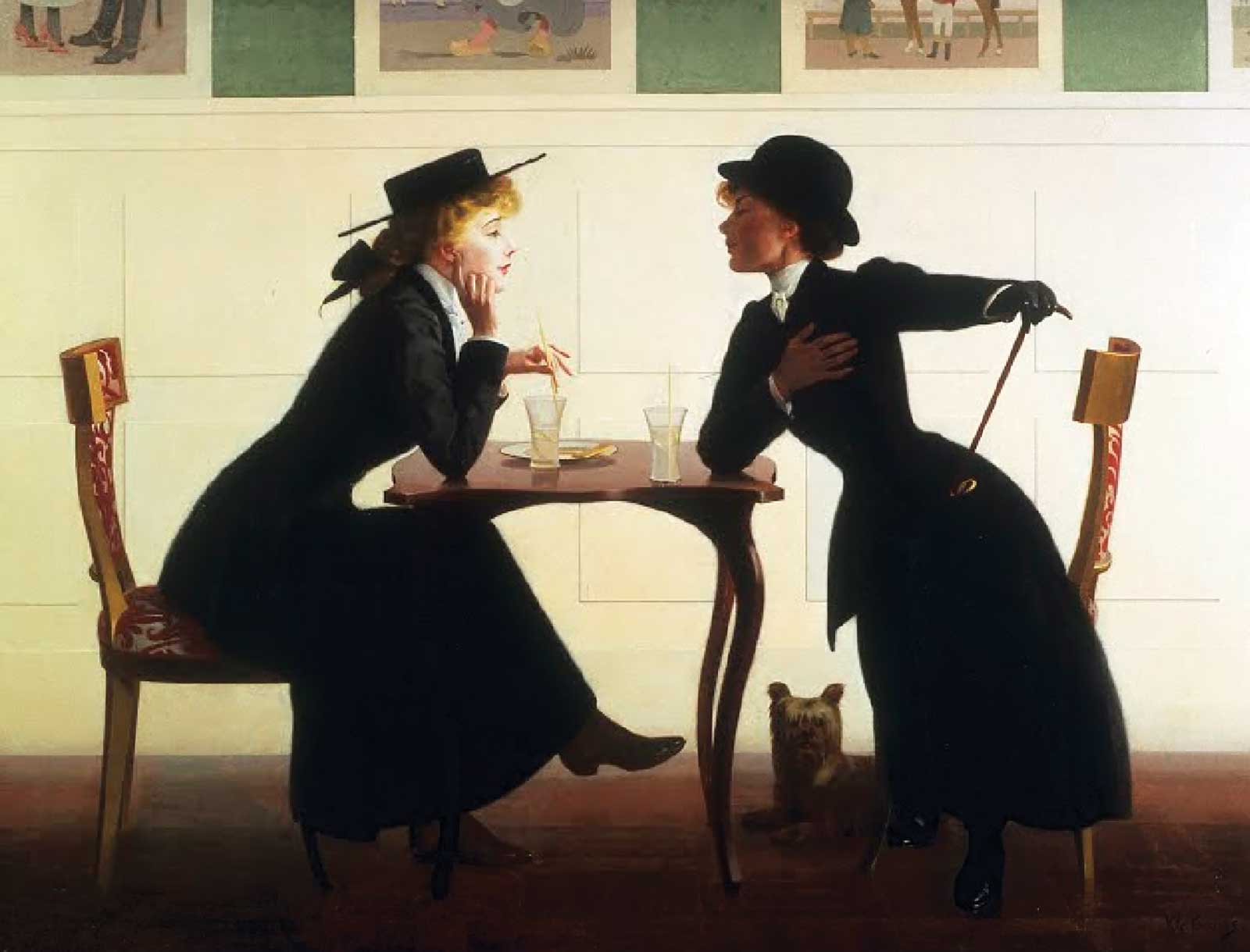 Harry Willson Watrous (1857-1940), Some Little Talk of Me and Thee There Was, 1905-9. Oil on canvas. From the National Arts Club Permanent Collection.
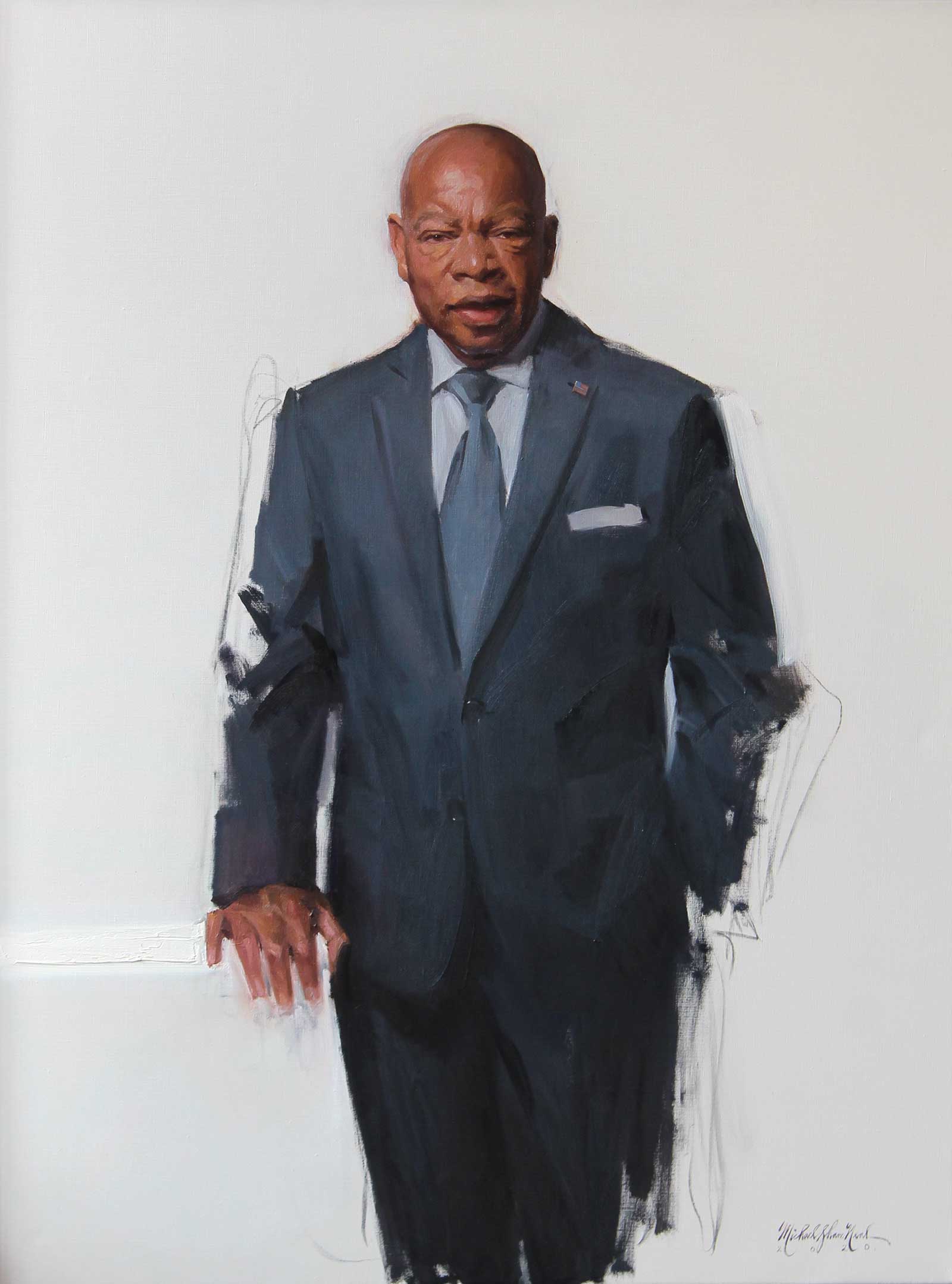 Michael Shane Neal (b. 1986), Congressman John Lewis, 2020. Oil on canvas, 48 x 36 in. National Portrait Gallery, Smithsonian Institution, Washington, D.C.Neal first visited Kinstler in his studio in 1996 and would return often as their friendship grew.
In a moving tribute to him, Neal wrote about visiting the studio after Kinstler’s death. “I slowly walked down the long, seemingly endless back corridor of the Arts Club to the studio annex in the rear of the building. As I walked, I reflected on the last few weeks. Earlier in the month, he’d been hard at work in his studio with several portraits on the easels, putting the finishing touches on them before their deliveries…I finally reached the elevator and took it to the 10th floor. The same elevator that carried countless politicians, U.S. presidents, celebrities and men and women from all walks of life to visit the studio and meet their portraitist. He enjoyed them all, and they in turn enjoyed him. Actors and entertainers like John Wayne, Katharine Hepburn, James Cagney, Christopher Plummer and Tony Bennett; U.S. presidents like Ronald Reagan and Gerald Ford—he painted eight in all; and over 50 government officials, hundreds of CEOs, philanthropists, astronauts, college presidents and the like.”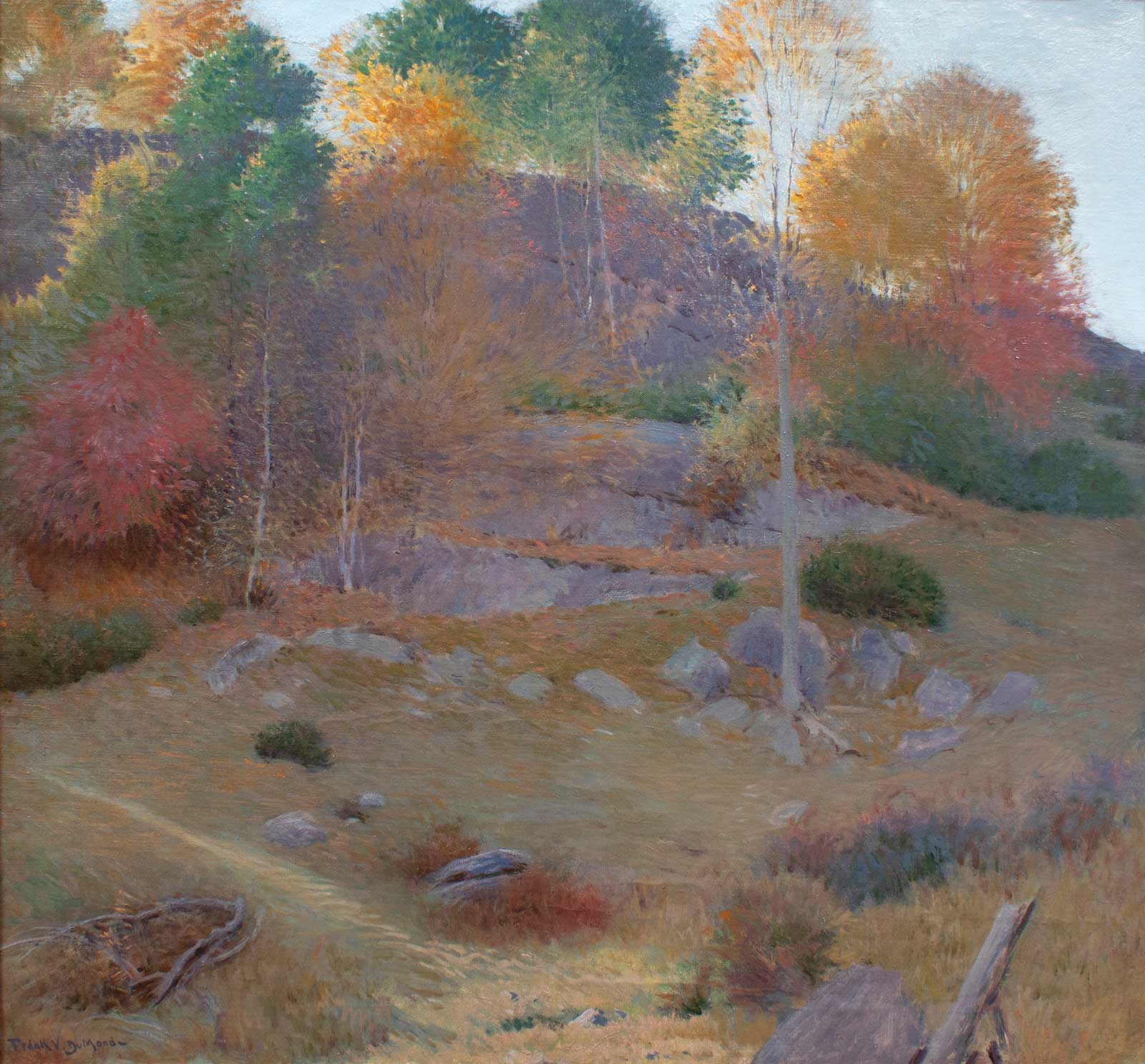 Frank Vincent DuMond (1865-1951), The Shadowed Vale. Oil, 32 x 34 in. Courtesy the MAW Gallery, Austin, TX.
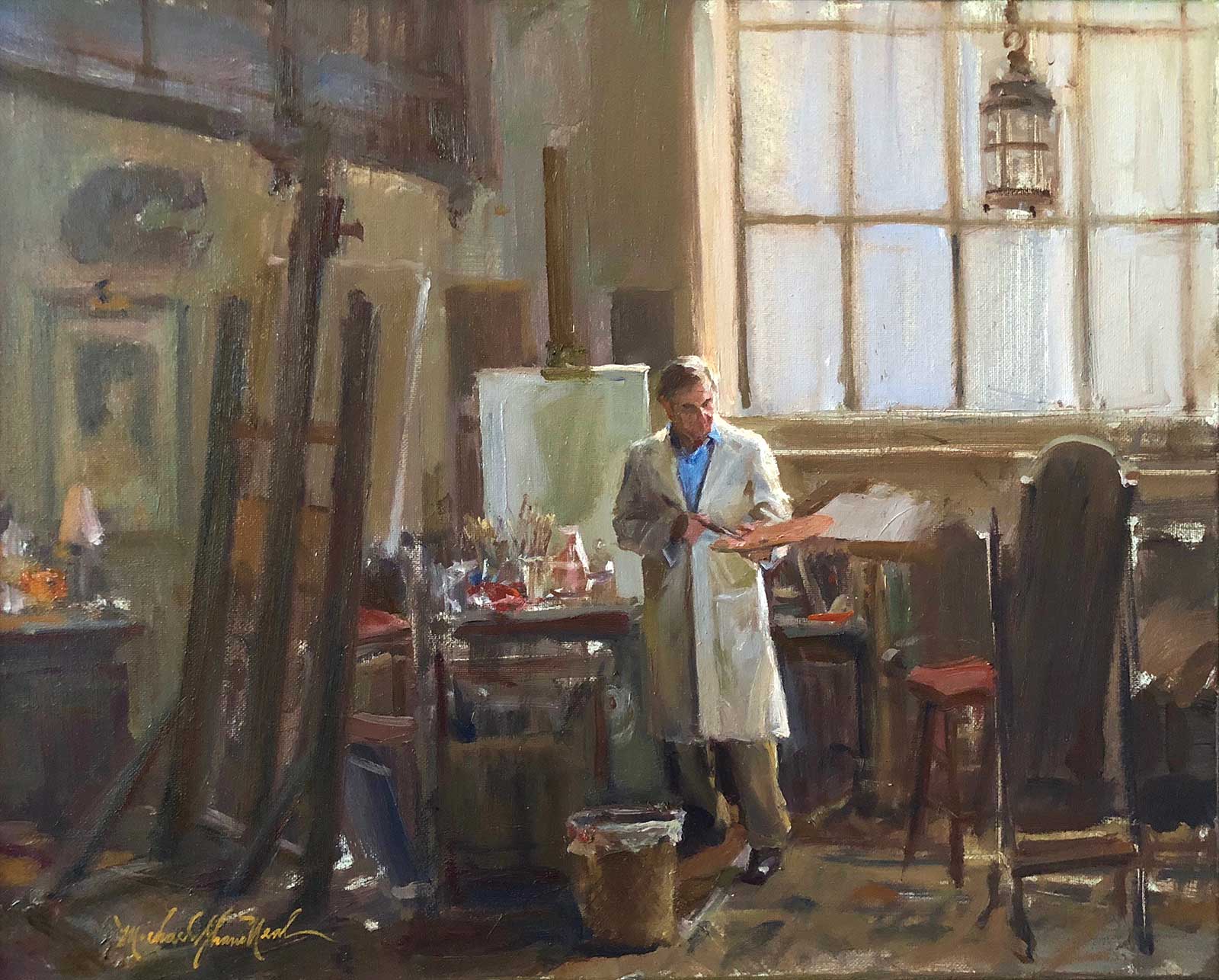 Michael Shane Neal (b. 1968), Everett Raymond Kinstler in his National Arts Club Studio, 2003. Oil on canvas, 16 x 20 in. Courtesy of Mrs. Peggy Kinstler.
Neal began painting full time when he was 21 and moved into his first studio on the eighth floor of the National Arts Club in 1984. Among the 100s of portraits he has painted, there are two I asked him to tell me about.
In 2008, he was commissioned to paint a portrait of Sandra Day O’Connor, the first woman appointed to the U.S. Supreme Court. She retired from the court in 2006 and that same year Arizona State University named its college of law after her. Justice O’Connor pronounced the portrait “superb.” Her judicial robes are draped over the back of her chair, symbolizing her having stepped down from the court. She also told Neal that since the portrait would be hung in a public space she didn’t want it to appear too serious and asked him to paint her smiling.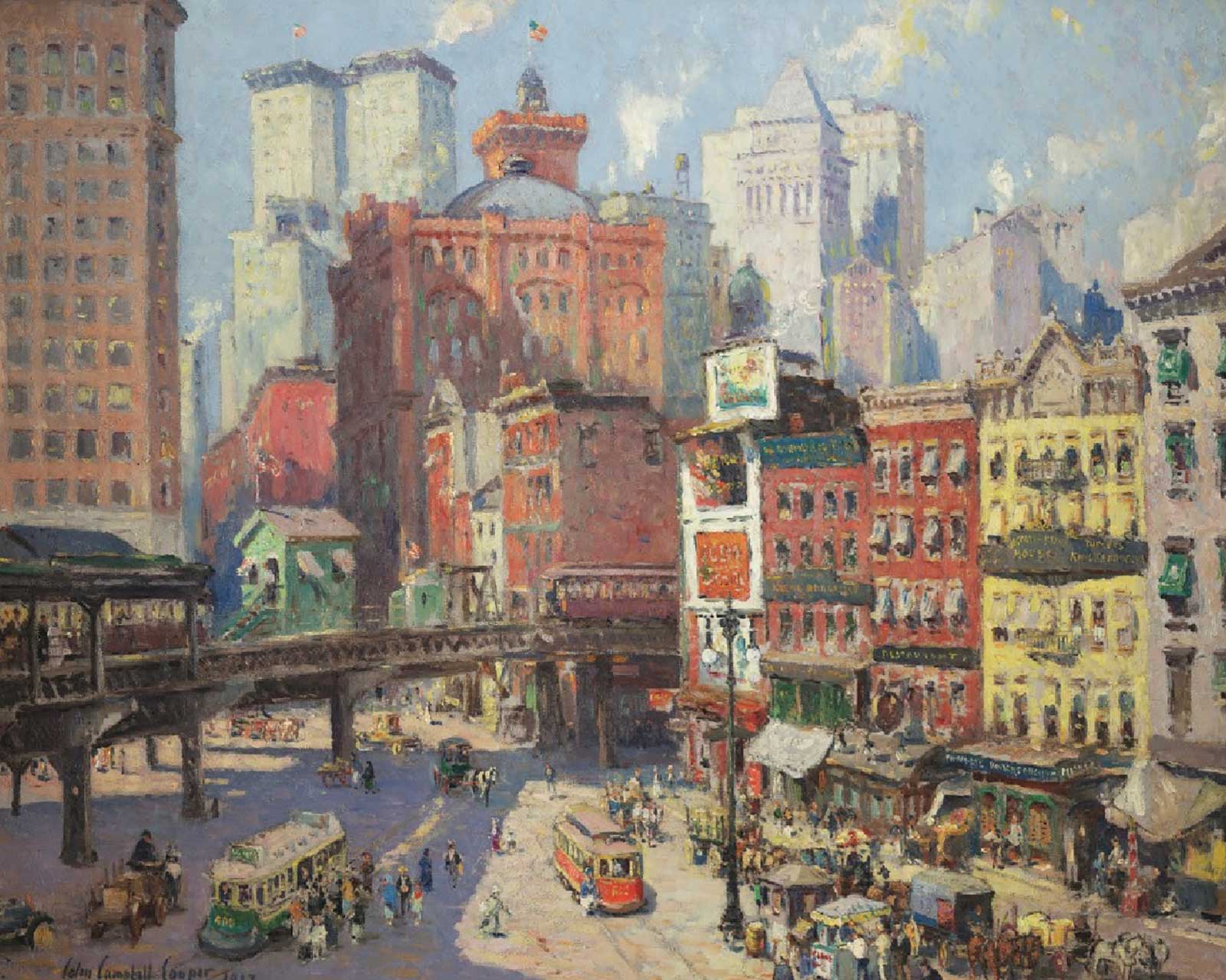 Colin Campbell Cooper (1856-1937), South Ferry, New York, 1917. From the National Arts Club Permanent Collection.
The O’Connor painting is what Kinstler would call “more fully realized” than Neal’s 2020 portrait of the late congressman John Lewis. “I was born in Nashville in 1968 only a few years after John Lewis had organized sit-ins and endured the first of his many arrests. My friend, the historian Jon Meacham, had introduced me to the congressman and I had painted a head and shoulders portrait of him for the Nashville Public Library Foundation. As I sat in his office, I looked at the memorabilia and thought about those Nashville connections. When he came in, I told him I had been reflecting on all that has changed in my lifetime. He said, ‘Yes. But there’s still a lot of work left to be done.’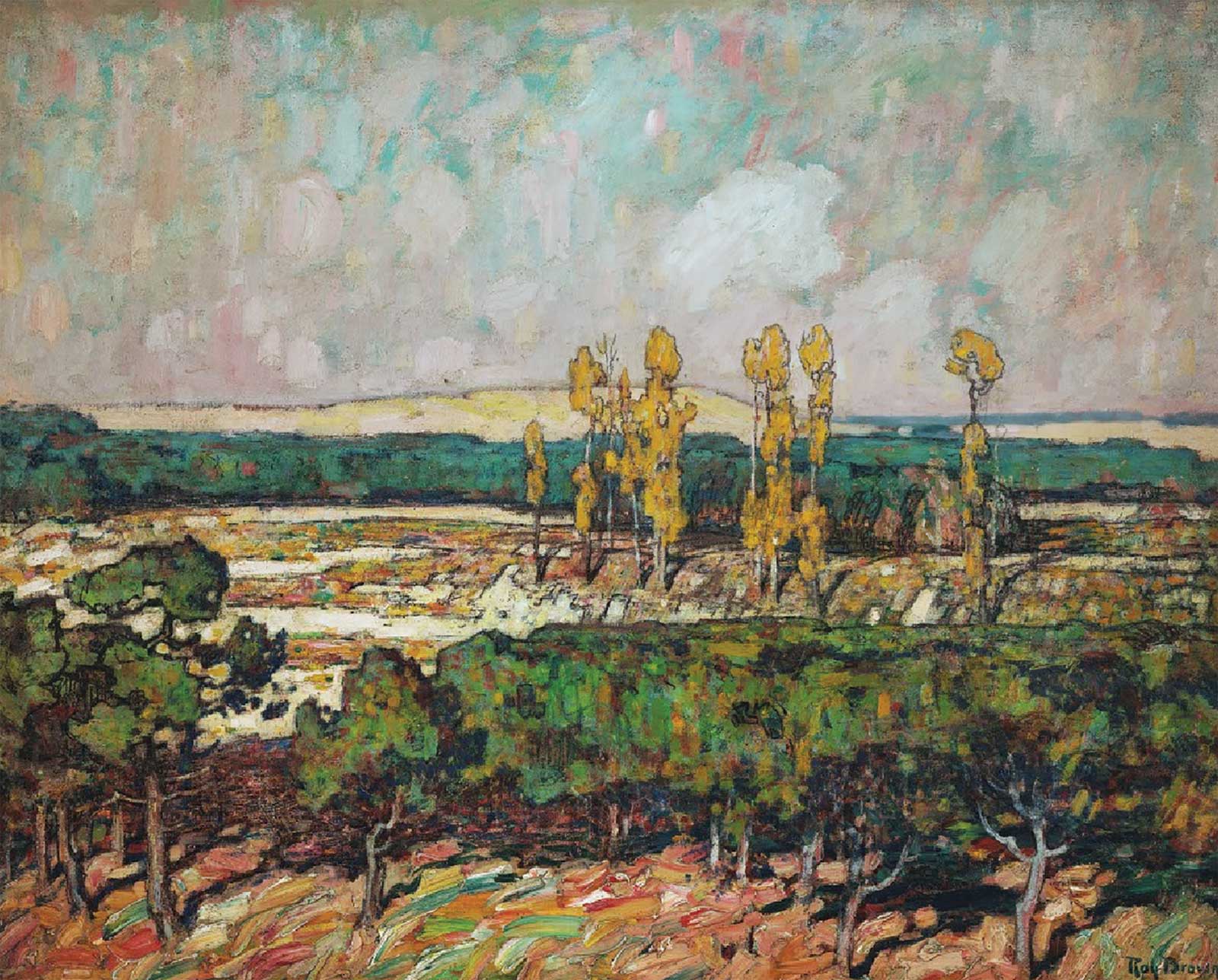 Roy Henry Brown (1879-1956), Sapins et Peupliers aux Dunes, 1910. From the National Arts Club Permanent Collection.“As I was sketching in charcoal on the white canvas, something told me not to stain the background as I sometimes do. I wanted the figure to contrast with the background. I didn’t quite finish the painting, allowing it to reflect the fact that although he had accomplished much, there’s still work to be done.” —
Powered by Froala Editor