An exhibition currently on view at the Saint Louis Art Museum celebrates the St. Louis region’s vibrant cultural history as Missouri recently marked 200 years of statehood. Within the exhibition, titled Art Along the Rivers: A Bicentennial Celebration, visitors can explore 156 objects produced or collected over the course of 1,000 years—items that were made or collected within the confluence region surrounding St. Louis. 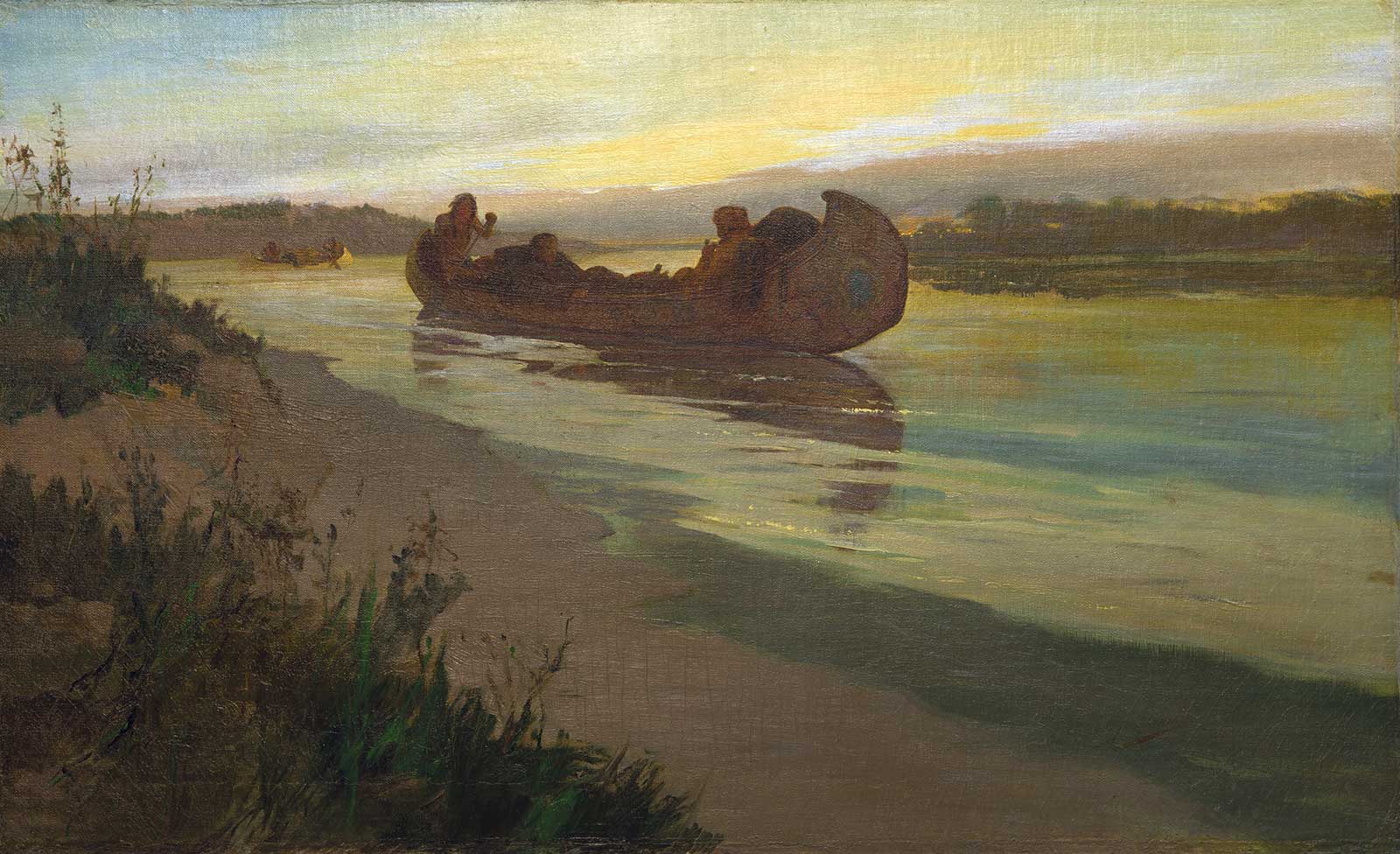 Oscar E. Berninghaus (1874-1952), Marquette and Joliet on the Mississippi, 1907. Oil on canvas, 22 x 36 in. Saint Louis Art Museum, Gift of August A. Busch Jr. 151:1976.
The exhibition has five main thematic sections: Art at the Confluence, Art on Display, Art in Production, Art Communities and Art as Advocate. Paintings, sculptures, photographs, furniture, ceramics, metals and textiles that have rarely been considered in connection with one another come together in vibrant conversation during this monumental exhibition.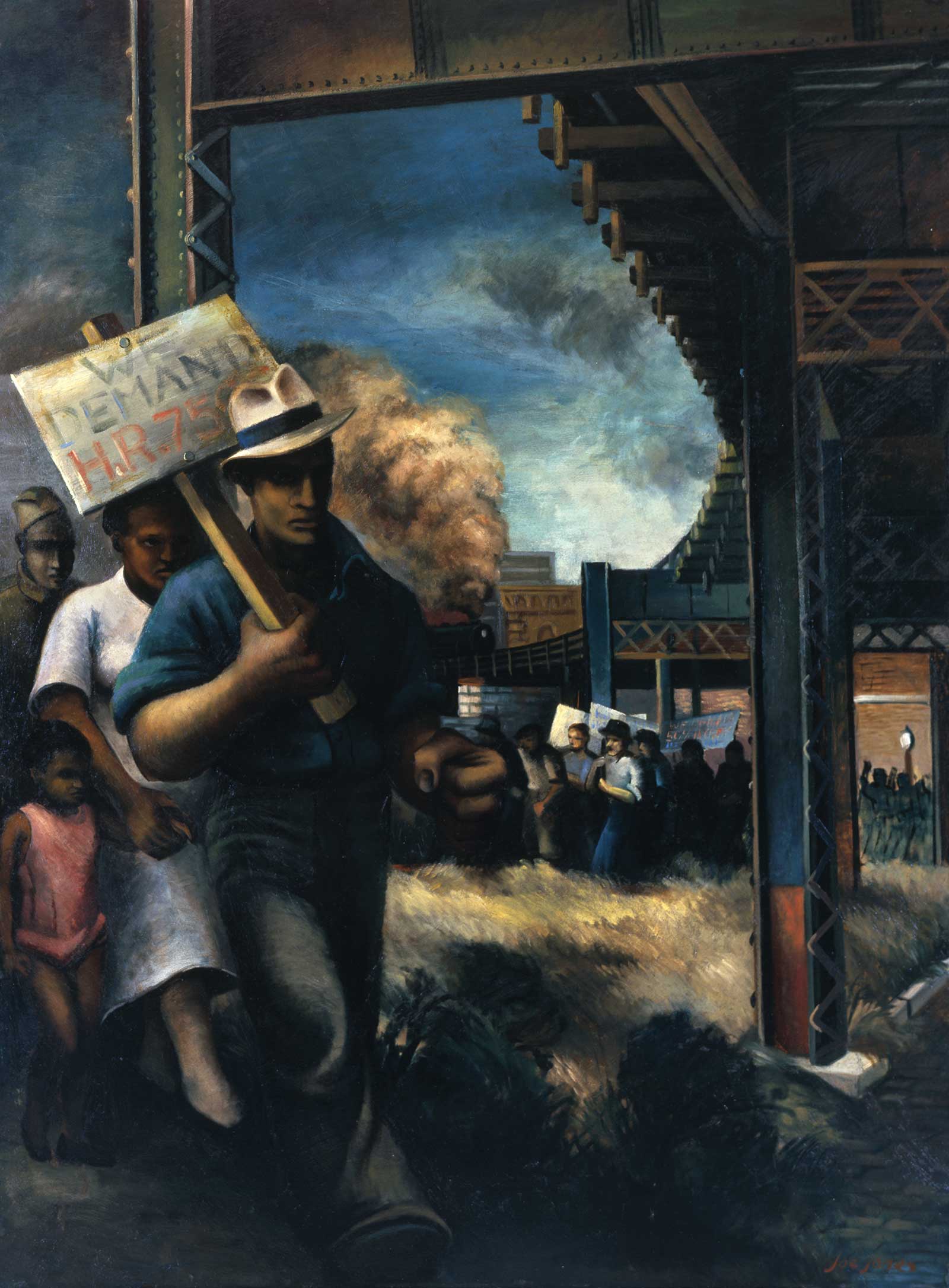 Joe Jones (1909-1963), We Demand, 1934. Oil on Masonite, 48 x 36 in. Loan courtesy The Butler Institute of American Art, Gift of Sidney Freedman 2021.3; © Heirs of Joe Jones.
“Though the confluence region is small, it has played an outsized role in the history of North America, due to the confluence of rivers and major trails and routes within its borders. The three most powerful rivers in North America—the Mississippi, Missouri and Ohio—all meet within the region,” says Amy Torbert, co-curator and Andrew W. Mellon Foundation Assistant Curator of American art. Torbert notes that Route 66 cuts a path running east/west through its center, with the Trail of Tears crossing the Southern portion. The four most vital overland routes to the West—the Santa Fe, Oregon, Mormon and Overland trails—departed or were supplied from the region’s center.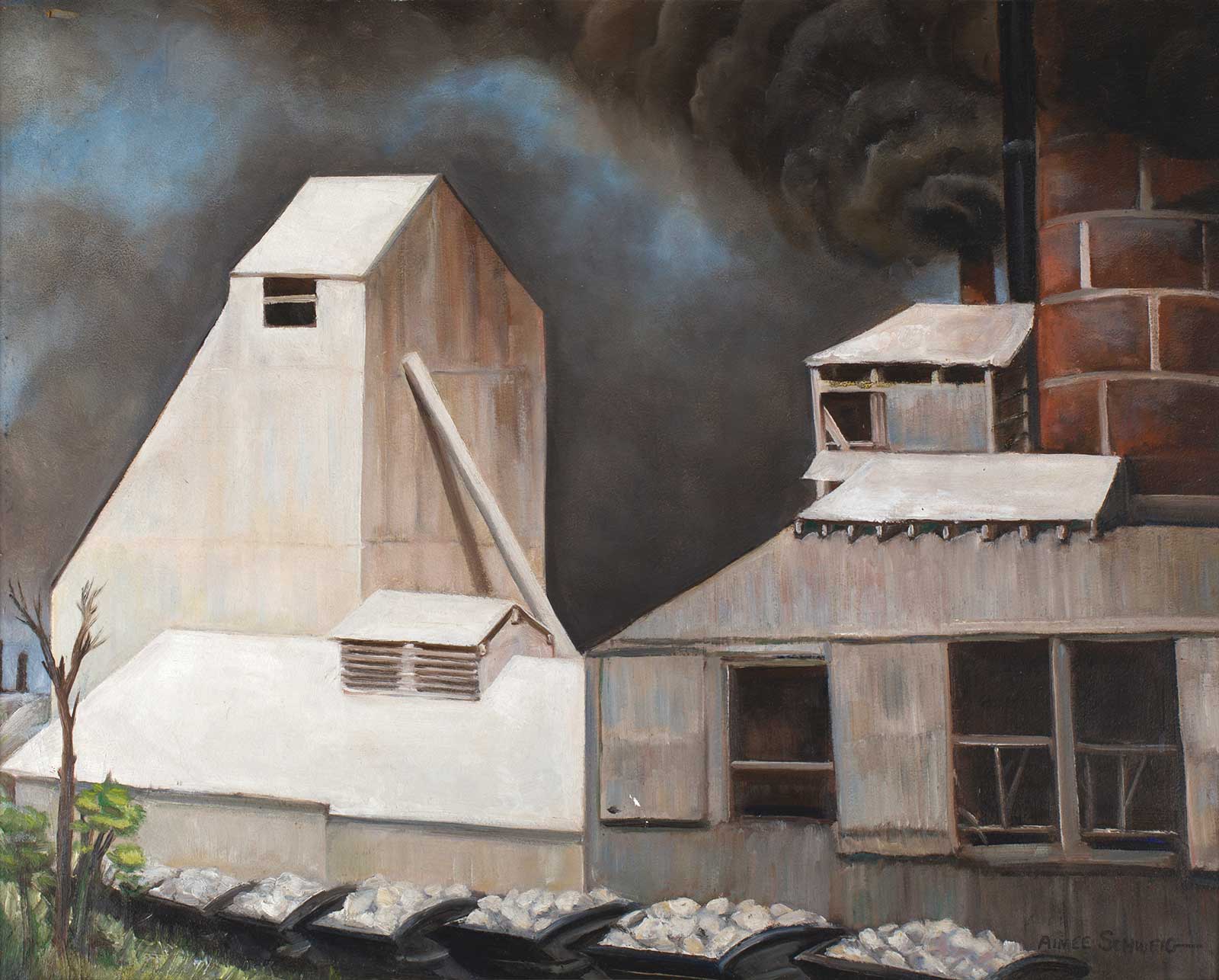 Aimee Schweig (1891-1987), Lime Works in Ste. Genevieve, Missouri, 1936. Oil on Masonite panel, 24 x 30 in. Saint Louis Art Museum, Collection of GFWC Woman’s Club of Ste. Genevieve 2021.91; Courtesy of Suzanne Langsdorf and Alexandra Langsdorf Shoemaker, granddaughters of Aimee Schweig.
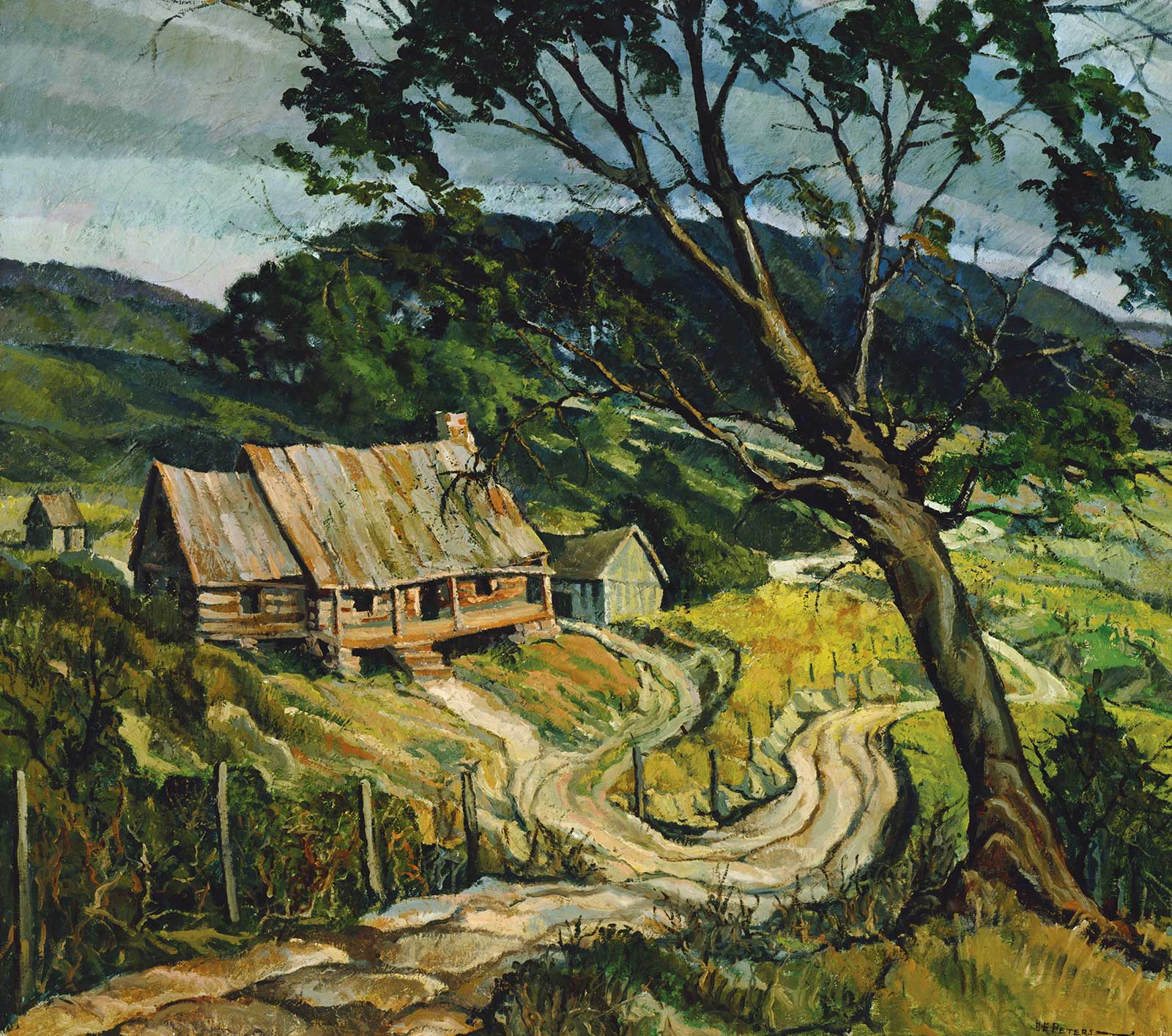 Bernard Peters (1893-1949), Landscape, ca. 1930. Oil on canvas, 36 x 39½ in. The John & Susan Horseman Collection, 2021.6.
“To demonstrate their relationships, Art Along the Rivers is arranged thematically, rather than by culture or chronology. These thematic sections reveal how geological and cultural confluence shaped the content and form of the region’s objects, and the surprising variety of works of art created, collected and exhibited in the area,” adds Melissa Wolfe, curator of American art and co-curator of Art Along the Rivers. “They address how artisans over centuries used the region’s natural resources to produce both luxury and utilitarian commercial objects. The exhibition also explores the area’s artistic communities as well as objects that have advocated for political, social and environmental viewpoints. Contemporary art is brought into the thematic sections as a dynamic response to the exhibition’s historic objects and contexts.”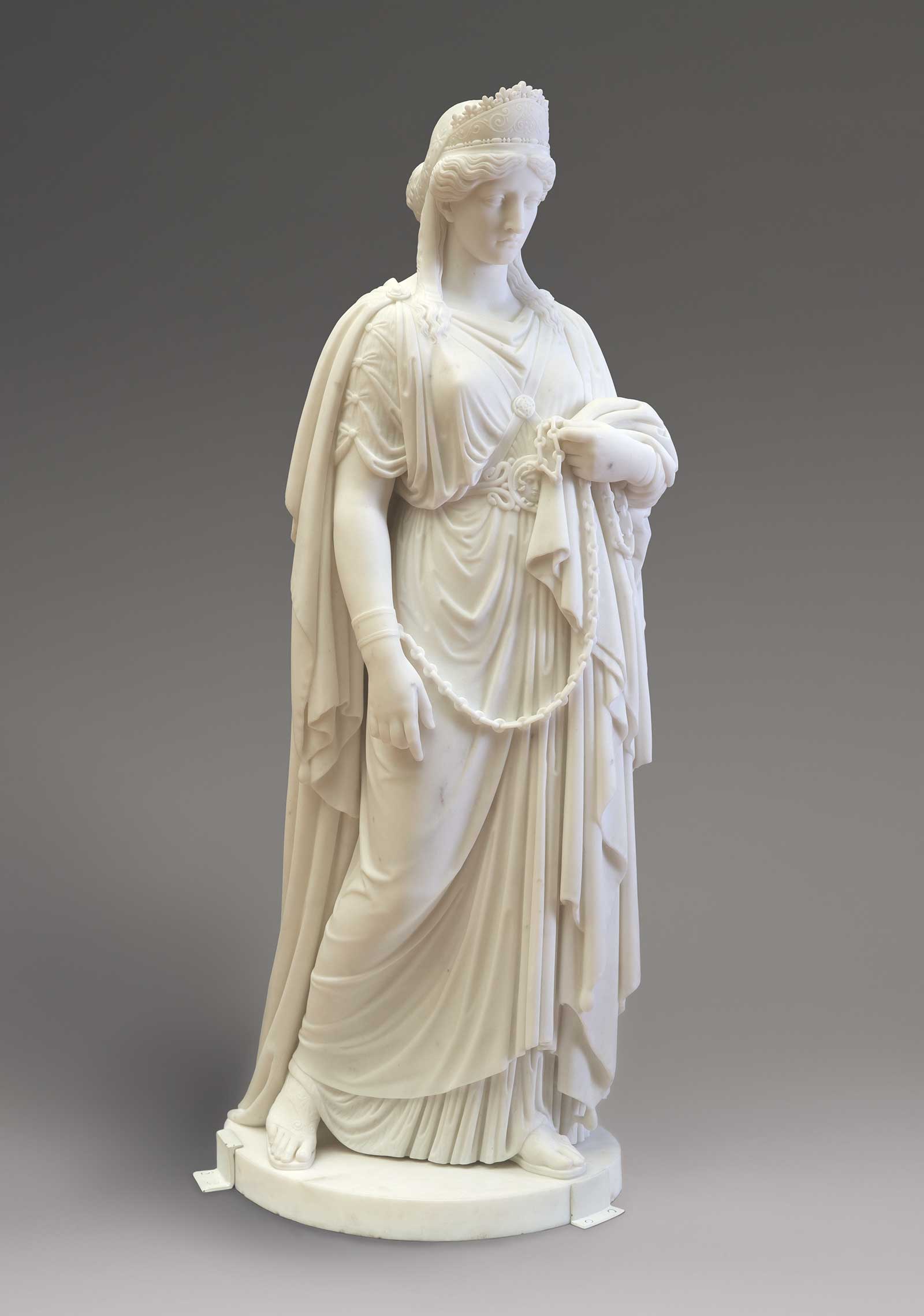 Harriet Goodhue Hosmer (1830-1908), Zenobia in Chains, ca. 1859. Marble, 44¼ x 14 x 18 in. Saint Louis Art Museum, American Art Purchase Fund 19:2008.
A few highlights of historic American works among the many phenomenal objects in the exhibition are Edmonia Lewis’ 1874 marble Bust of James Peck Thomas from the Art on Display section, as well as Thomas Martin Easterly’s daguerreotype Robert J. Wilkinson, Barber of the Southern Hotel from around 1860, which can be seen in the Art in Production section. 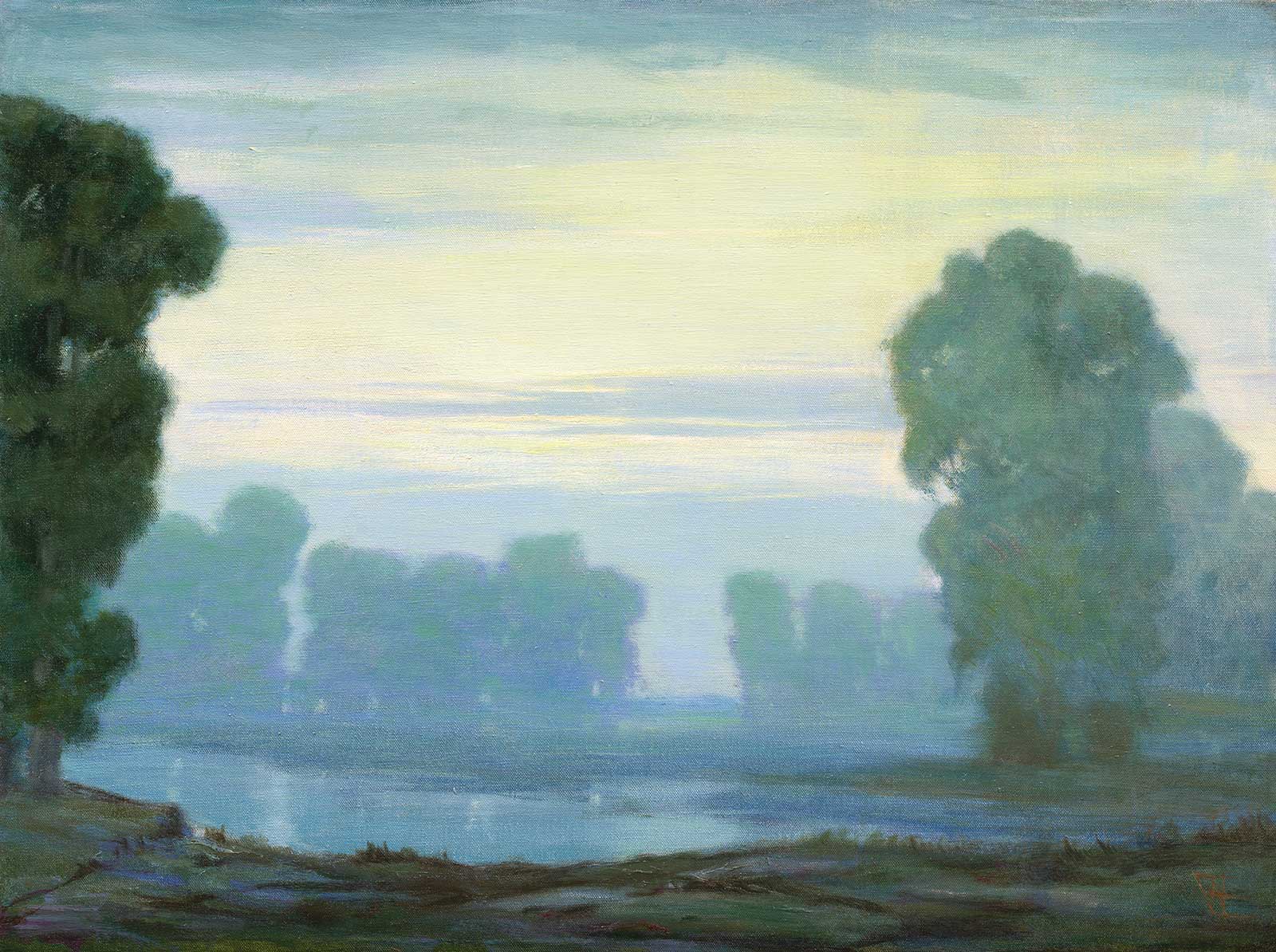 Edmund Henry Wuerpel (1866-1958), Mists o’ The Moors, ca.1918. Oil on canvas, 20 x 26 in. Susan and Stephen Hunkins 2021.8.
Torbert says that for visitors who make their way to Art Along the Rivers, they hope they “make new discoveries about the region in which they live [and] to think in broader ways about art-making...because art can connect us to different communities and times that might give us insight to our own time and communities.” Wolfe continues, “In understanding [these connections], the visitor might gain greater appreciation for the place where they live. The visitor will understand the way in which art has played a significant role in the conflicts and achievements of this region, leading to a better understanding of its similar role in the present.”
Art Along the Rivers remains on view through January 9, 2022. —
Powered by Froala Editor