
Art collecting for Thomas May began in 1961, with his purchase of Scene of Wallstreet, an iconic painting by Guy Wiggins. Sixty years since then, the May collection has grown to include an impressive array of American fine art with the help of wife, Eleanor May, along with the couple’s four children, and is now on display for its first standalone exhibition ever with the Dallas Museum of Art. Pursuit of Beauty: The May Family Collection, highlights more than 24 works in oil paintings, watercolor and sculpture, spanning about a century.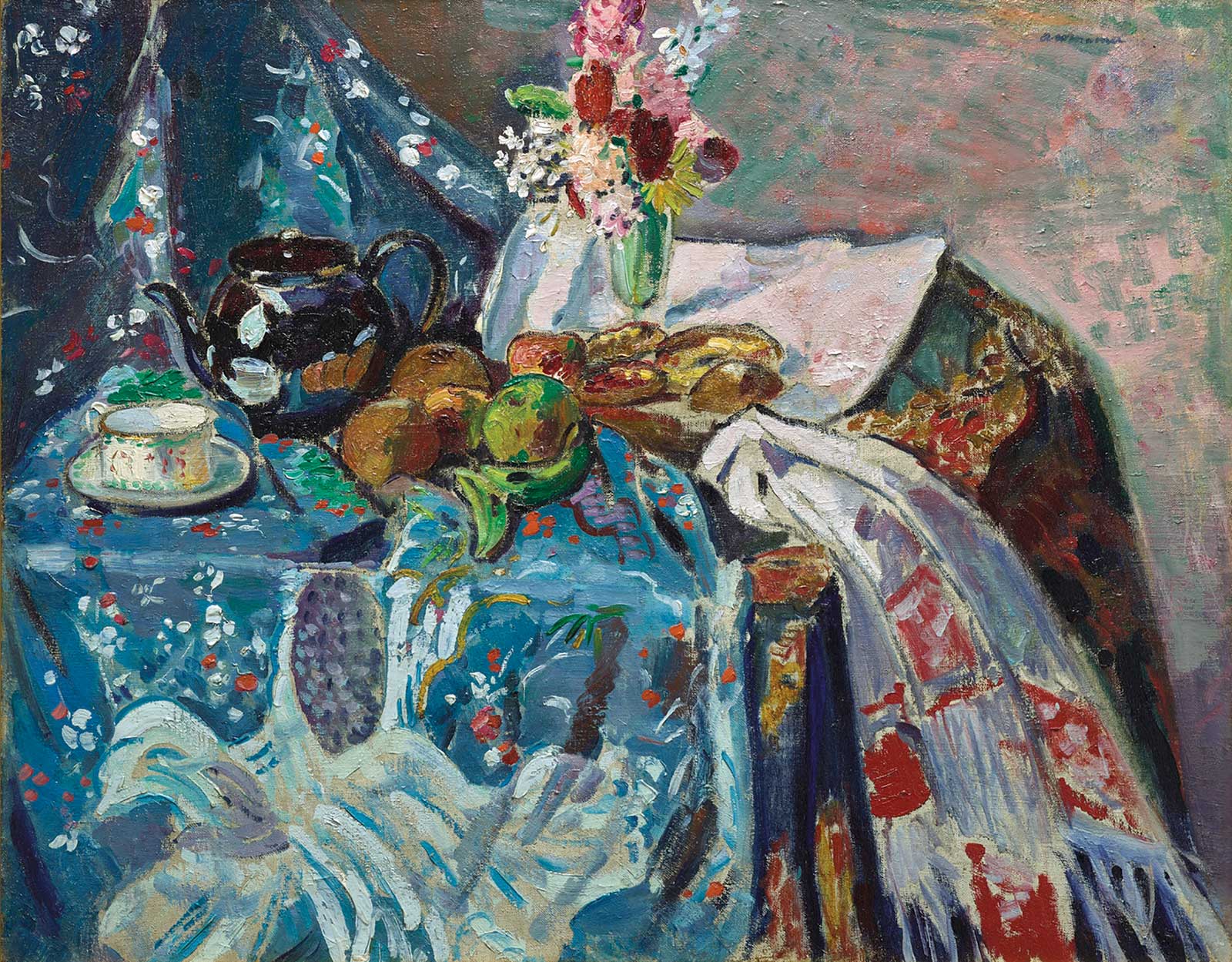 Alfred Henry Maurer (1868-1932), Tabletop Still Life, 1913. Oil on canvas. The Collection of Eleanor and C. Thomas May, Jr.
“It’s a really strong collection that I’ve always admired and curators who preceded me admired as well,” says Sue Canterbury, DMA’s Pauline Gill Sullivan Curator of American Art. “We’ve frequently exhibited parts of the collection over the years, but there’s not been an exhibition overall. We wanted to celebrate Tom as a collector and supporter of the museum.”
Upon diving into the art collecting world in 1961, Tom mainly concentrated his efforts on Western works, but the collection shifted. “It became more cohesive and went more toward moments in realism and American impressionism,” Canterbury says. “This shift could partly be due to one’s eyes developing in terms of quality…[Tom] generally went with his gut feeling about the work he purchased, and according to him, he never relied on people for advice. His thing was to always ask, ‘Do I love it,’ while also paying attention to condition and quality.”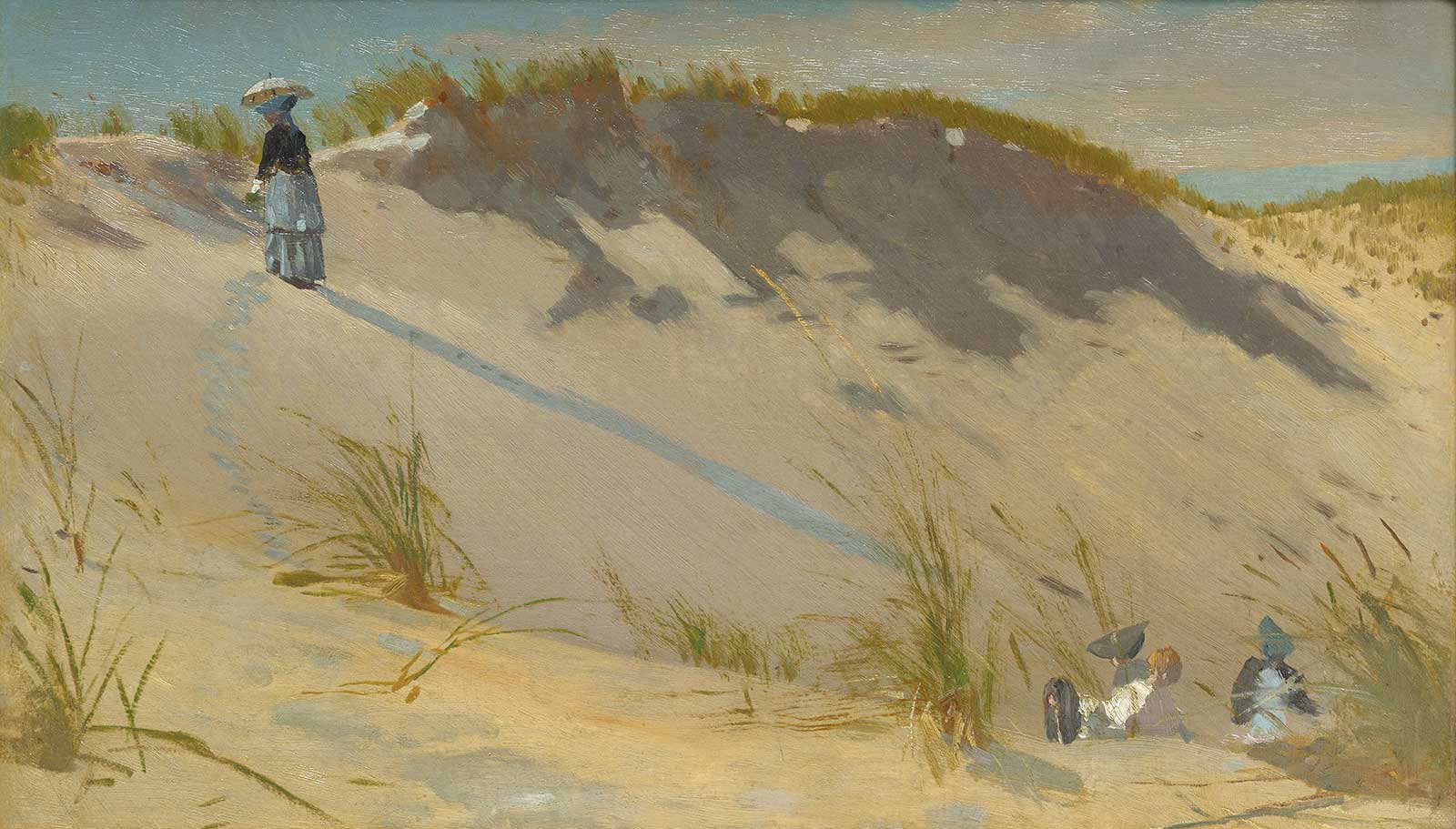 Winslow Homer (1836-1910), The Sane Dune, 1871-1872. Oil on canvas. The Collection of Eleanor and C. Thomas May, Jr.`
It could be that Tom was also affected by the words of Sir Caspar Purdon Clarke, a former director of the Metropolitan Museum of Art, who had written an essay about why people should collect American art. He expressed how American’s normally collect art from other nations but rarely from their own. “As a former Naval officer,” says Canterbury, “Tom’s reaction to what he may have read and his service with the Navy led him to collect art of his own country.”
Canterbury notes that there’s a certain feeling evoked by the collection overall, which helped develop the title for the show. “Pursuit of Beauty is about the chase and the forming of a collection and part of that pursuit is shaping it in terms of quality and cohesiveness as a collection,” Canterbury explains. “One cohesive aspect of this collection, is the overarching sense of quiet contemplation. Whether it’s in portraiture, landscape scenes or figures, they all have this quiet beauty to them.” 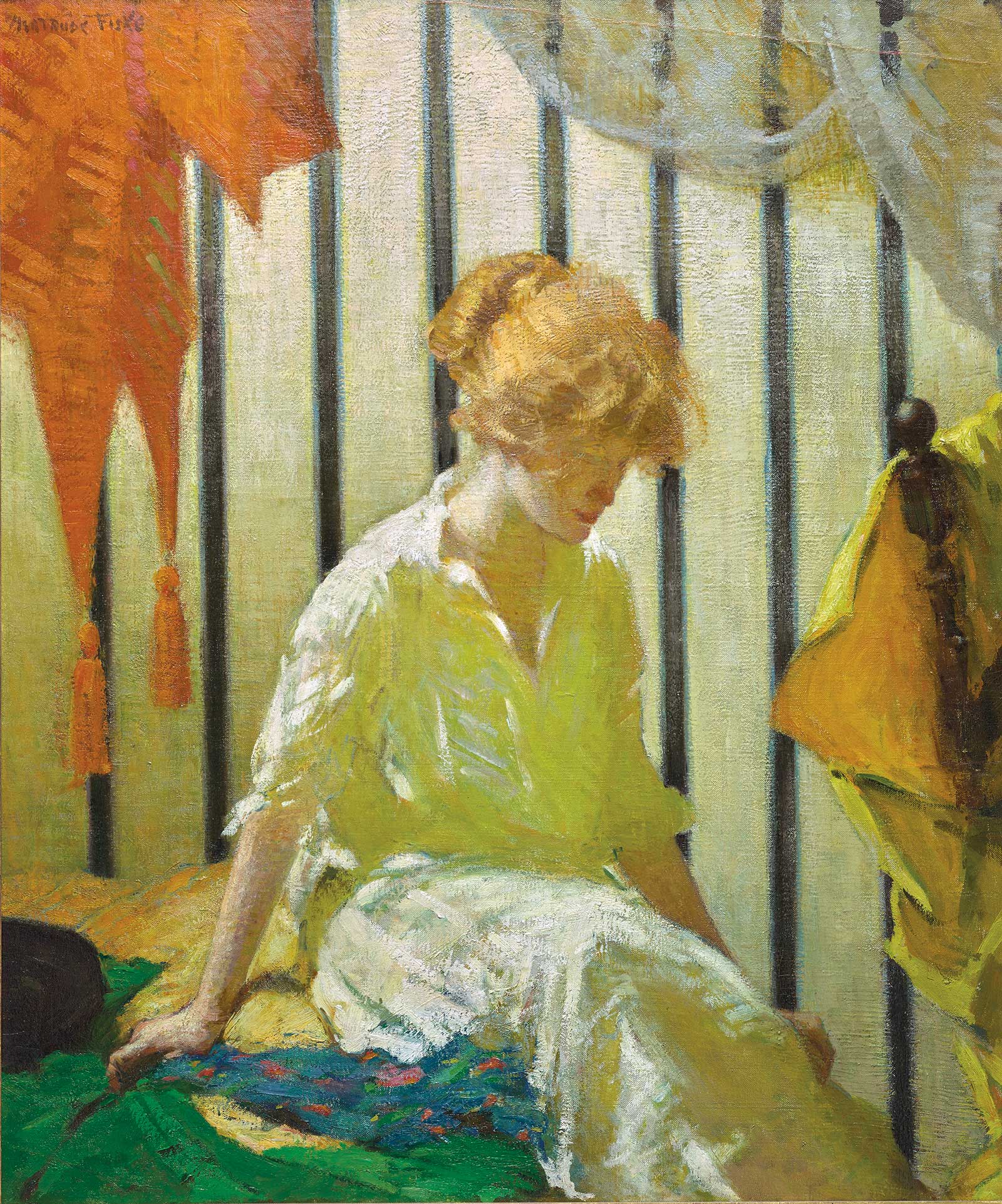 Gertrude Fiske (1879-1961), Contemplation, before 1916. Oil on canvas. The Collection of Eleanor and C. Thomas May, Jr.
This is most definitely found in pieces such as The Sane Dune, 1871-72, by Winslow Homer. It’s a simple composition of a beach scene, specifically Coffins Beach in Gloucester, Massachusetts, with a high horizon line that helps the viewer focus on the few characters depicted. “There’s children in the lower right and a woman making her path diagonally away from the water, but casting a long blue-gray shadow,” says Canterbury. “You can see the footprints in the sand leading toward the edge of the painting. The artist implicates the viewer being there.”
A little bit later in the collection timeline is the more modern Tabletop Still Life, a 1913 work by Alfred Henry Maurer. “The artist had already explored styles such as cubism and expressionism,” says Canterbury, “and in this piece, you see the influence of Henri Matisse, but this is more realistic than what Matisse would do. There’s a variety of pattern that pulls your eye around the work.”
From around the same time period, viewers will also take splendor in portrait pieces such as Gertrude Fiske’s Contemplation, 1916, and John Singer Sargent’s 1914 work Sylvia Harrison.
The exhibition at its core, is more about collecting; “Why someone does it and the rewards it has to an individual and how it enhances their life,” says Canterbury, “But it’s also how they went about it and built the collection.” —
Powered by Froala Editor