Sam Hyde Harris was born in England in 1889 and came to the U.S. when he was 15, eventually becoming a famed California plein air landscape painter. He was a master at atmospheric perspective as in his painting Old Chavez, circa 1938. The tidy village appears in the foreground and spread through the ravine. Harris’ decisively applied brushstrokes define the buildings in the foreground with sheets drying on the clothesline and then imply distance with the softening of color and the lessening of the details of the city in the distance.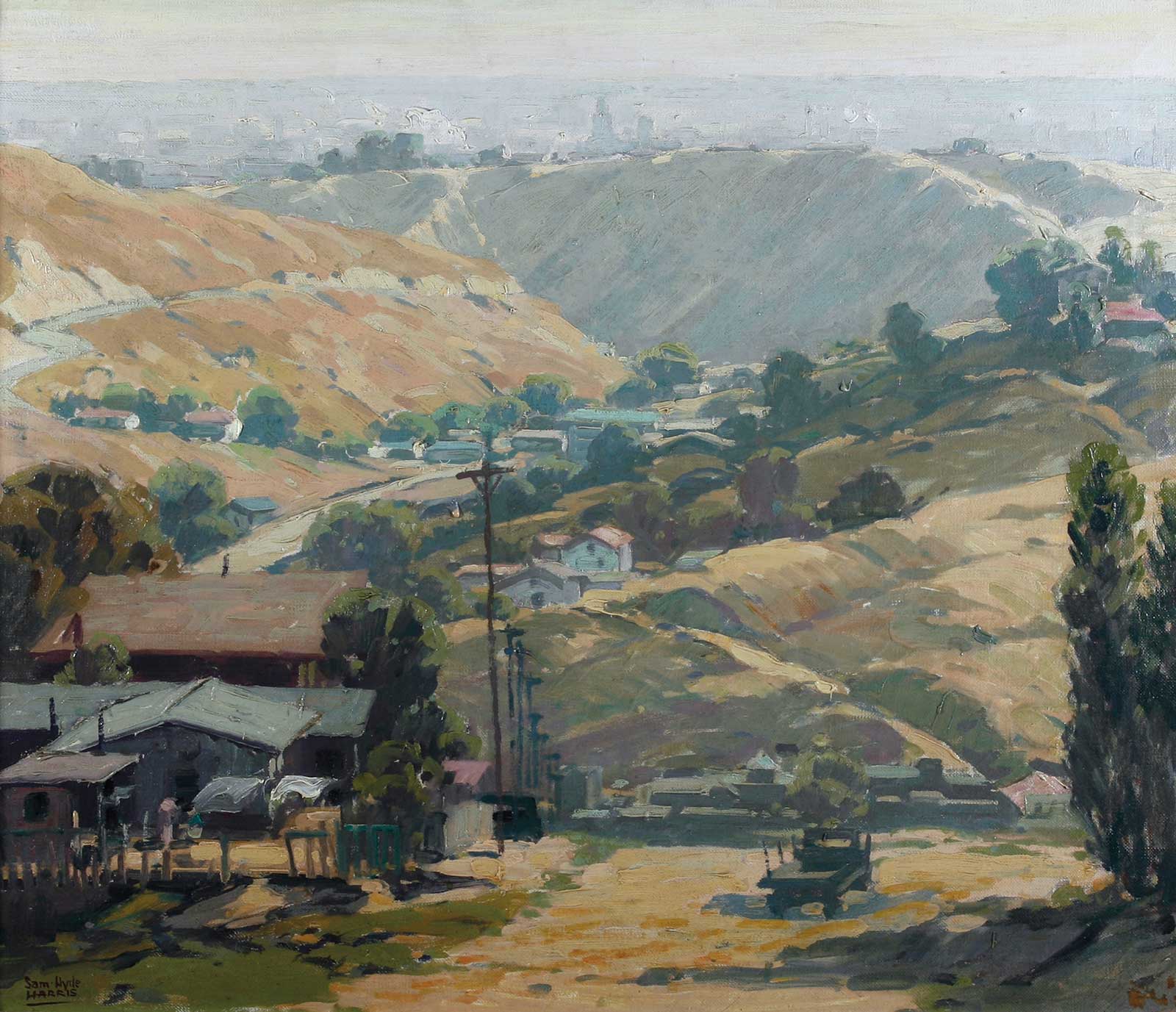 Sam Hyde Harris (1889-1977), Old Chavez (Chavez Ravine neighborhood in the City of Los Angeles), ca. 1938. Oil on canvas, 25 x 30 in. Photo: Martin A. Folb, PhD.
Harris was known for his impressionistic scenes of California but was also a less-known, successful commercial artist, producing bold, graphic posters for the Santa Fe, Southern Pacific and Union Pacific railroads as well as Gilmore Red Lion Gasoline.
Maurine St. Gaudens and Joseph Morsman have assembled the exhibition Sam Hyde Harris, Seeing the Unusual at Casa Romantica in San Clemente, California, opening November 19 and continuing through February 27, 2022.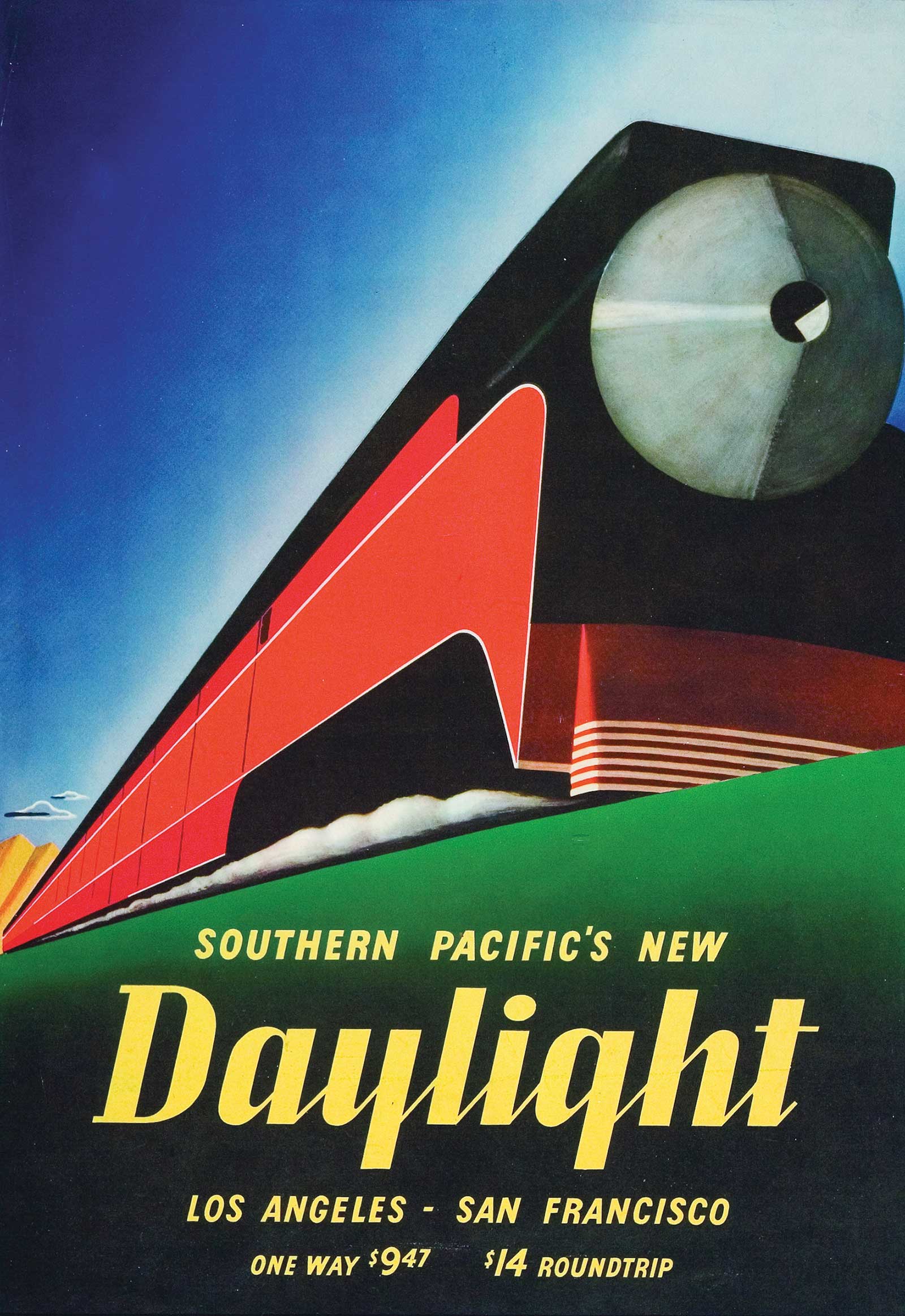 Sam Hyde Harris (1889-1977), Southern Pacific’s New Daylight, commercial advertising for the Southern Pacific Railroad, 1937. Original full size promotional lithograph poster. Collection of Charles N. Mauch. Photo: Martin A. Folb, PhD.
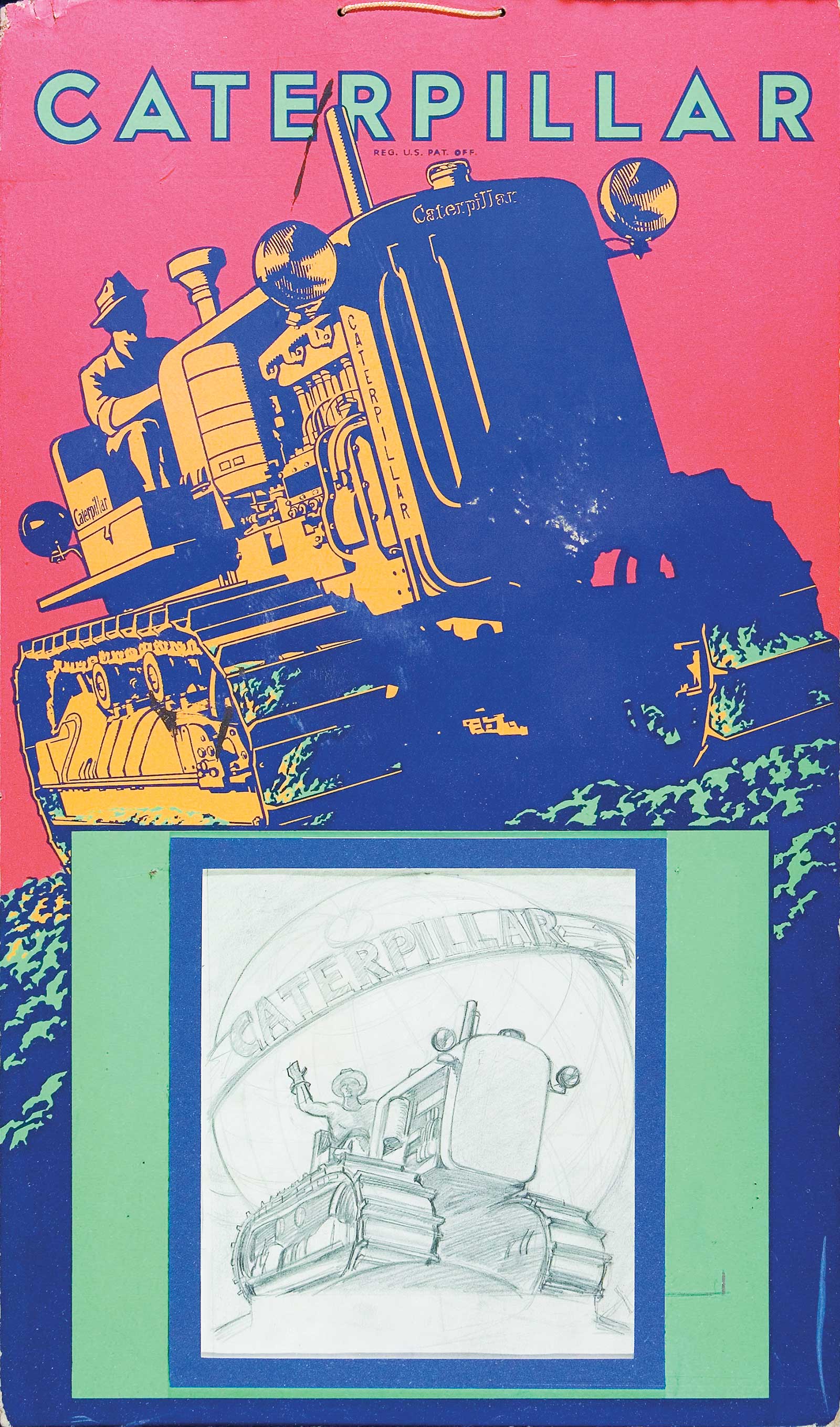 Sam Hyde Harris (1889-1977), Caterpillar, commercial advertising for the Caterpillar Tractor Company, ca. 1938. Original promo calendar minus calendar pad presented with original concept design pencil sketch. Collection of Charles N. Mauch. Photo: Martin A. Folb, PhD.
More than 30 years ago, St. Gaudens was hired by the artist’s widow to catalog his estate. Discovering a trove of original paintings and posters in a storage area beneath a staircase, she says, “It wasn’t until I fully explored the decade’s worth of work, which I found in his studio, that I realized his enormous contribution to 20th-century commercial advertising.” The title, Seeing the Unusual, refers to the revelation of this unexpected aspect of Harris’ career.
The wealth of material discovered in his studio includes sketches for poster designs. The curators have mounted a sketch with the final Caterpillar poster to highlight his design process.
“Throughout the better part of the 20th century,” St. Gaudens explains, “Harris’ commercial designs shaped the consciousness of early- to mid-20th-century consumers and travelers. This is most often seen in the colorful iconic designs he created from the 1920s to the 1950s…The opening of the 20th century saw the development of a growing middle class, an increase in leisure and vacation time and the rise in competition from the automobile, prompting the railroad to increase its network of ticket offices and to accelerate the marketing of its product, with the rallying cry, ‘Take the train.’ Continuing the traditions of earlier Santa Fe Railway’s commercial artists, Harris developed a style and design distinctly his own by 1925, which used brilliant red, blue and yellow highlights to dramatize his subjects.”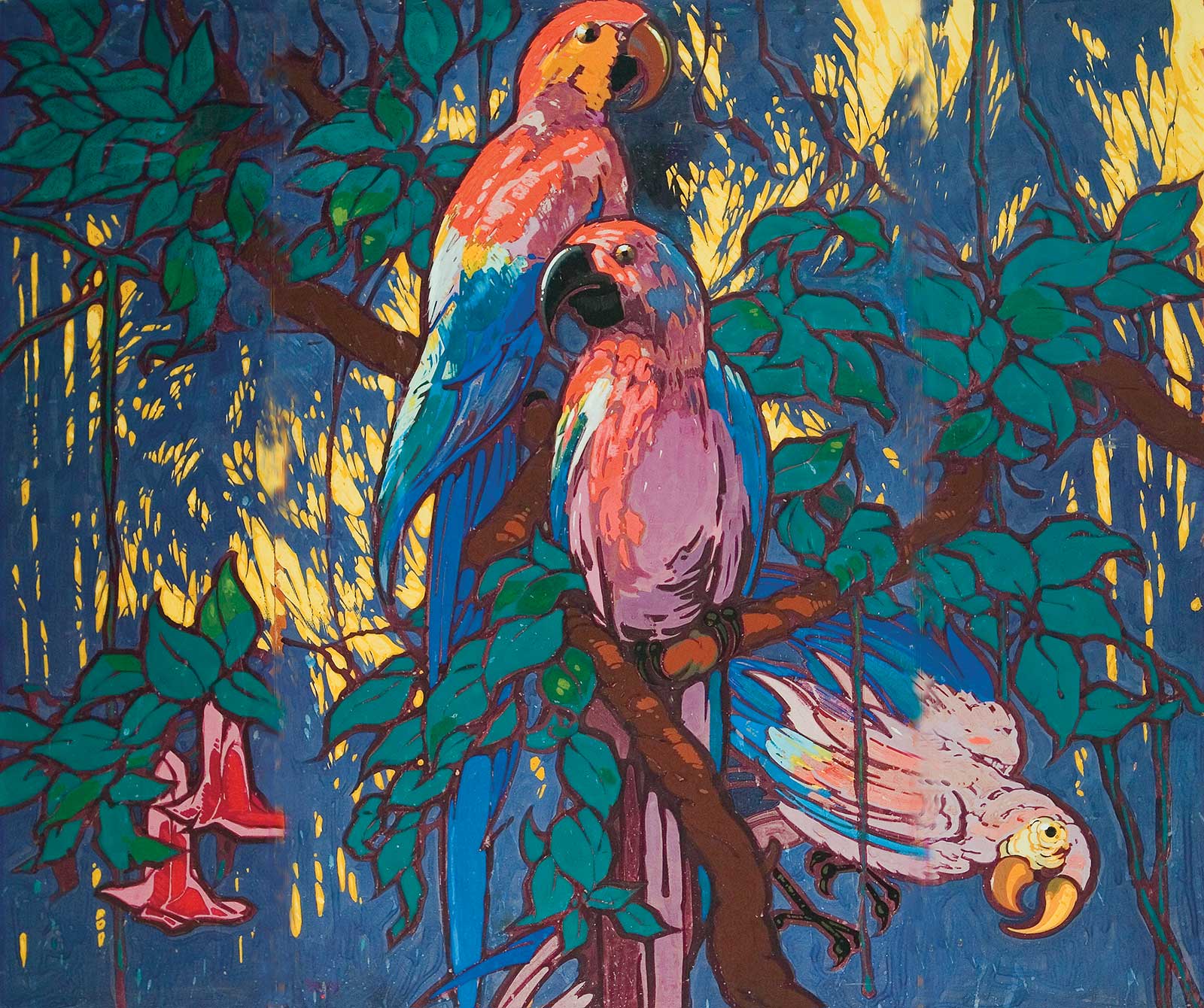 Sam Hyde Harris (1889-1977), Parrots, ca. 1945. Tempera on heavy Epson board. Collection of Harris Estate. Photo: Martin A. Folb, PhD.
She continues, “His iconic art deco themed Southern Pacific’s New Daylight poster has become one of the most recognizable images of this art form and one that has become highly praised by railroad and design enthusiasts alike.” —
Powered by Froala Editor