N.C. Wyeth (1882-1945) began painting in Maine in 1910 and bought an old house in Port Clyde that would become his family’s summer home for decades. He wrote to his son Andrew (1917-2009), “One of my great and blessed relaxations is to concentrate upon any chance detail with remote Port Clyde and sublime sea that bathes it shores even the imaged sight of a small ordinary wave, glass-clear and jewel green, gliding over the smoothed surface of a gently shelving shore.”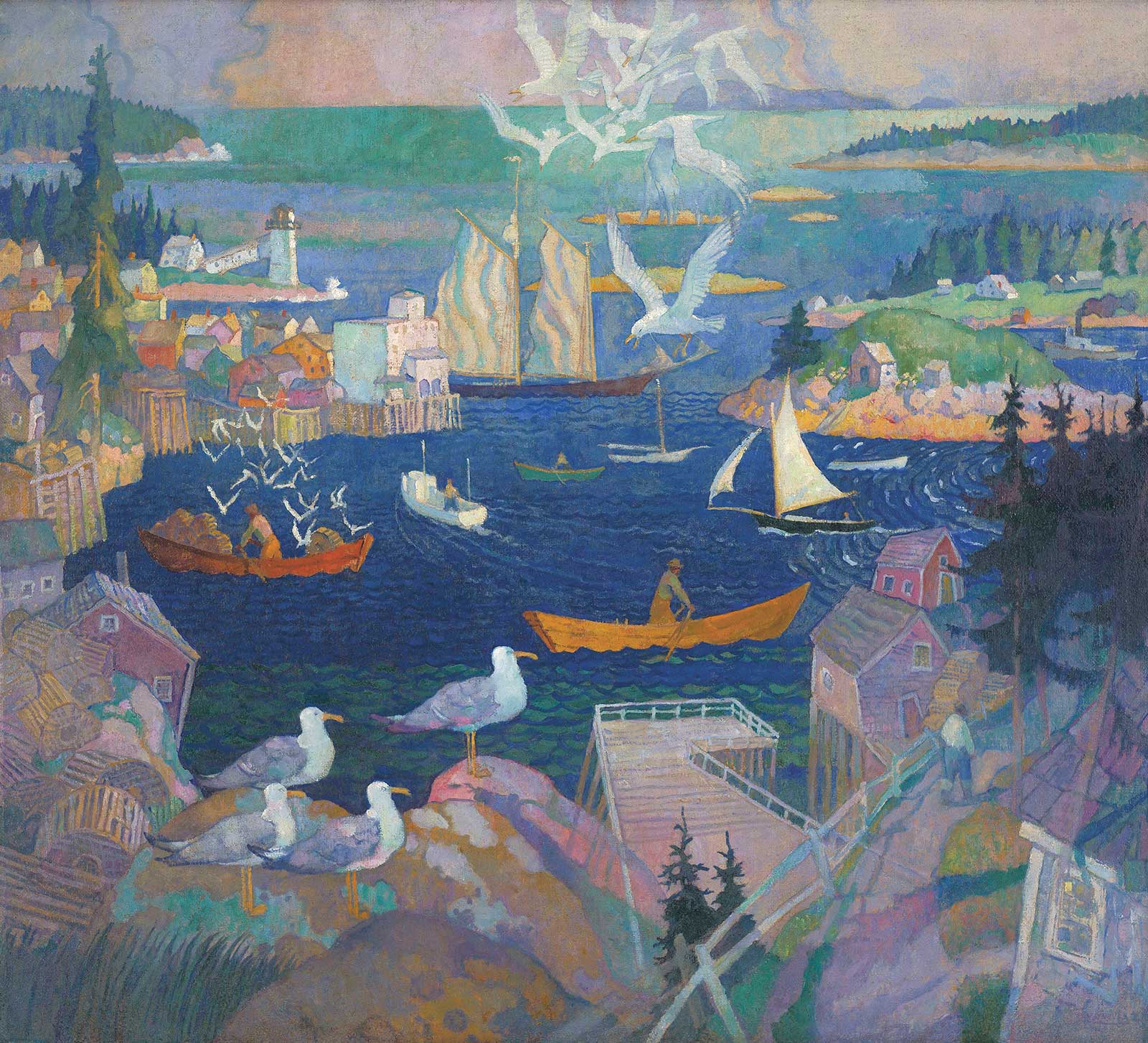 N.C. Wyeth (1882-1945), The Harbor at Herring Gut, 1925. Oil on canvas, 43 x 481⁄8 in. Bequest of Betsy J. Wyeth, 2021.
Vacations in Maine provided a respite from his high-pressure career as an illustrator. He had completed his now famed illustrations for Robert Louis Stevenson’s Treasure Island in 1911, as well as countless magazine commissions. In Maine he was free to pursue his own interests, free to experiment, and free to take his time without having to meet deadlines.
His painting The Harbor at Herring Gut, 1925, is an amalgam of motifs from Port Clyde that he exhibited in the 121st Annual Exhibition at the Pennsylvania Academy of the Fine Arts in 1926. It has the high chroma of the Fauves, the aerial perspective of 19th-century paintings, the false perspectives of American naïve paintings and a nod to American modernists.
Andrew and his wife, Betsy James Wyeth (1921-2020), kept the painting in their personal collection.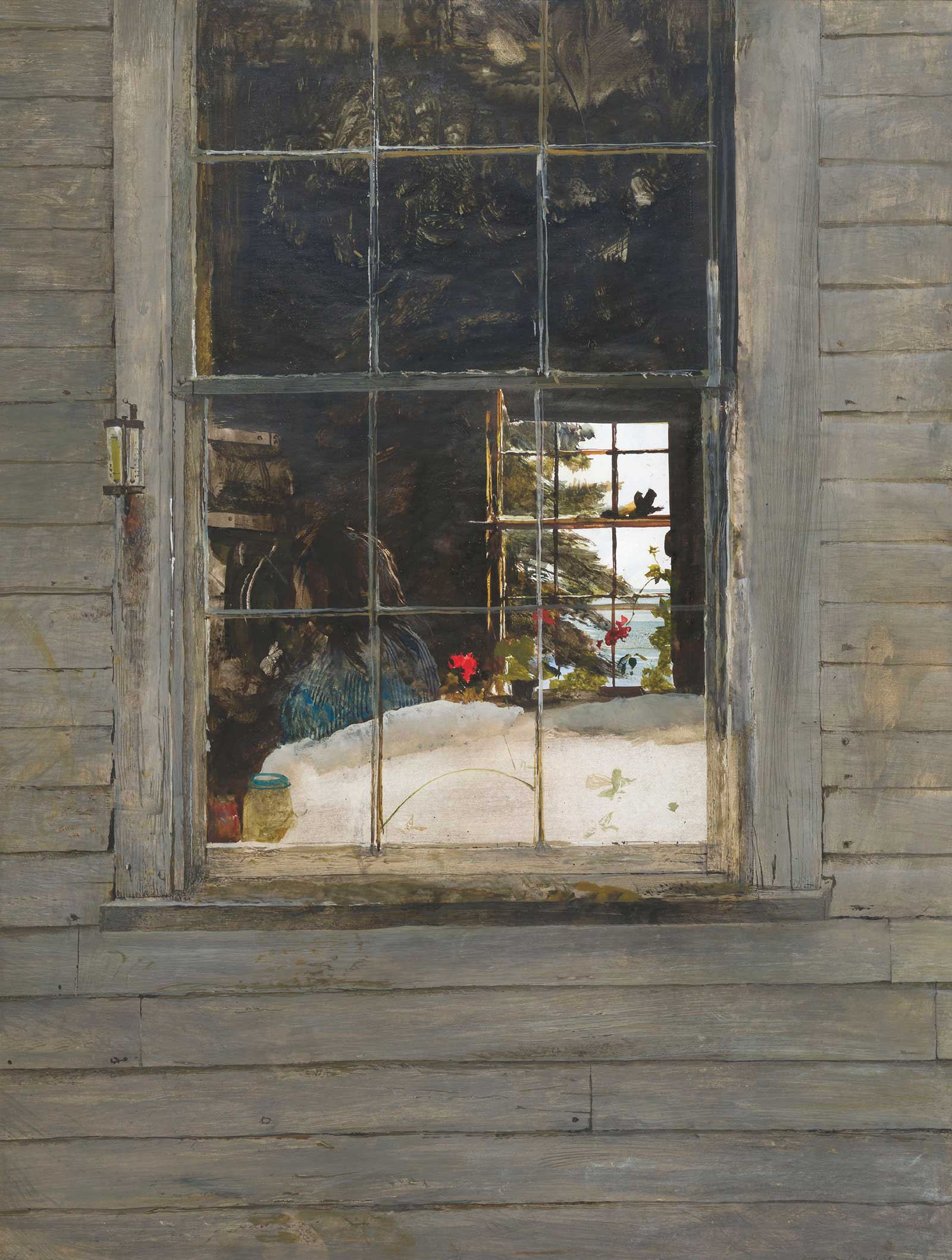 Andrew Wyeth (1917-2009), Geraniums, 1960. Drybrush watercolor on paper, 20¾ x 15½ in. Bequest of Betsy J. Wyeth, 2021. © 2021 Andrew Wyeth/Artists Rights Society (ARS).
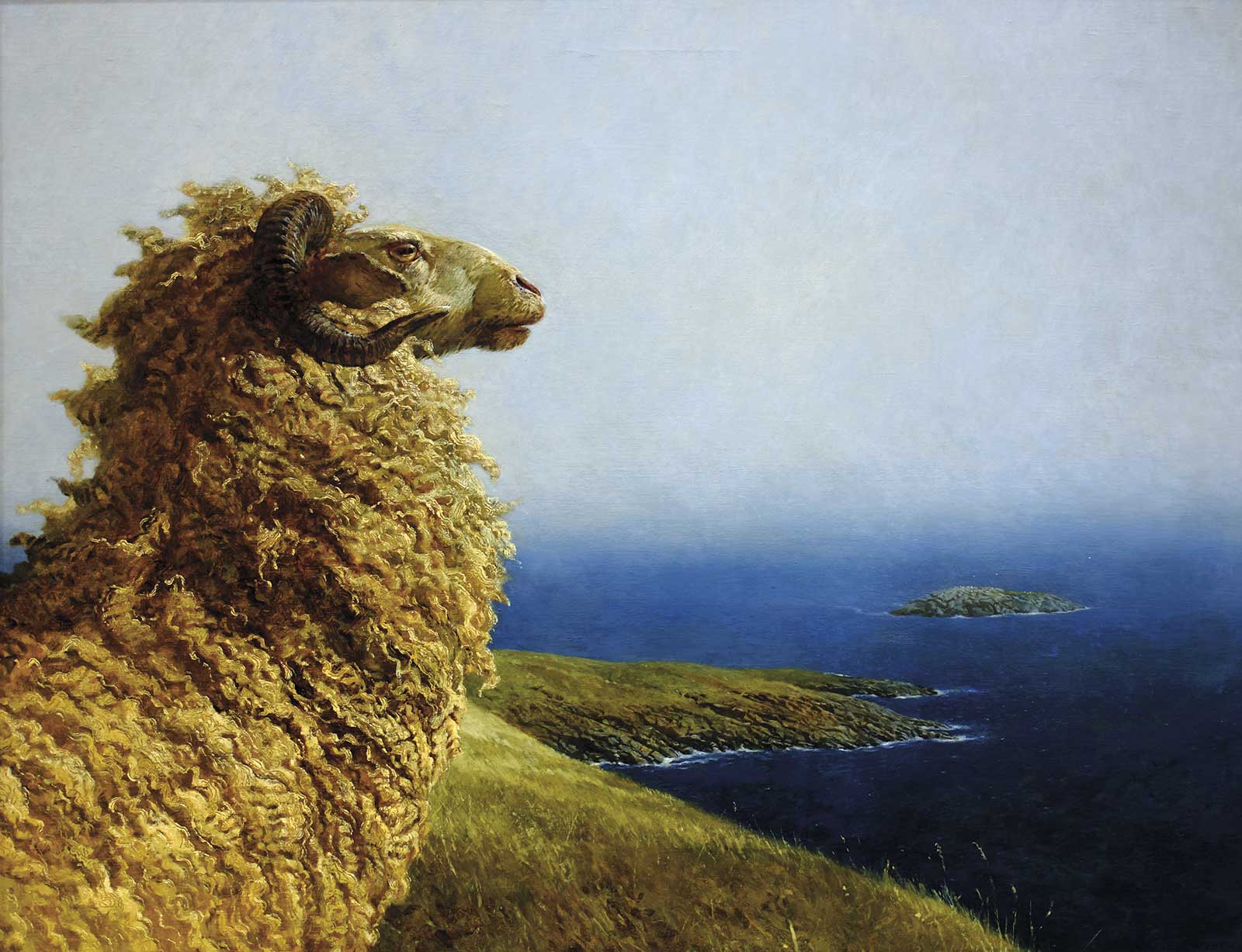 Jamie Wyeth, Islander, 1975. Oil on canvas, 34 x 443⁄8 in. Bequest of Betsy J. Wyeth, 2021.
Betsy James summered not far from the Wyeths on the coast of Maine. Andrew was introduced to Betsy in 1939. On their first date, she took him to the Olson farm to meet her friends Christina (1893-1968) and Alvaro (1894-1967). Andrew was 22 and Betsy was 17 and within a year they were married.
Betsy would become her husband’s muse and manager. In his book Andrew Wyeth: A Secret Life, Richard Meryman wrote, “She frees him from all responsibilities, administers the investments, the painting collection, the files and records, her staff, the properties, the business decisions.”
The Olsons and their ancient house would be immortalized in Andrew’s paintings. Wyeth once said, “I just couldn’t stay away from there. It was Maine.” The couple’s friendship with the Olsons would continue for 30 years. The Olsons and the Wyeths are now buried in the Olson family graveyard not far away.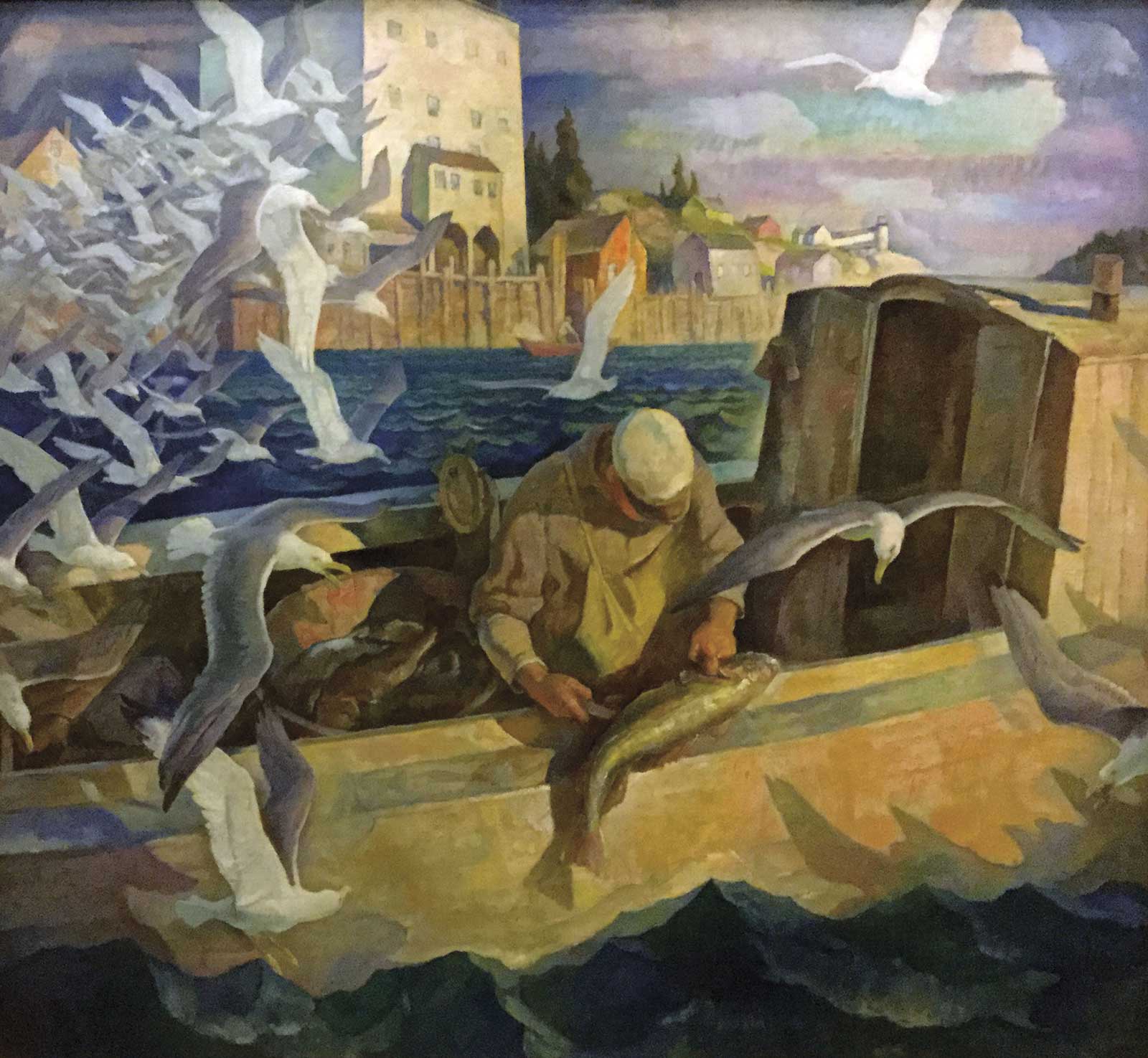 N.C. Wyeth (1882-1945), Cleaning Fish, 1933. Oil on canvas, 475⁄8 x 51¾ in. Bequest of Betsy J. Wyeth, 2021.
When Betsy died last year, the Farnsworth Art Museum in Rockland, Maine, received a bequest of 27 works by N.C., Andrew and Jamie Wyeth, Andrew and Betsy’s son. The Harbor at Herring Gut is among the works now being shown in the Farnsworth’s exhibition Betsy’s Gift, on view through May 8, 2022. The museum’s director, Christopher J. Brownawell, says, “The Farnsworth is so fortunate to have the ongoing support of the Wyeth family and we are deeply grateful for this treasured gift to the museum’s collection.”
The Wyeth’s association with the Farnsworth goes back to 1944 when the museum, which would open four years later, purchased six paintings by the then relatively unknown Andrew. The museum notes her contributions over the years: “Locally, Betsy supported the Farnsworth’s efforts to create the Wyeth Center and Wyeth Study Center galleries, spaces devoted to showing the work of N.C., Andrew and Jamie Wyeth. She also played a pivotal role in founding the Island Institute, and she created the Up East Foundation. Among other initiatives, Up East preserved 17 acres of Christina and Alvaro Olsons’ saltwater farm, the place that inspired some 300 works by Andrew Wyeth—including his iconic 1948 painting Christina’s World, which Betsy both titled and posed for.”
Among the recent gifts are two of Andrew’s paintings of the Olson house. Geraniums, 1960, is a closely cropped vignette of red geraniums in the kitchen window. Christina had been physically handicapped since she was a child. When she was no longer able to walk, she would drag herself across the fields to gather flowers to decorate the house.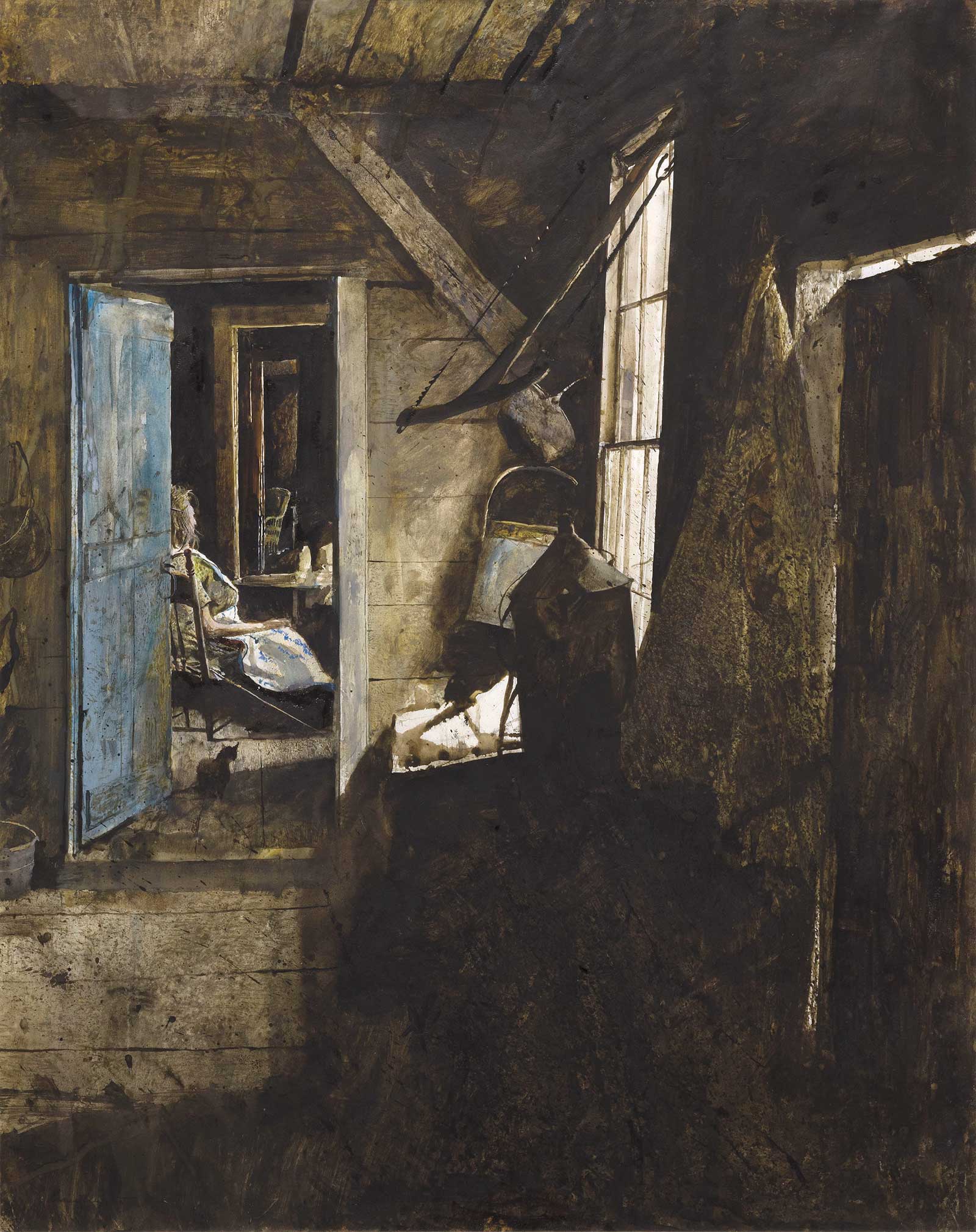 Andrew Wyeth (1917-2009), Room after Room, 1967. Watercolor on paper, 287⁄8 x 227⁄8 in. Bequest of Betsy J. Wyeth, 2021. © 2021 Andrew Wyeth/Artists Rights Society (ARS).
I moved to Maine in 1968, shortly after Christina’s death. One of my first weekend day trips was to the Olson House with several friends. We sat out in the field and ate wild blueberries and raspberries and enjoyed the view of the cove. The association with Wyeth’s Christina’s World and other paintings was the initial draw to the site, but the house itself is what captured me.
Betsy referred to it as “looming up like a weathered ship stranded on a hilltop.” I remember being moved by the geraniums in the kitchen window that someone was keeping alive after Christina was gone.
The Wyeths kept an early painting by their son, Jamie, in their personal collection. “Shorty” was a railroad worker who lived as a hermit in a hut in Chadds Ford, Pennsylvania, the winter home of the Wyeths. The weather-beaten, unshaven Shorty in a dirty, sleeveless undershirt, sits incongruously in a wing chair with elegant gold damask upholstery. I once asked Jamie how the portrait came about.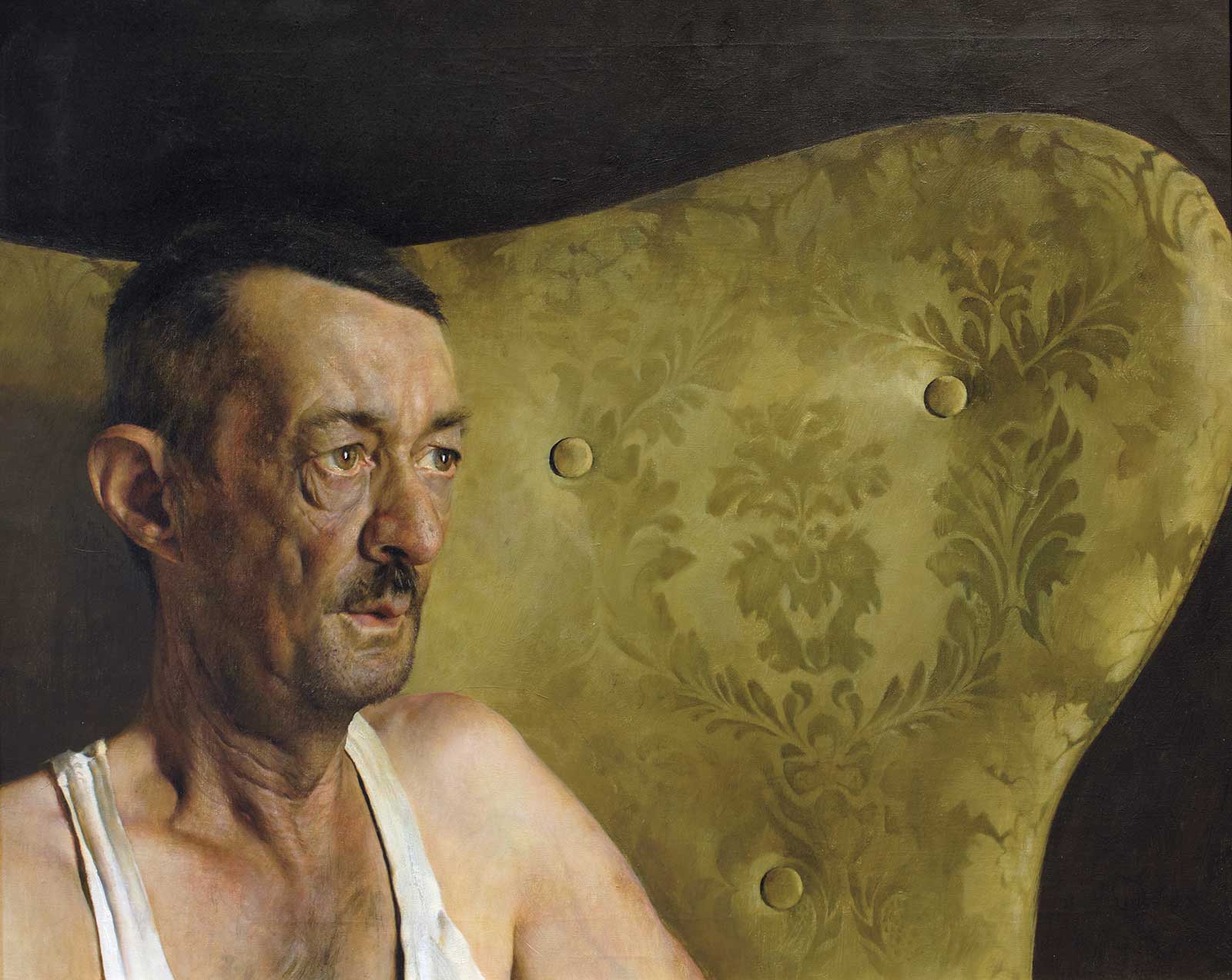 Jamie Wyeth, Shorty, 1963. Oil on canvas, 18 x 22 in. Bequest of Betsy J. Wyeth, 2021.
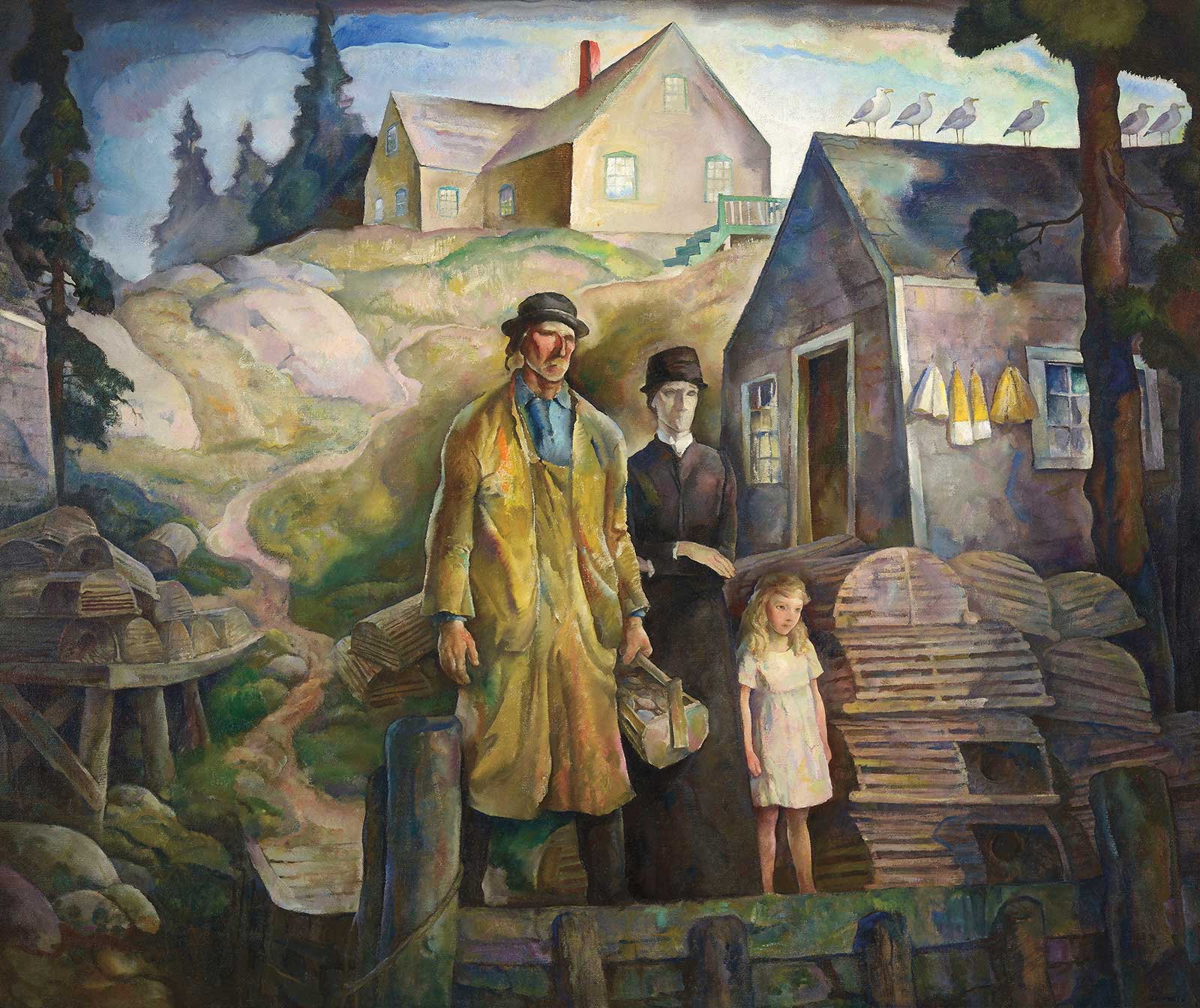 N.C. Wyeth (1882-1945), Fisherman’s Family, before 1935. Oil on canvas, 60 x 71¾ in. Bequest of Betsy J. Wyeth, 2021.
“I’m nervous around people,” he confessed. “I hate having a person in the room when I work. That’s difficult, of course, if I’m doing a portrait. You asked about [the] portrait of Shorty, a painting I did when I was 17. He hadn’t spoken to anyone for 30 years. I met him on the railroad tracks and took him to my studio and had him sit in that big, uncomfortable chair. He was totally unselfconscious, and I could completely lose myself in him.”
The Wyeths’ association with Chadds Ford resulted in the establishment of the Brandywine Conservancy & Museum of Art. Their association with Maine resulted in the Wyeth Center at the Farnsworth and the preservation of the Olson House. Both museum’s house extraordinary examples of the three Wyeths’ works.
Andrew once said, “I think one’s art goes as far and as deep as one’s love goes. I see no reason for painting but that. If I have anything to offer, it is my emotional contact with the place where I live and the people I do.” —
Betsy’s Gift: The Works of N.C., Andrew, and Jamie Wyeth
Through May 8, 2022
Farnsworth Art Museum
16 Museum Street, Rockland, ME 04841
t: (207) 596-6457, www.farnsworthmuseum.org
Powered by Froala Editor