The first exhibition in a three-part series, Black Artists in American: From the Great Depression to Civil Rights encompasses African American artists from 1929 through 1954. The Dixon Gallery & Gardens “explores ways in which African American artists responded to the political, social and economic climate of the United States [during this time],” says the museum. 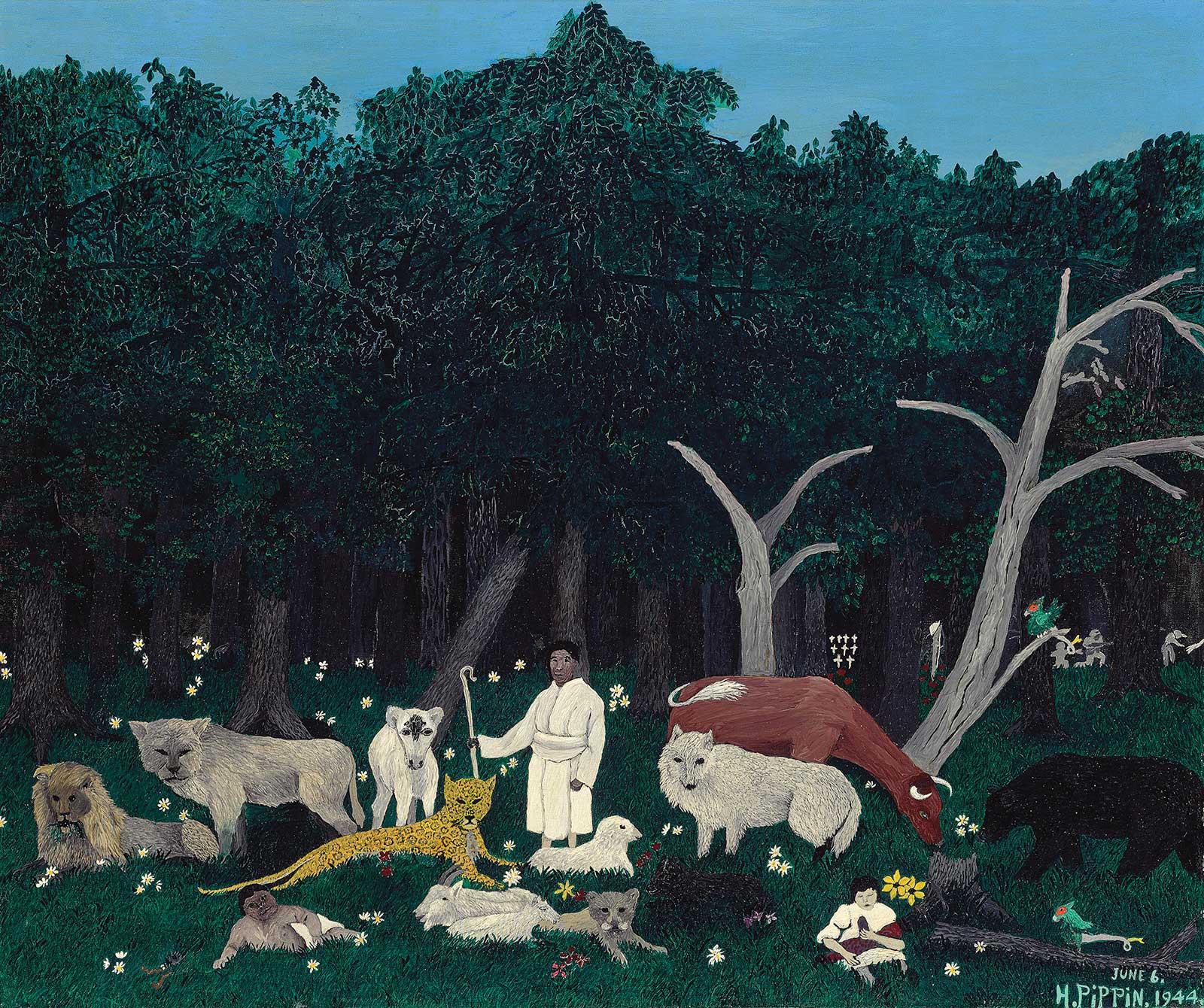 Horace Pippin (1888-1946), Holy Mountain I, 1944. Oil on canvas, 30½ x 35 in. Art Bridges, AB.2018.24.
In 2013, the museum acquired a sculpture by Augusta Savage, the first piece of artwork by a Black artist to enter the collection. “We had an exhibition on the artist and Black art in the early 20th century,” says Julie Pierotti, Martha R. Robinson Curator at the Dixon. “It was a small exhibition, but it made us want to dig deeper.” With the help of guest curator Dr. Earnestine Jenkins, Professor of Art History at University of Memphis, along with the generosity of collectors such as Susan and John Horseman, the Dixon has put together a fine display of Black voices in art.
“It’s a big chunk of time we’re covering,” says Pierotti, “along with a variety of artists. There was such rich work being made during this moment in history. We’re looking at the Black artists experience during the depression and how it affected them differently than white artists. We also go into World War II and how Black artists and their creative talents were used during the war, and then into postwar years as the conversation shifts in art from representational into abstraction.”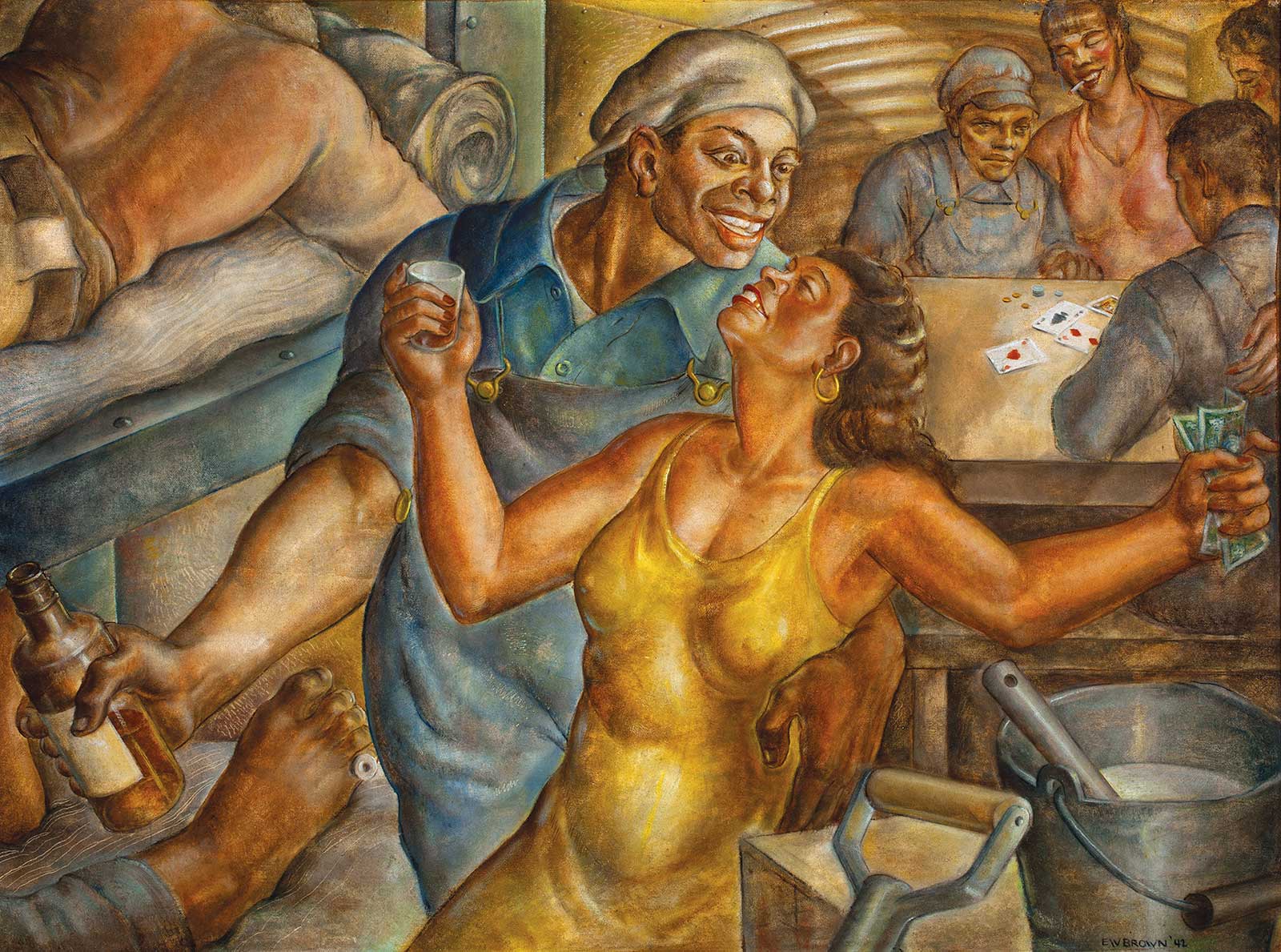 Elmer Brown (1909-1971), Gandy Dancer’s Gal, 1942. Oil on canvas, 24 x 32 in. ARTneo, Gift of the Elmer Brown Estate.
There will also be variety of medium and styles represented, with approximately 55 paintings, sculptures and works on paper, with a special mural series that has been restored by the museum.
Viewers will see works such as Holy Mountain I by self-taught artist Horace Pippin (1888-1946). The piece comes from Art Bridges, a nonprofit art foundation that’s based in Bentonville, Arkansa, and has a mission of sharing their collection. Pippin served in World War I, and often depicted scenes from his experiences at war. “[Holy Mountain] was made in response to WWII and is a reaction to D-Day,” Pierotti explains. The painting looks so peaceful and there was a tradition at this time to convey peace in the midst of all this destruction and bloodshed. Looking at this peaceful kingdom or Eden, there are exotic animals and a man in the middle of them like there his flock.” 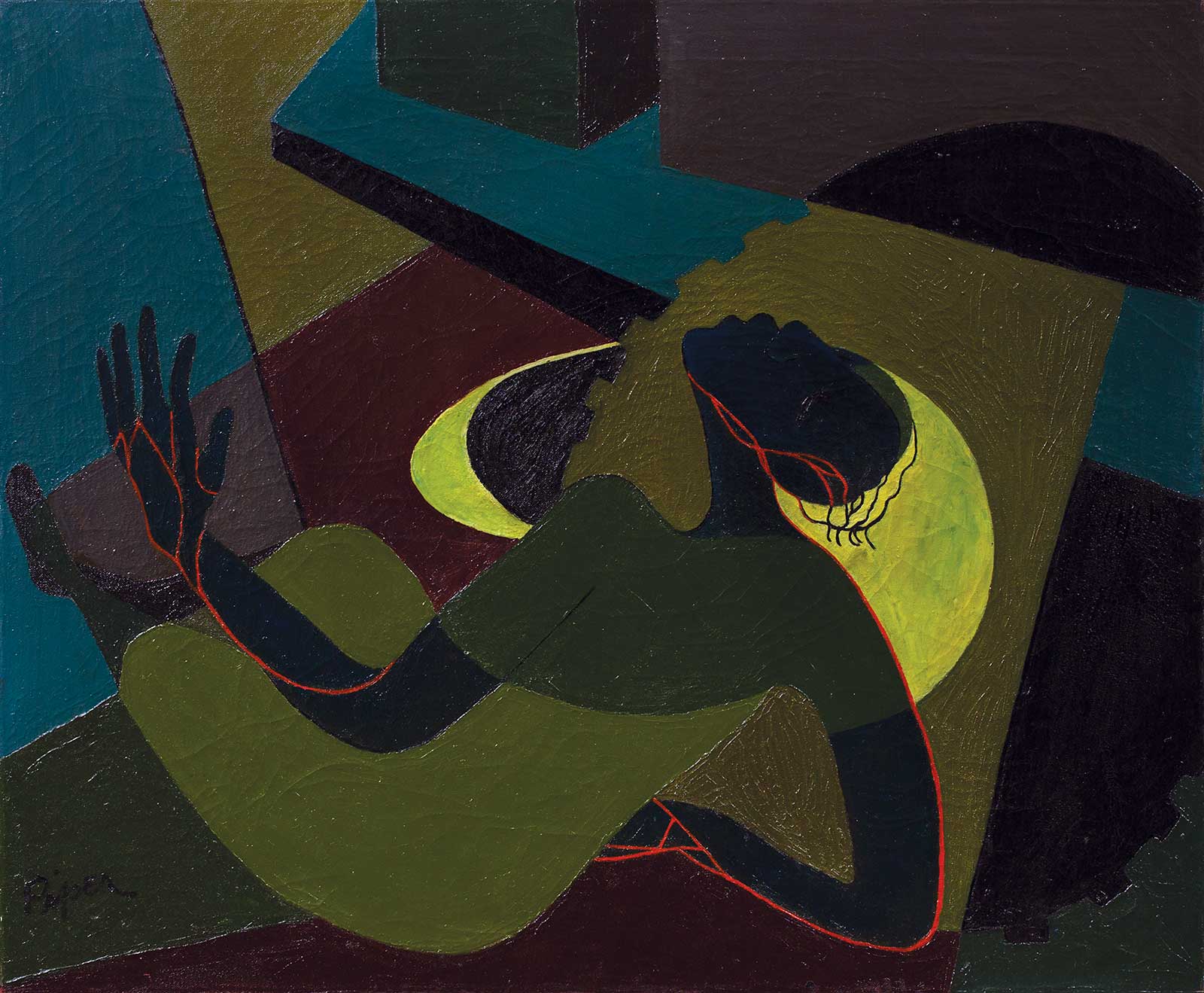 Rose Piper (1917-2005), The Death of Bessie Smith, 1947. Oil on canvas, 25 x 30 in. The John and Susan Horseman Foundation of American Art.
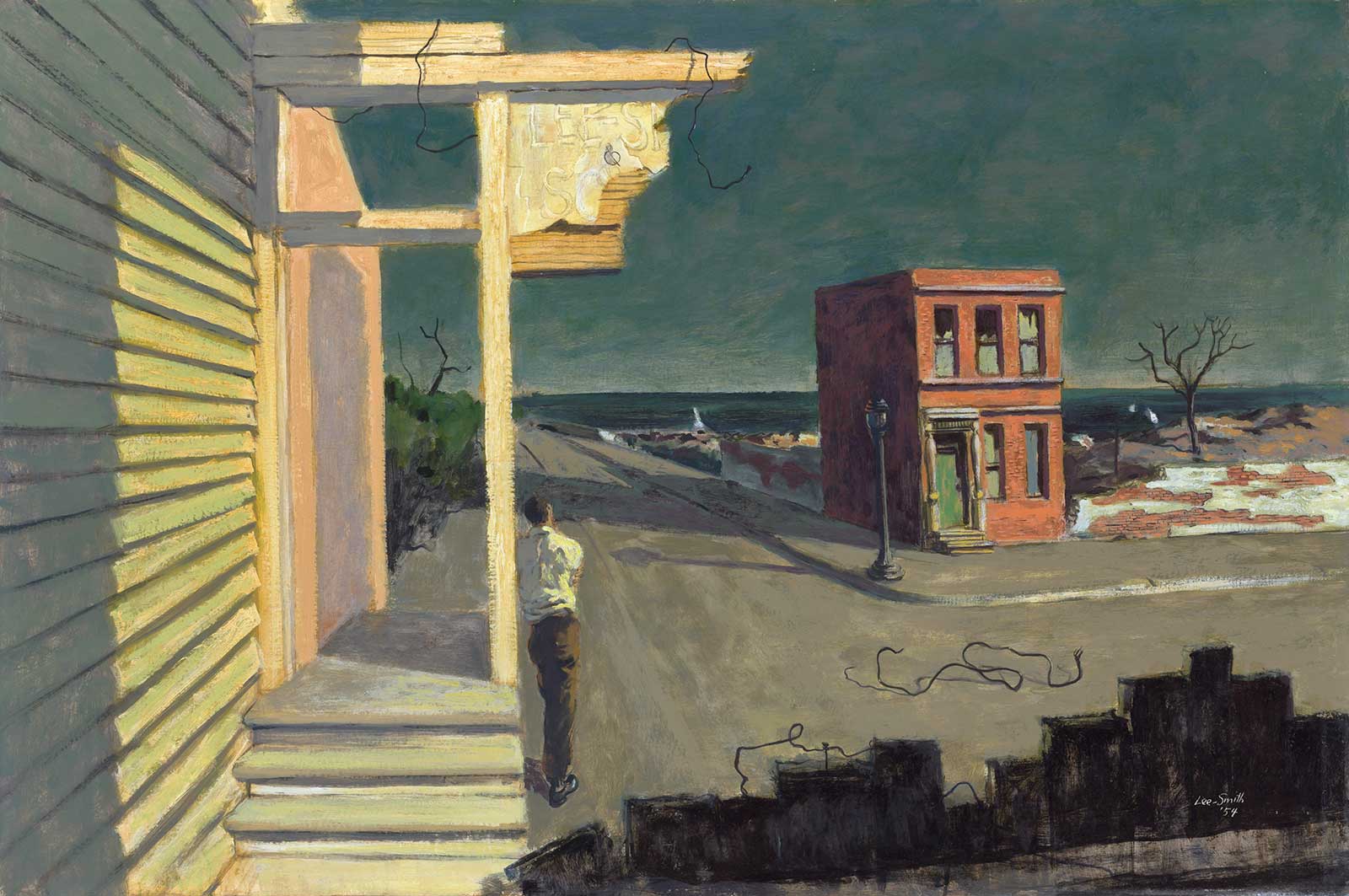 Hughie Lee Smith (1915-1999), Contemplating My Future, 1954. Oil on canvas, 24 x 36 in. The John and Susan Horseman Foundation of American Art.
Another significant piece is Gandy Dancer’s Gal by Elmer Brown (1909-1971), well known in Cleveland. “This is a really interesting scene that comes out of a regionalist aesthetic of working-class life,” Pierotti furthers. “These workers, railroad workers, are having a party. This type of painting was really common in American art in the 1930s and 1940s. It’s big, colorful and lively. There was so much poverty during this time, that the art was supposed to be an escape, but an escape that people could understand. It was meant to be art for the people.”
After the close of this exhibition in January 2022, the public can expect two additional exhibitions in the coming years to follow on a linear timeline.
“We’re excited about this,” says Pierotti, “and hope our visitors will come away with a better understanding of the remarkable contributions that Black artists have made in American art.” —
Powered by Froala Editor