

Oscar Bluemner (1867-1938) studied architecture in his native Germany. He came to New York in 1892 and practiced architecture in New York and Chicago. In 1908, he met Alfred Stieglitz who introduced him to the modernist movements in Europe and America. He began painting in earnest and submitted one work to the pivotal 1913 International Exhibition of Modern Art, known as the Armory Show, that introduced modern art to America. Two years later, he showed at Stieglitz’s 291 Gallery in New York. 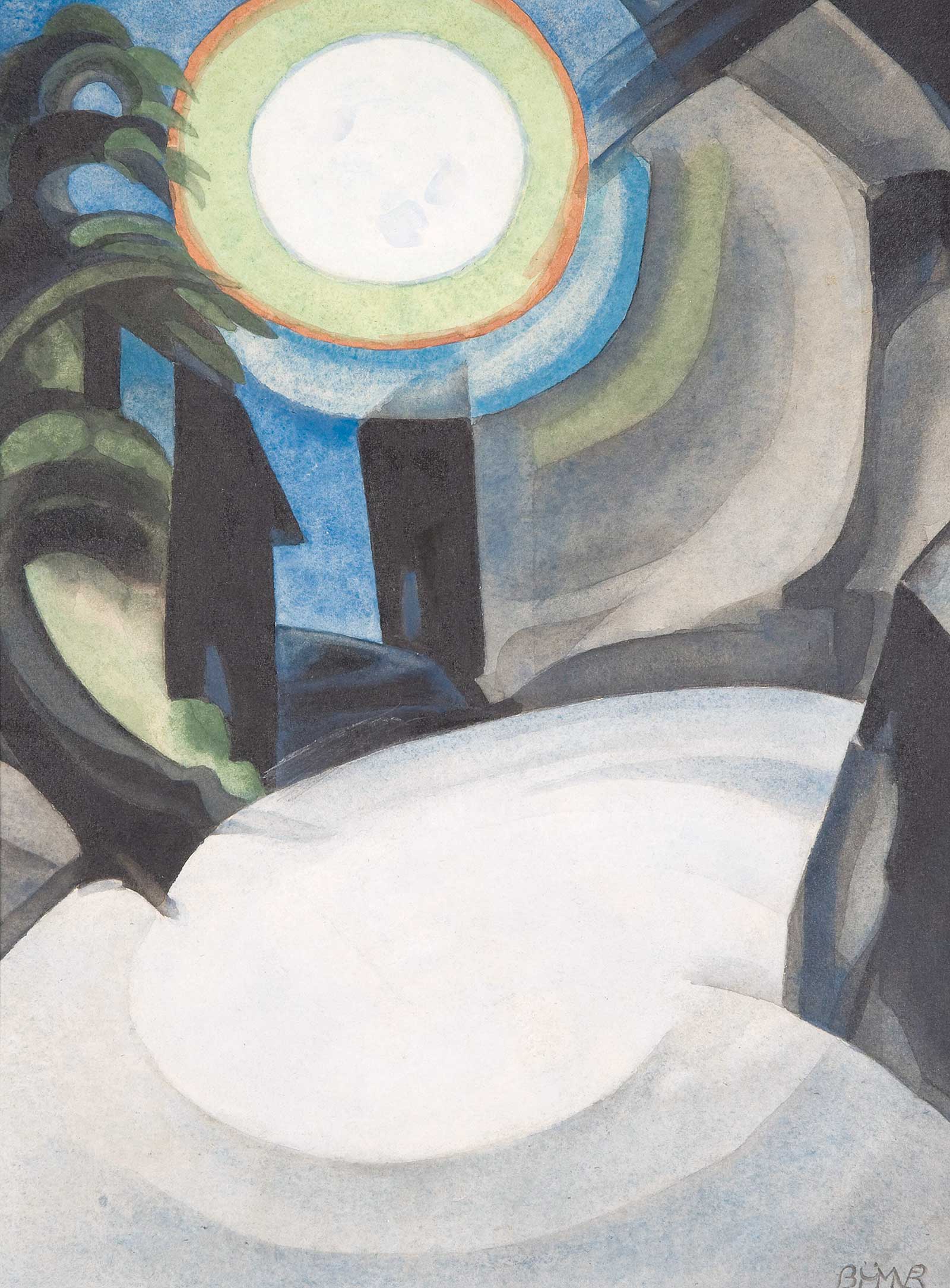 Oscar Bluemner (1867-1938), Silver Moon, 1927. Watercolor and pencil on paper mounted on board, 13 x 10 in., signed with conjoined letters lower right: ‘BLÜMNER’; inscribed and signed verso: ‘#3. Silver Moonlight / Oscar Bluemner. 1927. 102 Plain St. / S. Braintree, Mass’.
In an article about the Armory Show in Stieglitz’s publication Camera Work, Bluemner wrote about the modernists: “In this, however crude or strange their work may appear at first sight, they exert imagination and move forward within the lines of pure art, as opposed to its merchantable adulteration by sleek and dexterous technicians who pamper a vain and sentimental bourgeoisie with superficial conventionalities. Theirs, at best, is dead art; and our art-authorities and dealers stick to it like the butcher to his trade in dead meat…
“But art is not dead. Art is. It is, because as an idea it is inherent in the human mind. The new art movement in Europe has once more established the standard of true art, It is up to the American also to give his art the form of the living day.”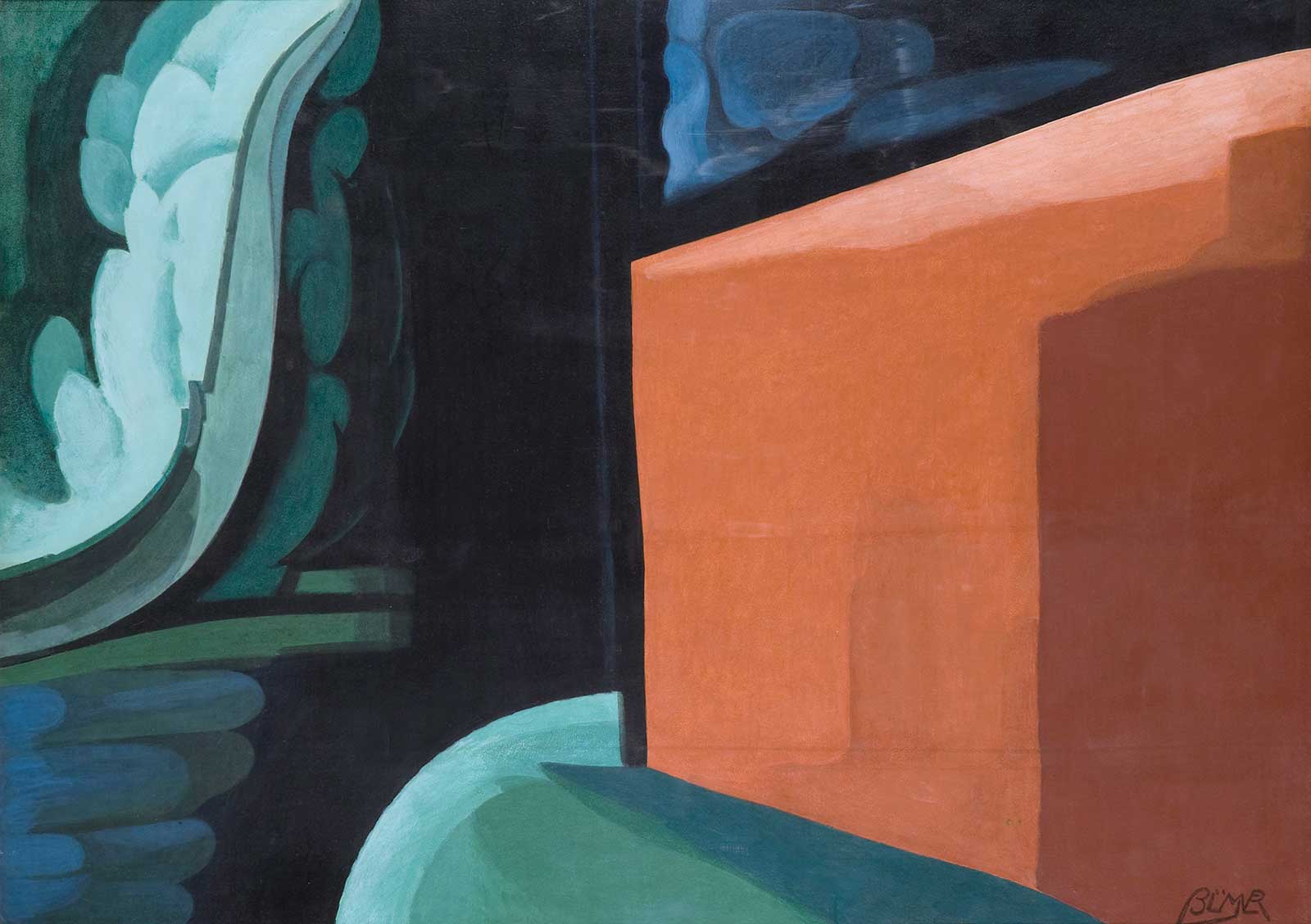 Oscar Bluemner (1867-1938), Approaching Black, 1932. Casin-oil-resin emulsion and watercolor on paper mounted to millboard, 23 3/8 x 31½ in., signed with conjoined letters lower right: BLÜMNER’.
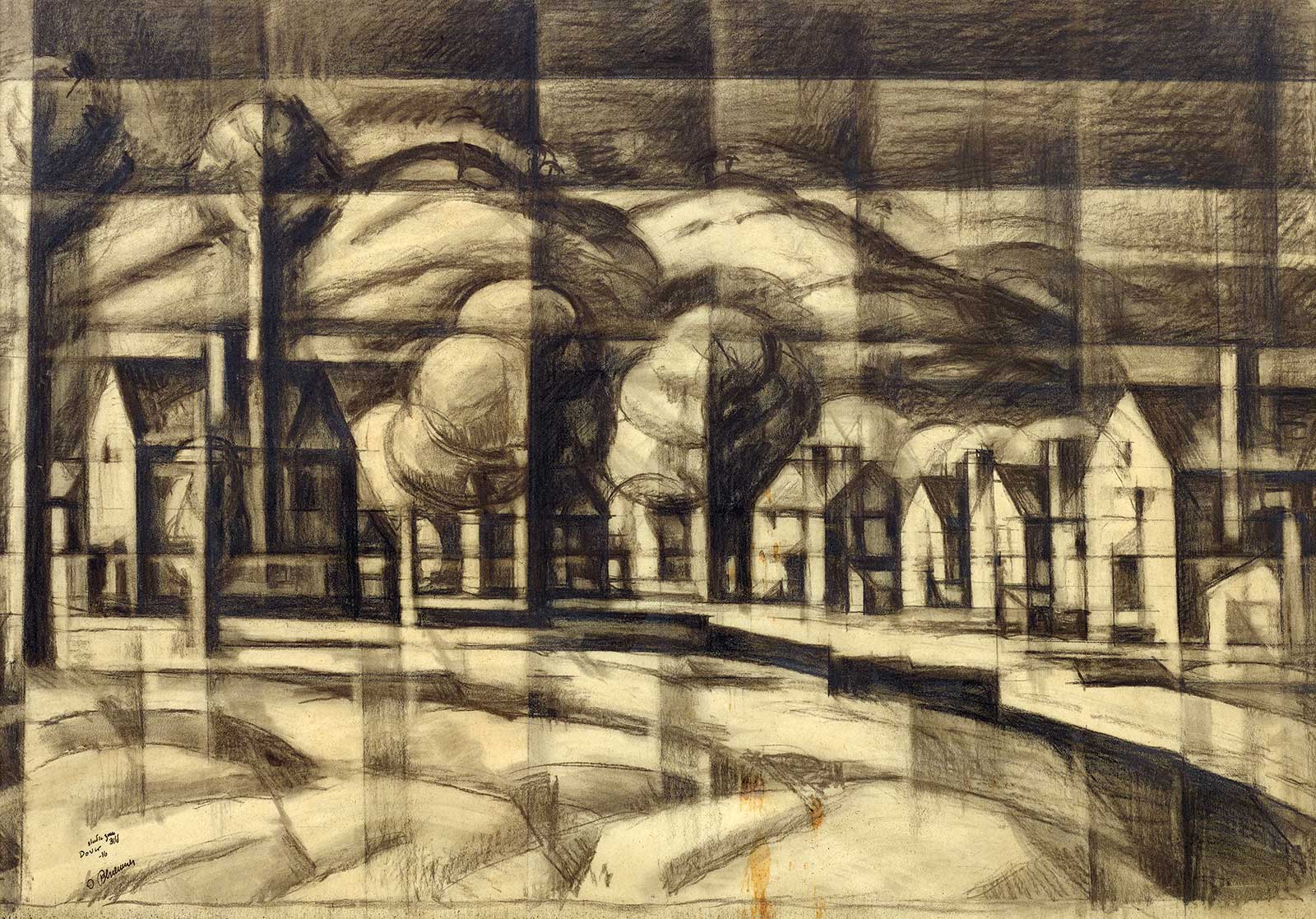 Oscar Bluemner (1867-1938), Study for “Morning Light (Dover Hills, October)”, 1916. Charcoal wash on paper, 20 x 30 in. signed lower left: ‘O Bluemner’; inscribed and dated lower left: ‘Dover / -16’.
Bluemner was respected in his lifetime and is revered today by connoisseurs of early American modernism, but he remains relatively neglected by the public
Menconi + Schoelkopf presents Bluemner + the Critics from November 1 to December 17 and it will be featured at the ADAA Art Show at the Park Avenue Armory, November 3 through 6.
It is part of a series the gallery is presenting “to illustrate the work of leading American modernists with a robust analysis of their work through the lens of understanding how scholars, critics, and others have evaluated an artist’s contributions.”
The gallery notes that Bluemner and other modernists were highly regarded in the years around the Armory Show but “mostly fell out of favor during the middle decades of the 20th century and were rediscovered in the years following America’s Bicentennial in the late 1970s and 1980s. Only with the renewed focus on Bluemner’s work around 1980 did he come to be understood once more as a major light in both the Stieglitz circle and American modernism. Bluemner + the Critics traces the artist’s rise and fall and ultimate resurrection in the eyes of the critics and features numerous masterworks from his early years in New Jersey, his pivotal sun-and-moon series in the late 1920s, and the later paintings from Massachusetts. The exhibition includes the artist’s drawings, watercolors and paintings.”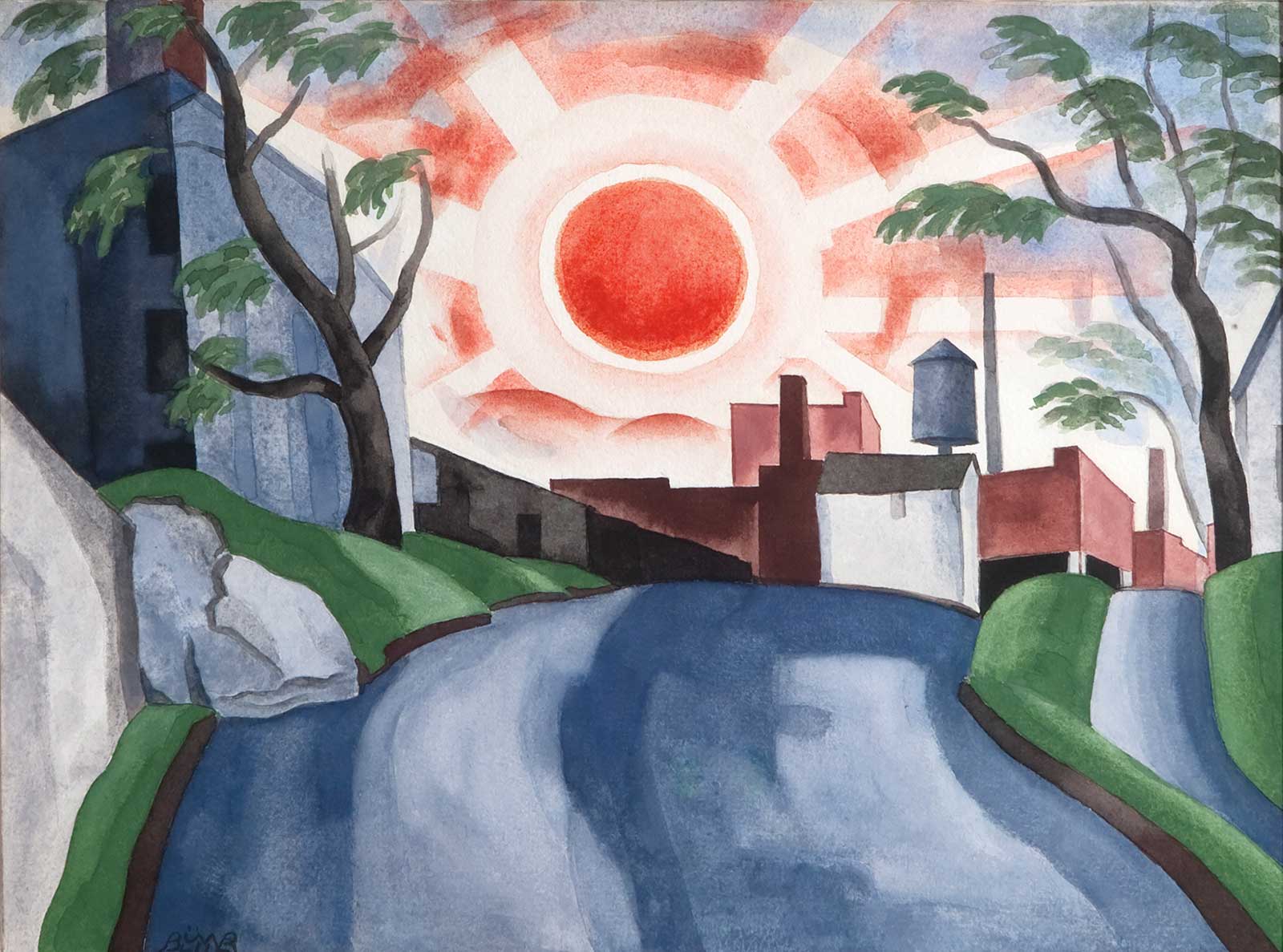 Oscar Bluemner (1867-1938), Sunset, 1925. Watercolor, pastel and pencil on paper, 9¼ x 12½ in., signed with conjoined letters lower right: ‘BLÜMNER’.
Silver Moon, 1927, is from a series of watercolors of the sun and the moon that he produced in the year following his wife’s death. Barbara Haskell, author of Bluemner: A Passion for Color, writes, “In Bluemner’s hands, the imagery became a potent signifier of the conversion of matter to spirit. Concentric bands of color, radiating from a central core onto natural and man-made forms, fused the polarities of body and soul, life and death, ecstasy and terror, male and female, yin and yang into a ‘single, isolated, emotional, ecstatic moment.” —
Powered by Froala Editor