John Marin (1870-1953) is known primarily for his paintings of New York City and his summer home on the coast of Maine. The roughly 500-mile road trip between the two destinations could be arduous. But the trip took him and his family through the rustic beauty of Connecticut, Massachusetts, New Hampshire and, sometimes, Vermont. He reveled in the landscape, exclaiming simply, “What a life, seeing!”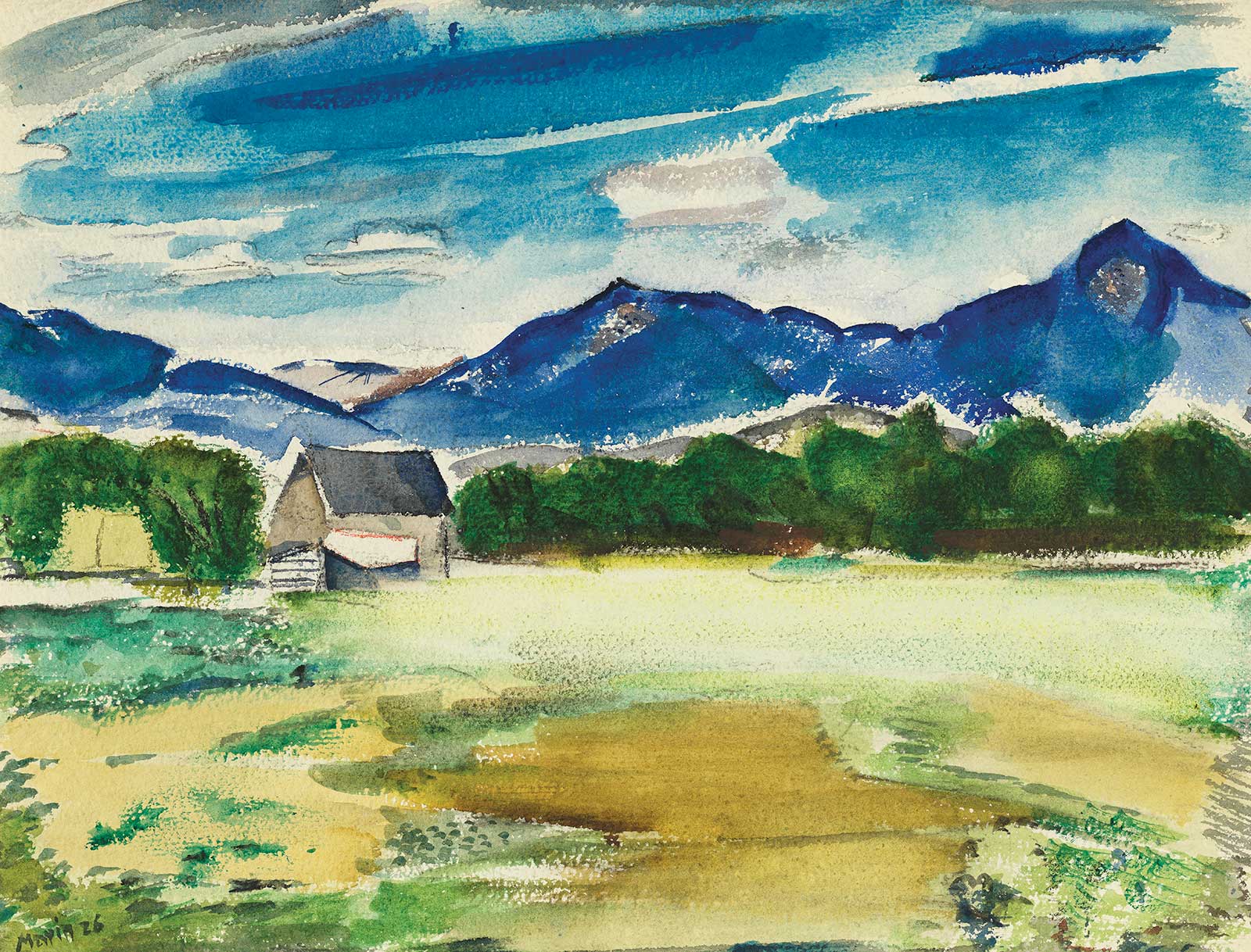 John Marin (1870-1953), Mt. Chocorua and a-Couple-a Neighbors, 1926. Watercolor on paper, 17 x 221/8 in., signed and dated lower left: ‘Marin 26’. © 2021 Estate of John Marin / Artists Rights Society (ARS), New York.
Writing to his friend and art dealer Alfred Stieglitz in 1926, he commented, “Some of the scenery, lakes and mountains in Vermont and New Hampshire, I took to like a duck to water. I made one or two watercolors. Couldn’t do a thing with it. Have to work up to things…. Well, maybe I’ll go back the same way and do something.”
He eventually did something, producing several watercolors of the mountains and valleys, most of which have remained in his family for generations.
Menconi + Schoelkopf in New York City, will host the exhibition Marin in the White Mountains, September 7 through October 15. It will include more than a dozen watercolors.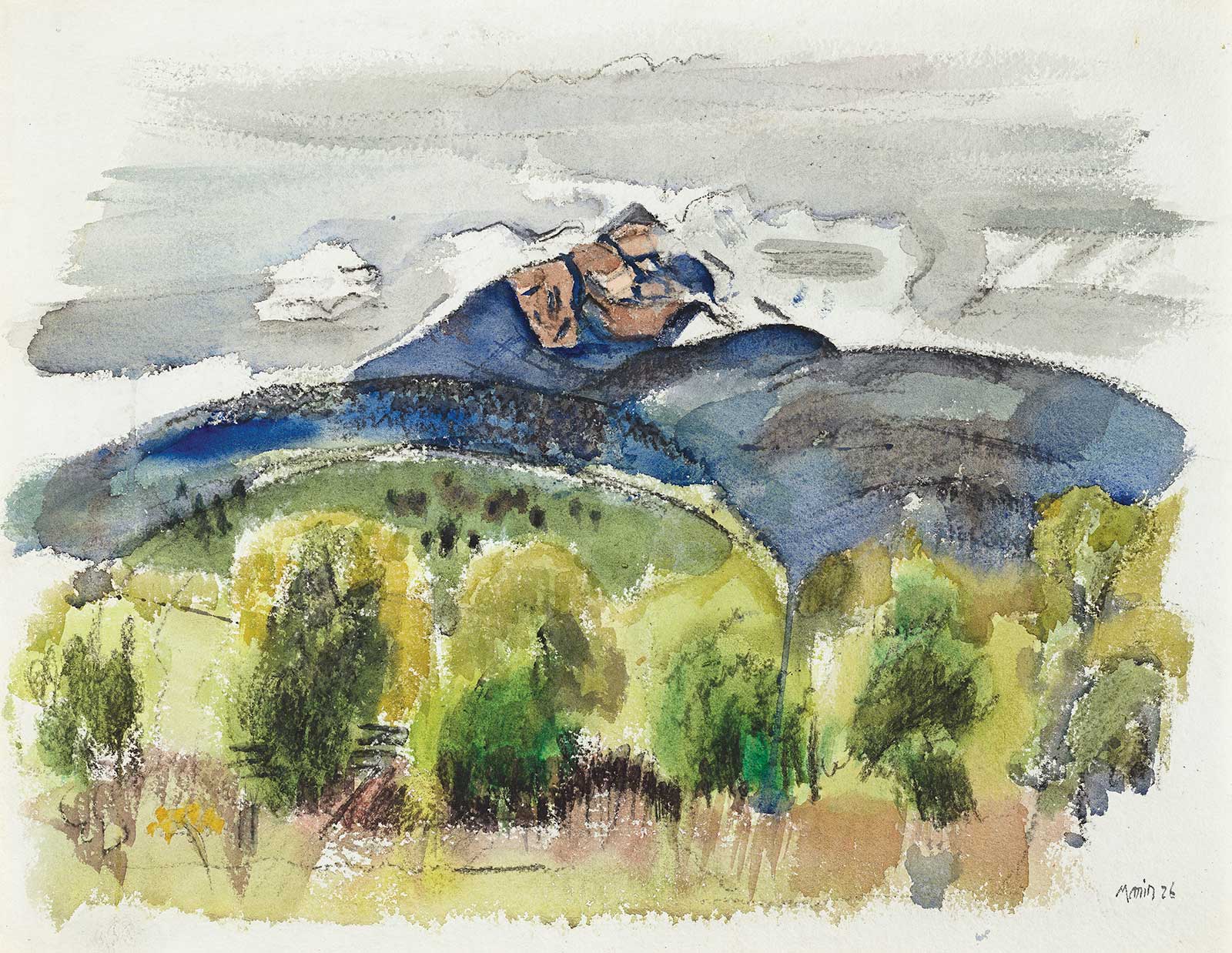 John Marin (1870-1953), Chocorua, White Mountain Series, 1926. Watercolor on paper, 17 x 21½ in., signed and dated lower right: ‘Marin 26’; inscribed and signed on label affixed to backing: ‘Chocorua White Mts NH / Series 1926 / John Marin’. © 2021 Estate of John Marin / Artists Rights Society (ARS), New York.
Andrew Schoelkopf explains, “Marin in the White Mountains is the story of a less well-known passage from John Marin’s long and storied career. Many of the works have not been seen previously and we expect they will surprise many viewers. Marin is one of America’s most consequential and influential artists of the 20th century, and many know John Marin’s Maine and New York subjects—this exhibition shares the watercolors and drawings that were the product of the Marin family’s many road trips between their summer home in Maine and their winter home in New York in the 1920s.”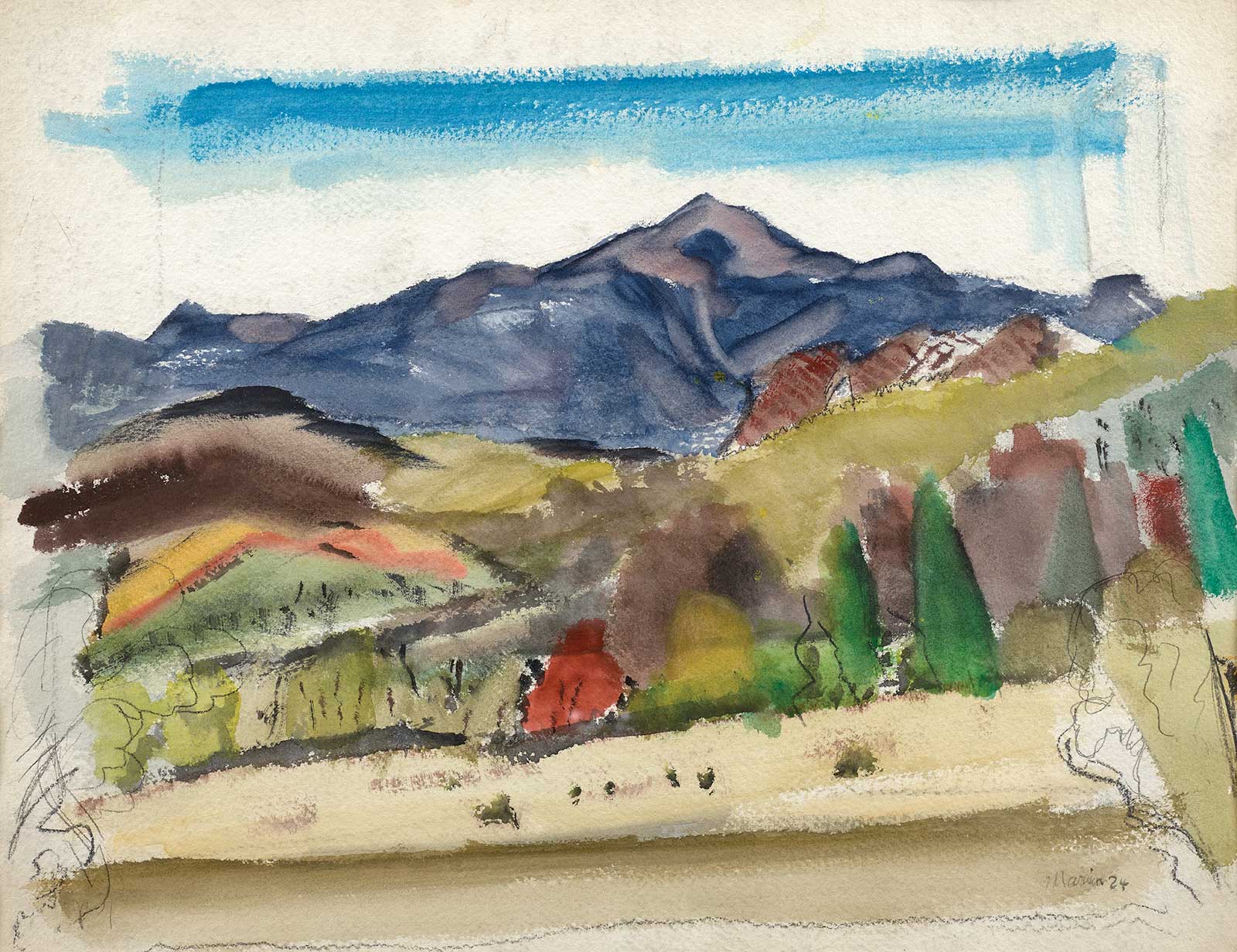 John Marin (1870-1953), Mount Washington, New Hampshire, 1924. Watercolor on paper, 17½ x 22 in., signed and dated lower right: ‘Marin 24’. © 2021 Estate of John Marin / Artists Rights Society (ARS), New York.
The gallery notes, “John Marin is a pioneer in American modernism and abstraction. Marin’s contributions to the canon are becoming more widely recognized amongst an international audience, some 70 years after he became the first American to exhibit at the Venice Biennale in 1950.”
He was born in New Jersey and first studied architecture before enrolling in the Pennsylvania Academy of the Fine Arts and later, the Art Students League in New York. He lived for a while in Paris where he met the photographer Edward Steichen who introduced him to Stieglitz who had opened his gallery “291” in New York in 1905. Stieglitz gave Marin his first American exhibition in 1909. The gallery was a mecca for European and American modernism. Marin remained committed to modernism throughout his career grounding his images in the architecture of the city and the ruggedness of the mountains and the sea. 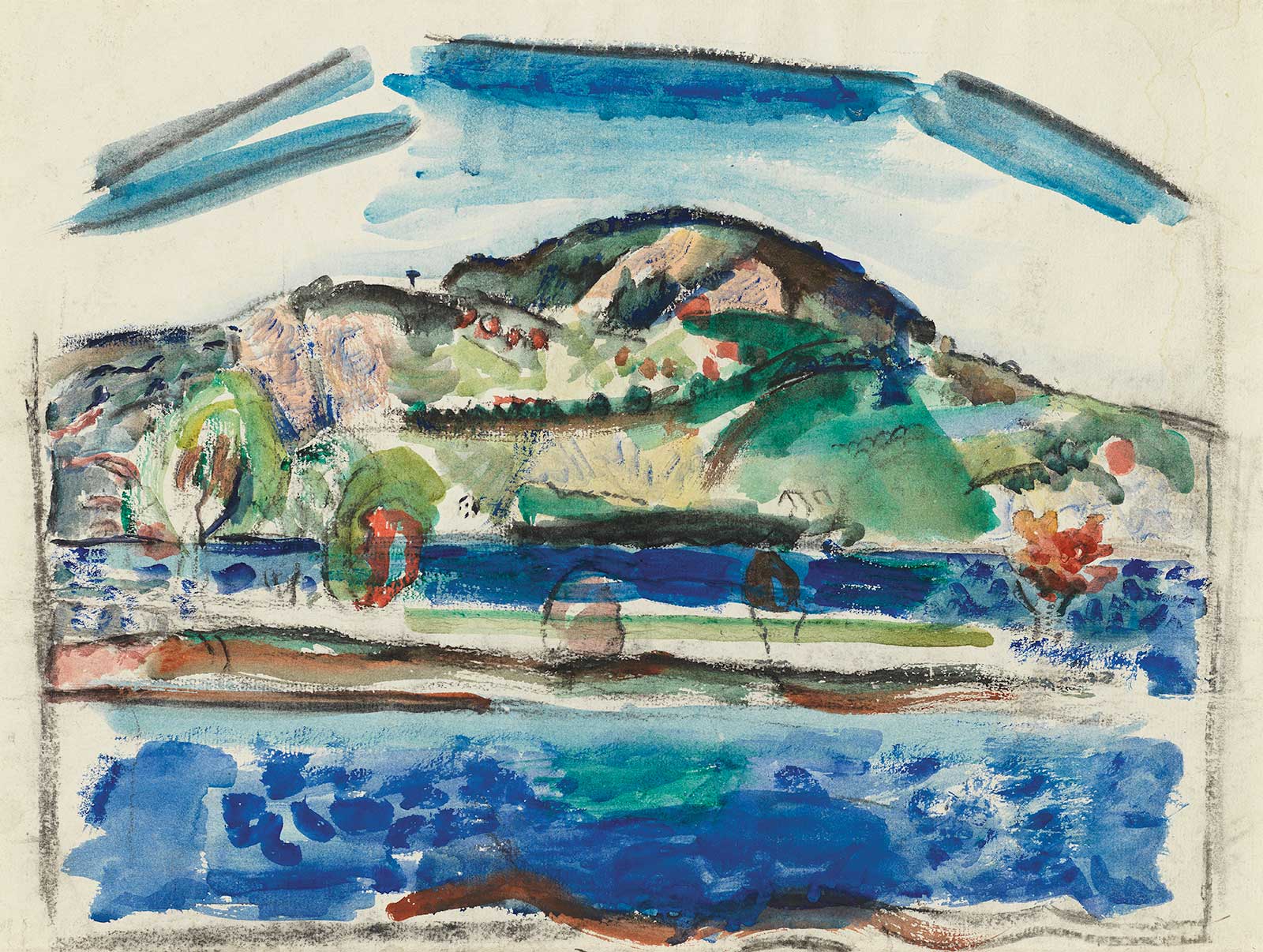 John Marin (1870-1953), White Mountains, ca. 1924. Watercolor on paper, 14½ x 19½ in. © 2021 Estate of John Marin / Artists Rights Society (ARS), New York.
Duncan Phillips founded the Phillips Memorial Art Gallery (now The Phillips Collection) in 1921. He acquired several of Marin’s New Hampshire watercolors in 1928. Phillips loaned 12 paintings to the Biennale and wrote, “In his 80th year John Marin still paints with power, ecstasy and the most original brush work and design of any American artist. He is one of the most gifted and important painters since Cézanne and perhaps the best of all masters of watercolor.” —
Powered by Froala Editor