In 2016 the Mint Museum in Charlotte, North Carolina, had the opportunity to acquire John Leslie Breck’s Suzanne Hoschedé Sewing. That acquisition was the catalyst for a new exhibition on the artist’s work. The show, John Breck: American Impressionist, spotlights Breck’s role as one of the earliest artsits to introduce French Impressionism to America. Largely falling under the radar, Breck will reenter into the conversation of American art history with this new presentation.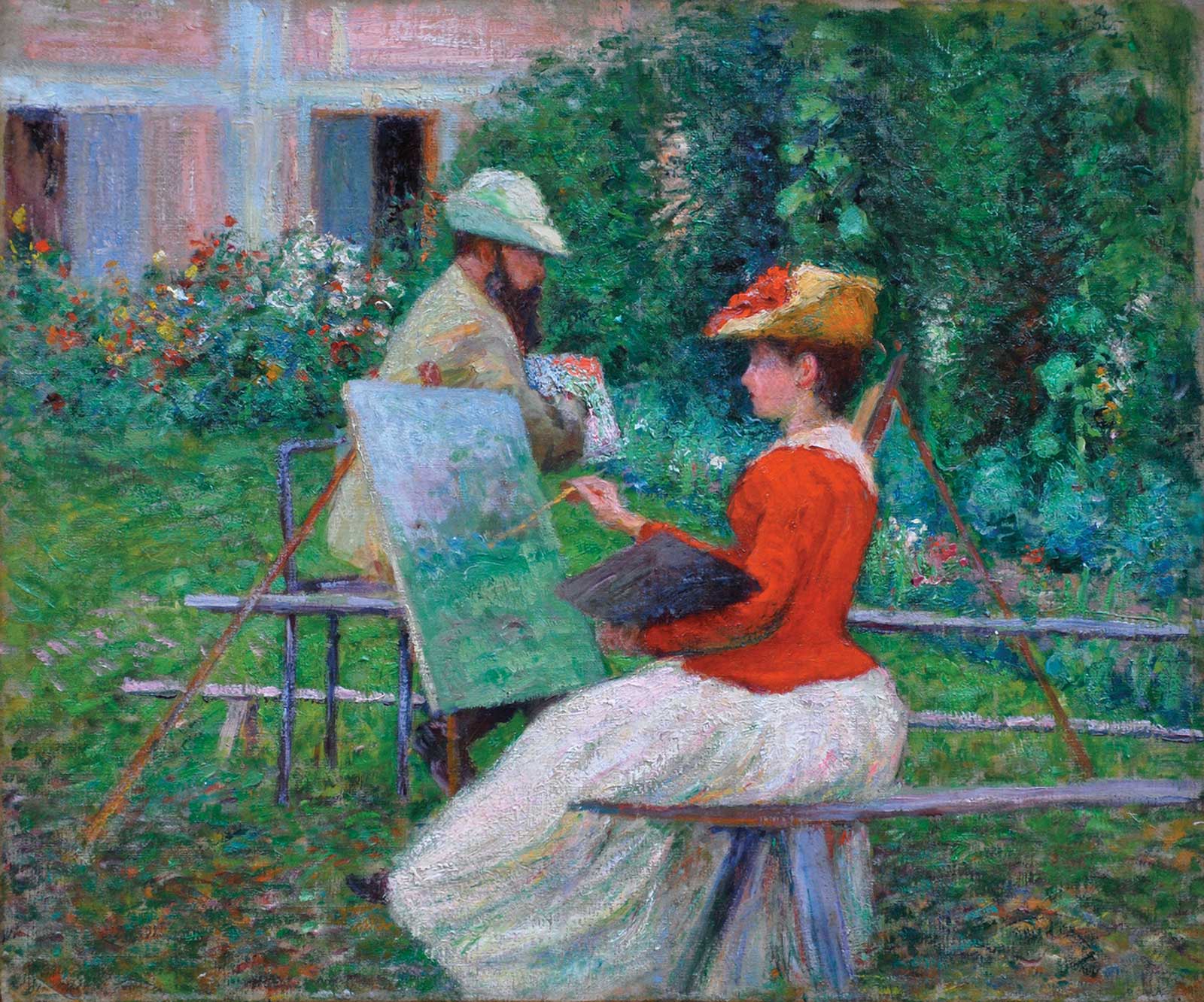 John Leslie Breck (1860-1899), Chez M. Monet, 1888. Oil on canvas, 18 x 22 in. Private collection
On view September 18 through January 2, 2022, this is the first museum retrospective for Breck since his untimely death in 1899 at age 38. It is a collaboration of research and organization from Jonathan Stuhlman, senior curator of American art at the Mint, other staff members, and Breck scholars Royal Leith and Jeffrey Brown. A 208-page fully illustrated catalog for the exhibition will be available with contributions from Erica Hirschler and Katherine Bourguignon.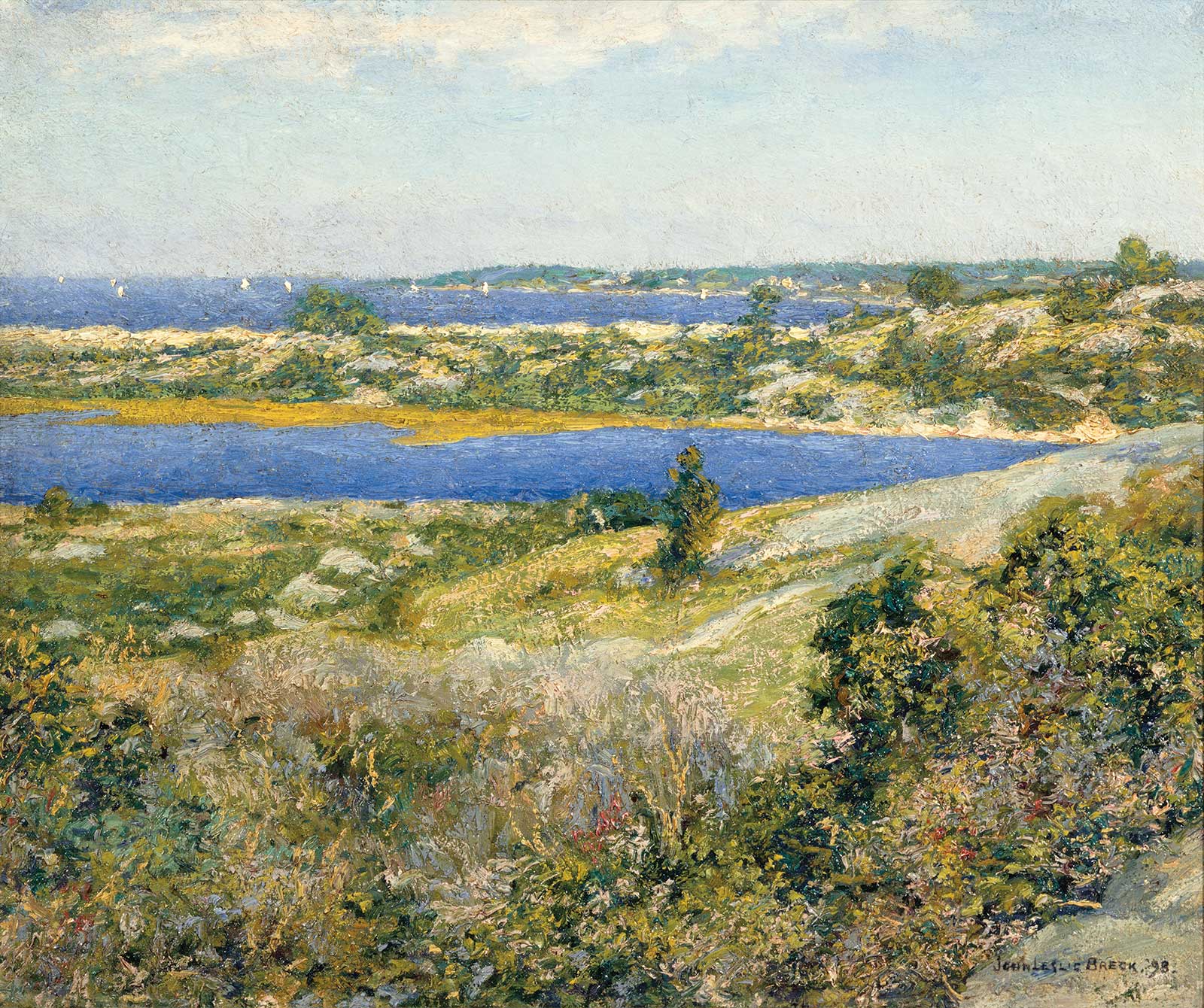 John Leslie Breck (1860-1899), View of Ipswich Bay, 1898. Oil on canvas, 18 x 22 in. Private collection.
More than 70 paintings by Breck will be in the show, as well as 10 works of art by contemporaries to give historical context. “The artwork comes from a range of places,” says Stuhlman. “There are a number that come from descendants of the artist that are still in family; some from private collections; and 10 or 12 from different museums that hold his work. Terra Foundation holds more Breck work than anyone else outside of the family, and they are lending a number of pieces as well.”
Arranged mostly in chronological order, the show tells the stories from the earliest days of his career to the end, with a particular spotlight on his time in Giverny painting with Monet. “The show spans most of his career. We have one or two of his pre-impressionist paintings on view, and there are not many of them out there,” explains Stuhlman. “The real bulk of the show is a span of a decade. It starts with his sojourn in 1887-88 to Giverny and goes to the end of his life. You have this moment when he arrives in Giverny to his conversion to impressionism.” There are a number of works depicting places around America such as Boston and California, and there are around 10 paintings from a trip he did to Venice right at the end of his life.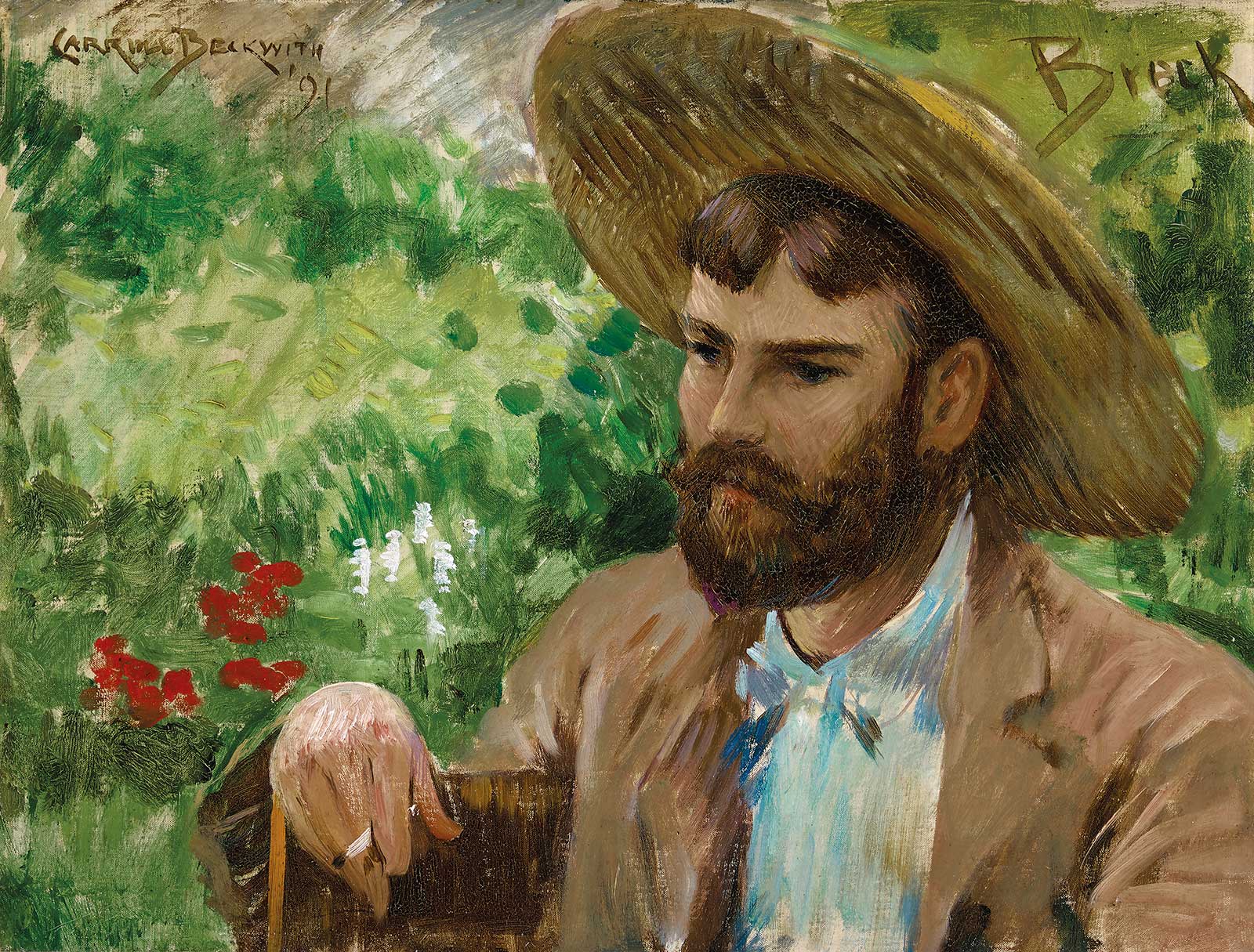 James Carroll Beckwith (1852-1917), Portrait of John Leslie Breck, 1891. Oil on canvas, 13¼ x 17¼ in. Collection of Max N. Berry.
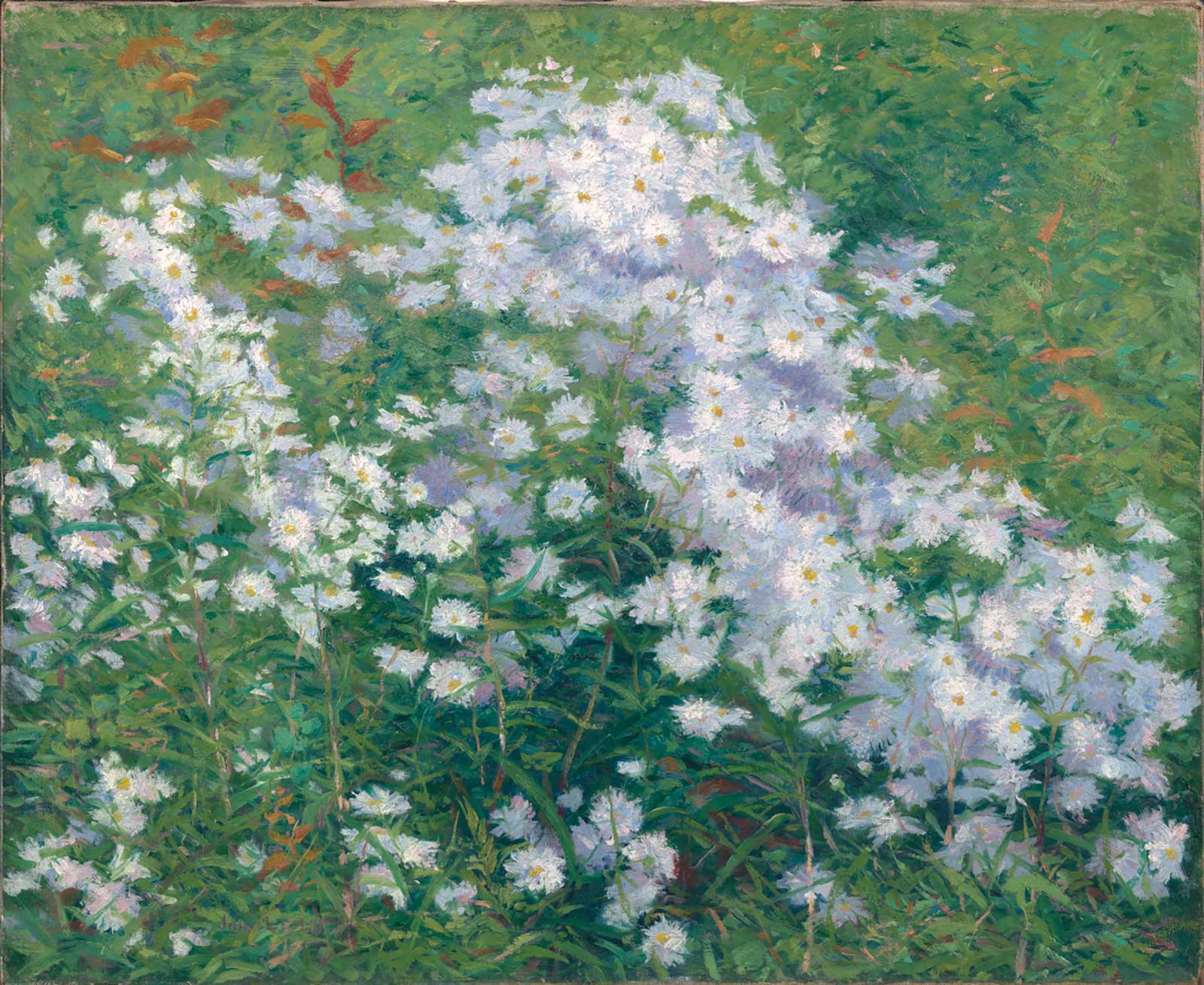 John Leslie Breck (1860-1899), Asters, ca. 1893. Oil on canvas, 18 x 22 in. The Middleton Family Collection.
Works in the show include the beautiful painting In the Valley of the Seine, which is on loan from the Museum of Fine Arts, Boston. It is one of his largest and most ambitious paintings, which depicts the panorama of the Seine river valley with rooftops and trees in his adept impressionist style. There will be several pieces on view representing his time in New England including the close-up look of Asters, which was painted around 1893. Among the works from his contemporaries is James Carroll Beckwith’s Portrait of John Leslie Breck, from 1891. It shows the artist in a relaxed position outdoors.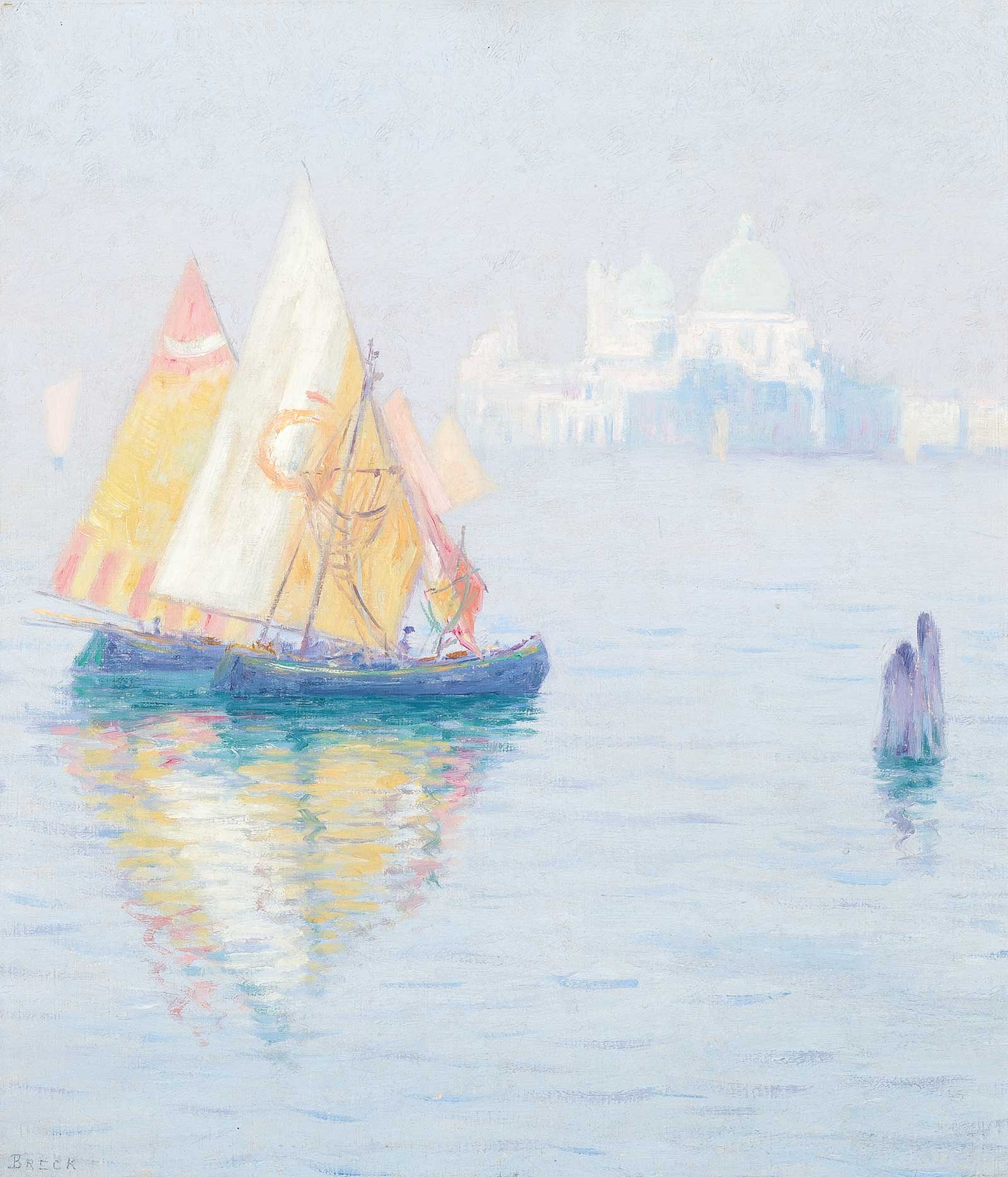 John Leslie Breck (1860-1899), The Bay at Venice, 1897. Oil on canvas, 32 x 45 in. Private collection.
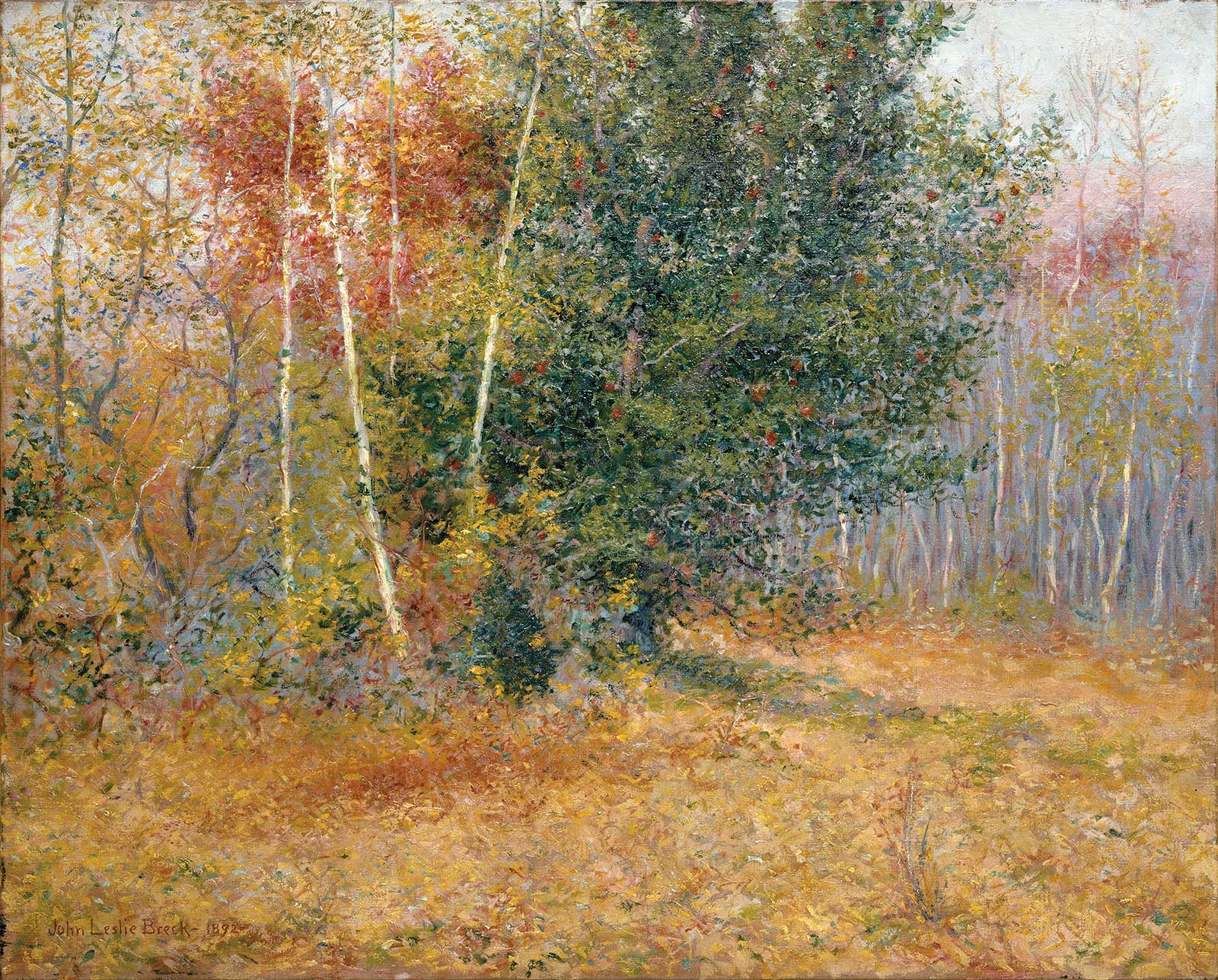 John Leslie Breck (1860-1899), Indian Summer, 1892. Oil on canvas, 27 x 32 in. Collection of Tom and Bonnie Rosse.
“On one end, the main point of the exhibition is to really see all these paintings gathered together and to appreciate what a great artist Breck was,” says Stuhlman. “He’s not well known, but [it’d be great if] he gets folded into the future studies of American impressionism.” Stuhlman adds that the show mainly being “beautiful mediations on the landscape,” he also hopes viewers will remember to enjoy and think of the natural world.
Following the exhibitions’s close at the Mint, it will travel to Dixon Gallery and Gardens in Memphis, Tennessee, and then to Figge Art Museum in Davenport, Iowa. —
Powered by Froala Editor