The concept was originally conceived with an exhibition at the Neuberger Museum of Art back in 2017 (with discussions about the show going back as far as 2009), and now it resurfaces as a major national exhibition—Romare Bearden: Abstraction. The show will include incredible abstract works by influential artist Romare Bearden, many of which haven’t been seen since they first exhibited in the 1960s. will begin at the Gibbes Museum of Art this October 15 and remain on view through January 9, 2022.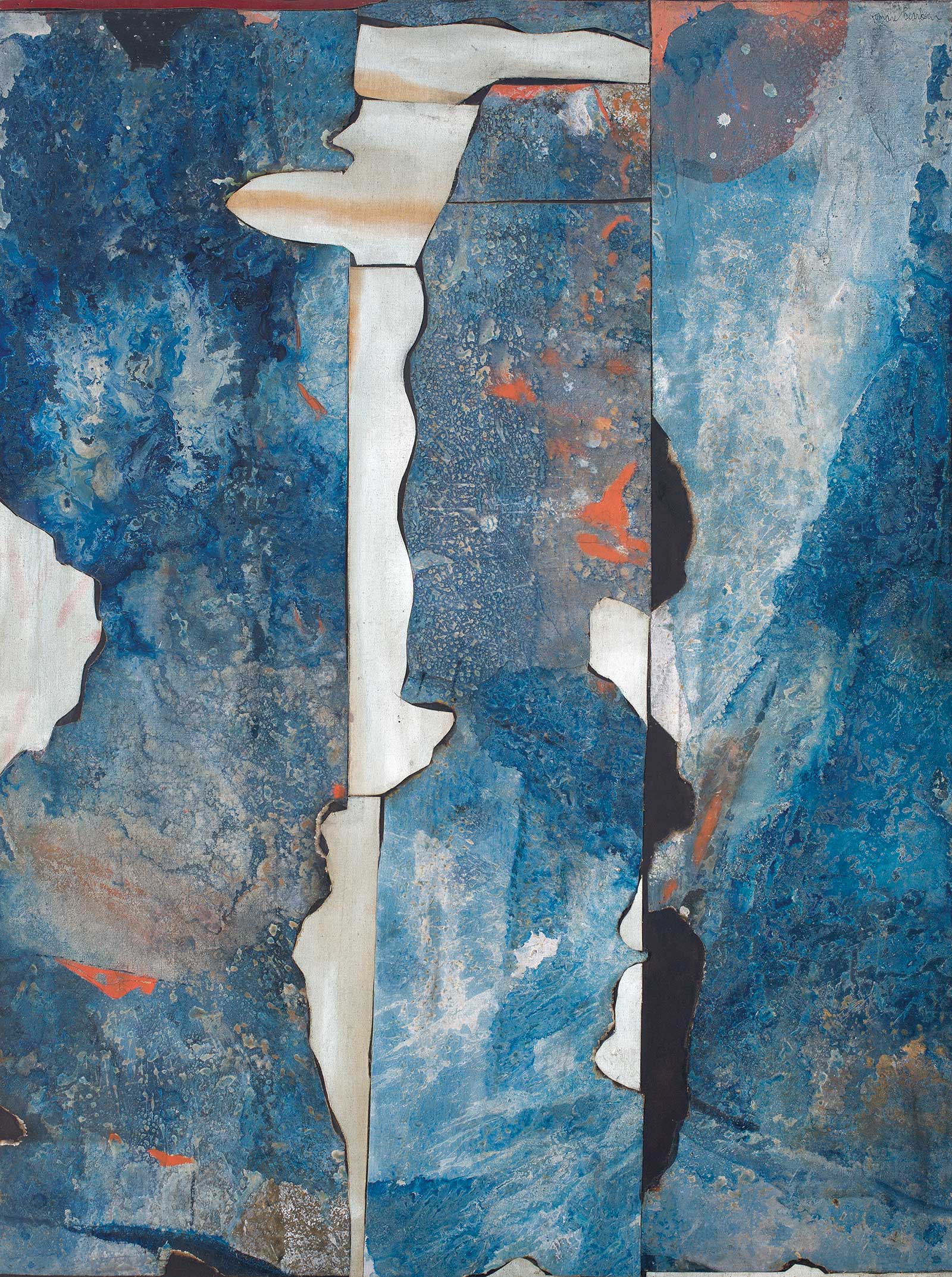 Romare Bearden (1911-1988), River Mist, ca. 1962. Oil on unprimed linen, and oil, casein and colored pencil on canvas, cut, torn and mounted on painted board, 54¼ x 407/8 in. © Romare Bearden Foundation / VAGA at Artists Rights Society (ARS), NY. Courtesy of DC Moore Gallery, NY and American Federation of Arts.
“The project doesn’t give an overview of Bearden, but rather covers that body of work which was absent, chronologizes it and reinserts it back into his [oeuvre],” explains exhibition curator, Dr. Tracy Fitzpatrick, director of the Neuberger Museum of Art and Associate Professor of Art History at Purchase College, SUNY. Works in the exhibition demonstrate Bearden’s explorations with abstraction, and in their day, they were visible and well-received, Fitzpatrick adds. She theorizes that with the Civil Rights Movement growing in the 1960s, Bearden started to shift the way he thought about art, perhaps realizing that abstraction did not wholly serve his purposes of creating art as a means to examine and discuss civil rights. “I hope other scholars will come look at the work and theorize about why it was left behind,” she says.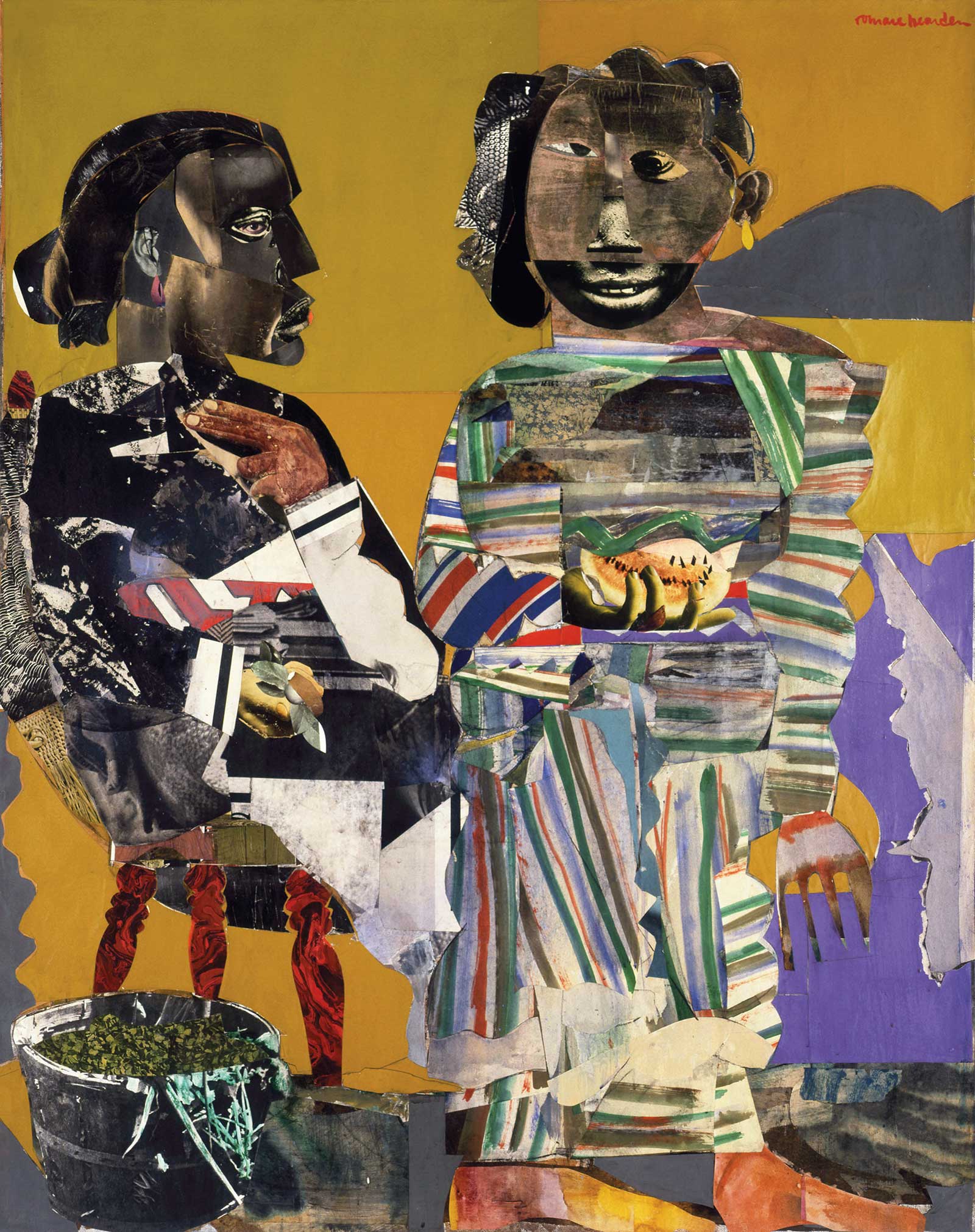 Romare Bearden (1911-1988), Melon Season, 1967. Mixed media on canvas, 56½ x 44½ in. Collection Neuberger Museum of Art, Purchase College, SUNY, Gift of Roy R. Neuberger, 1976.26.45. © VAGA at Artists Rights Society (ARS), NY. Courtesy American Federation of Arts.
Many pieces highlighted in the show come from the Romare Bearden Foundation, the estate of Bearden’s wife, and various public and private collections. “Bearden is really best known for describing the condition and experience of Black Americans during the period of time that he made art. And that is really the work people are most familiar with. This is an entirely unfamiliar body of work that really disappeared from the literature of Bearden...It’s a rare and exciting opportunity,” says Fitzpatrick. 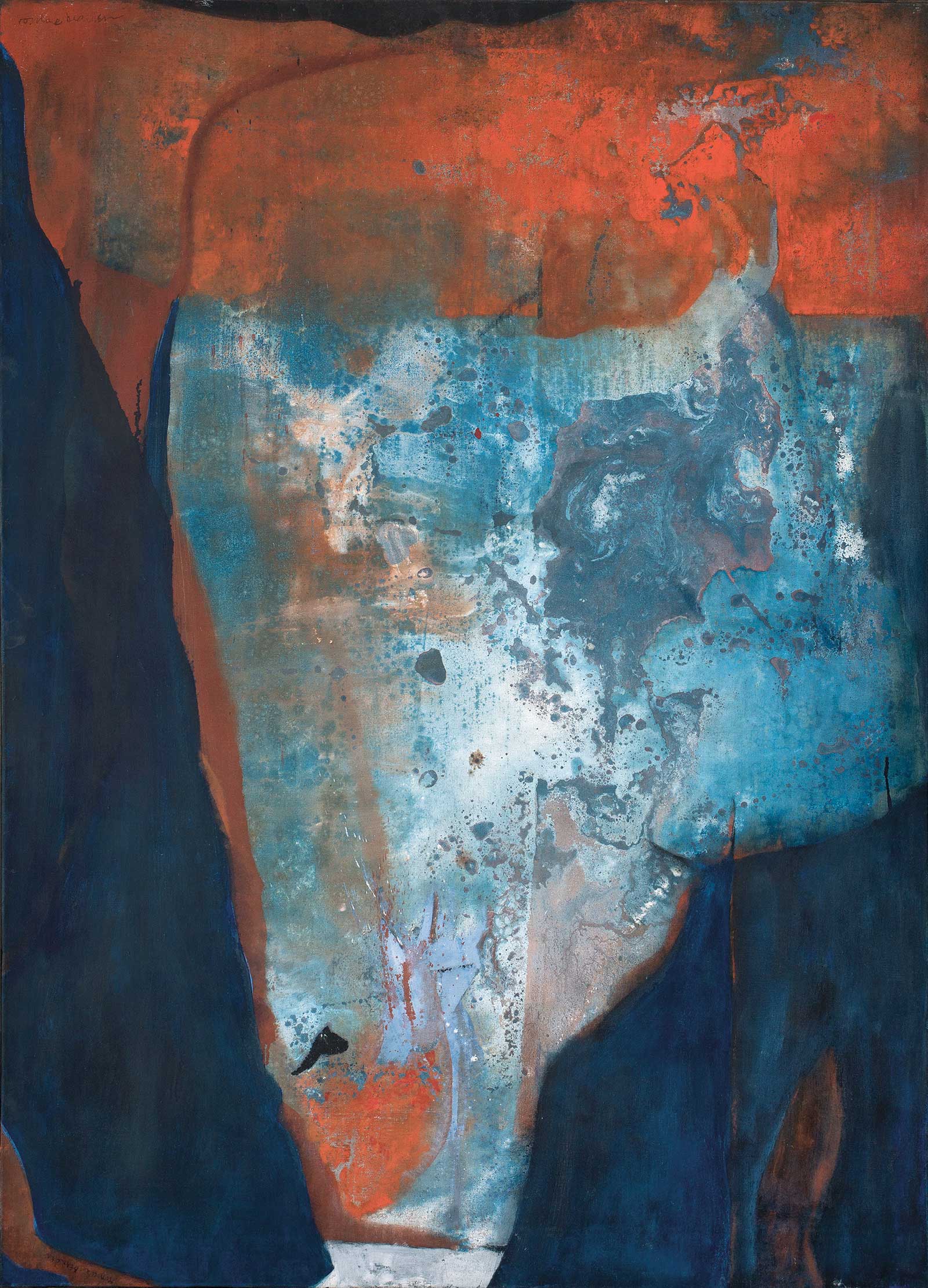 Romare Bearden (1911-1988), Strange Land, ca. 1959. Oil and casein on canvas, 58 x 421/8 in. Nanette Bearden Trust. © Romare Bearden Foundation / VAGA at Artists Rights Society (ARS), NY. Courtesy DC Moore Gallery, NY and American Federation of Arts.
The show surveys pieces Bearden created between 1952 and 1963 that includes abstract watercolors, oil paintings and collages. “I think what’s so interesting about these abstractions is that they’ll be very unexpected...Most people have never seen a pure abstraction by the artist...[They] really inform all that came afterward...the work people know best.”
One of her favorite pieces is the striking blue River Mist, which “shows the multiple ways in which he was using paint on canvas, cutting them and pasting them to create collages.” These paintings, Fitzpatrick says, all demonstrate the many ways that Bearden experimented with pigment and collage. 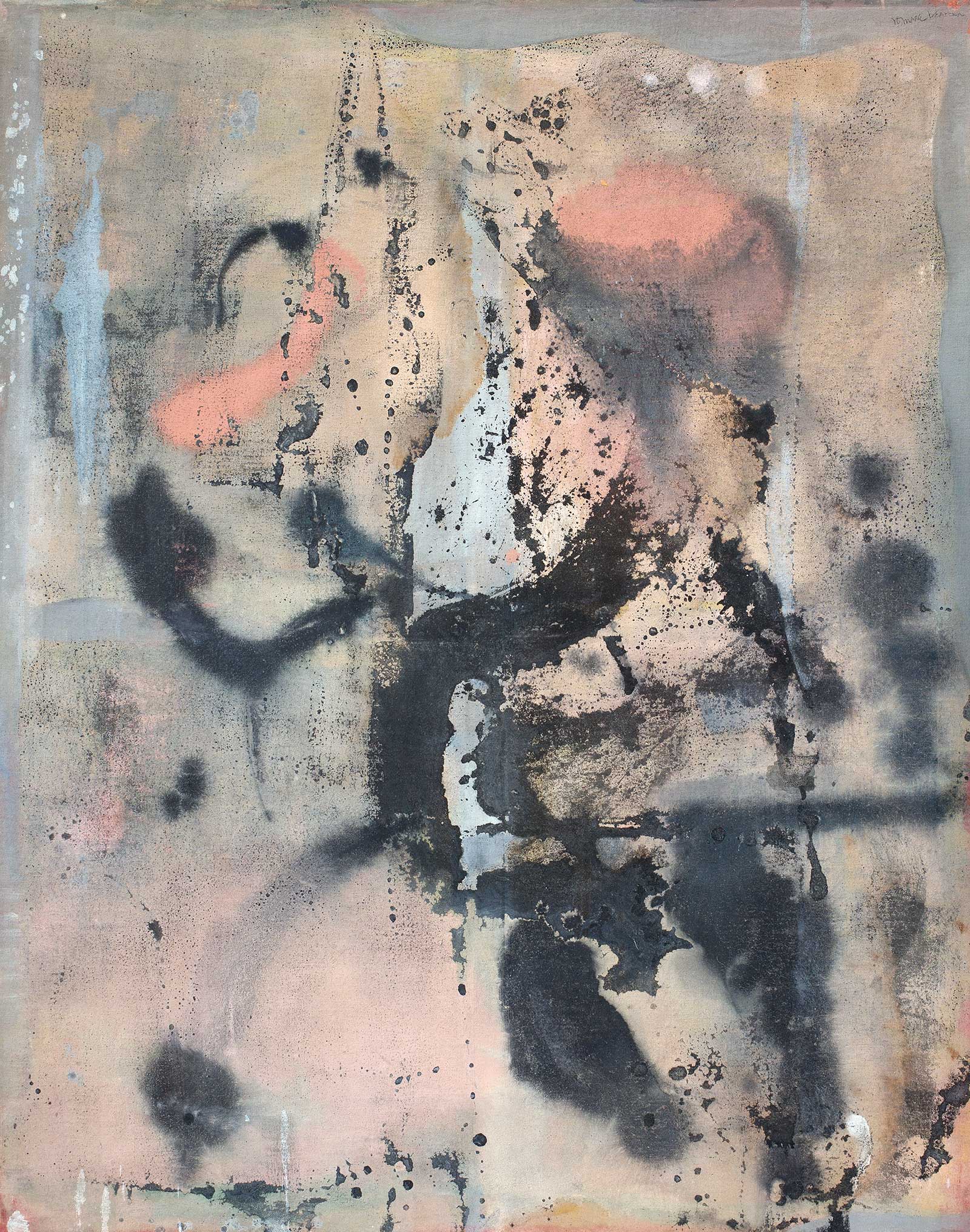 Romare Bearden (1911-1988), Eastern Gate, ca. 1961. Oil on canvas, 557/8 x 44 in. © Romare Bearden Foundation / VAGA at Artists Rights Society (ARS), NY. Courtesy DC Moore Gallery, NY and American Federation of Arts.
After its time at the Gibbes Museum of Art, Romare Bearden: Abstraction will journey to the University of Michigan Museum of Art in Ann Arbor, Michigan, from February to May 2022 and then to the Frye Art Museum in Seattle, Washington, from June to September 2022. This exhibition is organized by the American Federation of Arts and the Neuberger Museum of Art of Purchase College, SUNY. The national tour of Romare Bearden: Abstraction is sponsored by Morgan Stanley. —
Powered by Froala Editor