Anew exhibition at Yale University Art Gallery celebrates 150 years of women artists who studied and trained at the Yale School of Art (formerly Yale School of the Fine Arts) during their careers. On the Basis of Art: 150 Years of Women at Yale, running September 10, 2021, to January 9, 2022, takes visitors through the history of women at the Yale School of Art, demonstrating the ways in which these groundbreaking artists broke down walls and surged past the confines of the time to become established figures in the field.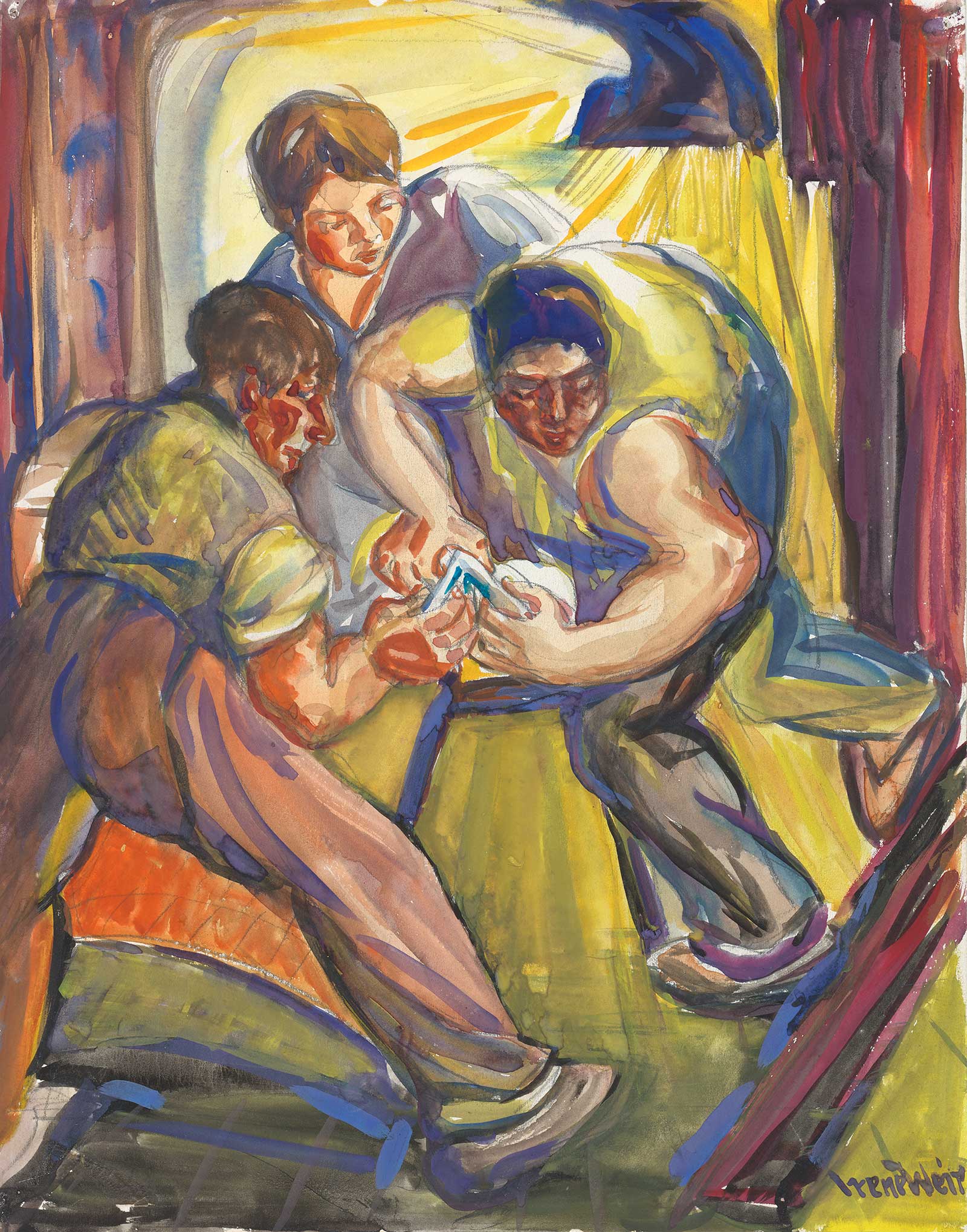 Irene Weir (1858-1944), The Blacksmith, Chinon, France, ca. 1923. Watercolor on paper. Yale University Art Gallery, Gift of Irene Weir, BFA 1906.
“When the [School of Fine Arts] opened in 1869, coincidentally, it was the same year that Susan B. Anthony and Elizabeth Cady Stanton established the National Woman Suffrage Association. It marked a point in time when women’s rights and women’s autonomy were being considered and fought for. It was kind of a remarkable year in that respect,” says exhibition curator Elisabeth Hodermarsky, Sutphin Family Curator of Prints and Drawings at Yale University Art Gallery. “Several of the women who studied at Yale went on to serious careers, [studying and training in Europe],” Hodermarsky adds. Several noteworthy historic artists in the exhibition include Mary Foot, Irene Weir and Josephine Miles Lewis. “[Foot] went to Paris and Italy to study. She was an incredibly interesting character and worked quite a bit in portraiture. Irene Weir is another artist who is quite interesting in the early period. She was the niece of the first dean of the School of Art, John Ferguson Weir. She studied at the school, went to train in Europe and came back. She was an extremely talented painter.”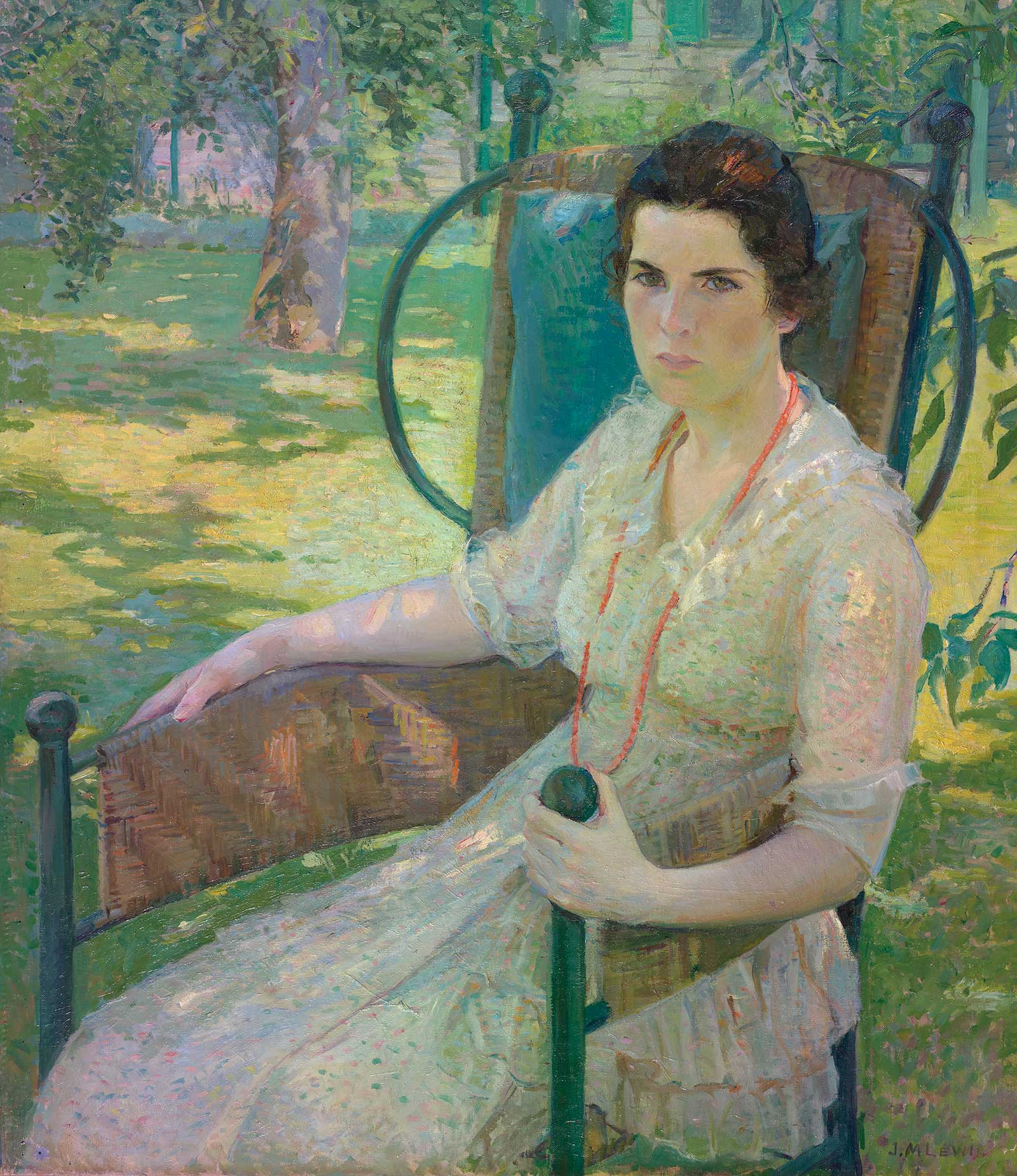 Josephine Miles Lewis (1865-1959), In the Orchard, 1922. Oil on canvas. Yale University Art Gallery, Gift of Mrs. James Finn.
More than 75 artists are featured in On the Basis of Art, covering a wide range of mediums, including painting, sculpture, drawing, print, photography, textile and video. And Hodermarsky explains that the continuing impact of arts education at Yale through the representation of women artists working today is an extremely important component of the exhibition. “With every living artist whose work is in this show, we reached out to them and asked for their time to conduct an oral history about their experience at Yale and beyond,” she says. “[It was] not always about their gender experiences, but almost all of these oral histories did touch on that. Their experiences as women at the University, at the School of Art.” For historic artists, Hodermarsky explains that “from the very beginning we mined primary documents from the library archives...letters, writings of women, using their prose, their reflections.”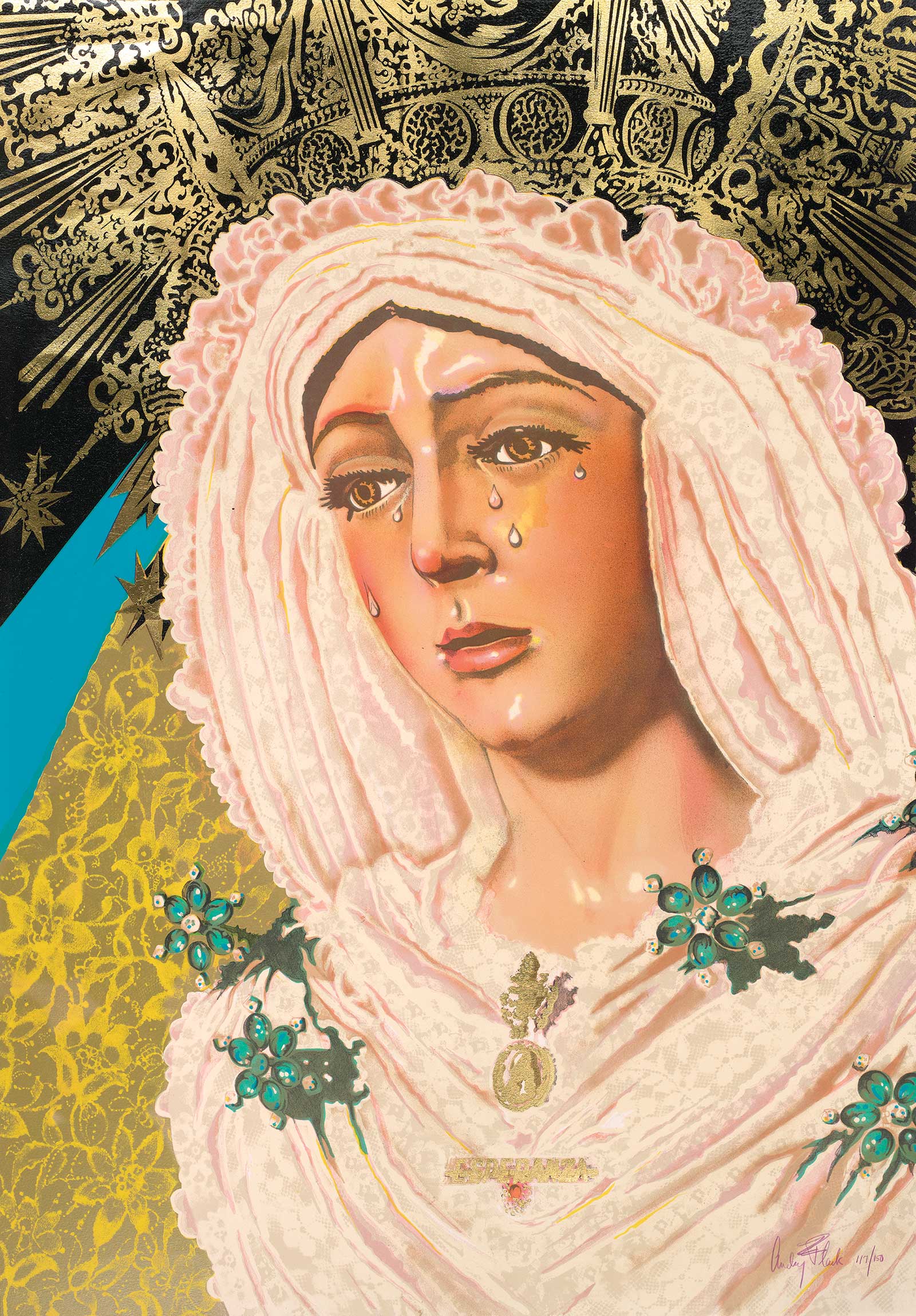 Audrey Flack (b. 1931), Lady Madonna, 1972. Lithograph. Yale University Art Gallery, Gift of Dr. and Mrs. Samuel S. Mandel, MD. © Audrey Flack.
She continues, “Every exhibition, every history, has been predominantly told by men...When we commenced work on this project, we really took that to heart. Here was an opportunity...to tell this 150-year history and its intermingling with the Yale University Art Gallery from a female identifying perspective. That was really very important to us from the get go.”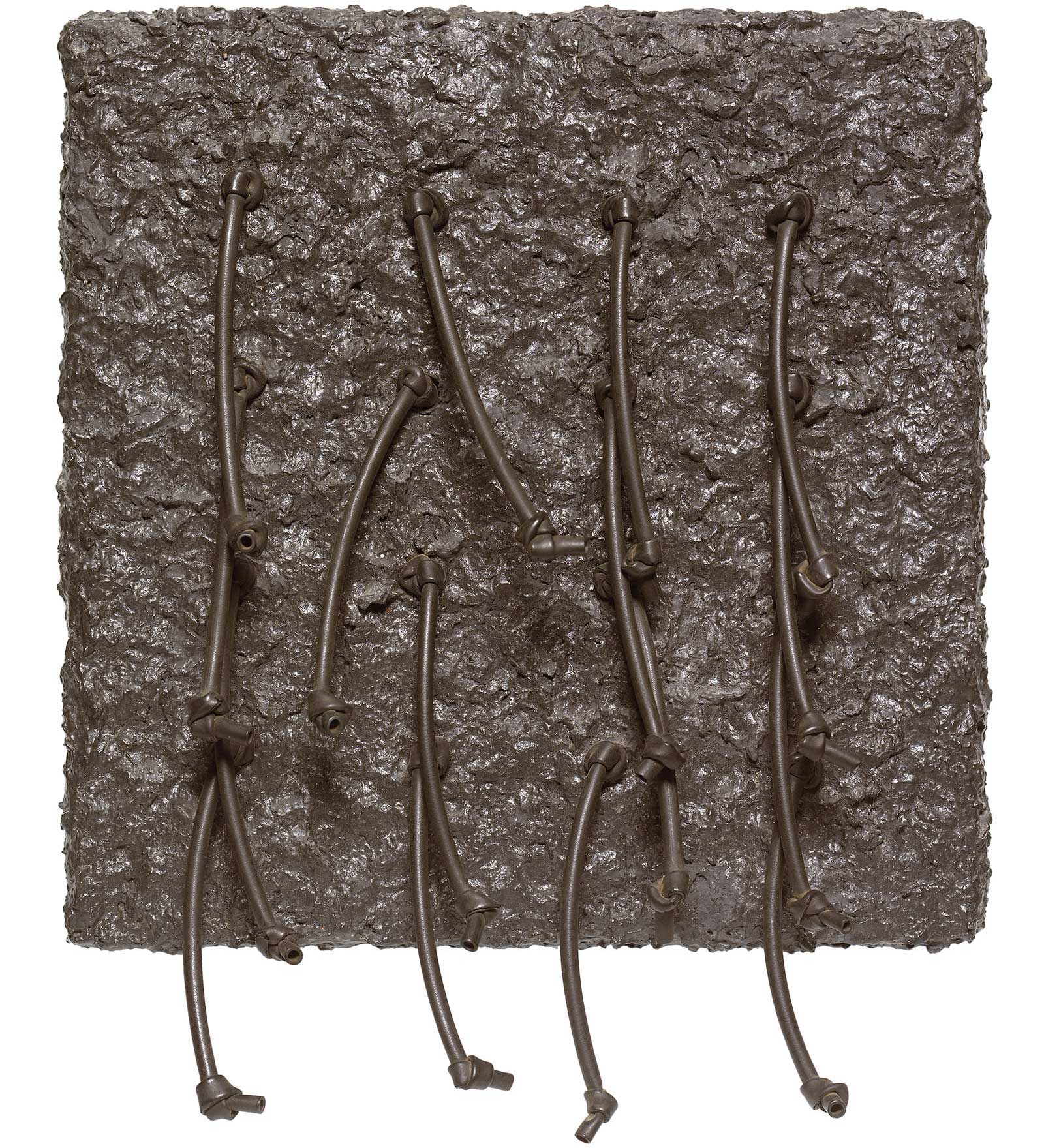 Eva Hesse (1936-1970), No Title, 1967. Acrylic, wood shavings, unknown modeling compound, Masonite and rubber. Yale University Art Gallery, Gift of Robert Mangold, BFA 1961, MFA 1963, and Sylvia Plimack Mangold, BFA 1961, in memory of Eva Hesse, BFA 1959, and in honor of Helen A. Cooper, MA 1975, Ph.D 1986. © The Estate of Eva Hesse. Courtesy Hauser & Wirth.
While the catalog is focused on chronology, the exhibition itself takes a more thematic approach, divided into six sections. “It was really important that we allow the mediums to co-mingle and to tell the stories across media and across generations,” says Hodermarsky. The six themes are: “Carving a Presence” (portraiture); “Sculpting Space and Place” (conceptions of space and place); “Casting History, Etching Memory” (history); “Drawing Identity” (a section on identity); “Modeling Nature, Tracing the Human Footprint” (nature) and “Spreading Myth, Legend, and Ritual” including works by artists that engage with creation stories from their native cultures or literary stories like Grimms’ Fairy Tales.
There will also be an audio guide with excerpts of those interviews with the exhibition’s contemporary artists along with narrations. “In terms of gender, we really tried to include their voices,” says Hodermarsky. “I’m happy that those voices are coming through.” —
Powered by Froala Editor