Marsden Hartley (1870-1953) was born in Lewiston, Maine, and referred to himself as “the painter from Maine.” A loner and peripatetic by nature, he was constantly on the move, but always returned to Maine.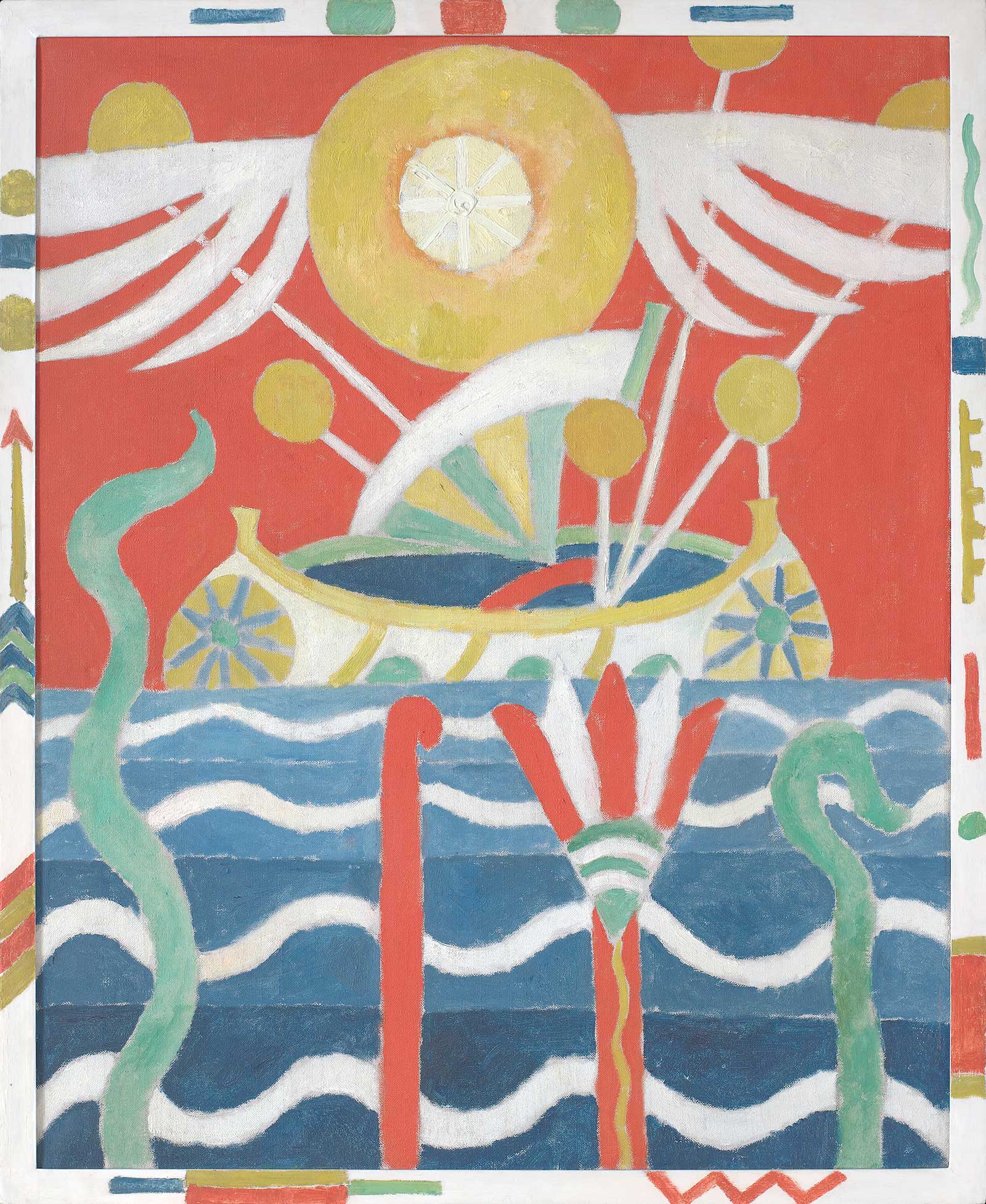 Marsden Hartley (1877-1943), Canoe (Shiff), 1915. Oil on canvas with painted frame, 39¾ x 317/8 in. (artwork), 52 x 433/8 x 3” (framed). Vilcek Collection, 2015. 05.01.
The Bates College Museum of Art in Lewiston has partnered with the Vilcek Foundation in New York to mount the exhibition Marsden Hartley: Adventurer in the Arts. It will be shown at Bates September 20 through November 19 and at the Vilcek Foundation from September 19, 2022, through January 20, 2023.
The 35 works in the exhibition include all 22 of the artist’s works in the Vilcek Collection. Personal items from the Marsden Hartley Memorial Collection at Bates will be shown along with his paintings and drawings, and include mementos of his travels from pressed edelweiss to postcards.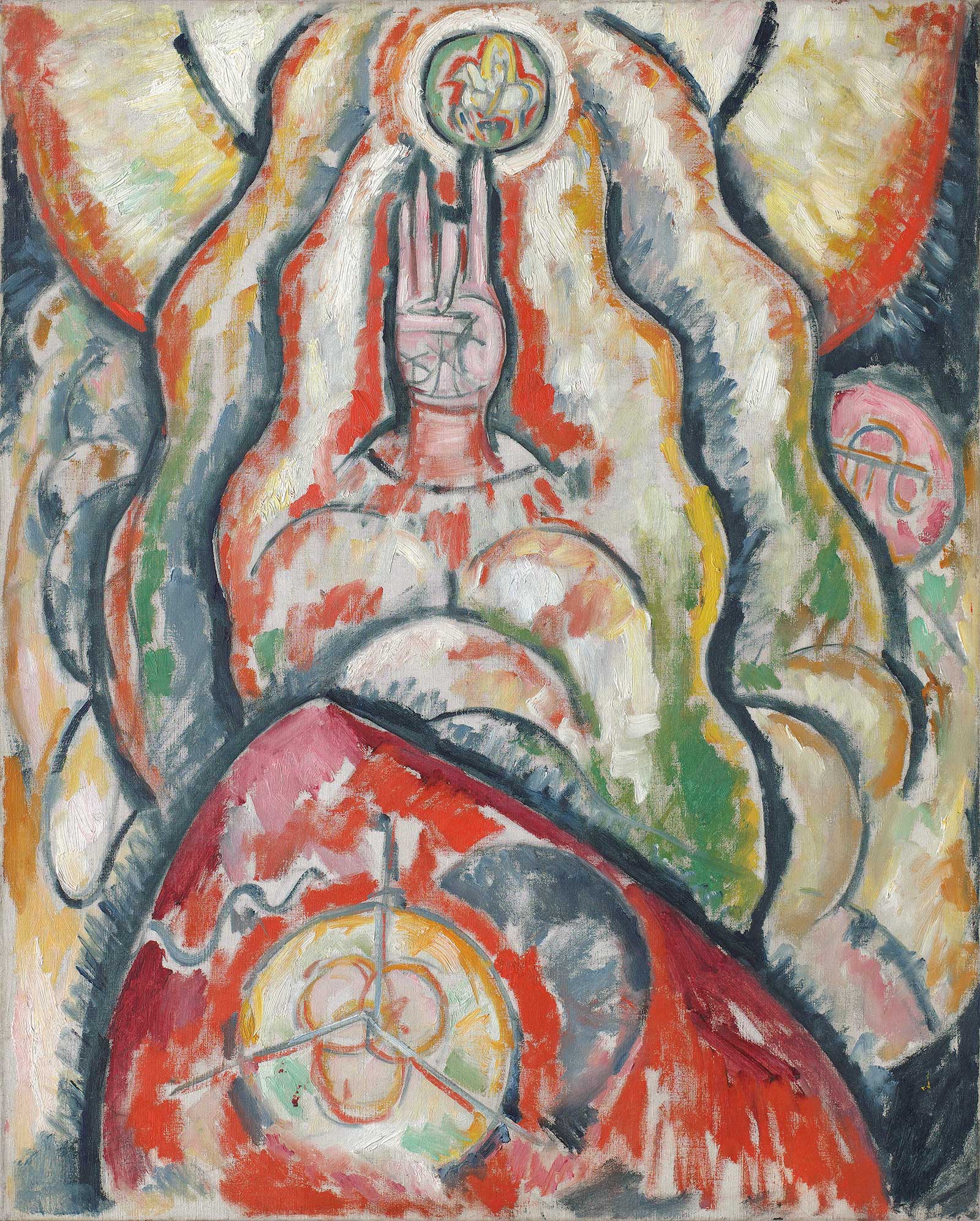 Marsden Hartley (1877-1943), Portrait Arrangement No. 2, 1912-13. Oil on canvas, 39½ x 31¾ in. (artwork), 54½ x 46½ x 2½ in. (framed). Vilcek Collection, 2005.09.01.
Rick Kinsel, president of the Vilcek Foundation, notes, “The importance of travel on Marsden Hartley’s artistic development is the ideal subject for the second exhibition in our gallery, which examines one of the most prominent American modernist artists in the collection using an unconventional lens to reveal new facets of his work. At the heart of the foundation’s mission is the idea that diverse perspectives catalyze innovation. The unique cultures and individuals that Hartley encountered during his trips profoundly impacted his growth as a person and artist; his ability to integrate these varied influences is precisely what makes his works so striking.”
Paris, Berlin, New York and New Mexico all played a role in his artistic growth. While in Germany, he was associated with Wassily Kandinsky (1866-1944) and Franz Marc (1880-1916). Hartley had been influenced early in his life by the New England transcendentalists, Emerson and Thoreau as well as the poet Walt Whitman. Hartley was also a poet.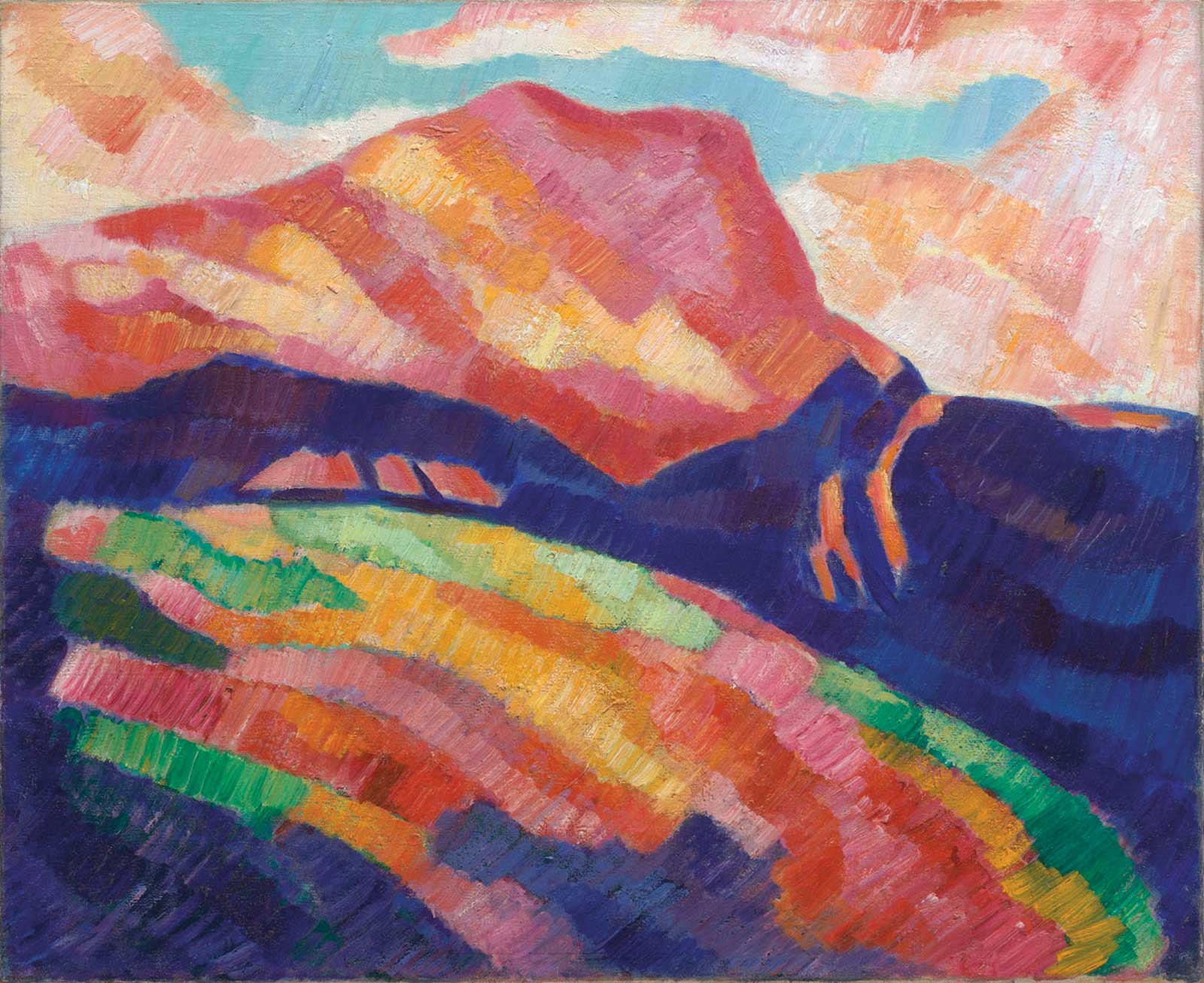 Marsden Hartley (1877-1943), Mont Sainte-Victorie, ca. 1927. Oil on canvas, 20 x 24 in. (artwork), 27½ x 31¾ x 2½ in. (framed). Vilcek Collection, 2007.06.01.
He wrote to Alfred Stieglitz, “I have learned that what I came for is not to find art but to find myself and this I have done...I could never be French. I could never become a German—I shall always remain the American—the essence which is in me is American mysticism...and it is the same element that I am returning to now with a tremendous increase of power through experience.”
Influenced by German expressionism and celebrating his American roots, he produced a series of paintings in Berlin called Amerika, using the German spelling. Among the series is Canoe (Schiff), 1915, which incorporates Native American motifs and will be exhibited for the first time in America. 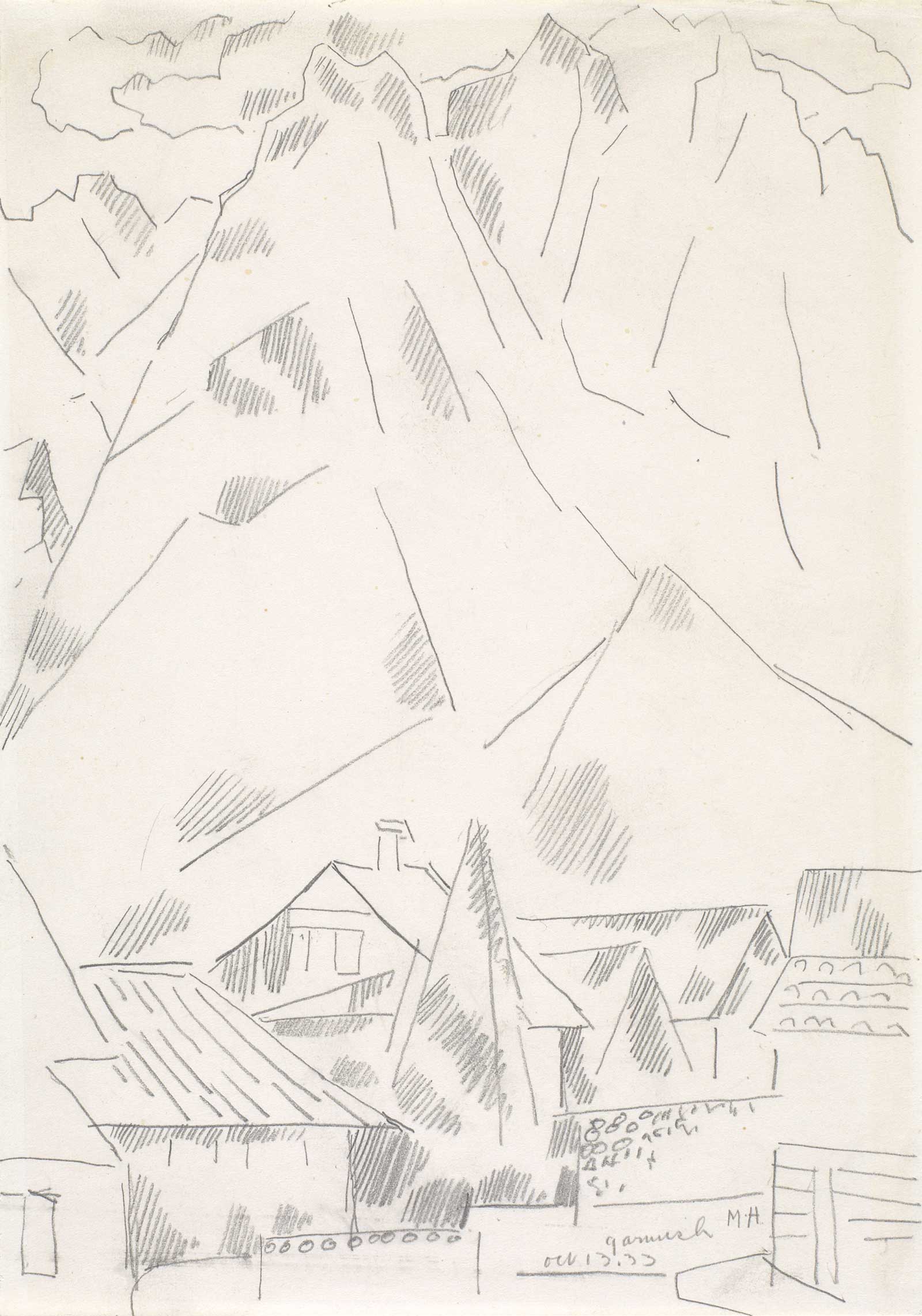 Marsden Hartley (1877-1943), Garmisch, October 13, 1933. Graphite on paper, 101/8 x 77/8 in. Bates College Museum of Art, Marsden Hartley Memorial Collection, gift of Norma Berger, 1955.1.28.
The painting and three others were purchased by a young German couple in 1915. Again, writing to Stieglitz, Hartley commented, “They have been bought by a young couple who have recently been married and are to be the only decorations in the music room which I hear is very beautiful.” Sometime before 1929, the painting was purchased by Hans Hasso Baron von Veltheim. It was confiscated during World War II and restituted to von Veltheim’s grandson in 2014. It entered the Vilcek Collection the following year.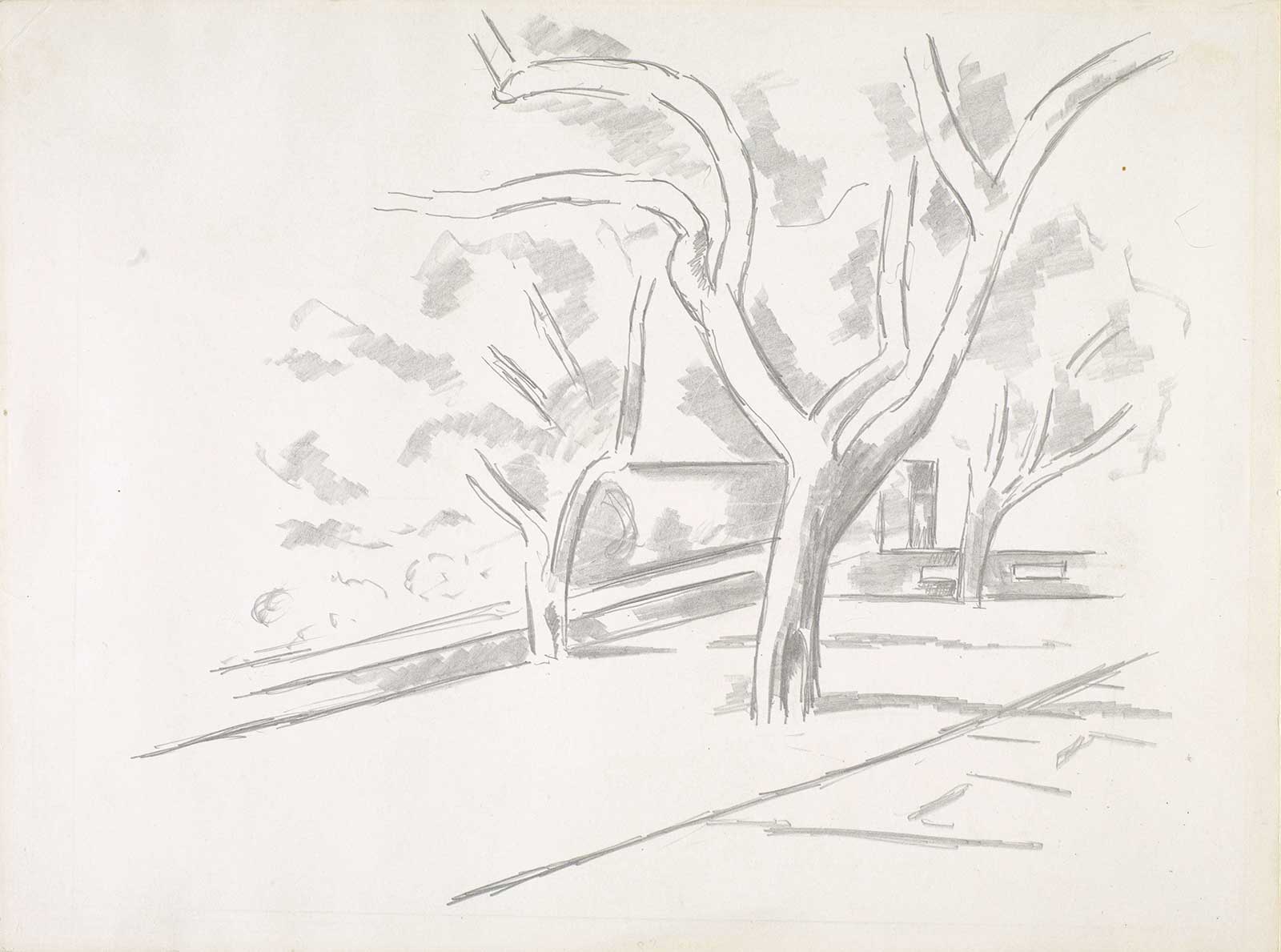 Marsden Hartley (1877-1943), [Landscape with Trees in a Courtyard], 1927. Graphite on paper, 9 x 12 in. Bates College Museum of Art, Marsden Hartley Memorial Collection, gift of Norma Berger, 1955.1.18.
In his preface to the catalog to the exhibition, Bates Museum director, Dan Mills, writes, “This selection of artworks and personal objects, coupled with the insightful essays by Bates College Museum curator William Low, Vilcek Foundation curator Emily Schuchardt Navratil, and Vilcek Foundation director Rick Kinsel, further an understanding of this important aspect of Hartley’s life.” —
Powered by Froala Editor