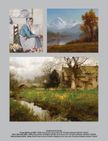
The journey through American art is a path that tells the story of a constantly changing world. It ranges from the idyllic Hudson River School landscapes that have seemed to fade over time as industrialization took hold and bustling cities began to make their mark all the way through the modernist works and to the abstract expressionist era when the notions of traditional art were tipped on their axis. There are other genres that fill in the gaps, such as fine portraiture and illustration, that continue to delight collectors.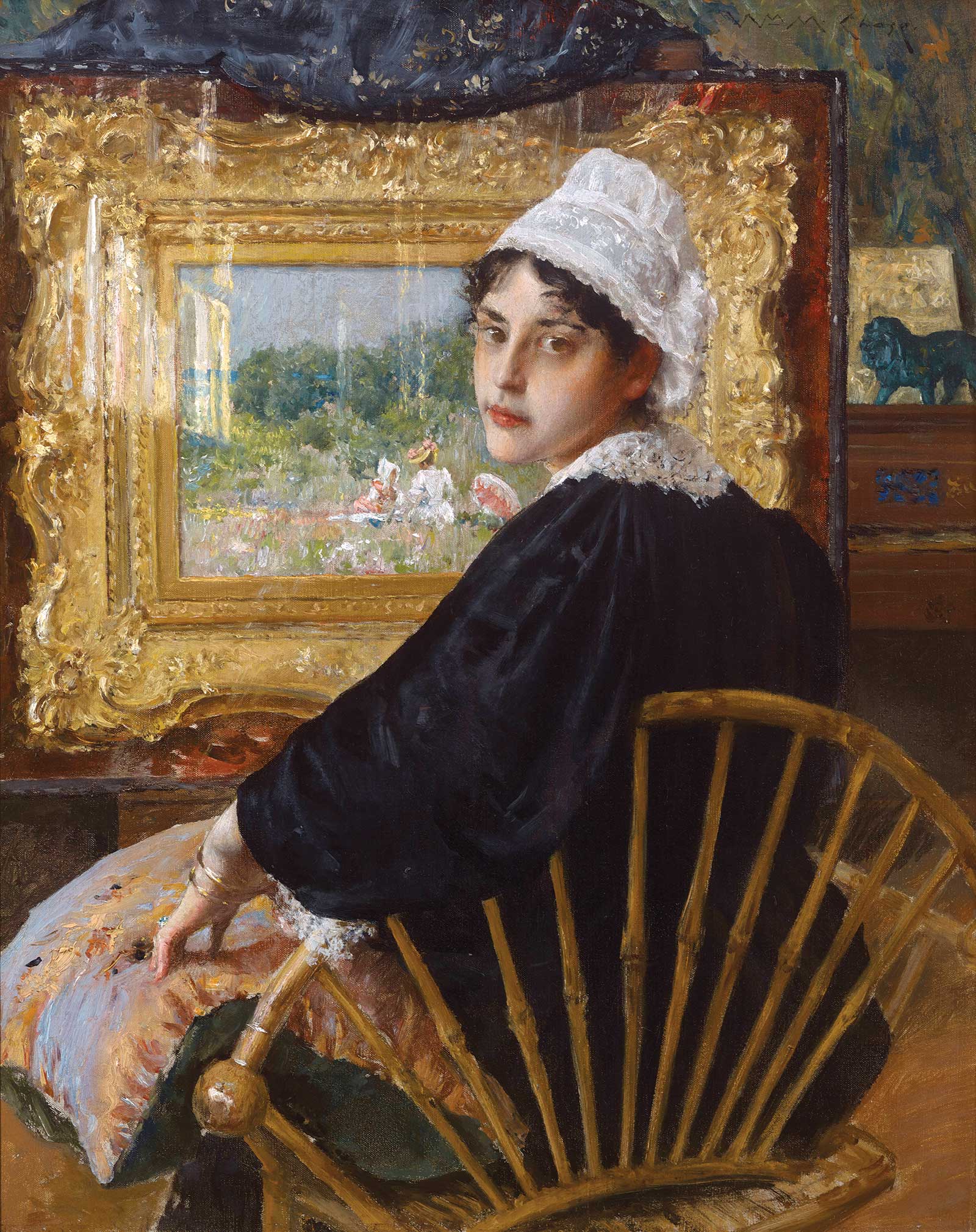 William Merritt Chase (1849-1916), An Artist’s Wife, 1892. Oil on canvas, 201⁄8 x 161⁄8 in. Fayez S. Sarofim Collection.
This summer, the Museum of Fine Arts, Houston will present an exclusive exhibition of one of the most astonishing and significant collections of American art in private hands. For around 60 years Houston collector and philanthropist Fayez S. Sarofim has quietly assembled masterpieces reflecting key periods of American art and speak to its evolution. The show, Three Centuries of American Art: Antiquities, European, and American Masterpieces—The Fayez S. Sarofim Collection, marks the first time Sarofim’s works will be on public view at the same time.
Sarofim, who has been a longtime supporter of the museum and other arts venues in Houston, has had art in his life from a young age. His maternal grandfather was a collector in Cairo, Egypt—Sarofim’s country of origin—and established one of its museums. “Mr. Sarofim loves his adopted country and wanted to tell the story of American art in his collection,” says Alison de Lima Greene, the Isabel Brown Curator of Modern and Contemporary Art at the museum. In the 1960s the collection began to take shape and gained momentum in the 1970s when he started to buy pieces from the 19th and early 20th centuries.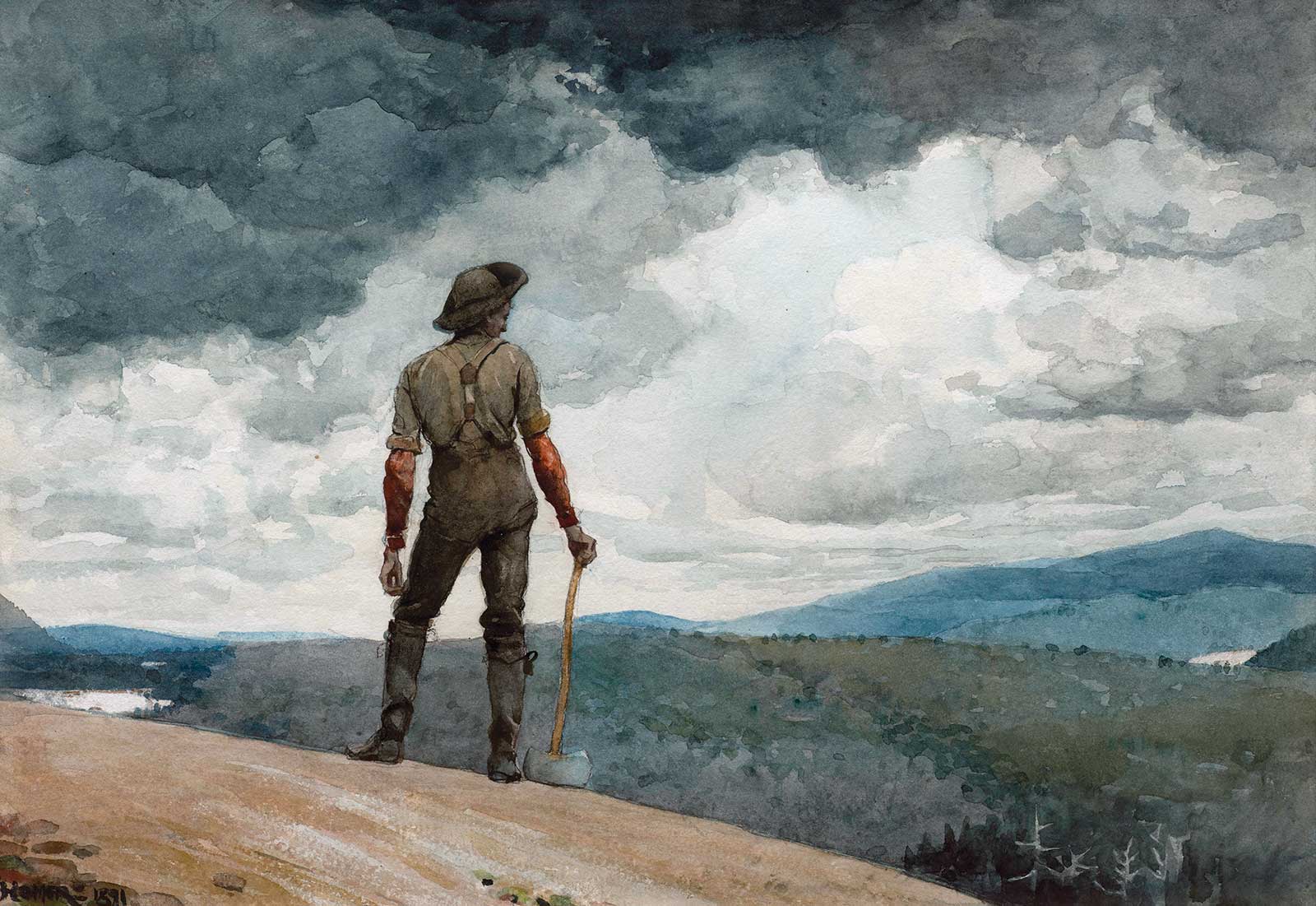 Winslow Homer (1836-1910), The Woodcutter, 1891. Watercolor over graphite on wove paper, 14 x 20 in. Fayez S. Sarofim Collection.
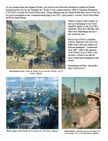
“He’s always been a very responsible collector, and anytime there’s an important show, because of the great strengths in his collection, he’s always willing to lend pieces,” says Greene. “He is a model collector in that fashion, but a very private man. We talked with him thoughtfully about when it would be an appropriate time to celebrate the collection. A lot of Houstonians don’t know [the work he has in his collection], but we wanted to make the celebration possible because the museum has enjoyed so much of his generosity and support.”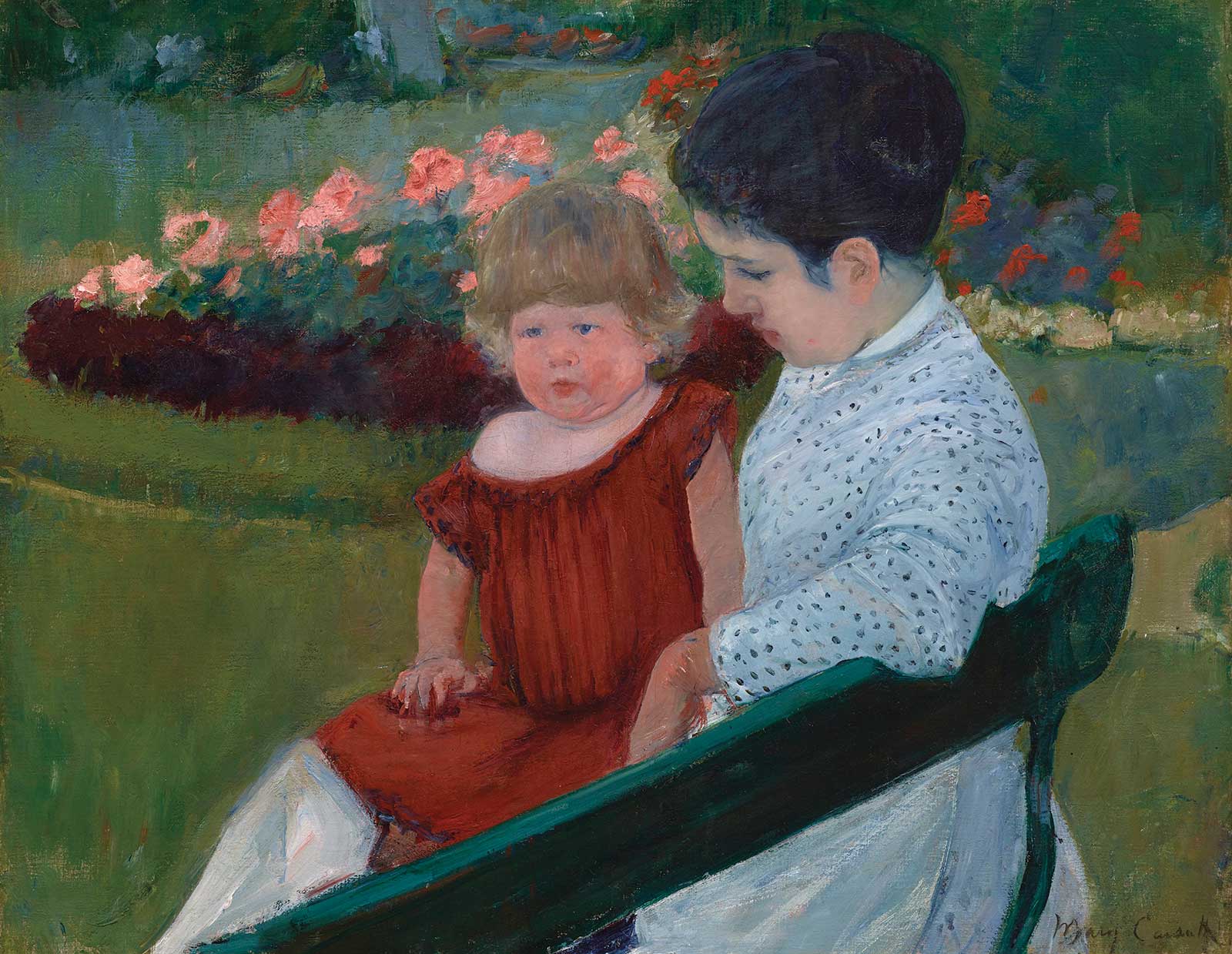 Mary Cassatt (1844-1926), In the Park, ca. 1894. Oil on canvas, 30 x 36 in. Fayez S. Sarofim Collection.
The exhibition, which will have 218 works on view—primarily American art, but also Native American pottery and textiles, European paintings and Egyptian art—is organized chronologically by period and theme. “Depending on which way you enter the exhibition, you might see an array of American art,” Greene explains, “or if you come in through the first rooms you will see the display of the antiquities, Native American material and European masterpieces until we get to John Singleton Copley and the great American art that is the focus of the collection.”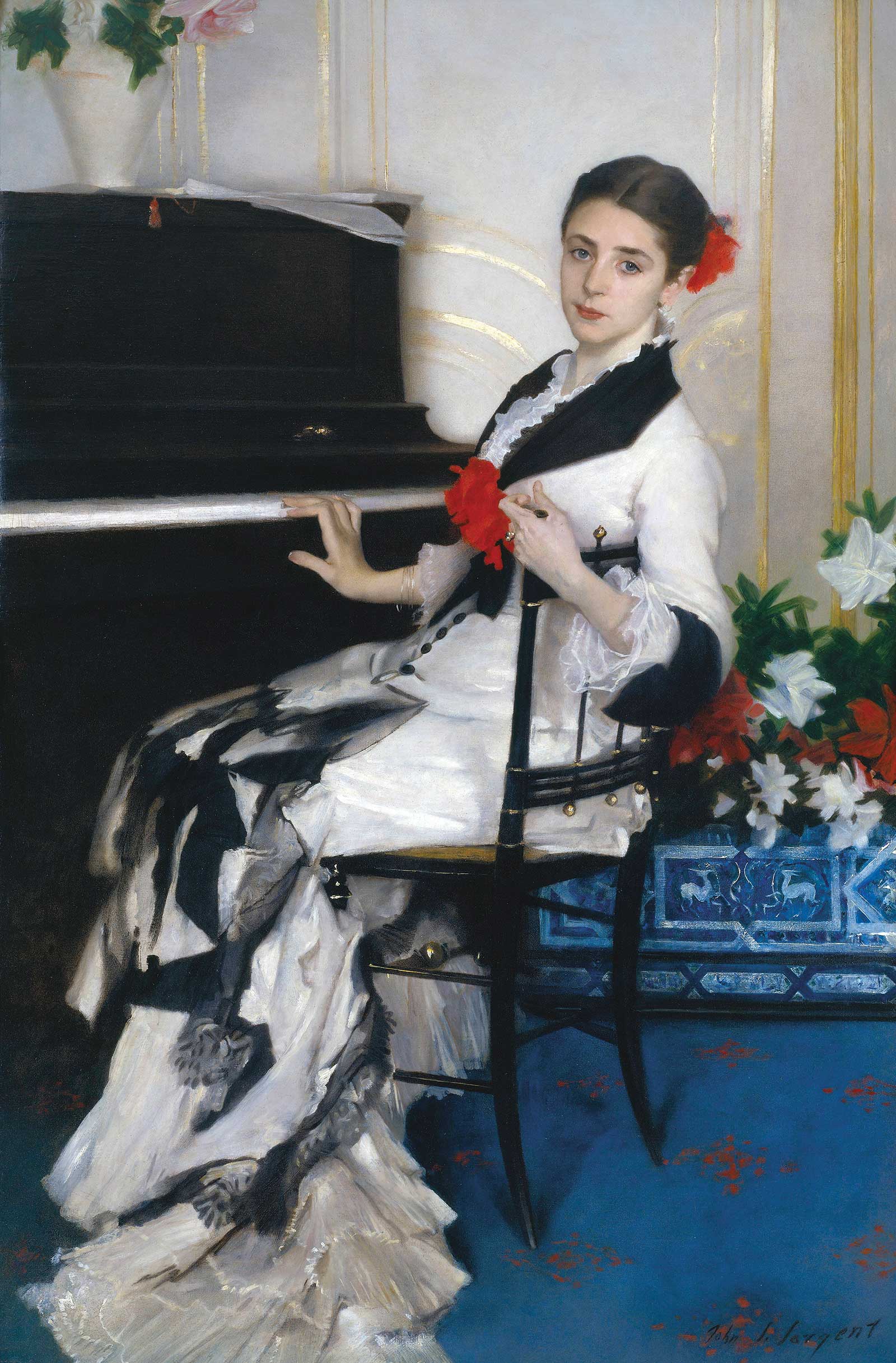 John Singer Sargent (1856-1925), Madame Ramón Subercaseaux, ca. 1880–81. Oil on canvas, 65 x 43 ¼ in. Fayez S. Sarofim Collection.
Portraiture and figurative artwork has a prominent place in Sarofim’s collection with works by many of the greats: Copley, John Singer Sargent, Mary Cassatt and Robert Henri, to name a few. Copley, considered the most important colonial portraitist in New England before leaving to study in Italy and settling in London where he continued to paint aristocrats, is represented by the commanding full-length portrait Sir Edward Knatchbull, 8th BT, 1800-03. The portrait is actually a segment of a larger composition, The Knatchbull Family, which was painted by Copley of Knatchbull, his 10 children, his new wife and, in an odd request, his two deceased wives. In the late 19th century the portrait was cut apart and only three sections survived, including this one, representing the far right of the painting.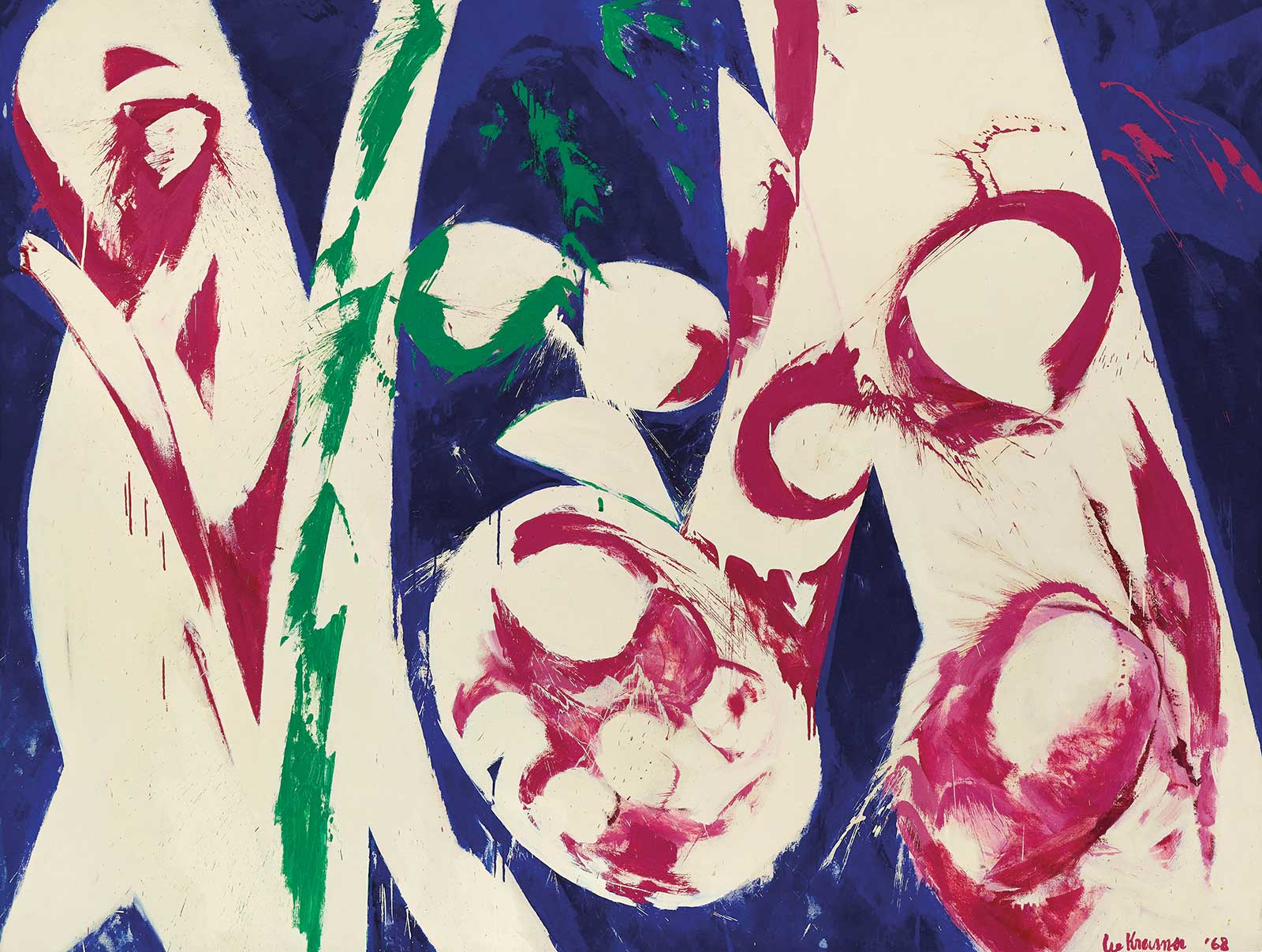 Lee Krasner (1908-1984), The Green Fuse, 1968. Oil on canvas, 68 x 90 in. Fayez S. Sarofim Collection. © 2021 The Pollock-Krasner Foundation/Artists Rights Society (ARS), New York.
More than a dozen paintings by Sargent are in the collection. The works may be some of the artist’s best, with portraits, florals, architecture and even beautiful figurative scenes being among them. The standout is Madame Ramón Subercaseaux, an intimate portrait done between 1880 and 1881. A number of his popular Italy scenes are included such as Fountain at Bologna, circa 1906; A Window in the Vatican, 1906; and Santa Maria della Salute, 1913.
“One of the highlights that the general public will particularly respond to is Winslow Homer’s beautiful watercolor The Woodcutter from 1891,” says Greene. She adds, “Another one of the things that will be an icon in the show is Mary Cassatt’s In the Park, 1894. We have several beautiful paintings by her in the show. William Merritt Chase is in the show a few times. The most splendid painting being A Lady in Evening Dress from 1893. America in the Gilded Age could not be better represented by this portrait.”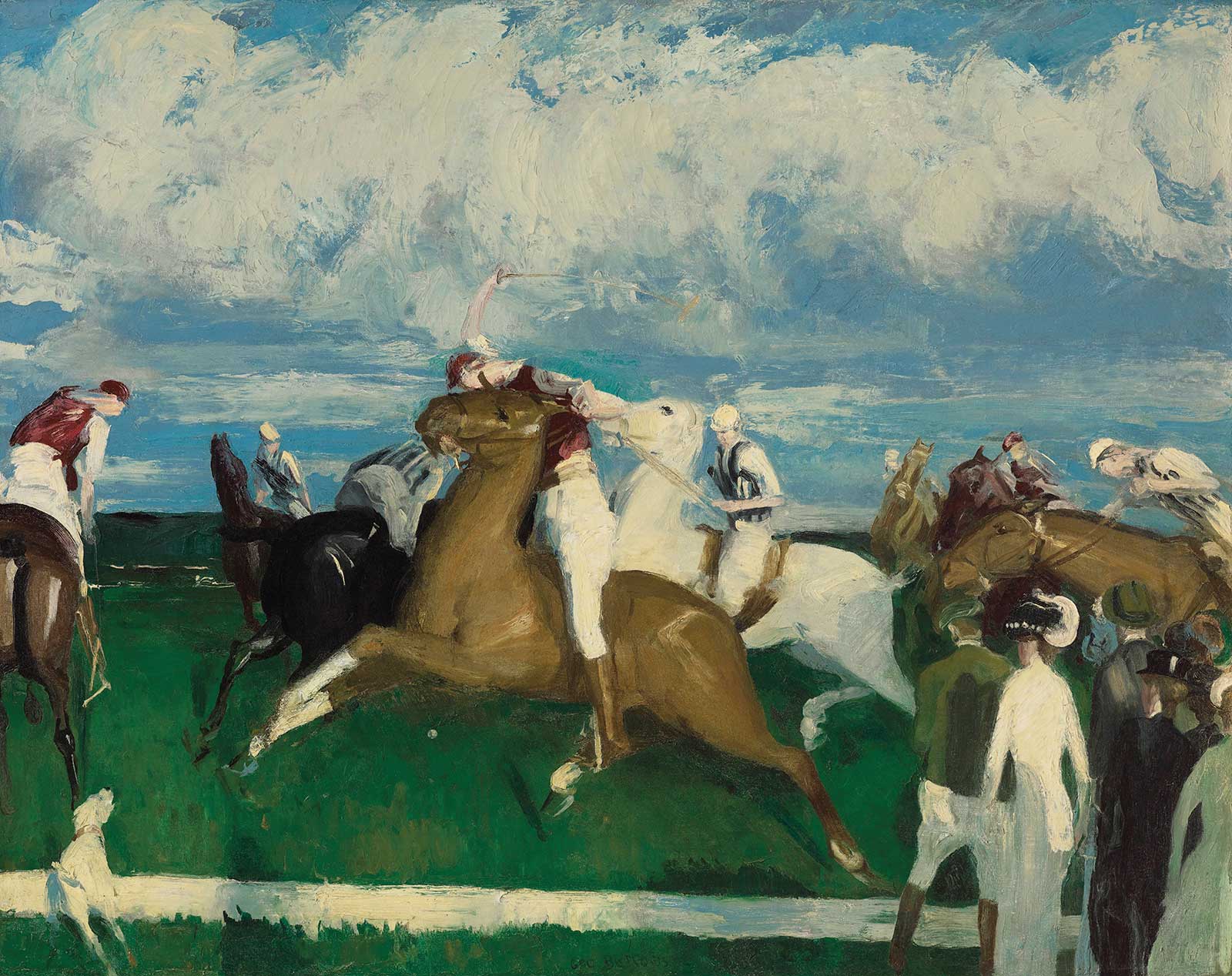 George Bellows (1882-1925), The Polo Game, 1910. Oil on canvas, 38 x 48 in. Fayez S. Sarofim Collection.
Another Chase in the show is An Artist’s Wife, 1892, which depicts his wife, Alice, who was a frequent model for the artist. In this portrait Alice sits in Chase’s Long Island summer studio; on the easel is a painting of his work A Fairy Tale, from around the same year, in a gilded frame.
A turning point in the collection are works by Childe Hassam, particularly his 1918 painting Celebration Day, which is one of his iconic flag paintings of New York City. The work shows a Red Cross drive along Fifth Avenue during the waning days of World War I. “This is painted in 1918, and at the same the artists from the Aschan School were making their mark,” Greene explains. “That’s another strong area of the collection.” Works by Maurice Prendergast, Robert Henri and rare paintings by Everett Shinn round out the next era of art and, as Greene says, “make you feel like you’ve plunged into the 20th century.”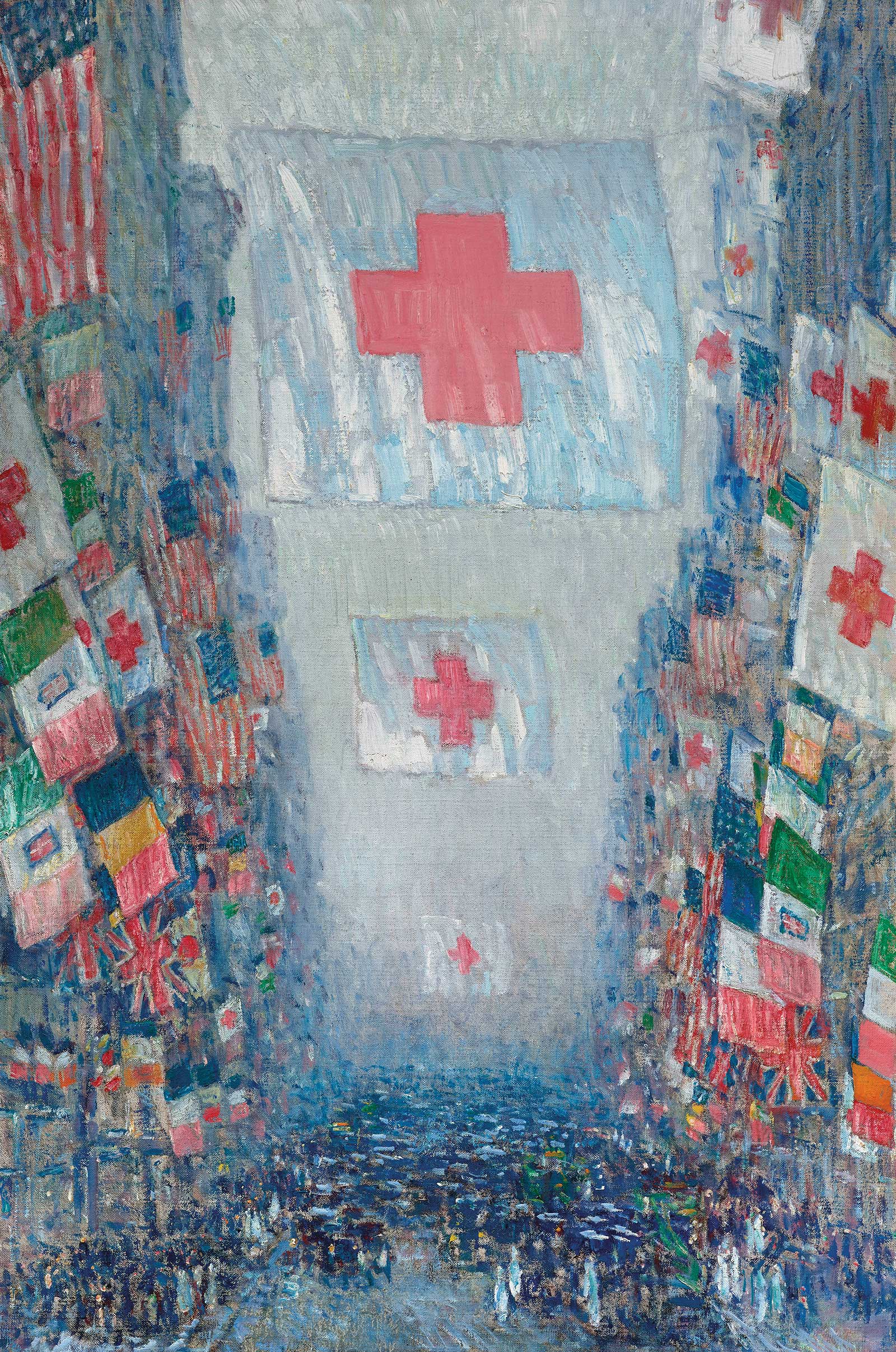 Childe Hassam (1859-1935), Celebration Day, 1918. Oil on canvas, 35½ x 23½ in. Fayez S. Sarofim Collection.
The Stieglitz Circle is beautifully represented with Maine landscapes by John Marin and a Georgia O’Keeffe. Sarofim, as Greene shares, is a particular fan of Marsden Hartley and there are also two Stuart Davis paintings in the collection, as well as New York School pieces from artists such as Lee Krasner, Helen Frankenthaler, Robert Motherwell and Willem de Kooning.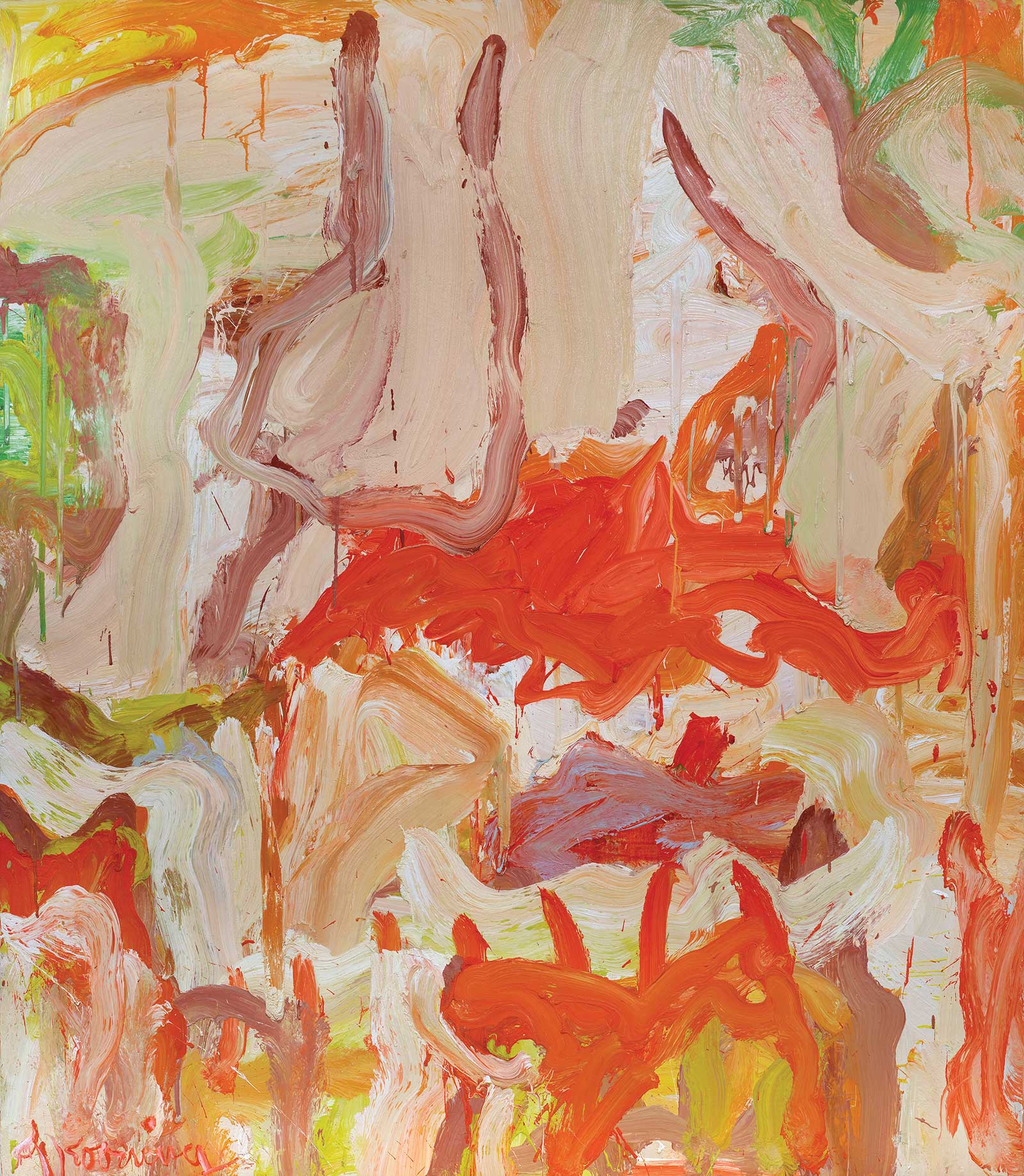 Willem de Kooning (1904-1997), Landscape of an Armchair, 1971. Oil on canvas, 80 x 70 in. Fayez S. Sarofim Collection. © 2021 The Willem de Kooning Foundation / Artists Rights Society (ARS), New York.
The show will be on view June 27 through September 6. Accompanying the exhibition is Masterpieces from the Fayez S. Sarofim Collection: From Antiquity to Abstraction, a fully illustrated catalog written by the museum curatorial staff with an introduction from Gary Tinterow, the museum’s director and its Margaret Alkek Williams Chair. Along with the extraordinary journey through American art, visitors will undoubtedly notice the passion that Sarofim has for collecting. Greene says, “There’s a nobility and humanism that runs throughout the collection and a certain zest for life.” —
Three Centuries of American Art: Antiquities, European, and American Masterpieces—The Fayez S. Sarofim Collection
June 27-September 6
Museum of Fine Arts, Houston
10001 Bissonnet Street, Houston, TX 77005
(713) 639-7300, www.mfah.org
Powered by Froala Editor