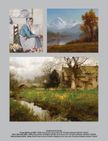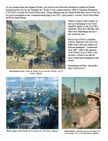
An upcoming exhibition at the High Museum of Art in Atlanta takes a look at how historic artists with no formal training first gained recognition in the mainstream art world. Inspired by the dissertation of the same name by Katherine Jentleson, the High Museum’s Merrie and Dan Boone Curator of Folk and Self-Taught Art, the exhibition specifically surveys the careers of John Kane, Horace Pippin and Anna Mary Robertson “Grandma” Moses.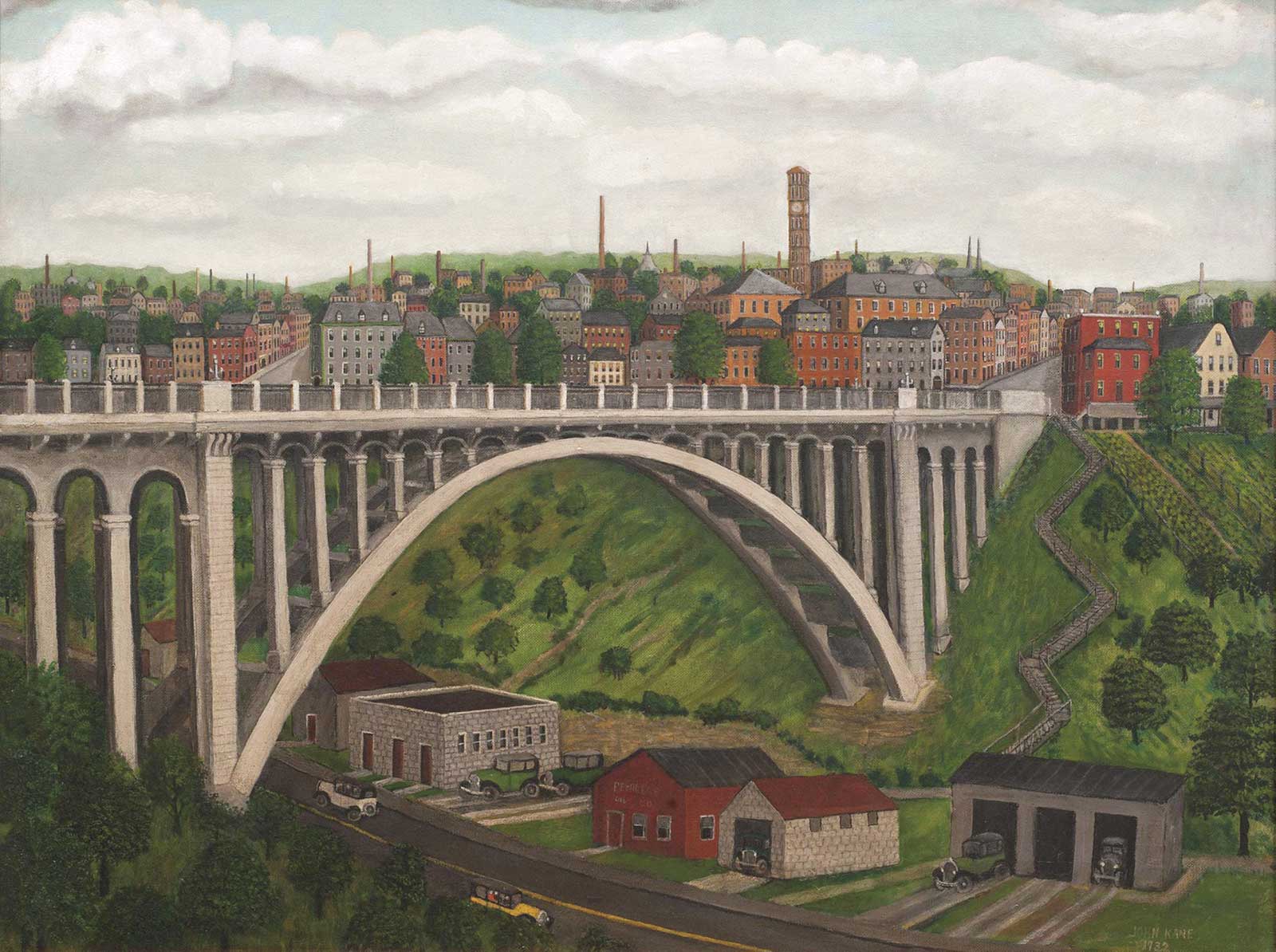 John Kane (1860-1934), Larimer Avenue Bridge, 1932. Oil on canvas. Carnegie Museum of Art, gift of G. David Thompson.
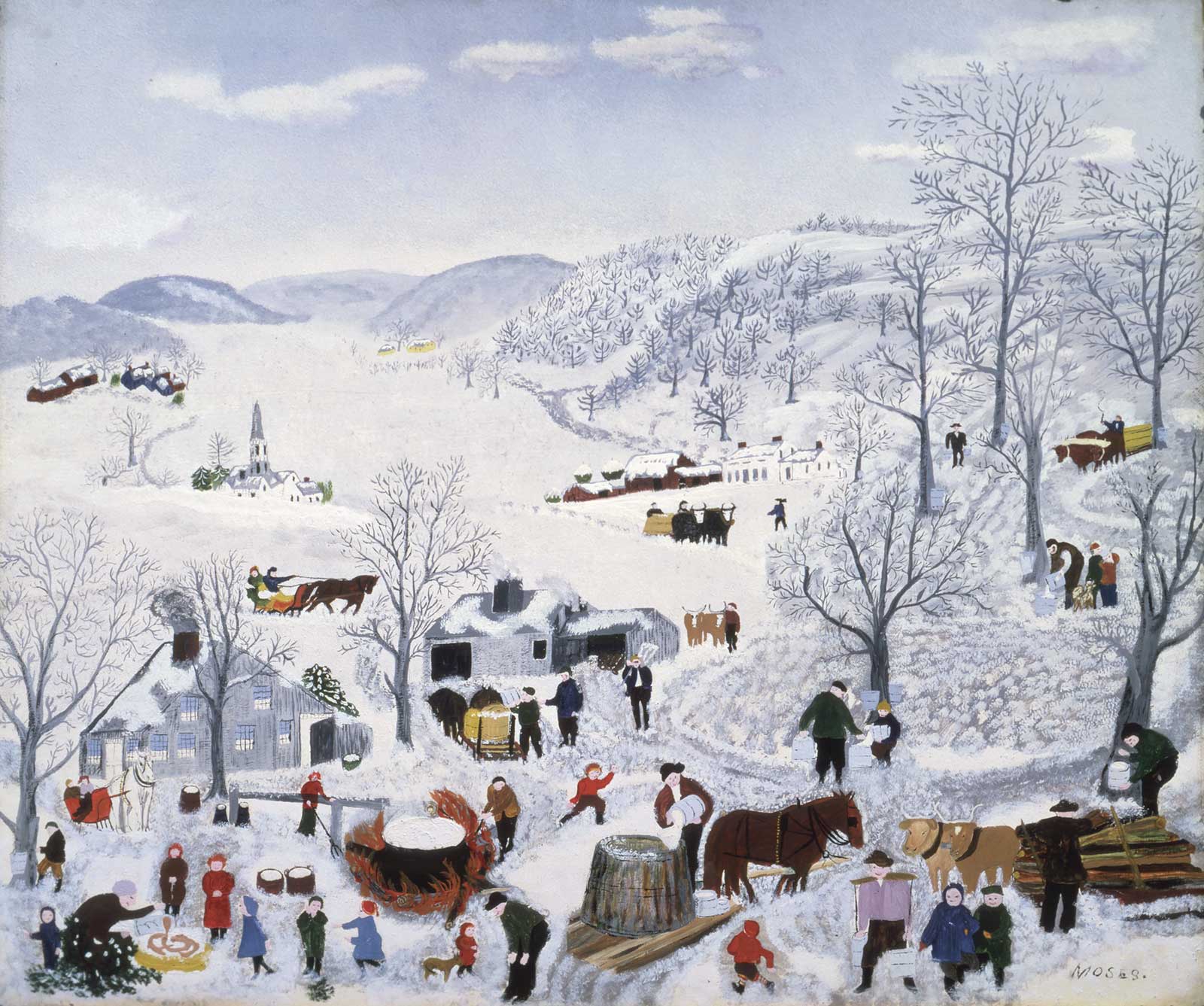 Anna Mary Robertson “Grandma” Moses (1860-1961), Sugaring Off, 1943. Oil on canvas. Courtesy Galerie St. Etienne, New York. © Grandma Moses Properties Co., New York.
“I was inspired to make this period and these artists the focus of that research because I was drawn to their art and life stories, and I wanted to understand how they managed to break into the art world’s ivory tower,” says Jentleson.
After World War I, major museums began displaying the works of self-taught artists, a phenomenon dubbed “crashing the gates” by newspapers of the day. More than a dozen early 20th-century artists’ work will be on view during the exhibition at the High Museum, aptly titled Gatecrashers: The Rise of the Self-Taught Artist in America. These artists, who also include Morris Hirshfield, Lawrence Lebduska and Josephine Joy, among others, paved the way for future self-taught artists as respected individuals in the elite art world.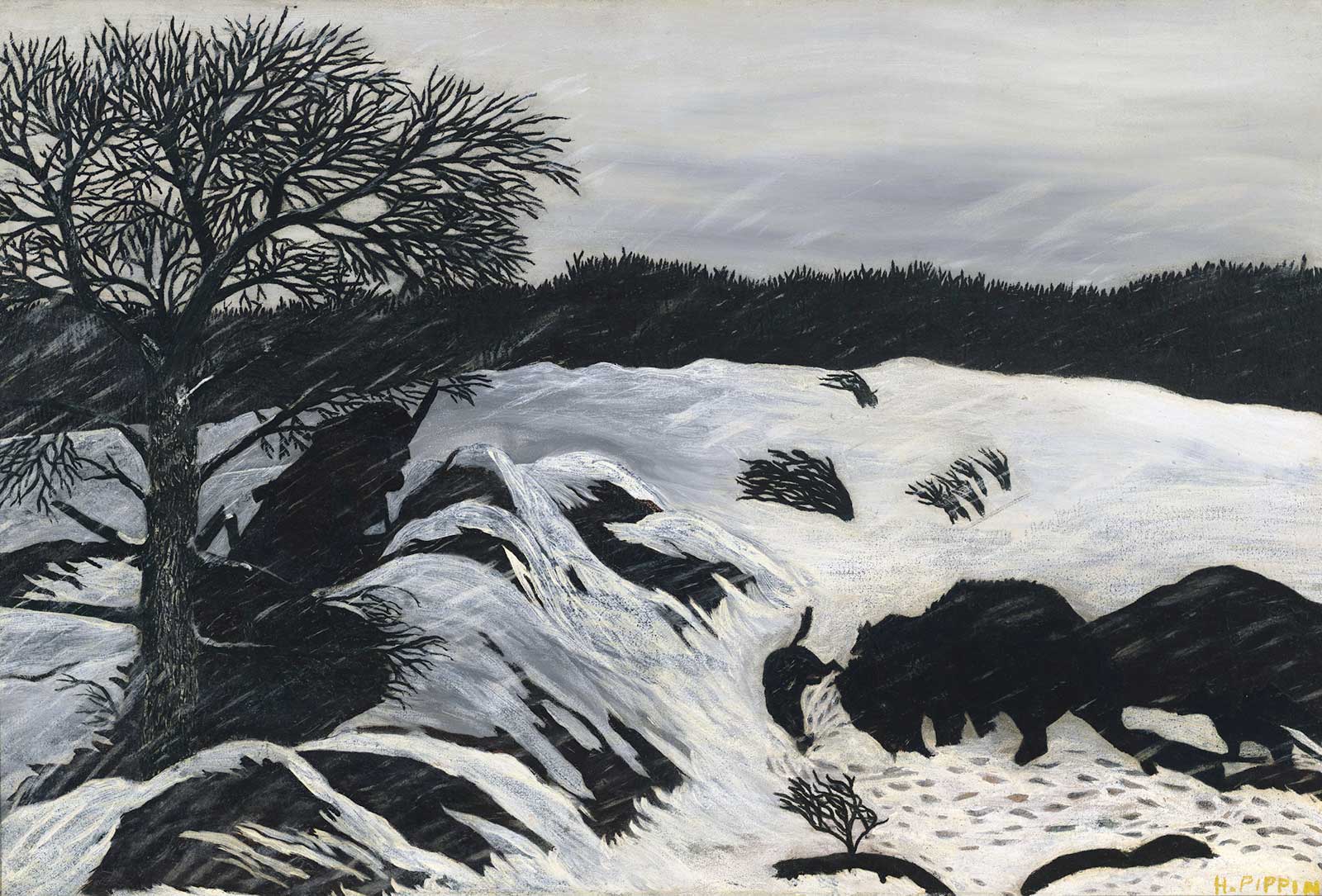 Horace Pippin (1888-1946), The Buffalo Hunt, 1933. Oil on canvas. Whitney Museum of American Art, New York, purchase. Digital image © Whitney Museum of American Art/Licensed by Scala/Art Resource, New York.
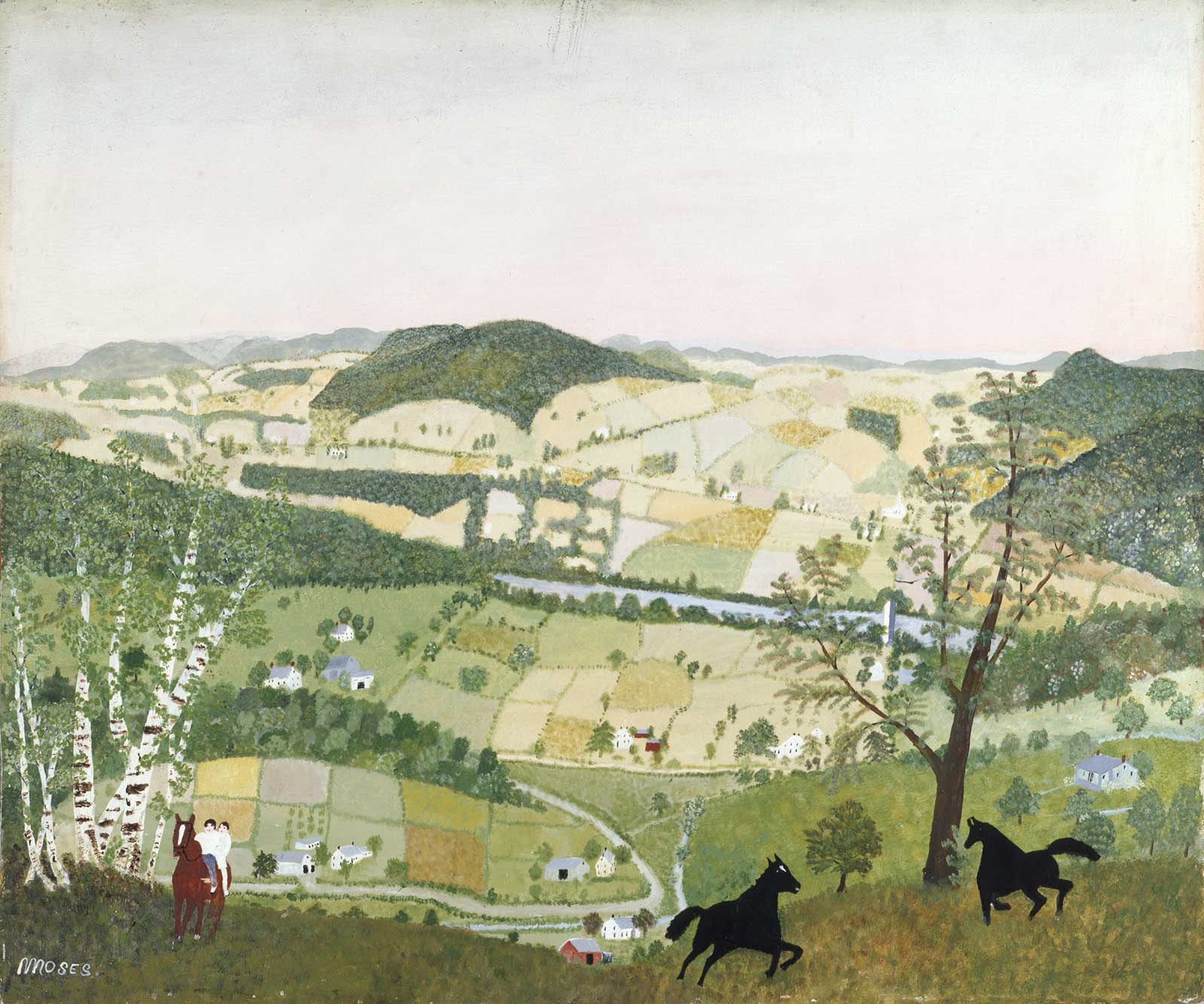 Anna Mary Robertson “Grandma” Moses (1860-1961), Black Horses, 1942. Oil on Masonite. Courtesy Galerie St. Etienne, New York. © Grandma Moses Properties Co., New York.
“In addition to being the most celebrated self-taught artists of the interwar period, Kane, Moses and Pippin each rose to fame in subsequent decades, such that their stories map the arc of the American art world’s initial interest in self-taught artists, beginning with Kane in 1927, ballooning in the 1930s with Pippin, and faltering by the early 1950s with Moses, whose mass appeal worried highbrow critics like Clement Greenberg, especially when her work was presented abroad as a symbol of American culture in 1950,” Jentleson explains. “Kane, Pippin and Moses each came to represent a paradigm of Americanness—the industrious, naturalized immigrant, the African American war veteran and the farmer’s wife—that resonated deeply in the moments of their respective breakthroughs.”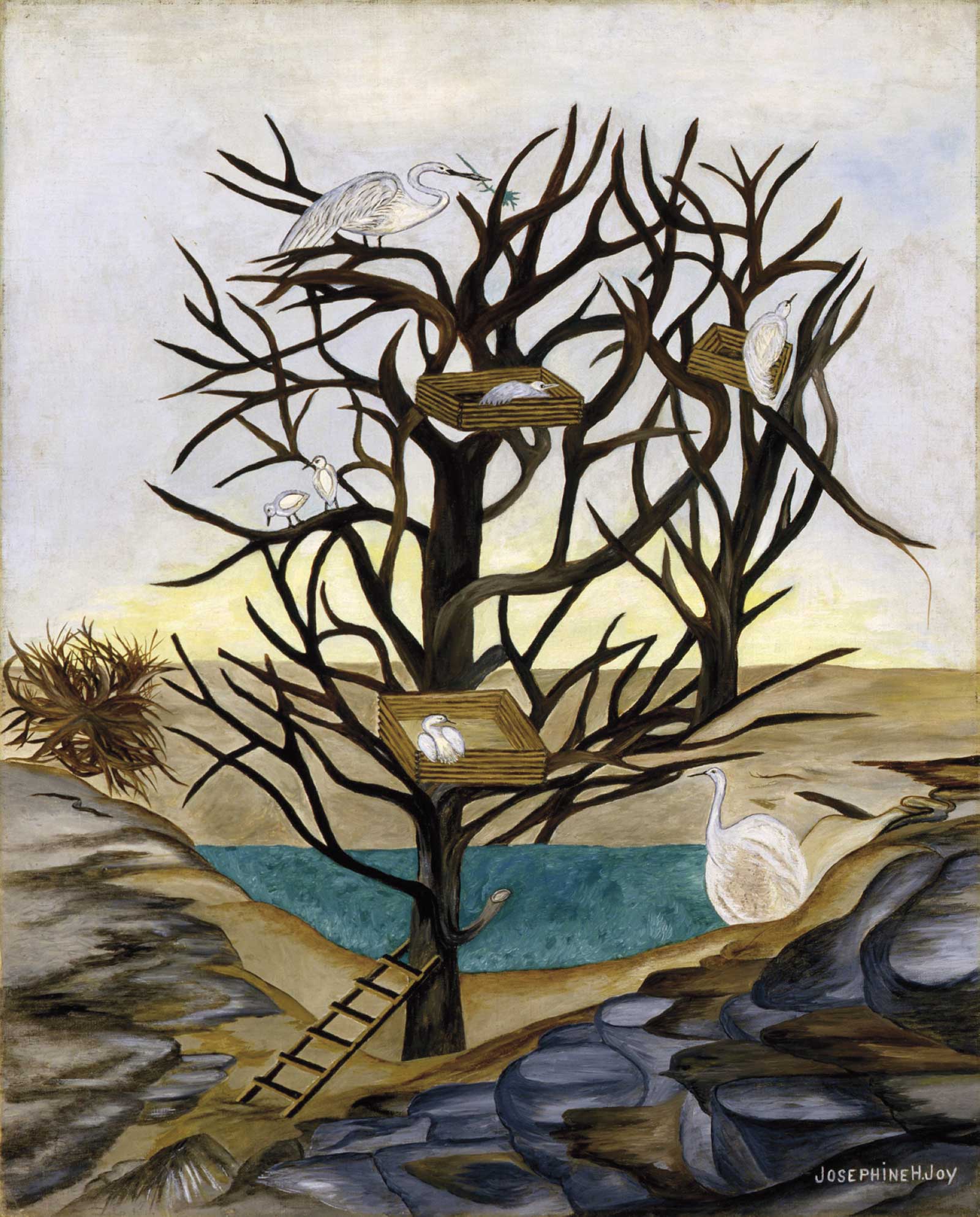 Josephine Joy (1869-1948), Waterbirds Nesting, ca. 1935-1939. Oil on canvas. Smithsonian American Art Museum, Transfer from General Services Administration.
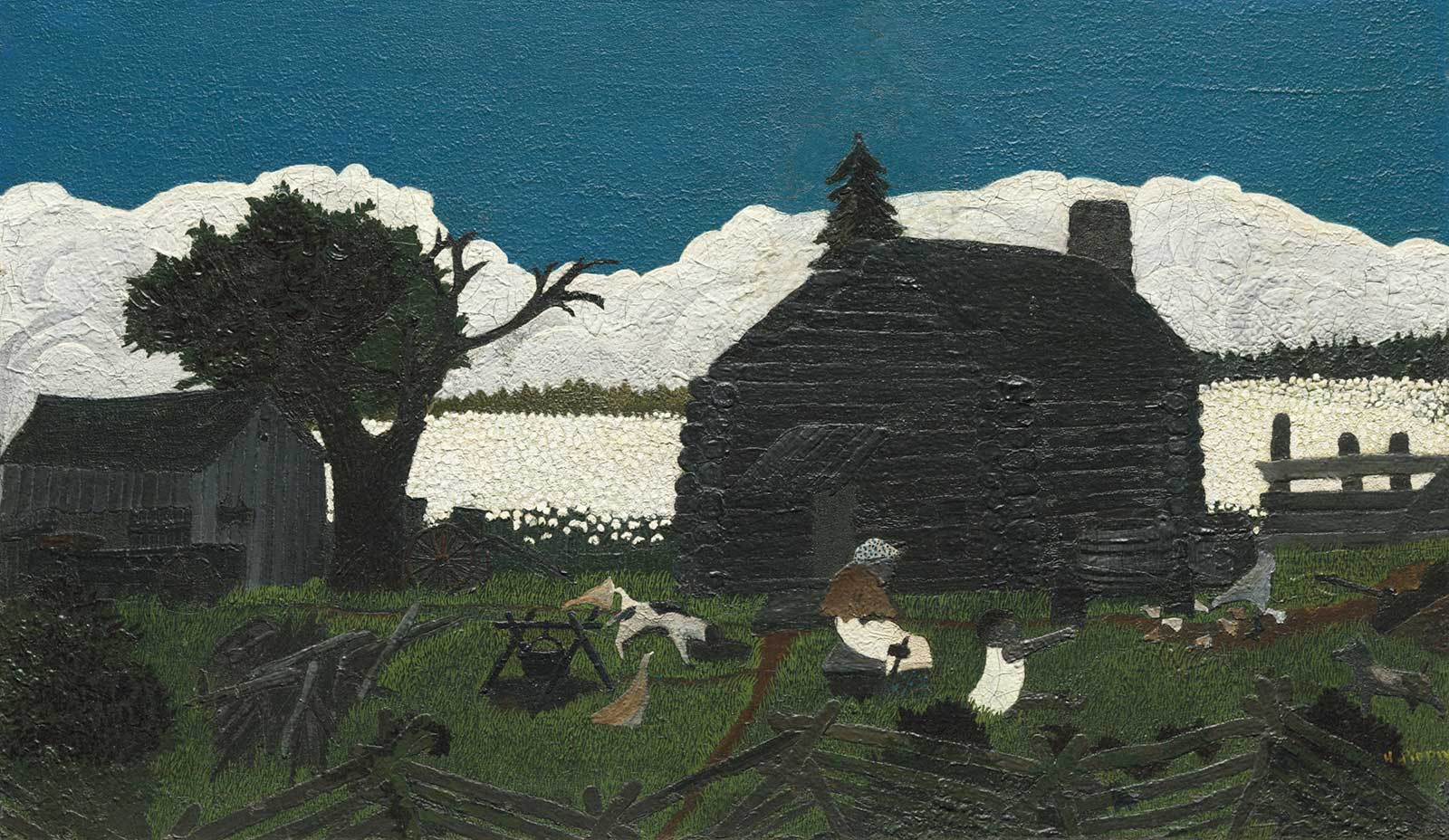 Horace Pippin (1888-1946), Cabin in the Cotton, 1933-1937. Oil on cotton mounted on Masonite. The Art Institute of Chicago, purchased with funds provided by Thomas F. Pick and Mary P. Hines in memory of their mother Frances W. Pick.
Aside from the works that will be available to explore by Kane, Moses and Pippin, Jentleson says she’s also excited about Flag Day, a panoramic view of a patriotic procession on loan from the Museum of Modern Art by Ukraine-born artist William Doriani. The oil was a tribute to his adopted country of the United States.
Gatecrashers: The Rise of the Self-Taught Artist in America will be on view from August 20 to December 11. —
Powered by Froala Editor