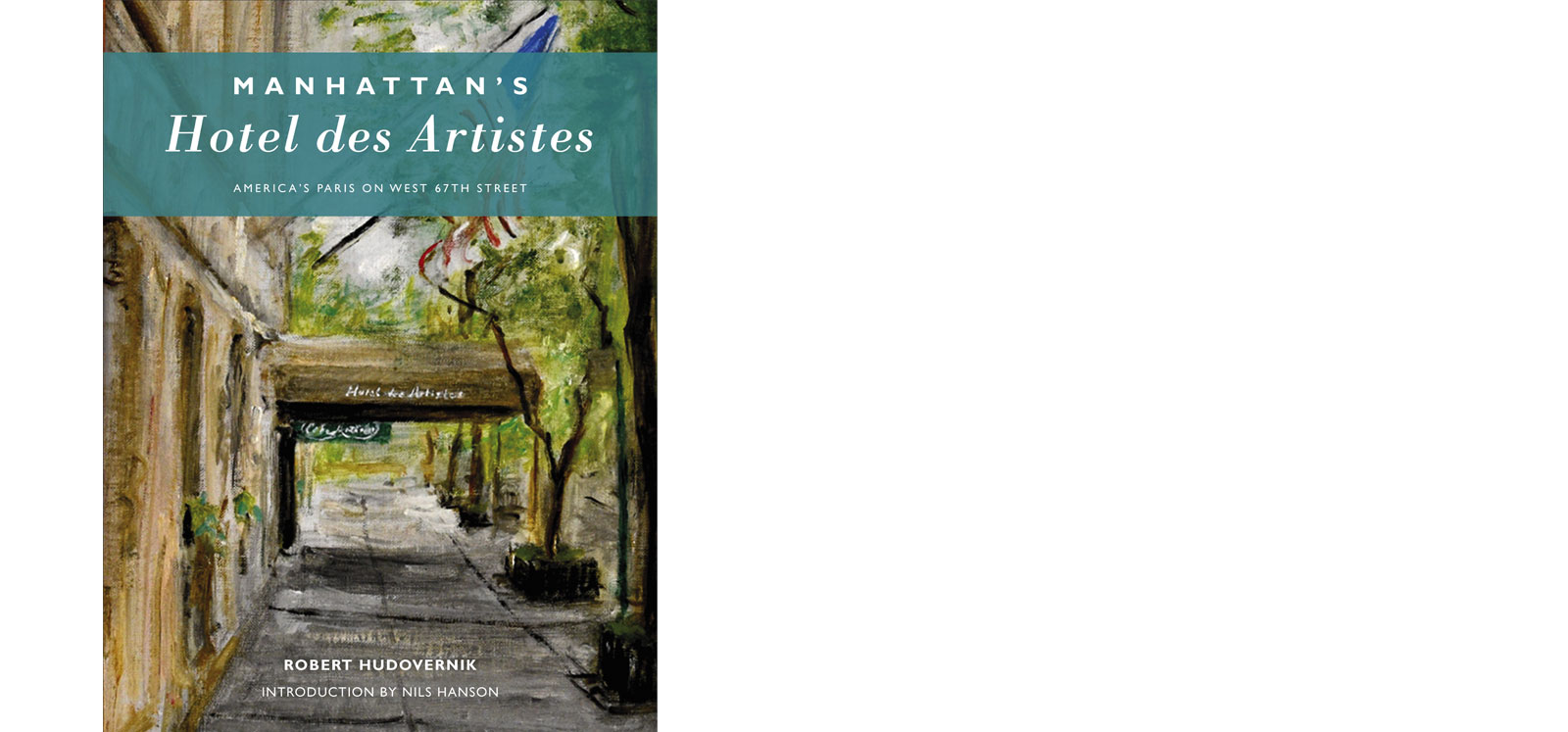
 Manhattan’s Hotel des Artistes: America’s Paris onWest 67th Street
By Robert Hudovernik with introduction by Nils Hanson. (Schiffer Publishing, December 2020). Hardback, 288 pages with 632 color and black and white images. $65.
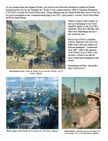
Located on the northeast corner of West 67th Street and Central Park West in New York City is a storied landmark. It is recognized from the outside for its early-to-mid-20th-century architecture, including gargoyle sentinels reminiscent of Paris’ Notre Dame Cathedral. However, the more exciting stories of the building, named the Hotel des Artistes or the Grand Old Matriarch of West 67th Street, are from the artistic presence that lives on the inside.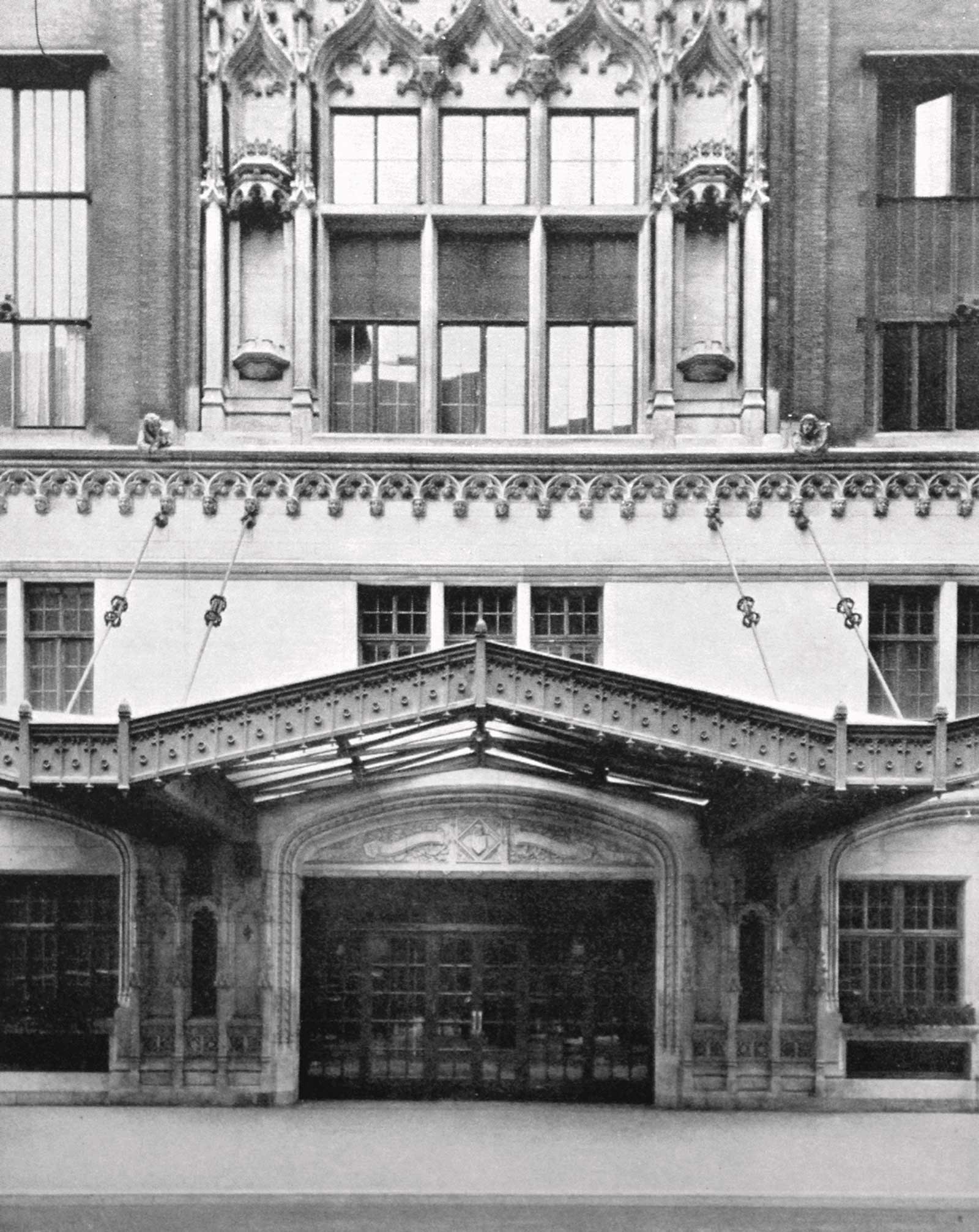 Penrhyn Stanlaws’ vision for the Hotel des Artistes was reportedly designed by its unofficial architect and Stanlaws’ silent partner, Walter Russell. The stunning glass canopy entrance was later removed due to prohibitive repair costs. Collection of the author, ca. 1921-28.
Hotel des Artistes is an artists’ cooperative that was built in 1917 and even includes the ideal art windows with northern light exposure. The building became home for not only painters and sculptors, but also photographers, dancers, authors, actors and more. In the new publication Manhattan’s Hotel des Artistes: America’s Paris on West 67th Street, author Robert Hudovernik traces the history of this hallowed building from its beginnings to the world-famous creatives who called it home to what is happening today.
During the late 19th and early 20th centuries, many artists were traveling to Europe to expand their horizons. What they found on their sojourns were places that artists could come together and work and discuss their craft. When they returned home, many artists longed for the camaraderie they felt abroad. As the first chapter of the book explains, in 1898 a group of artists—led by Walter Russell and Henry Ward Ranger and including Frank Vincent DuMond, Childe Hassam and Sydney Smith, among others—began the discussions of starting an artist community. They settled on West 67th Street, and what was built has become known as the Artists’ Block, or also referred to as Artists’ Row.
The second chapter, “Building the Hotel des Artistes, 1914-17,” focuses on the architecture and design of the building, showing how the Artists’ Block continued to grow after early financial success with their endeavor. The third chapter is the primary focus of the book and perhaps the most enticing as it is dedicated to the Artists in Residence—those who established studios there and created many works of art and shared ideas. Among them were Howard Chandler Christy; Harrison Fisher; Emil Fuchs and Clare Sheridan. Each includes anecdotes about the artists, works they created and their association with the Hotel des Artistes.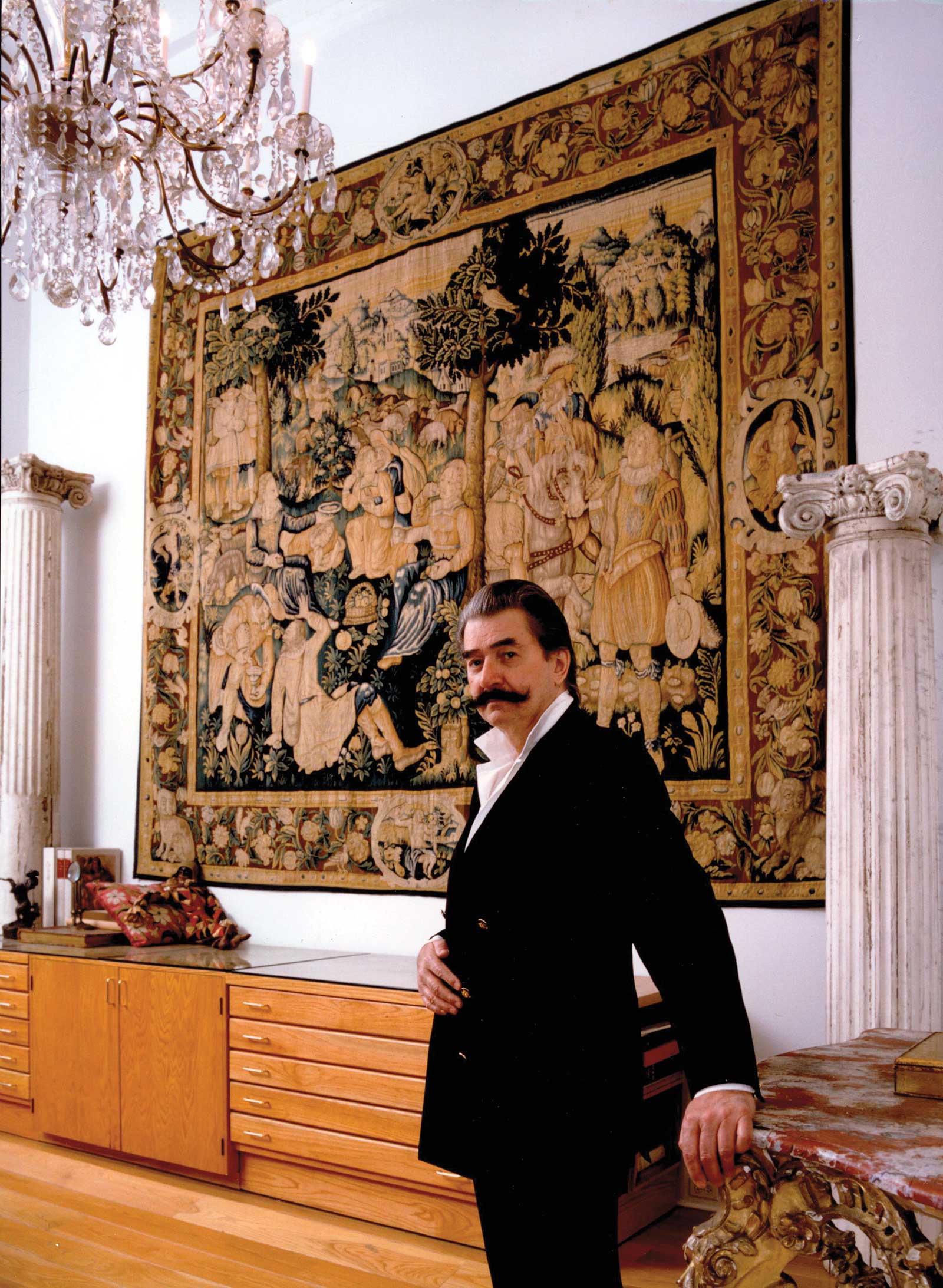 Leroy Neiman was proud of his Hotel Des Artistes studio. On the wall behind him is a tapestry displayed much like the ones that previous generations of Des Artistes artists decorated with. (LeRoy in front of a tapestry in his office, 1994. Photo credit Lynn Quayle. Courtesy the LeRoy Neiman Foundation.)
Two of the most famous residents were Norman Rockwell and LeRoy Nieman. Rockwell is said to have stayed at Hotel des Artistes several times in his life, with one of the most notable being after marrying Mary Barstow, and he also rented his studio space to other artists. Nieman was from the next generation of occupants, who established his space in the building after returning from Paris in the 1960s. It was a fond reminder for the artist of his time abroad with his new wife, Janet, and as Hudovernik writes, it was also an artist coming in “ready to pick up the torch from a long line of famous artists who had resided there before him.”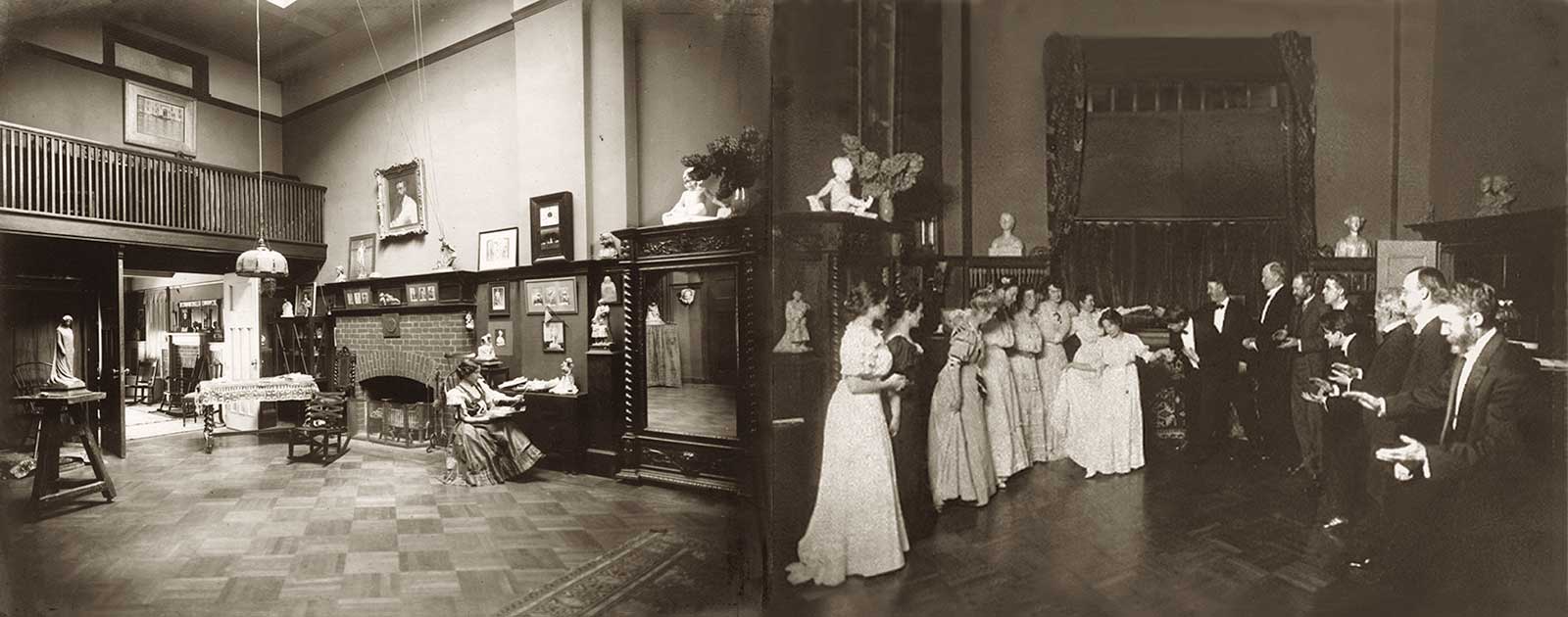 Painter Robert Vonnoh and his sculptor wife, Bessie Potter Vonnoh, invested in the buildings on West 67th Street and loved the artists’ block. In this “blended panoramic view” of their No. 33 studio, the couple is dancing at right center, ca. 1905-10. Courtesy Library of Congress.
The book continues by discussing the Café des Artistes restaurant, as well as the ballroom and stories from artists of West 67th Sreet. Exploring the writings, it was perhaps an appeal for many artists to be forging their own legacies where many great American artists came before them. There also is a sense of community, comfort and respect among those who have called the Hotel des Artists home. They found solace and friendship, but most of all they found creativity and inspiration. —
Powered by Froala Editor