The David C. Driskell Center for the Study of the Visual Arts and Culture of African Americans and the African Diaspora at the University of Maryland describes Driskell succinctly as “distinguished university professor emeritus of art, artist, art historian, collector, curator and philanthropist.”
Driskell died of complications of the coronavirus just as finishing touches were being made on a major retrospective of his role as artist, one aspect of his extraordinary life and career.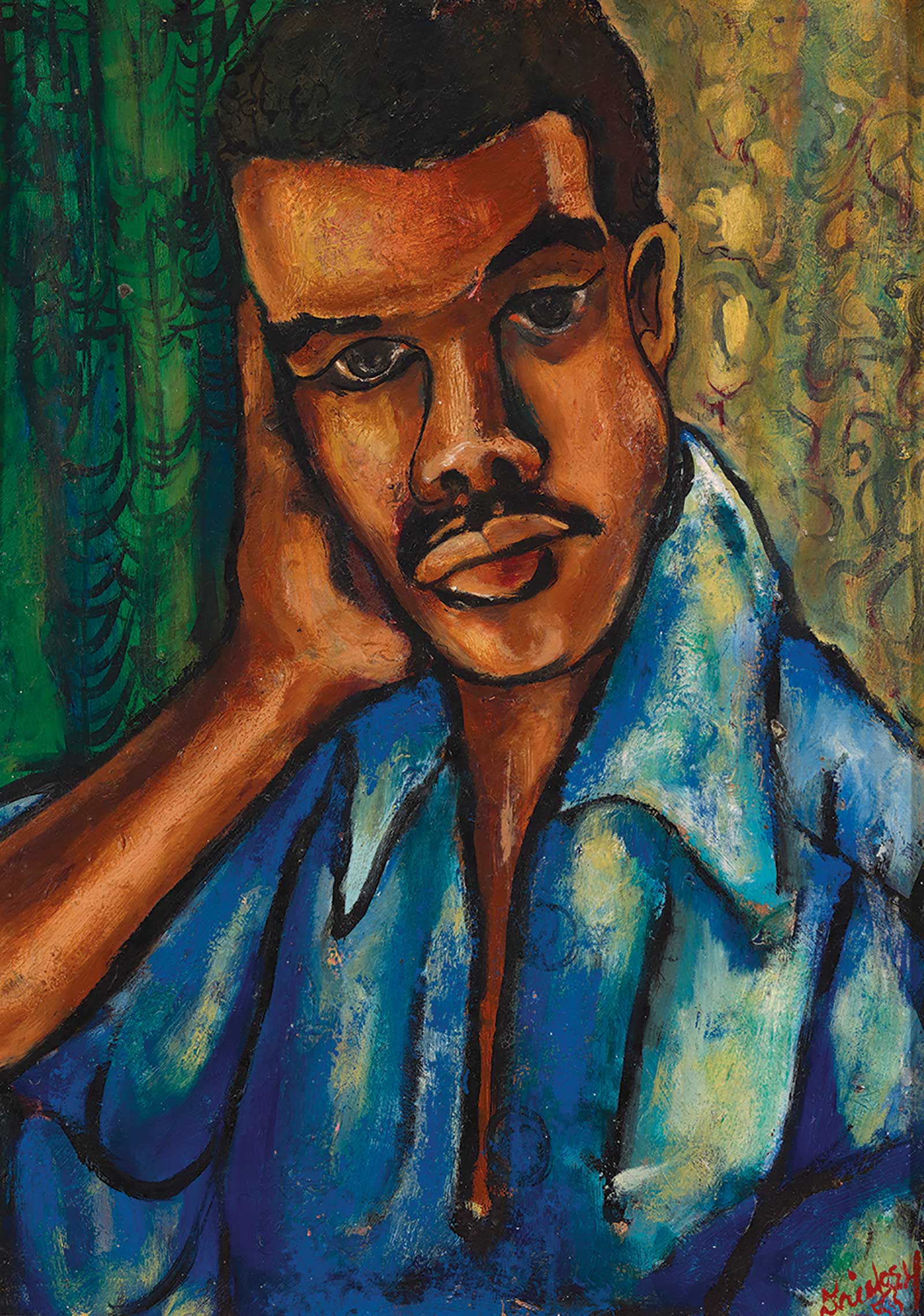 David Driskell (1931-2020), Self-Portrait, 1953. Oil on board, 15¼ x 11 in. Collection of the Estate of David C. Driskell, Maryland. Photograph by Luc Demers. © Estate of David C. Driskell, courtesy DC Moore Gallery, New York.
David Driskell: Icons of Nature and History continues at the museum through September 12. The museum states, “Icons represents a landmark moment in American art: A major museum exhibition focused solely on David Driskell’s remarkable career as a painter. Driskell’s legacy in the history of American art is unparalleled, as he pushed audiences to consider the American story inclusive of the art of Black people. Driskell’s choice then, to build a studio, home and artistic practice in Maine and a region that, to this day, excludes Black American and POC perspectives, narratives and critically, contributions, was radical.”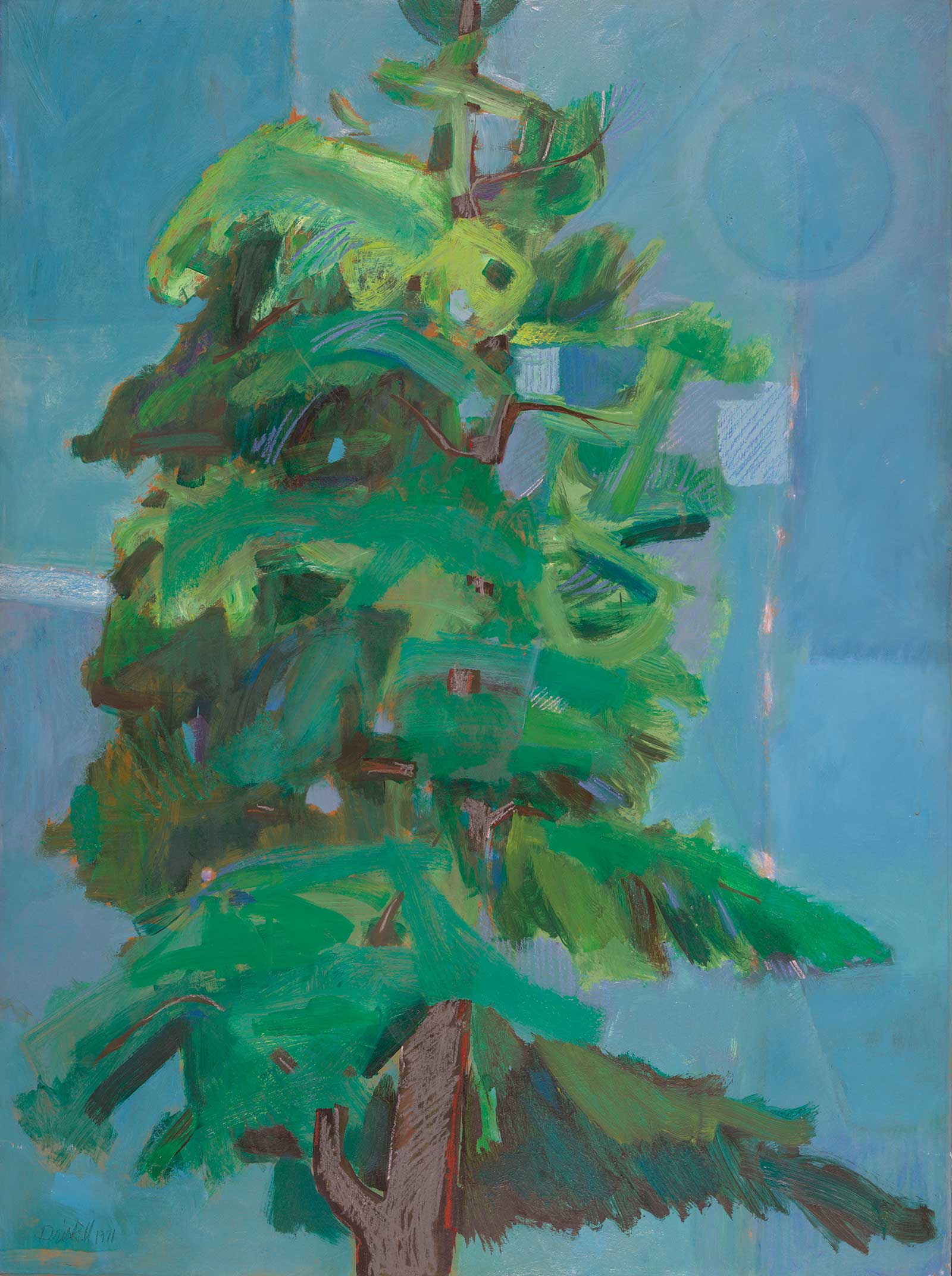 David Driskell (1931-2020), Pine and Moon, 1971. Oil on Masonite, 473/8 x 351/8 in. Portland Museum of Art, Maine. Museum purchase with support from the Friends of the Collection, 2011.4. Photograph by Luc Demers. © Estate of David C. Driskell.
Curated by Julie L. McGee, Associate Professor of Africana Studies and Art History and Director of the Interdisciplinary Humanities Research Center at the University of Delaware, the show is a collaboration between PMA and High Museum of Art in Atlanta, where it opened before traveling to the Maine museum. It will be on view at The Phillips Collection in Washington, D.C., October 16 through January 9, 2022.
In a reminiscence of Driskell, Jessica May, former deputy director and chief curator of PMA, wrote: “He spent time with me thinking about Ghetto Wall #2, which was painted just one year before his great Pine and Moon, which is also in the PMA collection. I was transfixed by the profound difference between the two paintings, one ‘political,’ rooted in the Civil Rights Movement, and the other much more spiritual, more rooted in a landscape tradition. David observed my interest—which was about categories rather than meaning, a classic art historical dodge—with patient bemusement, but he had his eye on bigger and much more complex questions.”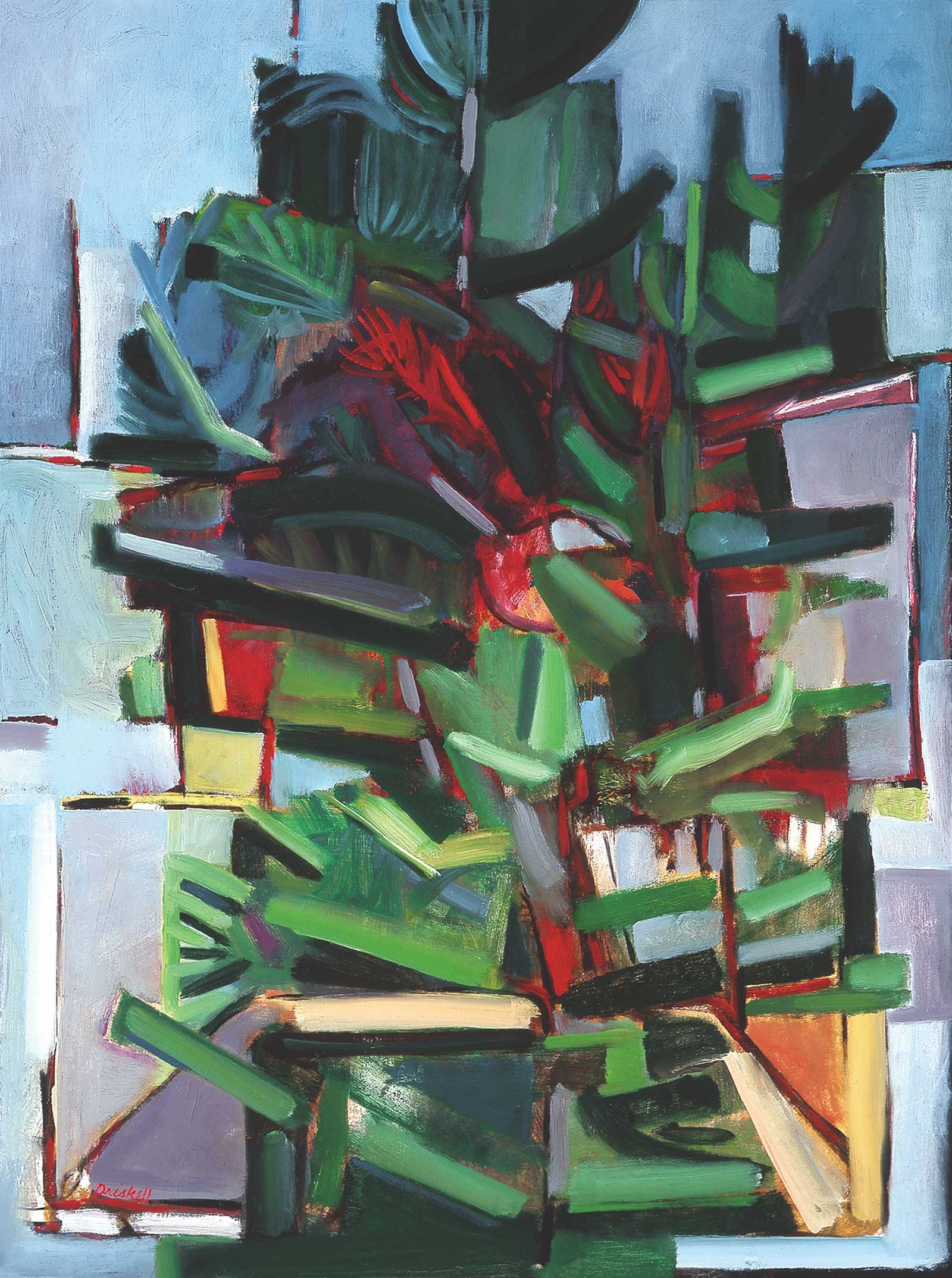 David Driskell (1931-2020), Two Pines #2, 1964. Oil on canvas, 48 x 36 in. High Museum of Art, Atlanta. Gift of David C. and Thelma G. Driskell, 2000.203. © Estate of David C. Driskell.
May continued, “David’s reflections on Ghetto Wall #2 over the course of the summer revealed his willingness to think about that painting as a mystery—not in the prosaic sense, but as a philosophical question—even to himself. Instead of explaining exactly what he was up to, making the history of his own art neat and tidy, David modeled a kind of openness, a willingness to ask the question, ‘How can one respond meaningfully and authentically to their historical moment?’ David saw Pine and Moon and Ghetto Wall #2 as two paintings that proposed alternate answers to the fundamental question of how to be present in the world.”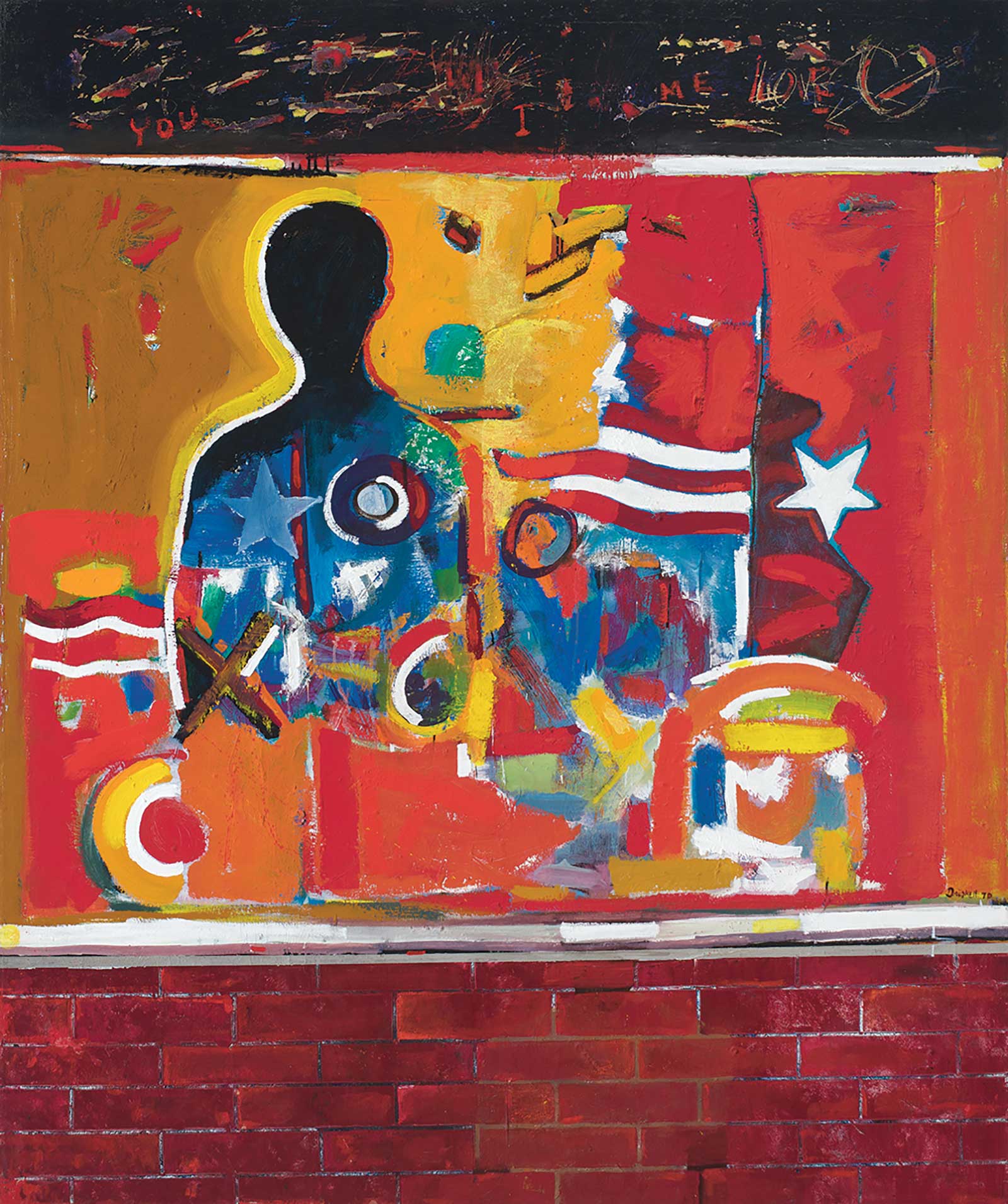 David Driskell (1931-2020), Ghetto Wall #2, 1970. Oil, acrylic and collage on linen, 60 x 50 in. Portland Museum of Art, Maine. Museum purchase with support from the Friends of the Collection, including Anonymous (2), Charlton and Eleanor Ames, Eileen Gillespie and Timothy Fahey, Cyrus Hagge, Patricia Hille Dodd Hagge, Alison and Horace Hildreth, Douglas and Sharyn Howell, Harry W. Konkel, Judy and Leonard Lauder, Marian Hoyt Morgan and Christopher Hawley Corbett, Anne and Vince Oliviero, D. Suzi Osher, Christina F. Petra, Karen and Stuart Watson, Michael and Nina Zilkha, and with support of the Freddie and Regina Homburger Endowment for Acquisitions, and the Emily Eaton Moore and Family Fund for the Collection, 2019.16. Photograph by Luc Demers. © Estate of David C. Driskell.
In her catalog essay, McGee quotes Driskell’s comments on his home in Maine: “I wanted to claim this almost like a spiritual place…where I would be free to experiment and where the spirit can just flow in any direction that one wants. That’s what this place does for me. And there is something about the romance of being here, the quietness of this place, really like a little garden paradise of sorts, where one can feel free. So all of that adds up to my love of nature and communion that I have with this place. I even dream about it when I am not here. Thank God for the pines.” —
Powered by Froala Editor