Frank Vincent DuMond is a key figure in American art for his paintings and his career as an educator. DuMond taught at the Art Students League in New York City for nearly 60 years and instructed artists such as John Marin, Georgia O’Keeffe and Norman Rockwell. DuMond also played an important role in the Old Lyme art colony of the early 20th century. He and his artist wife, Helen DuMond, would spend summers in Lyme, Connecticut, after buying a home there in 1906. He would teach classes and take breaks to explore the nearby cities as well as Vermont and Nova Scotia with his students and friends such as Ogden Pleissner and Willard Metcalf.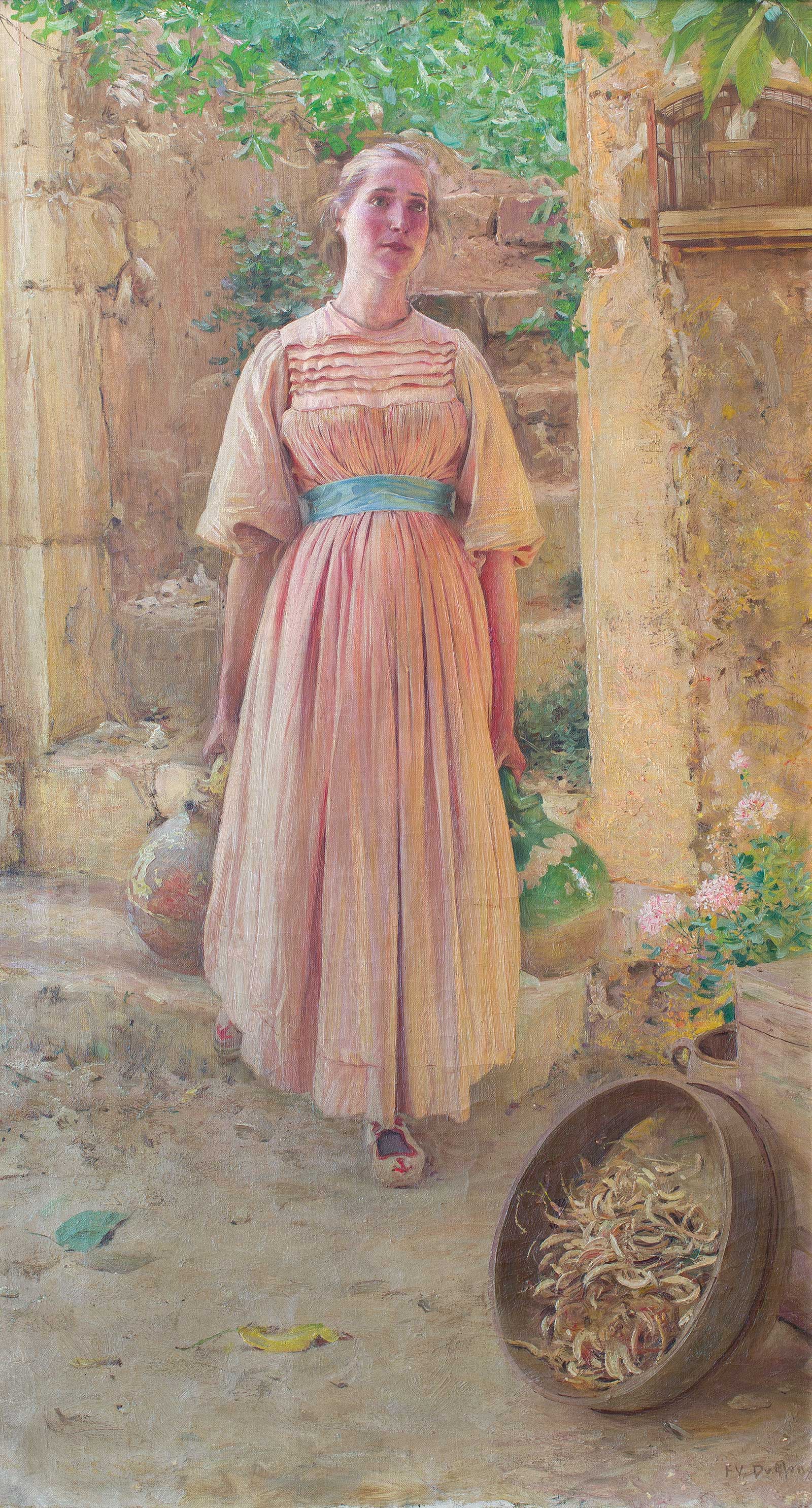 Frank Vincent DuMond (1865-1951), Victorine in the Garden, 1899. Oil on canvas, 36½ x 19¾ in. Francesca & Carl Mellin.
June 19 through October 2, Lyman Allyn Art Museum in New London, Connecticut, just about 15 miles away from Old Lyme, will host The Prismatic Palette: Frank Vincent DuMond and His Students. The exhibition is the first on the artist in 20 years, and it will not only highlight DuMond’s artwork and pieces from his students and contemporaries, but it also dives into his teachings and the impact of his “prismatic palette.”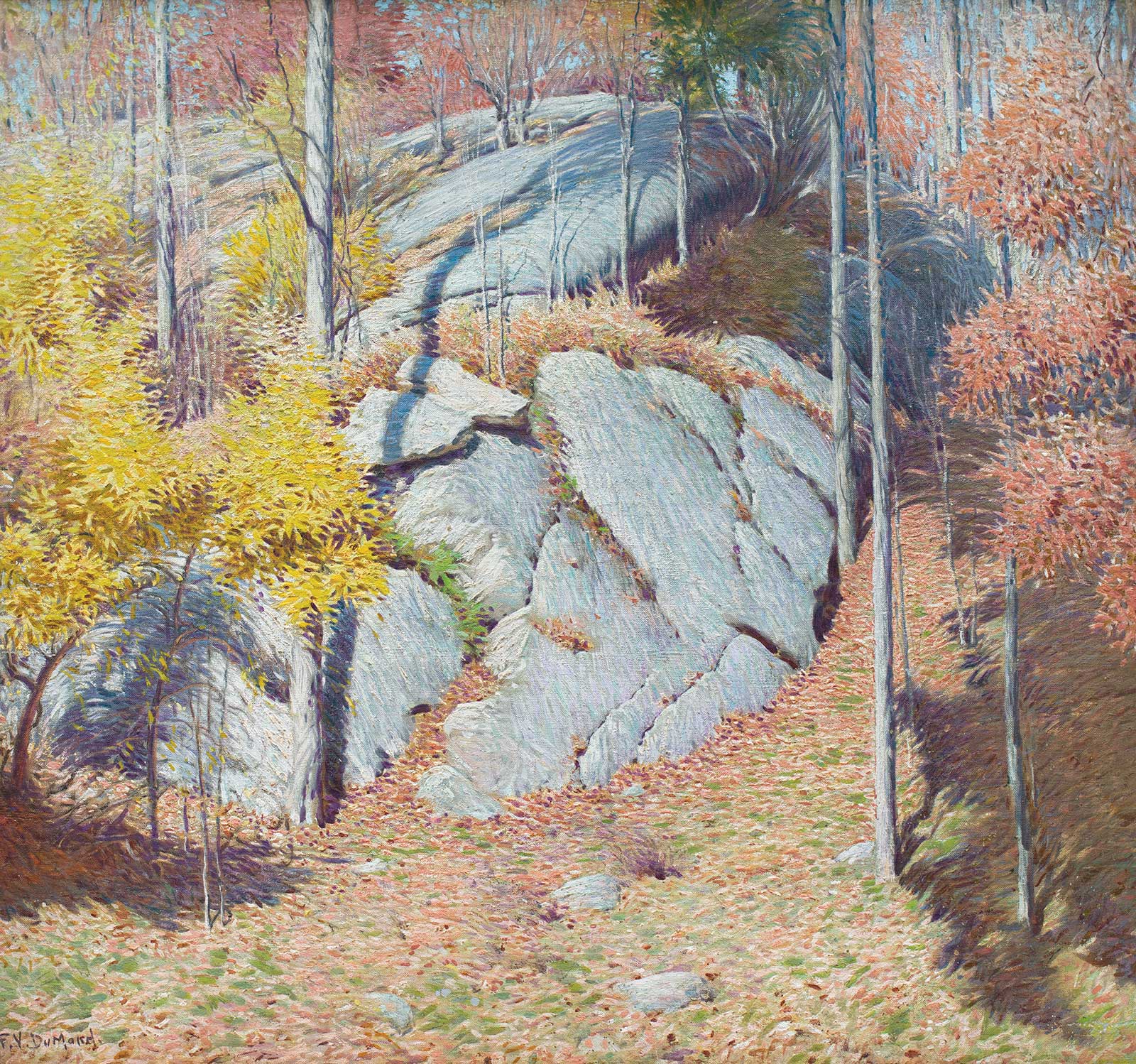 Frank Vincent DuMond (1865-1951), Autumn in Lyme, 1915. Oil on canvas, 28 x 30 in. N. Robert Cestone.
Tanya Pohrt, curator at Lyman Allyn Art Museum, says, “A descendent of DuMond—his great-grandson Douglas DuMond—was introduced to us, and he mentioned that there had been a couple of exhibitions in the past, but nothing recently. The last exhibit was 20 years ago, so we started looking at our collection and thinking about his role as an artist. It has really exciting intersections with our collection and with where we our geographically and our demographic.”
The exhibition will include approximately 60 works, including many loaned from the DuMond family. Alongside his works will be pieces from his students, such as Eugene Speicher, Pleissner, O’Keeffe, Marin and Rockwell. Historic photographs that document DuMond’s classroom and his lessons at Art Students League also will be on display.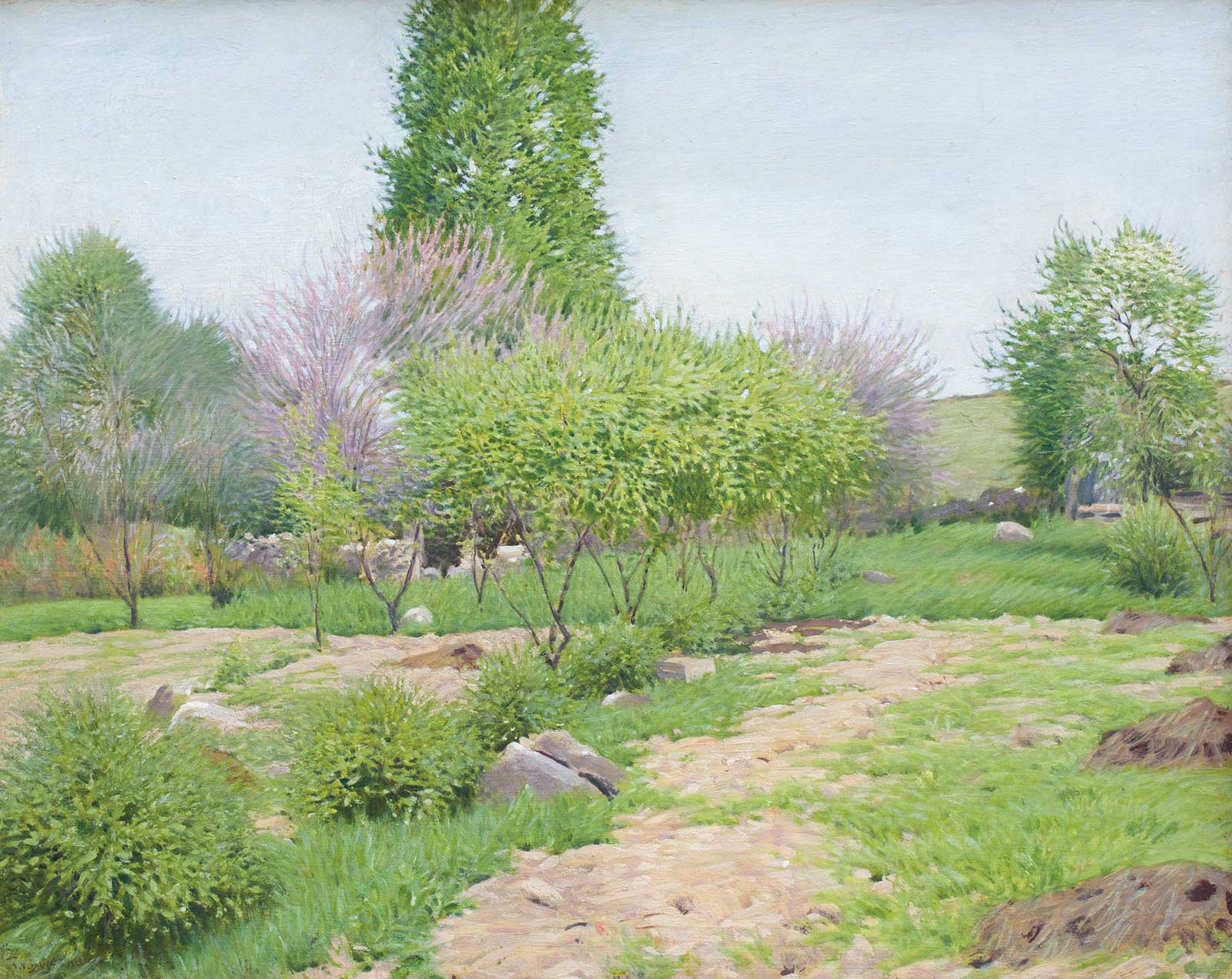 Frank Vincent DuMond (1865-1951), Planting Season, Lyme, ca. 1925. Oil on board, 24 x 30 in. Douglas & Marcia DuMond.
One important segment of the show is dedicated to DuMond’s enduring teachings of color theory, most notably the prismatic palette method he developed of pre-mixing color strings. The technique was helpful for plein air students and is continued to be used and taught today. “This derives from his teaching, and it’s been passed down from him to some of his key students that were then longtime instructors at a few places including the Art Students League,” says Pohrt. “In the exhibition we look at the enduring role of this prismatic palette and how it evolved and which artists continued to teach the method and how it might be used.”
Among the works in the show is DuMond’s Victorine in the Garden, an 1899 painting that was from when he was working in France. “It shows sort of the influence some of the late 19th-century French artists had on his work,” Pohrt explains. There also are several later pieces included that show his property in Lyme, such as Planting Season, Lyme, from around 1925.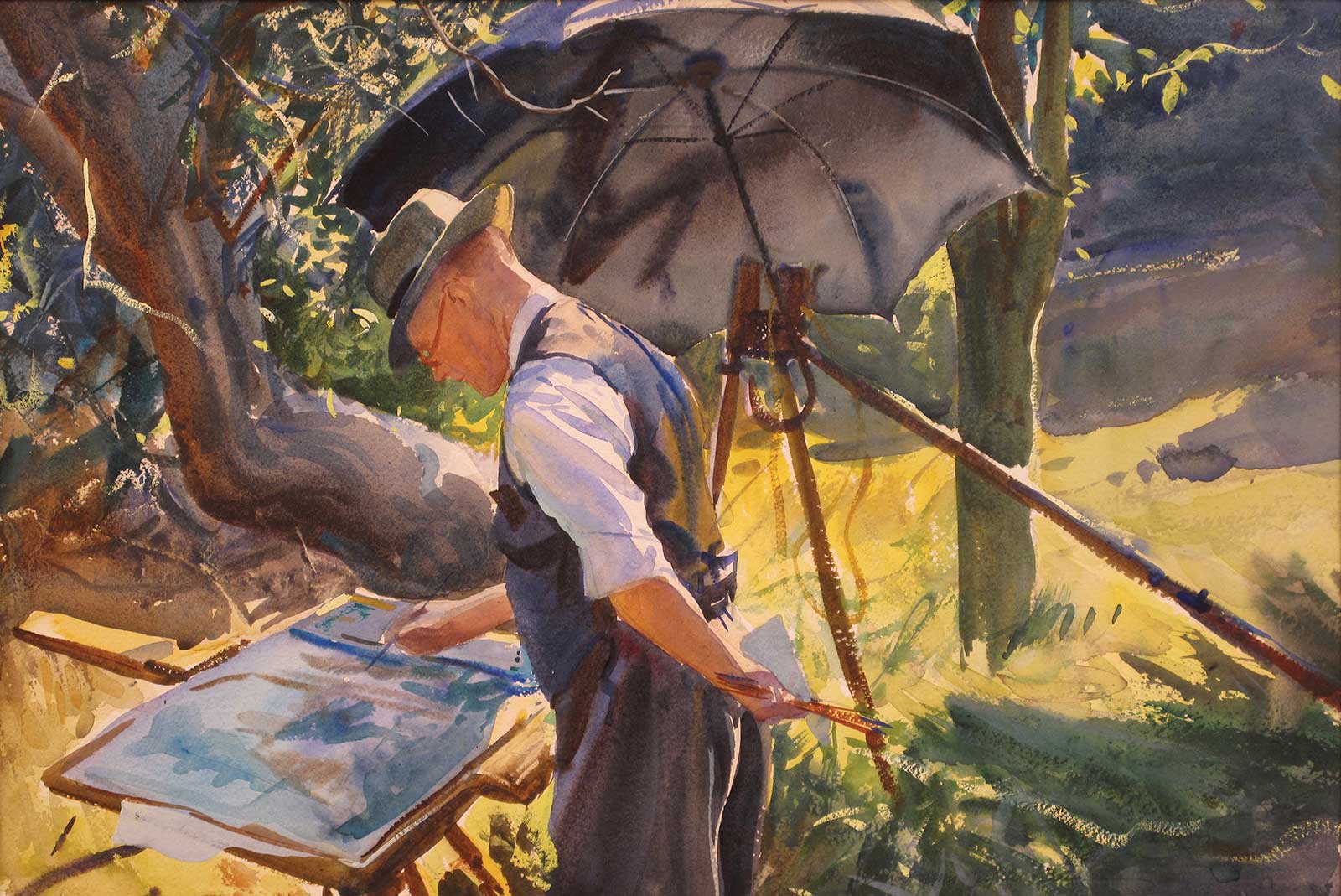 Ogden M. Pleissner (1905-1983), Winfield Scott Clime. Watercolor and gouache on paper, 14 x 21 in. Private collection.
“That [period] is really a bit of a shift where he’s embracing elements of impressionism,” Pohrt says, adding that Childe Hassam was one of the artists in the Lyme Art Colony who first brought this shift from more tonalist pieces to brighter more vivid works. “DuMond,
I think, was someone who made that shift because a couple of his earlier paintings are darker, more shadowed…[and we have later works] that have the explosion of color.”—
Powered by Froala Editor