The theme for an upcoming exhibition at the High Museum of Art was inspired by a single print in the institution’s collection, Our Good Earth, by John Steuart Curry. “The image shows a farmer—tall, stoic, chiseled-featured—standing in his wheat field, his children at his side,” says Stephanie Heydt, Margaret and Terry Stent Curator of American Art at the High Museum. “The picture has a monumental feel about it, angled from below, looking up at the farmer. He is watchful over his bounty, and by extension, ours...Paired with the slogan ‘Our Good Earth—keep it ours,’ Curry’s heroic farmer became a popular image, and one that inspired broad distribution in print, as well as a testament to the power of the agrarian idol in the national psyche.” 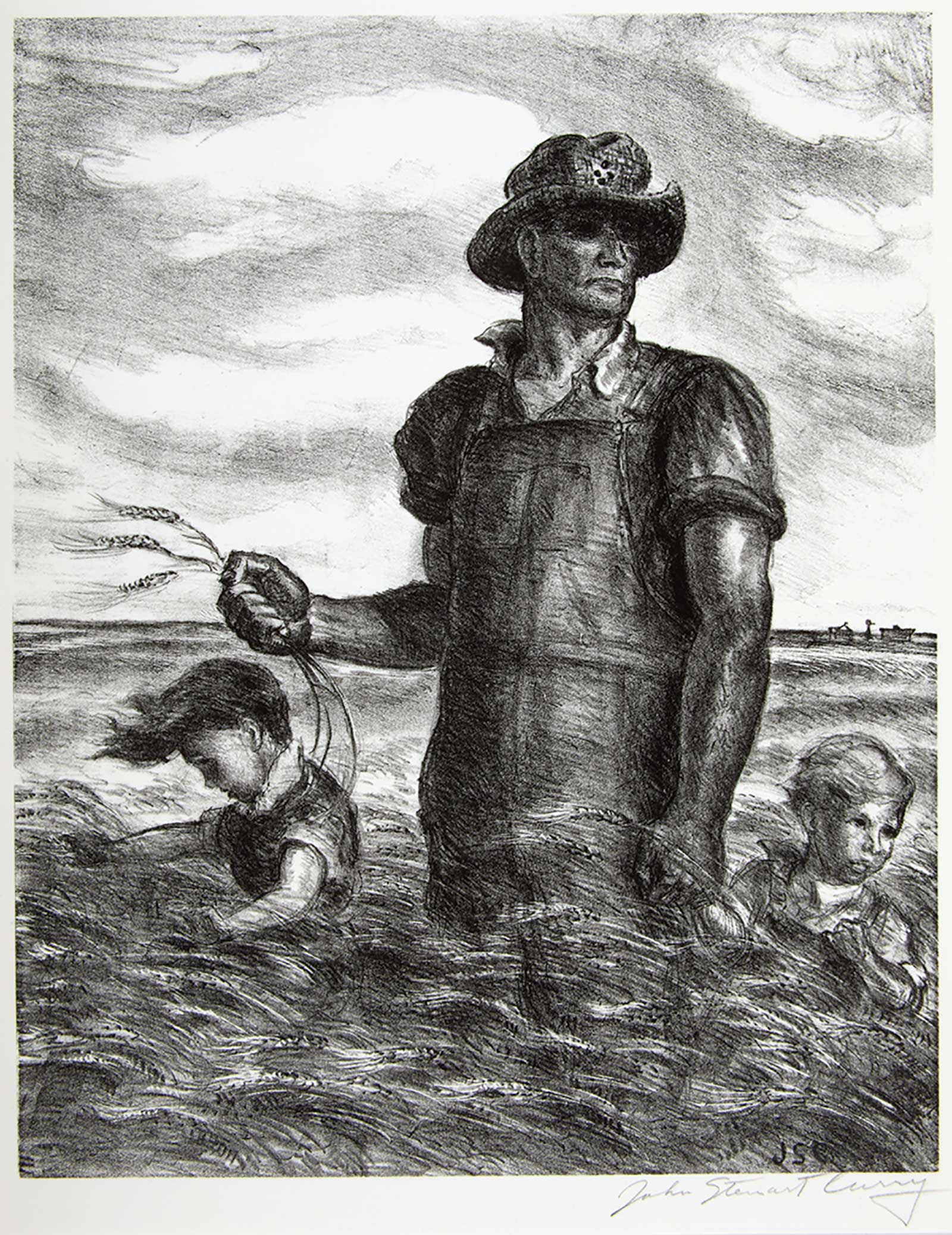 John Steuart Curry (1897-1946), Our Good Earth, 1938. Lithograph on paper. High Museum of Art, Atlanta, gift in memory of Alan R. Liederman from his children, 1991.107.
Also included within the exhibition, adopting the title Our Good Earth: Rural Life and American Art after Curry’s 1938 lithograph, are other works that represent men and women at work, tending their crops, working the fields and connecting with the soil. Visitors can explore etchings, lithographs, photographs and woodcuts from such 19th- and 20th-century artists as Winslow Homer, Peter Moran, Thomas Hart Benton, Marion Greenwood and more. Each piece taps into the notion of the American rural ideal, despite the shifting focus of American life as it drifted closer to urbanization. Despite this, the fields, the farms and the country still held the fascination of many artists. 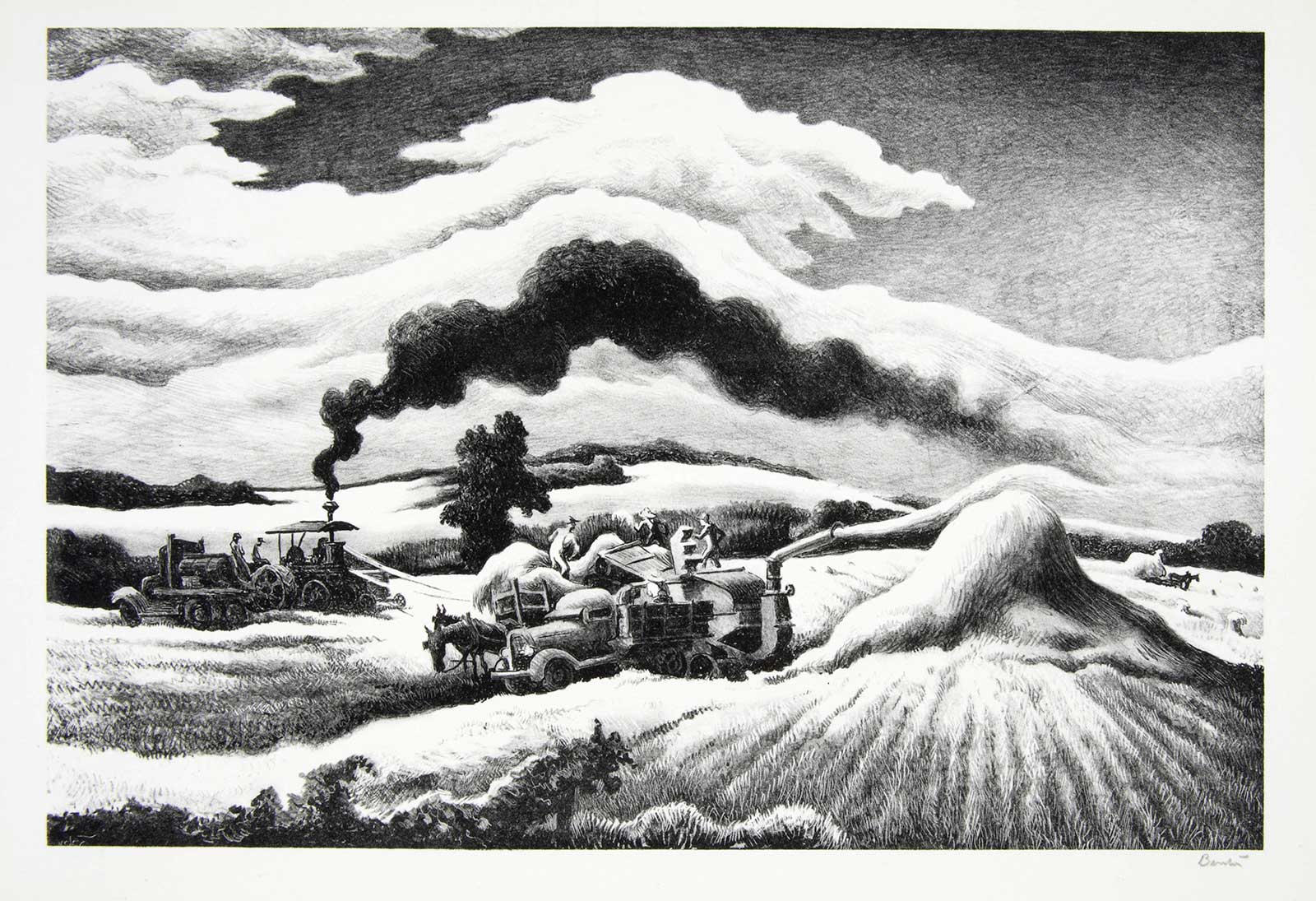 Thomas Hart Benton (1889-1975), Threshing, 1941. Lithograph on paper. High Museum of Art, Atlanta, gift in memory of Alan R. Liederman from his children, 1991.84. © T.H. Benton and R.P. Benton Testamentary Trusts/UMB Bank Trustee/VAGA at Artists Rights Society (ARS), New York.
“I was fascinated by the idea that a humble farmer had not only become, [but] remained well into the 20th century such a natural and powerful symbol of American ideals and ideology. In our modern world, most of us live in cities and have little connection to the land in any substantial way. But the image persists. Of course, the farmer as a symbol of hope and promise has a long history, grown from the historic American figure of frontiersman and then the yeoman farmer, each credited with taming and settling the nation,” says Heydt. “If rural life once symbolized opportunity for Americans of the 1800s, it represented a wholesome return to American values in the 1900s and a respite from the quickening pace of the modern world.” 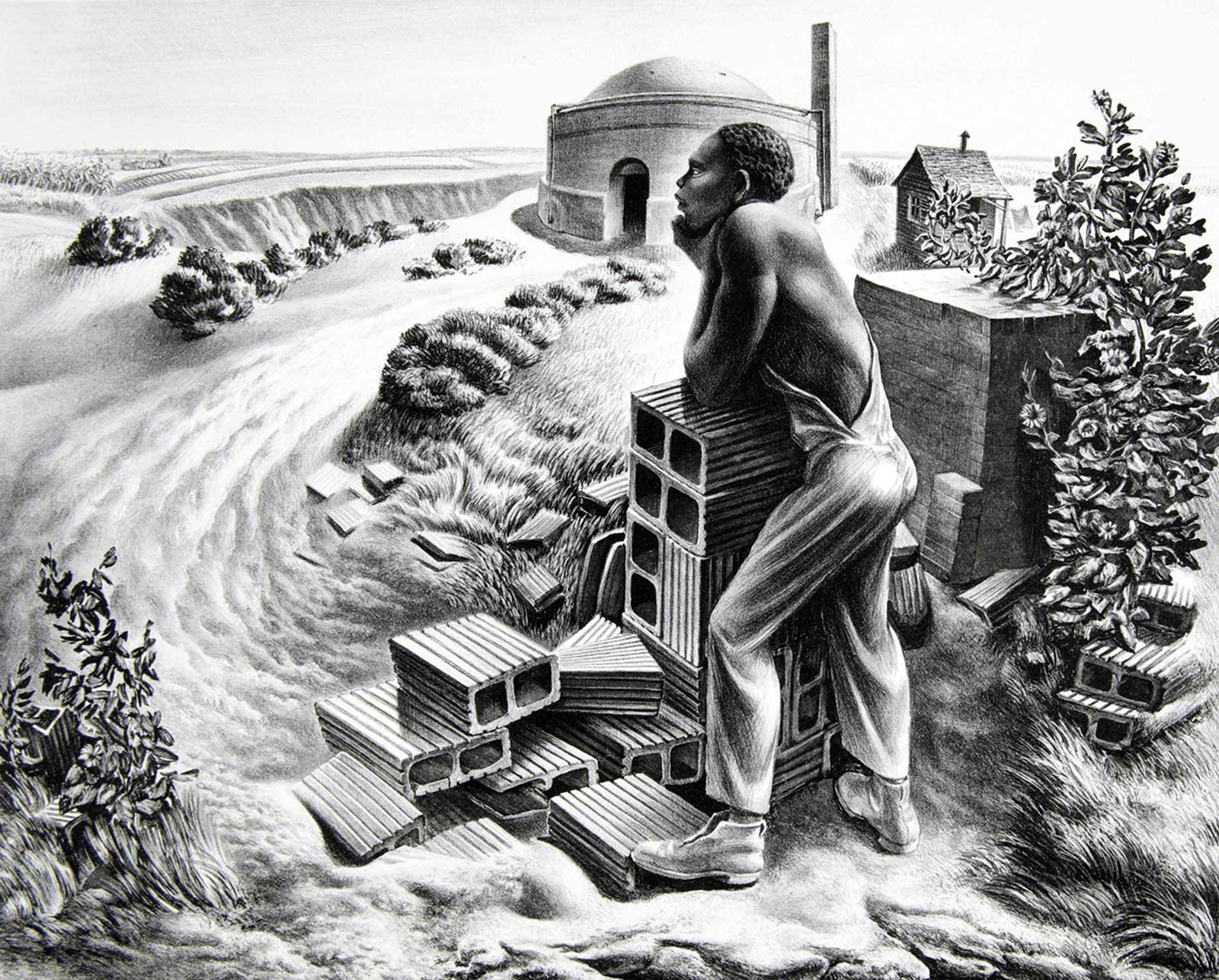 John S. de Martelly (1903-1980), Looking at the Sunshine, 1942. Lithograph on paper. High Museum of Art, Atlanta, gift of Carl and Marian Mullis, 1997.214.
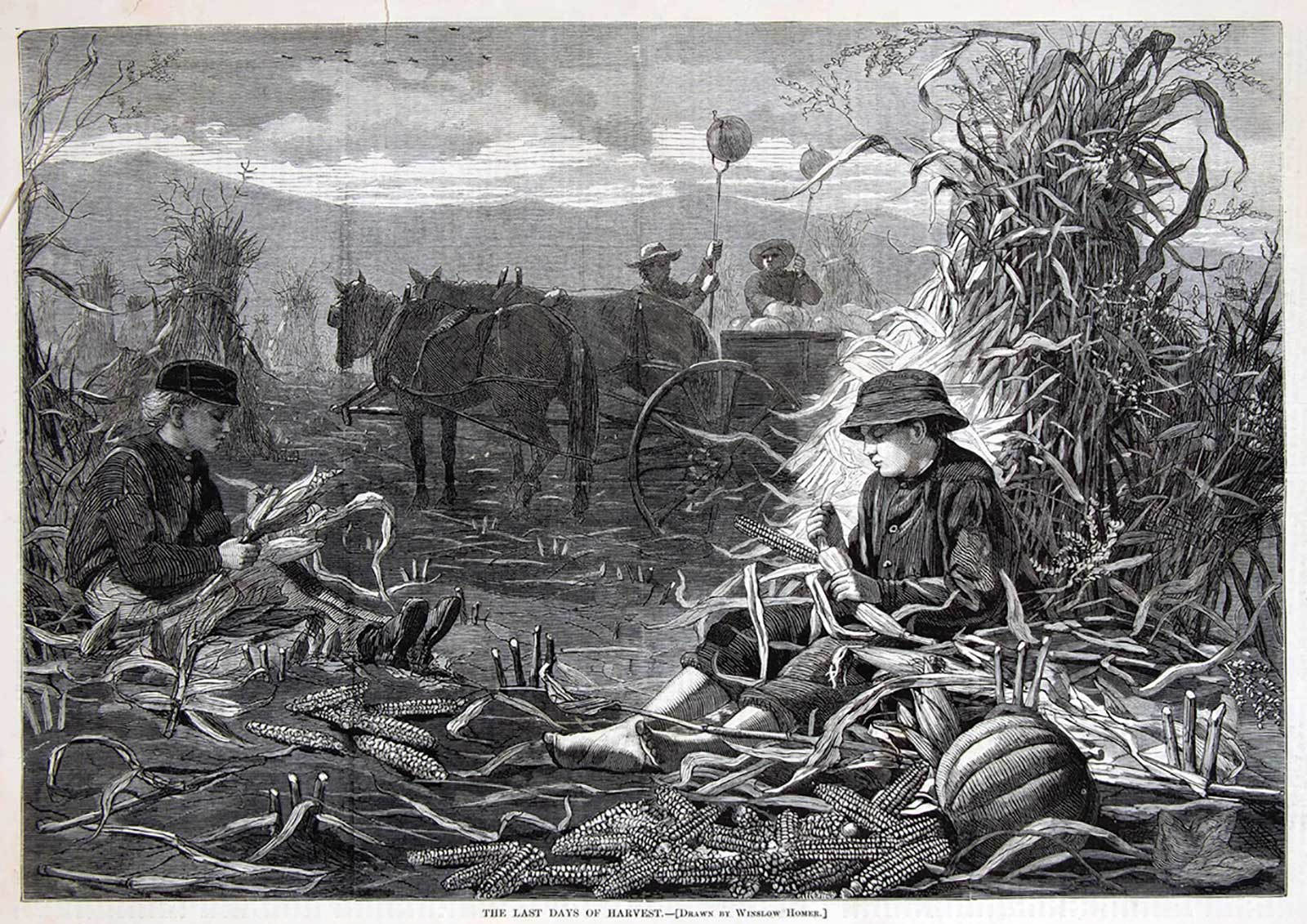 Winslow Homer (1836-1910), The Last Days of Harvest, 1873. Woodcut on newspaper. High Museum of Art, Atlanta, gift of John D. Hatch, 70.10.
She continues, “For this exhibition I wanted to explore how artists portrayed these persistent ideals—and the starker realities...I include photographs, prints and drawings because I hoped the diversity of imagery could also provide a broader lens to get a clearer picture of how artists interpreted and presented a subject that had been so foundational to a theme many have considered a cornerstone of American identity.” —
Powered by Froala Editor