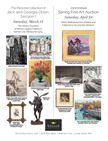
The breadth of watercolor painting techniques in 19th- and 20th-century America can be seen in the exhibition Views Across and Beyond: Important Works on Paper, at Hawthorne Fine Art in New York, which is open by advanced appointment only. The 20 paintings were assembled by a private collector over three decades.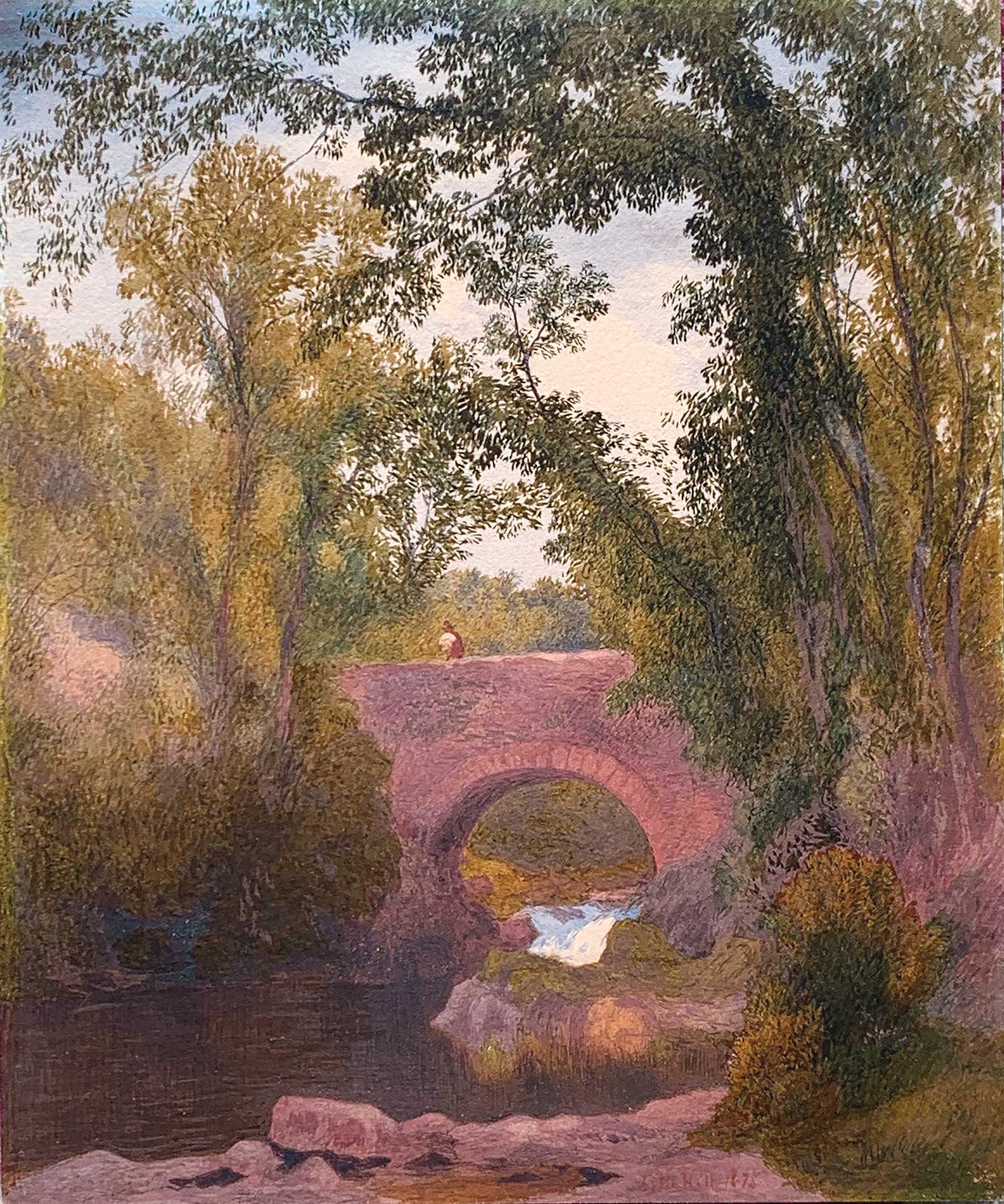 John Henry Hill (1839-1922), The Old Stone Bridge. Watercolor on paper, 115⁄8 x 95⁄8 in., signed lower right.
Watercolor as a medium came into its own after the founding of the American Watercolor Society in 1866. A history of the society notes, “The Society wished to keep the quality of its membership high, but many top painters hesitated to join, because women had been allowed membership.”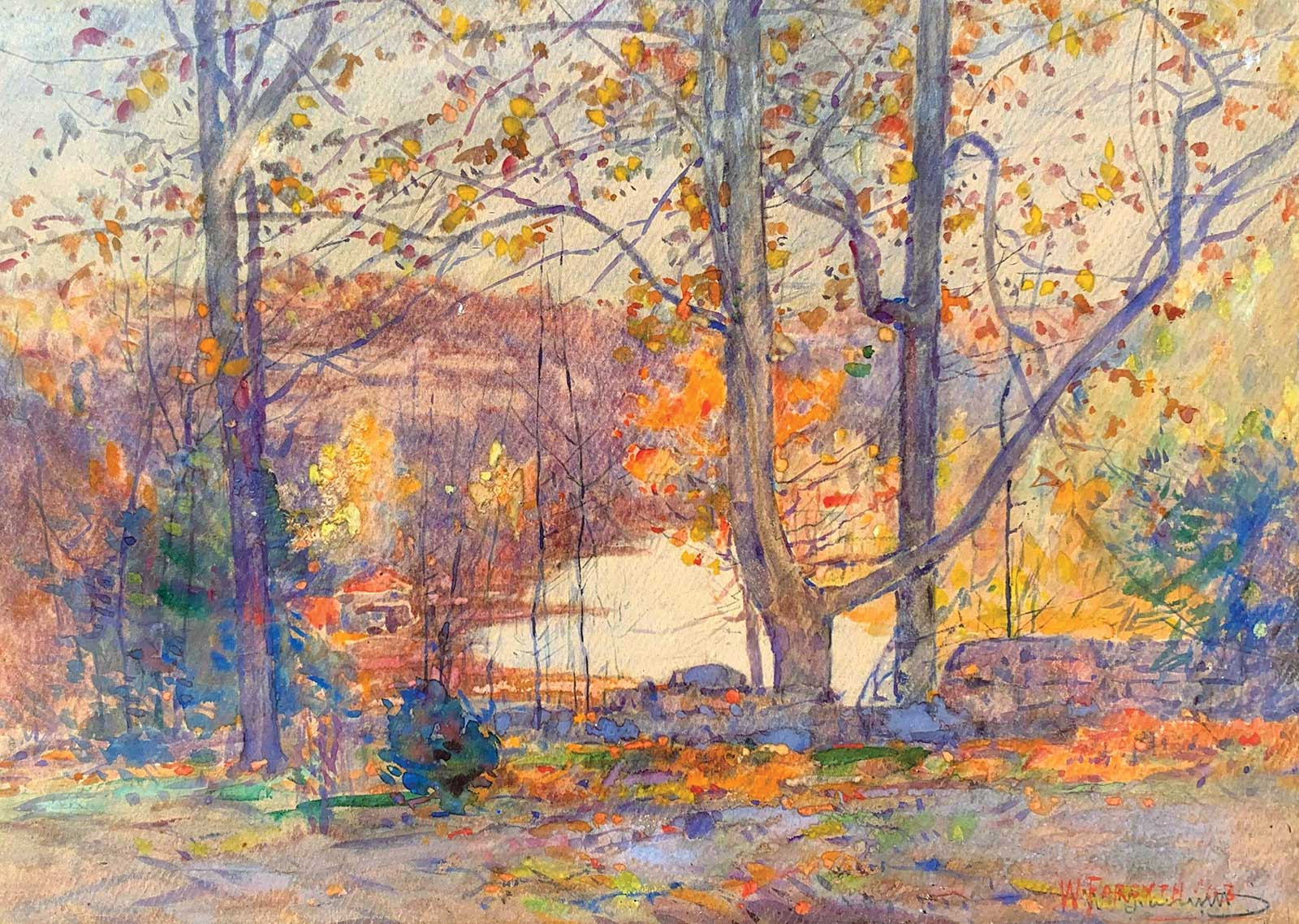 William J. Forsyth (1854-1935), Autumn, Whitewater, Indiana, 1903. Watercolor on paper, 15 x 21 in., signed lower left.
Ellen Robbins (1828-1905) was known for her floral paintings. One contemporary wrote that her paintings were “so natural that bees might light” on the flowers. She exhibited in the Society’s first exhibition in 1867. Less colorful than her florals and paintings of autumn leaves, her Cabin in Winter is a finely drafted, monochromatic image of a farmhouse and its outbuildings in a barren landscape.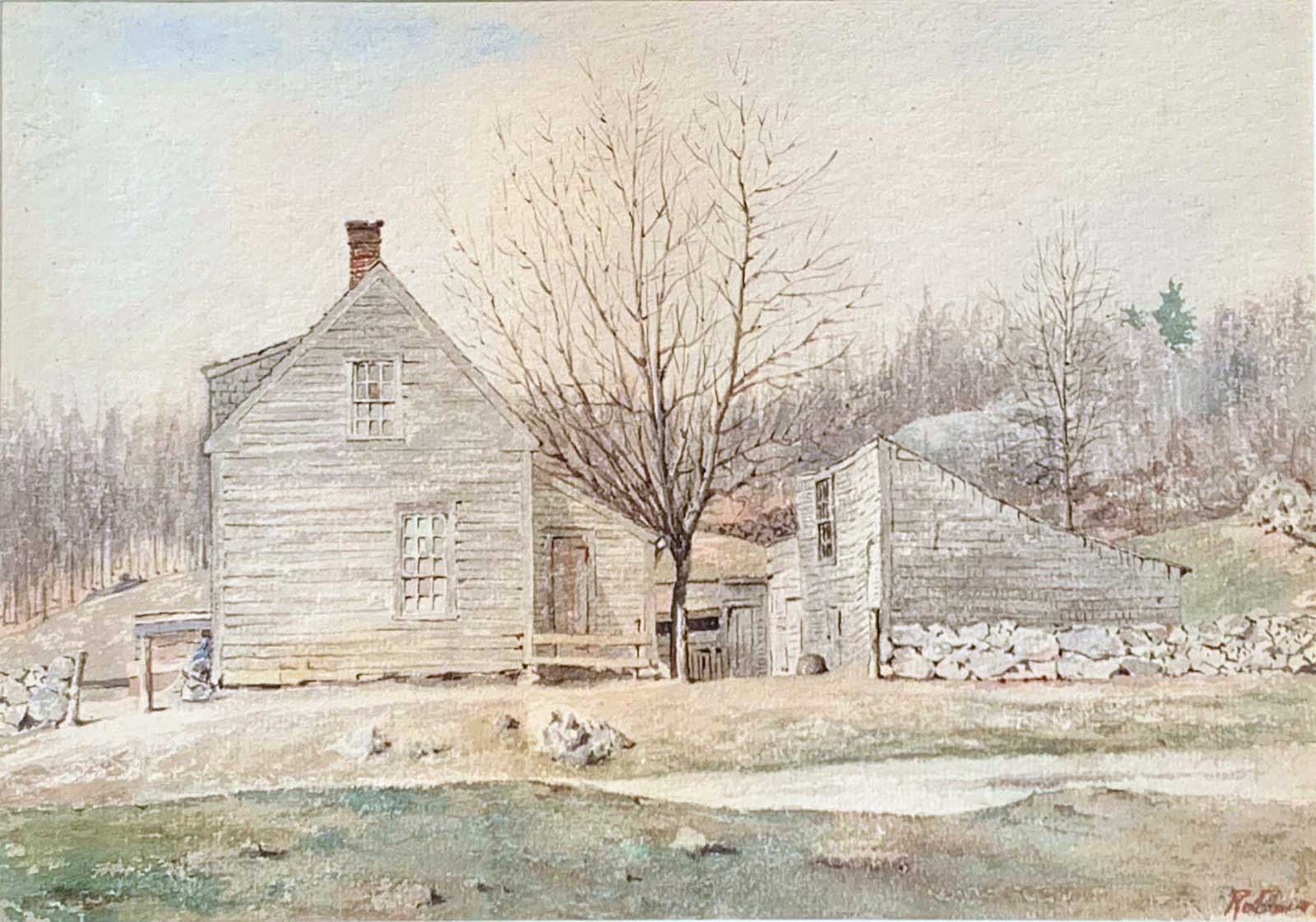 Ellen Robbins (1828-1905), Cabin in Winter. Watercolor on paper, 9¼ x 133⁄8 in., signed lower right.
New England Marsh at Sundown, by Edward Dearborn Everett (1818-1903), is an image we often associate with watercolor—washes of transparent color suggesting the forms and nuances of the landscape. Despite his skill at watercolor, Everett considered himself more of a draftsman. During his military career, which included service in the Mexican War, he produced detailed ink and watercolor drawings of the Alamo and local missions, some which now hang in the Amon Carter Museum of American Art in Fort Worth, Texas.
John Ruskin (1819-1900) was an English critic and philosopher who espoused a reform in art that called for detailed fidelity in recording nature while being aware of its spiritual qualities. He was an advocate of the Pre-Raphaelite Brotherhood that had been formed in England in 1848 advocating a return to the complex compositions, rich in detail and color, which existed before mannerists like Raphael. The American followers of the Pre-Raphaelite movement formed the Association for the Advancement of Truth in Art in 1863. John Henry Hill (1839-1922) was among the founders of the association and painted The Old Bridge in a drybrush technique that allowed him to achieve extraordinary detail.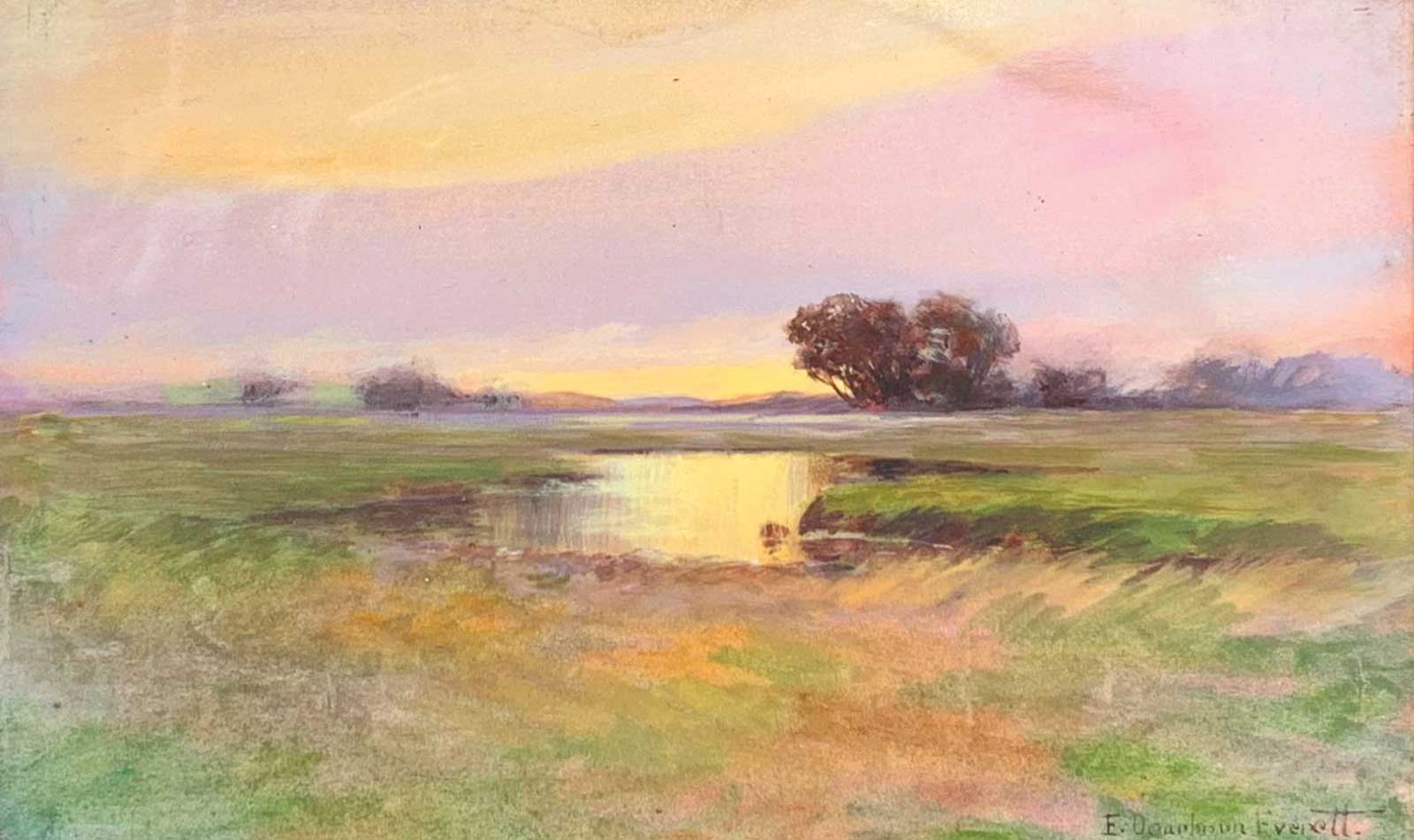 Edward Dearborn Everett (1818-1903), New England Marsh at Sundown. Watercolor on paper, 6½ x 10¾ in., signed lower right.
The brilliant colors of fall are captured in William J. Forsyth’s Autumn, Whitewater, Indiana. Forsyth (1854-1935) was a member of the Hoosier Group of five Indiana impressionist painters who worked at the turn of the 20th century. Regionalist artists have a deep bond with the environment they live in. In 1916 Forsyth wrote, “To live out-of-doors in intimate touch with nature, to feel the sun, to watch the ever-changing face of the landscape, where waters run and winds blow and trees wave and clouds move, and to walk with all the hours of the day and into the mysteries of night through all the seasons of the year—this is the heaven of the Hoosier Painter!” —
Powered by Froala Editor