The best gifts are the ones that keep on giving, and by that measure the Hartford Steam Boiler Collection is a special one. In 2001, the Hartford Steam Boiler Inspection and Insurance Company made a generous and unprecedented gift of 190 pieces of art to the Florence Griswold Museum in Old Lyme, Connecticut. Now 20 years since that transformative donation, the museum is celebrating with a new examination of the collection.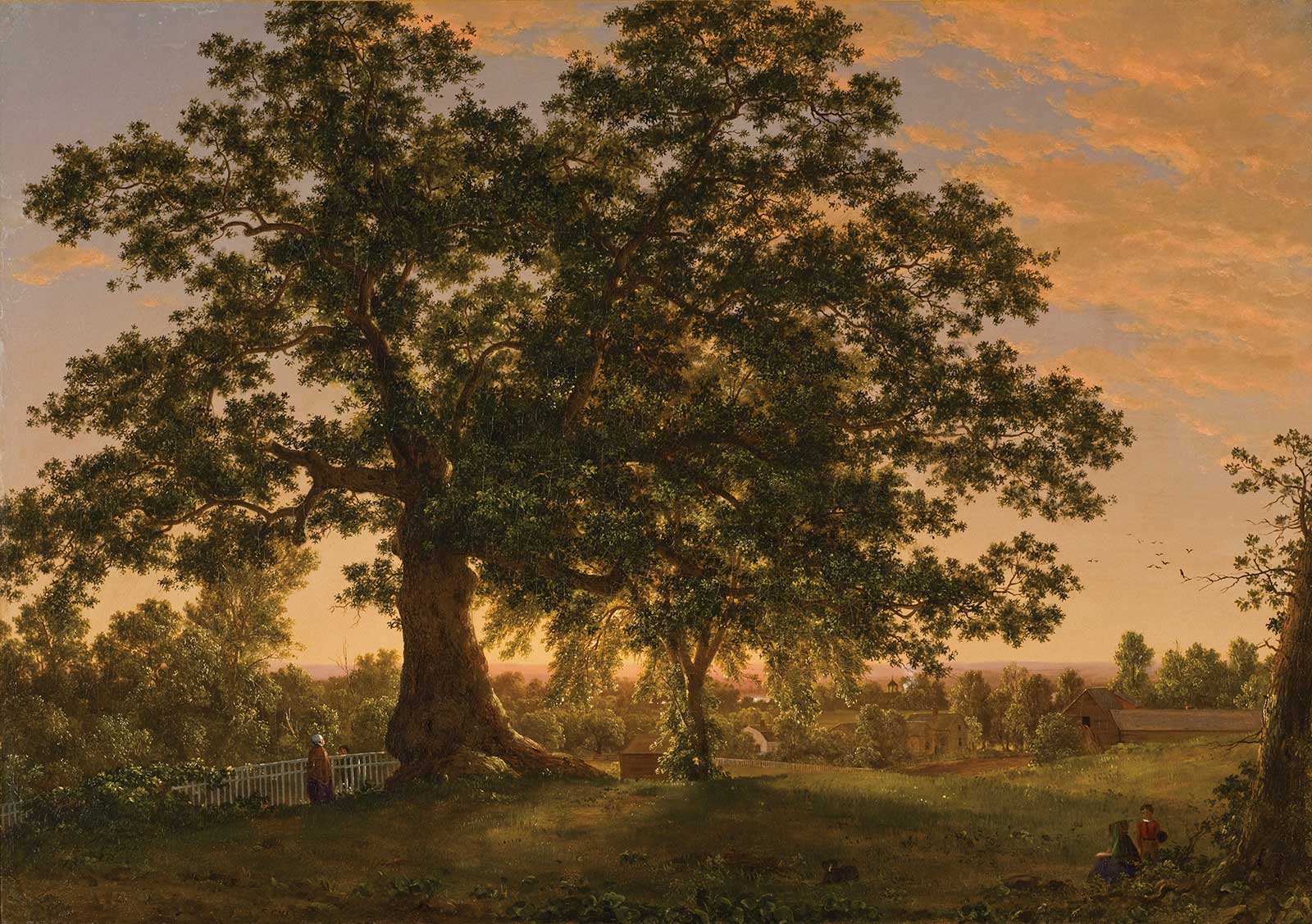 Frederic E. Church (1826-1900), The Charter Oak at Hartford, ca. 1846. Oil on canvas mounted on Masonite, 24 x 34¼ in. Florence Griswold Museum. Gift of the Hartford Steam Boiler Inspection and Insurance Company, 2002.1.29.
“For us, it’s really about looking forward, not back. The collection really connects with things that people find relevant today,” says curator Amy Kurtz Lansing, who adds that the collection is prompting new discussions about environmental issues, race and equality. “We celebrated the collection when it was 10 years old, so now that it’s 20 years old we thought we should take this moment in America and rethink what these works mean. The exhibition was planned before the pandemic, but this new time in the country has really allowed us to start thinking in new directions.”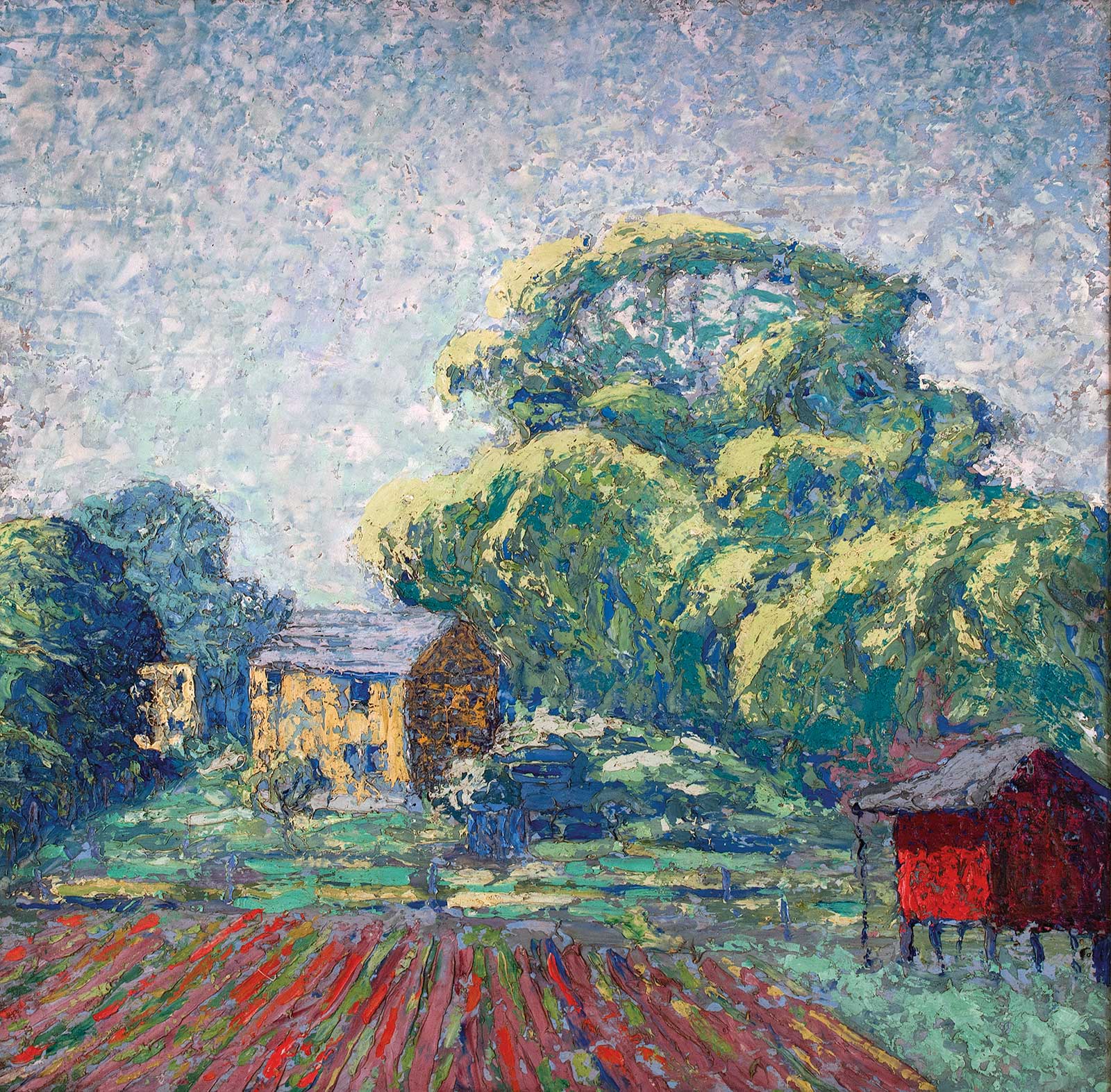 Milton Avery (1885-1965), East Hartford Meadows, 1922. Oil on upsom board, 23 x 23 in. Florence Griswold Museum. Gift of the Hartford Steam Boiler Inspection and Insurance Company, 2002.1.2.
Expanding Horizons: Celebrating 20 Years of the Hartford Steam Boiler Collection was curated by associate curator Jenny Parsons, who wrote much of the new label copy, but also enlisted 20 outside experts for fresh perspectives. Anyone who may have seen these works a decade ago, when they were last celebrated as a group, will be surprised at what Parsons and her guest experts have done with the works.
For instance, one of the key works in the exhibition is William Johnston’s mid-1700s work Portrait, David Gardiner, Jr. Parsons draws attention to the fact that the Gardiners were slave owners. “Indeed, a portion of the Gardiners’ wealth, which allowed them to have their portraits painted, was generated by slave labor,” Parsons writes. “It is through the portraits of figures like the Gardiners that we must work to access a fuller history of our country, and recognize the populations who were not painted.”
Lansing adds that this acknowledgement does not change history or “fix” the past, but adds context to the art in the museum. “We’re in this moment, and we’re primed to look at the unseemly side of our history,” she says. “And we’re not alone in asking these important questions. We’re taking a step forward, not back.”
The exhibition also has humorous aspects, which is on full display in the text of Robert Vonnoh’s 1883 work Portrait of John Severinus Conway. “Some portraits are team players; they want to quietly represent their sitter and blend into a visual ecosystem. They are easy, asking only for a little attention. They really just want to fit in with a tender: ‘Why hello there. Thanks for looking at me.’ This is not that kind of portrait,” writes Alexis Boylan, an associate professor of art history at the University of Connecticut. “…Everything is perfectly calibrated here to convey masculine style and flair, from the sharp cut suit to the tousled hair. Ideals of manhood were shifting, both in Europe and in the United States, with anxieties over class, race and gender often visually eased with the presentation of white men in authoritative, business-like, somber attire. Yet, artists also needed to project individuality, even some danger, to maintain the air of creativity. All which make each element of this bold portrait a considered balancing act. For example, the detail of the cigarette is doing important work, signaling a bohemian edge without scaring anyone off with the threats of real societal radicalism. The cigarette also pulls our eyes to his pelvis, reminding the viewer of the strength, virility, and control of both the sitter and the artist. This is a power portrait, a Gilded Age version of the thirsty Instagram shot. We can love the portrait, we can hate it—just please don’t look away.”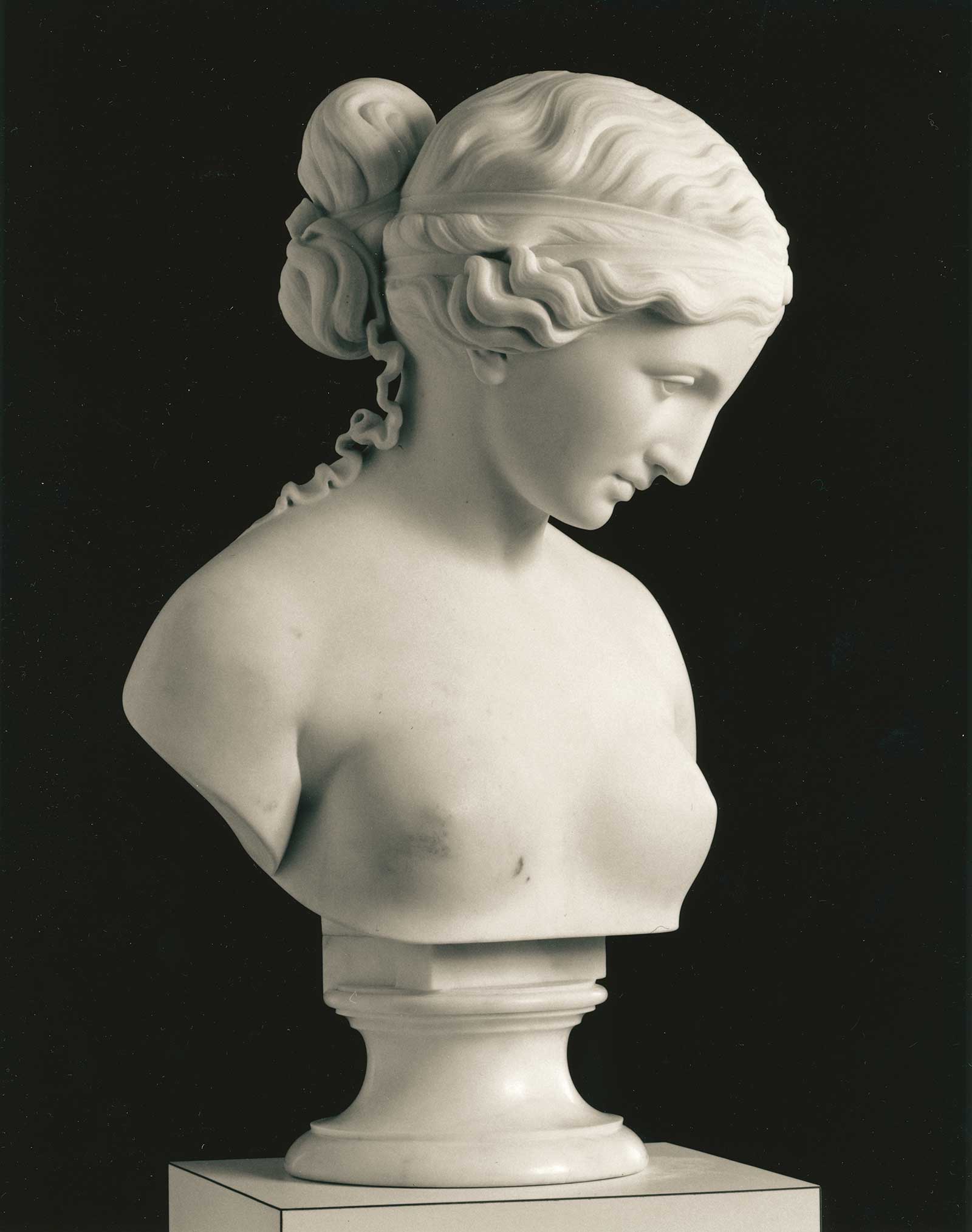 Edward Bartholomew (1822-1858), Sappho, 1850s. Marble, 25 x 16 x 14 in. Florence Griswold Museum. Gift of the Hartford Steam Boiler Inspection and Insurance Company, 2002.1.6.
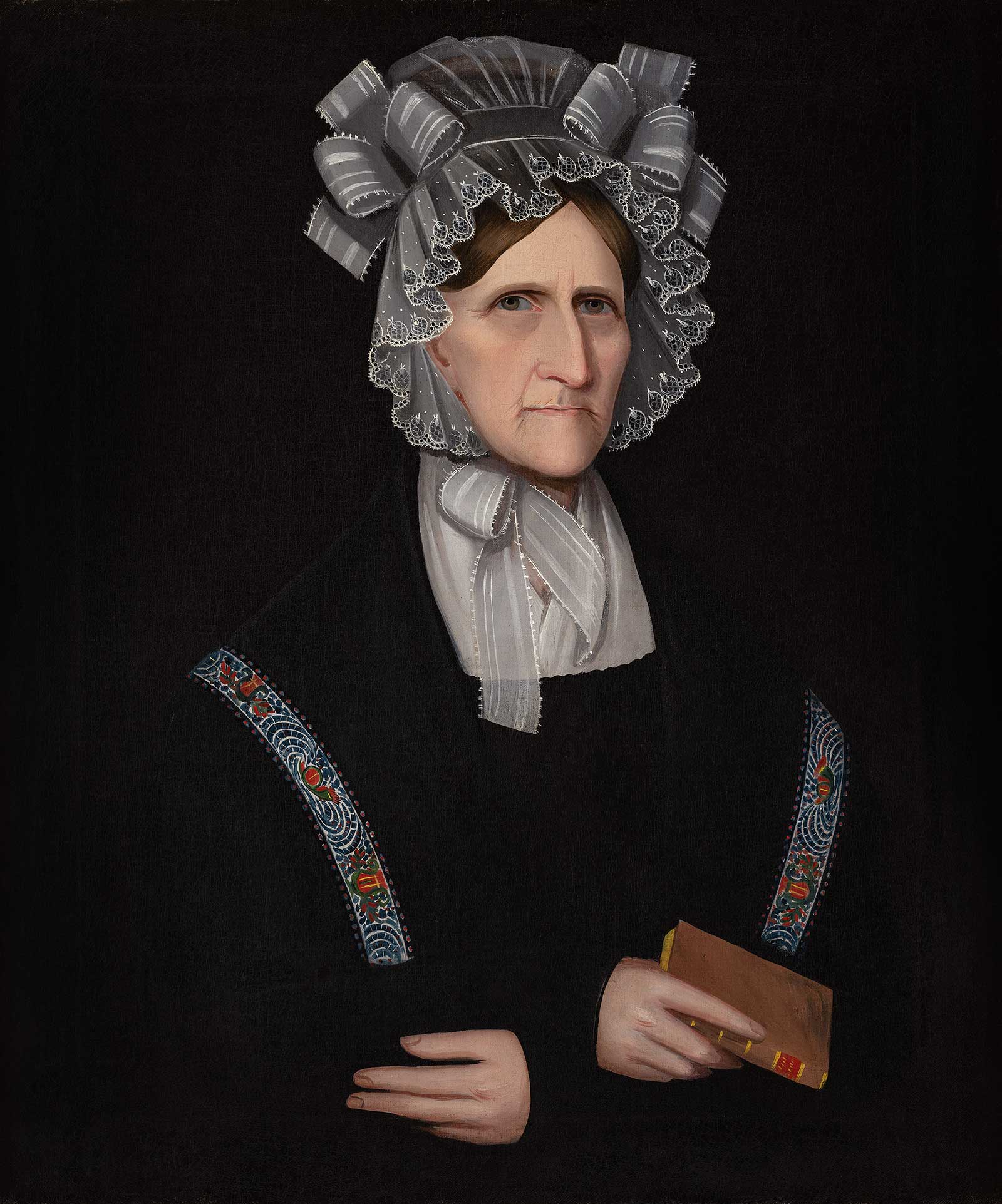 Ammi Phillips (1788-1865), Portrait of Katherine Salisbury Newkirk Hickok, ca. 1825. Oil on canvas, 32 x 27 in. Florence Griswold Museum. Gift of the Hartford Steam Boiler Inspection and Insurance Company, 2002.1.103.
The exhibition includes pieces by John Frederick Kensett, Willard Metcalf, George de Forest Brush, Worthington Whittredge, Thomas Cole, John Henry Twachtman, and several magnificent works by Childe Hassam, including A Familiar Tune and The Dry Northeaster, Isles of Shoals.
Another landscape on display is Frederic Church’s The Charter Oak at Hartford. “Bathed in warm light, an enormous tree consumes this canvas, with every leaf and twisted limb exquisitely delineated. Undertaken by the 20-year-old Frederic Church while he was still a student of Thomas Cole, the landscape painting already bears the marks of Church’s style: a mesmerizing emphasis on detail and a naturalist’s eye for botanical form. But this is also an unlikely history painting. In 1687, colonists had purportedly hidden Connecticut’s charter—the document that established certain rights to self-governance—in the dark hollows of this oak when British officials came to revoke it. A striking arboreal specimen became a protector of civil liberties,” writes Jennifer Raab, associate professor of art history Yale University. 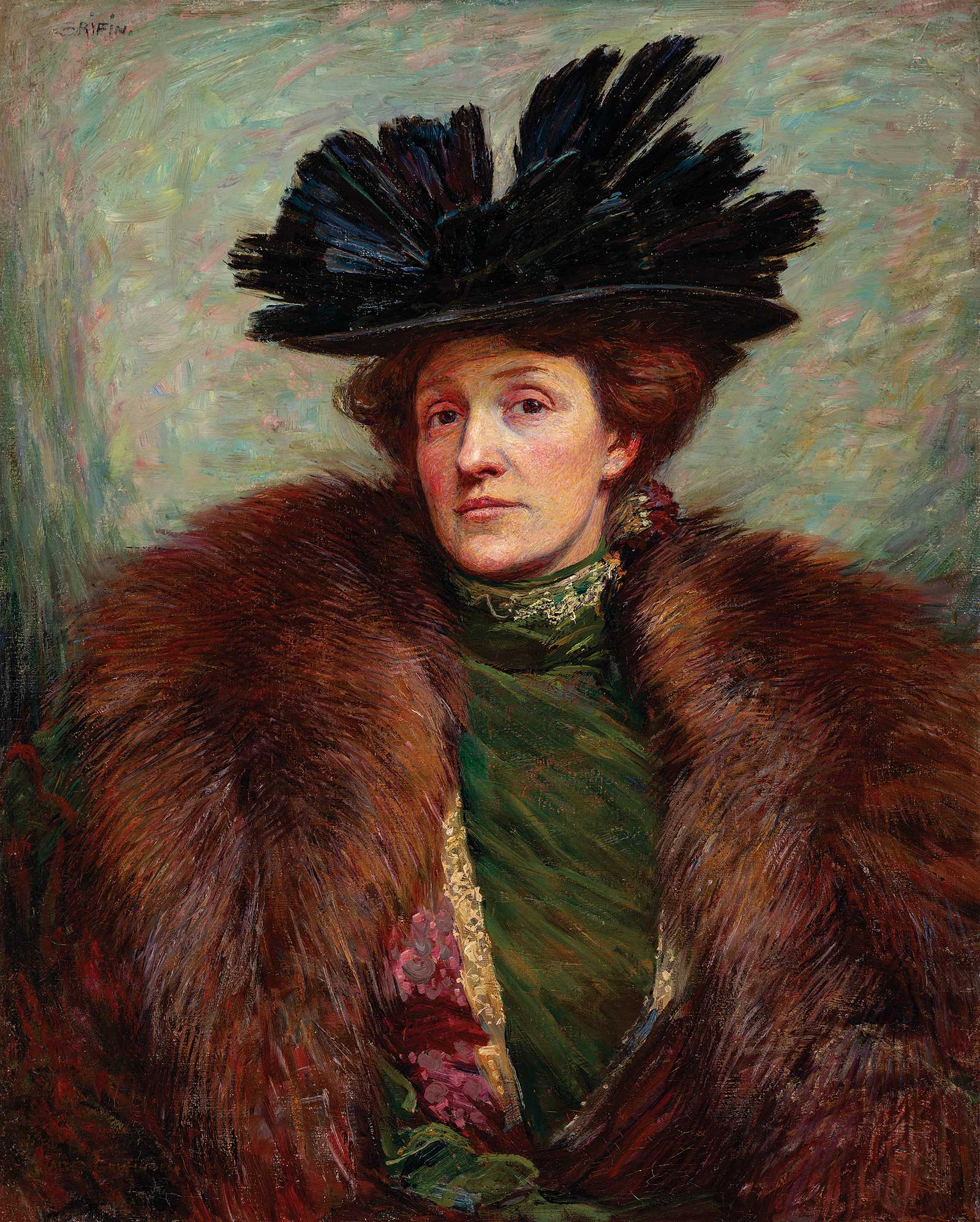 Walter Griffin (1861-1935), Portrait of a Lady, ca. 1897. Oil on canvas, 36 x 28¾ in. Florence Griswold Museum. Gift of the Hartford Steam Boiler Inspection and Insurance Company, 2002.1.60.
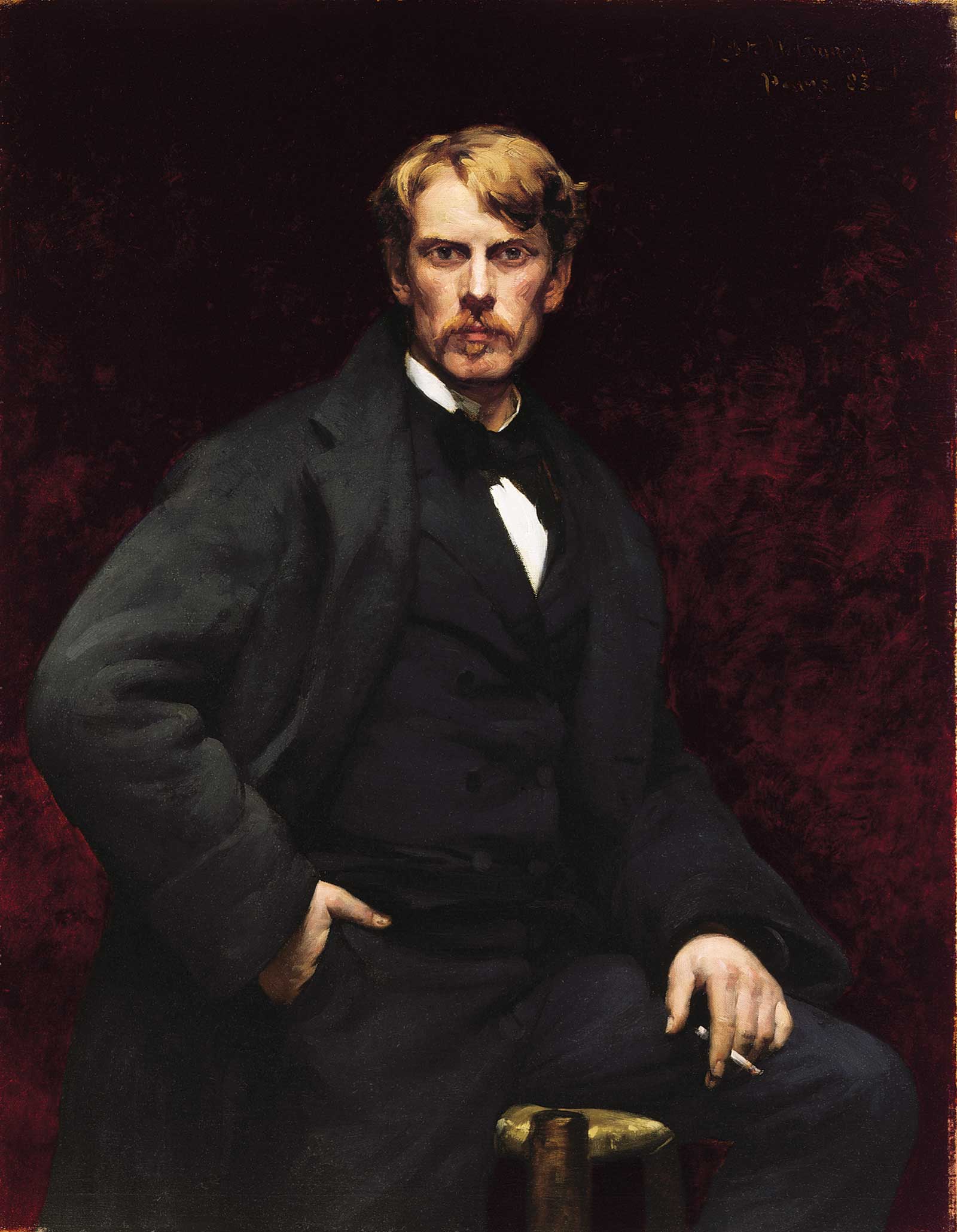 Robert Vonnoh (1858-1933), Portrait of John Severinus Conway, 1883. Oil on canvas, 45 x 351/8 in. Florence Griswold Museum. Gift of the Hartford Steam Boiler Inspection and Insurance Company, 2002.1.149.
“In Church’s picture,” Raab continues, “a woman at the right appears to be sketching the legendary tree while a young boy looks on, as if to indicate the ways that a reverence for history—and the natural world—must be passed down to each successive generation. When the Charter Oak was toppled by a fierce storm 10 years after the painting, the news made headlines and a band played funeral dirges beside the fallen giant. Pieces of its wood quickly became prized mementoes and Church himself collected a few small sections and had other larger lengths made into a rustic chair for his home. These relics served as physical links to the distant past of a nation, and to the personal past of the artist himself, who grew up just a few blocks from the tree in Hartford. In this early painting, Church establishes his own artistic vision, one in which history lies in the details. Every gnarled knot of wood is a means to tell an old story anew.” Adding to the context, is a piece of wood from the Charter Oak presented next to the painting as a historic relic.
Expanding Horizons continues through May 23. —
Expanding Horizons: Celebrating 20 Years of the Hartford Steam Boiler Collection
Through May 23, 2021
Florence Griswold Museum
96 Lyme Street, Old Lyme, CT 06371
t: (860) 434-5542
www.florencegriswoldmuseum.org
Powered by Froala Editor