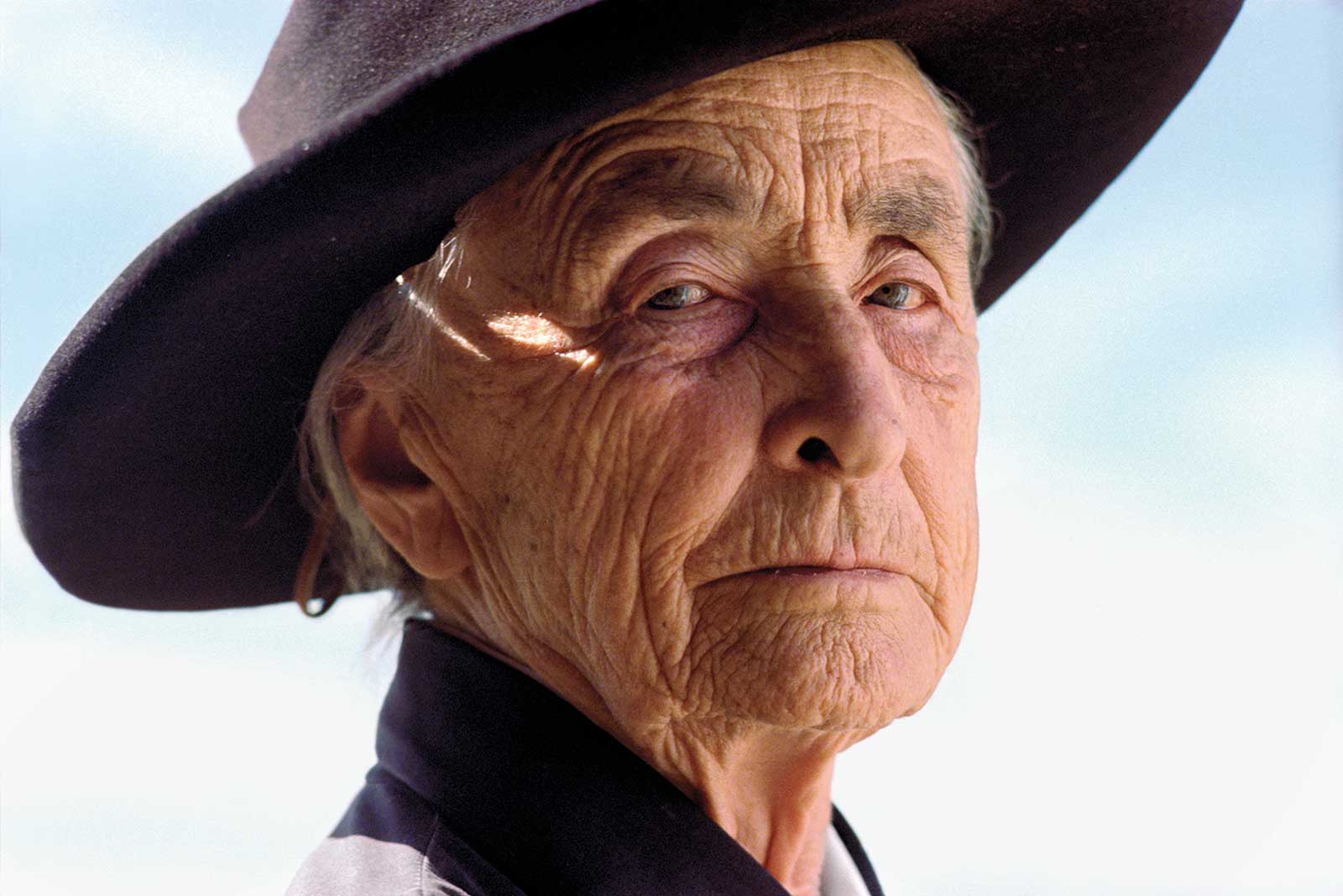
 O’Keeffe at Ghost Ranch.
Georgia O’Keeffe: A Life Well Lived
Photographs by Malcolm Varon with foreword by Cody Hartley and introduction by Barbara Buhler Lynes. (University of New Mexico Press, November 2020). Hardback with jacketed cloth, 112 pages with 64 color plates. $39.95.
Georgia O’Keeffe is one of the most iconic figures in the American art world. Her long career spanned many subjects and mediums, but her life also has provided a sense of intrigue. In her early years, the budding artist gained recognition through Alfred Stieglitz, who had seen her charcoal drawings in 1916 and decided to mount an exhibition of her work at 291 without her permission. After their initial meeting, O’Keeffe and Stieglitz fell for one another and she quickly became his muse.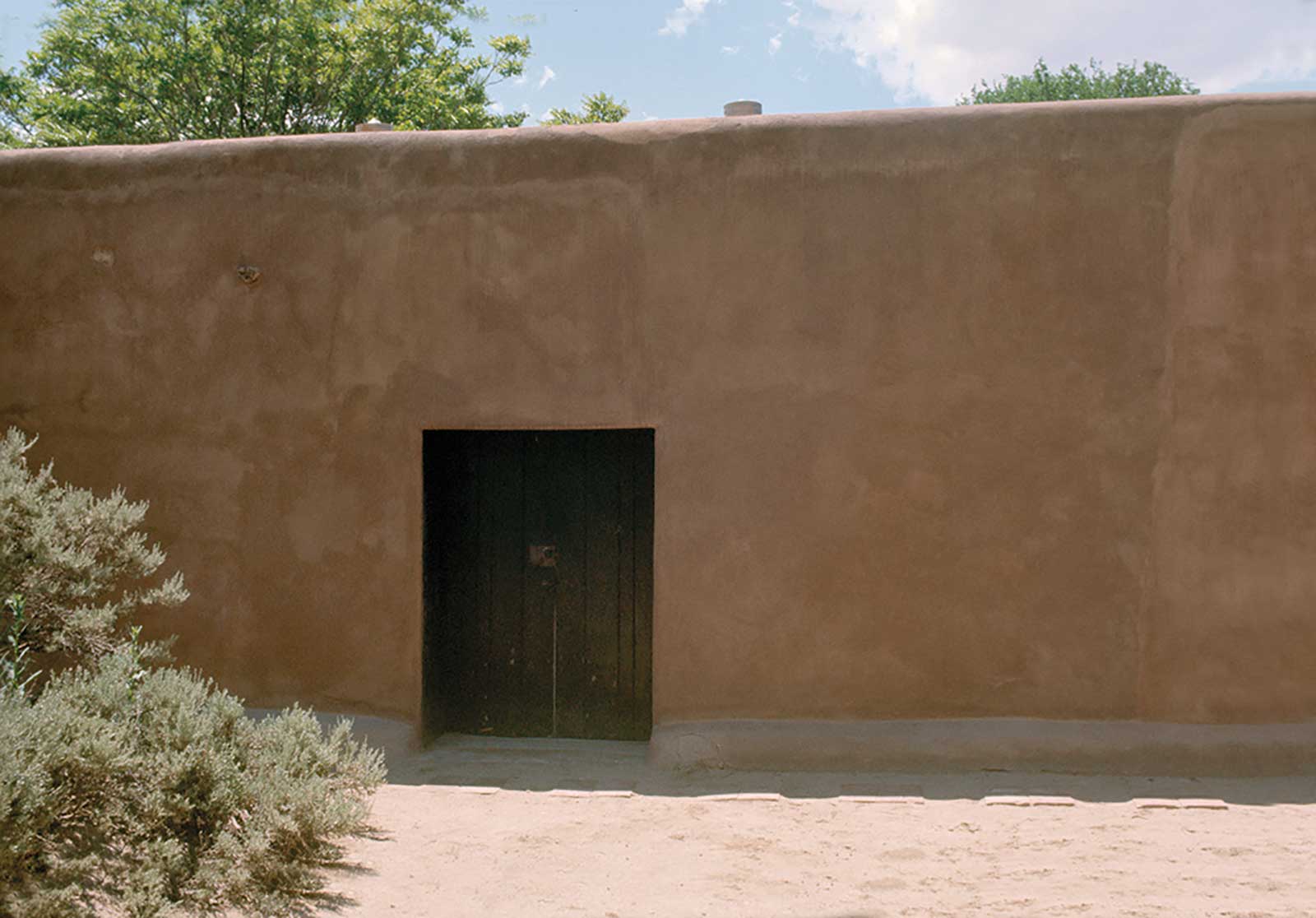 This is the black door in the patio of the Abiquiú house, which was the subject of several of O’Keeffe’s paintings.
Stieglitz photographed O’Keeffe between 1918 and 1925, with more than 350 mounted prints that showed her at her most vulnerable moments in her early years. All the while, O’Keeffe continued to work as an artist, with Stieglitz photographing her paintings. Only one other person was selected by O’Keeffe herself to photograph her art in color and that was Malcolm Varon. In 1969, he photographed Sky Above Clouds IV, which became the cover of the catalog for her 1970 retrospective at the Whitney Museum of American Art. It also was Varon’s first published photograph of one of O’Keeffe’s paintings.
Varon went on to photograph many of her paintings, but in 1977 also took on photographing the artist and her life as she was approached her 90th year. In the new book Georgia O’Keeffe: A Life Well Lived, 64 full-color photographs by Varon showcase the artist, her home and companions at Ghost Ranch and Abiquiú, and the landscape that inspired her art. The book is the first collection of photographs portraying O’Keeffe and her surroundings in color.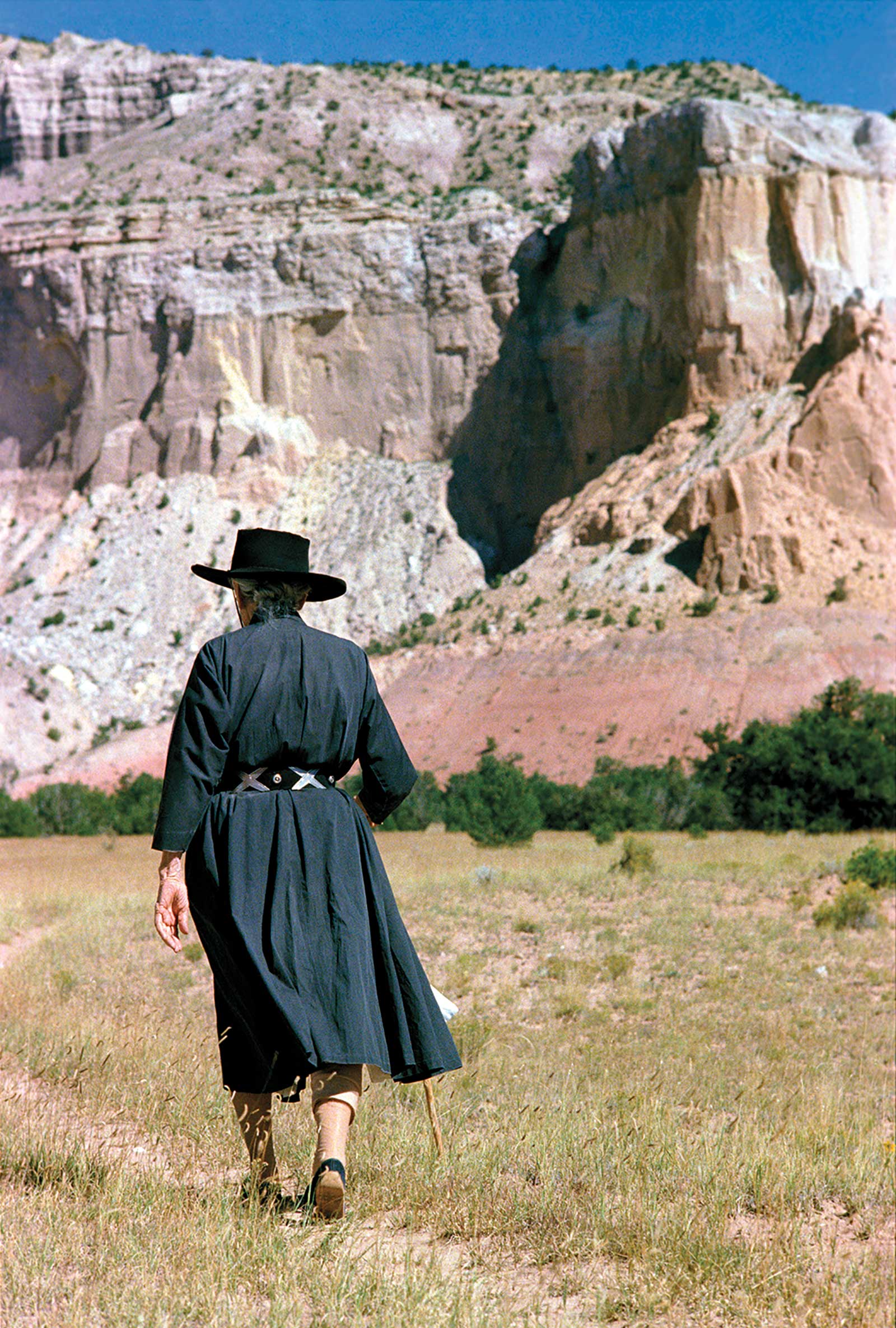 O’Keeffe briskly walking in the field at Ghost Ranch.
The book is divided into three sections of photographs that provide insight into the artist’s later life. The first part, titled “Georgia O’Keeffe: A Woman of Intense Personality and Piercing Intelligence,” is a selection of photographs of O’Keeffe. Some are posed images that show her public persona—a woman with great strength, intelligence and determination—while other images offer a more private glimpse of the artist. They are candid photos of the artist laughing or standing outside at Ghost Ranch surrounded by the cliffs and lands that she often painted.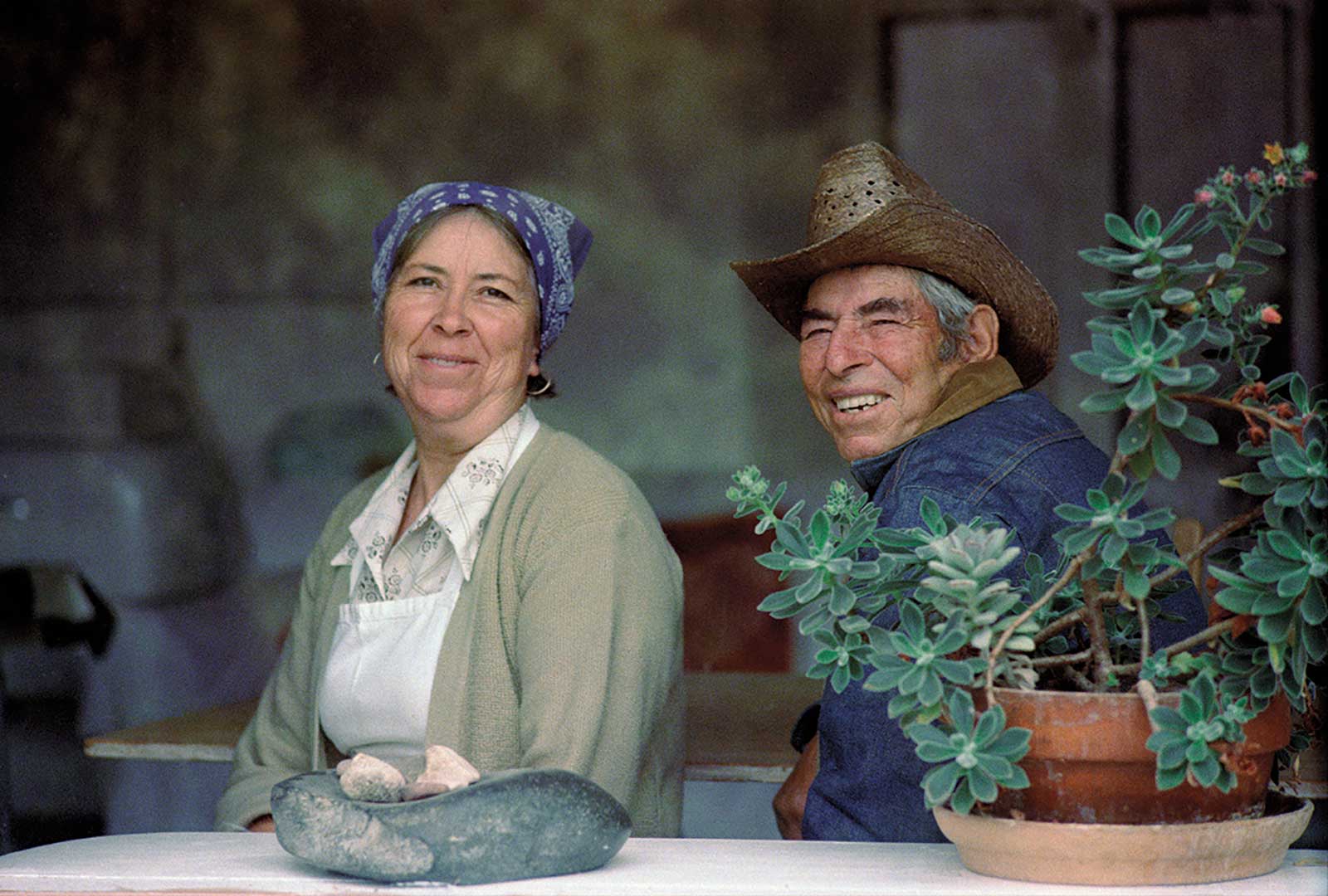 Candelaria Lopez and Estiben Suazo. They are the mother and grandfather of Agapita Judy Lopez, O’Keeffe’s longtime administrative assistant. Candelaria was employed by O’Keeffe as a cook and housekeeper. She prepared most of O’Keeffe’s meals. Estiben was employed by O’Keeffe to maintain the garden in the compound.
The second part of the book is dedicated to O’Keffee’s relationship with the young artist Juan Hamilton. Called “Georgia O’Keeffe and Juan Hamilton: A ‘Strong and Tender Connection,’” the chapter shows O’Keeffe’s care for Hamilton—who had become her studio assistant and taught her to work in clay—as well as their admiration for one another. In the introduction of the book, O’Keeffe scholar Barbara Buhler Lynes writes, “Varon’s photographs provide new insight on O’Keeffe’s friendship with artist and potter Juan Hamilton, which began in 1972 when he was 26 and she was 85. Their relationship prompted speculation about whether or not they were lovers, which amused and delighted O’Keeffe (they were not)…Varon photographed them walking, talking and laughting together, revealing the depth of O’Keeffe’s trust in Hamilton and her dependence on him, which can be seen, for example, when she gently and tenderly touches him while looking up and directly into his face.”
The last section of the book, “Her Space: The Places and People Important to Georgia O’Keeffe,” is a beautiful tribute to her home at Abiquiú. The photographs show many facets of the adobe, which often appeared in her paintings, as well as the places and people that were part of her everyday life including her sister, Claudia, her dog Jingo, and her employees.
To supplement the imagery, along with the introduction, the book includes a foreword by Cody Hartley, director of the Georgia O’Keeffe Museum. Concluding the book is an intimate reflective essay by Varon that discusses how he came to photograph O’Keeffe’s artwork and the friendship they forged over the years. His words only enhance the imagery seen throughout the pages, showing the artist beyond her public persona and living her day-to-day life in a place she loved surrounded by people she loved. —
Powered by Froala Editor