The Canton Museum of Art in Ohio is currently displaying quite the significant exhibition of American impressionist work titled Dancing in the Light: Masterworks from the Age of American Impressionism. From 1878 through circa 1930, this unique exhibition traverses a turning point in American history and highlights some of the great impressionist painters of that time.
“American impressionism emerged during an era bracketed by the Civil War and the Great Depression,” explains Christy Davis, curator of exhibitions at the Canton Museum of Art. “Such profound social and cultural change gave rise to American Impressionism, as the country also entered into a period of growth, national wealth and industry. There was a push during this time frame for education, and cities and towns were competing to distinguish themselves by developing public art galleries and museums.”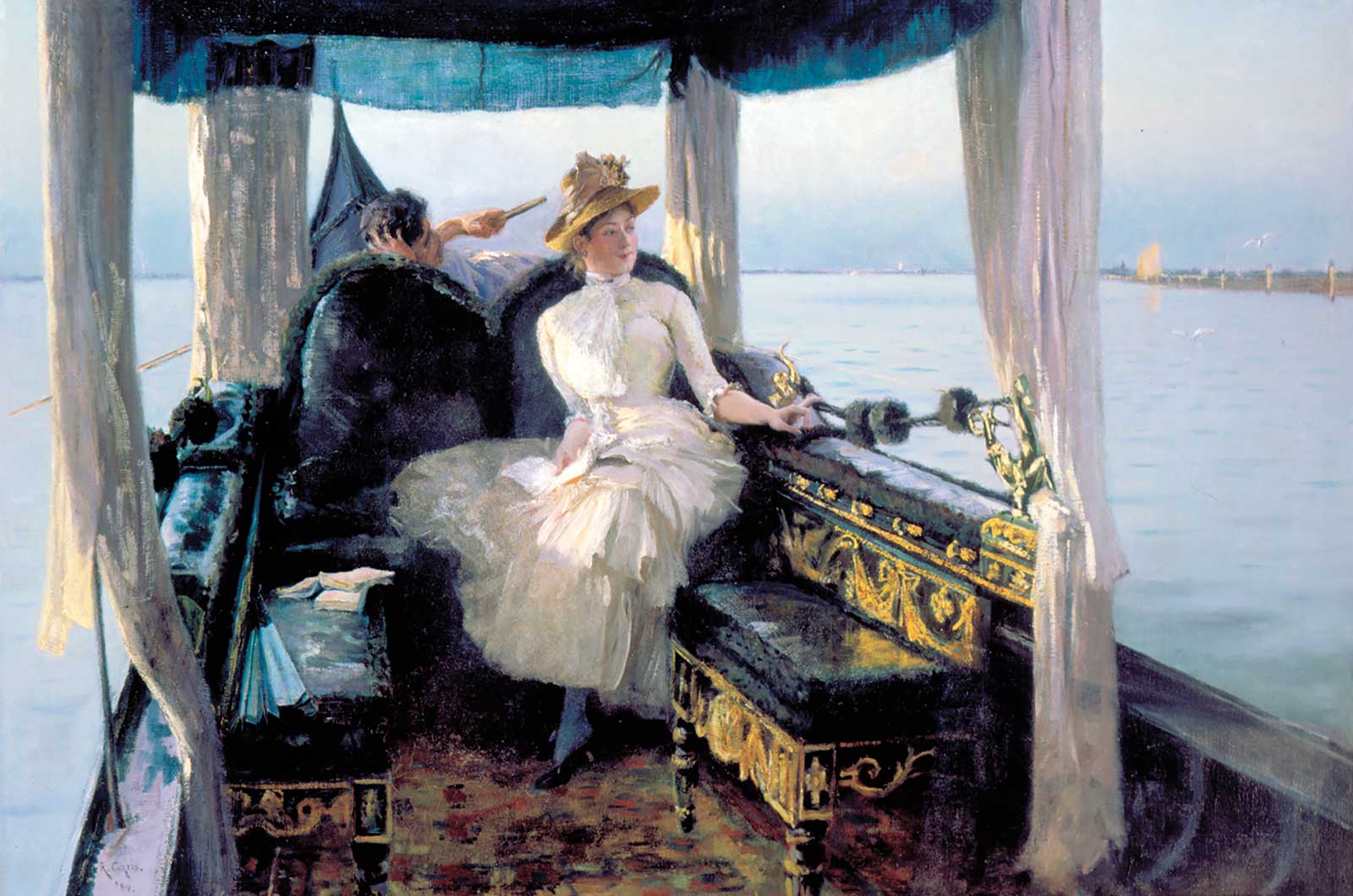 Ralph Wormeley Curtis (1854-1922), Drifting on the Lagoon, Venice (Drifting with the Tide), 1884. Oil on canvas, 25½ x 37½ in. Private collection, Courtesy of Keny Galleries.
This cultural shift also paralleled the French impressionists, as travel became easier for Americans to reach Europe and learn alongside many of the greats. “They took many trips abroad to paint,” Davis says. “Many of these artists studied at the same schools and traveled to the same cities.”
Exhibition piece Bleak House, Broadstairs, by Childe Hassam, is an example of this extensive travel with a scene he created from a trip to Kent, England. A woman in a white dress reads a book in the foreground. “What’s fun about this piece is the brown building in the background is actually the summer home of Charles Dickens where he wrote David Copperfield,” Davis says. 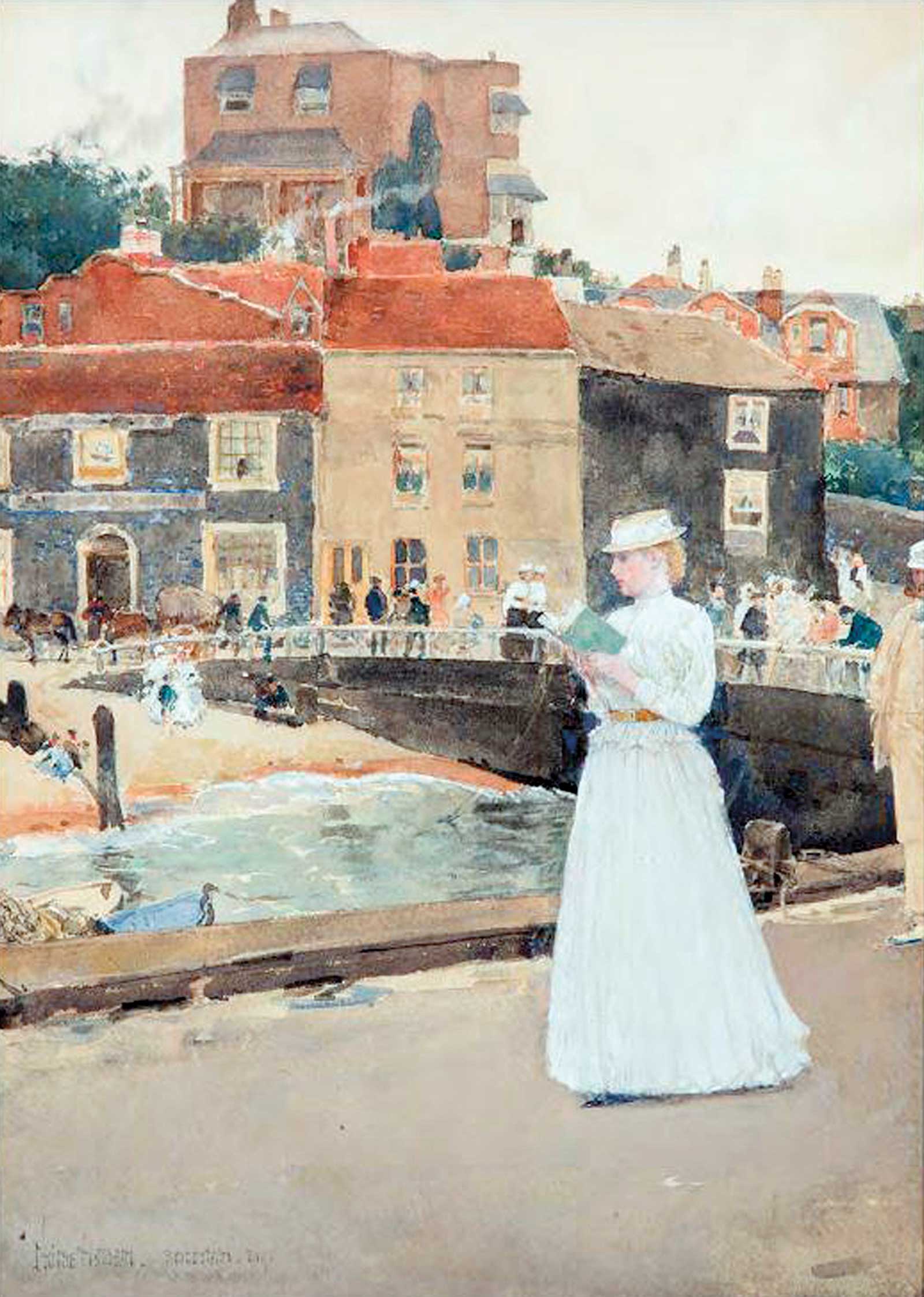 Childe Hassam (1859-1935), Bleak House, Broadstairs, 1889. Watercolor on paper, 13½ x 9¾ in. Purchased by the Canton Museum of Art, 2017.83.
In addition, Canton Museum has made a point to highlight the women of American impressionism. “Going back to this time in American history, there were big changes with women’s rights as well,” the curator says. “There was this concept of the ‘new woman,’ where women finally had the ability to attend some of the art academies and shows when previously they were restricted from participating.”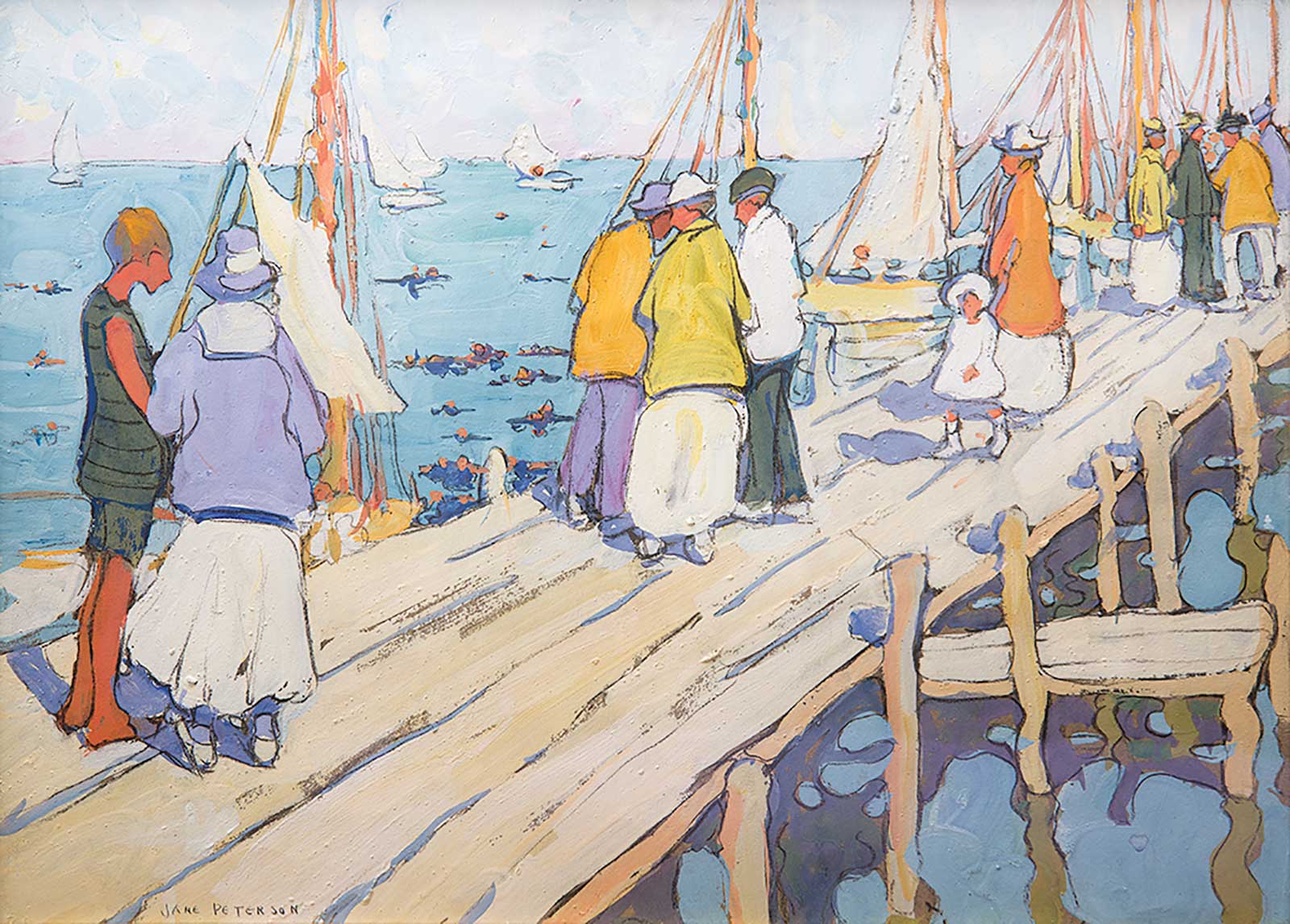 Jane Peterson (1876-1965), Boat Landing, Edgartown, 1915. Gouache on paper, 17 x 23 in. Private collection, Mr. and Mrs. Charles Atwood.
Jane Peterson is the most heavily represented artist in the exhibition, with a total of five paintings, including Boat Landing. This depiction of people on a boating dock really illustrates “seeing through the artist’s eyes,” Davis explains.
What makes this exhibition even more spectacular is the rarity of most of the pieces on display. “The majority of the exhibit is from private collections that haven’t been shown in public for decades,” says Davis. “It’s really fantastic when you think about it because you can see paintings you otherwise would never see.”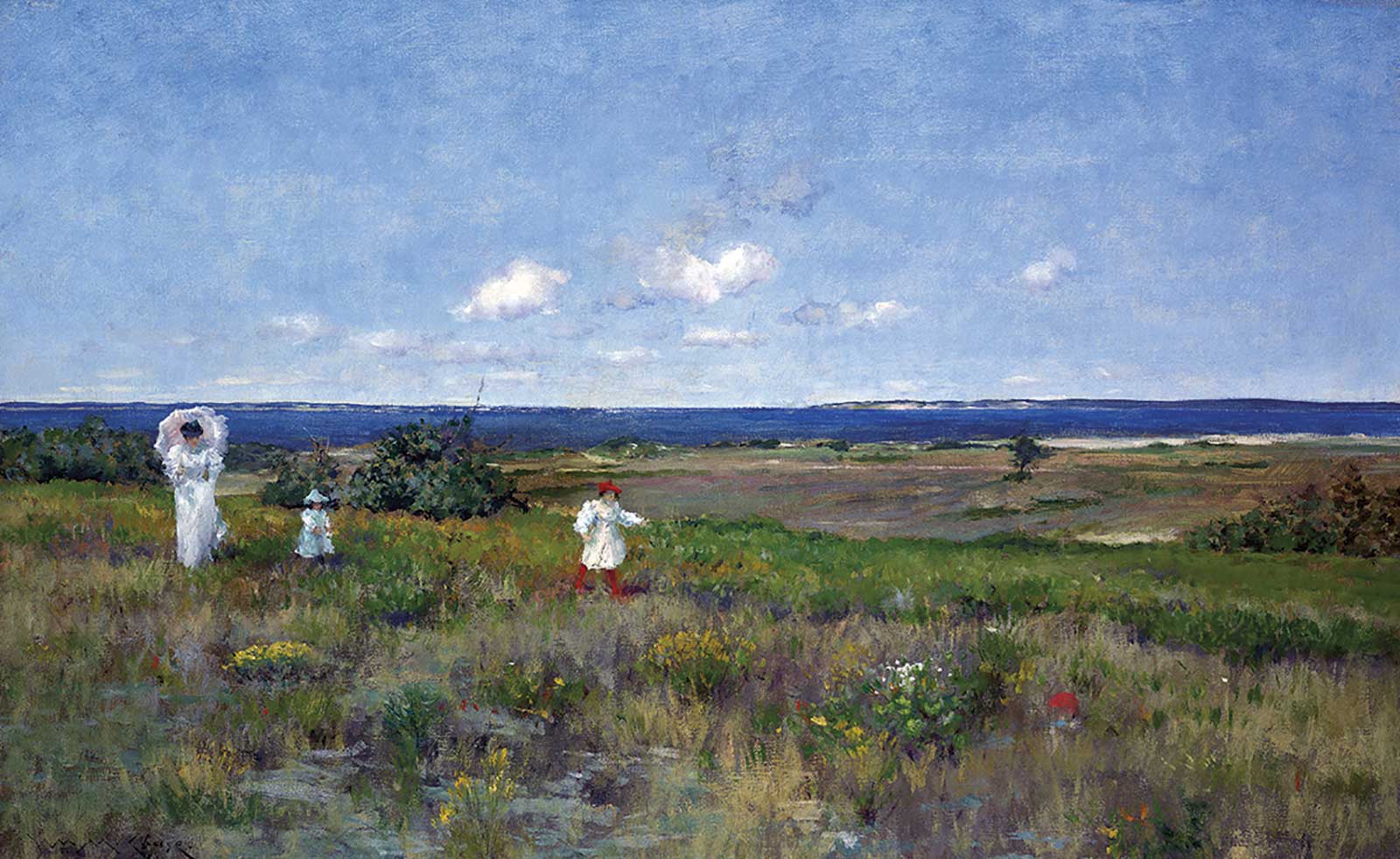 William Merritt Chase (1849-1916), Near the Beach, Shinnecock, 1895. Oil on canvas, 30 x 48 in. Toledo Museum of Art, Gift of Arthur J. Secor, 1924.58.
This is true of the popular piece Drifting on the Lagoon, Venice (Drifting with the Tide), by Ralph Wormeley Curtis, a quintessential impressionist painting showing a woman in a boat, with the glow of magic-hour lighting cast upon her. The woman is in detail but the rest of the painting shows loose, broken brushstrokes. “The composition is textbook impressionism,” Davis adds. “This piece is from a private collection and hasn’t been seen in a public exhibition in a least a decade.”
The Canton Museum broadly discusses all of the era in their legendary exhibition, and will be on display through March 7. The museum also offers a 360-degree narrated virtual opportunity through their website, and will be available after the closing of the exhibit. —
Powered by Froala Editor