Scott Joiner designed his house in Punta Gorda, Florida, not only as a home for himself but also for an extensive collection of American and European art, artifacts and furniture. The style is derived from historic properties in New Orleans and Charleston. A people person, he says, “People are worth loving and caring for. Things are special but people count most. Well, I do also love animals.”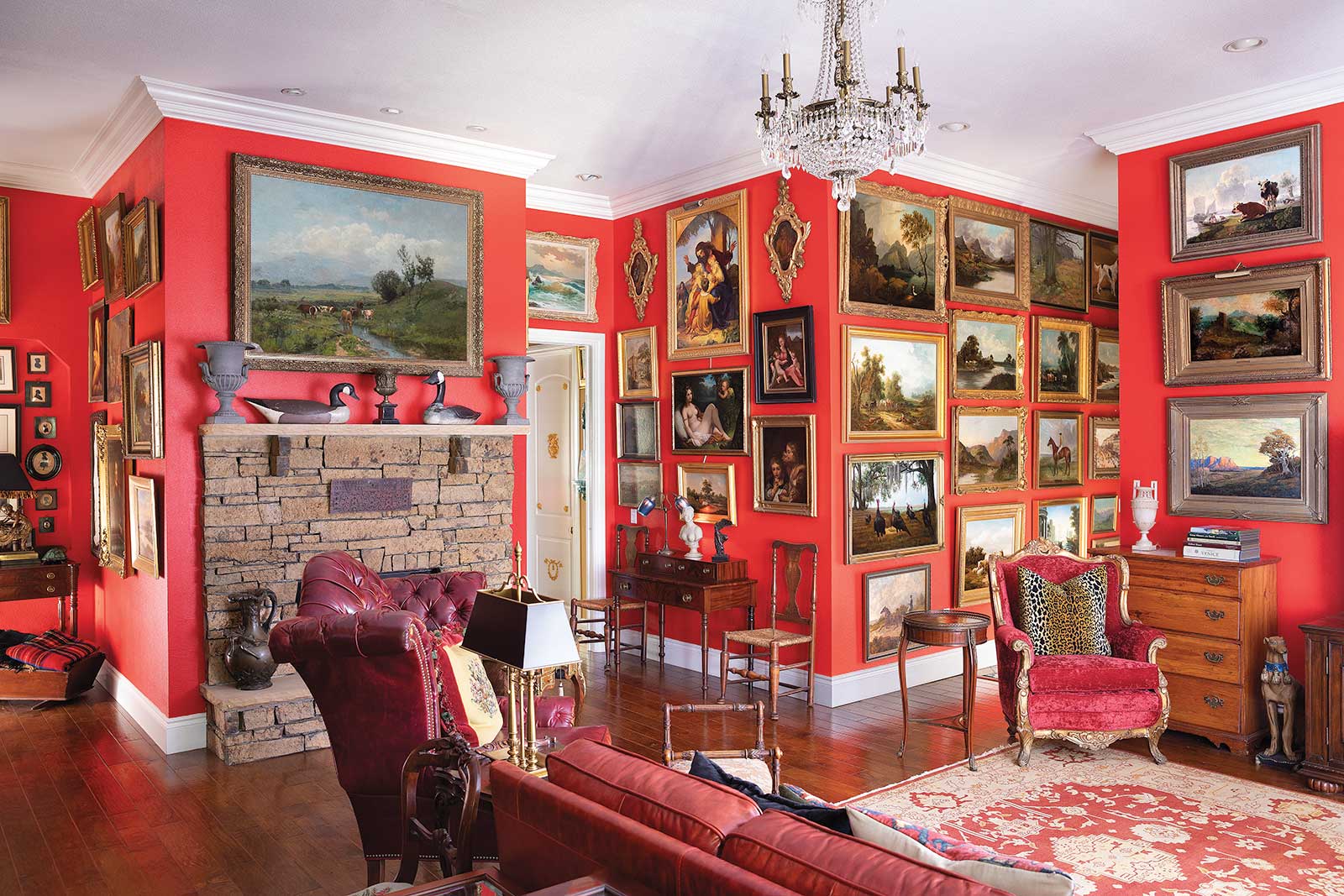 Hanging above one of the home’s three fireplaces is Cattle in Virginia, 1887, by Rufus Way Smith (1840-1900), a lawyer who gave up his career to dedicate himself to painting. The bottom painting on the right is a southwestern landscape by Carl Moon (1879-1948) who was an American photographer, painter, illustrator, poet, writer and collector of Native American artifacts.
The “things” in his collection have people connections, however—their makers and their owners and, occasionally, fortuitous connections to his own family. On a trip to Scotland, he went into a shop and discovered a collection of antique silhouettes of people each bearing his family name.
His collection is a living thing. Since Francis Smith photographed his home before COVID-19, Joiner has rehung one wall with his collection of antique silhouettes. “When I buy something new, I move things around,” he says. “When I first started getting better things or was able to replace a Victorian piece with something from the Federal period, I gave things away. If I know someone is interested in a piece, I find joy in giving it to them.”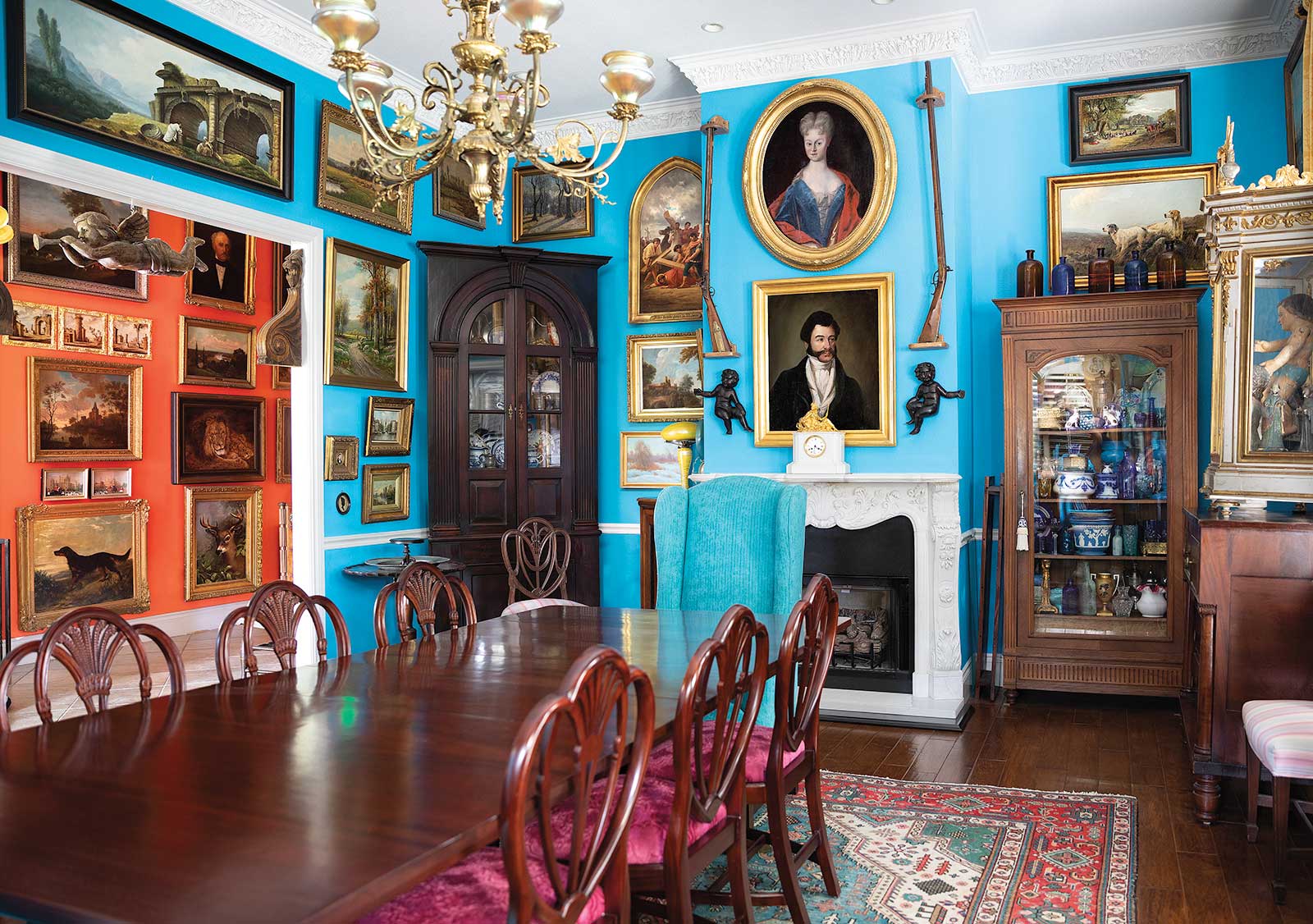 The collector found the oval portrait above the fireplace is in a shop on Charles Street in Boston. “I got excited,” he says, “knew I couldn’t live without it.” Beneath it is an 18th-century portrait of a gentlemen, from Philadelphia. Flanking the portraits are two early American rifles, one of which is from the War of 1812. The cabinets display antique American glass. The chandelier and light fixtures throughout the home are antique American.
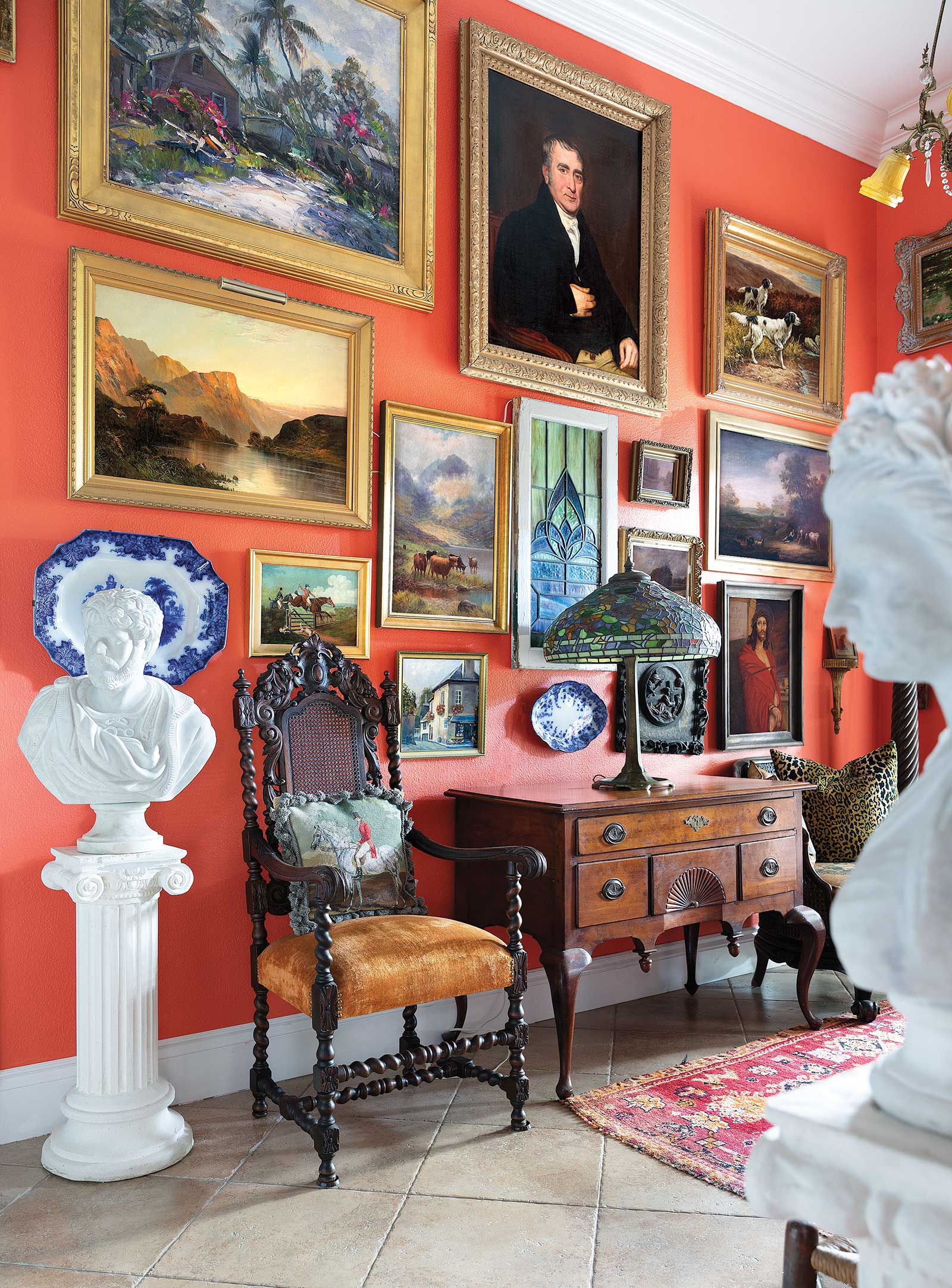 The large painting on the upper left is Florida Cottages, by Robert C. Gruppé (b. 1944), son of Emile Gruppé (1896-1978) and grandson of Charles Paul Gruppé (1860-1940). An early American stained glass lamp sits on a Queen Anne lowboy from Boston, circa 1780.
Joiner was a competitive tennis player in his youth and his artist mother, Patricia Joiner, took him all over to tournaments with antique shops being destinations along the way. “I’ve always loved history,” he says. “Facts and dates stuck with me.” He does extensive research into the periods he is interested in—primarily the 18th century, but beginning in about 1650 and running through the Federal period, which extends to about 1830.
He purchases paintings and furniture, in a way, “as is.” “It doesn’t bother me if a painting needs a patch or the frame has a nick. And I never strip or refinish the furniture,” he says. He does, however, do extensive research into styles, material and manufacture. He can detect replaced woods, the presence of manufactured nails rather than those that are handmade, dovetail joints that don’t belong to a particular period and are different in English and American furniture.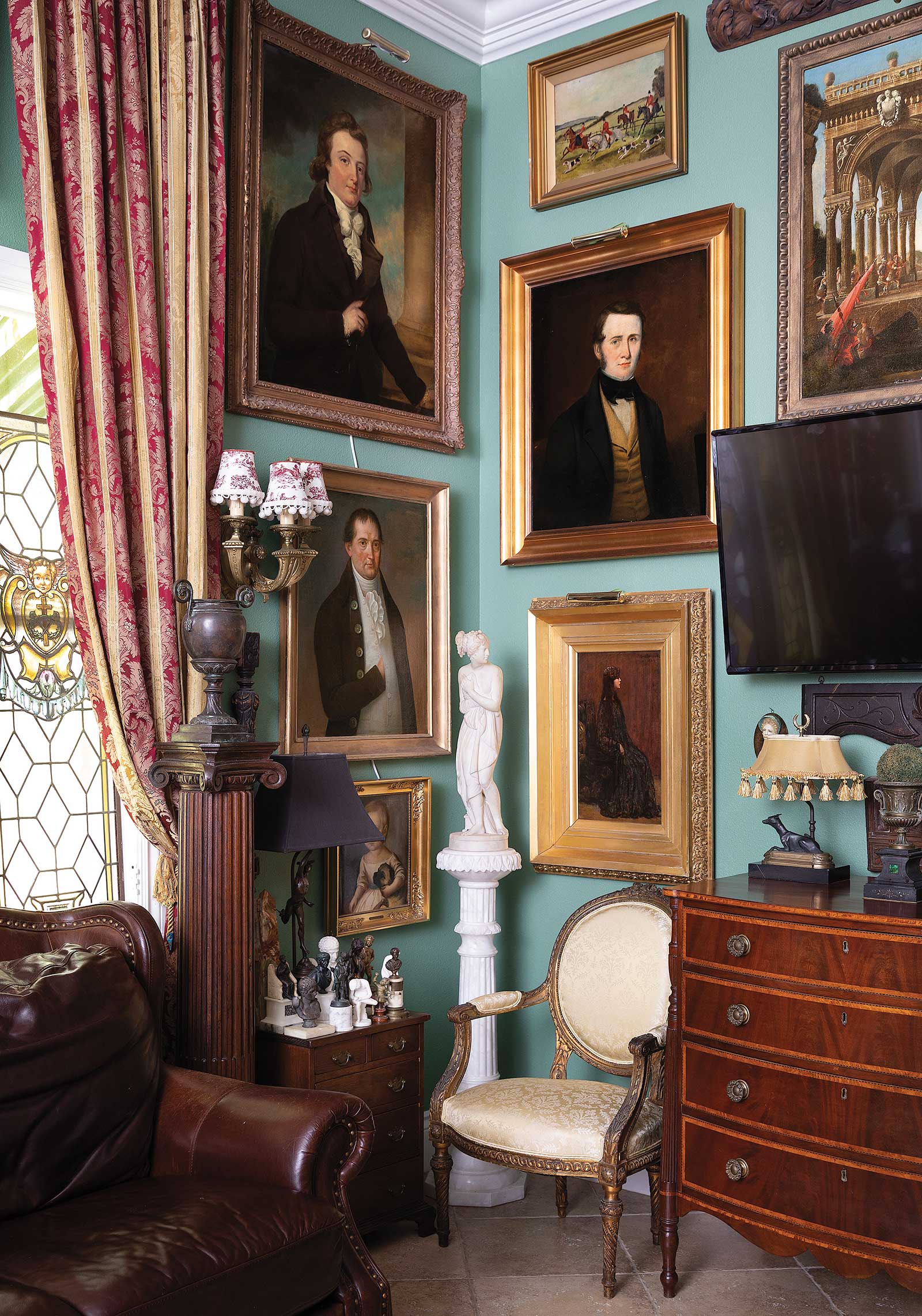 Among the collection of American Federal Period furniture is this Sheraton Chest from New England, circa 1810. The painting above the chair is A Queen of the Orient, 1904, by Louis Kronberg (1872-1965). Kronberg was a protégé of Isabella Stewart Gardner who had nine of his paintings in her home, Fenway Court.
“Learning about different periods and what a period should look like is important,” he explains. A Southern mint julip table, circa 1840, for example, is rarer than a candle stand table from Massachusetts since much Southern furniture was burned or destroyed in the Civil War. “A dealer in North Carolina had it on her website,” he explains. “I called her immediately.”
Joiner researches not only the provenance of pieces, but also the lives of the artists. Louis Kronberg (1872-1965), for instance, was discovered and supported by Isabella Stewart Gardner. There are nine of his paintings in her collection. One of his cattle paintings is by Rufus Way Smith (1840-1900) who left his legal career to devote his life to painting. Joiner discovered his painting Cattle in Virginia, 1887, studied up on Smith and compared signatures to establish its authenticity.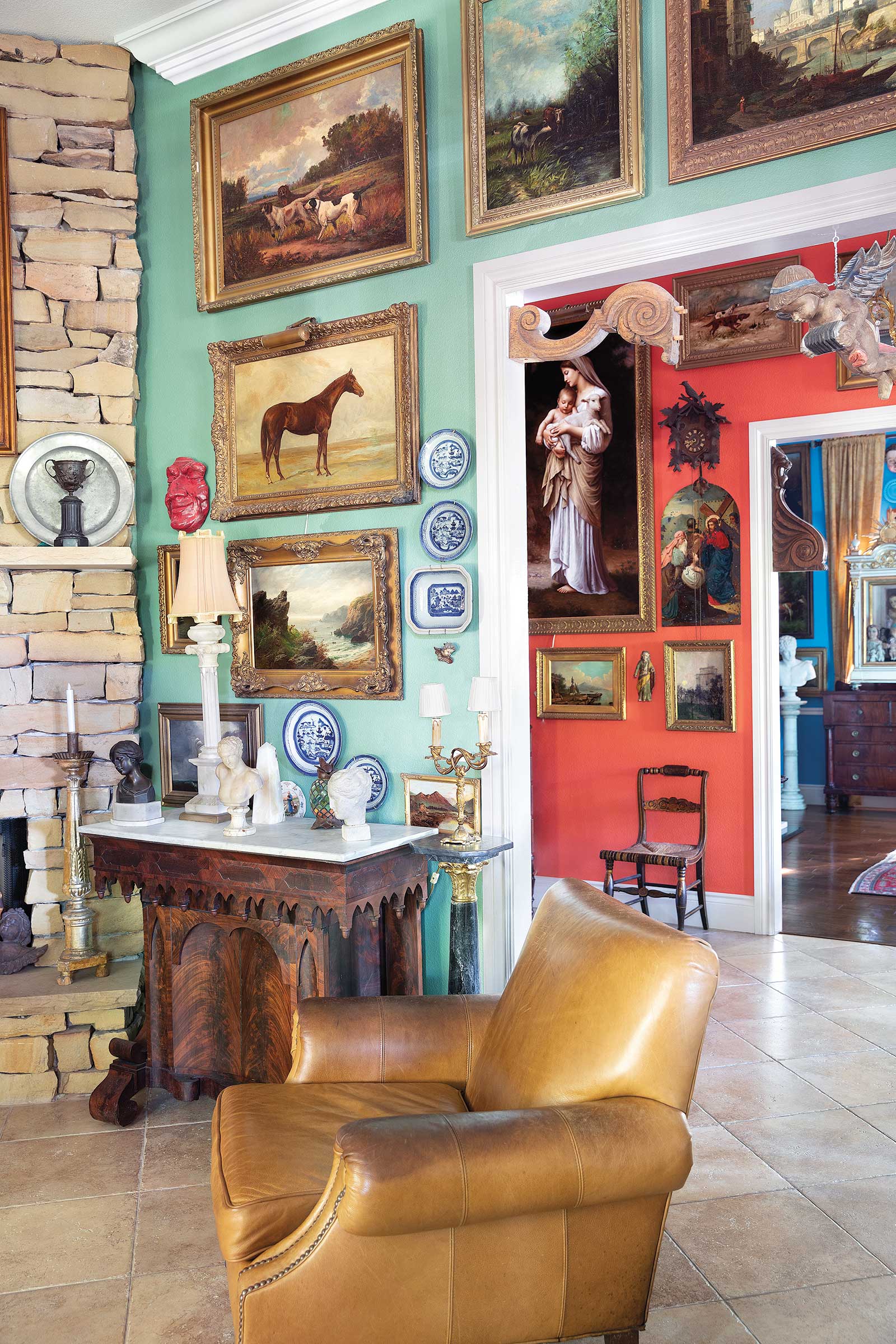 Beneath the wall of paintings is a rare southern Mint Julip table, circa 1840. The chair in the hall is a Baltimore fancy chair, circa 1830. The room combines the artist’s love of furnishing, artifacts and art up through the Federal period.
He also relies on the knowledge of trusted dealers. “I was fortunate to meet a wonderful family in Nokomis, Florida,” he explains. “Woody and Delma Lanius were originally from Salem, Massachusetts. Her mother was a dealer and now her daughter, Eugenie Lanius, has a shop in Nokomis. Going into their shop and home was like an educational adventure. Delma allowed me to put things on layaway. She has great early stuff and a wealth of information. Delma could pick up a piece of glass or porcelain and tell you all about it.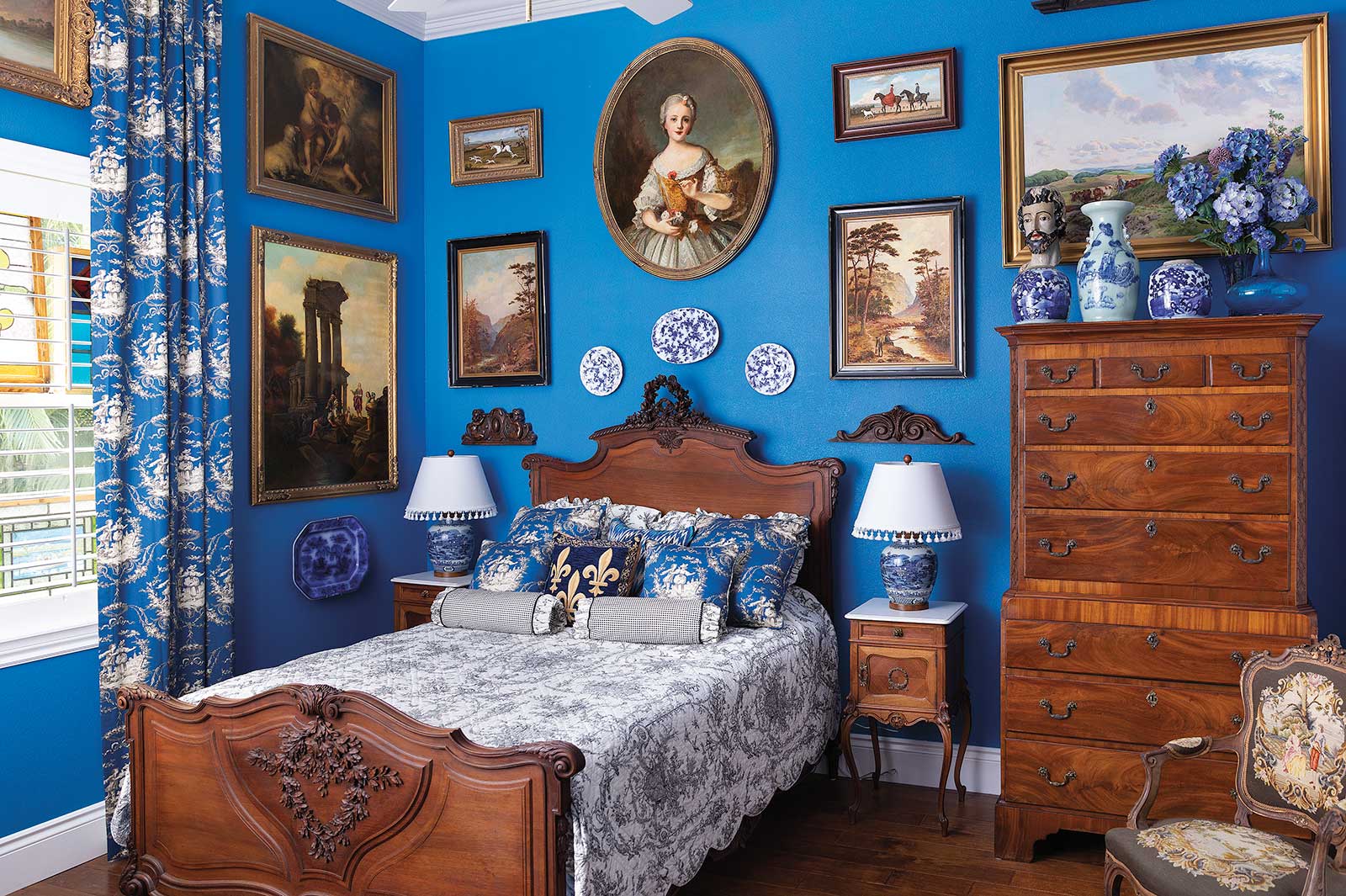 The French bedroom in the collector’s home.
“There is another dealer in Newton, Massachusetts, that I have had the pleasure to deal with. Christopher Settle has wonderful early stuff. I met him at one of the Manchester, New Hampshire, antiques shows,” he continues. “There is a walking encyclopedia in Sarasota, Florida, named Bruce Johnson. Bruce has a wealth of knowledge about furniture. Bruce also repairs and restores furniture. He can tell you how things were made. One of my favorite antique stores in New Orleans is Kevin Stone Antiques. Great French and Italian antiques. Kevin has fantastic art, lighting and furniture. It is a pleasure to go inside the shop and take it all in.”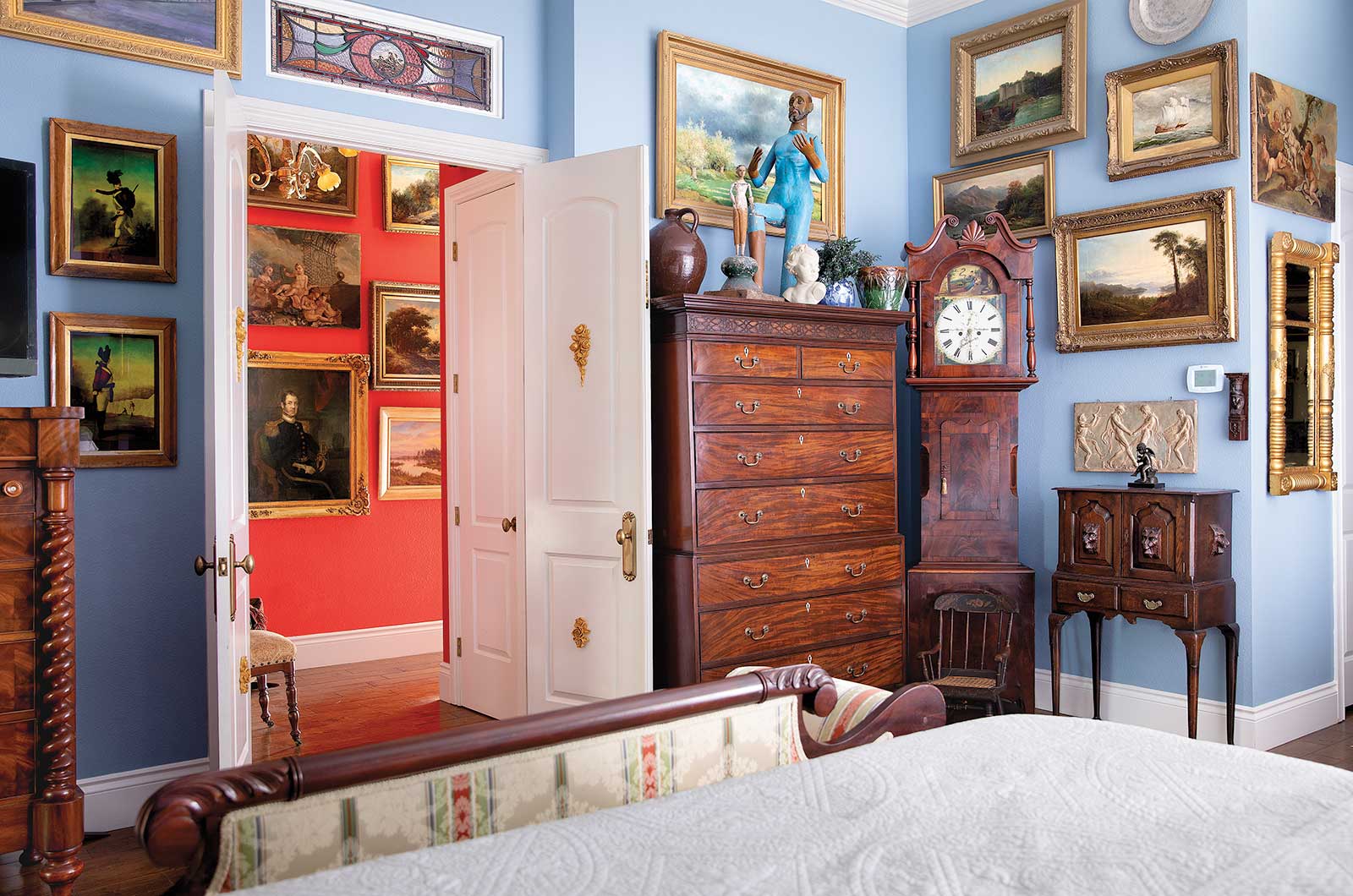 An American Federal period sofa anchors the master bedroom, which includes paintings that reflect the collector’s primary interest in 18th-century works.
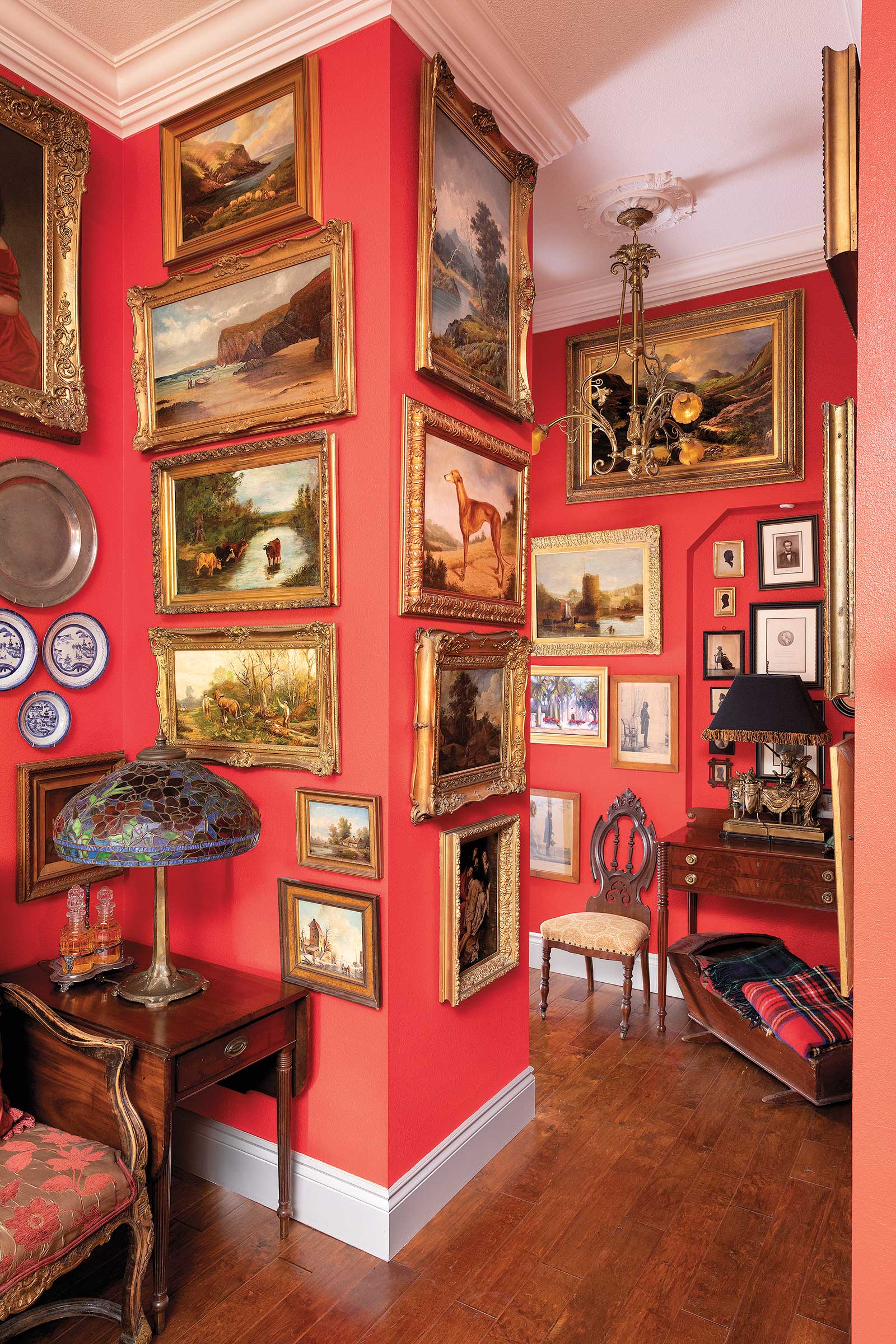 An early American stained glass lamp sits among paintings exhibiting the collector’s love of animals.Joiner says, “My aunt, Faye Jackson, has been a big influence. Her home is filled with early American things. Faye loves history and I think she would like to be transported back in time to the 18th century. I have had great fun talking to her about antiques.”
There is less interest in antiques among modern buyers, but Joiner is an advocate. “I encourage young people to learn about antiques. Buy real wood and quality items. Enjoy the history of things and the people who owned them. As you go along you can continue to upgrade your collection. Sell or give away the things you are replacing. Find things you enjoy and plan a road trip. Antiquing is a wonderful hobby and there are special people buying and selling. It is also a great way to visit historic towns. Visit Savannah, Georgia, or Boston and explore. I cannot tell you how many times I have purchased something that I learned about which ended up being valuable. I found the Louis Kronberg painting in an antique store sitting on the floor. I have purchased furniture that had the look and feel of a famous furniture maker to later find out it actually was authentic. When you open a drawer on a beautiful piece of American Federal furniture, you appreciate the age, structure and details.” —
Powered by Froala Editor