Explorations of exotic, faraway lands have long captured our fascination. There is an allure to the romanticism of traveling to an unknown place, with new cultures, people, architecture and landscapes that feel quite literally worlds away from our own. During the second half of the 19th-century, many American artists embarked on a grand tour of Europe as an expected part of their training. And while Italy and France are widely known to have been some of the most frequented locales for the great masters of the 19th and 20th centuries, less often discussed but equally as captivating are their exploits to Spain. Some of the greatest names in American art—from William Merritt Chase, Mary Cassatt and Ernest Lawson to Robert Henri, Childe Hassam and John Singer Sargent—all made the journey to the Kingdom of Spain at some point in their careers.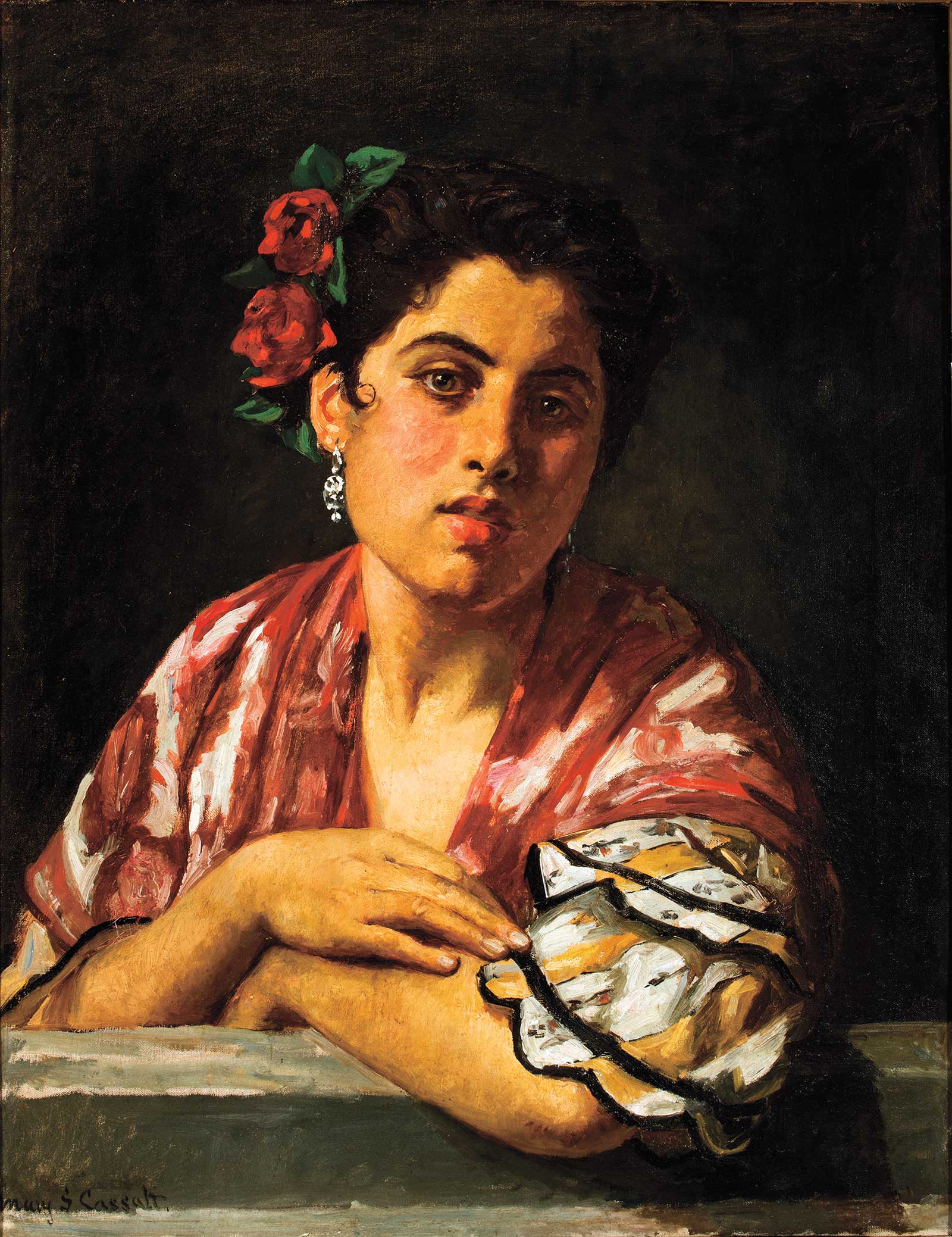 Mary Cassatt (1844-1926), Spanish Girl Leaning on a Window Sill, ca. 1872. Oil on canvas. Manuel Piñanes García-Olías, Madrid.
Beginning February 12 at the Chrysler Museum of Art in Norfolk, Virginia, Americans in Spain: Painting and Travel, 1820-1920 explores a pivotal moment in the 19th and early-20th centuries when American and European artists alike traveled to Spain to capture its scenic charms and customs, its seduction and magnetism. The exhibition places 100 artworks by American artists, as well as photographs, prints and travel guides, alongside their Spanish contemporaries and Spanish Old Masters. For example, take Diego Velázquez, celebrated artist of the Spanish Golden Age of art and culture of the 1600s, or Joaquín Sorolla y Bastida, whose exploits two centuries later brought him to Rome, Paris and the United States on several occasions.
“It’s been a years-long process,” says Corey Piper, Brock Curator of American Art at the Chrysler Museum of Art. After its run at the Chrysler ending May 16, the exhibition will travel to the Milwaukee Art Museum in Wisconsin from June 11 to October 3. The monumental project, which is the first of its kind to present this period of American art to a wide audience, started back in 2017. “We worked very closely and collaboratively on the checklist,” says Piper, who co-curated the exhibition alongside Brandon Ruud, Abert Family Curator of American Art at the Milwaukee Art Museum. The two made a number of trips together to the United Kingdom and Spain viewing phenomenal art collections as part of their research, from the Victoria and Albert Museum in London to the Prado Museum in Madrid, Spain. The exhibition gathers important works from the Chrysler Museum’s collection of American and Old Master works and the Milwaukee Art Museum’s collection of realist paintings, particularly the Ashcan Circle and the Eight. Additional works in the exhibition, Piper explains, come from a range of other institutions including the Prado Museum, the Metropolitan Museum of Art in New York, Musée d’Orsay in Paris, the Getty Museum in Los Angeles and the Museum of Fine Arts, Boston. “We cast quite a wide net. We always thought of this exhibition as an international endeavor,” he says.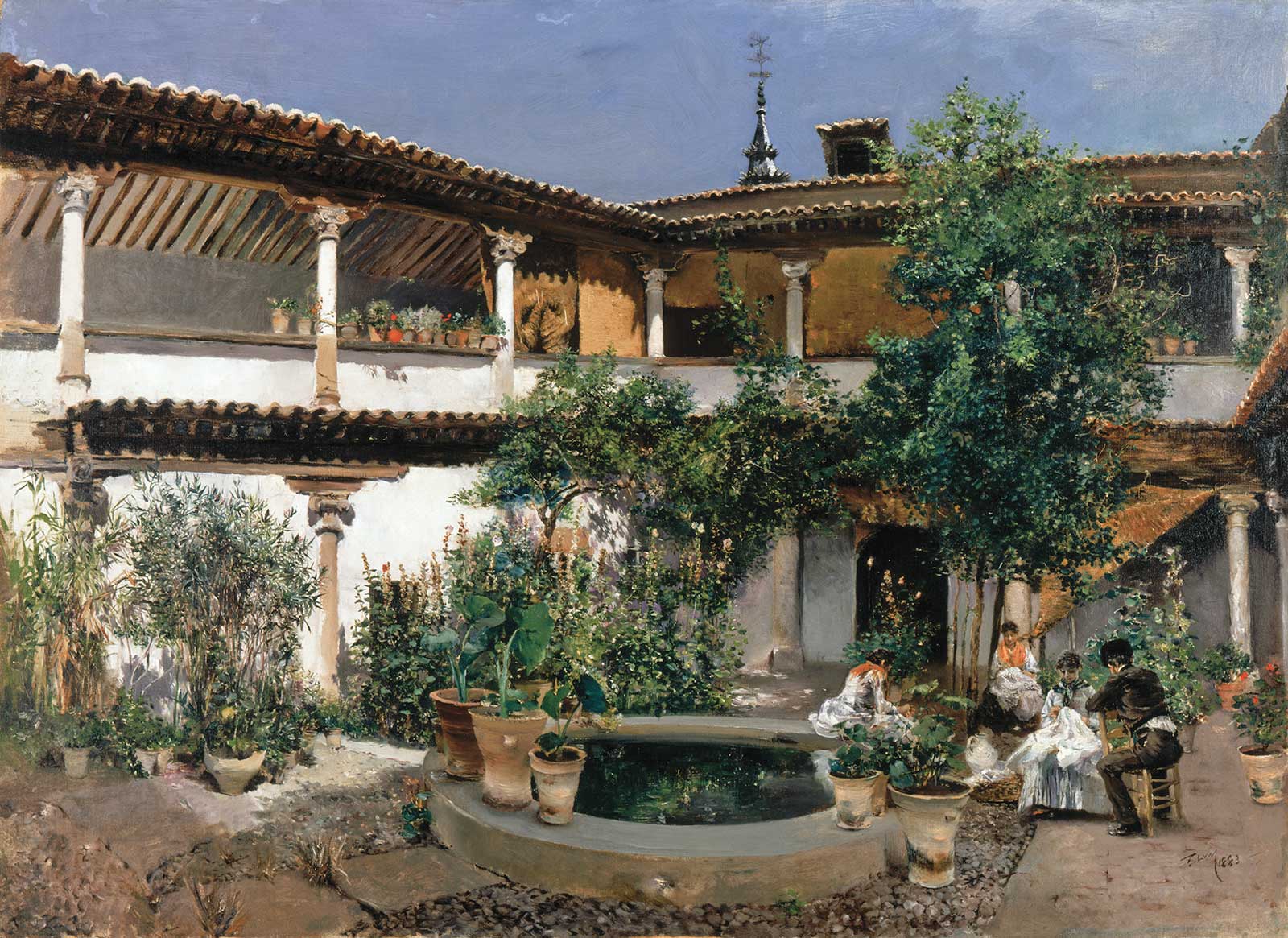 Robert Frederick Blum (1857-1903), Spanish Courtyard, 1883. Oil on canvas. Cincinnati Art Museum, Gift of Joni Herschede and Museum Purchase with funds from the Fanny Bryce Lehmer Endowment, 2002.104.
Piper delves into the time period the exhibition surveys: “Throughout the whole 19th century the idea of American art as this closed, sealed art world is really not the reality of the art world as it existed during that time. Artists were constantly crossing the Atlantic. There have been tons of exhibitions about artists traveling to Italy...and Paris. In the late-19th century, the American art world became more cosmopolitan after the Civil War, [and] for whatever reason, Spain had been overlooked in scholarly art, which didn’t really reflect the artwork of actual American artists,” he explains. Some artists, like Thomas Eakins, went to Spain very early in their careers. “He sees the Prado Museum for the first time, and it overwhelms him what these Spanish Old Masters created,” says Piper. Eakins began painting in Seville and then Madrid. “It’s that pivotal moment where he decides he’s not a student anymore and is a professional artist.”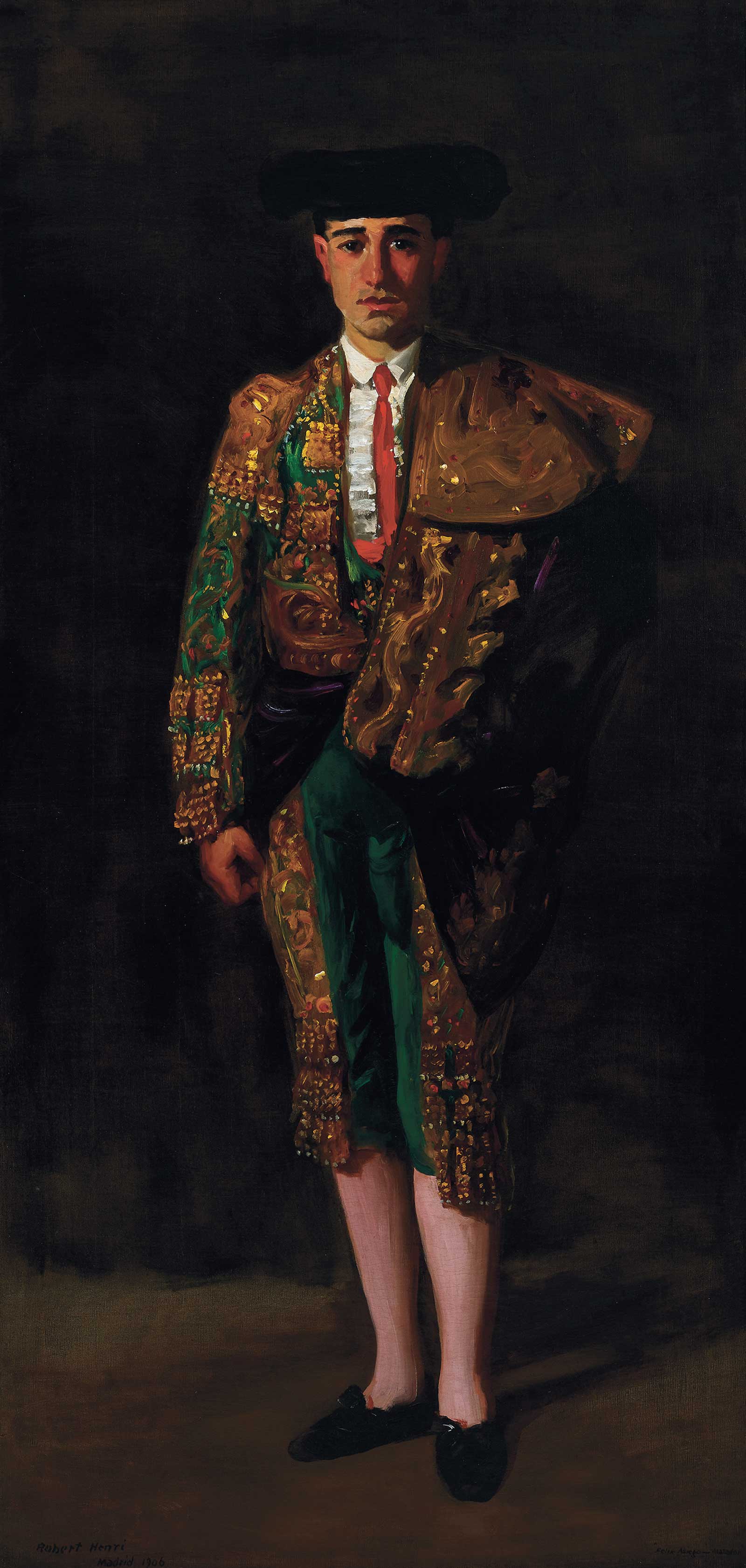 Robert Henri (1865-1929), El Matador, 1906. Oil on canvas. Milwaukee Art Museum, Purchase, the Mr. and Mrs. Donald B. Abert and Barbara Abert Tooman Fund with funds in memory of Betty Croasdaile and John E. Julien.
Others, like Cassatt, wanted to see the Spanish Old Master collections. The Prado Museum was at the very center of these paintings, and undoubtedly one of most compelling reasons to travel to Spain. One of the standout pieces in the exhibition is Cassatt’s Spanish Girl Leaning on a Window Sill, a portrait of a young Spanish woman with crimson flowers in her hair, vibrant against the contrast of the dark backdrop. This is the first time the oil will be shown in the United States. Cassatt traveled to Spain on her own, first arriving in Madrid, then setting up shop for a few months in Seville, Piper explains. She arranged for a number of models to sit for her for several weeks, taking motifs from popular Spanish imagery of things like bull fighters and flirtatious young women. “She was a very young artist still finding her way, and [this piece] clearly demonstrates her engagement with Spanish Old Masters but also her burgeoning confidence...her painterly flourish, the highly loaded brushstrokes,” says Piper.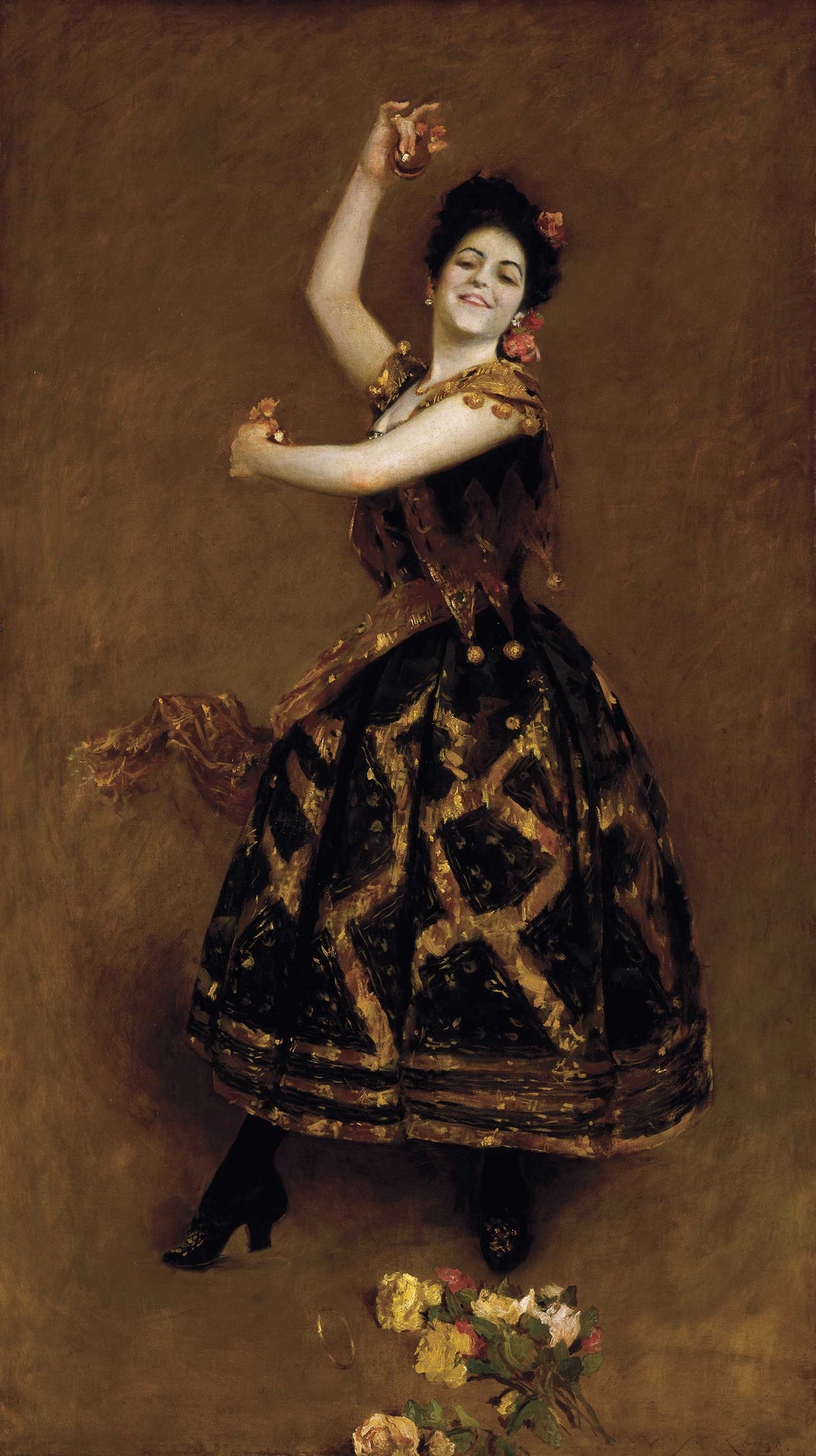 William Merritt Chase (1849-1916), La Carmencita, 1890. Oil on canvas. Metropolitan Museum of Art, Gift of Sir William Van Horne, 1906.
Dueling paintings by Chase and Sargent give visitors an opportunity to compare each artists’ rendition of renowned Spanish dancer Carmen Dauset Moreno, widely known as Carmencita. Sharing the same title of La Carmencita, Sargent’s oil depicts Carmencita in a dignified but stationary pose, while Chase’s captures the energy of the famous dancer in motion. “These paintings have been shown together in modern times, but it doesn’t seem either artist was aware of each other’s work on the canvases...On the one hand they both show the tremendous influence Old Spanish Master paintings had on them, the format and stylistic manner in which they were painted...But they’re quite different works of art,” Piper comments. “Sargent’s is much more like a portrait, a very forceful pose, where Chase’s is extremely active, shown in the midst of dance and flowers being thrown at her feet...In my mind, visitors will be able to pick which they think is the best. I have my favorite, I love the Chase.” Piper says he’s also excited about several copies after Velázquez’s original portrait of Queen Mariana, queen of Spain through her marriage to Philip IV of Spain and daughter of Emperor Ferdinand III and Mary of Hungary.
Ruud brings attention to some of the superb works in the show by Spanish artists, which provide important cultural and historical context for the exhibition as viewers contemplate paintings created by those native to the country. “I love Figaro’s Shop, by [José Jiménez] Aranda,” says Ruud. “Spanish artists were extremely popular in America in the second half of the 19th century, and after the Civil War you saw more and more Spanish artists exhibited in the United States at expositions and Worlds Fairs,” he says. “Art was a huge and important part of these expositions…I think [Figaro’s Shop] is just a beautiful painting, the anecdote, the narrative.” Completed in 1875, the subject of the painting is the Spanish archetype Figaro, “The Barber of Seville,” which also happens to be one of the most celebrated operas in history. “The painting really informs ideas about Spain at the time,” says Ruud. He also cites the 1910 oil on canvas My Uncle Daniel and his Family by Spanish artist Ignacio Zuloaga y Zabaleta, as one of the highlights in the exhibition.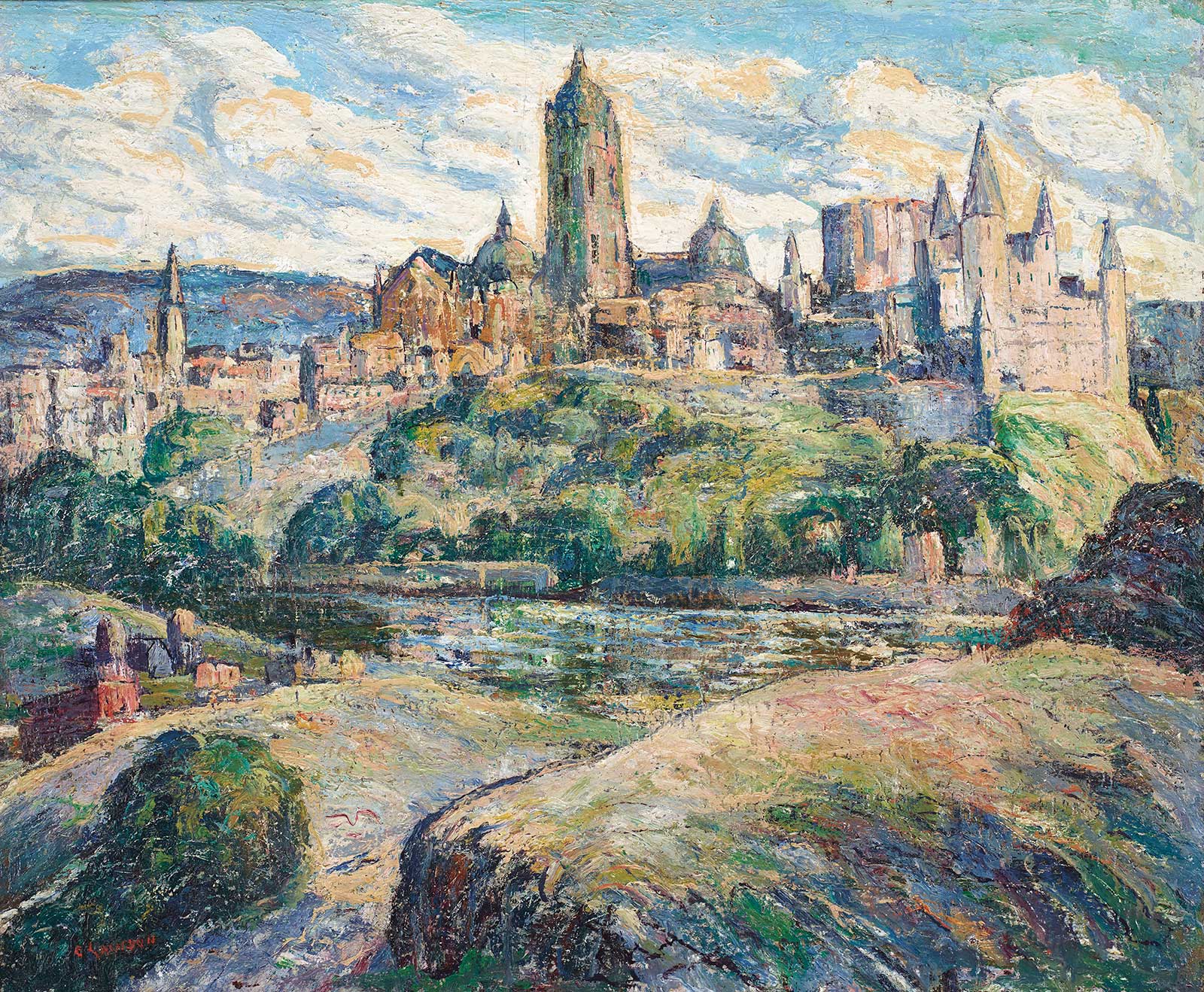 Ernest Lawson (1873-1939), Segovia, ca. 1916. Oil on canvas. Minneapolis Institute of Arts, The John R. Van Derlip Fund. Photo courtesy Minneapolis Institute of Art.
Ultimately, some sort of magnetic force seemed to pull both American artists and Europeans toward Spain, a culmination of attributes the sum of which was far greater than each component alone. Idyllic notions of the romance of Old Spain—of the architecture, gardens and landscapes—permeated the minds of artists, and drew them in. “There’s a number of factors,” Piper elaborates on the attraction of the country. “Spain had a reputation of being distinct from Europe with its multi-ethnic and religious history. The history of Islamic rulers and heritage are reflected very much in the architecture.” He cites Islamic monuments like Alhambra in Granada and cultural flagships like Flamenco dance that are all “connected to this vibrant part of Spain’s past.”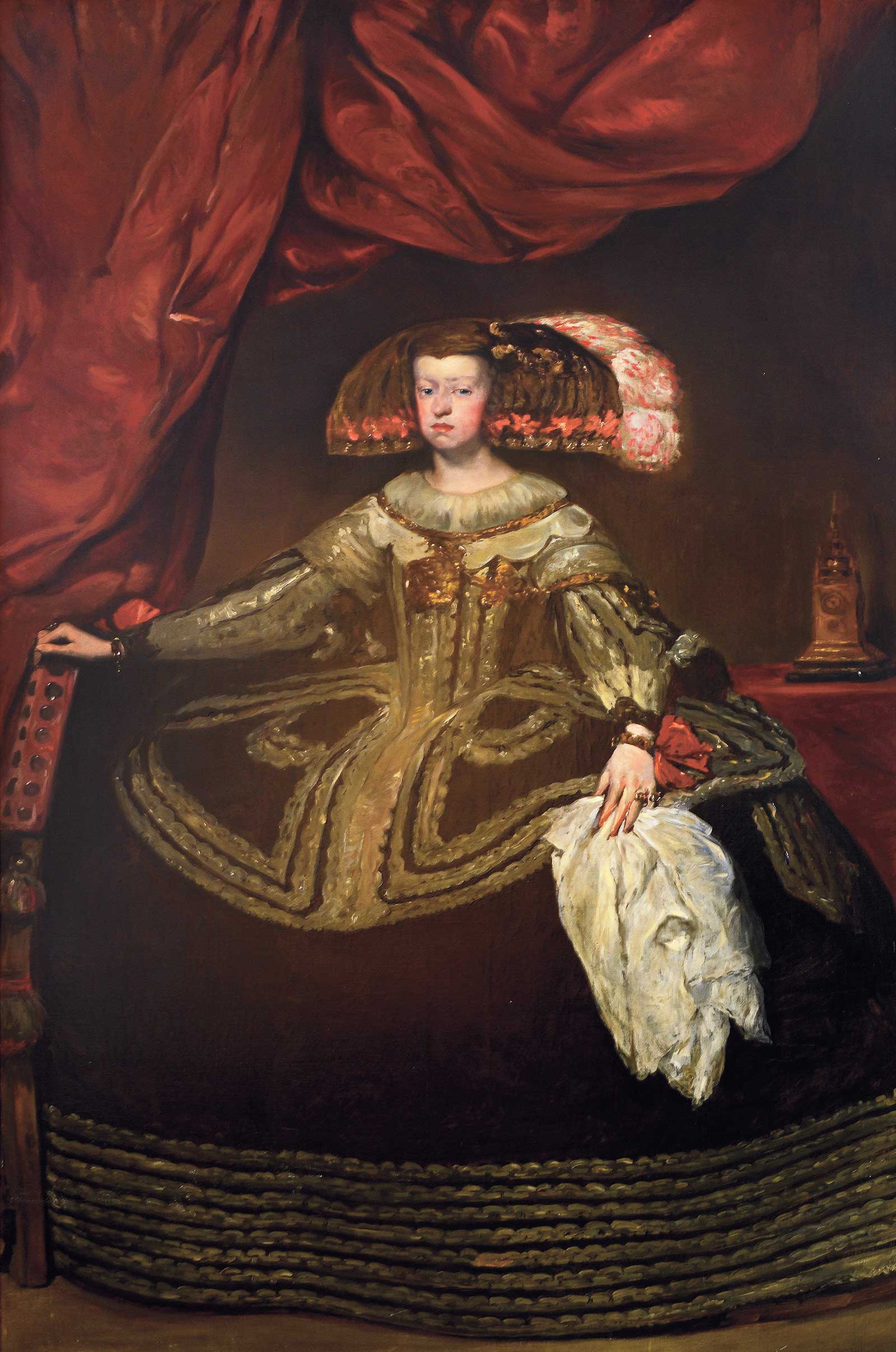 Robert Henri (1865-1929), Queen Mariana, ca. 1898. Oil on canvas. The Robert Henri Museum and Gallery.
A virtual reality experience as part of Americans in Spain aims to transport visitors to that very part of history, allowing them to step into the shoes of the artists who traveled to Spain hundreds of years ago. Recreated in a 3D imaging lab at Milwaukee’s Marquette University, this “3D Visualization,” based on recreations of archival photographs, will place visitors in the Prado Museum as it looked in the 1870s, specifically Queen Isabella II’s gallery, Ruud explains. “People will be able to walk into this and experience the way the Prado looked in the 1870s, much in the same way the artists themselves experienced it,” says Ruud. “We’re absolutely thrilled to be able to present this and allow visitors to travel in space and time...I think this has become all the more important and pressing now that people are limited in their ability to see these places firsthand.” At this time, Ruud says the VR component will likely only be available during the Milwaukee Art Museum leg of the exhibition.
However, other digital components of the exhibition will be included at both the Chrysler and Milwaukee Museum, as well as online for those who cannot attend in-person. “The Artists Travelers Project,” Ruud explains, is a mapping project highlighting all of the places tourists and artists traveled throughout Spain during that time period and incorporates the artworks they created, in addition to primary source material like diaries, memoirs and guidebooks. “Materials that tell us how people viewed these places at the time,” Ruud adds. The project is a partnership with Marquette University’s Department of Languages, Literatures and Cultures, and the American Geographical Society Library at University of Wisconsin.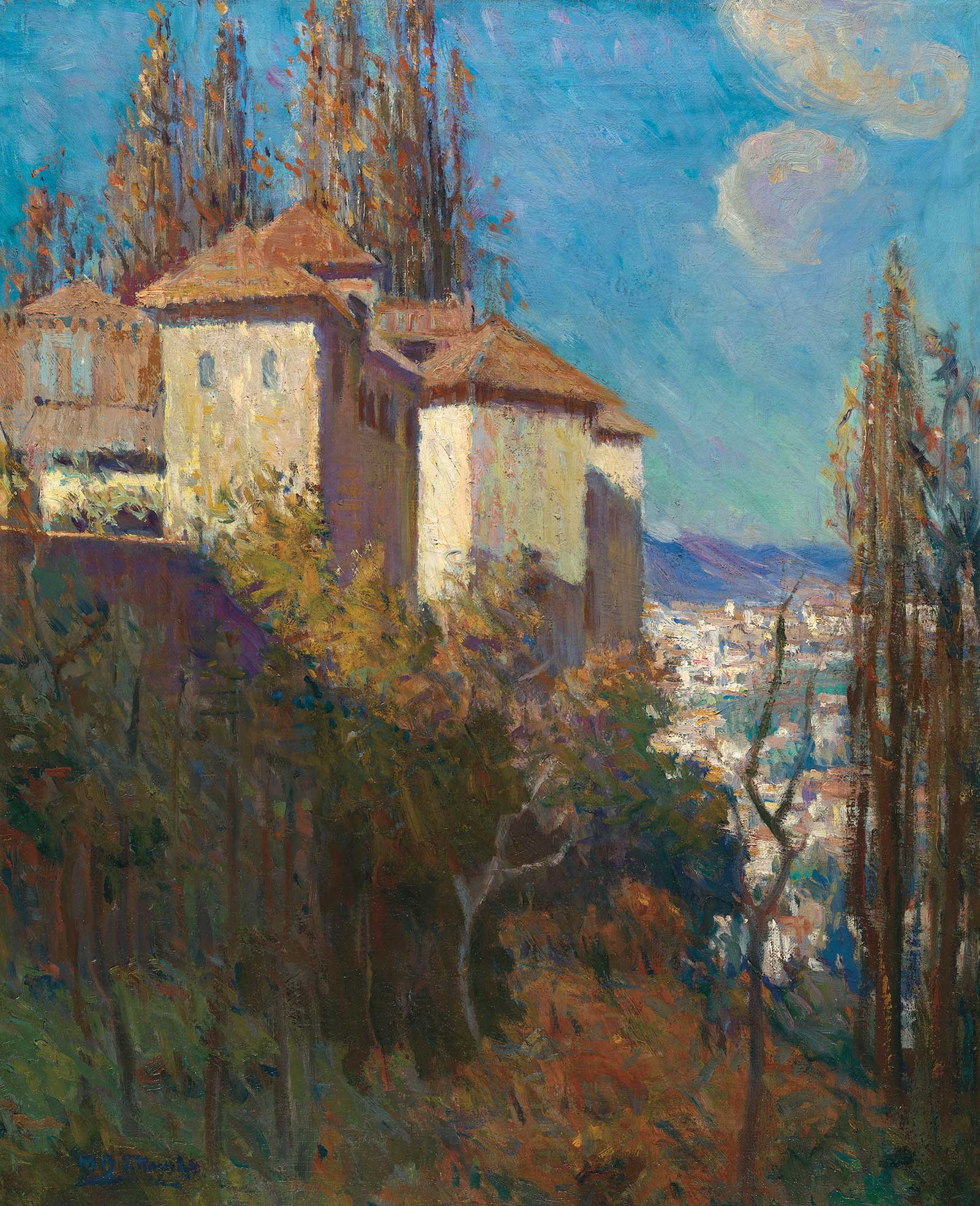 Mary Bradish Titcomb (1858-1927), The Alhambra, ca. 1906. Oil on canvas. Chrysler Museum of Art, Museum purchase with funds given in memory of Joan Foy French by her daughters Wendy and Christina, 2018.25.1.
Also developed for Americans in Spain is an app for Android and iPhone that will feature three dozen works of art with contained and expanded text on each piece. “We’re also including a mapping component that will allow people to see how the images and artwork migrated, whether they were created in Spain or back in the artist’s studio,” says Ruud. The app, available in advance of the exhibition, will have both English and Spanish versions.
“My hope is that there is a greater understanding and appreciation for this particular moment in American art history...just how influential Spanish art and culture was on artists in the U.S.,” says Ruud.
A full-color, hardcover catalog featuring essays by Piper and Ruud, as well as leading scholars in the field, will be available to purchase at the Chrysler Museum of Art and Milwaukee Art Museum. —
Americans in Spain: Painting and Travel, 1820-1920
February 12-May 16, 2021
Chrysler Museum of Art
One Memorial Place
Norfolk, VA 23510
(757) 664-6200, www.chrysler.org
June 11-October 3, 2021
Milwaukee Art Museum
700 N. Art Museum Drive Milwaukee, WI 53202
(414) 224-3200, www.mam.org
Powered by Froala Editor