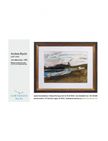
Debra Force studied American history and politics as an undergraduate and American civilization as a graduate student. An American art history class ignited a complement to her penchant for history. After a career as curator for a corporate collection, head of the American paintings department at Christie’s and leading roles at prestigious art galleries, she opened Debra Force Fine Art in 1999. Over the years, the gallery has assembled an unparalleled inventory, its exhibitions have featured American luminaries and have introduced lesser-known artists, as well as work by artists influenced by the artists of the past.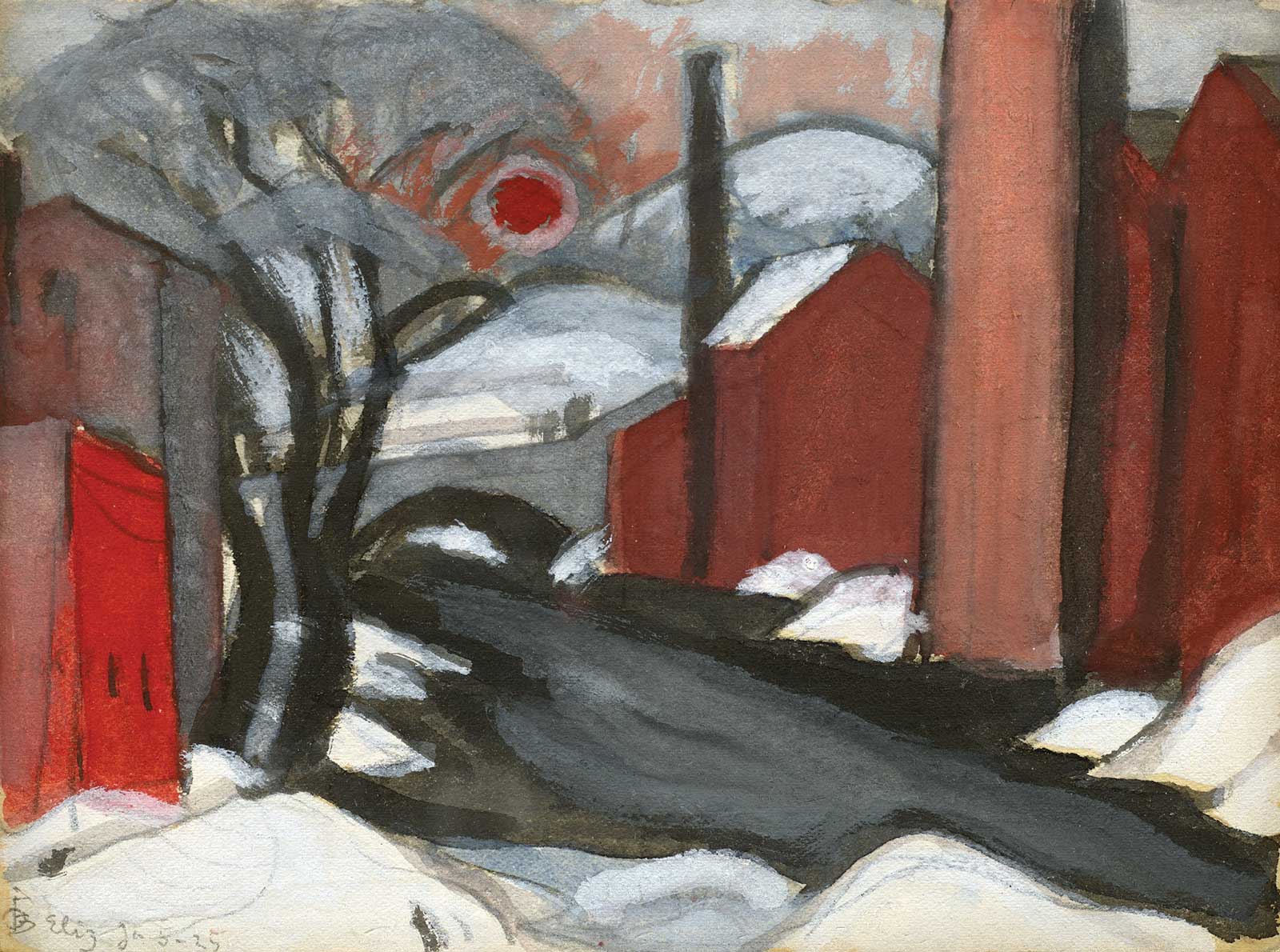 Oscar Bluemner (1867-1938), Study “Winter Sun” Millcreek, Elizabeth, N.J., 1925. Watercolor, gouache and pencil on paper, 5 x 6¾ in.
Works primarily by Ashcan and American modernist artists will be featured in an exhibition opening November 18 and running through January 15, 2021. Featuring works from a New York private collection, the artists include William Glackens, Robert Henri, Walt Kuhn, George Benjamin Luks, John Marin, Reginald Marsh, Alfred Maurer, Guy Pène du Bois, Maurice Brazil Prendergast, John Sloan, Florine Stettheimer and Max Weber, among others.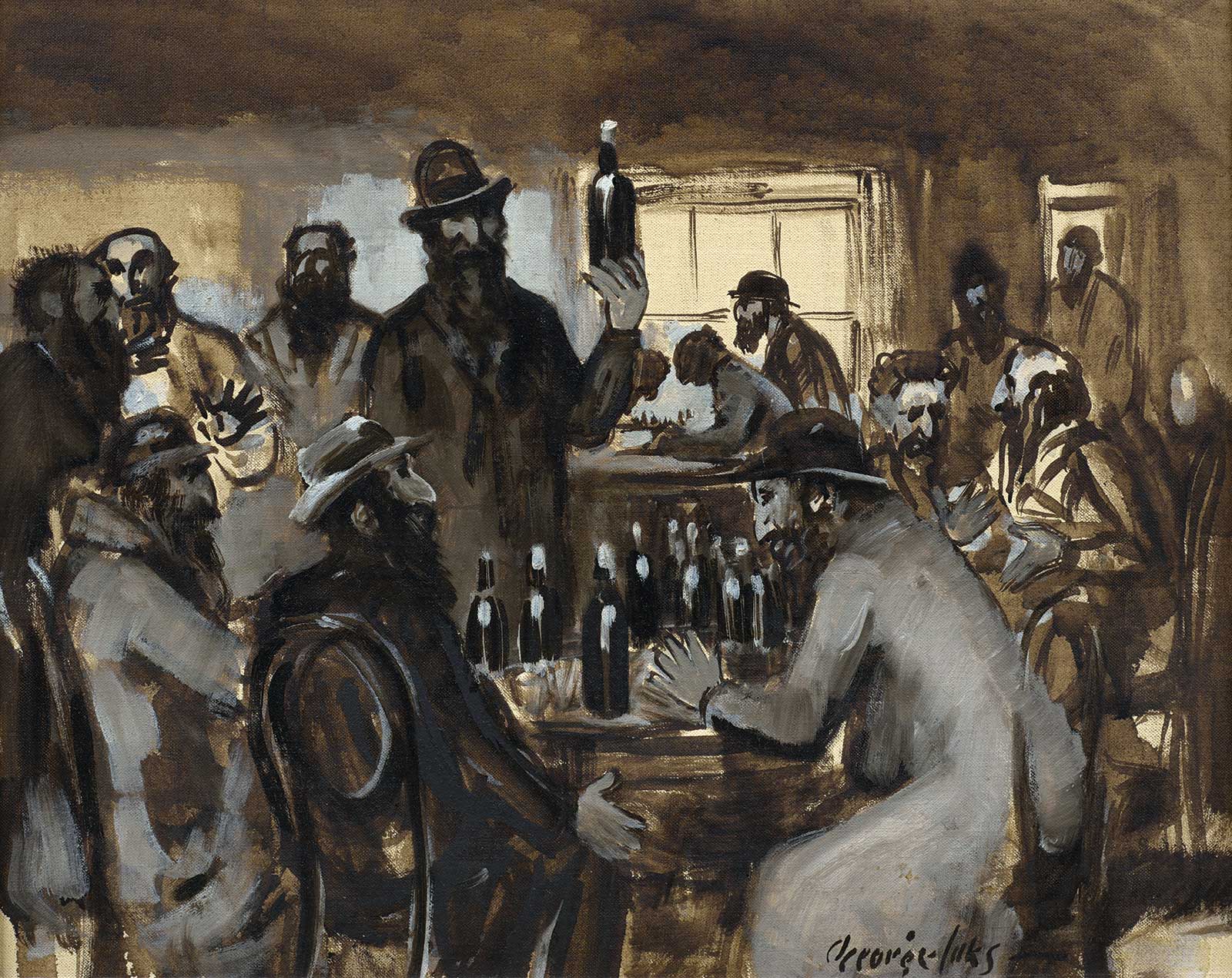 George Benjamin Luks (1867-1933), Men of the Auld Palestine Sod at Sweeney’s Near Houston Street, ca. 1933. Oil en grisaille on canvas board, 15¼ x 19½ in.
Oscar Bluemner (1867-1938) studied architecture in his native Germany. He came to New York in 1892 and practiced architecture in New York and Chicago. In New York in 1908, he met Alfred Stieglitz who introduced him to the modernist movements in Europe and America. He began painting in earnest and submitted one painting to the pivotal Armory Show in 1913 and, two years later, he showed at Stieglitz’s 291 gallery in New York. His work at the time contained the crisp geometries of architecture with strong colors and high contrast.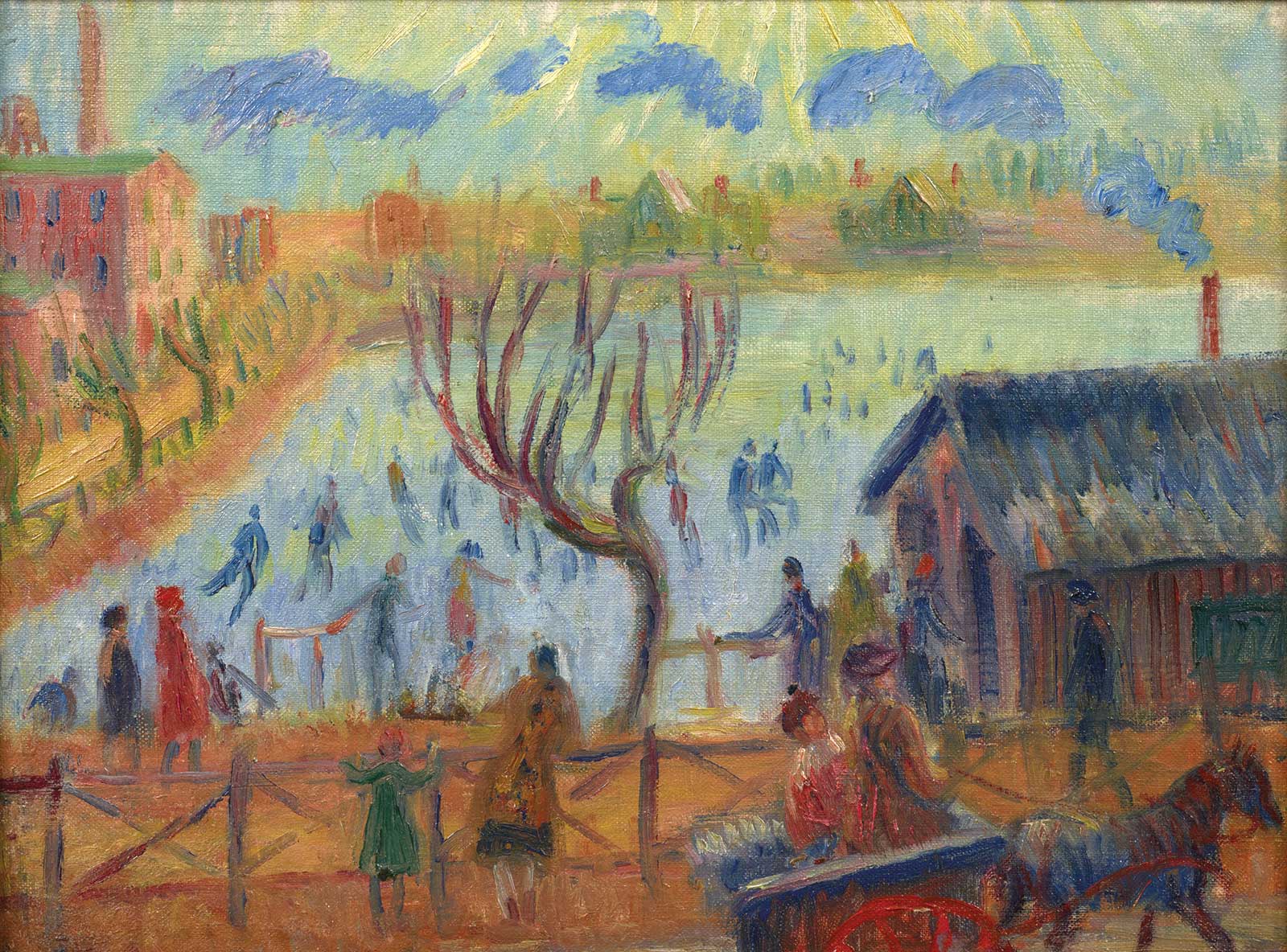 William Glackens (1870-1938), Skaters at Lakewood New Jersey, ca. 1915. Oil on canvas board, 11 x 15¼ in.
He and his family moved to New Jersey where he painted Study “Winter Sun” Millcreek, Elizabeth, N.J., 1925, a painting vibrating with energy despite its diminutive size of 5 by 6¾ inches. Bluemner exclaimed, “I present a surprising vision of landscape by the daring new use of colors. I ‘introduced red’ as Stieglitz said in 1915.” Of this painting Debra Force notes, “The heavy earth-toned red buildings, which complement the fireball sun, are symbolic of the artist’s melancholic demeanor during this period. This gouache is architectural and industrial yet Dove-like in its undulating forms and atmospheric quality…”
Whereas Bluemner escaped the hubbub of the city, Luks (1867-1933) reveled in it. He began his career as a newspaper illustrator in Philadelphia after studying at the Pennsylvania Academy of the Fine Arts and spending 10 years in Europe. In Philadelphia, he became friends with Everett Shinn, Glackens, Sloan and Henri.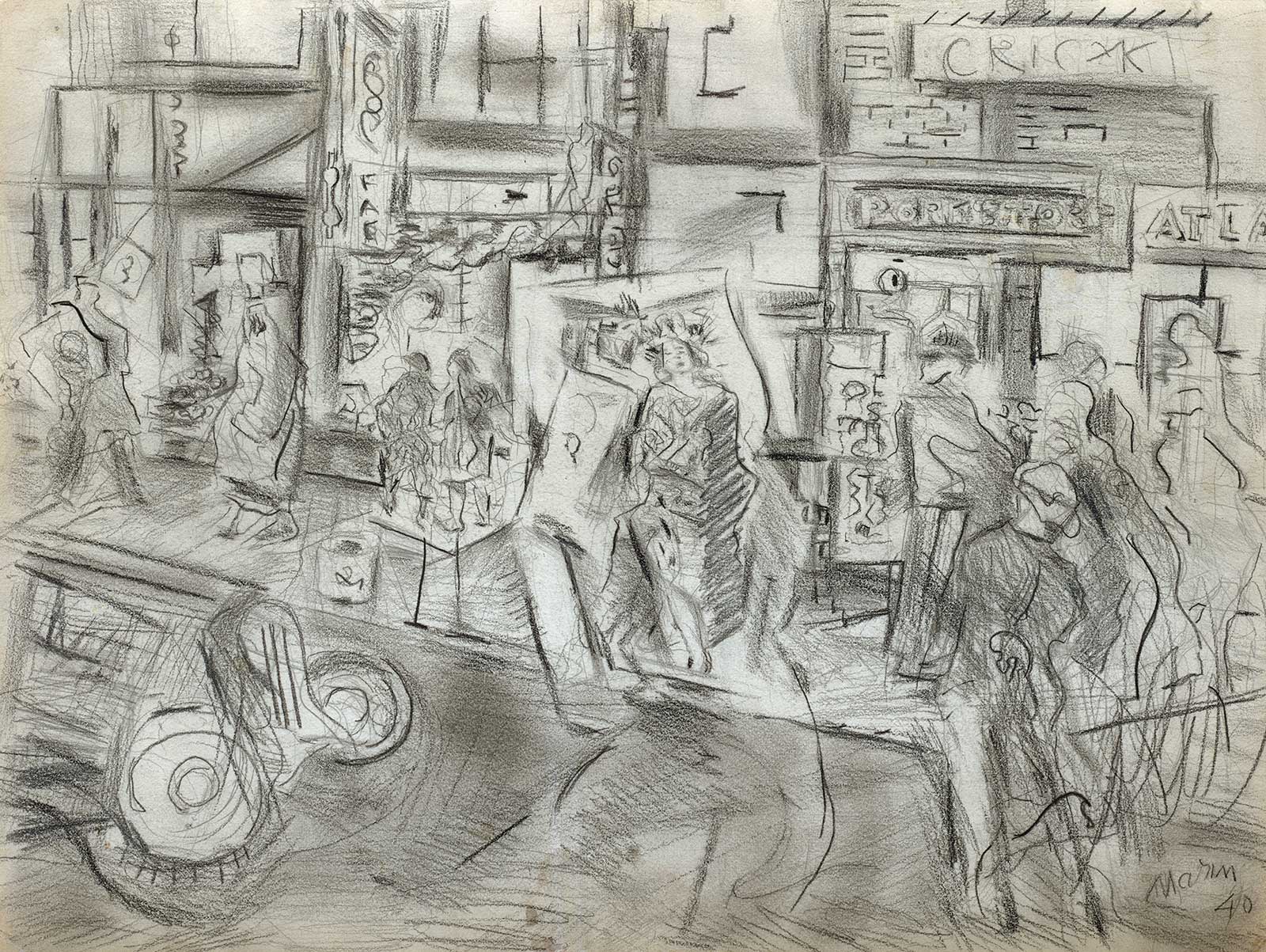 John Marin (1870-1953), Street Movement, Downtown Manhattan, 1940. Pencil and crayon on paper, 15 x 20 in.
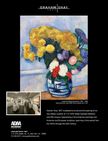
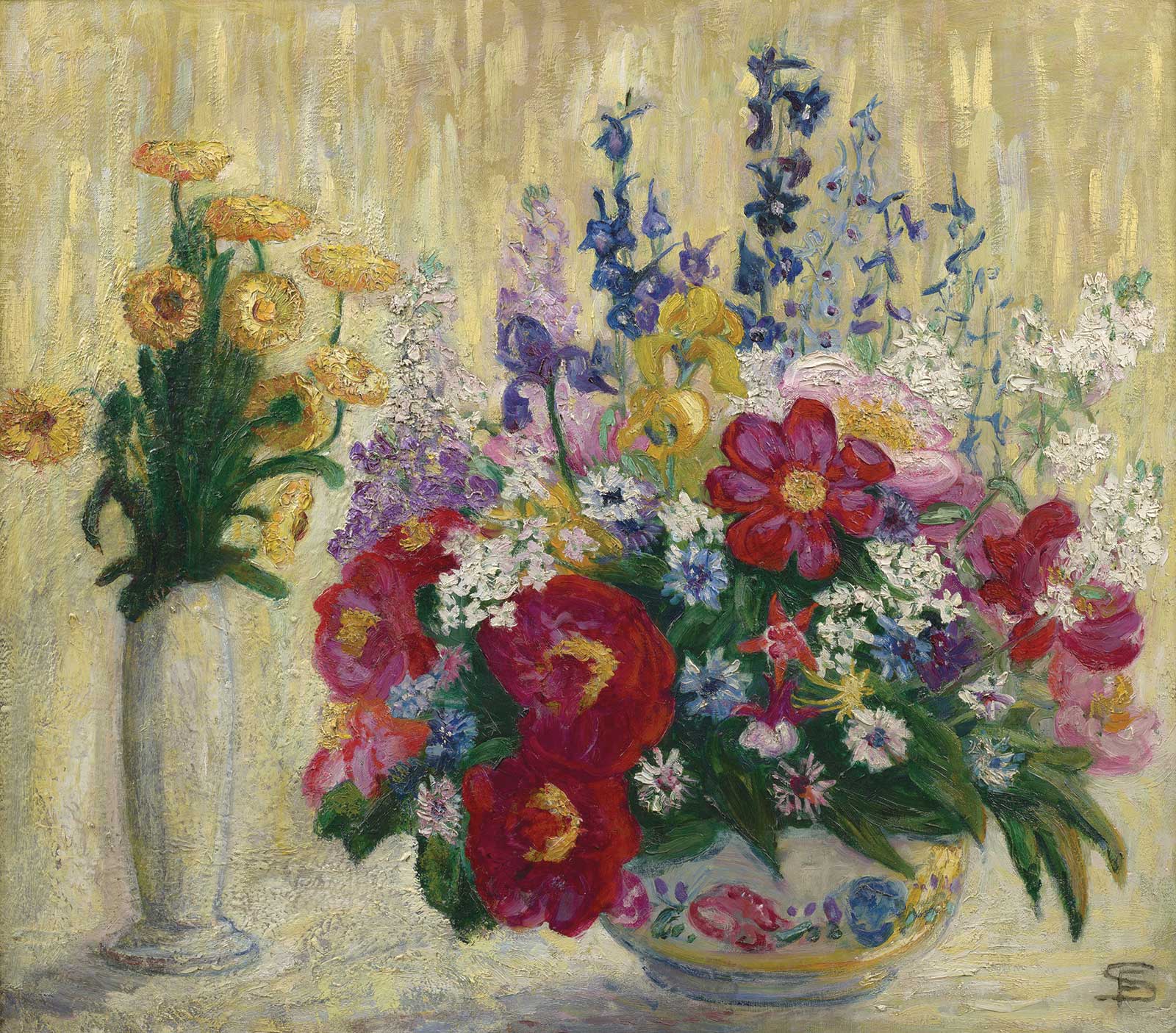 Florine Stettheimer (1871-1944), Flowers, 1915. Oil on canvas, 301⁄8 x 34 in.
Henri (1865-1929), in opposition to the conservative National Academy of Design, assembled a group of friends for an exhibition of The Eight at Macbeth Gallery in New York in 1908. The group eventually became known as the Ashcan School because of their gritty genre paintings of unidealized city life.
Luks’ painting Men of the Auld Palestine Sod at Sweeney’s Near Houston Street, circa 1933, done in oil en grisaille, depicts the dim, colorless interior of a bar, a frequent haunt of the artist.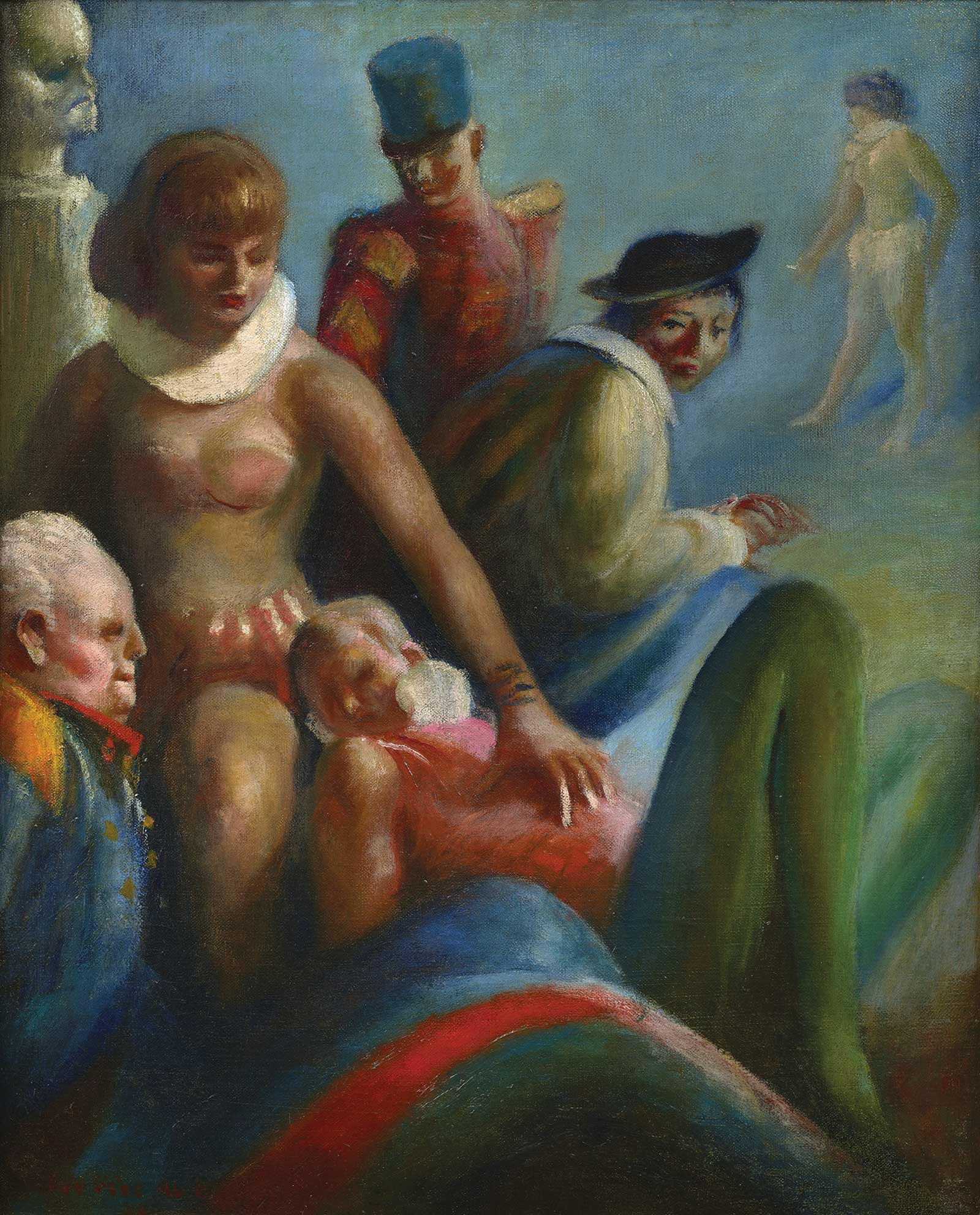 Guy Pène du Bois (1884-1958), Masquerade Party, 1938. Oil on canvas, 201⁄8 x 16 in.
Duncan Phillips collected all of The Eight for The Phillips Collection and wrote that Luks was “an individualist with a buoyant belief in his own genius and gusto in his copious enjoyments of his chosen subjects…We are reminded of Hals, then of Goya and again of Courbet. But these painters of the past who also wielded their brushes with exhilarating ease and racy personal expression lacked the mischievous irony which is the very autograph of Luks…”
Luks’ boisterous life ended when he died in a New York doorway some say of a heart attack after a barroom brawl. —
Powered by Froala Editor